Walking Tours in Buenos Aires
Buenos Aires: San Telmo & La Boca
Walk the soul of Buenos Aires — from the revolutionary Plaza de Mayo through the cobblestoned tango district of San Telmo to the vivid painted houses of La Boca.
Buenos Aires: The Paris of the South
Buenos Aires was founded twice — once in fifteen thirty-five, abandoned, and refounded in fifteen eighty by Juan de Garay. For two hundred and fifty years it was a backwater of the Spanish Empire, prohibited from trading directly with Europe and forced to smuggle goods through Montevideo. Then in eighteen ten it declared independence, and in the decades that followed it became one of the fastest-growing cities in the world — importing architecture, culture, and millions of immigrants from Italy, Spain, France, and Eastern Europe, building a city that the Argentines called 'the Paris of the South.' The Tango was born in the brothels and conventillos of La Boca and San Telmo. Evita is buried in Recoleta. The mothers of the disappeared circled the Plaza de Mayo every Thursday for decades. This city has lived at operatic intensity for two centuries, and the streets carry all of it.
30 Landmarks in Buenos Aires
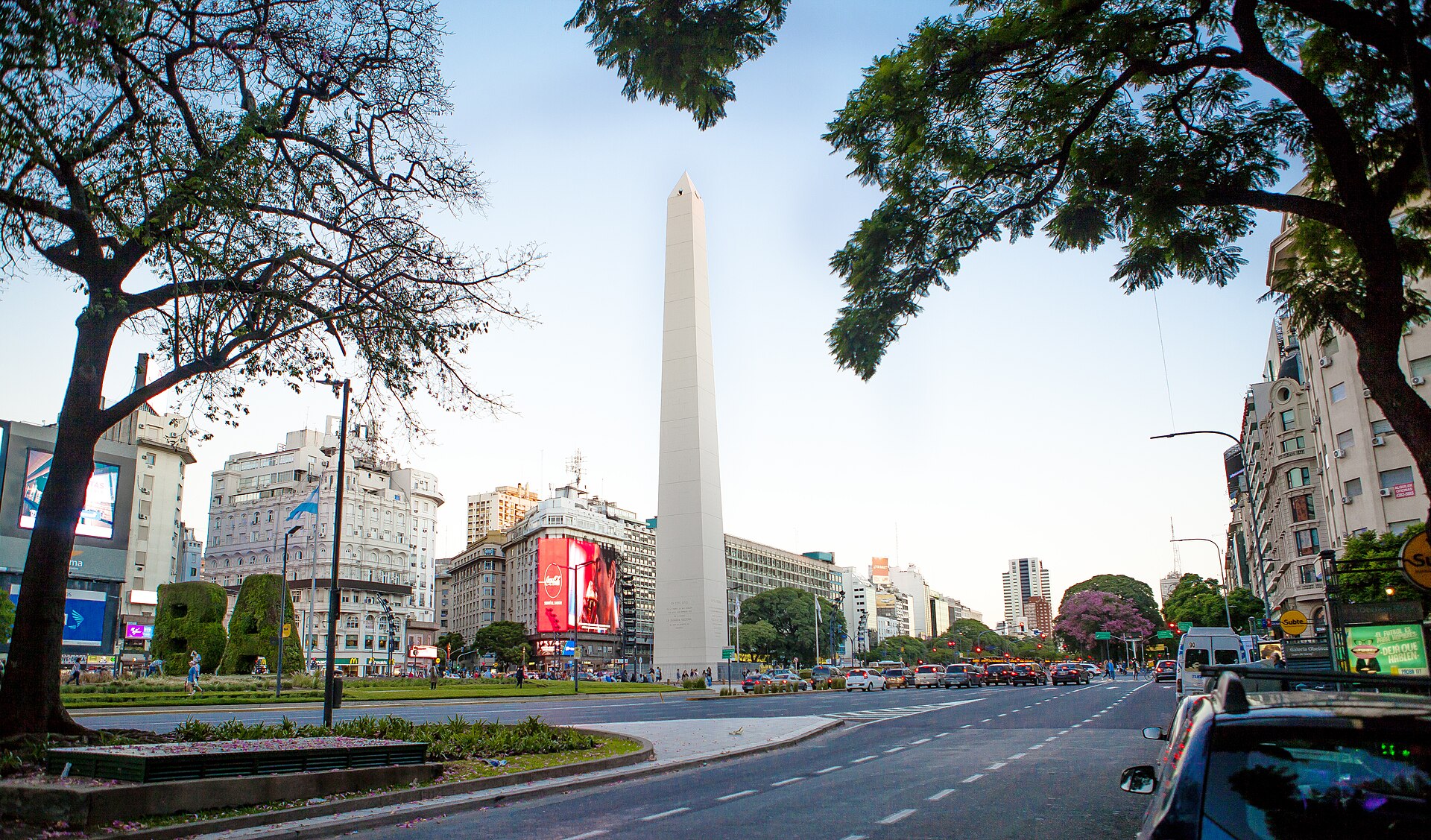
Avenida 9 de Julio & Obelisco
Av. 9 de Julio & Av. Corrientes, Buenos Aires
Avenida 9 de Julio is the widest avenue in the world — a 140-metre-wide boulevard that carves through the centre of Buenos Aires with 12 lanes of traffic, central medians planted with jacaranda trees, and the Obelisco standing at the intersection with Corrientes like an exclamation mark in the middle of the city. The avenue was cut through existing city blocks in the 1930s, demolishing entire rows of buildings to create a Parisian-scale boulevard that outdid Paris by a factor of two. The Obelisco, erected in 1936 to mark the 400th anniversary of the city's first founding, is 67.5 metres of white concrete that has become Buenos Aires' most recognisable landmark despite having no particular architectural distinction — it's a pointy white stick on a traffic island. Its significance is entirely emotional: the Obelisco is where Argentines gather to celebrate football victories, political triumphs, and New Year's Eve, and the image of the monument surrounded by tens of thousands of celebrating fans has become the defining image of Argentine public joy. The intersection of 9 de Julio and Corrientes — the 'Broadway' of Buenos Aires, lined with theatres, bookshops, and pizza-by-the-slice joints — is the symbolic centre of the city, and crossing the avenue on foot (it takes two traffic light cycles) gives you a visceral sense of the scale that Argentine urban planners aspired to. The jacaranda trees that line the medians bloom in purple in November, creating a colour that photographs spectacularly against the white concrete of the Obelisco.
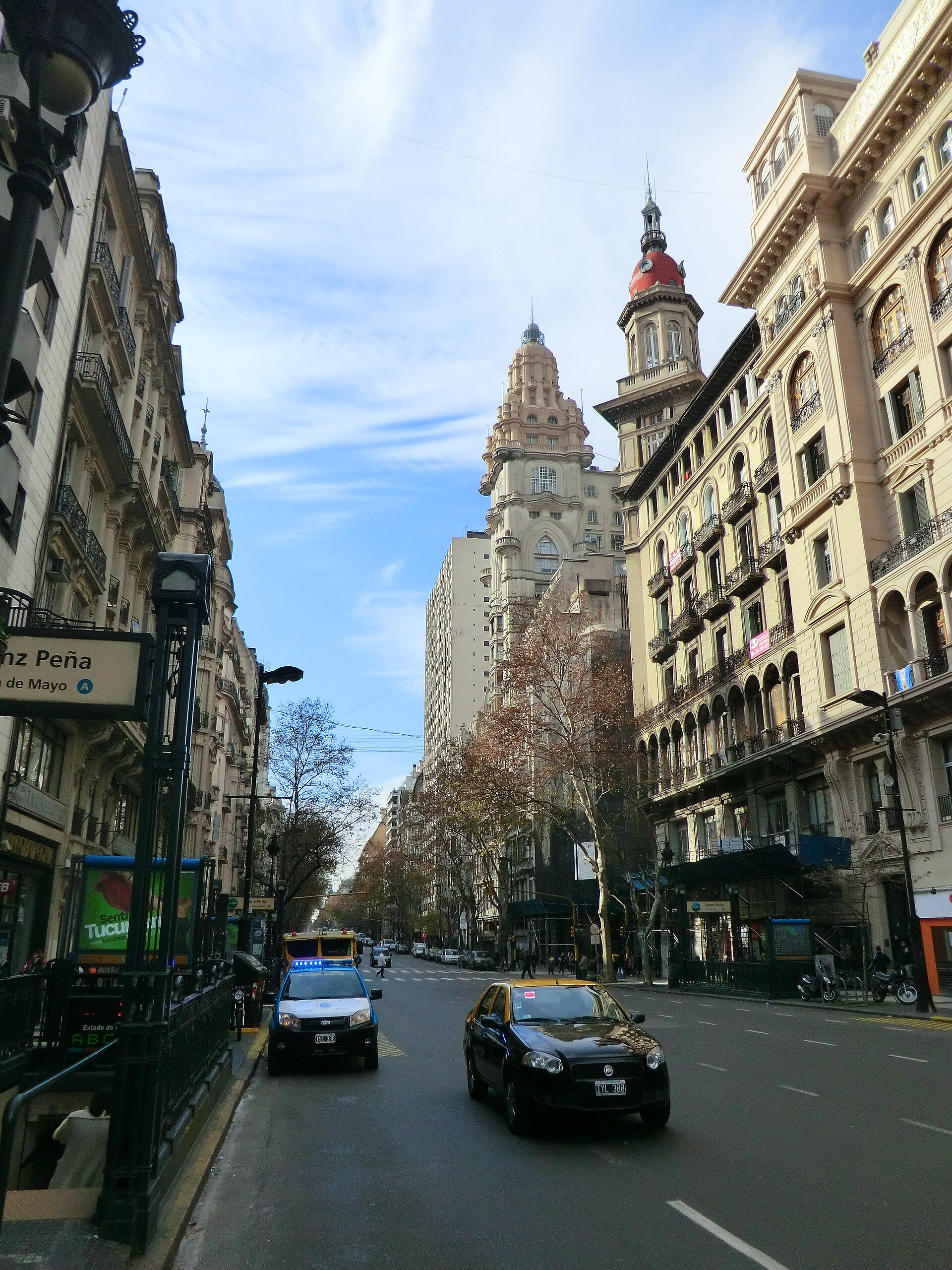
Avenida de Mayo
Avenida de Mayo, San Isidro, B1839, Argentina
Avenida de Mayo is Buenos Aires' most architecturally significant street — a 1.3-kilometre boulevard connecting the Casa Rosada to the Congreso Nacional that was modelled on Madrid's Gran Vía and represents the peak of Argentine architectural ambition. Built in the 1890s by demolishing two blocks of colonial buildings to create a European-width avenue, it was the first thoroughfare in South America designed to rival the grand boulevards of Europe. The architecture is a timeline of early 20th-century styles — Art Nouveau, Beaux-Arts, Neo-Gothic, and the eclectic combinations that architects produced when their clients said 'make it look European but bigger.' The Palacio Barolo, designed by Italian architect Mario Palanti and completed in 1923, is the avenue's most extraordinary building — a 100-metre tower inspired by Dante's Divine Comedy, with the ground floors representing Hell, the middle floors Purgatory, and the upper floors Paradise, topped by a lighthouse whose beam was designed to be visible from Montevideo across the Río de la Plata. Café Tortoni anchors the avenue's cultural life, but the surrounding blocks contain some of the best traditional cafés and restaurants in the city — places where the Spanish-Argentine heritage of the avenue (it was the centre of Buenos Aires' Spanish immigrant community) survives in the food, the conversation, and the unhurried pace of afternoon coffee. The Subte (metro) Line A, which runs beneath the avenue, was the first underground railway in South America when it opened in 1913, and riding it in the original Belgian-made carriages (recently replaced, though some survive as museum pieces) was itself a historical experience.
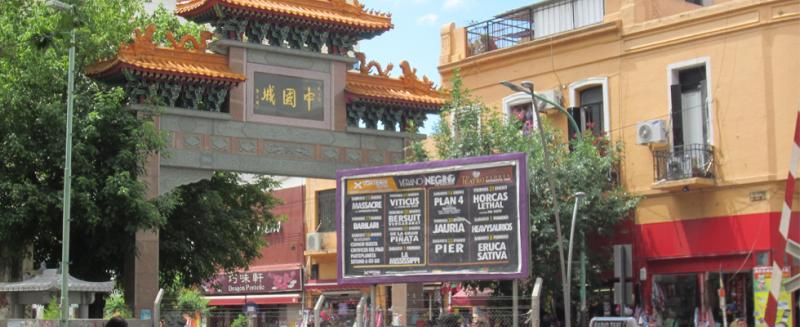
Barrio Chino (Chinatown)
13 Malasia, Comuna 14, Buenos Aires, B1758, Argentina
Buenos Aires' Barrio Chino is a compact but vibrant Chinatown in the Belgrano neighbourhood — a two-block stretch of Asian supermarkets, restaurants, and shops that reflects the city's small but growing East Asian community and serves as the best place in Buenos Aires to eat dumplings, ramen, and dim sum. The neighbourhood is centred on Arribeños Street between Juramento and Olazábal, marked by a traditional Chinese gate (paifang) at the entrance. The food is the draw — the Chinese, Taiwanese, Korean, and Japanese restaurants packed into these two blocks represent the best Asian food in a city that is otherwise dominated by Italian-Argentine cuisine. The supermarkets stock ingredients that are impossible to find elsewhere in Buenos Aires — fresh tofu, specialty soy sauces, rice vinegars, and the particular vegetables that Chinese and Korean cooking require — and browsing them is an education in culinary traditions that Argentina's European-immigrant culture largely missed. Barrio Chino is busiest on weekends and during Chinese New Year, when the gate area fills with lion dancers, firecrackers, and the kind of celebratory chaos that Buenos Aires' Asian community rarely displays in other parts of the city. The neighbourhood is small enough to walk in 20 minutes but interesting enough to spend an hour eating and exploring. It sits near the Belgrano train station and is easily combined with a visit to the nearby Barrancas de Belgrano park.
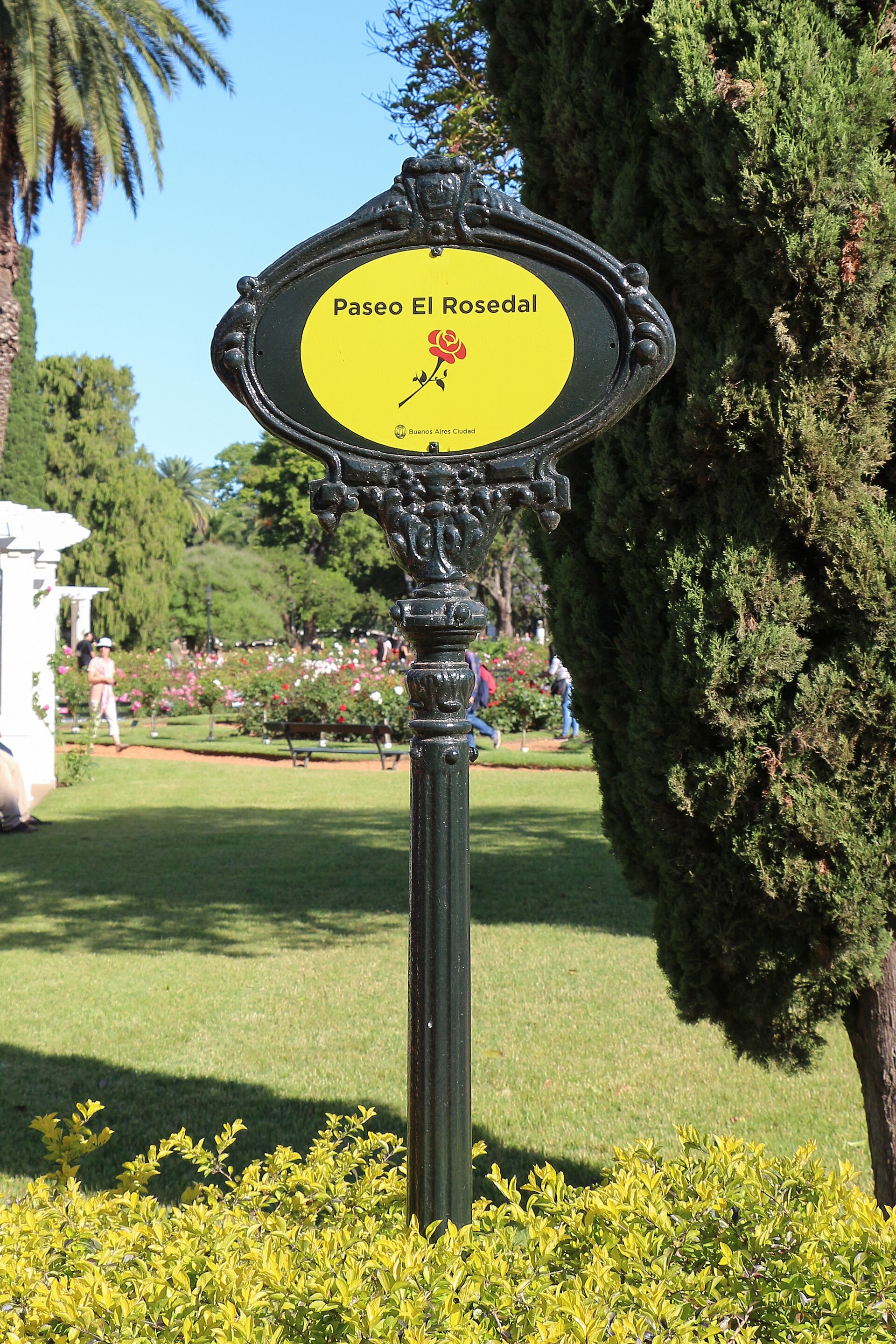
Bosques de Palermo & Rose Garden
Avenida Infanta Isabel, Comuna 14, Buenos Aires, C1425, Argentina
The Bosques de Palermo (Palermo Woods) is Buenos Aires' Central Park — a 400-hectare green space of lakes, gardens, and forested paths that wraps around the northern end of the city and provides the lungs that make Palermo liveable. The park was designed by French landscape architect Carlos Thays in the 1890s, who also designed most of Buenos Aires' other major green spaces, and his vision of a French-style park adapted to the Argentine climate has aged beautifully. The Rosedal (Rose Garden) is the park's crown jewel — a manicured garden of over 18,000 rose bushes, a Grecian bridge, pergolas, and the kind of romantic landscaping that makes it the most popular location in the city for wedding photographs, Instagram sessions, and the Sunday afternoon paseo (stroll) that is an Argentine cultural institution. The rose garden is free, open daily, and is at its best in October-November (Argentine spring) when the roses bloom. The park also contains the Japanese Garden (Jardín Japonés) — a 2.5-hectare garden with koi ponds, arched bridges, and a tea house built by the Japanese-Argentine community in 1967. The Planetario Galileo Galilei, a 1960s space-age structure surrounded by meteorites, sits at the park's southeastern edge. The lakes (artificially created in the 1890s) support paddle boats, runners circle the perimeter paths, and on weekends the park fills with the same mix of families, cyclists, mate-drinkers, and dog-walkers that fills every great urban park in the world.
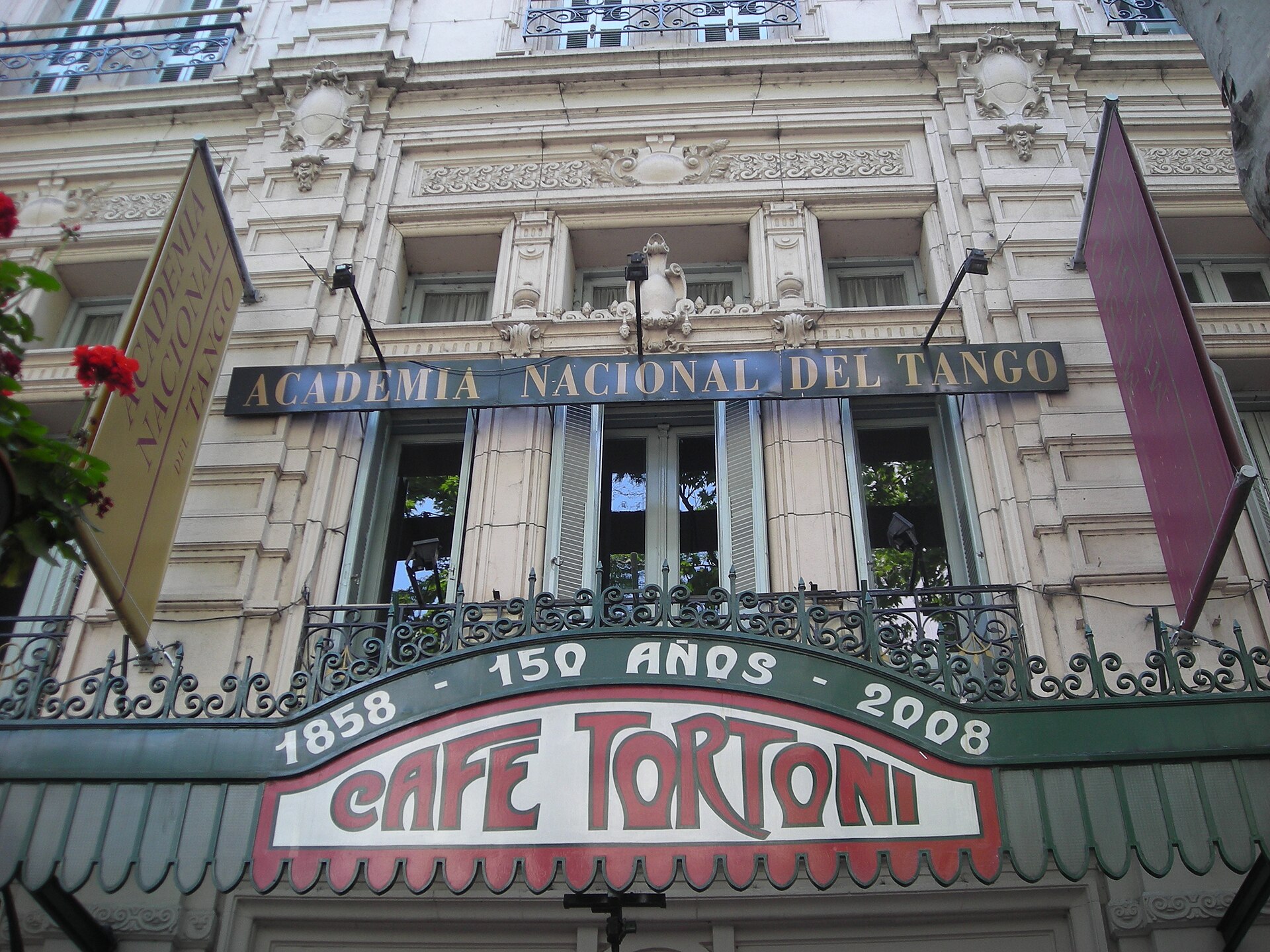
Café Tortoni
825 Avenida de Mayo, Comuna 1, Buenos Aires, C1084, Argentina
Café Tortoni is the oldest coffee house in Buenos Aires — open since 1858 on Avenida de Mayo, and the café that most embodies the city's literary and intellectual tradition. The interior, with its dark wood panelling, stained glass, marble tables, and the portraits of famous patrons on the walls, has changed almost nothing in over a century, and ordering a café con leche and medialunas (croissants) here is a ritual that connects you to the Buenos Aires that Jorge Luis Borges, Carlos Gardel, and Alfonsina Storni inhabited. The café was founded by a French immigrant and modelled on the Parisian café tradition — a place where writers, journalists, politicians, and artists gathered to argue, create, and drink coffee in quantities that would alarm a cardiologist. The literary history is real: Borges was a regular, and the Agrupación de Gente de Artes y Letras held meetings in the basement that included many of Argentina's most important 20th-century writers. The tango shows held in the basement performance space continue a tradition that dates to the café's early decades. The queue to enter can stretch down Avenida de Mayo, particularly on weekends, which has led some porteños to dismiss Tortoni as a tourist trap. The criticism is partly fair — the coffee is good rather than exceptional, and the prices reflect the heritage premium. But the interior is genuine, the atmosphere is warm, and drinking coffee in a room where Borges sat is worth the wait and the markup. The cafe's position on Avenida de Mayo, between Plaza de Mayo and the Congreso, makes it a natural stop on any Centro walk.
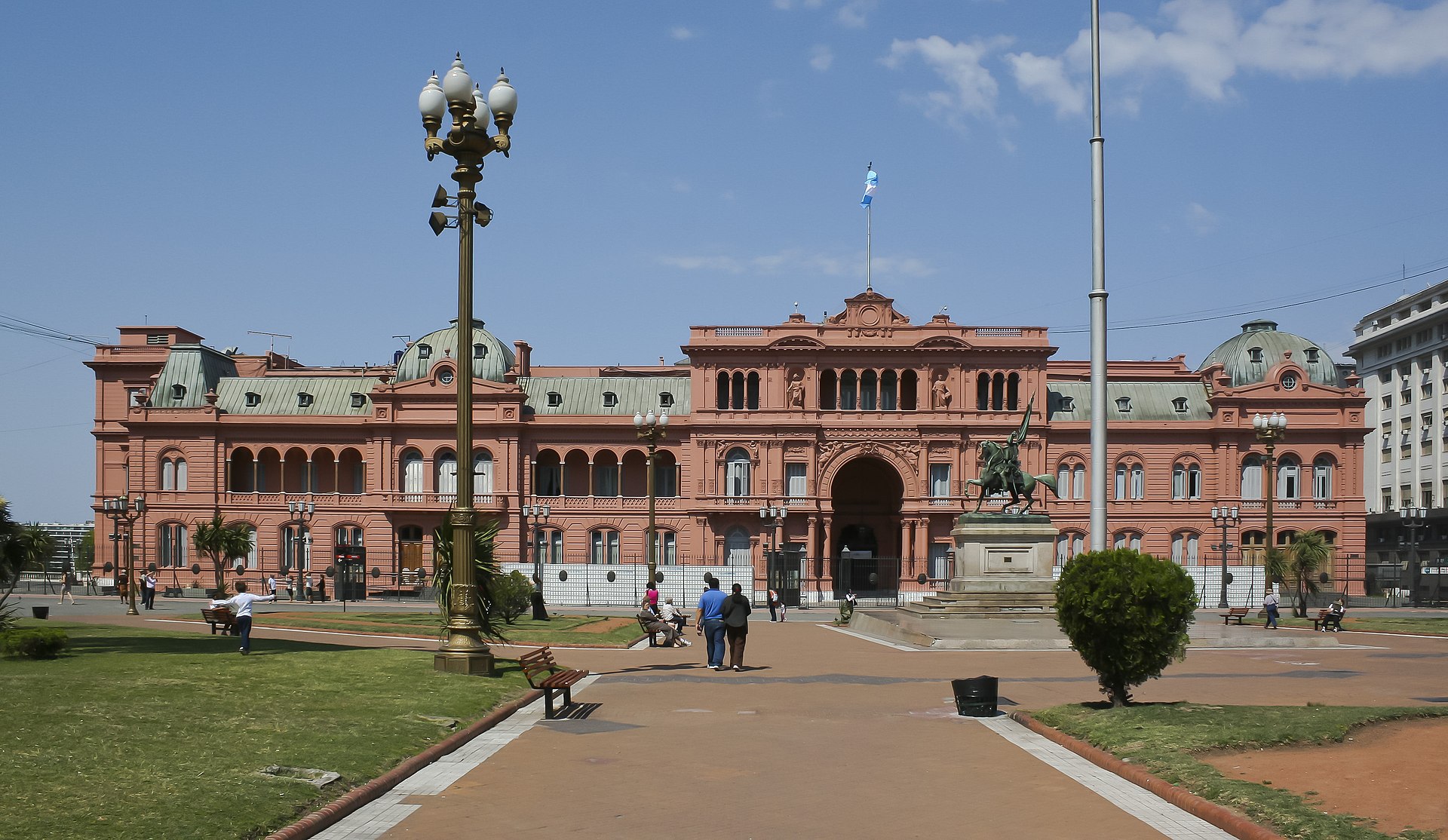
Casa Rosada
Balcarce 50, Monserrat, Buenos Aires
The Casa Rosada is Argentina's presidential palace — a pink Italianate building on the eastern side of Plaza de Mayo that is most famous for the balcony from which Eva Perón addressed the descamisados (the shirtless ones, Argentina's working class), Maradona celebrated the 1986 World Cup victory, and every Argentine president since has addressed the nation in moments of triumph or crisis. The building's pink colour — which gives it its name — is one of Buenos Aires' most enduring mysteries. The most popular explanation is that President Sarmiento in the 1860s chose pink to blend the red of the Federalists with the white of the Unitarians, symbolising national unity. The less romantic explanation is that the original whitewash was mixed with ox blood as a weather sealant, and the colour was simply maintained. Either way, the building has been pink since at least the 1870s, and changing it would be unthinkable. Free guided tours on weekends take visitors through the presidential offices, the Hall of Busts (every Argentine president is represented), the Salón Blanco (the main ceremonial room), and out onto the famous balcony — where you stand in the exact spot where Evita stood, looking down at the plaza below. The museum in the basement houses presidential artifacts including the desk where independence was planned and the sash of every president. The tours must be booked online in advance and fill up quickly, particularly around national holidays.
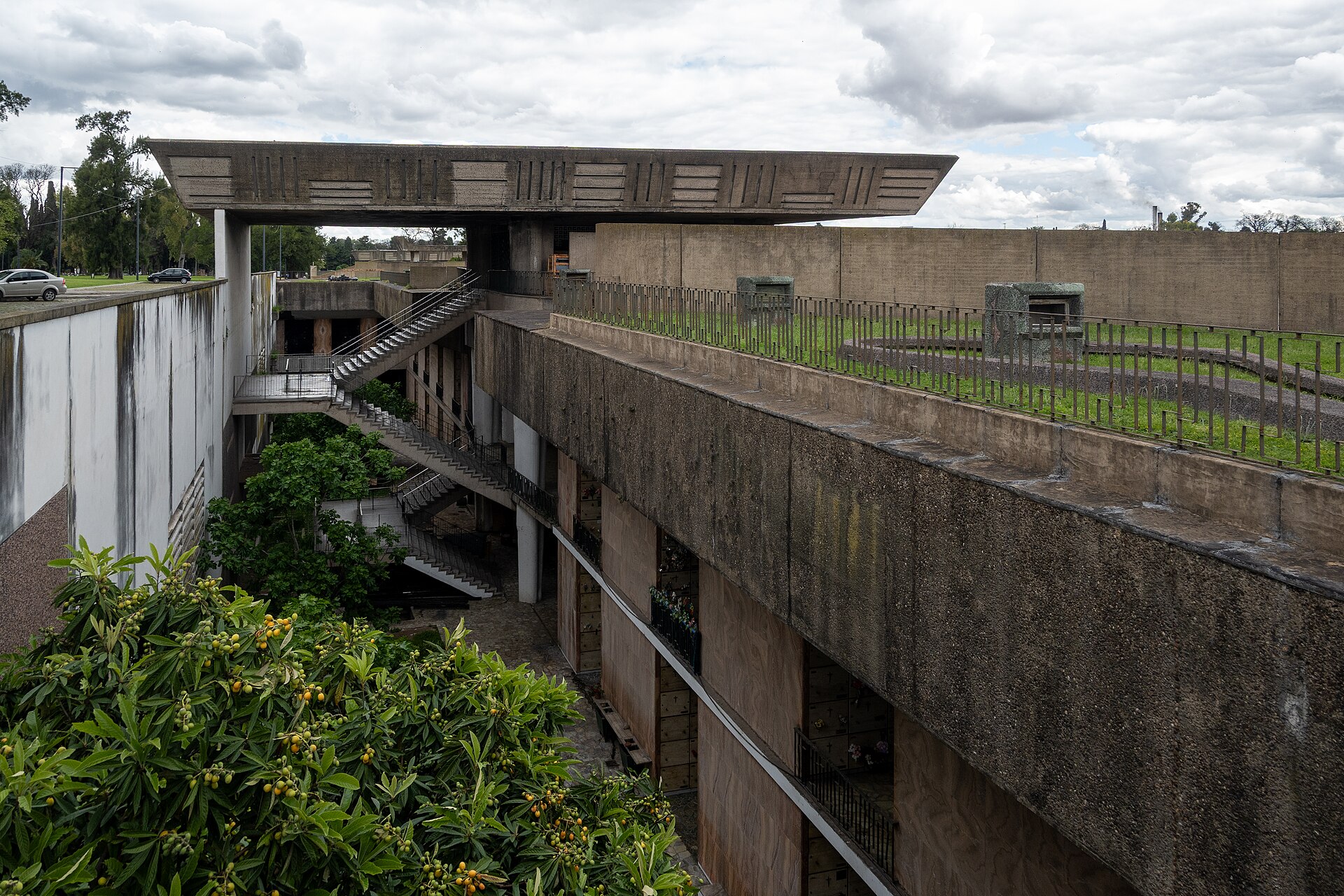
Cementerio de la Chacarita
680 Guzmán, Comuna 15, Buenos Aires, C1427, Argentina
Chacarita is Buenos Aires' largest cemetery and Recoleta's working-class counterpart — a massive necropolis that houses the remains of Carlos Gardel (the greatest tango singer in history), Juan Domingo Perón (the populist president who shaped modern Argentina), and the everyday porteños whose tombs tell the story of the city's immigrant communities in a way that Recoleta's elite vaults cannot. Gardel's tomb is the most visited — a bronze statue of the singer in his trademark fedora, with a permanent cigarette placed between his fingers by fans and a collection of flowers, notes, and tango memorabilia that is refreshed constantly. Gardel died in a plane crash in Medellín in 1935, and his funeral in Buenos Aires drew hundreds of thousands of mourners in one of the largest public displays of grief in Argentine history. The tomb has become a secular shrine, and the tradition of placing a lit cigarette in the statue's hand continues despite cemetery regulations. Perón's mausoleum, added to the cemetery after his remains were moved here in 2006, is a more controversial site — Peronism still divides Argentine opinion, and the tomb draws both devoted followers and people who come to argue about his legacy. The cemetery's scale (95 hectares, making it one of the largest in the world) means most visitors see only the notable tombs near the entrance, but walking deeper into the grounds reveals sections dedicated to specific immigrant communities — Italian, Spanish, Jewish, Armenian — whose tombstone inscriptions, in their original languages, document the waves of immigration that built the city.
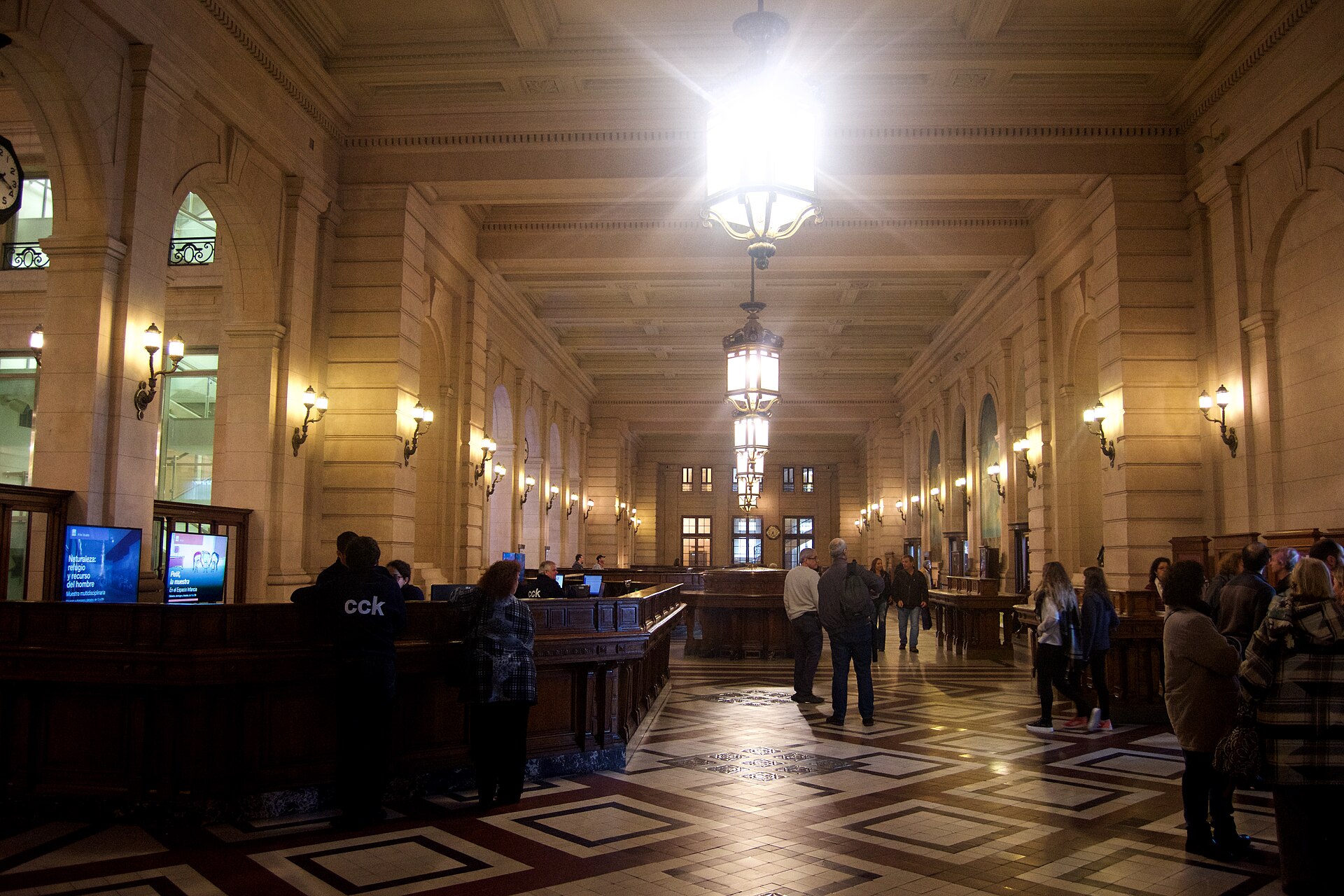
Centro Cultural Kirchner (CCK)
151 Calle Sarmiento, Comuna 1, Buenos Aires, C1041, Argentina
The Centro Cultural Kirchner is the largest cultural centre in Latin America — a converted early 20th-century post office building that was transformed in 2015 into a massive cultural complex housing concert halls, exhibition galleries, and the Blue Whale (La Ballena Azul), a 1,950-seat concert hall with acoustics designed by Nagata Acoustics (the same firm that designed the acoustics of the Elbphilharmonie in Hamburg and Suntory Hall in Tokyo). The building, originally the Central Post Office, was designed by French architect Norbert Maillart in a Beaux-Arts style and completed in 1928. The exterior is monumental — a full city block of French limestone and granite with a 60-metre clock tower — and the interior conversion preserved the original architecture (the marble lobbies, the grand staircase, the sorting rooms) while inserting contemporary performance and exhibition spaces into the vast industrial volumes. The Blue Whale concert hall, suspended inside one of the former sorting rooms, is a wooden structure within a stone one — a concert hall inside a post office, which sounds absurd until you hear the acoustics. Admission to the CCK is free for most events, which is remarkable given the quality of the programming — the resident orchestras, the contemporary art exhibitions, and the film, theatre, and dance programmes rival any cultural institution in South America. The building's scale (100,000 square metres) means you can spend hours exploring galleries, performance spaces, and the rooftop terrace with views across Puerto Madero and the river. The CCK is politically charged — it was a flagship project of the Kirchner government and has been renamed and repurposed by subsequent administrations — but the cultural programme and the building itself transcend the politics.
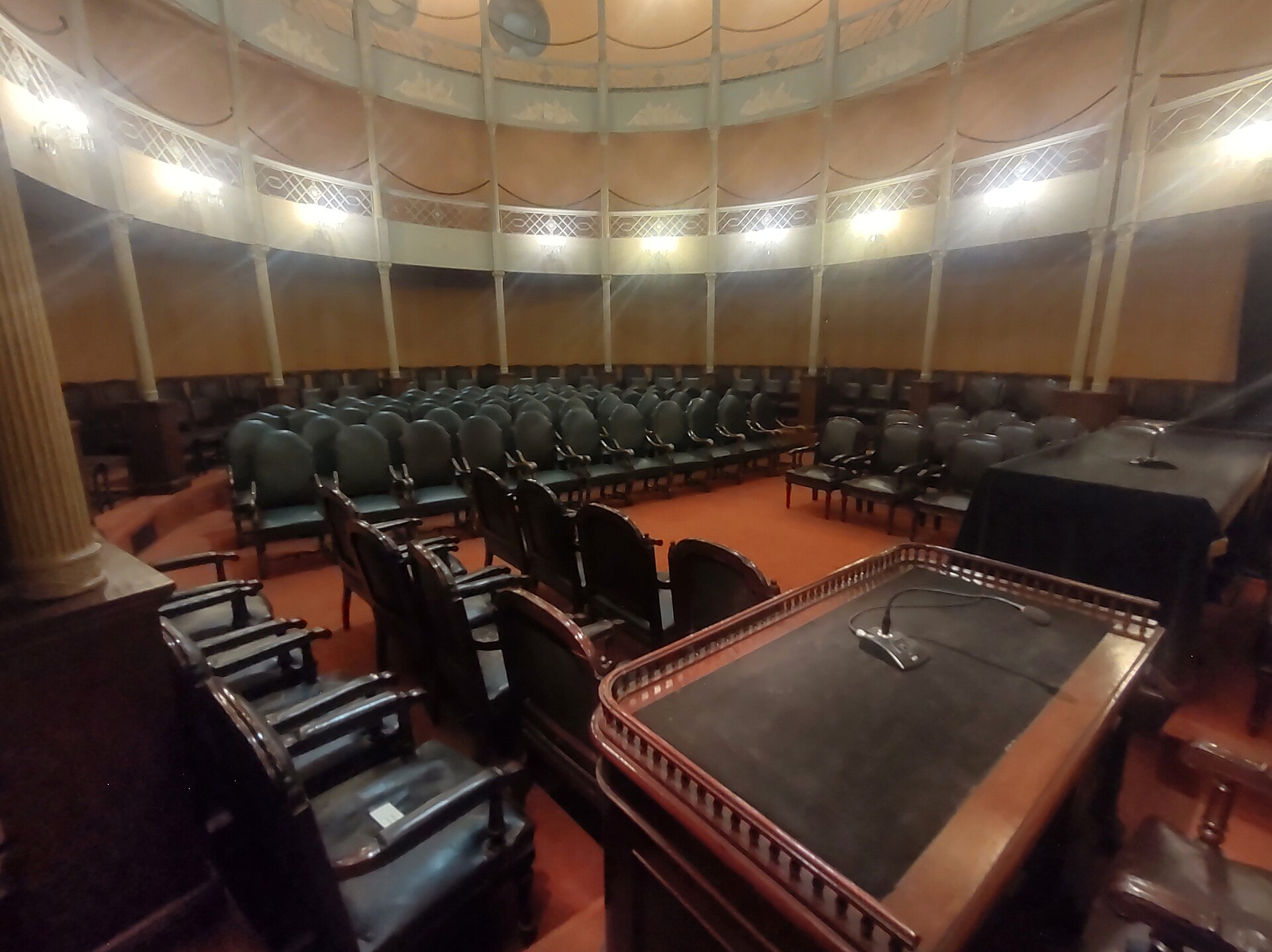
Congreso Nacional
Av. Hipólito Yrigoyen 1849, Buenos Aires
The Congreso Nacional is Argentina's parliament building — a Greco-Roman colossus topped by an 80-metre dome that anchors the western end of Avenida de Mayo and faces the Casa Rosada two kilometres away across the political geography of the city. Designed by Vittorio Meano (an Italian architect who was murdered before the building was completed in 1906) and modelled on the US Capitol, the Congreso is one of the most imposing legislative buildings in South America. The building's exterior is white granite from Córdoba province, and the dome — visible from much of the city's western barrios — is topped by a bronze quadriga (four-horse chariot) representing the Argentine Republic in triumph. The interior, accessible via free guided tours, contains the Senate and Chamber of Deputies in rooms decorated with the kind of Belle Époque excess that Argentina could afford when it was one of the richest countries in the world: Venetian mosaics, Belgian crystal chandeliers, Spanish mahogany, and French bronzes. Plaza Congreso, the square in front, contains the Monumento a los Dos Congresos — a fountain and monument marking Kilometre Zero, the point from which all distances in Argentina are measured. The plaza is also a traditional site for political demonstrations, and the juxtaposition of ornate European architecture with the raw energy of Argentine political protest is one of those tensions that defines Buenos Aires as a city where beauty and chaos are not opposites but companions.
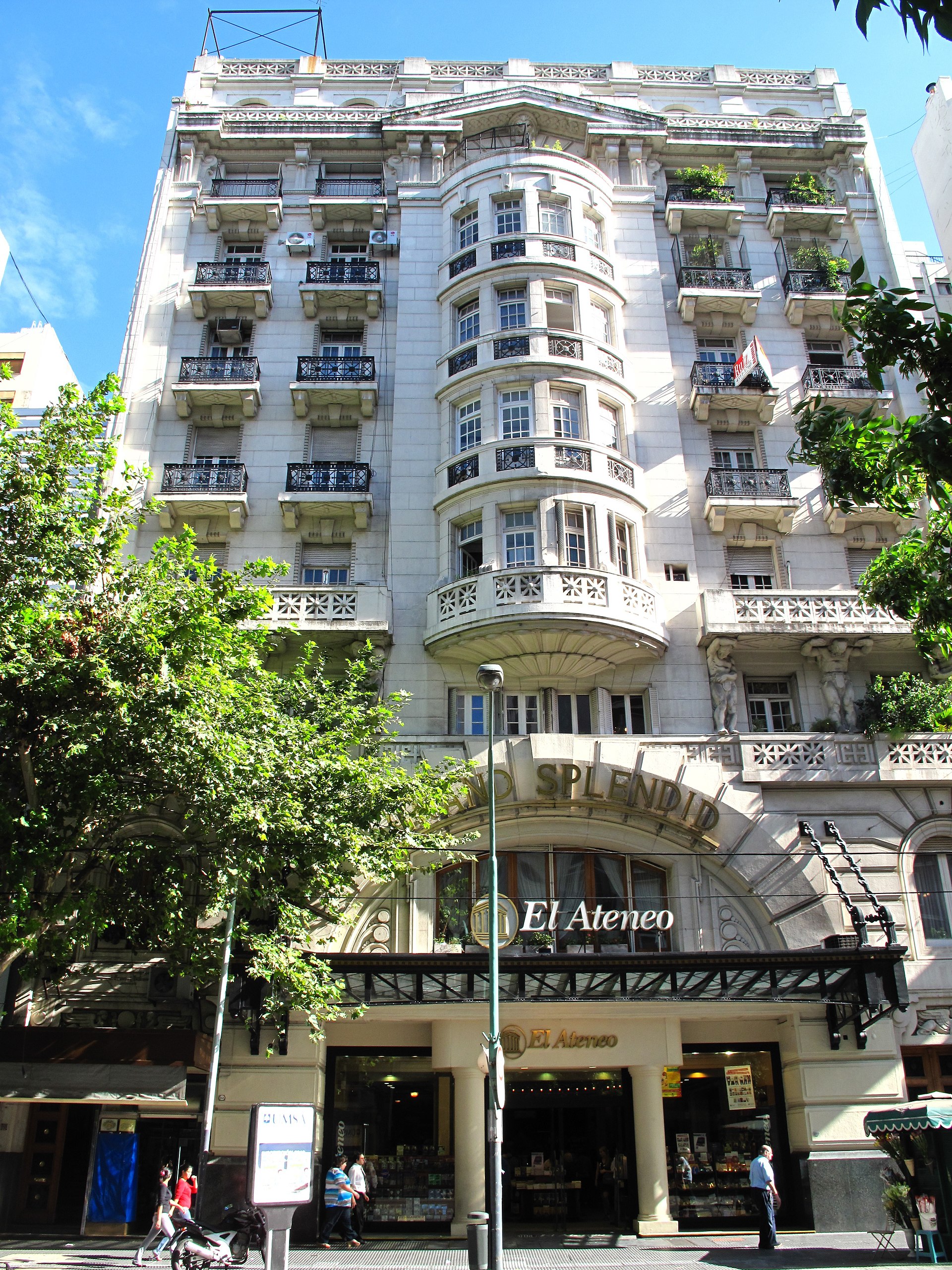
El Ateneo Grand Splendid
Av. Santa Fe 1860, Recoleta, Buenos Aires
El Ateneo Grand Splendid is the most beautiful bookshop in the world — a 1919 theatre converted into a bookstore in 2000 that preserved the ornate ceiling frescoes, the gilded balconies, the crimson stage curtain, and the theatre boxes (now reading nooks) while filling the auditorium floor with bookshelves. The effect is like browsing in a Baroque opera house, which is exactly the disorienting pleasure that draws over a million visitors a year. The building was originally the Teatro Grand Splendid, designed by architects Peró and Torres Armengol for the Glücksmann entertainment company, and it served as a cinema and theatre before being converted by the El Ateneo bookshop chain. The ceiling fresco by Nazareno Orlandi (depicting allegorical figures of peace) is intact and illuminated, and the stage — where tango legend Carlos Gardel once recorded for the Nacional Odeon record label — has been converted into a café where you can drink coffee surrounded by the theatre's original architecture. Buenos Aires has more bookshops per capita than any other city in the world, and El Ateneo is the crown jewel of a literary culture that Argentines treat with the same passion they bring to football and grilled meat. The shop stocks over 100,000 titles in Spanish and English, and the combination of architecture, book browsing, and stage-side coffee makes it one of those rare places where commerce and culture genuinely enhance each other.
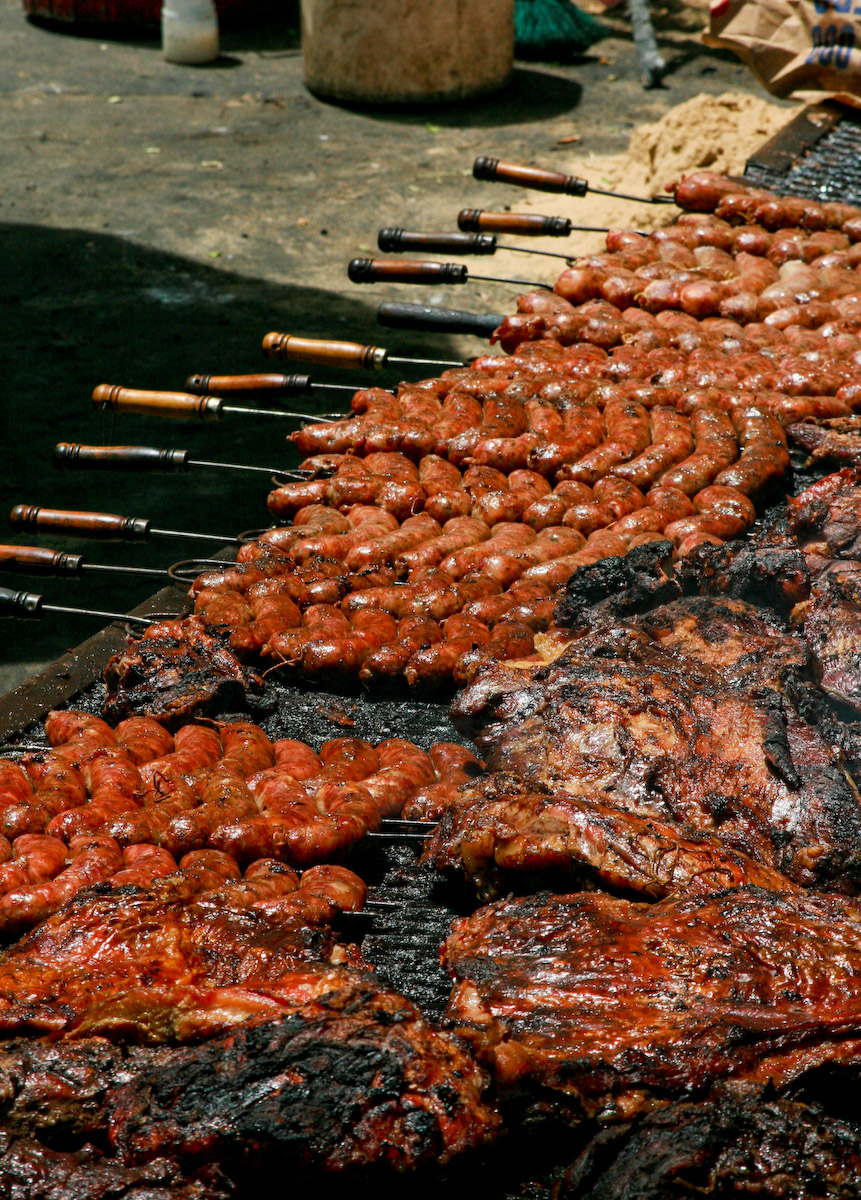
Feria de Mataderos
Lisandro de la Torre, Comuna 8, Buenos Aires, C1439, Argentina
The Feria de Mataderos is Buenos Aires' gaucho market — a Sunday street fair in the far western neighbourhood of Mataderos (named for the slaughterhouses that once operated here) that celebrates the rural Argentine traditions of horsemanship, folk music, and the asado (barbecue) culture that defines the country's identity far more than tango or Borges. The fair draws porteños and rural Argentines alike, and the atmosphere — folk bands, gaucho riders, craft stalls selling leather goods and silver mate cups, and the smell of beef grilling over wood fires — is the most authentically Argentine experience available in the capital. The food is the highlight. Enormous parrillas (barbecue grills) cook entire cuts of beef, chorizo, morcilla (blood sausage), and the achuras (offal) that are an essential part of the Argentine asado tradition. Empanadas from the northern provinces (Salta, Tucumán) are made by hand and fried to order. Locro (a hearty corn and meat stew from the Andes) and humitas (corn tamales) represent the indigenous Argentine food traditions that the cosmopolitan city centre rarely showcases. The market takes place on Sundays from April through December (it moves to Saturday evenings in January-March) and is reached by bus from the city centre in about 40 minutes. The journey through Mataderos — past the old cattle market buildings and the working-class houses of a neighbourhood that has never been gentrified — provides context for the fair's existence: this is where rural Argentina meets the city, and the Fair of Mataderos is the weekly negotiation between the two.
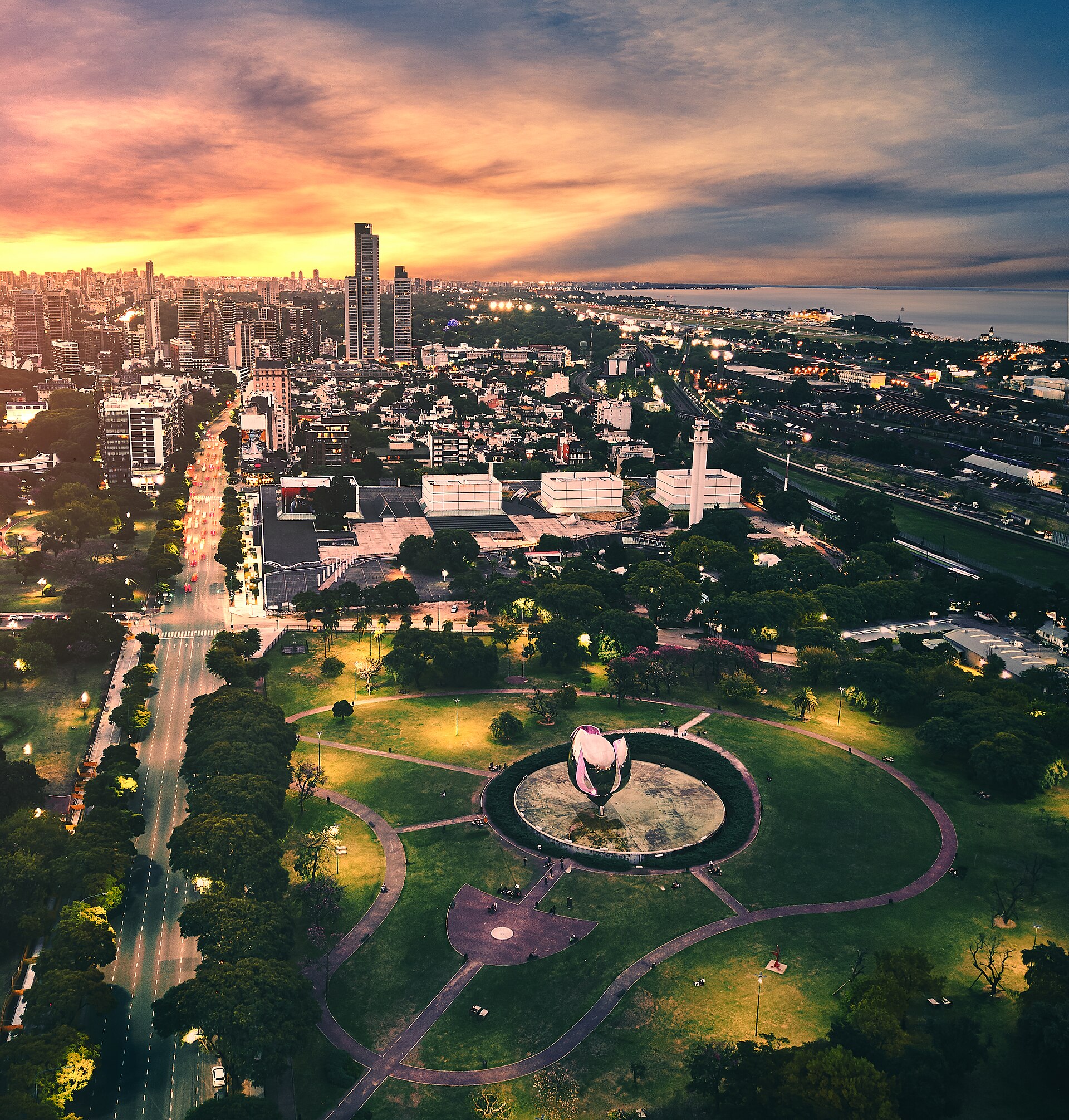
Floralis Genérica
2263 Avenida Presidente Figueroa Alcorta, Comuna 2, Buenos Aires, B1752, Argentina
Floralis Genérica is a 23-metre-tall steel and aluminium flower sculpture in the Plaza de las Naciones Unidas that opens its petals every morning and closes them every evening — a kinetic artwork that uses hydraulic mechanisms to track the sun like a real flower. Designed by Argentine architect Eduardo Catalano and installed in 2002, the sculpture weighs 18 tons and has become one of Buenos Aires' most recognisable contemporary landmarks. The flower's six petals, each 13 metres long and made of polished stainless steel, reflect the surrounding water of the fountain basin and the trees of the Recoleta parkland, creating reflections that change with the weather and the time of day. The opening and closing mechanism operates automatically, though the flower remains fully open on certain national holidays and on May 25 (Argentina's national day). When the petals are closed at night, the flower is lit from within, creating a glowing lantern visible from the surrounding avenues. Catalano, who donated the sculpture to the city, described it as 'a synthesis of all flowers and at the same time a hope that is reborn every day as it opens.' The sculpture sits between MALBA and the National Library, on a stretch of Avenida Figueroa Alcorta that passes through some of the most expensive real estate in Buenos Aires, and its combination of engineering precision and poetic intent makes it one of the few pieces of public art in the city that both architects and grandmothers can appreciate equally.
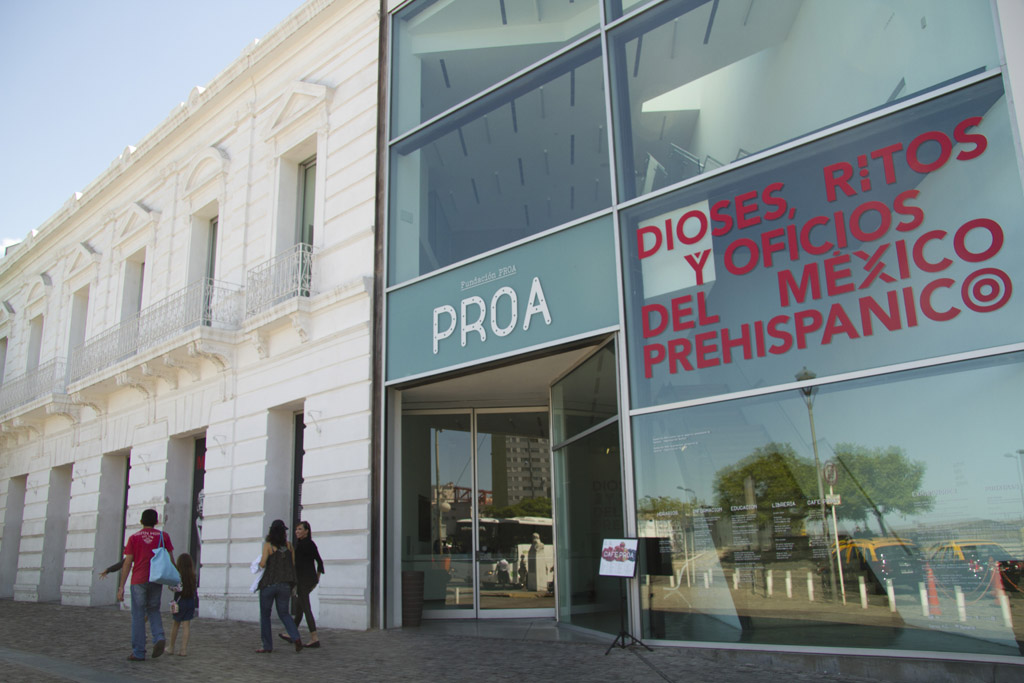
Fundación Proa
Av. Pedro de Mendoza 1929, La Boca, Buenos Aires
Fundación Proa is a contemporary art museum at the edge of La Boca — a converted Italian-Argentine house with a minimalist glass-and-steel extension that hosts exhibitions of international contemporary art at a level of ambition that rivals institutions many times its size. The museum was founded in 1996 by the Rocca family (founders of Tenaris, the steel company) and has consistently brought major international exhibitions to Buenos Aires — Marcel Duchamp, Louise Bourgeois, Ai Weiwei, and Yayoi Kusama have all had shows here. The building itself is notable — the original 19th-century Italian-immigrant house (typical of La Boca's architecture) has been preserved as the museum's facade, while the interior has been replaced by clean white galleries and a glass-walled top floor with panoramic views of the Riachuelo, the port, and the La Boca waterfront. The rooftop terrace café, overlooking the river and the rusting hulks of abandoned ships, provides one of the most atmospheric lunch spots in Buenos Aires. Proa's location — at the southern end of La Boca, past Caminito and into the working port area — means most visitors who are only doing the Caminito tourist circuit miss it entirely. This is a mistake. The exhibition programme is world-class, the building is beautiful, and the view from the terrace puts La Boca's industrial landscape into a context that the painted houses of Caminito deliberately obscure.
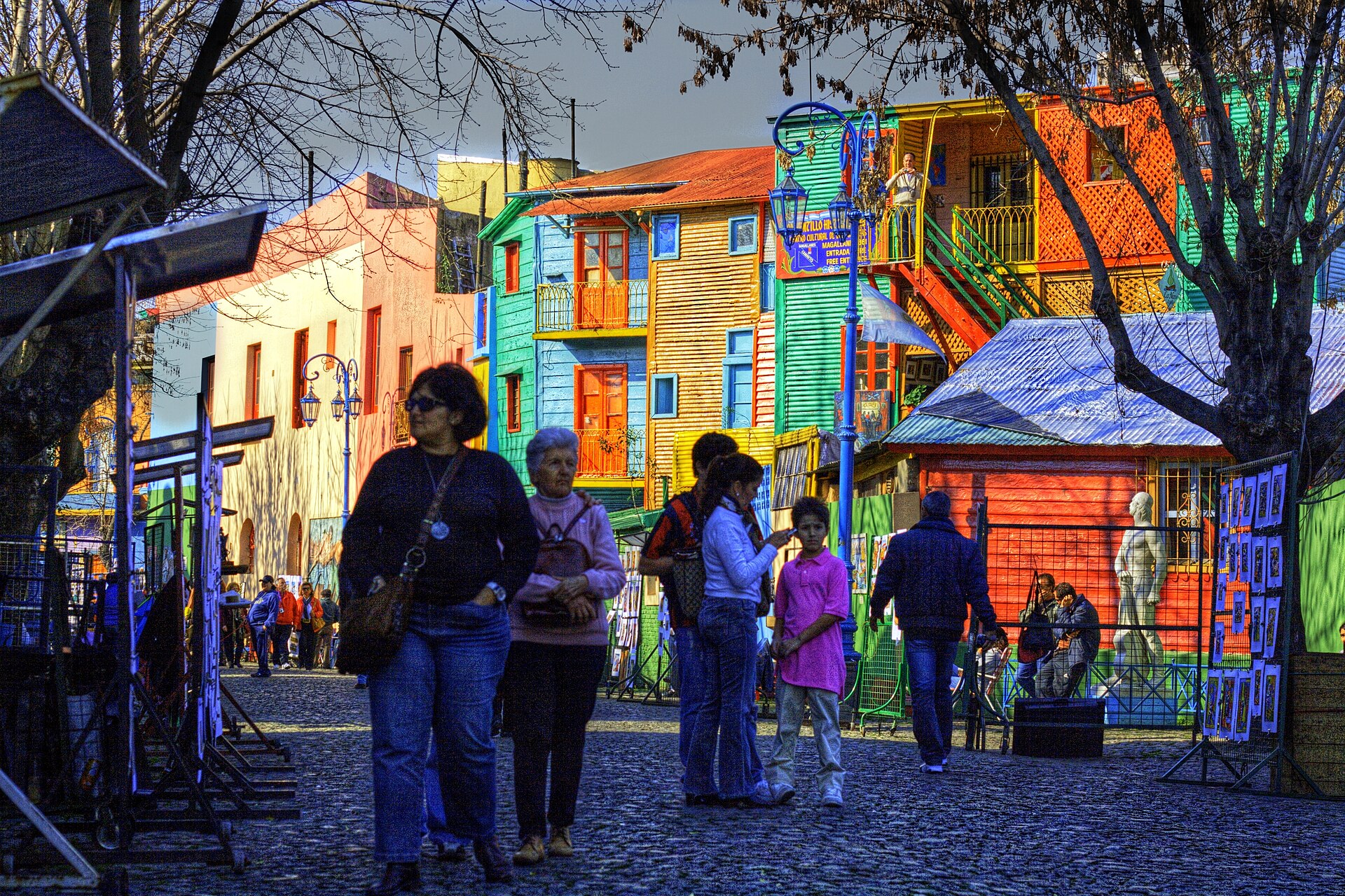
La Boca & Caminito
Buenos Aires, Argentina
La Boca is Buenos Aires' most colourful neighbourhood — a working-class district at the mouth of the Riachuelo River where Italian immigrant shipyard workers painted their corrugated-iron houses with leftover ship paint, creating the rainbow streetscape that has become the defining image of the city. Caminito, a pedestrianised alley-turned-open-air-museum, is the epicentre — a short, curved street of painted houses, tango dancers, street artists, and souvenir vendors that is simultaneously the most touristy and most photogenic block in Buenos Aires. The neighbourhood's history is inseparable from immigration. The Genoese families who settled here in the late 19th century built their conventillos (tenement houses) from corrugated metal and wood salvaged from the docks, and the tradition of painting them in bright colours — originally with whatever marine paint was available — became an aesthetic identity that the neighbourhood has maintained ever since. The artist Benito Quinquela Martín, who grew up in La Boca and spent his career painting the port and its workers, was the driving force behind Caminito's transformation from a derelict rail siding to a street gallery in the 1950s. La Bombonera stadium, home of Boca Juniors — Argentina's most popular football club and the team Diego Maradona called his own — is a few blocks from Caminito, and on match days the neighbourhood vibrates with the kind of intensity that only South American football generates. The museum inside the stadium is a shrine to Maradona and Boca's history. Visitors should stay on the tourist streets around Caminito — the surrounding neighbourhood can be rough, particularly after dark.
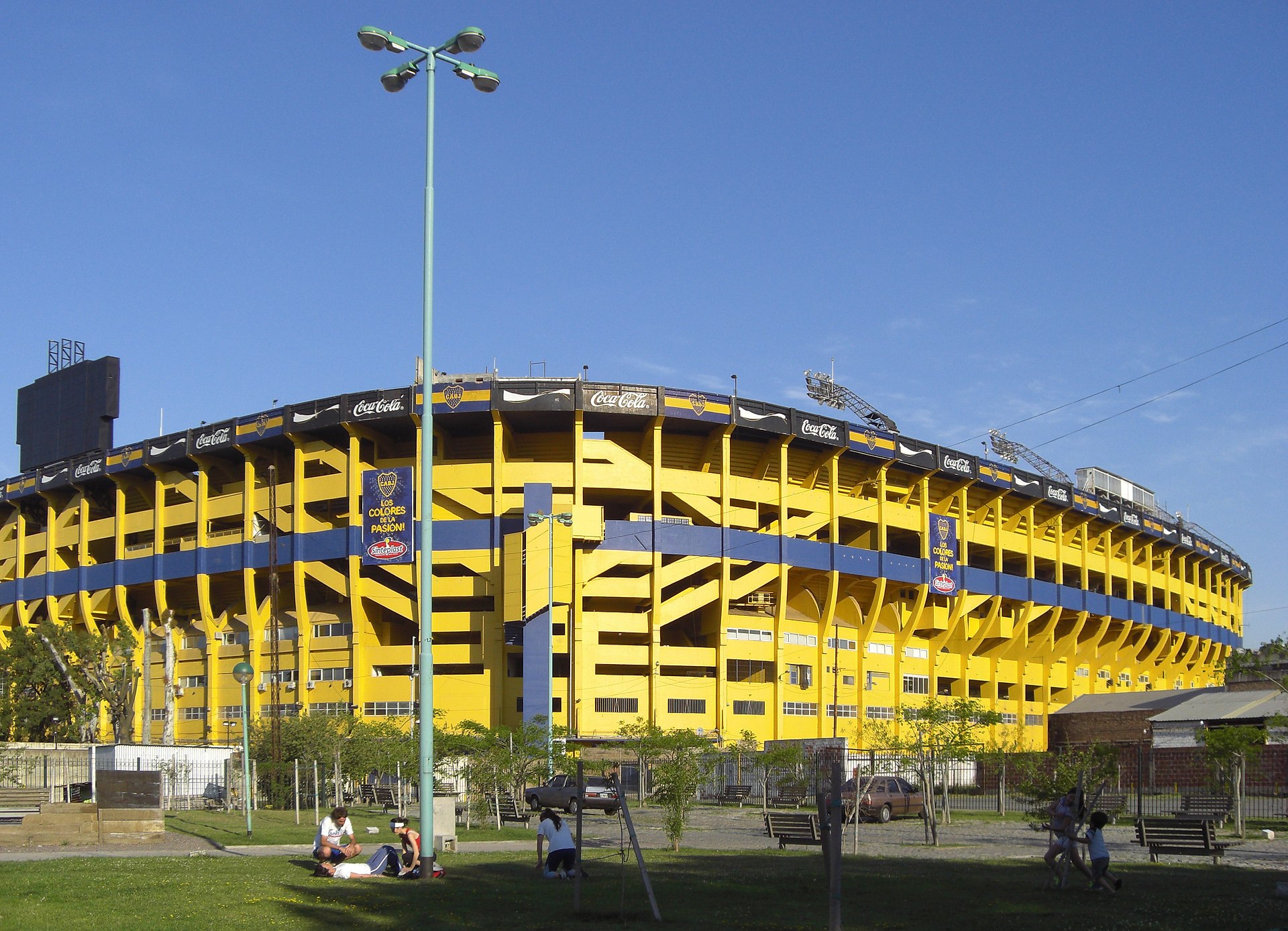
La Bombonera (Boca Juniors Stadium)
Brandsen 805, La Boca, Buenos Aires
La Bombonera is the most famous football stadium in South America — a 54,000-seat cauldron in La Boca that has been home to Boca Juniors since 1940 and is named "The Chocolate Box" for its distinctive rectangular shape with one steep, towering stand. Diego Maradona called Boca Juniors "the team of the people," and match days at La Bombonera are the most intense sporting experiences in Argentina — the concrete stands literally vibrate when 50,000 fans jump in unison. The Museo de la Pasión Boquense inside the stadium traces the club's history from its founding by Italian immigrants in 1905 through Maradona's era to the present, with jerseys, trophies, and the multimedia shrine to Maradona that has become a secular pilgrimage site since his death in 2020. The stadium tour includes the changing rooms, the tunnel, and the pitch — standing on the same grass where Maradona, Riquelme, and Tévez played is a mandatory experience for football fans. The Superclásico — the derby between Boca Juniors and River Plate — is the most intense club football rivalry in the world. Attending a match (particularly a Superclásico) requires planning and nerves — the atmosphere is passionate, loud, and overwhelming in the way that only South American football can be. Tickets are difficult to obtain through official channels, and most visitors attend through tour operators who provide tickets and security.
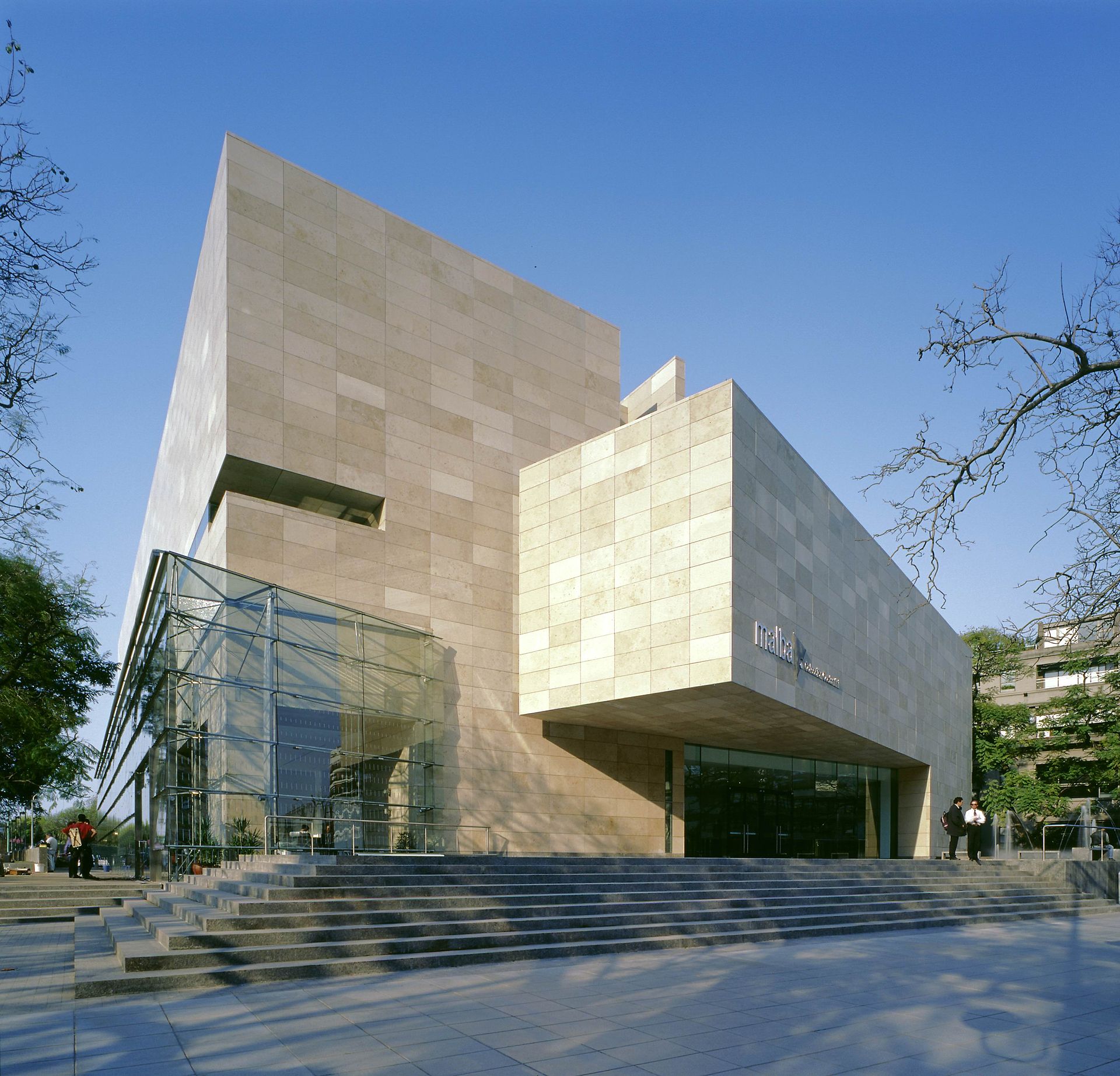
MALBA (Museo de Arte Latinoamericano de Buenos Aires)
3415 Avenida Presidente Figueroa Alcorta, Comuna 14, Buenos Aires, C1425, Argentina
MALBA is Latin America's most important contemporary art museum — a geometric glass-and-stone building in Palermo housing the Costantini collection of over 600 works by Latin American artists from the early 20th century to the present. The museum was founded in 2001 by Eduardo Costantini, who built the collection over decades with the explicit goal of creating an institution that would rival MoMA and Tate Modern for Latin American art. The permanent collection includes canonical works by Frida Kahlo, Diego Rivera, Tarsila do Amaral, Wifredo Lam, Joaquín Torres-García, and Antonio Berni, alongside contemporary artists like Guillermo Kuitca, Liliana Porter, and Adriana Varejão. The collection's strength is its regional scope — it treats Latin American art as a unified (if diverse) tradition rather than separating it by country, which reveals connections and dialogues between Mexican muralism, Brazilian modernism, Argentine concrete art, and Cuban surrealism that national museums typically miss. The building, designed by Gastón Atelman, Martín Fourcade, and Alfredo Tapia, is a sharp geometric composition of limestone and glass that sits confidently alongside the grand Beaux-Arts mansions of Avenida Figueroa Alcorta. The temporary exhibitions are consistently excellent, the cinema programme shows arthouse and Latin American films daily, and the ground-floor café (with its terrace overlooking the street) is a Palermo institution. Wednesday evenings offer reduced admission and extended hours.
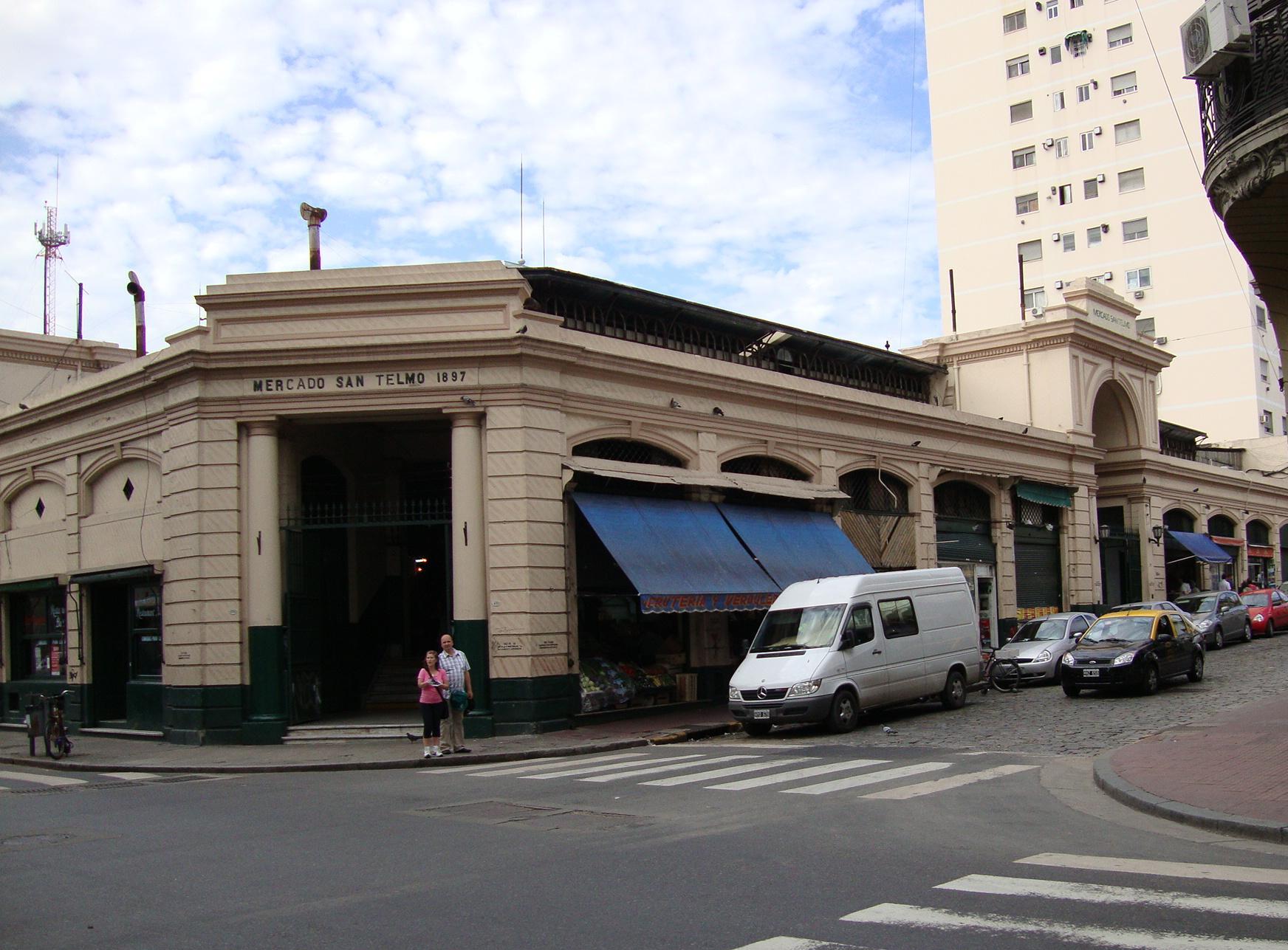
Mercado de San Telmo
970 Bolívar, Comuna 1, Buenos Aires, B1704, Argentina
Mercado de San Telmo is a covered market from 1897 that has evolved from a traditional neighbourhood food market into Buenos Aires' most exciting food destination — a cavernous iron-and-glass structure housing butchers, produce vendors, coffee roasters, wine bars, and the new generation of food stalls that have turned the market into a culinary crossroads where traditional Argentine cooking meets global influences. The market building, with its wrought-iron columns and vaulted glass roof, is a beautiful example of late 19th-century market architecture — the kind of structure that European cities built by the dozen but that few South American cities preserved. Inside, the traditional vendors (butchers selling Argentine beef, pasta shops making fresh noodles, empanada counters) share space with specialty coffee roasters, craft beer bars, and stalls serving Japanese, Peruvian, and Middle Eastern food — a combination that reflects the neighbourhood's transition from working-class to creative-class. The market's transformation accelerated after 2010, and the balance between traditional vendors (who serve the neighbourhood's residents) and new vendors (who serve the tourists and food enthusiasts) is a constant negotiation. The best strategy is to eat traditionally — a plate of choripán (chorizo sandwich) or a dozen empanadas from the old-school vendors — and drink contemporarily — a specialty coffee or a glass of natural Malbec from the new arrivals. The market is open daily and is considerably less crowded on weekdays than during the Sunday market rush.
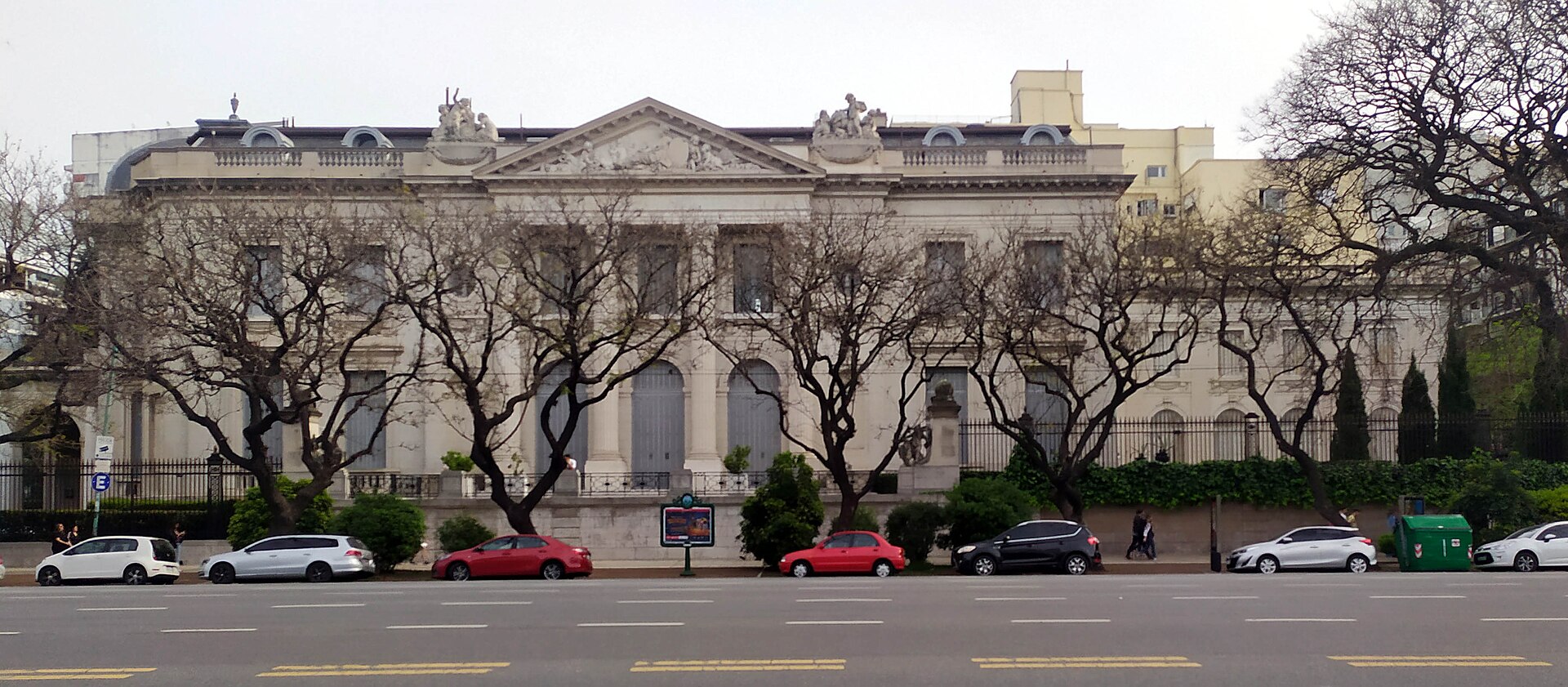
Museo de Arte Decorativo
1902 Avenida Del Libertador, Comuna 14, Buenos Aires, C1425, Argentina
The Museo de Arte Decorativo occupies one of the most beautiful private residences ever built in Buenos Aires — a French Beaux-Arts palace designed by René Sergent in 1917 for the Errázuriz-Alvear family, filled with their collection of European decorative arts, and donated to the Argentine state in 1937. Walking through the museum is like visiting the home of an impossibly wealthy family at the height of Argentina's golden age, when the country's landowners lived like European royalty and furnished their houses accordingly. The rooms are arranged as they were when the family lived here — a ballroom with a ceiling painted by Gaspar Camps, a dining room with Gobelins tapestries, a Louis XV salon with Sèvres porcelain, and bedrooms furnished with pieces that any European museum would covet. The collection includes works by El Greco, Fragonard, Corot, and Rodin, displayed not in gallery conditions but in the domestic settings for which they were originally intended. The effect is more intimate and more revealing than a conventional museum — you see how art functioned as decoration, as status symbol, and as the material fabric of daily life for people with unlimited resources. The museum is on Avenida del Libertador in Recoleta, within walking distance of the cemetery and MALBA, and its relative obscurity (it receives a fraction of the visitors that the Recoleta Cemetery attracts) means you can often explore the rooms alone. The temporary exhibitions in the ground-floor gallery are consistently excellent, and the garden — visible through the ground-floor windows — is a formal French parterre that completes the Parisian fantasy.
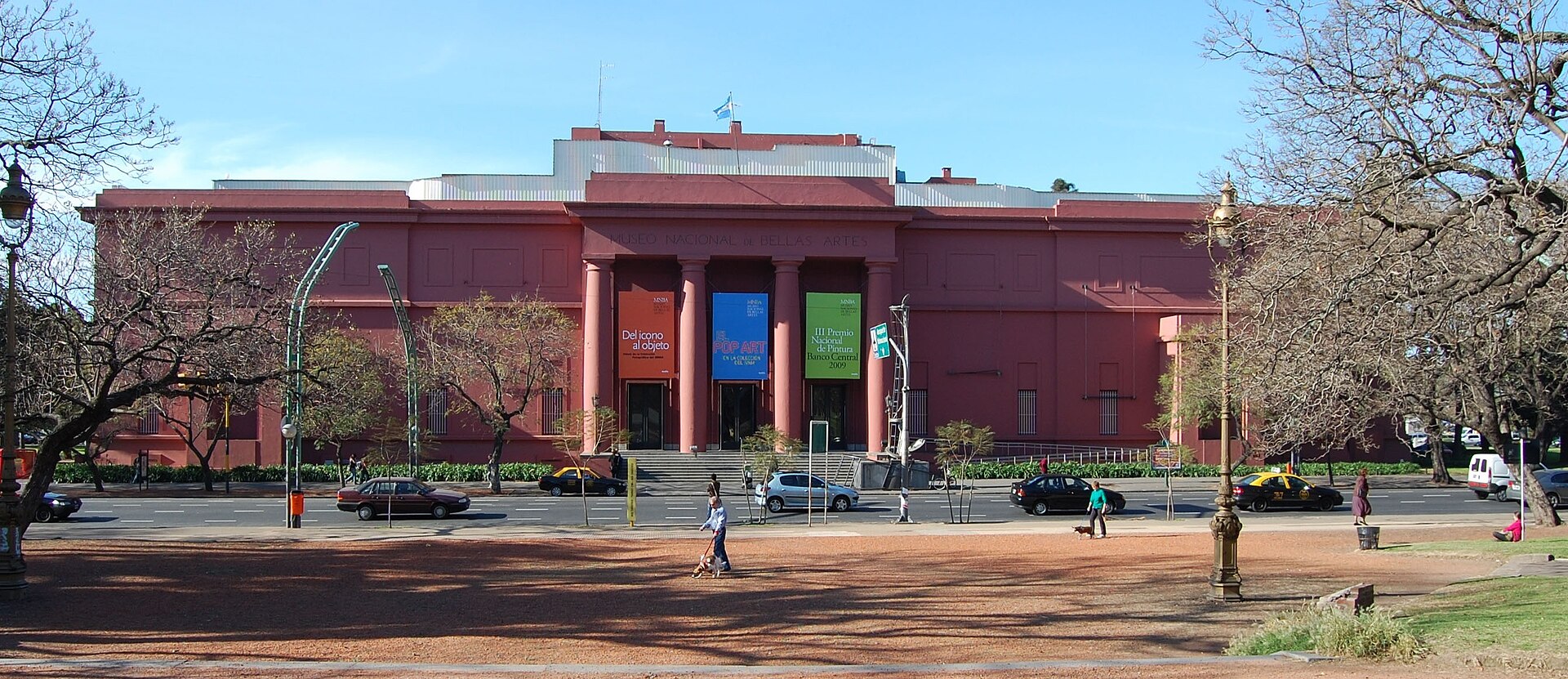
Museo Nacional de Bellas Artes
Av. del Libertador 1473, Recoleta, Buenos Aires
The Museo Nacional de Bellas Artes is Argentina's most important art museum — a neoclassical building in Recoleta housing a collection of over 12,000 works that ranges from medieval European art through Impressionism to contemporary Argentine painting, with a particular strength in 19th-century French and Argentine art that reflects the historical relationship between the two countries. The collection includes works by El Greco, Rembrandt, Goya, Monet, Degas, Renoir, Van Gogh, Rodin, Picasso, and Kandinsky — a roll call of European masters that few South American museums can match. The Argentine galleries are equally strong, with major works by Prilidiano Pueyrredón, Eduardo Sívori, and the 20th-century artists who defined Argentine modernism. The terrace sculpture garden, overlooking the green space of Plaza Francia, provides an outdoor extension that is particularly pleasant in the Buenos Aires spring. Admission is free — one of the few major art museums in the world with free permanent collection access — and the museum is typically less crowded than its European equivalents, which means you can stand in front of a Rodin or a Van Gogh without jostling for position. The museum's location in Recoleta, adjacent to the cemetery and the cultural complex around Plaza Francia, makes it part of a cluster of attractions that could fill an entire day. The weekend artisan fair in Plaza Francia, directly outside the museum, adds outdoor craft shopping to the itinerary.
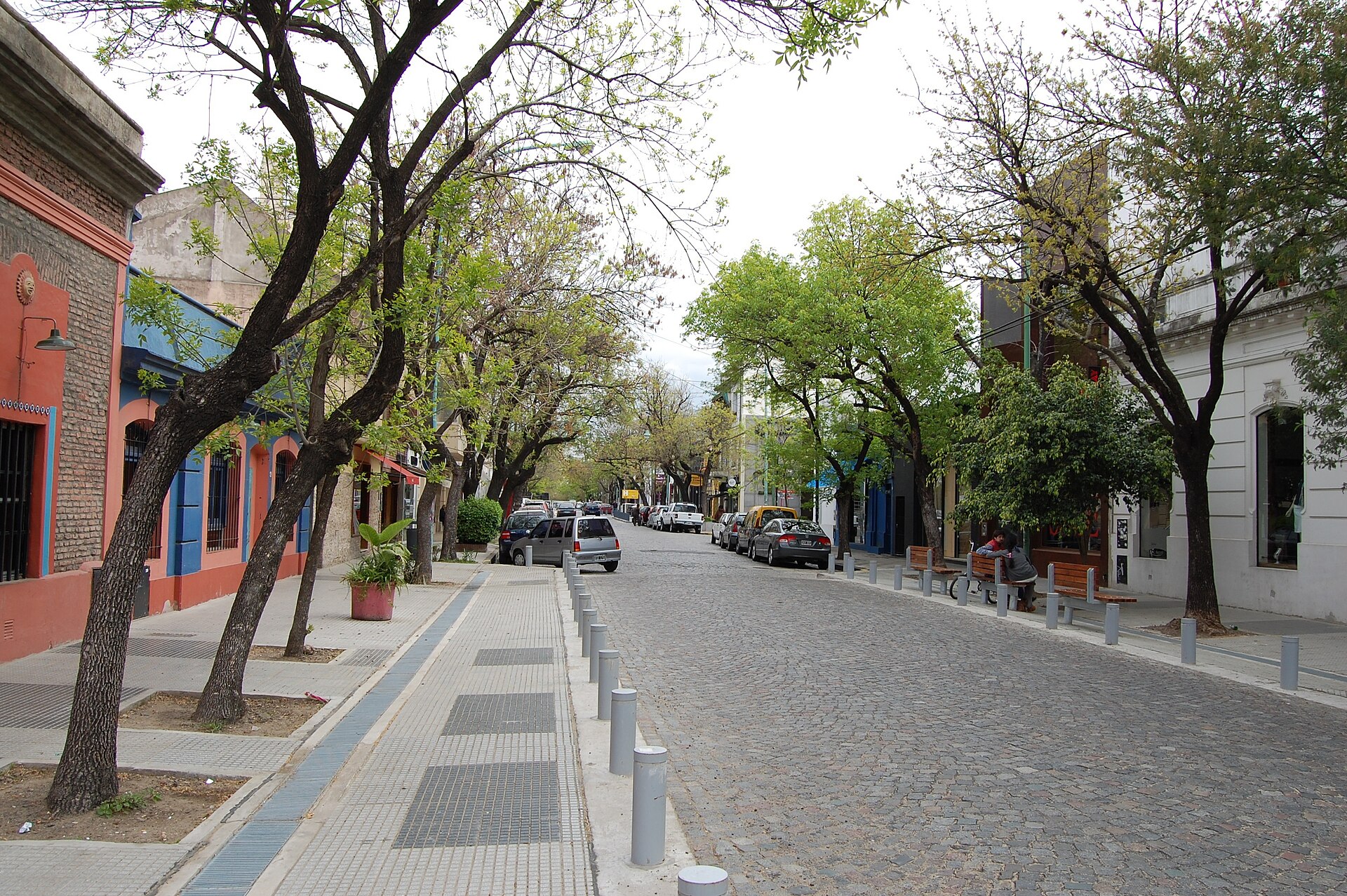
Palermo & Palermo Soho
1595 Serrano, Comuna 14, Buenos Aires, B1609, Argentina
Palermo is Buenos Aires' largest and most diverse neighbourhood — a sprawling barrio that contains the city's biggest park, its best restaurants, its trendiest boutiques, and a nightlife scene that starts after midnight and continues until the sun comes up. Palermo Soho, the grid of streets around Plaza Serrano (officially Plaza Cortázar), is the creative hub — cobblestone streets lined with designer shops, street art, cocktail bars, and the kind of restaurants that put Buenos Aires on the global food map. The restaurant scene in Palermo Soho has made Buenos Aires a culinary destination: Don Julio (consistently ranked among the best steakhouses in the world), Proper (contemporary Argentine tasting menu), and dozens of parrillas, wine bars, and empanada shops that represent the full range of Argentine cooking. The wine bars deserve special mention — Argentina's Malbec revolution happened on these streets, and the bars that pour by the glass from boutique Mendoza producers offer one of the best wine experiences outside the actual wine regions. Palermo Hollywood, a few blocks north, is where the media companies, production studios, and nightclubs cluster, and the area around Godoy Cruz and Honduras streets becomes the city's after-hours district on Thursday, Friday, and Saturday nights. Palermo's parks — the Bosques de Palermo, the Japanese Garden, the Rose Garden — provide the green space, and the entire neighbourhood is connected by the kind of walkable, tree-lined streets that make Buenos Aires feel more like a European capital than a South American metropolis.
Palermo Bosques (Japanese Garden & Rose Garden)
2966 Adolfo Bioy Casares, Comuna 2, Buenos Aires, C1129, Argentina
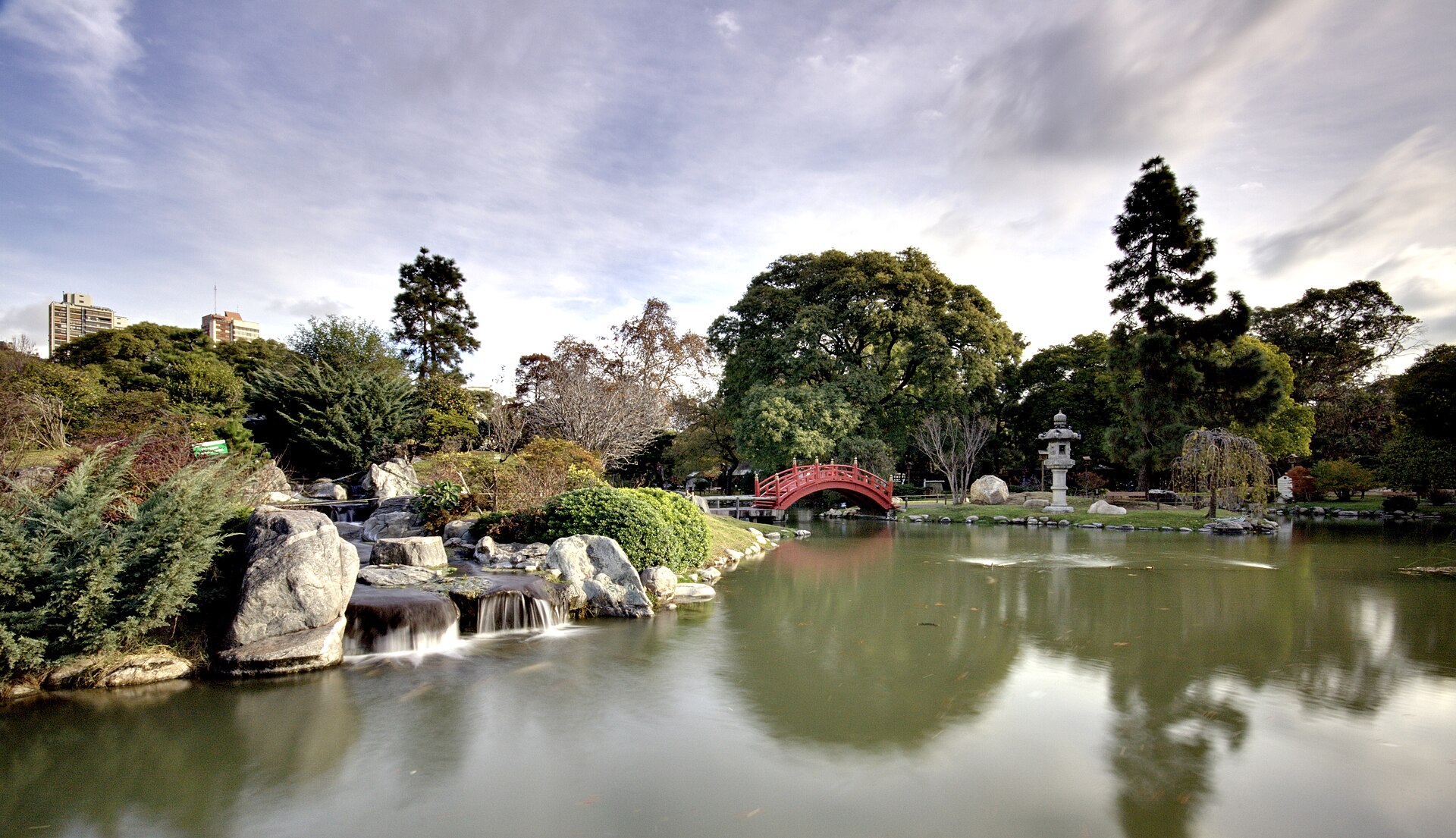
The Japanese Garden (Jardín Japonés) in the Bosques de Palermo is the largest Japanese garden outside Japan — a 2.5-hectare landscape of koi ponds, arched bridges, stone lanterns, and carefully pruned trees donated by Buenos Aires' Japanese-Argentine community in 1967 and maintained with the kind of meticulous attention that makes it feel like a portal to Kyoto in the middle of the pampas. The garden is genuinely beautiful rather than kitsch — the landscape was designed by Japanese architects and is maintained by trained gardeners who follow traditional pruning techniques. The koi ponds contain fish that are regularly restocked from Japanese breeders, the cherry trees bloom in September (Southern Hemisphere spring), and the tea house serves matcha and Japanese pastries in a tatami-floored room overlooking the main pond. The cultural centre hosts exhibitions of Japanese art, calligraphy workshops, and the annual Obon Festival. The garden sits within the larger Bosques de Palermo, adjacent to the Rosedal (Rose Garden) — a formal garden of over 18,000 rose bushes, a Grecian bridge, and pergolas that is the most romantic public space in the city. The combination of Japanese tranquility and rose-garden romanticism in a single afternoon walk is one of Palermo's great pleasures, and the surrounding parkland — with its lakes, paddle boats, and running paths — provides the kind of urban escape that porteños treat as a constitutional right.
Palermo Hollywood
Honduras, Comuna 14, Buenos Aires, B1620, Argentina
Palermo Hollywood is the media and nightlife district within greater Palermo — named for the TV production companies and film studios that moved into the area's converted warehouses in the early 2000s. The neighbourhood, centred on the streets around Honduras, Godoy Cruz, and Fitz Roy, has become Buenos Aires' after-dark headquarters, with bars, clubs, and restaurants that operate on a schedule that makes New York look like it has an early bedtime. The restaurant scene is more casual than Palermo Soho — craft burger joints, ramen shops, Peruvian ceviches, and the cervecerías artesanales (craft breweries) that have transformed Argentina's beer culture from industrial lager to IPA-obsessed. The bars range from speakeasy-style cocktail spots (several hidden behind unmarked doors or inside operating laundromats, which is Buenos Aires' version of the secret bar trend) to rooftop terraces and the traditional corner bars where cheap fernet-and-cola is the default order. Nightlife in Palermo Hollywood starts late — dinner at 10pm, bars at midnight, clubs at 2am — and the street scene on a Thursday, Friday, or Saturday night, with hundreds of people moving between venues on foot, creates the kind of urban energy that is Buenos Aires' most marketable cultural product. The neighbourhood is safe by Buenos Aires standards, walkable, and connected to Palermo Soho by a 15-minute stroll that takes you past some of the best street art in the city.
Plaza de Mayo
Plaza de Mayo, Monserrat, Buenos Aires
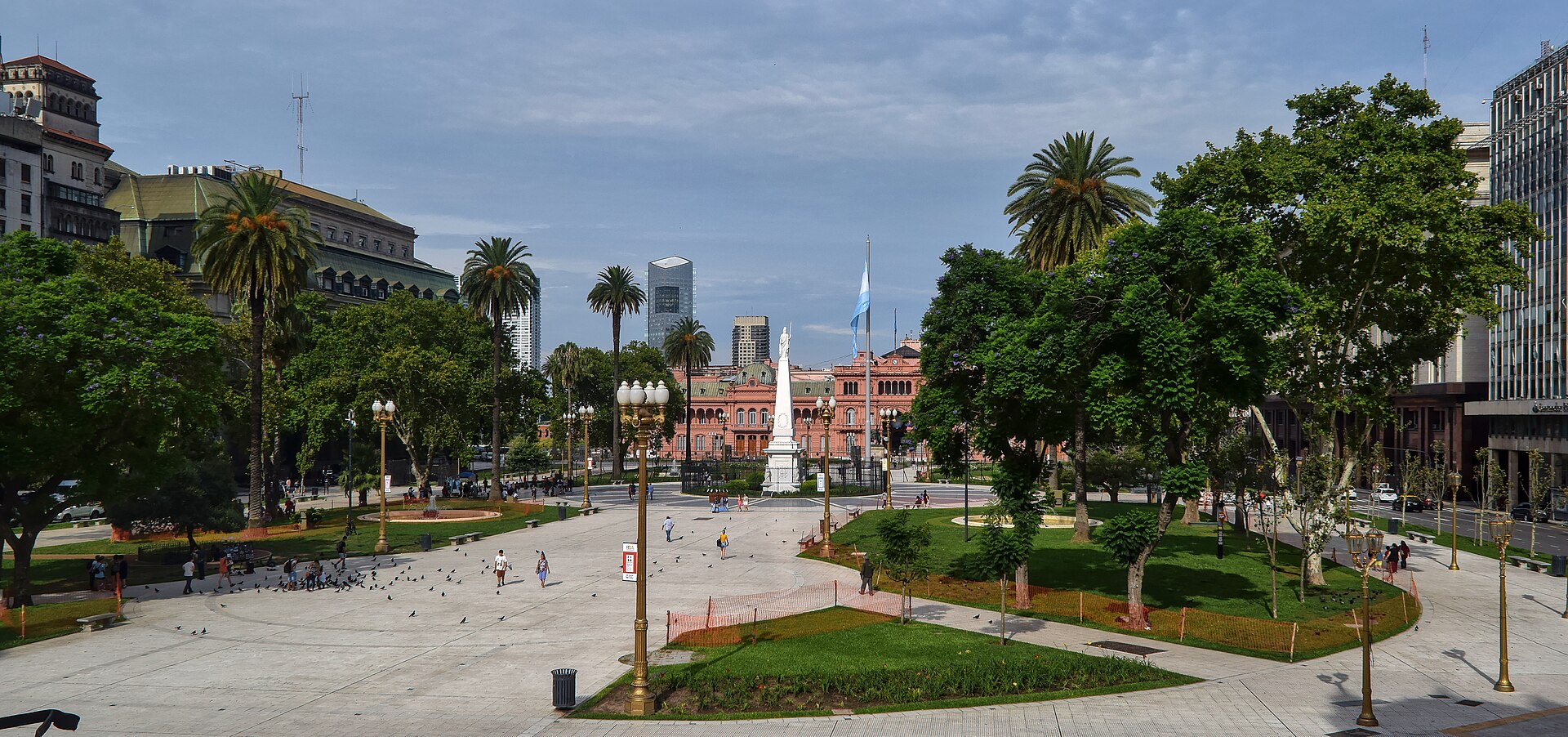
Plaza de Mayo is the political heart of Argentina — the square where every major event in the nation's history has played out, from the May Revolution of 1810 that gave the plaza its name to Eva Perón's balcony speeches to the Mothers of the Plaza de Mayo who marched every Thursday for decades demanding information about their children 'disappeared' by the military dictatorship. The plaza is framed by the institutions that define Argentina: the Casa Rosada (the pink presidential palace, whose balcony is the most famous in South America), the Metropolitan Cathedral (where Pope Francis served as archbishop), the Cabildo (the colonial town hall where independence was debated), and the Banco de la Nación Argentina. The white scarves painted on the pavement — representing the headcoverings worn by the Mothers of the Plaza de Mayo — are a permanent memorial to the estimated 30,000 people who were kidnapped, tortured, and killed during the Dirty War (1976-1983). The Casa Rosada's distinctive pink colour has been attributed to everything from President Sarmiento's attempt to blend the red of the Federalists with the white of the Unitarians, to the practice of mixing ox blood into whitewash (a common colonial technique). Whatever the origin, the pink facade against the Argentine sky has become one of South America's most recognisable political images. Free tours of the Casa Rosada (including the famous balcony) run on weekends and must be booked in advance.
Puente de la Mujer
3 Duque de Abruzzi, Escobar, B1635, Argentina
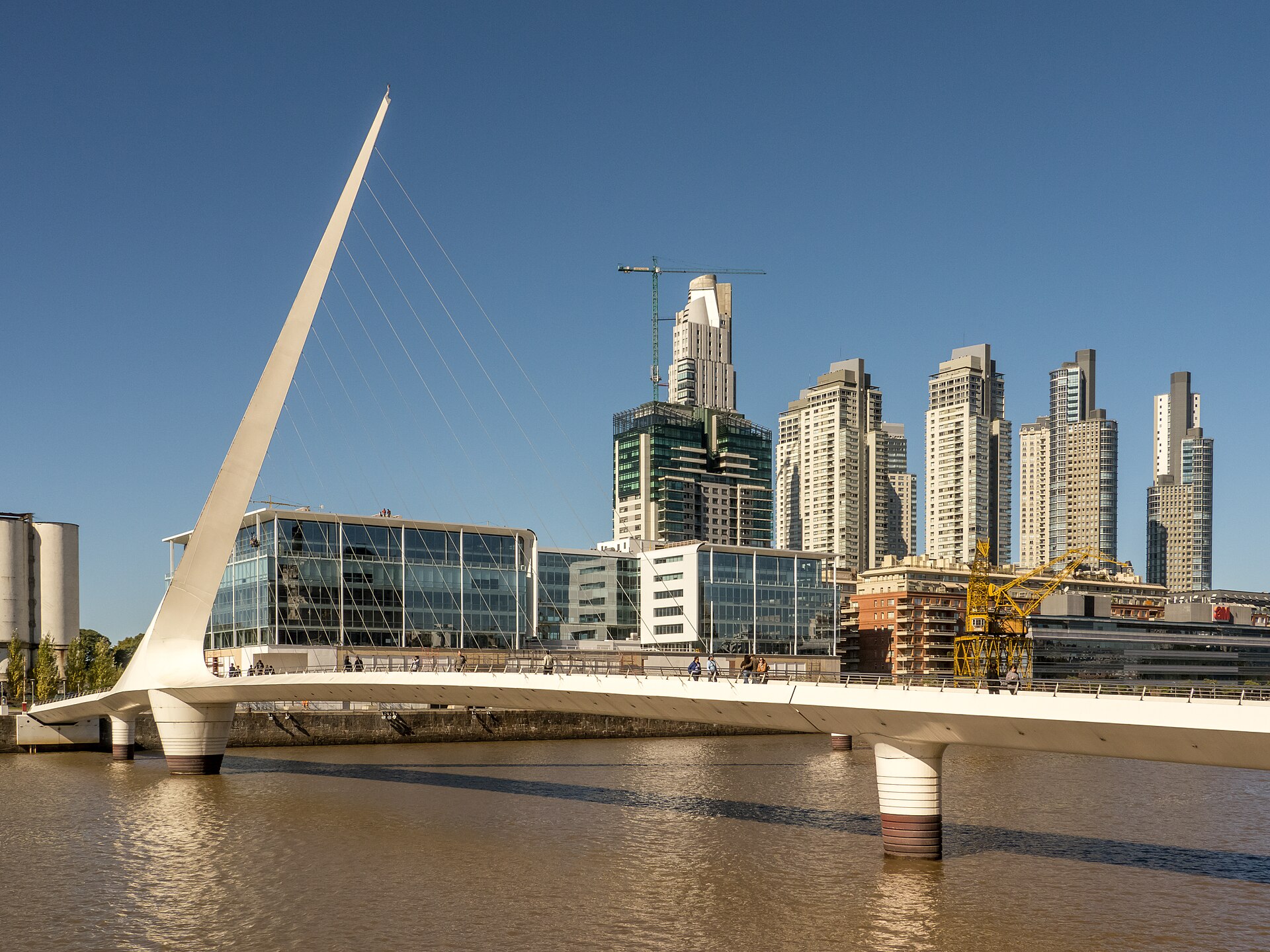
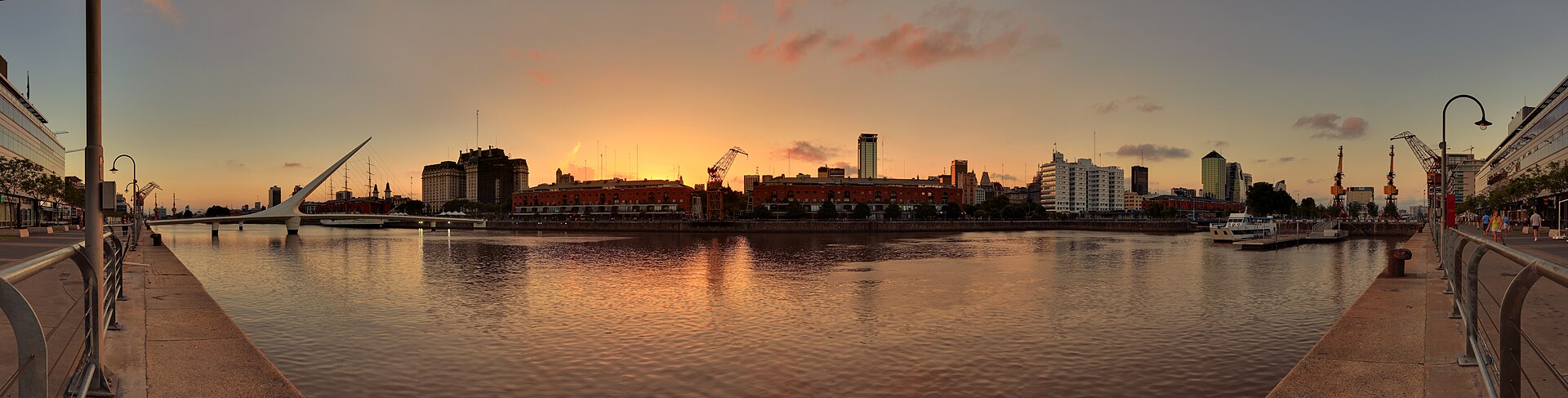
The Puente de la Mujer (Bridge of the Woman) is a rotating pedestrian bridge in Puerto Madero designed by Spanish architect Santiago Calatrava — a 170-metre white steel structure whose asymmetric mast and cable stays are said to represent a couple dancing tango. The bridge rotates 90 degrees on its central pier to allow boat traffic through the dock, and watching the mechanism operate — the entire 800-ton structure swinging silently open — is one of Puerto Madero's unexpected pleasures. Calatrava designed the bridge as a gift to Buenos Aires (the construction was funded by Argentine businessman Alberto González, not public funds), and it was installed in 2001 at a cost of $6 million. The design is characteristically Calatrava — white, skeletal, and so obviously inspired by natural forms that the tango interpretation is only one of several plausible readings. The single pylon, leaning at an angle with cables radiating from its top like tendons, creates a silhouette that has become Puerto Madero's defining image. The bridge connects the two sides of Dique 3 in Puerto Madero and is most photogenic at sunset, when the white steel catches the warm light and the reflections in the dock water double the visual effect. The surrounding waterfront — lined with the converted brick warehouses that anchor Puerto Madero's restaurant scene — provides the context that the bridge's sculptural elegance requires: without the industrial heritage backdrop, it would be beautiful; with it, it becomes a statement about how cities can transform their industrial past into something that feels inevitable rather than imposed.
Puerto Madero
3 Duque de Abruzzi, Escobar, B1635, Argentina
Puerto Madero is Buenos Aires' newest neighbourhood — a former industrial port district east of the Centro that has been transformed since the 1990s into a waterfront promenade of converted red-brick warehouses, glass-tower residences, and the Santiago Calatrava-designed Puente de la Mujer, a rotating pedestrian bridge that has become one of the city's most recognisable modern landmarks. The four docks (diques) of the old port have been lined with restaurants, many occupying the converted brick warehouses that once stored grain and hides for export. The dining is upscale by Buenos Aires standards, and the waterfront setting — particularly at sunset, when the warehouse facades turn golden and the modern towers behind them catch the last light — makes it one of the more attractive dining environments in the city. The Faena Hotel, designed by Philippe Starck in a converted grain silo, anchors the eastern end with the kind of theatrical luxury that only Buenos Aires can produce with a straight face. The Costanera Sur Ecological Reserve, a 350-hectare nature reserve on reclaimed land at Puerto Madero's eastern edge, is one of the city's great surprises — a wetland of lagoons, grasslands, and forests that is home to 300 bird species and feels like an entirely different ecosystem from the concrete city five minutes away. The reserve is free, open daily, and provides one of the only places in Buenos Aires where you can stand on the riverbank, look east across the Río de la Plata, and see nothing but water stretching to the horizon.
Recoleta Cemetery
1760 Junín, San Fernando, B1722, Argentina
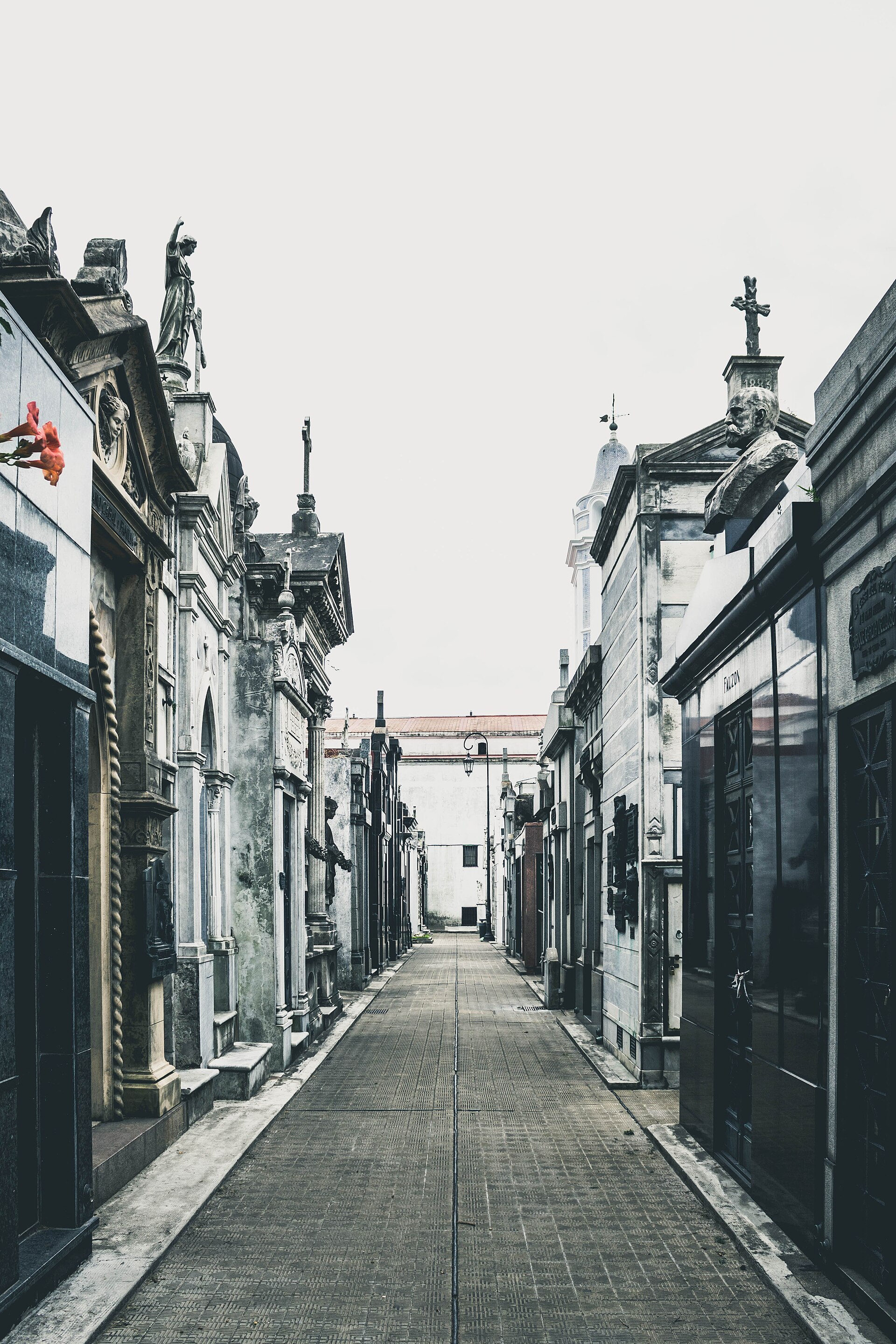
Recoleta Cemetery is the most extraordinary burial ground in the Americas — a miniature city of 4,691 above-ground vaults arranged along tree-lined avenues, housing the remains of Argentina's presidents, generals, Nobel laureates, and oligarchs in marble mausoleums that range from restrained neoclassical to full-blown Art Nouveau fantasy. Walking through Recoleta is like walking through a compressed history of Argentine power and wealth, told in stone. The most visited tomb belongs to Eva Perón — Evita, the former first lady whose life and death at 33 defined Argentine populism and inspired a musical that made her the most famous Argentine outside of Maradona. Her tomb is modest by Recoleta standards (the Duarte family vault is a simple black marble structure), which creates a strange contrast with the extravagant monuments surrounding it. Fresh flowers are placed on the tomb daily, and the queue to photograph it is a permanent feature of the cemetery. The cemetery was established in 1822 and quickly became the exclusive resting place of Buenos Aires' elite — being buried in Recoleta was (and remains) a statement of social status, and the mausoleums were designed by the same architects who built the mansions of the neighbourhood above ground. The styles span two centuries of Argentine taste: Greek temples, Gothic chapels, Egyptian obelisks, Art Deco towers, and a few genuinely bizarre structures that defy categorisation. The cemetery is free to enter, and guided tours (available in English) provide the historical context that turns the experience from architecture tour to social history lesson.
Reserva Ecológica Costanera Sur
Avenida Costanera Doctor Tristán Achával Rodríguez, Comuna 1, Buenos Aires, B1864, Argentina
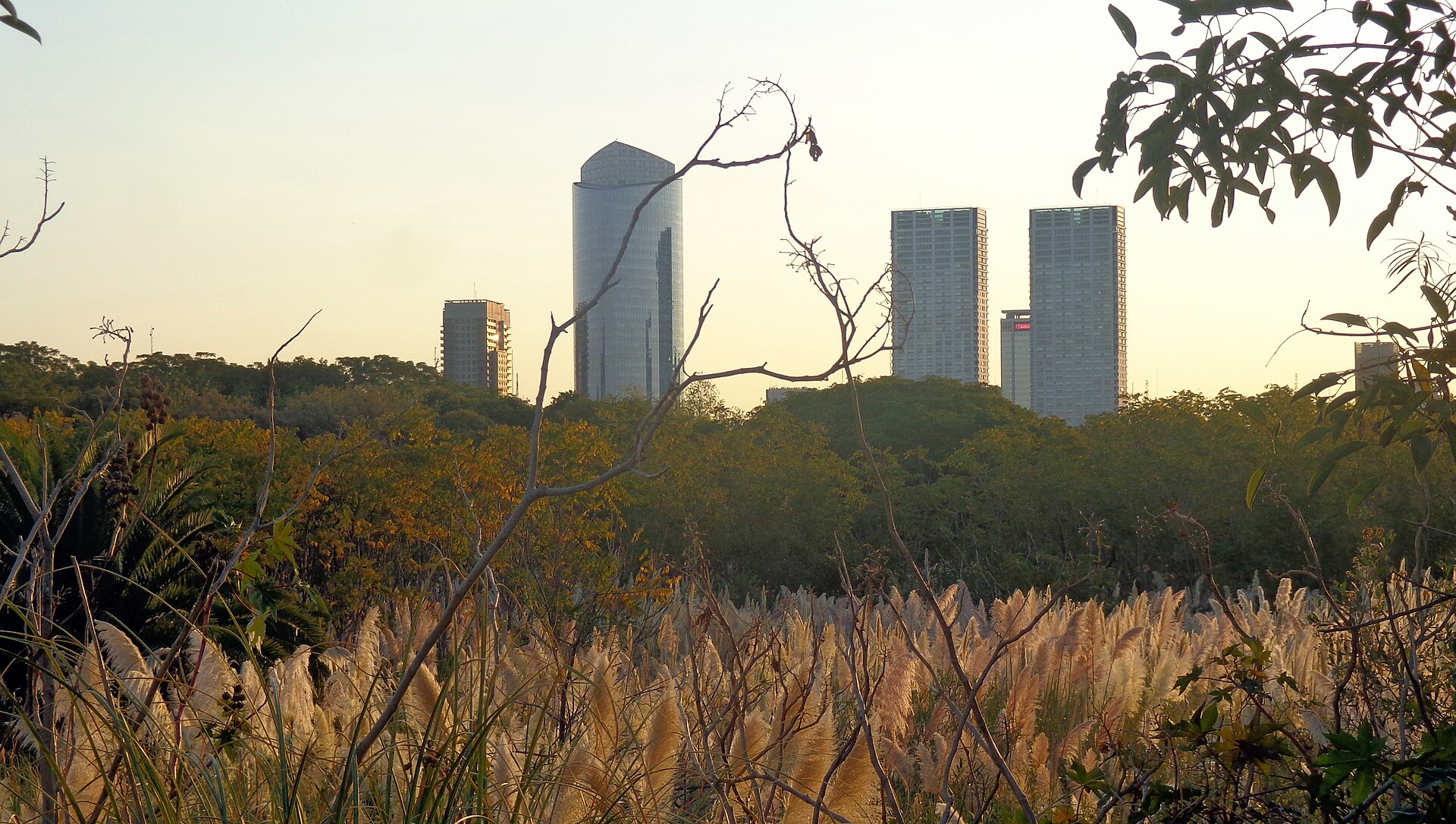
The Costanera Sur Ecological Reserve is Buenos Aires' most improbable green space — 350 hectares of wetland, grassland, and forest on reclaimed land at the edge of Puerto Madero that is home to over 300 bird species and feels like a completely different ecosystem from the concrete city five minutes away. The reserve was created accidentally — land was reclaimed from the Río de la Plata in the 1970s and 80s for development that never happened, and nature took over the vacant lots with such enthusiasm that the city declared it a nature reserve in 1986. The reserve's lagoons, reed beds, and scattered trees attract an extraordinary variety of birdlife — herons, cormorants, kingfishers, and the occasional Neotropical hawk — that makes it one of the best urban birdwatching sites in South America. The walking paths run for several kilometres through the reserve, and the experience of standing on the riverbank at the eastern edge, looking across the widest river in the world (the Río de la Plata is 200 kilometres across at its mouth) with nothing but water to the horizon, is a perspective on Buenos Aires' geography that the city's tree-lined streets never provide. The reserve is free, open daily from sunrise to sunset, and is popular with joggers, cyclists, and the weekend crowds who come to barbecue at the river's edge. The sunsets over the city skyline — visible from the reserve's western paths — are among the best in Buenos Aires. The combination of free admission, genuine wilderness, and the surreal contrast with the skyscrapers of Puerto Madero a few hundred metres away makes this one of the city's most rewarding and undervisited attractions.
San Telmo
1 Defensa, Comuna 1, Buenos Aires, B1718, Argentina
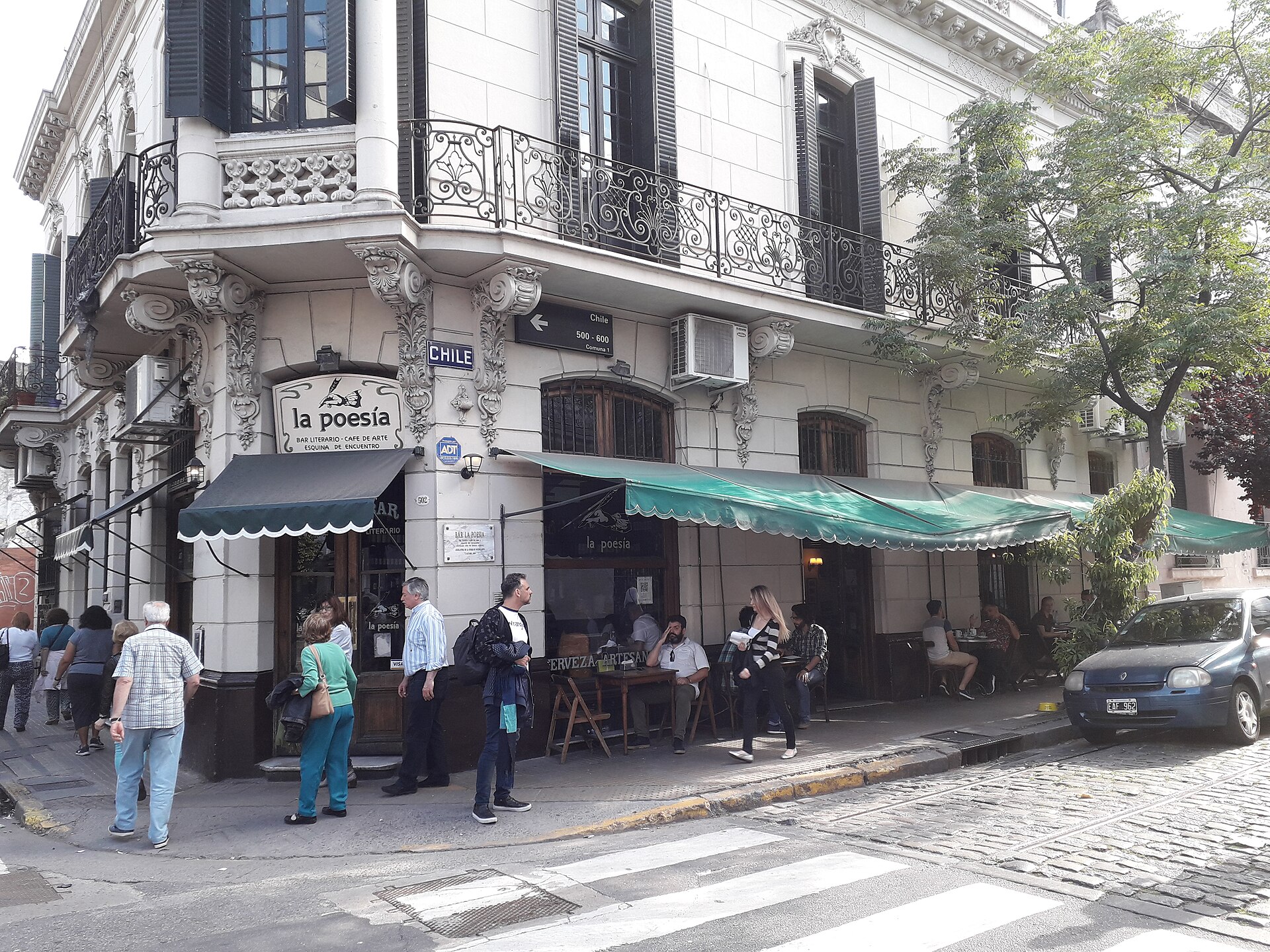
San Telmo is Buenos Aires' oldest residential neighbourhood — a district of colonial-era houses, antique shops, tango bars, and the famous Sunday market that transforms Defensa Street into a 10-block open-air bazaar of antiques, crafts, street food, and tango performances. The neighbourhood was the city's aristocratic quarter until a yellow fever epidemic in 1871 drove the wealthy north to Recoleta, leaving behind grand houses that were subdivided into conventillos (tenements) for the immigrant families who arrived in the following decades. The Sunday Feria de San Telmo is one of the great markets of South America — over 270 stalls line Defensa Street from Plaza de Mayo to Parque Lezama, selling antique silverware, vintage clothing, leather goods, mate gourds, and the accumulated material culture of a city that has been accumulating things since the 18th century. Street performers — tango dancers, living statues, musicians — fill every intersection, and the crowd (a mix of porteños and tourists) creates an atmosphere that is festive without being overwhelming. During the week, San Telmo is quieter and more rewarding. The antique shops along Defensa and the side streets contain genuine treasures — Art Deco furniture, colonial-era religious art, vintage tango records — and the prices are lower without the Sunday premium. The Mercado de San Telmo, a covered market from 1897, houses food vendors, coffee roasters, and the increasingly trendy restaurants that are turning the market into a food destination. The tango bars on the surrounding streets — particularly the milongas (tango dance halls) where locals dance — are the real thing, not tourist shows.
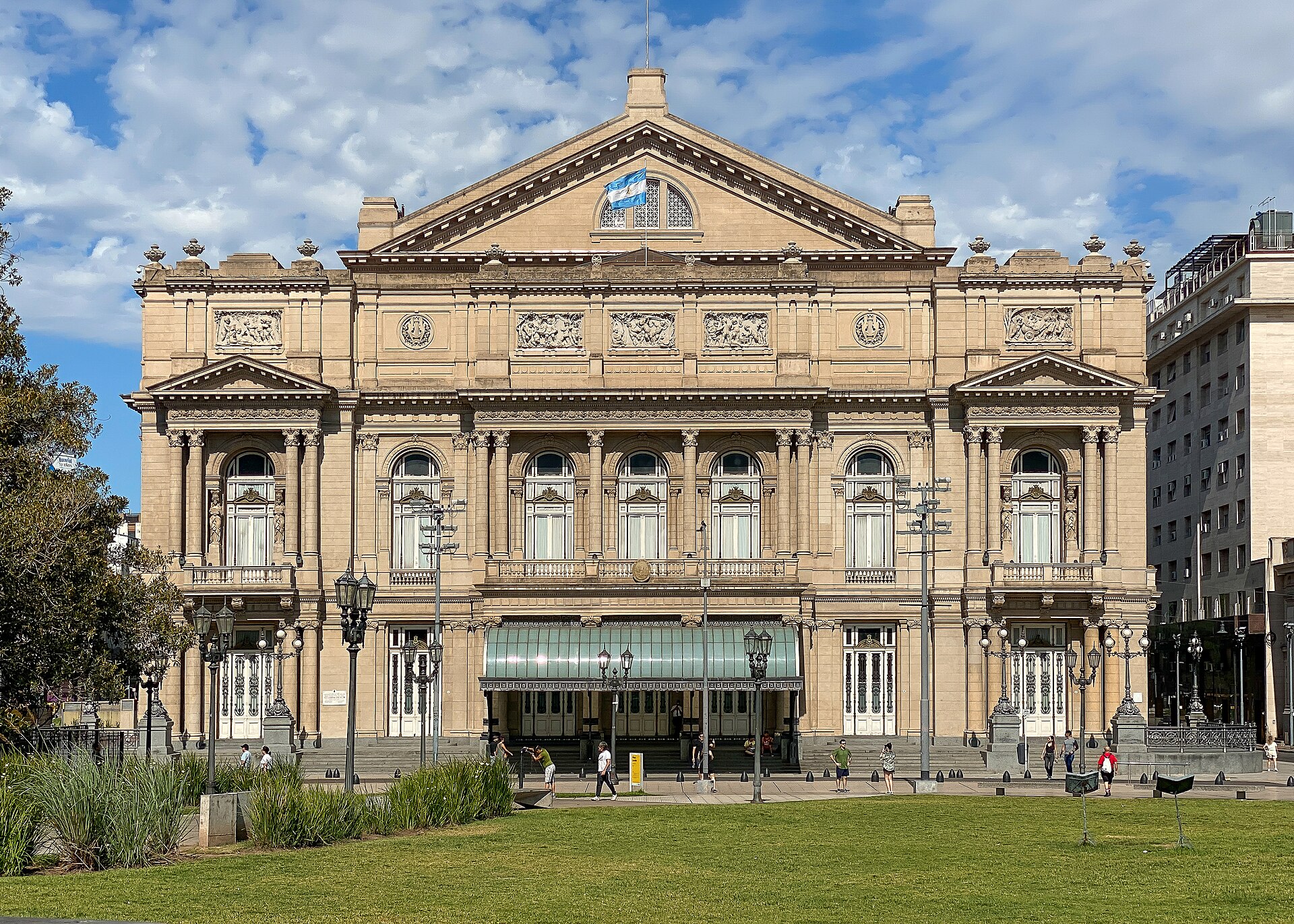
Teatro Colón
Cerrito 628, Buenos Aires
Teatro Colón is one of the greatest opera houses in the world — a 2,487-seat horseshoe auditorium completed in 1908 that is consistently ranked alongside La Scala, the Vienna Staatsoper, and the Paris Opéra for the quality of its acoustics and the splendour of its interior. Pavarotti called it the best acoustics he had ever experienced. Stravinsky conducted here. Callas sang here. The building is Buenos Aires' single most impressive cultural monument. The interior is an exercise in European extravagance executed at South American scale — Italian marble, French stained glass, Venetian mosaics, a 7-ton crystal chandelier, and a ceiling fresco by Raúl Soldi that was added during a 1966 renovation. The auditorium's horseshoe shape, with six levels of balconies rising to the painted dome, creates both extraordinary acoustics (the reverberation time is precisely calibrated for opera) and a sense of theatrical intimacy that bigger modern halls can't match. Every seat in the house has a sightline to the stage. Guided tours run throughout the day and provide access to the auditorium, the rehearsal rooms, the costume workshops (which produce everything in-house), and the backstage areas that reveal the engineering behind the spectacle. The building occupies an entire city block between Cerrito, Libertad, Tucumán, and Viamonte, and its Beaux-Arts exterior — designed by a succession of architects over 20 years — anchors the cultural district around Avenida 9 de Julio. Attending a performance here (opera, ballet, or orchestral) is one of the essential Buenos Aires experiences, and the top-gallery seats are surprisingly affordable.
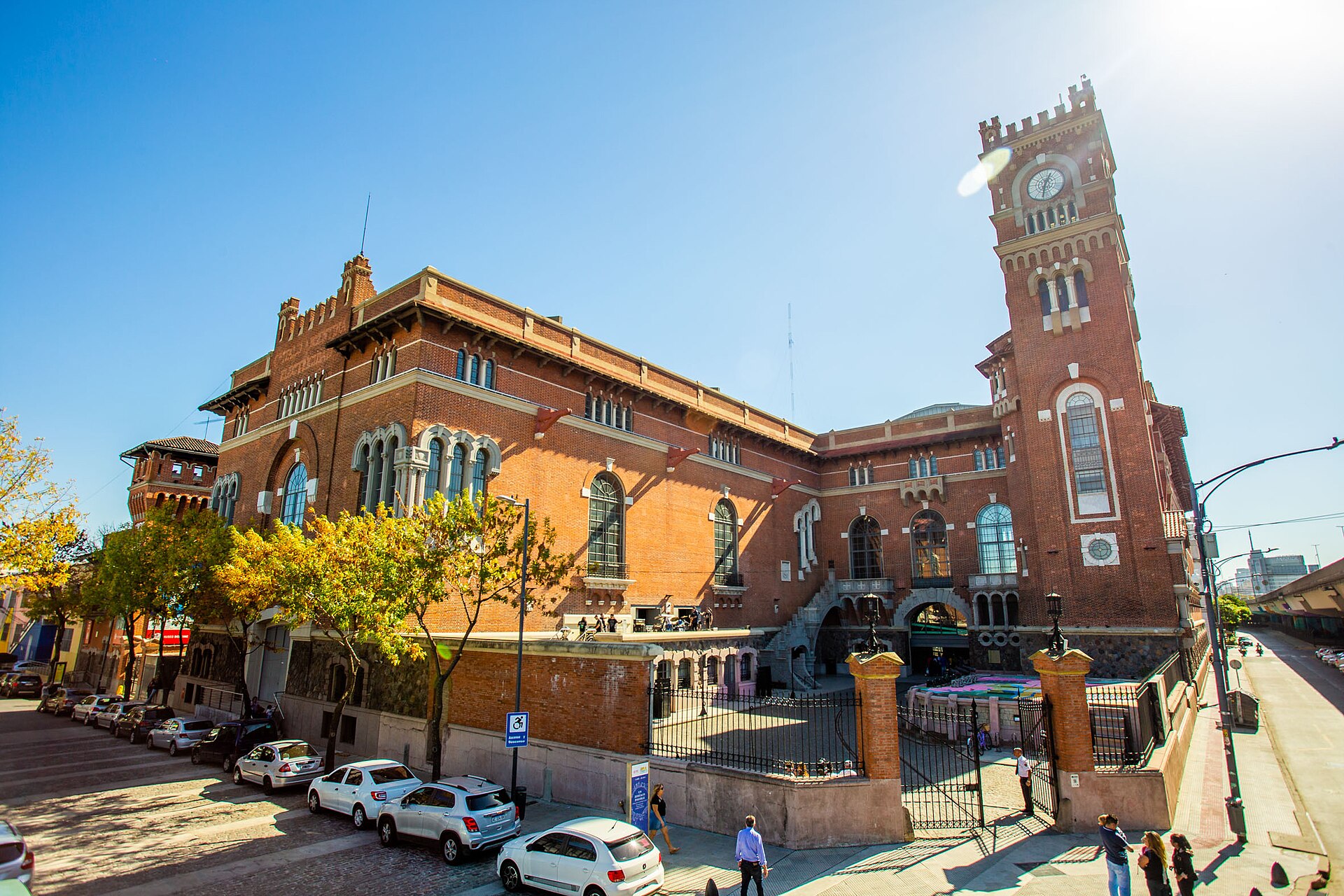
Usina del Arte
1 Agustín R. Caffarena, Comuna 4, Buenos Aires, B1845, Argentina
Usina del Arte is a converted power station in La Boca that has become one of Buenos Aires' most impressive cultural venues — a 1916 industrial building of red brick and exposed steel that was abandoned for decades before being restored as a concert hall, art gallery, and event space in 2012. The main hall, with its towering industrial ceiling and the original power-generation equipment preserved as sculptural elements, seats 1,200 for concerts and has acoustics that rival the Teatro Colón. The building was originally the Italo-Argentine Electricity Company's power plant, designed by Italian architect Giovanni Chiogna in a style that combines Florentine Renaissance detailing with industrial functionalism — ornate brick facades housing massive turbine halls. The restoration preserved this character while adding contemporary lighting, sound systems, and the infrastructure required for a world-class performance space. The result is a venue where the industrial heritage amplifies rather than competes with the programming. Usina del Arte hosts free concerts, art exhibitions, and cultural events that bring people into La Boca's interior — beyond the tourist strip of Caminito, into the working-class neighbourhood that most visitors never see. The building's location, a 15-minute walk south of Caminito, requires deliberate effort to reach, but the combination of industrial architecture, cultural programming, and the neighbourhood context makes it one of the most interesting cultural spaces in Buenos Aires. Weekend cultural events often include food stalls, live tango, and community activities in the surrounding streets.