Garfield Park Conservatory
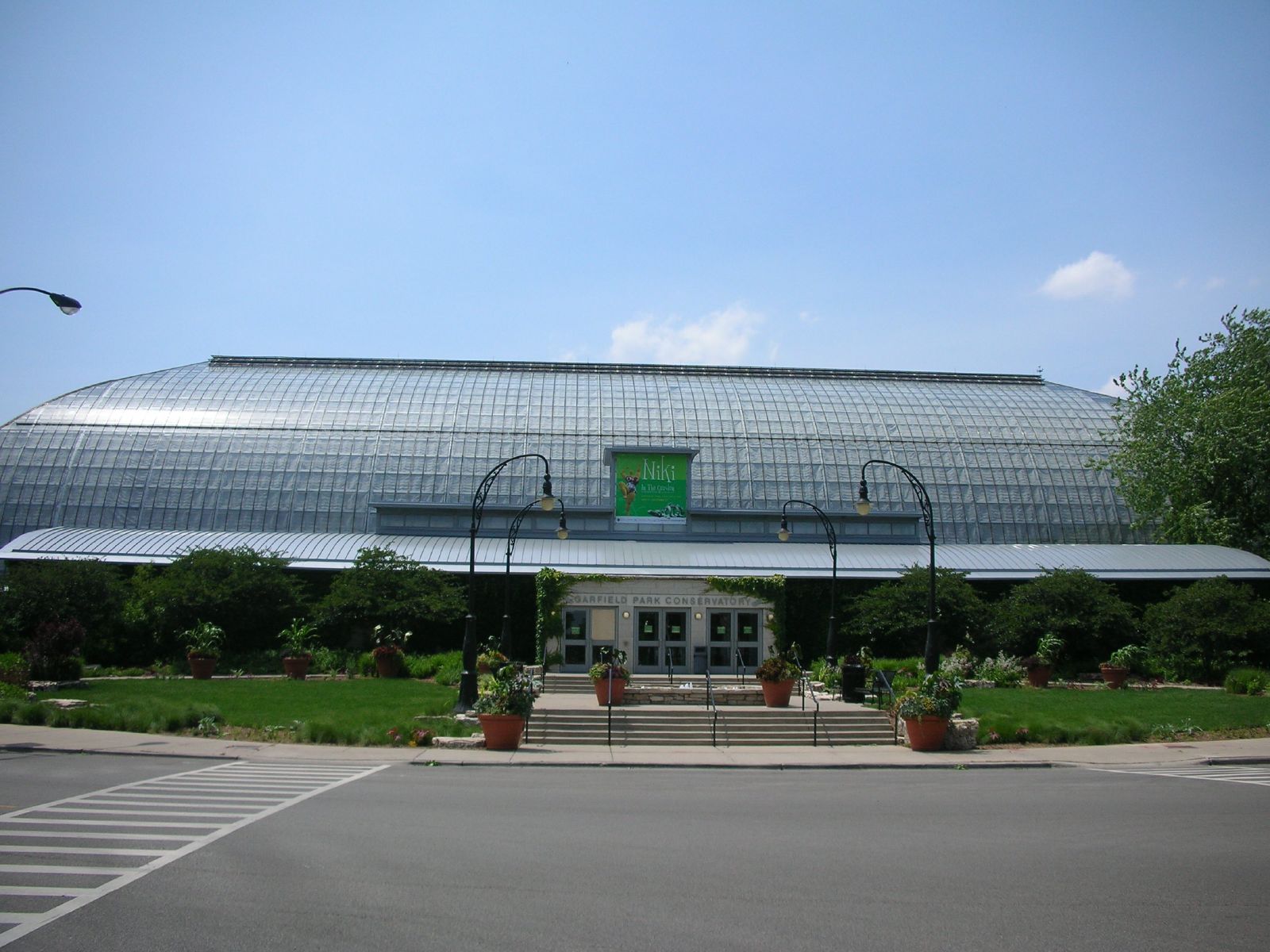
Garfield Park Conservatory is one of the world's largest conservatories — two acres of tropical plants under glass in Chicago's West Side, free to enter, and visited by a fraction of the tourists who crowd into the Loop attractions a few miles east. The designer, Jens Jensen, called it 'landscape art under glass' and modelled the interior on the rolling prairies of Illinois, using raised planting beds instead of formal greenhouse rows to create a landscape you walk through rather than past.
The conservatory was built in 1907 and expanded over the following decades into a complex of eight indoor gardens and outdoor spaces that feel entirely separate from the urban neighbourhood surrounding them. The Palm House — a soaring glass room filled with 70-foot palm trees — is the centrepiece, and stepping into it on a February day when the temperature outside is below zero is one of the most disorienting and delightful sensory experiences in Chicago. The Fern Room, built to resemble a prehistoric landscape, has stone-lined pools and cascading water under a canopy of tree ferns.
The conservatory's West Side location, far from the tourist infrastructure of the Loop and Museum Campus, means it's never crowded. Come on a weekday morning and you'll share the Palm House with a few students sketching plants and maintenance staff tending the collection. The surrounding Garfield Park, designed by William Le Baron Jenney (who also designed the world's first skyscraper), has a lagoon, fieldhouse, and mature trees that make it one of the city's most underrated green spaces.
Verified Facts
The conservatory was built in 1907 and designed by Jens Jensen
It covers approximately 2 acres under glass
Admission is free
Garfield Park was designed by William Le Baron Jenney
Get walking directions
300 N Central Park Ave, East Garfield Park, Chicago, 60624, United States