Walking Tours in Chicago
Chicago: Architecture, Blues & the Loop
Stand beneath the Bean as the skyline reflects in your face, walk the Chicago Riverwalk under towers that invented the skyscraper, cross the Michigan Avenue bridge where the city burned and rebuilt itself taller, explore the Art Institute's lions, and understand why every architect in the world comes to school here.
Chicago: The Riverwalk & Loop Treasures
Walk Chicago's most beautiful mile — along the Chicago River between the canyon walls of the Loop's most celebrated skyscrapers, from the Art Deco Tribune Tower and Marina City's corncobs to Millennium Park's Bean and Grant Park's lakefront.
30 Landmarks in Chicago
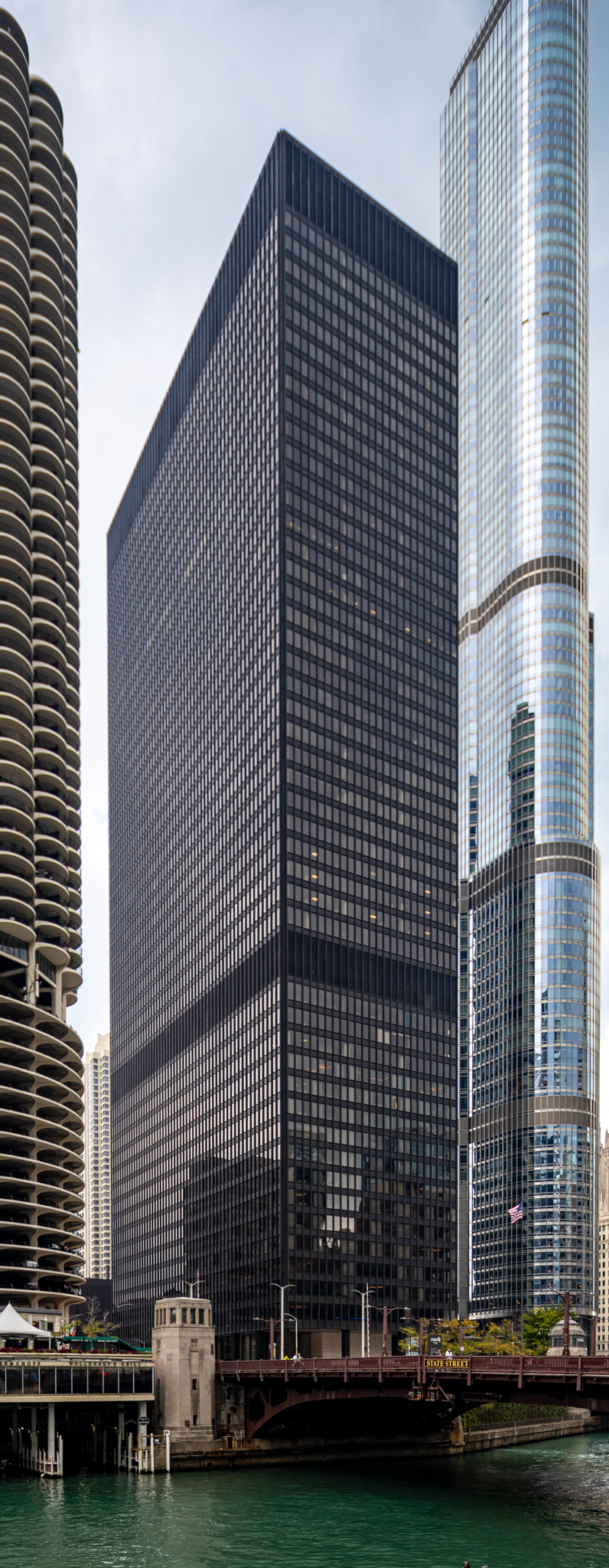
330 N Wabash (Mies van der Rohe)
330 N Wabash Ave, River North, Chicago, 60611, United States
330 North Wabash — originally the IBM Building — was the last American office building designed by Ludwig Mies van der Rohe, and it's the purest expression of his 'less is more' philosophy in Chicago's skyline. Completed in 1973 (the same year as Willis Tower, which embodies a completely different approach to tall buildings), the dark aluminium and bronze-tinted glass tower stands on the north bank of the Chicago River like a Mondrian painting rendered in three dimensions. Mies, who spent the last three decades of his career in Chicago after fleeing Nazi Germany, designed the building as a 52-story box with no ornament, no setbacks, and no concessions to the idea that a building should be anything other than perfectly proportioned structure. The ground floor is a glass-enclosed lobby that appears to float — the columns that support the tower are set back from the glass, creating the illusion that the 52-story mass above is weightless. The plaza, with its steps descending to the river, frames views of the Wrigley Building across the water. The building is Mies's farewell to the city that adopted him, and understanding it requires understanding what he rejected: the decorative, the expressive, the individual. Every element serves a structural purpose. The window bays are identical. The proportions are mathematical. For Mies, perfection meant eliminating everything unnecessary, and this building — stark, precise, and unbothered by the Gothic, Art Deco, and Postmodern neighbours competing for attention around it — makes that argument with more authority than any lecture.
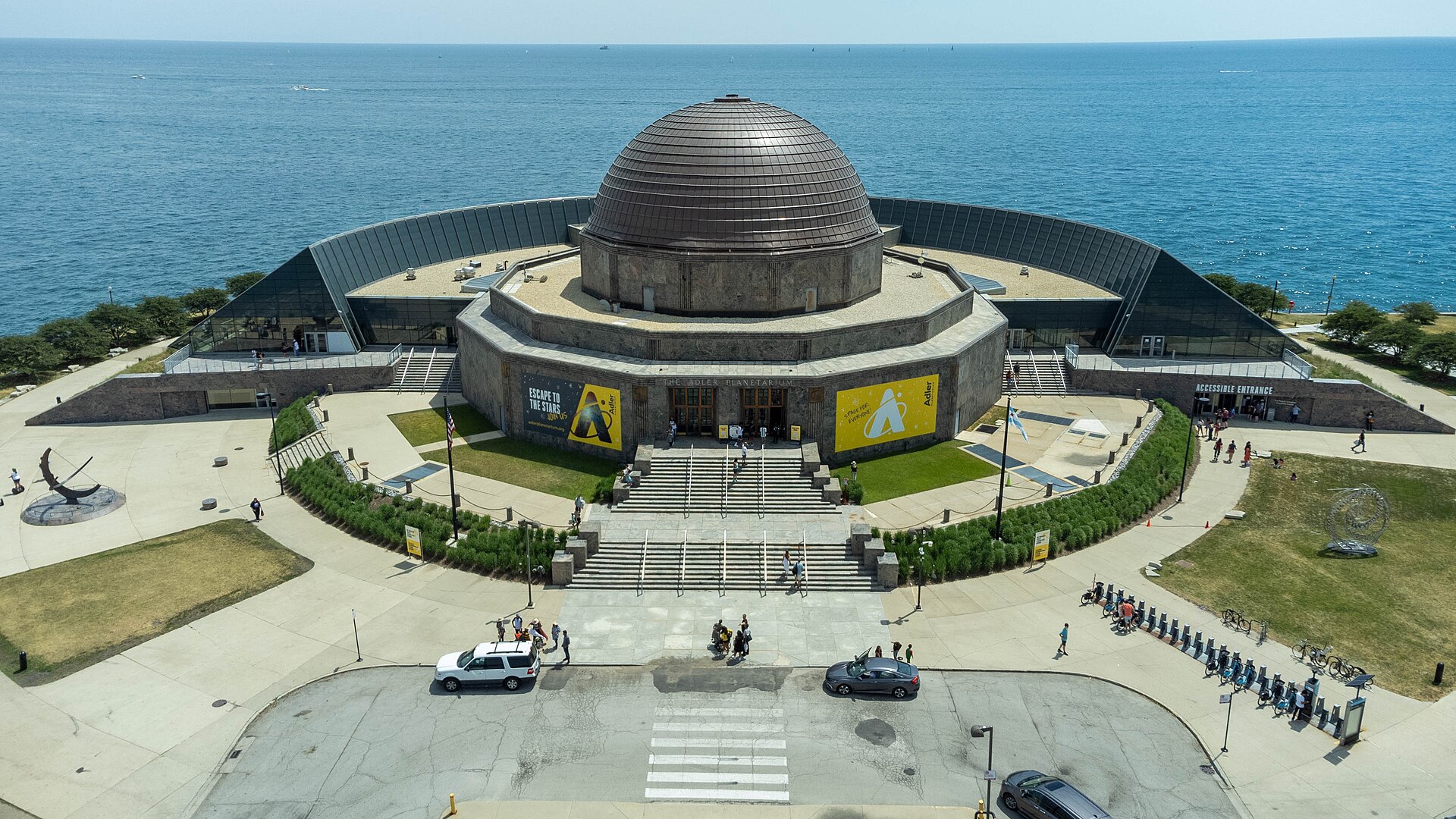
Adler Planetarium
1300 S DuSable Lake Shore Dr, Chicago, IL 60605
The Adler Planetarium was the first planetarium in the Western Hemisphere when it opened in 1930, and its location on the tip of a peninsula jutting into Lake Michigan gives it the best skyline view in Chicago — a fact that the architects clearly knew, because the building is positioned so that the city rises directly behind you as you enter. The view from Adler's terrace at sunset, with the skyline backlit and the lake stretching east to the horizon, is one of those Chicago moments that justifies a detour. The planetarium itself has two immersive theater experiences — the Grainger Sky Theater and the Definiti Theater — projecting shows about the universe onto domed ceilings with resolution that makes you genuinely feel like you're drifting through space. The historical instrument collection, often overlooked by visitors heading straight to the shows, contains astrolabes, sundials, and celestial globes dating back centuries, including instruments that navigators actually used to cross oceans. Max Adler, a Sears Roebuck executive, founded the planetarium after a visit to the Deutsches Museum in Munich, where he saw a Zeiss projector and decided Chicago needed one. The original Zeiss instrument — retired but preserved — sits in the building as a reminder that this institution exists because a businessman saw something amazing in Germany and thought, 'Chicago should have that.' It's a very Chicago origin story.
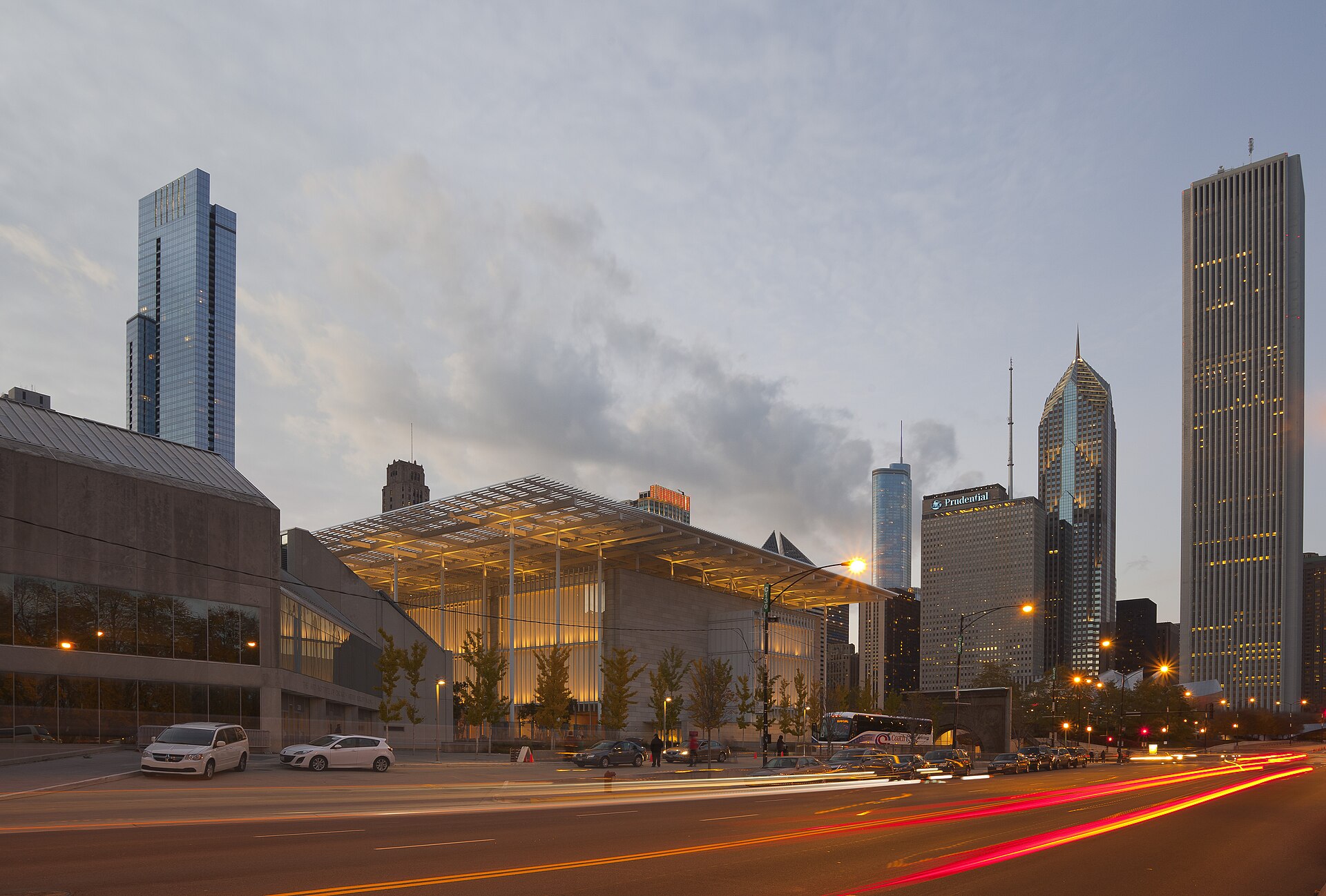
Art Institute of Chicago
111 S Michigan Ave, Chicago, IL 60603
The Art Institute of Chicago has been rated the best museum in the world by TripAdvisor multiple years running, and that ranking is not hyperbole — this is a collection that holds Seurat's 'A Sunday on La Grande Jatte,' Hopper's 'Nighthawks,' Wood's 'American Gothic,' and the finest Impressionist collection outside Paris, all under one roof with free admission on certain days. The museum sprawls across both sides of the railroad tracks behind Millennium Park, connected by the Modern Wing — Renzo Piano's 2009 addition that doubled the gallery space and gave the museum one of the most beautiful contemporary art halls in America. The original Beaux-Arts building, guarded by the famous bronze lions, houses the European paintings and the extraordinary collection of medieval armour. Cross the bridge to the Modern Wing and you're in a completely different aesthetic universe of natural light and open space. What makes the Art Institute exceptional isn't just the collection — it's the depth. The Japanese print collection is one of the finest outside Japan. The Thorne Miniature Rooms — 68 tiny furnished rooms recreating historical interiors at 1:12 scale — are unlike anything in any other museum. The paperweight collection, the textile collection, the architectural fragments salvaged from demolished Chicago buildings — every corner has something that could justify a museum of its own. Plan three hours minimum, but you could spend three days and not see everything.
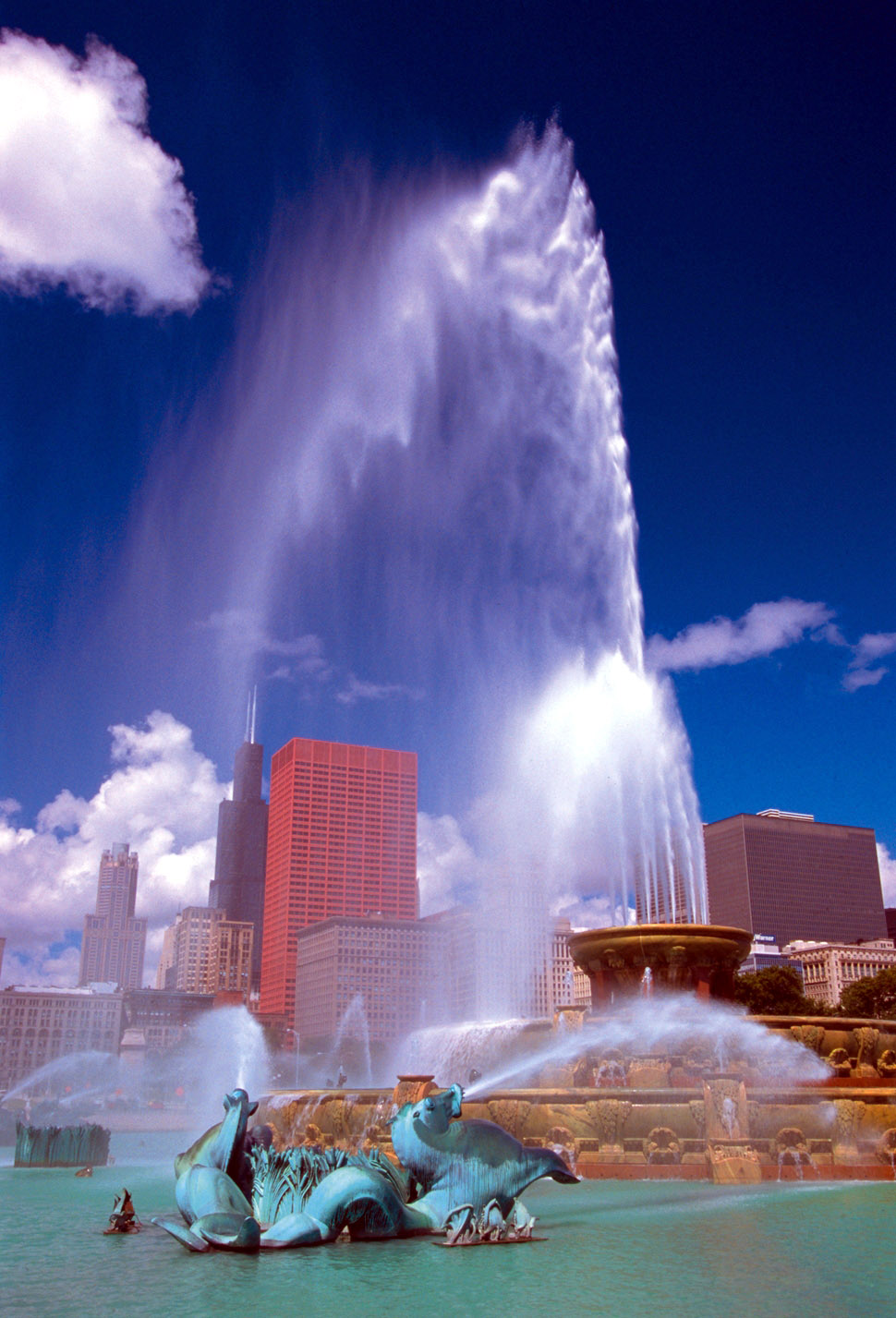
Buckingham Fountain
301 S Columbus Dr, Chicago, IL 60605
Buckingham Fountain is one of the largest fountains in the world — 280 feet across, holding 1.5 million gallons of water, capable of shooting its central jet 150 feet into the air — and it sits in the middle of Grant Park like a Baroque fantasy transported to the shores of Lake Michigan. Donated to the city in 1927 by Kate Buckingham in memory of her brother, it was inspired by the Latona Fountain at Versailles but built at twice the scale, because Chicago has never done anything at the same scale as anyone else if a bigger version was an option. The fountain's evening light show, running from May to October, is a 20-minute choreography of coloured lights and water jets that draws crowds to Grant Park every summer night. The four pairs of bronze sea horses at the fountain's corners represent the four states bordering Lake Michigan — Illinois, Indiana, Wisconsin, and Michigan — and were sculpted by Marcel Loyau, who also worked on the actual fountains at Versailles. The fountain's location is perfect — directly on axis with Congress Parkway, looking east toward the lake and west toward the Loop skyline, with the Museum Campus to the south and Millennium Park to the north. It appears in the opening credits of 'Married... with Children,' which is the second most culturally significant thing it's done after simply being a magnificent piece of public infrastructure that has survived nearly a century of Chicago winters.
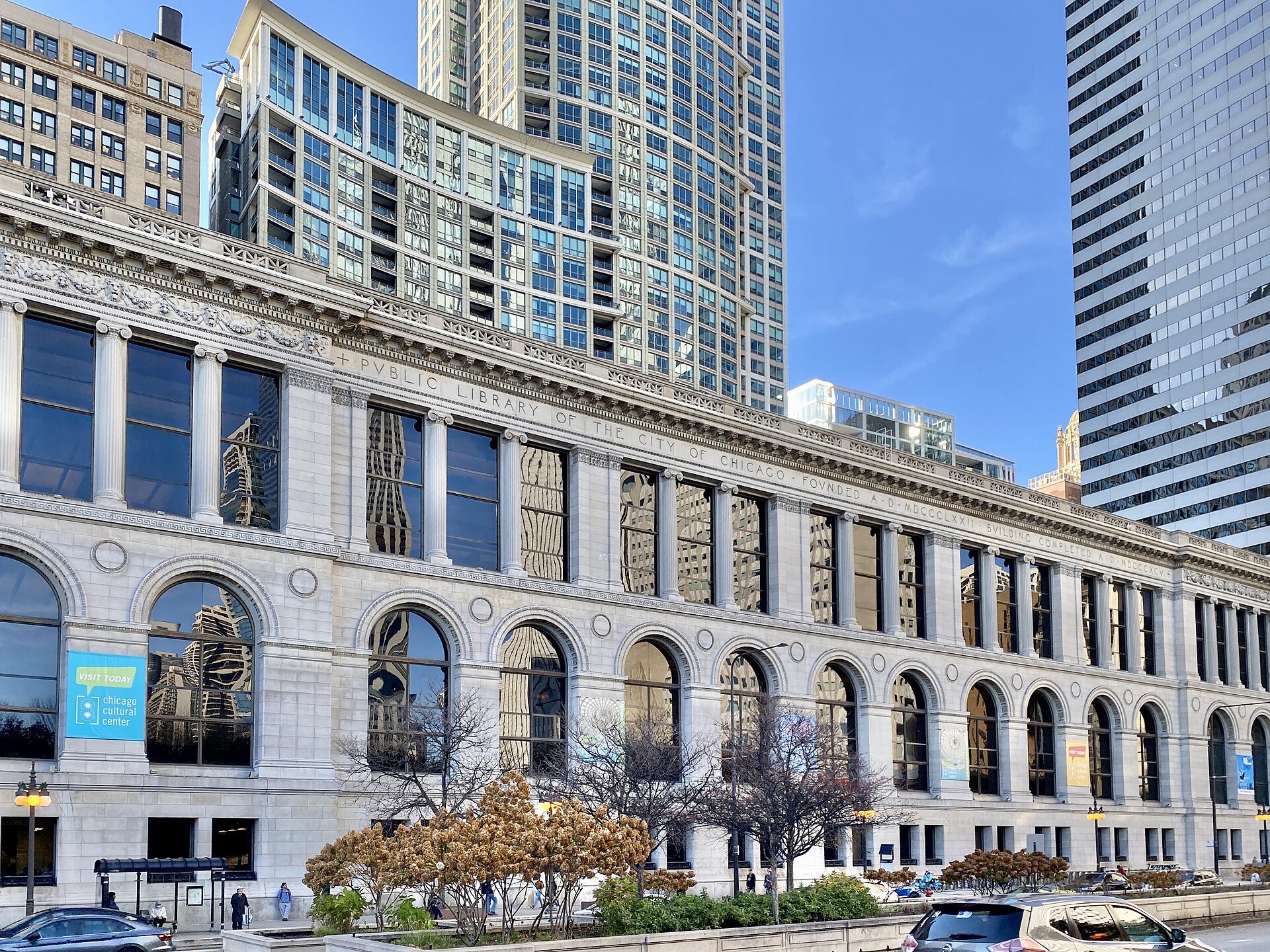
Chicago Cultural Center
78 E Washington St, Chicago, IL 60602
The Chicago Cultural Center is a building that would be a museum in any other city but in Chicago is just... a free public building that happens to contain the world's largest Tiffany stained-glass dome. The Preston Bradley Hall dome, 38 feet in diameter and made of approximately 30,000 pieces of Tiffany glass, sits above a room that hosts free concerts, lectures, and exhibitions and is open to anyone who walks in off the street. The building was originally the Chicago Public Library, opened in 1897 in a Beaux-Arts design by Shepley, Rutan and Coolidge that was intended to rival any cultural institution in Europe. The exterior is white marble and limestone. The interior is Carrara marble, polished brass, mosaics, and mother-of-pearl inlay — the kind of extravagance that only makes sense when you remember that 1890s Chicago was trying to prove it wasn't just a meatpacking town. There's a second Tiffany dome in the GAR Hall on the south side of the building — smaller but equally beautiful — and the building hosts over 1,000 free public programs a year, from jazz concerts to art exhibitions to film screenings. The visitor information center on the ground floor is staffed by people who know the city intimately and is the best first stop in Chicago for anyone who doesn't want to rely on a guidebook. Free, beautiful, and useful — the Cultural Center is Chicago's quiet overachiever.
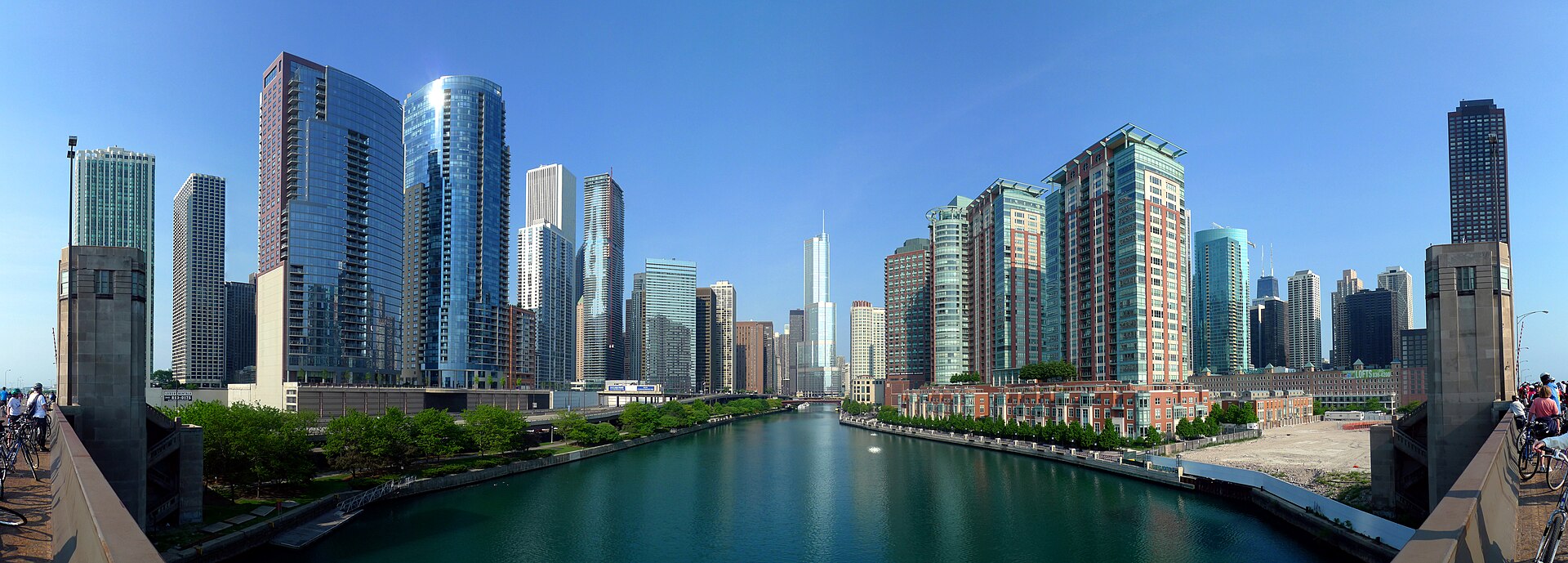
Chicago Riverwalk
Chicago, United States
The Chicago Riverwalk is a mile-long promenade along the south bank of the Chicago River that transformed what was essentially a service road for delivery trucks into one of the best urban waterfronts in America. Completed in stages between 2001 and 2016, the walkway runs from Lake Shore Drive to Lake Street, dropping below street level to put you at water height with the river, the bridges, and the architecture rising above. The walkway is divided into six 'rooms' — named The Marina, The Cove, The River Theater, The Swimming Hole, The Jetty, and The Boardwalk — each designed with a different relationship to the water. Some have steps leading down to the river surface. Others have floating gardens or kayak launches. Restaurants and wine bars line several sections, and the evening scene on a warm summer night — hundreds of people eating, drinking, and watching tour boats glide past — is Chicago at its most convivial. The architecture views from river level are extraordinary. Looking up from the Riverwalk puts you directly beneath some of the most important buildings in American architecture — the Wrigley Building, Tribune Tower, Marina City, the Merchandise Mart, Mies van der Rohe's AMA Building. The Chicago Architecture Center's boat tours depart from here, and they're consistently rated among the best tours in any American city. Even without the tour, walking the Riverwalk with your eyes up is a self-guided lesson in a century of skyscraper design.
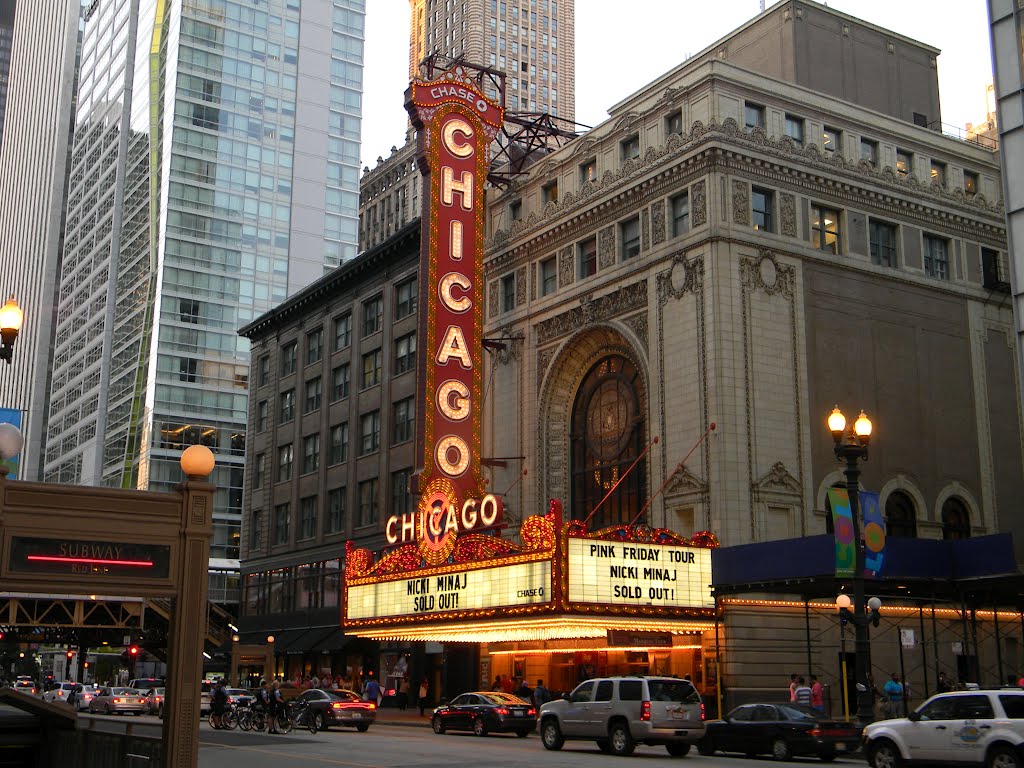
Chicago Theatre
175 N State St, Chicago, IL 60601
The Chicago Theatre's vertical 'C-H-I-C-A-G-O' marquee sign is arguably the most photographed sign in the city — six stories of neon and incandescent bulbs that have been spelling out the city's name on State Street since 1921. The sign is so iconic that it's become shorthand for the city itself, appearing on postcards, posters, and establishing shots of every film set in Chicago. The theatre behind the sign is equally extravagant. Designed by Cornelius and George Rapp in a French Baroque style, the 3,600-seat auditorium was the first of what became the great American movie palaces — ornate fantasy spaces where ordinary people could sit in surroundings that rivalled Versailles for the price of a movie ticket. The lobby is modelled on the Royal Chapel at Versailles, complete with marble columns, crystal chandeliers, and a sweeping grand staircase. The auditorium ceiling is a painted heaven of clouds, angels, and gold leaf. The theatre was nearly demolished in the 1980s but was saved by a restoration that brought back its original glory. It now hosts concerts and comedy shows rather than movies, and the roster of performers who've played here reads like a history of American entertainment — from Duke Ellington to Prince to Adele. Tours of the building run regularly and include access to backstage areas and the sign itself — you can walk out onto the marquee and look down State Street from behind those famous letters.
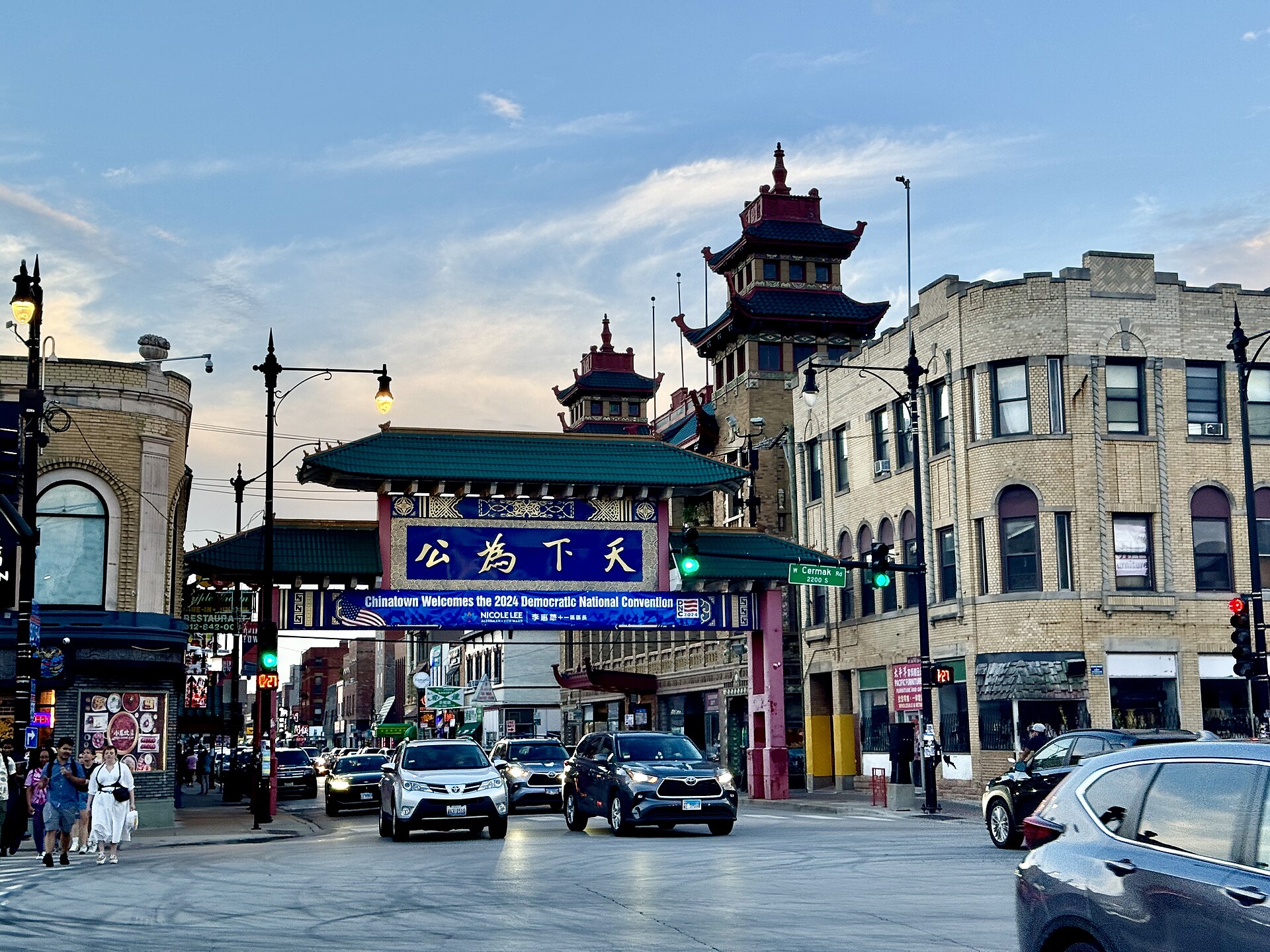
Chinatown Gate & Wentworth Avenue
200 W Cermak Rd, Chinatown, Chicago, 60616, United States
Chicago's Chinatown is the busiest in the Midwest and one of the oldest in the country — the community dates to the 1870s, making it one of the few Chicago neighbourhoods that predates the Great Fire. The ornate nine-dragon gateway on Cermak Road opens onto Wentworth Avenue, a bustling commercial strip of restaurants, bakeries, tea shops, and herbalists that feels like a transplanted slice of Guangdong. The food is the main draw. Dim sum at Phoenix or Ming Hin — where carts of dumplings, rice noodle rolls, and steamed buns circle the dining room on weekend mornings — is one of Chicago's great eating experiences. Lao Sze Chuan, specialising in fiery Sichuan cuisine, has a menu that runs to hundreds of items and a following that includes professional chefs from across the city. The bakeries on Wentworth sell custard buns, egg tarts, and pineapple cake for prices that feel like a different economic reality from the Loop a mile north. Beyond the food, Chinatown has the Chinese-American Museum of Chicago (small but well-curated), Ping Tom Memorial Park (a beautifully designed riverfront park), and the Nine Dragon Wall — a recreation of the famous glazed-tile screen in Beijing's Beihai Park. The neighbourhood is easily accessible by L train and makes an excellent half-day trip from the Loop, particularly if you time it for weekend dim sum and follow it with a walk along the river.
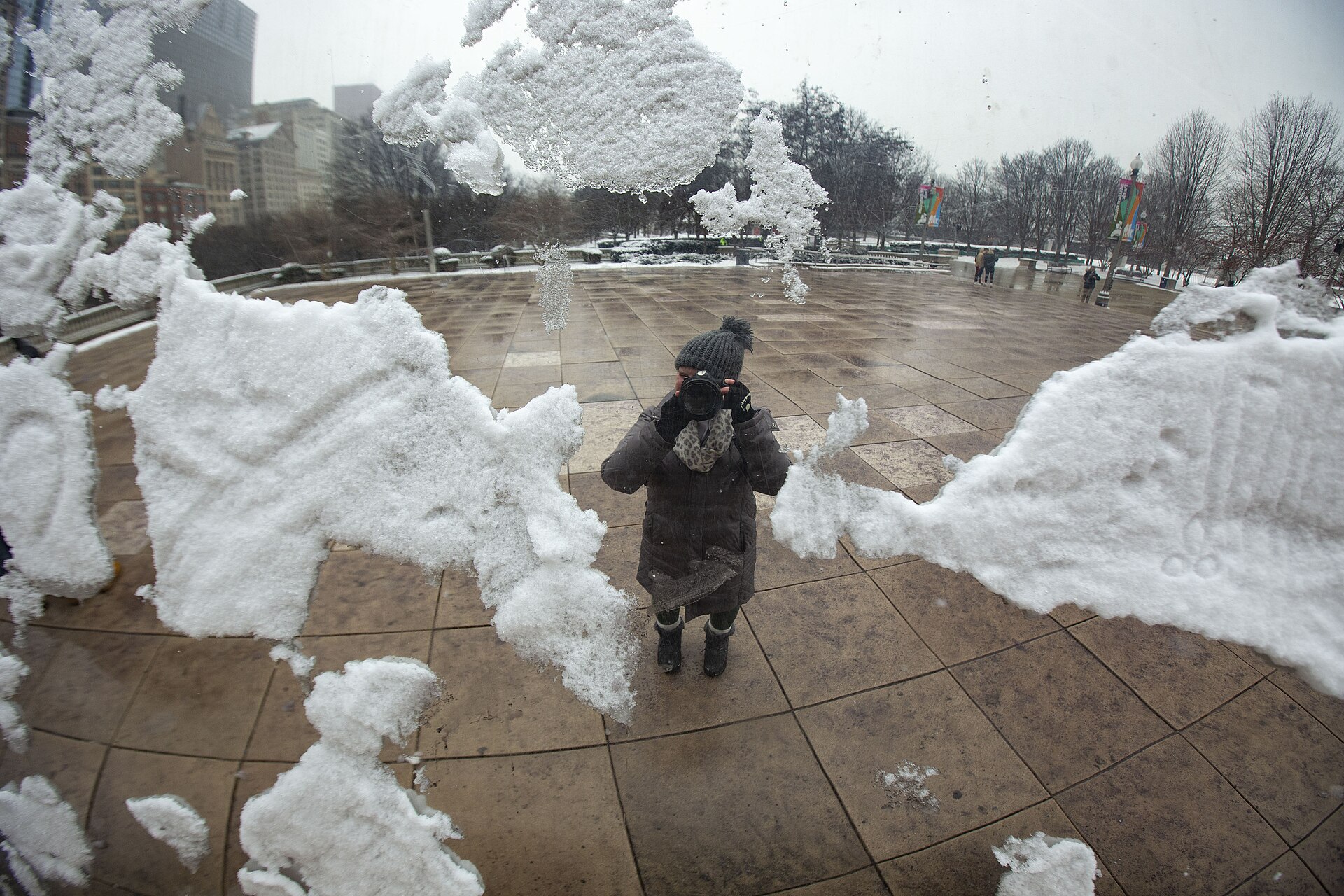
Cloud Gate (The Bean)
201 E Randolph St, Chicago, IL 60602
Cloud Gate is a 110-ton drop of liquid mercury that someone forgot to clean up in Millennium Park — at least that's what it looks like. Anish Kapoor's stainless steel sculpture, universally known as the Bean despite the artist's objections, has been Chicago's most photographed object since it was unveiled in 2004, and the engineering behind it is as impressive as the aesthetics. The sculpture is made of 168 stainless steel plates welded together and polished until the seams disappeared, creating a mirror surface that reflects the Chicago skyline from every angle. Stand back and you see the city's towers bending and warping across its surface like a funhouse mirror version of the lakefront. Walk underneath and you're inside the 'omphalos' — a concave chamber where your reflection multiplies and distorts in patterns that have kept children and adults equally fascinated for two decades. The practical genius of the Bean is that it works at every scale. From across the park, it's a landmark. From 20 feet away, it's a mirror that puts you inside the skyline. From directly underneath, it's an optical toy that makes everyone look ridiculous in exactly the same way, which turns out to be an excellent social equaliser. On a summer evening, when the setting sun turns the western face gold and the city lights begin to appear in the eastern reflection, it's genuinely one of the most beautiful public artworks in America.
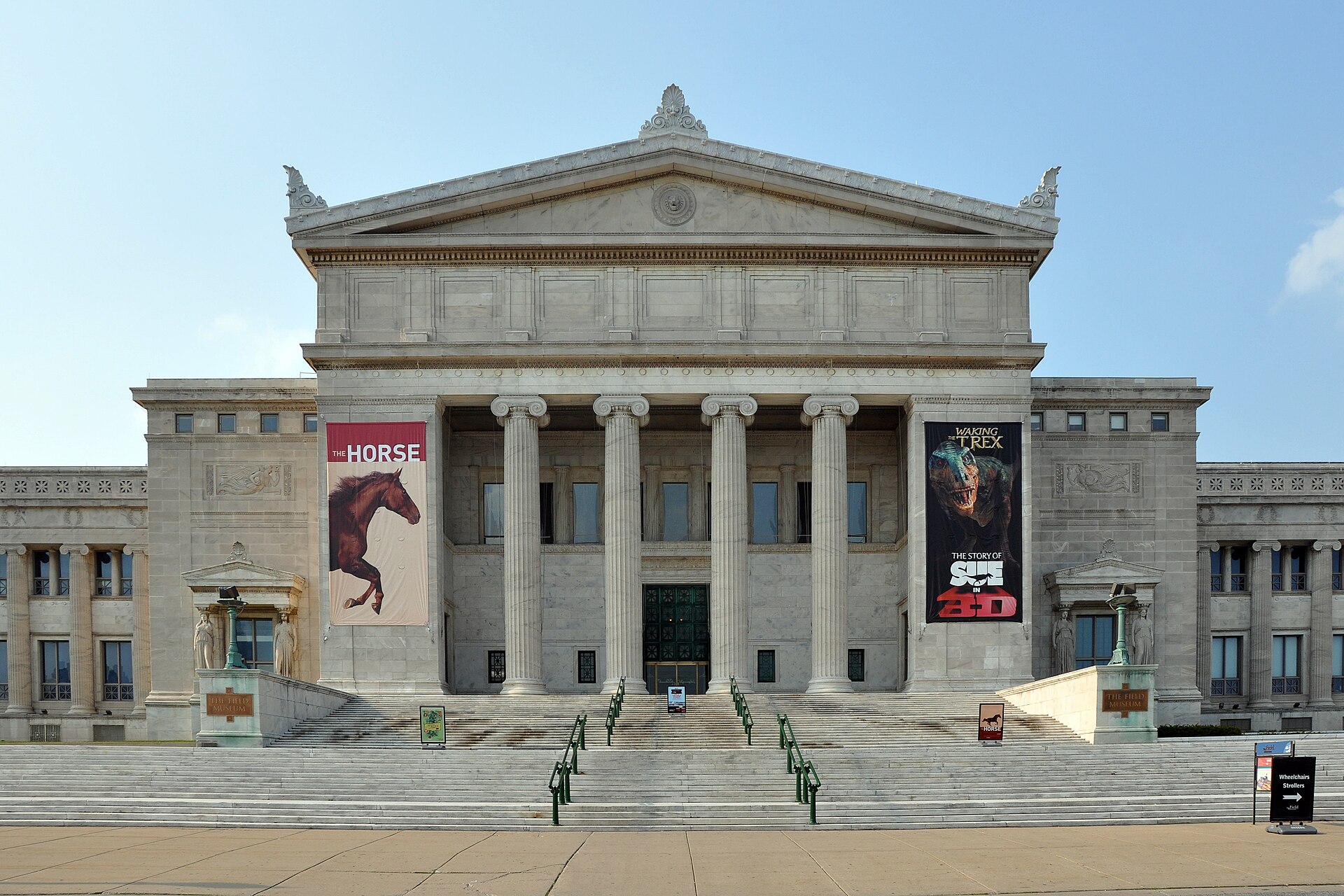
Field Museum of Natural History
1400 S DuSable Lake Shore Dr, Chicago, IL 60605
The Field Museum is home to SUE — the largest, most complete, and best-preserved Tyrannosaurus rex ever discovered — and 40 million other artifacts spanning 4.6 billion years of history. That's not an exaggeration: the geology collection starts with meteorites from the formation of the solar system and works forward through every era of life on Earth to the present day. SUE stands in her own gallery on the second floor (the museum finally gave her a proper space in 2018 after decades in the main hall), and meeting her face-to-face is one of those museum experiences that lives up to its reputation. She's 42 feet long, her skull alone weighs 600 pounds, and the level of preservation is extraordinary — you can see individual tooth serrations from 67 million years ago. The museum paid $8.36 million for SUE at auction in 1997, the most ever spent on a fossil, and she's earned it back many times over in visitor revenue. Beyond SUE, the Field Museum is staggeringly large. The Ancient Egypt exhibition includes 23 mummies. The Evolving Planet hall walks you through 4 billion years of evolution. The Tsavo man-eater lions — the pair that killed an estimated 35 workers building the Kenya-Uganda railway in 1898 — are here, smaller than you'd expect but somehow more terrifying for it. The museum sits on the lakefront Museum Campus alongside the Shedd Aquarium and Adler Planetarium, and the three together could comfortably consume an entire day.
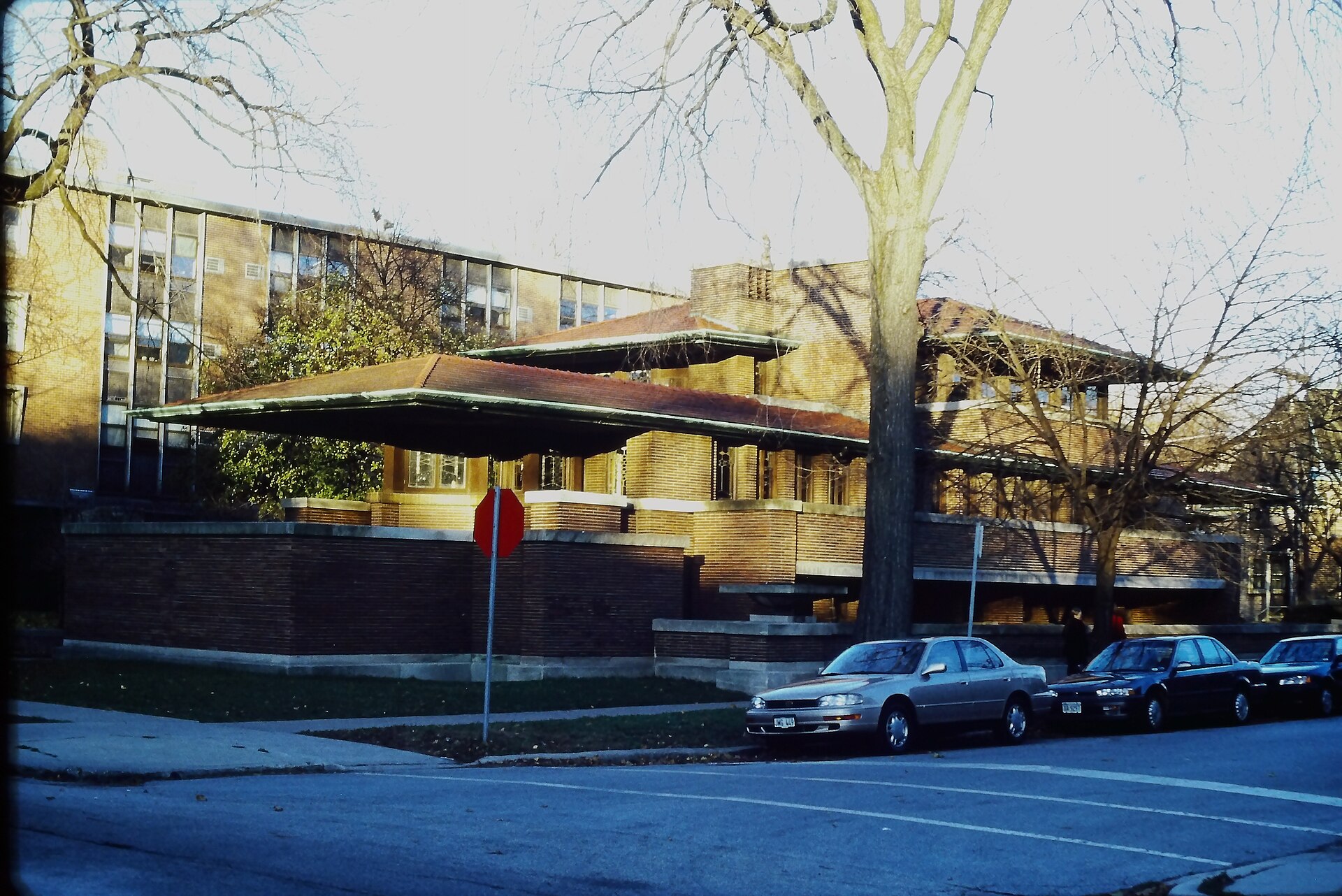
Frank Lloyd Wright's Robie House
5757 S Woodlawn Ave, Chicago, IL 60637
The Robie House is Frank Lloyd Wright's masterpiece — a UNESCO World Heritage Site and the building that defined the Prairie School of architecture with such authority that it's been called one of the ten most significant structures of the 20th century. Built between 1909 and 1910 for businessman Frederick C. Robie, it sits on a corner of the University of Chicago campus in Hyde Park, looking like a spacecraft from a civilisation that valued horizontal lines above all else. Wright's design eliminates the traditional box. The roof extends in dramatic cantilevers — 20 feet beyond the walls in some places, without visible supports — creating deep overhangs that shade the art glass windows and blur the boundary between inside and outside. The floor plan is organised around a central fireplace rather than corridors, with rooms flowing into each other in a way that was revolutionary in 1910 and still feels modern today. The art glass windows — 174 of them — filter light through geometric patterns that represent abstracted plant forms. The house nearly didn't survive. It was sold to the Chicago Theological Seminary, which wanted to demolish it for a dormitory. Wright himself campaigned to save it, and it was eventually preserved and restored. Today the Frank Lloyd Wright Trust runs guided tours that explain both the architectural innovations and the domestic reality of living in a house where the genius of the design occasionally conflicted with practical matters like hanging curtains or moving furniture.
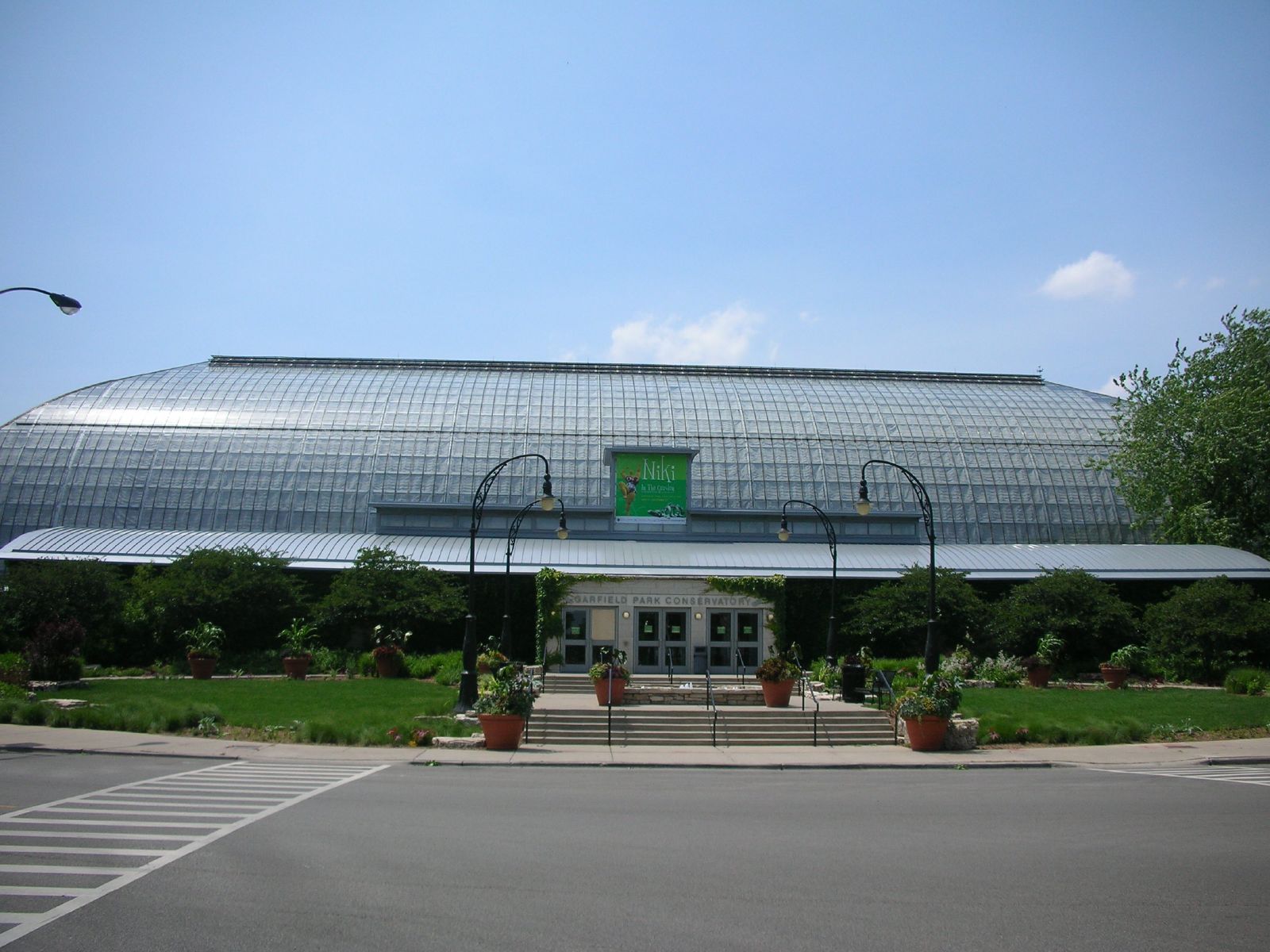
Garfield Park Conservatory
300 N Central Park Ave, East Garfield Park, Chicago, 60624, United States
Garfield Park Conservatory is one of the world's largest conservatories — two acres of tropical plants under glass in Chicago's West Side, free to enter, and visited by a fraction of the tourists who crowd into the Loop attractions a few miles east. The designer, Jens Jensen, called it 'landscape art under glass' and modelled the interior on the rolling prairies of Illinois, using raised planting beds instead of formal greenhouse rows to create a landscape you walk through rather than past. The conservatory was built in 1907 and expanded over the following decades into a complex of eight indoor gardens and outdoor spaces that feel entirely separate from the urban neighbourhood surrounding them. The Palm House — a soaring glass room filled with 70-foot palm trees — is the centrepiece, and stepping into it on a February day when the temperature outside is below zero is one of the most disorienting and delightful sensory experiences in Chicago. The Fern Room, built to resemble a prehistoric landscape, has stone-lined pools and cascading water under a canopy of tree ferns. The conservatory's West Side location, far from the tourist infrastructure of the Loop and Museum Campus, means it's never crowded. Come on a weekday morning and you'll share the Palm House with a few students sketching plants and maintenance staff tending the collection. The surrounding Garfield Park, designed by William Le Baron Jenney (who also designed the world's first skyscraper), has a lagoon, fieldhouse, and mature trees that make it one of the city's most underrated green spaces.
Lincoln Park Zoo
2001 Clark St, Whiting, 46394, United States
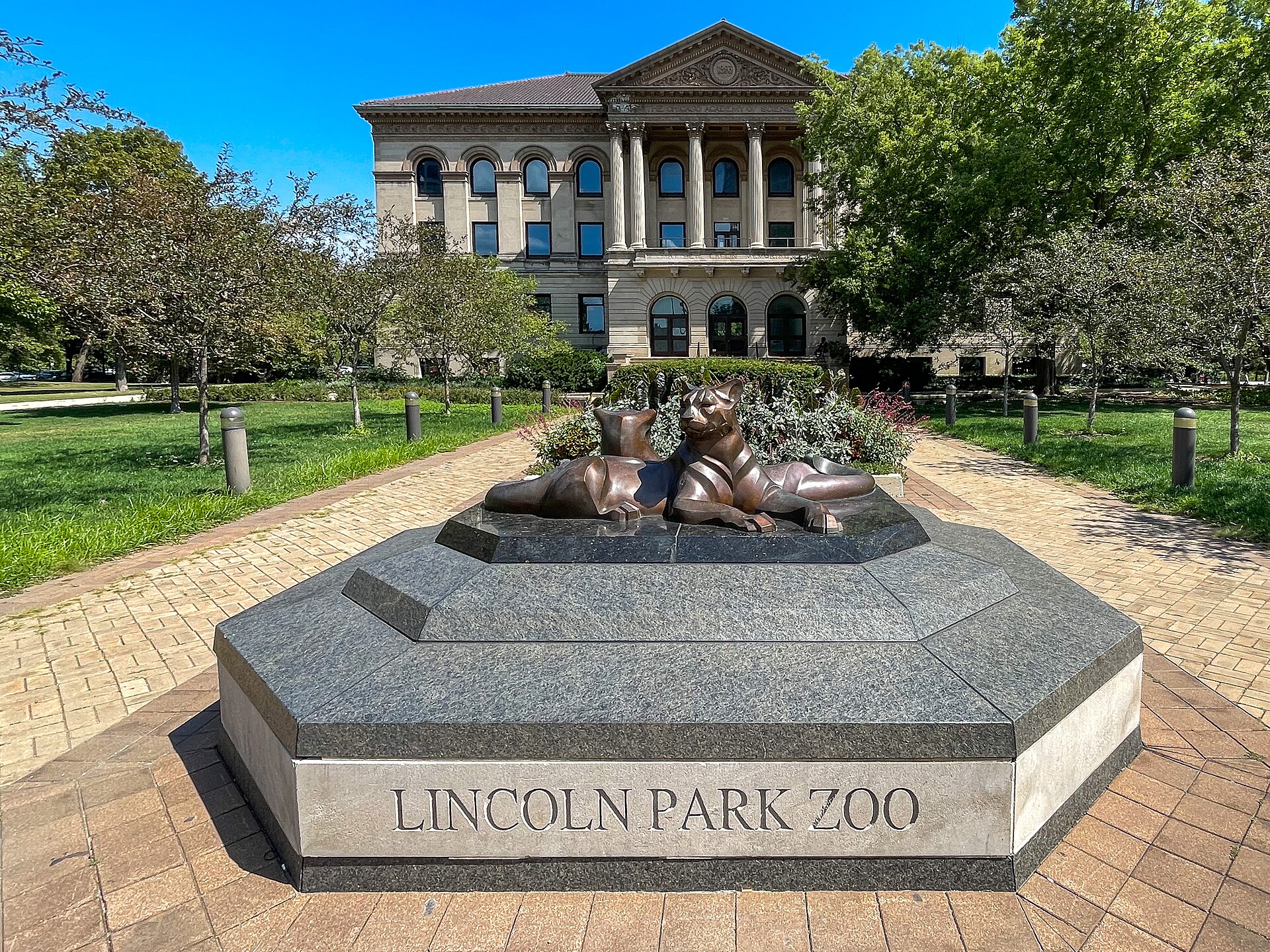
Lincoln Park Zoo has been free every day since 1868, making it one of the last free zoos in America and one of the oldest in the country. Sitting in the middle of Lincoln Park — itself Chicago's largest public park at 1,208 acres — the zoo manages to house over 1,100 animals representing 200 species on a relatively compact 35-acre site that somehow never feels cramped. The zoo's small size is actually its strength. Unlike sprawling suburban zoos that require a car and a full day, Lincoln Park is a neighbourhood zoo — you can walk from the penguin habitat to the great ape house in five minutes, stop for coffee, see the African lions, and be back on the L train within two hours. The Regenstein Center for African Apes is the standout exhibit, with a gorilla family whose dynamics — the teenager testing boundaries, the silverback maintaining order with a look — are recognisably, uncomfortably human. The surrounding park is worth the visit even without the zoo. The Alfred Caldwell Lily Pool, a restored prairie landscape hidden behind the zoo's north gate, is one of the most peaceful spots in Chicago. The Lincoln Park Conservatory — a Victorian glass house growing palms, ferns, and orchids — is free and uncrowded. North Pond, a natural area surrounded by the skyline, hosts migrating birds in spring and fall. The entire area is proof that Chicago's best attractions don't cost anything.
Lou Malnati's Pizzeria
439 N Wells St, Chicago, IL 60654
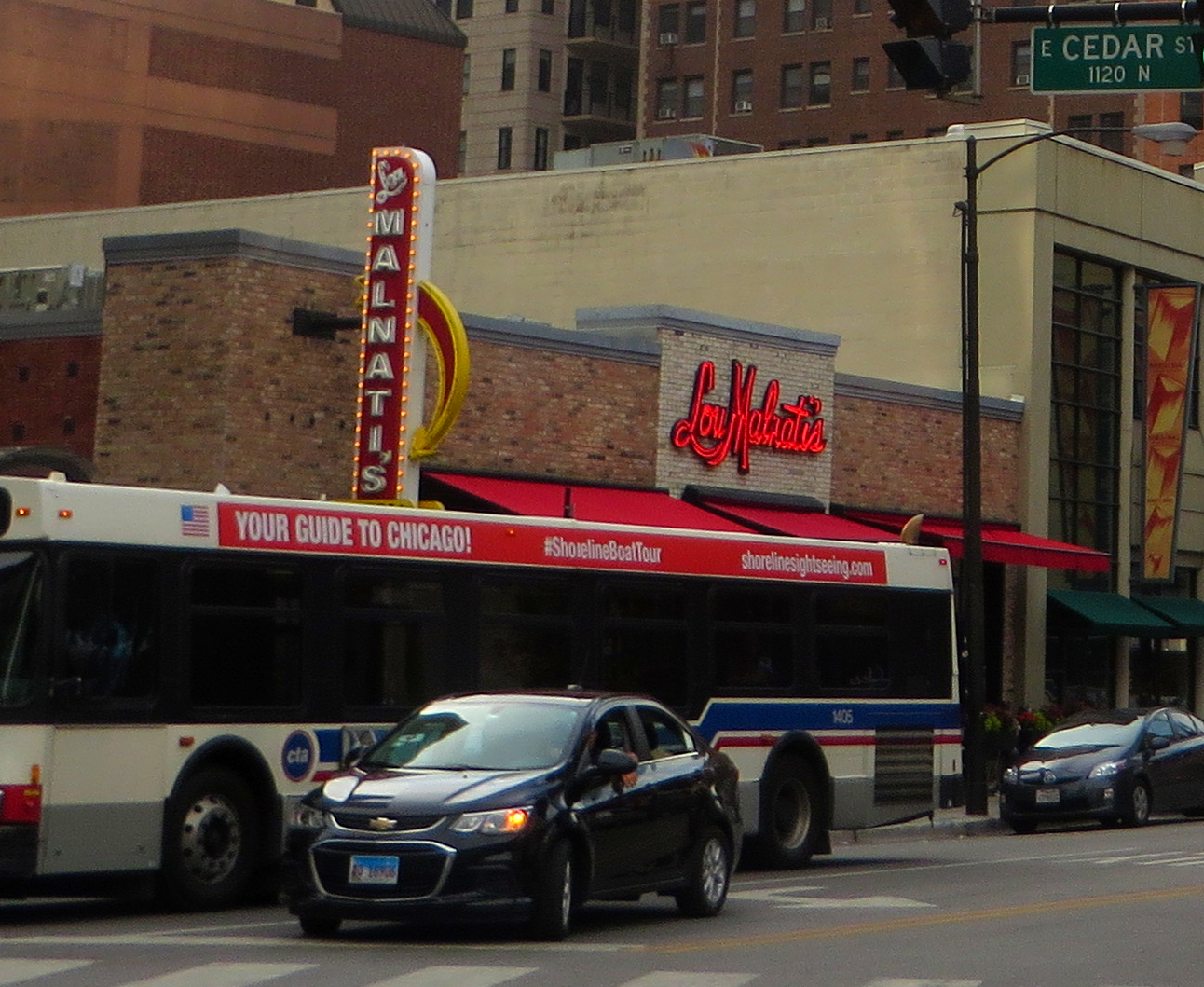
The deep-dish pizza argument in Chicago has two sides: Giordano's and Lou Malnati's. The locals overwhelmingly pick Lou's, and the original River North location — opened in 1971 by the son of one of the men who helped create deep-dish pizza at Pizzeria Uno in the 1940s — is where you go to understand why. Lou Malnati's deep dish has a buttery, flaky crust that owes more to pastry than bread, layered with sliced mozzarella (not shredded — this matters), Italian sausage that covers the entire surface in a single seasoned layer, and crushed tomatoes on top. The order of ingredients — cheese on the bottom, sauce on top — is the opposite of conventional pizza and is what makes Chicago deep-dish its own food category rather than just thick pizza. The Malnati Chicago Classic, with its sausage patty and butter crust, is the canonical order. The restaurant itself is no-frills — wood panelling, booth seating, the kind of place where your server has worked there for 15 years and calls everyone 'hon.' The wait for a table can be long, but the wait for the pizza will be 40-50 minutes regardless, because deep dish is baked in a pan like a pie and cannot be rushed. Order a salad to start and a beer to drink, and use the time to observe the mix of office workers, tourists, and families who make up a typical Lou Malnati's crowd — it's one of the few restaurants in the city where all demographics of Chicago eat in the same room.
Marina City
300 N State St, River North, Chicago, 60654, United States
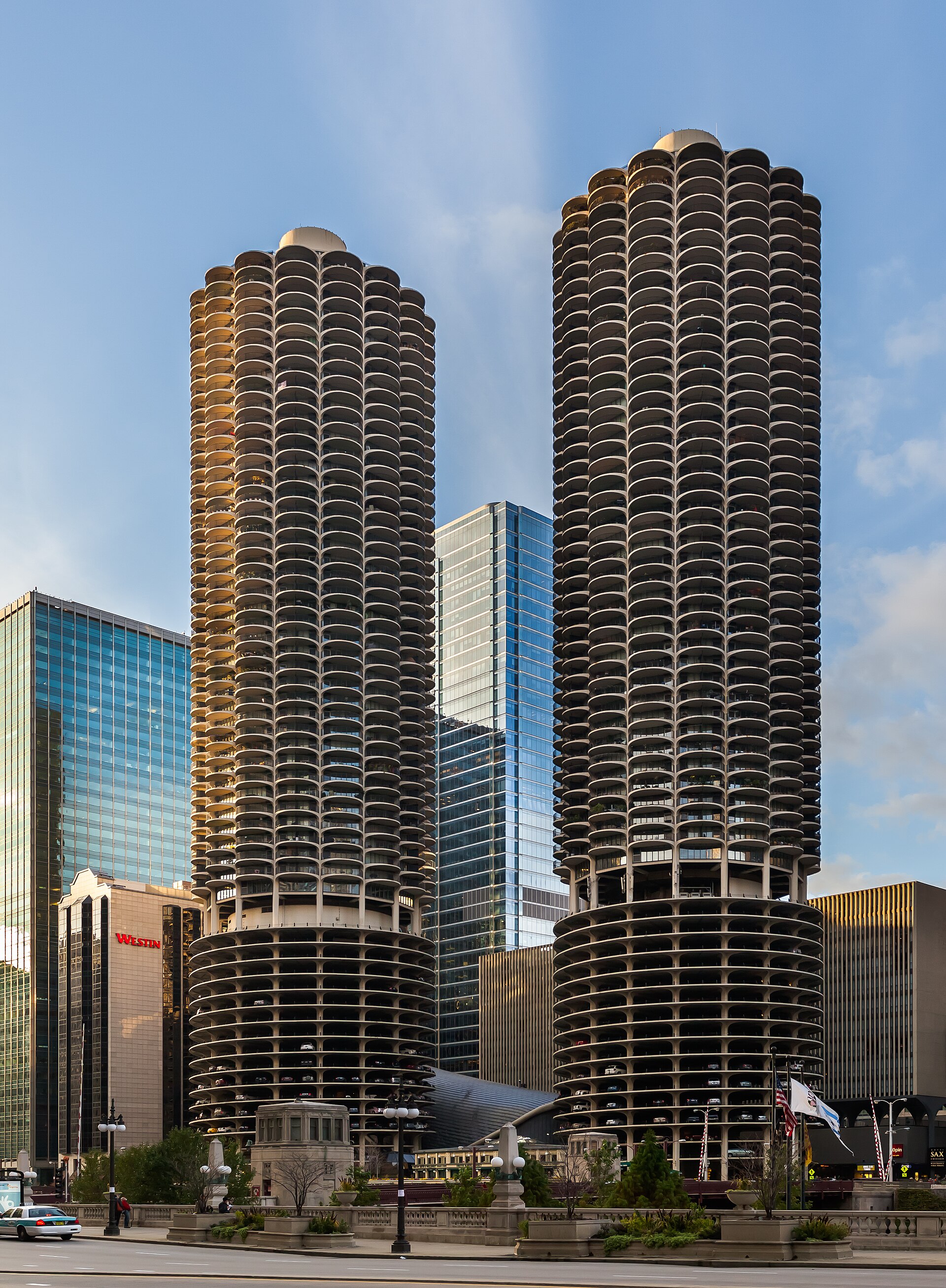
Marina City's twin cylindrical towers — universally known as the 'corn cobs' — are the buildings that made Chicago's riverfront into a postcard. Designed by Bertrand Goldberg and completed in 1964, they were the tallest residential buildings in the world at the time and the first mixed-use high-rises in America, combining apartments, a marina, restaurants, a theatre, a bowling alley, and an ice rink in a single complex designed to keep residents inside the city rather than fleeing to the suburbs. The design is pure 1960s futurism. The lower 18 floors of each tower are an open-air parking garage — the cars are visible from outside, spiralling up the building like a helix — and the upper 40 floors are pie-shaped apartments that radiate from a central core like petals. Every apartment has a semicircular balcony with river views, and the curved floor plans mean that no two rooms in any apartment are the same shape. It's the opposite of the rectilinear grid that defines most urban housing. Goldberg, who had studied under Mies van der Rohe but rejected his mentor's obsession with straight lines, believed that curved buildings were more humane than rectangular ones. Marina City was his manifesto — a building that looked nothing like anything that came before and influenced mixed-use urban development for decades after. The towers appear on the cover of the Wilco album 'Yankee Hotel Foxtrot,' which is the most culturally significant thing any Chicago building has done since the Water Tower survived the fire.
Millennium Park
201 E Randolph St, Chicago, IL 60601
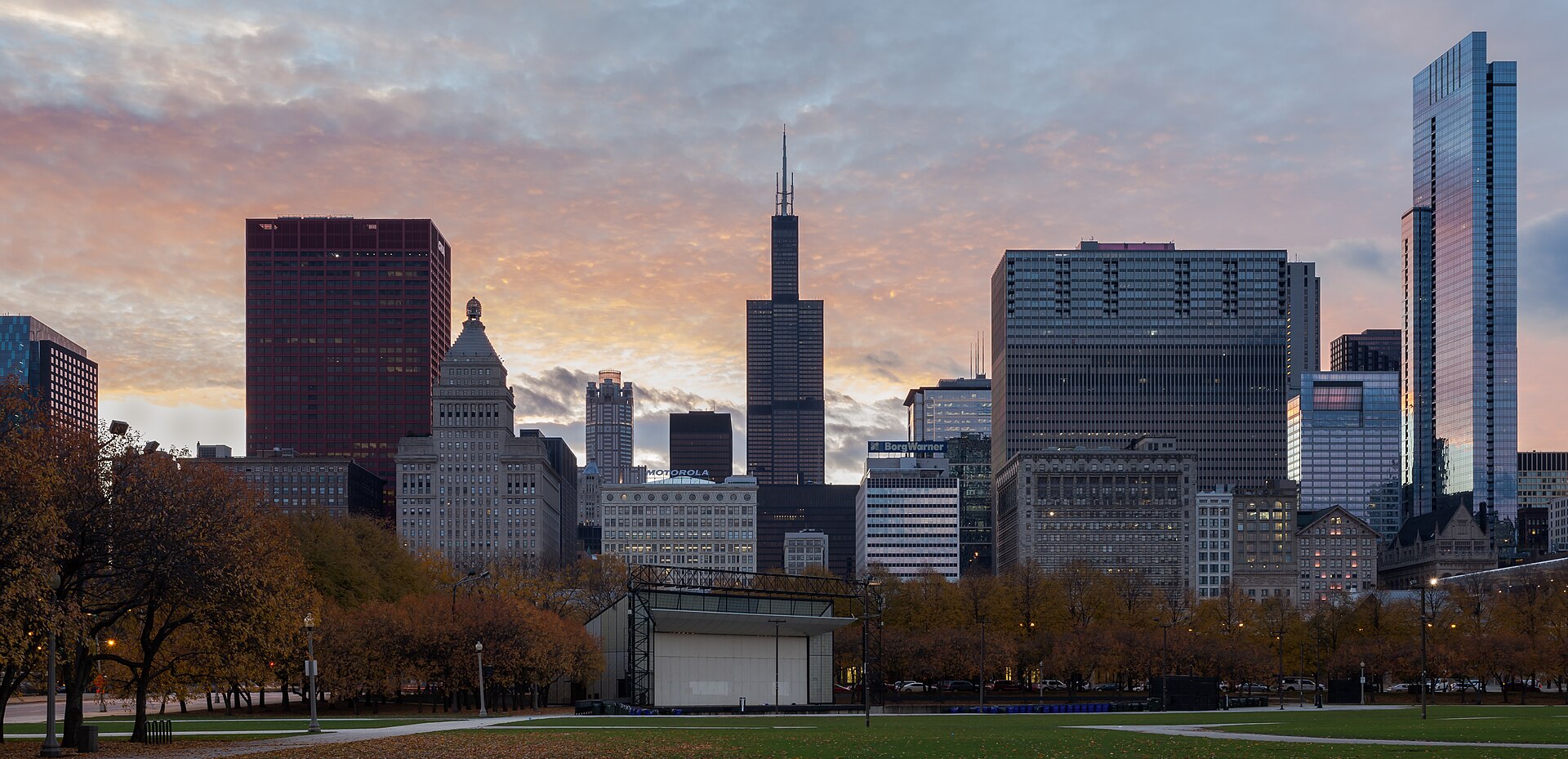
Millennium Park is a 24-acre rooftop garden built on top of a parking garage and railroad tracks — one of the most ambitious pieces of urban infrastructure in American history, delivered four years late and $325 million over budget, and worth every dollar and every delay. The park transformed Chicago's front yard from a railyard wasteland into a world-class public space that's become the city's most popular destination. Beyond the Bean, the park's major attractions include the Crown Fountain — two 50-foot glass towers that project video faces of Chicago residents who periodically 'spit' water at delighted children in the shallow reflecting pool between them. The Jay Pritzker Pavilion, designed by Frank Gehry, is an outdoor concert venue whose stainless-steel ribbons frame the stage like a Baroque explosion, and the trellis of steel pipes extending over the Great Lawn carries speakers that give every seat in the 11,000-capacity audience the acoustic quality of an indoor concert hall. The Lurie Garden, tucked behind the Pritzker Pavilion, is a designed landscape that traces Chicago's transformation from prairie to city — native prairie plants on one side, cultivated garden on the other, separated by a 'shoulder' hedge representing Carl Sandburg's description of Chicago as 'City of the Big Shoulders.' It's the park's quietest space and its most thoughtful. Free yoga classes, concerts, and film screenings run through the summer, making this one of the great free attractions in any American city.
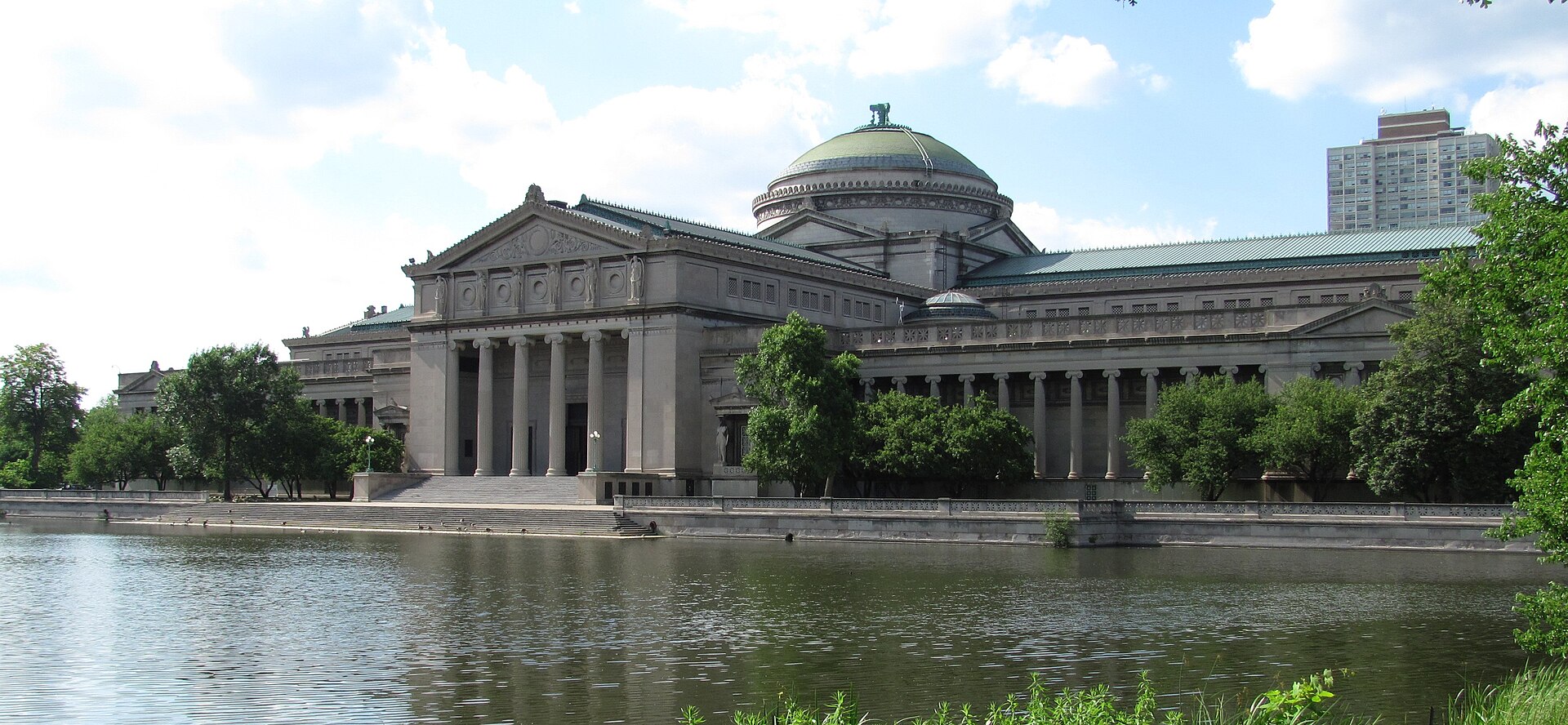
Museum of Science and Industry
5700 S DuSable Lake Shore Dr, Chicago, IL 60637
The Museum of Science and Industry is the largest science museum in the Western Hemisphere, housed in the only surviving building from the 1893 World's Columbian Exposition — the Palace of Fine Arts, a Beaux-Arts behemoth that was rebuilt in permanent materials after the original plaster-and-staff structure began to crumble. The building alone, sitting in Jackson Park overlooking the lagoon that Frederick Law Olmsted designed for the fair, is worth the trip to Hyde Park. The collection is spectacular in its range. A captured German U-505 submarine — the only one on display in the Western Hemisphere — sits in an underground gallery that explains how US Navy sailors boarded and captured a functioning U-boat in 1944, seizing Enigma codebooks that helped win the war. A full-sized coal mine (built in 1933 using actual mining equipment) descends beneath the museum floor. A Pioneer Zephyr streamlined train, a 727 fuselage you can walk through, a working model railroad that fills an entire room, a mirror maze, a tornado simulator — the museum treats science as something you experience rather than read about. The Colleen Moore Fairy Castle — a miniature castle containing the smallest Bible in the world, real diamond chandeliers, and gold fixtures — has been a peculiar highlight since 1949. The Science Storms exhibit fills a three-story atrium with demonstrations of tornadoes, tsunamis, lightning, and fire. The museum takes a minimum of three hours to see properly, and children under 12 may never want to leave.
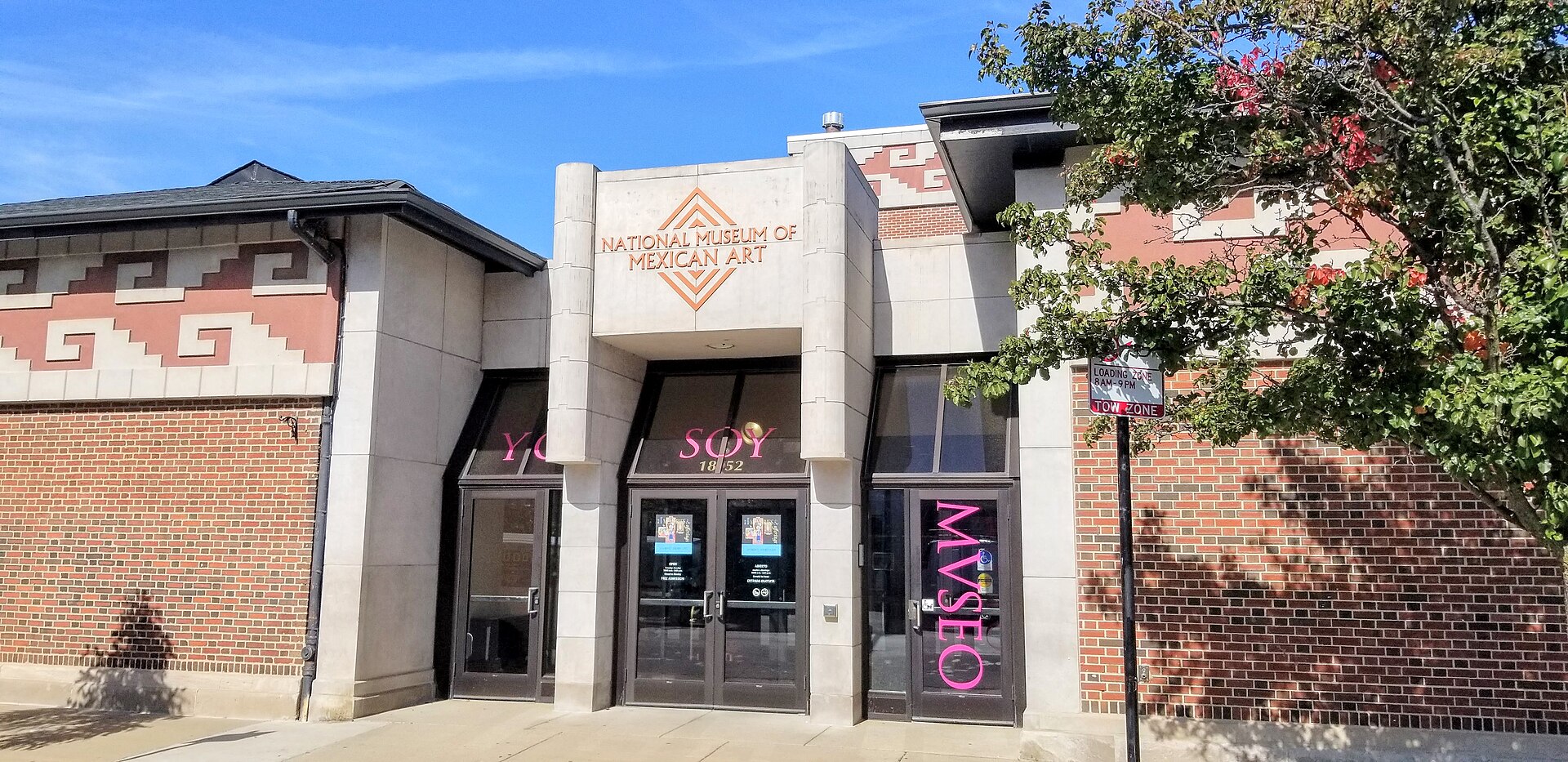
National Museum of Mexican Art
1852 W 19th St, Chicago, IL 60608
The National Museum of Mexican Art is the largest Latino cultural institution in the United States, holds a permanent collection of over 10,000 works spanning 3,000 years of Mexican art, and has never charged admission in its 40-year history. In a city where major museum tickets can cost $30 or more, this is either an act of extraordinary generosity or a quiet statement about who museums should serve. The collection ranges from pre-Columbian ceramics and Aztec stone carvings to colonial religious art, 20th-century modernism, and contemporary works by Mexican and Mexican-American artists working today. The Day of the Dead exhibition, mounted annually since the museum's founding and running from September through December, has become the institution's signature event — an immersive exploration of the Mexican tradition of honouring the dead that combines historical context with contemporary art installations. The museum sits on 19th Street in the heart of Pilsen, and visiting it in context — walking through the murals on 16th Street, eating at the taquerias on 18th Street, then arriving at the museum — gives you a complete immersion in Mexican-American culture that no other city in the US can match. The building itself, a converted fieldhouse in Harrison Park, is modest from outside, which makes the quality and ambition of what's inside all the more surprising.
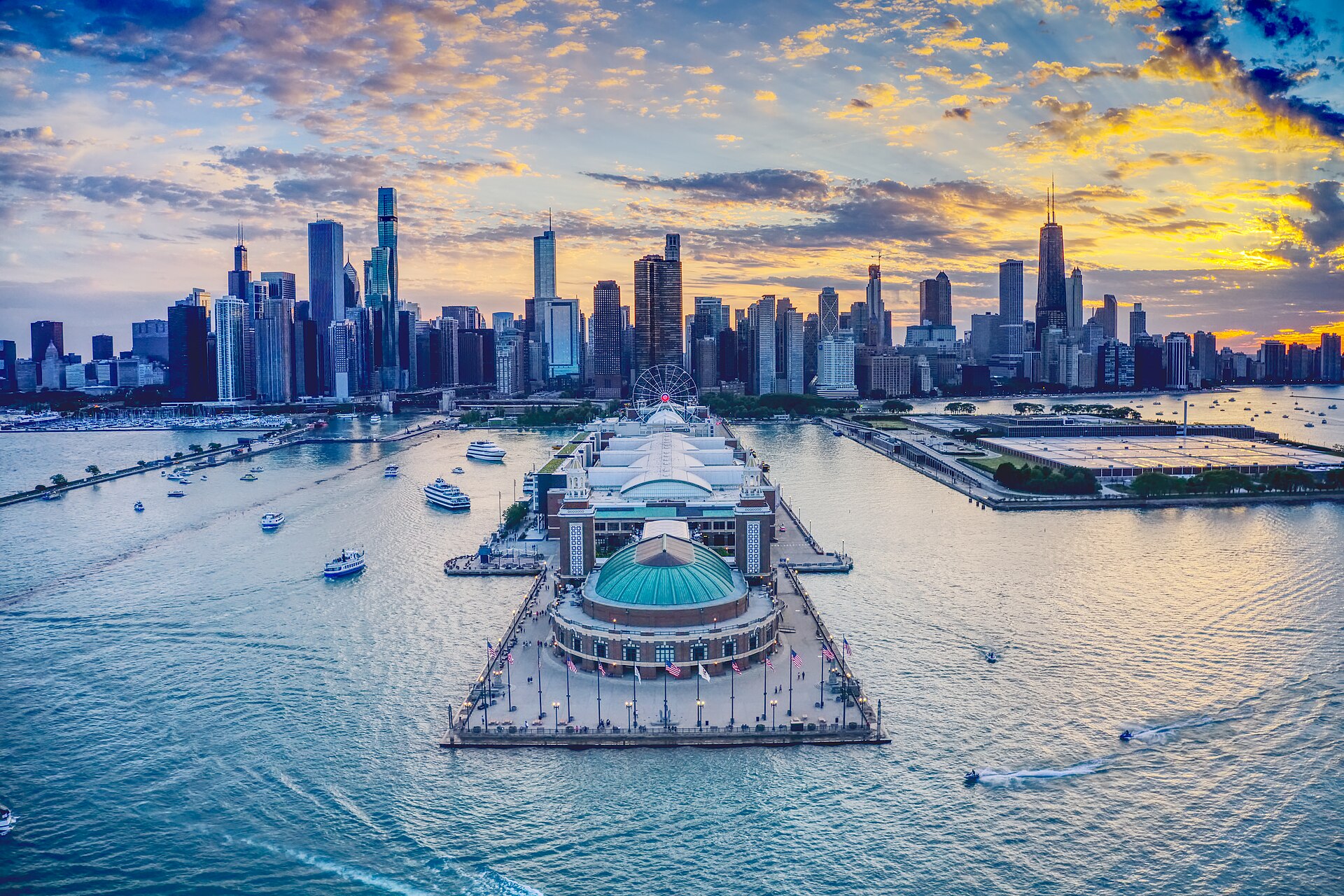
Navy Pier
600 E Grand Ave, Chicago, IL 60611
Navy Pier is Chicago's most-visited attraction — over 9 million people a year walk the 3,300-foot pier that extends into Lake Michigan from the mouth of the Chicago River. Originally built in 1916 as a shipping and entertainment facility, the pier has been through several identity crises — naval training centre during both World Wars, a University of Illinois campus in the 1950s, near-dereliction in the 1970s — before its current incarnation as the city's primary tourist attraction. The centrepiece is the Centennial Wheel, a 196-foot Ferris wheel that replaced the previous wheel in 2016 and offers enclosed, climate-controlled gondolas with views across the city and the lake. The pier also houses the Chicago Children's Museum, a Shakespeare theater, an IMAX cinema, beer gardens, restaurants, and enough shops to occupy a dedicated consumer for an afternoon. The east end of the pier — beyond the commercial section — is worth walking to for the views back toward the skyline, particularly at sunset. Locals tend to avoid Navy Pier in the same way New Yorkers avoid Times Square, but dismissing it entirely is a mistake. The summer fireworks displays (Wednesday and Saturday nights) are spectacular, the beer garden is genuinely pleasant on a warm evening, and the lakefront location means you're never far from the breeze that makes Chicago's summers bearable. It's touristy, yes, but it's also a pier extending a third of a mile into one of the Great Lakes, and that's an experience worth having.
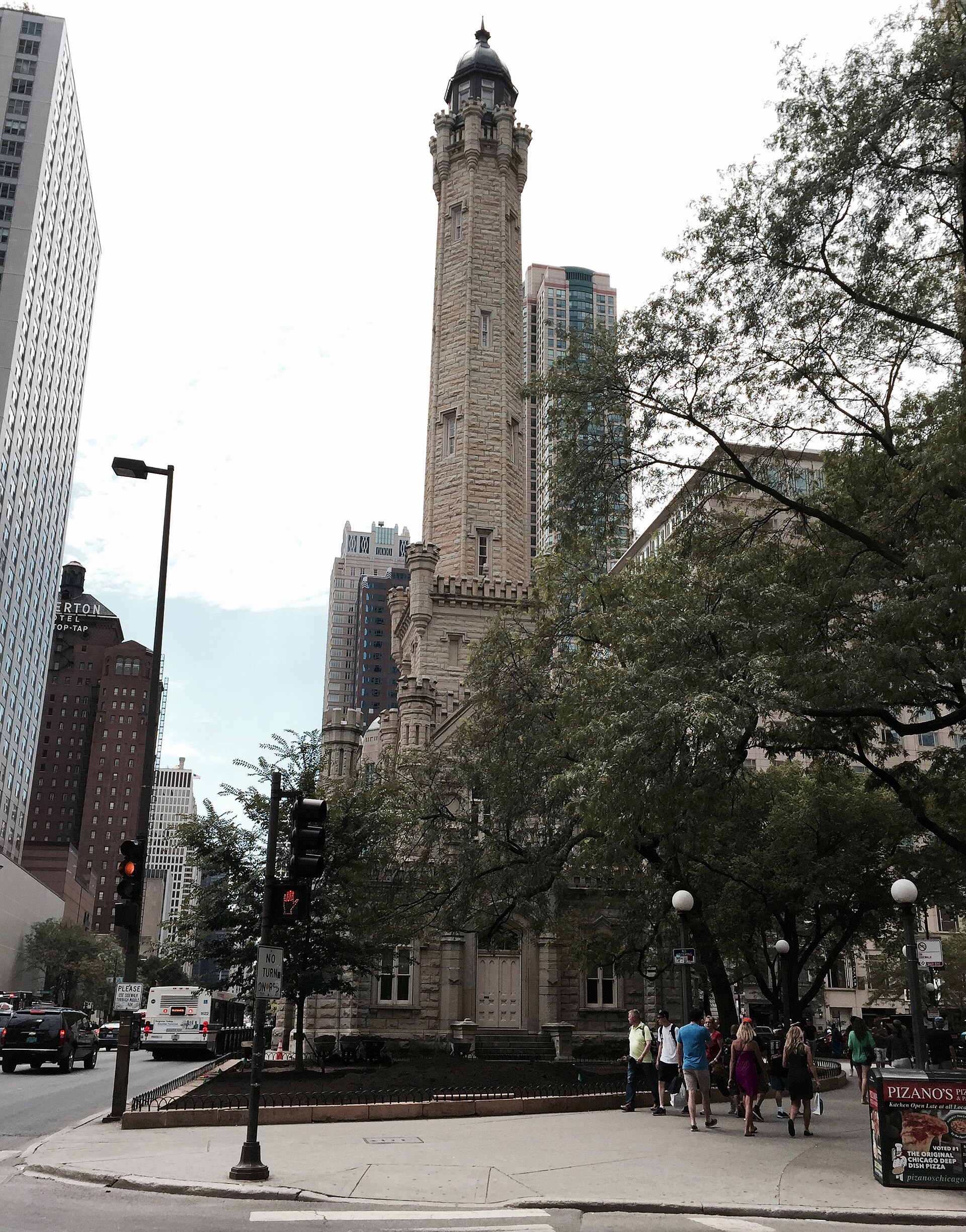
Old Water Tower
806 N Michigan Ave, Chicago, IL 60611
The Old Water Tower is the building that refused to burn. When the Great Chicago Fire of 1871 destroyed 17,500 buildings and left 100,000 people homeless, this 154-foot limestone tower — built just two years earlier to disguise a standpipe for the city's water system — was one of the only public buildings left standing. It has been a symbol of Chicago's resilience ever since, the physical proof that the city could survive its worst day and rebuild. The tower was designed by William W. Boyington in a castellated Gothic style that Oscar Wilde, visiting Chicago in 1882, described as a 'monstrosity' with 'pepper boxes stuck all over it.' Wilde's architectural criticism didn't age well — the tower is now a beloved landmark on the Magnificent Mile, dwarfed by the surrounding skyscrapers but impossible to overlook. Its survival was partly luck (the surrounding streets were wide enough to create firebreaks) and partly the fact that limestone, while it can crack and blacken, doesn't burn. The tower now houses a small City Gallery showcasing work by Chicago-based photographers, which is free to enter and changes regularly. The pumping station across the street — which also survived the fire — contains the Lookingglass Theatre. The tower's real function today is symbolic: it stands at the heart of Chicago's most commercial street as a reminder that the entire city around it was rebuilt from ashes in a single generation.
Pilsen 16th Street Murals
W 16th St, Heart of Chicago, Chicago, 60608, United States
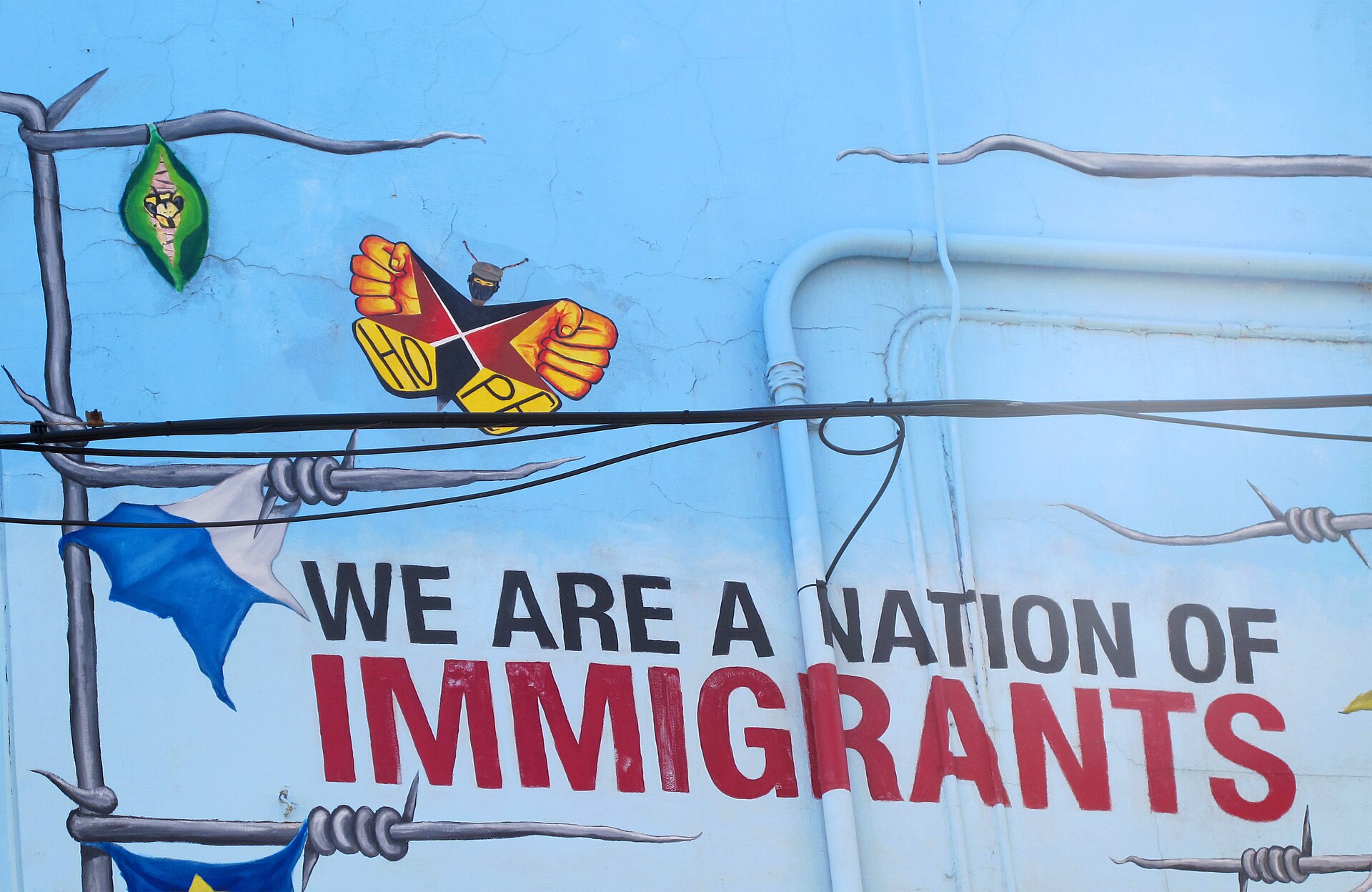
Pilsen's 16th Street corridor is a half-mile outdoor gallery of Mexican-American murals that's been evolving since the 1960s, and walking its length is one of the most visually intense experiences in Chicago. The murals cover entire building facades in vivid colour — Aztec warriors, Day of the Dead celebrations, portraits of community leaders, political statements, mythological scenes — and the sheer density of art on a single street is unlike anything else in the city. The mural tradition in Pilsen dates to the Mexican muralist movement that followed the Mexican Revolution, and the earliest works here were painted by artists who saw public art as a political act — a way of claiming space, preserving culture, and making the Mexican-American community visible in a city that didn't always pay attention. Many of the original murals from the 1970s and 1980s have been lost to weathering or new construction, but the tradition continues with new works appearing regularly, creating a living record of the neighbourhood's evolution. Pilsen itself is one of Chicago's most vibrant neighbourhoods — a historically Mexican-American community that's produced some of the city's best food, music, and art. The National Museum of Mexican Art on 19th Street (free admission, always) is a world-class institution with 10,000 works spanning 3,000 years. The taquerias, panaderias, and street food vendors along 18th Street serve some of the best Mexican food north of the border. The murals are the introduction; the neighbourhood is the main event.
Portillo's
100 W Ontario St, River North, Chicago, 60654, United States
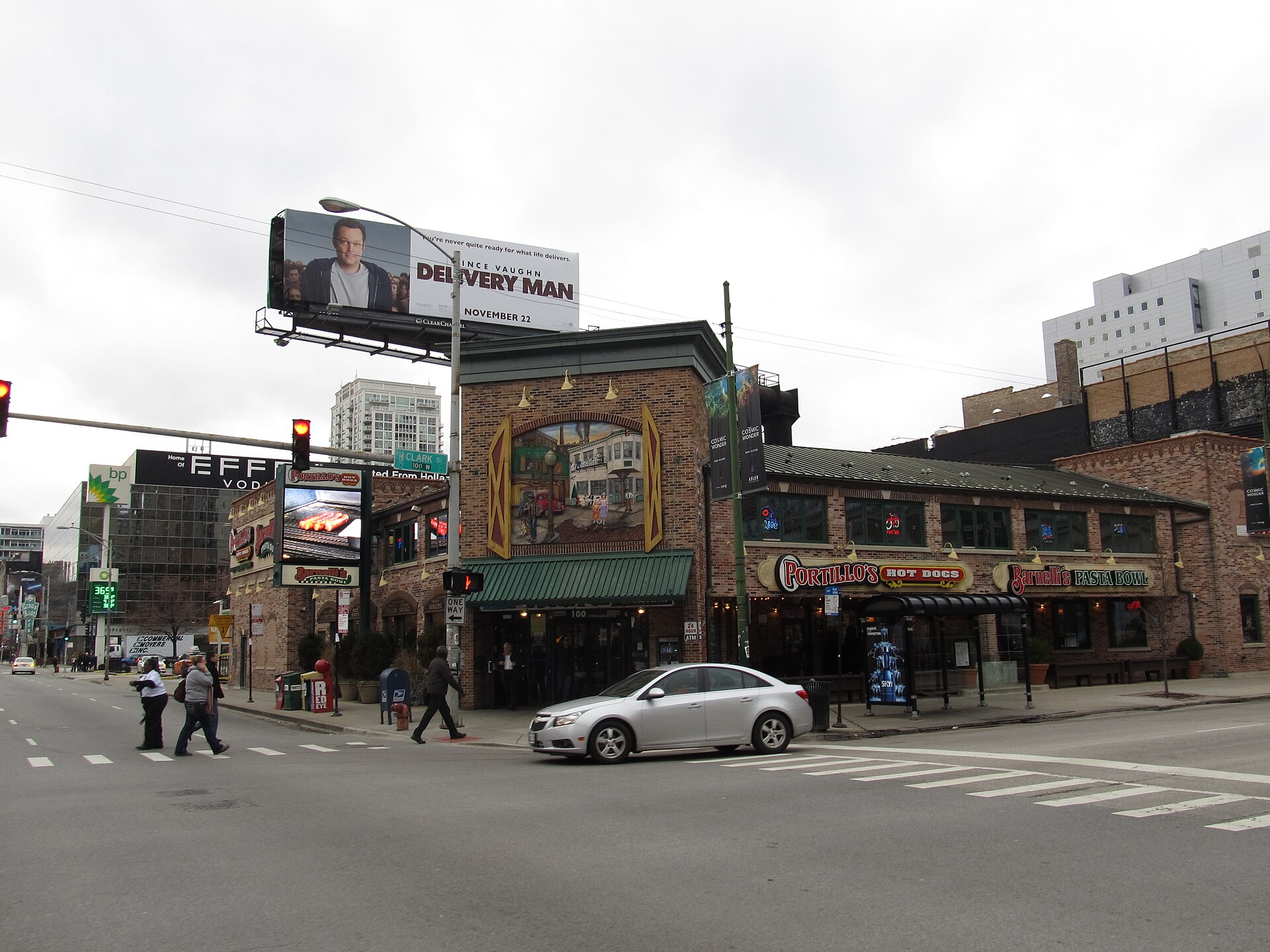
Portillo's is Chicago's definitive fast-food institution — a place where Italian beef sandwiches, Chicago-style hot dogs, and chocolate cake shakes have been served to a devoted following since Dick Portillo opened the first stand (called 'The Dog House') from a small trailer in 1963. The River North location is the flagship, and the queue that extends out the door at lunchtime is a daily reminder that Chicago takes its encased meats seriously. The Italian beef — thinly sliced roast beef piled in a French roll, dipped in natural gravy, and topped with either sweet or hot peppers (or both, which is called 'combo') — is Chicago's most underrated contribution to American cuisine. Unlike deep-dish pizza, which tourists seek out and locals eat occasionally, the Italian beef is what Chicagoans actually eat regularly. The correct way to eat one is to ask for it 'dipped' (the entire sandwich goes into the gravy) and accept that you will need napkins. Many napkins. The Chicago-style hot dog — an all-beef frankfurter in a poppy seed bun with yellow mustard, bright green relish, chopped white onion, a dill pickle spear, tomato slices, sport peppers, and celery salt (never, ever ketchup) — is the other essential order. The chocolate cake shake, which is literally a slice of chocolate cake blended into a milkshake, is the sort of thing that no reasonable person would invent but that becomes irresistible once you know it exists.
Promontory Point
5491 S DuSable Lake Shore Dr, Kenwood, Chicago, 60637, United States
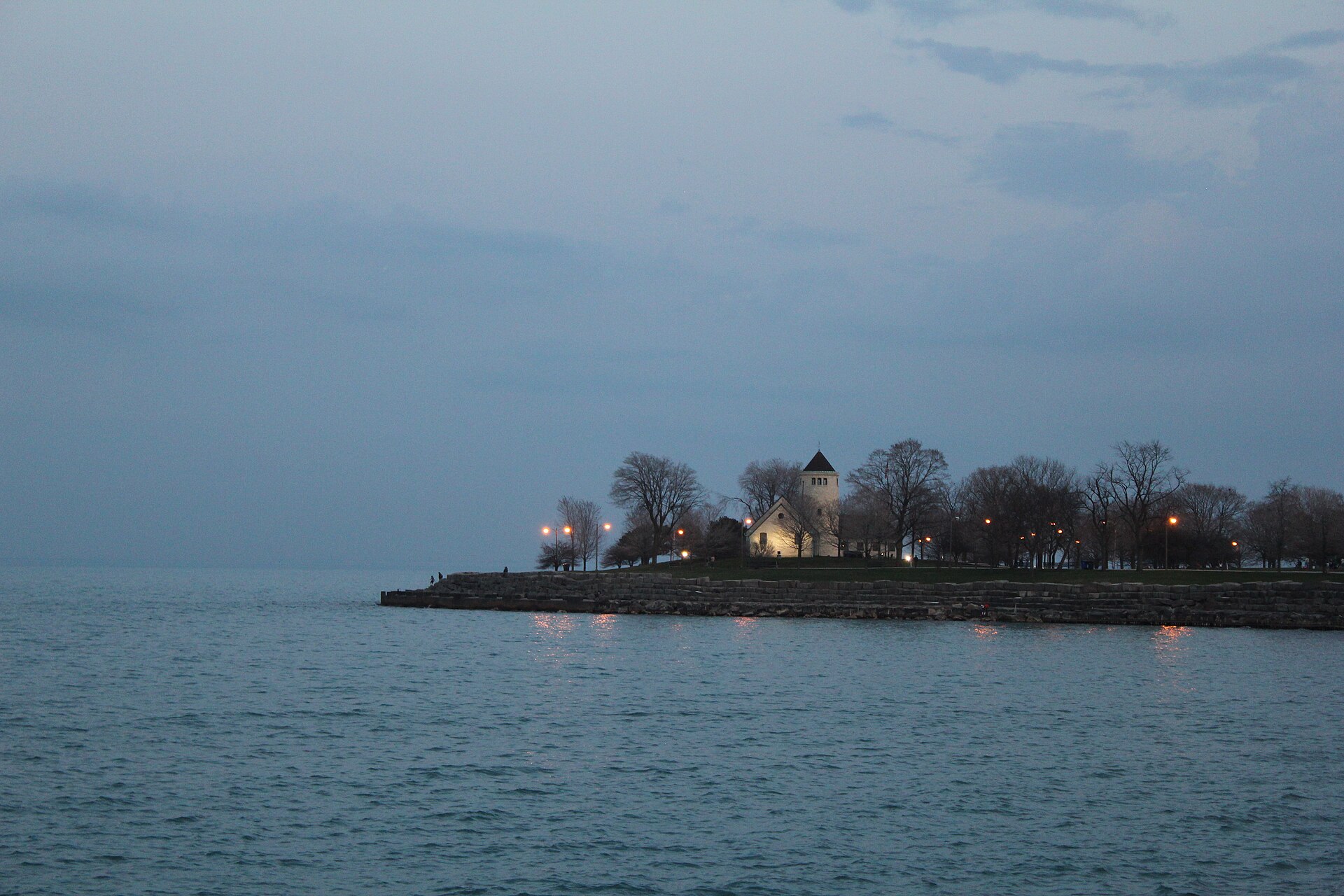
Promontory Point is a man-made peninsula in Burnham Park that juts into Lake Michigan from the Hyde Park shoreline, and it offers the best skyline panorama in Chicago — a sweeping view north to the Loop and south to the steel mills of Gary, Indiana, with nothing between you and the water but a set of limestone steps that descend directly into the lake. The point was designed by Alfred Caldwell in the 1930s as part of the lakefront park system envisioned by Daniel Burnham's 1909 Plan of Chicago, and the prairie-style landscape — native grasses, limestone seating walls, a fire circle — reflects Caldwell's belief that public parks should connect Chicagoans to the natural landscape of the Midwest. The stone steps that lead into the lake are not a swimming pool, but on hot summer days they function as one — locals wade in, kids jump off the rocks, and the point becomes an informal beach that the Park District has periodically tried and failed to regulate. The skyline view from Promontory Point is the one that photographers use when they want to show all of Chicago in a single frame — the full sweep from Hancock to Willis, with the lake in the foreground and no tourist infrastructure in sight. Come at sunset for the full effect, or come on a summer weekend afternoon when the grills are fired up and every patch of grass is occupied by a family reunion, a pickup soccer game, or a couple with a picnic blanket. It's Chicago's backyard.
Pullman National Historical Park
11141 S Cottage Grove Ave, Pullman, Chicago, 60628, United States
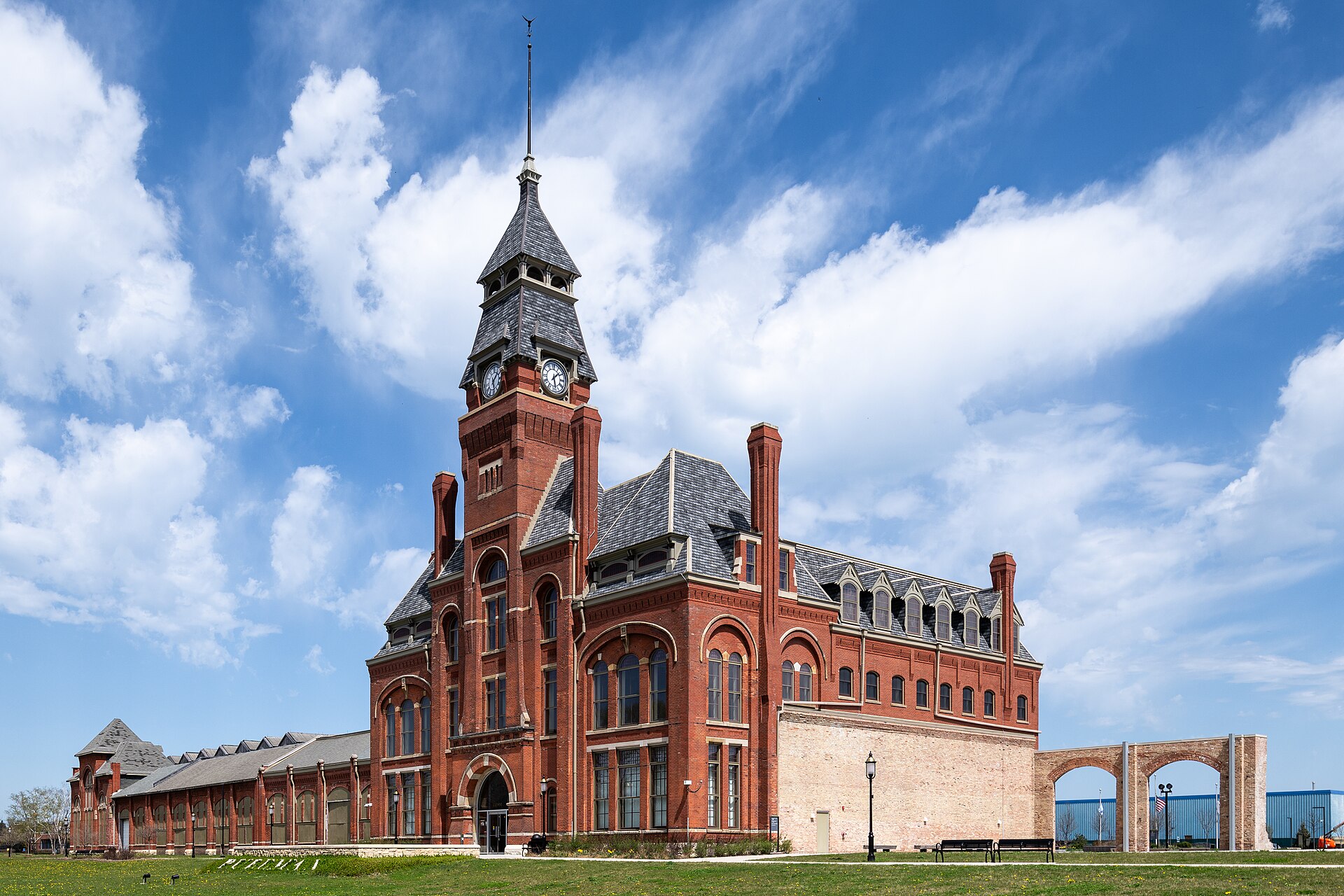
Pullman is a planned industrial town built in the 1880s by railroad sleeping car magnate George Pullman, who believed that providing workers with clean housing, parks, a library, and a theatre would make them more productive and less inclined to unionise. It didn't work — the Pullman Strike of 1894, triggered by wage cuts during a recession while rents in company housing stayed the same, became one of the most significant labour disputes in American history and led directly to the creation of Labour Day as a federal holiday. The town itself, now a National Historical Park and a South Side neighbourhood, is remarkably well-preserved. The Hotel Florence (named after Pullman's daughter), the Market Hall, the Administration Building, and rows of worker housing in alternating red brick patterns survive largely intact, creating a complete 1880s industrial landscape that looks like a film set. The visitor centre, in the restored Administration Building, tells the story of Pullman's utopian vision, its spectacular failure, and its lasting impact on American labour law. Getting to Pullman requires the Metra train to 111th Street (about 30 minutes from downtown), which means most tourists don't bother. That's a shame, because the neighbourhood — which also has significant African American history, including its role in the development of the Brotherhood of Sleeping Car Porters — tells a story about race, class, and power in industrial America that you won't find in any downtown museum.
Shedd Aquarium
1200 S DuSable Lake Shore Dr, Chicago, IL 60605
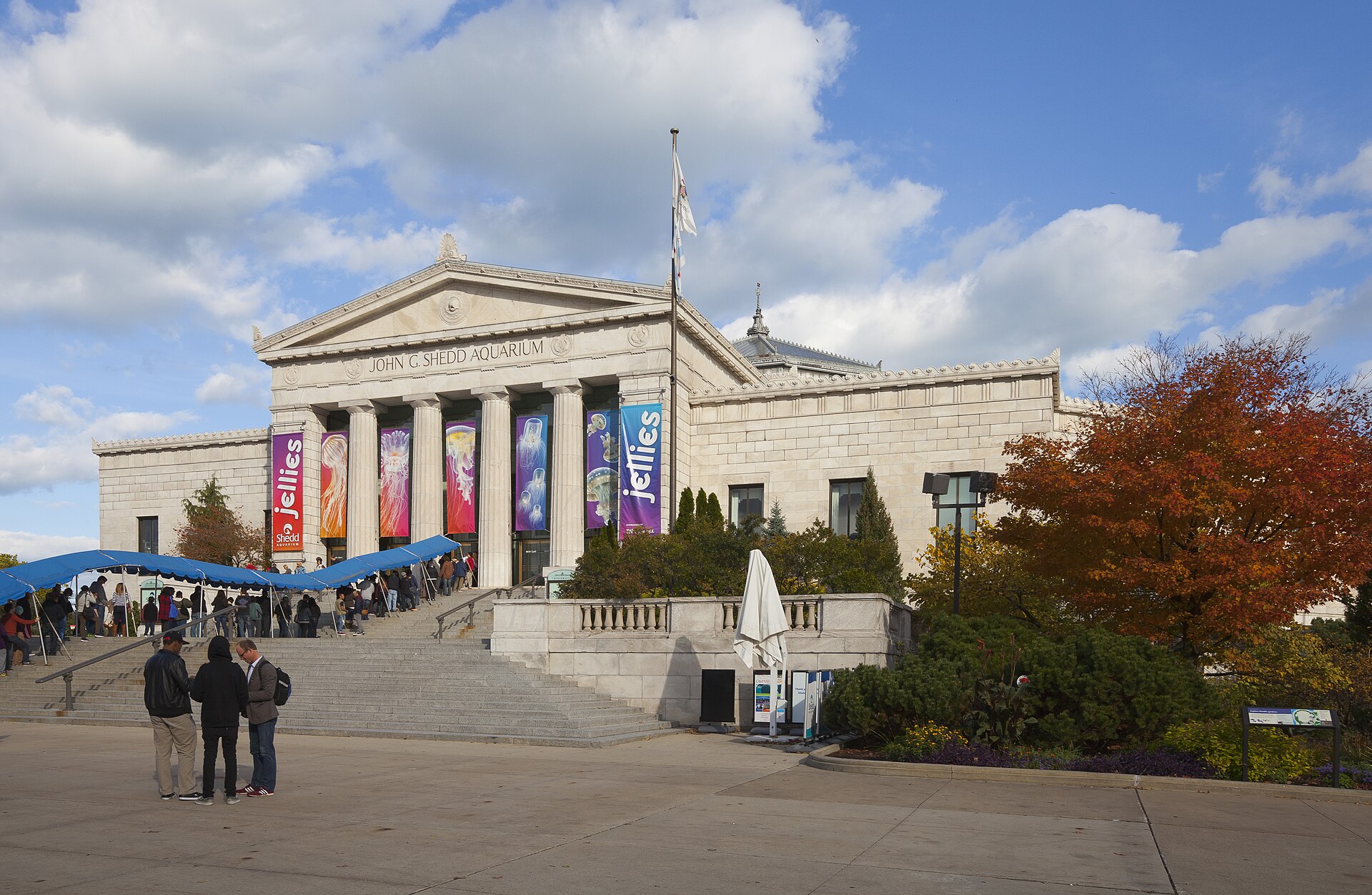
The Shedd Aquarium sits on Lake Michigan's shore and houses 32,000 animals — which makes it one of the largest indoor aquariums in the world and creates the slightly surreal experience of watching beluga whales swim with the Chicago skyline visible through the windows behind them. Opened in 1930 as a gift from John G. Shedd (a Marshall Field's executive), it was the first inland aquarium with a permanent saltwater collection. The original 1930 building is Beaux-Arts marble and bronze, designed to look like a Greek temple dedicated to the sea. The central rotunda, with its carved fish friezes and ceiling decorated with nautical symbols, is one of the most beautiful interior spaces in Chicago — you walk in expecting fish tanks and find yourself in an architectural monument. The Caribbean Reef exhibit, a 90,000-gallon circular tank in the centre of the rotunda, features a diver feeding sharks and sea turtles several times daily. The Oceanarium — a 1991 addition with floor-to-ceiling windows overlooking the lake — is home to Pacific white-sided dolphins, sea otters, and the belugas that have become the aquarium's stars. The Abbott Oceanarium blurs the line between the tanks and the lake outside, creating a visual effect where dolphins appear to be swimming in Lake Michigan. The aquarium is one of three institutions on the Museum Campus (with the Field Museum and Adler Planetarium), and the walk along the lakefront between them, with the skyline rising to the north, is one of Chicago's great promenades.
The 606 / Bloomingdale Trail
1805 N Ridgeway Ave, Logan Square, Chicago, 60647, United States
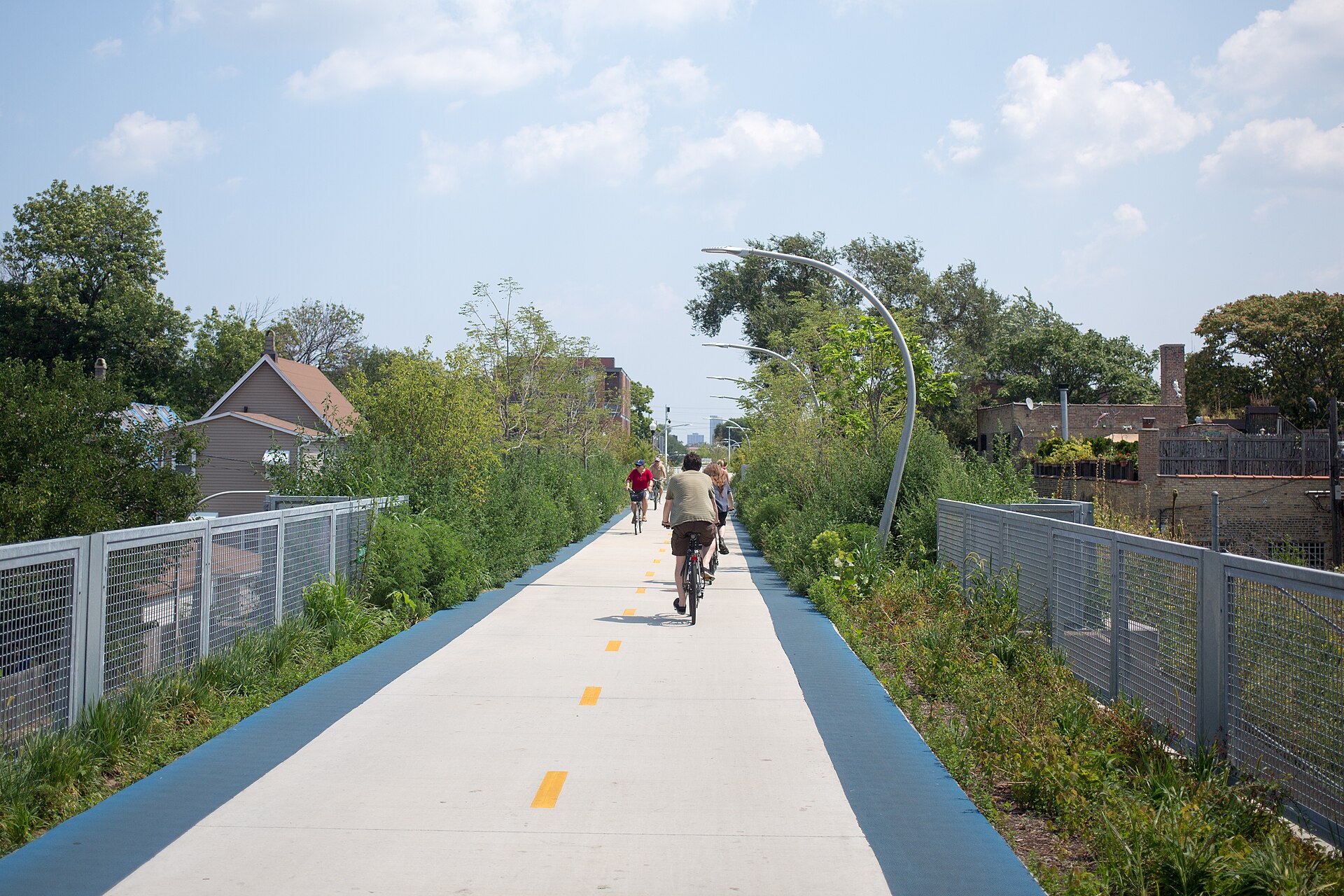
The 606 is a 2.7-mile elevated rail-trail built on a former industrial railroad line through four of Chicago's trendiest neighbourhoods — Wicker Park, Bucktown, Humboldt Park, and Logan Square. Named after Chicago's zip code prefix, the trail opened in 2015 and has become one of the most popular running, cycling, and people-watching routes in the city, a Midwest High Line that puts you 17 feet above street level with unobstructed views of the neighbourhood below. The trail follows the former Bloomingdale Line, a freight railroad that was elevated in 1913 and abandoned in 2001. The conversion preserved the industrial character — concrete pillars, steel bridges, occasional stretches of original rail — while adding native plantings, lighting, public art installations, and access ramps at regular intervals. Running or cycling the full length takes you from the boutiques of Wicker Park through increasingly residential blocks to the wide boulevards and Puerto Rican heritage of Humboldt Park. The neighbourhoods along the trail are some of Chicago's most dynamic — Wicker Park for vintage shopping and cocktail bars, Bucktown for restaurants and galleries, Logan Square for the craft beer and independent music scene. The trail connects them all in a linear park that feels like a neighbourhood rather than a tourist attraction. Come at sunset for the best light and the most runners.
The Rookery
209 S LaSalle St, Chicago, IL 60604
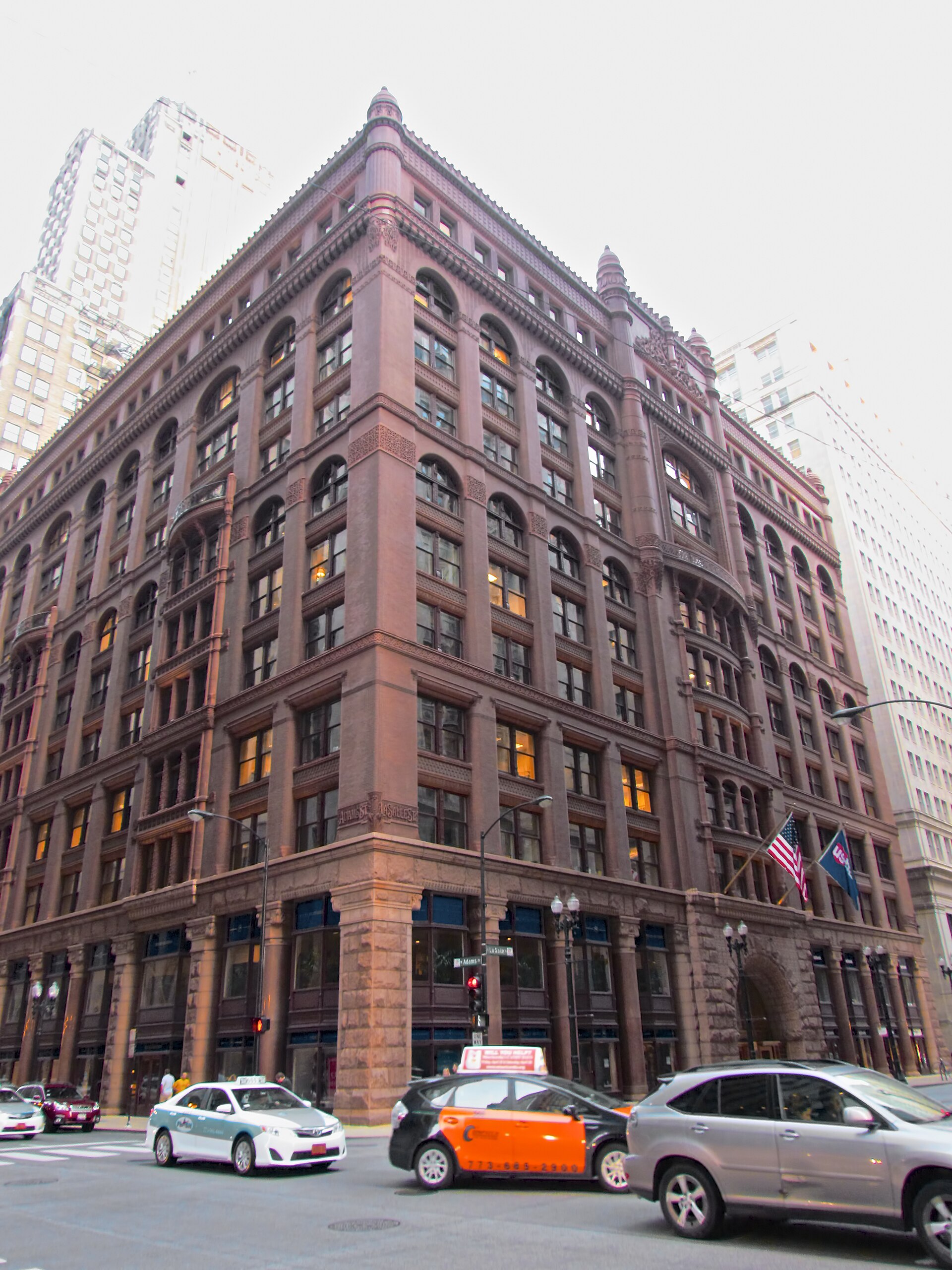
The Rookery is a building that contains two of the greatest achievements in Chicago architecture — and most people who work in it don't know about either. The exterior, designed by Daniel Burnham and John Wellborn Root in 1888, is a Romanesque masterwork in red granite and brick that was the tallest building in Chicago when completed. But the real treasure is the light court — a soaring two-story atrium with a glass skylight that Frank Lloyd Wright redesigned in 1905, adding white marble, gold-leaf ornamentation, and geometric light fixtures that transformed Root's Victorian original into something luminous and modern. The building's name comes from the temporary city hall that stood on this site after the Great Fire of 1871, which attracted so many pigeons that locals called it 'the rookery.' When Burnham and Root built their office block here, the name stuck. The structural innovation hidden behind the ornate exterior was Root's use of a floating foundation — concrete and steel rails spread across the soft Chicago clay — which solved the engineering problem that made tall buildings on Chicago's marshy lakefront soil seem impossible. Wright's lobby renovation is the jewel. The staircase with its ornamental ironwork, the marble wainscoting, the interplay of natural light through the skylight and the geometric patterns Wright imposed on Root's original design — it's one of the few places where you can see two of Chicago's architectural titans in dialogue across two decades. The building is open during business hours, and the lobby is free to visit. Most tourists don't know it exists, which makes it one of the best architecture experiences in the city.
Tribune Tower
435 N Michigan Ave, Chicago, IL 60611
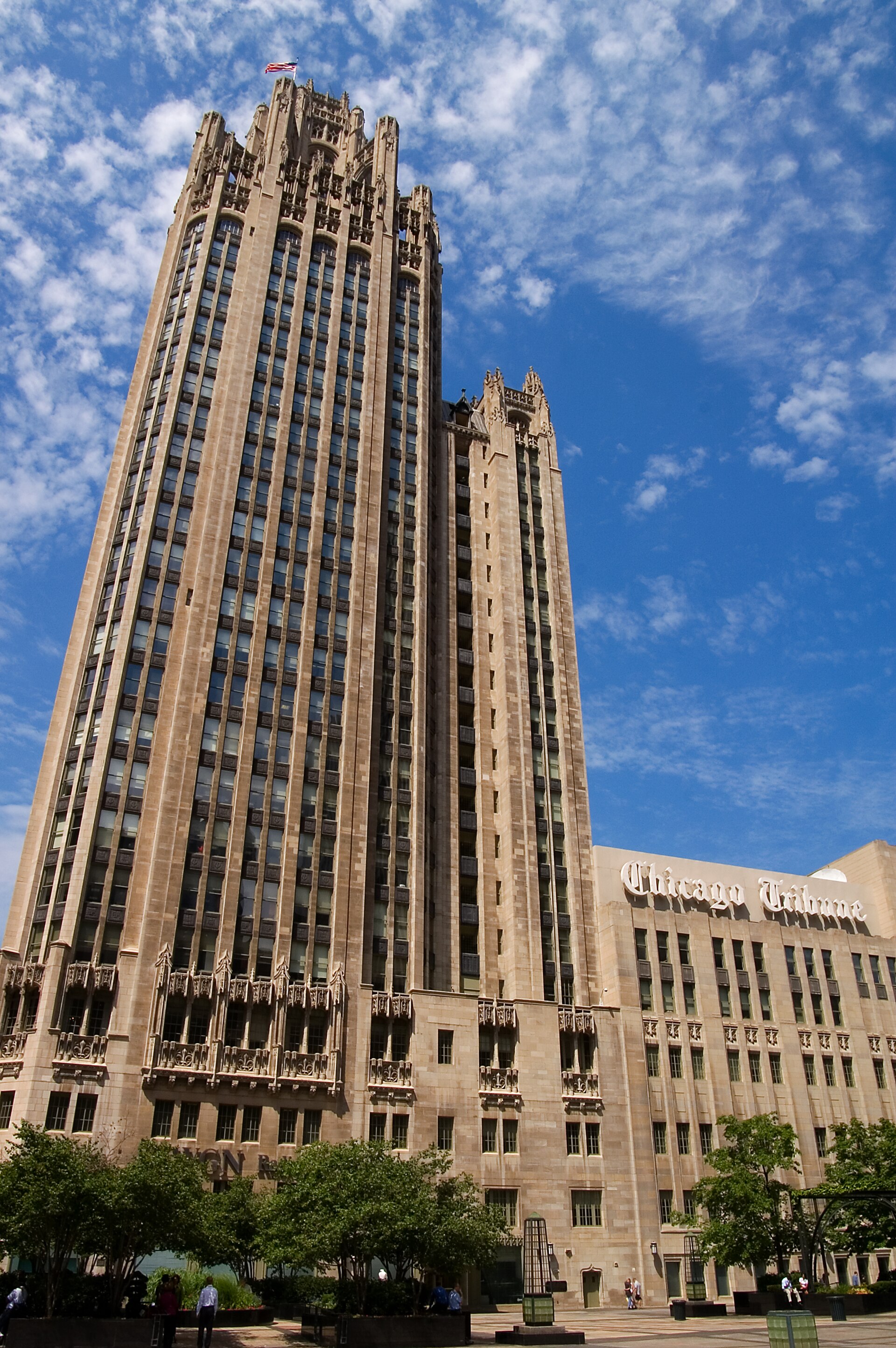
Tribune Tower is a Gothic skyscraper with a secret that most visitors walk past without noticing — embedded in the limestone walls at street level are 149 fragments of famous buildings and landmarks from around the world, collected by Chicago Tribune correspondents over decades: pieces of the Parthenon, the Great Wall of China, Notre-Dame de Paris, the Taj Mahal, the Berlin Wall, the Great Pyramid, Westminster Abbey, and Fort Sumter, among others. The tower itself was the winning entry in a 1922 international architecture competition organised by Tribune publisher Colonel Robert McCormick, who wanted 'the most beautiful and distinctive office building in the world.' The Gothic design by Raymond Hood and John Mead Howells beat 260 entries from around the globe, including a famous modernist submission by Eliel Saarinen that didn't win but was so influential it changed the direction of American architecture. The competition entries are displayed in the Art Institute. The stone fragments are labelled with small plaques, and hunting for them is one of Chicago's best free activities — walking around the base of the tower, spotting pieces of world history mortared into the wall of a newspaper building. The Tribune moved out in 2018 when the tower was converted to luxury condominiums, but the fragments remain, and the flying buttresses, pointed arches, and octagonal crown still make it one of the most distinctive silhouettes on the Michigan Avenue skyline.
Willis Tower Skydeck
233 S Wacker Dr, Chicago, IL 60606
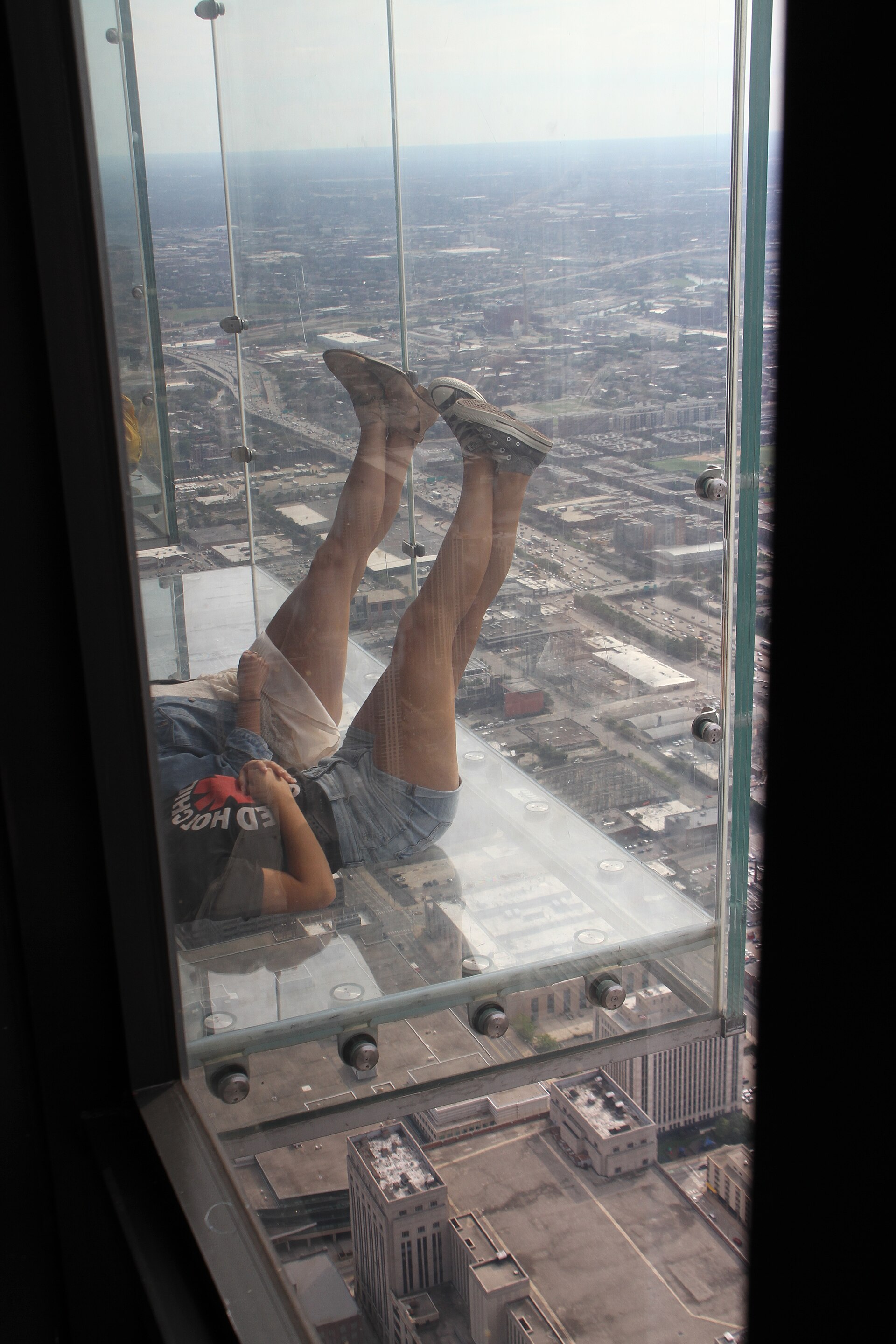
Willis Tower — which every Chicagoan over 30 still calls Sears Tower — held the title of tallest building in the world for 25 years after its completion in 1973, and at 1,450 feet it remains the tallest building in Chicago and one of the most recognisable skyscrapers on Earth. The Skydeck on the 103rd floor offers views across four states on a clear day, but the real attraction is the Ledge — glass-bottomed boxes that extend four feet out from the building, putting nothing between you and the street 1,353 feet below except a few inches of transparent material. The building was designed by Skidmore, Owings & Merrill's Bruce Graham and structural engineer Fazlur Rahman Khan, whose 'bundled tube' structural system — essentially nine separate towers of different heights bound together — was a revolutionary engineering concept that made supertall buildings economically feasible. Every tall building built since owes something to Khan's work on this tower. The Skydeck experience involves a high-speed elevator ride and a queue for the Ledge that varies from 10 minutes to two hours depending on the day. Go early on a weekday morning for the shortest wait, and don't go on a cloudy day — the view from 103 floors up through clouds is atmospheric but you won't see much of the city. On a clear day, the view south toward Indiana, north toward Wisconsin, and east across Lake Michigan to the horizon is one of those perspectives that permanently recalibrates your sense of how big a city can be.
Wrigley Building
400-410 N Michigan Ave, Chicago, IL 60611
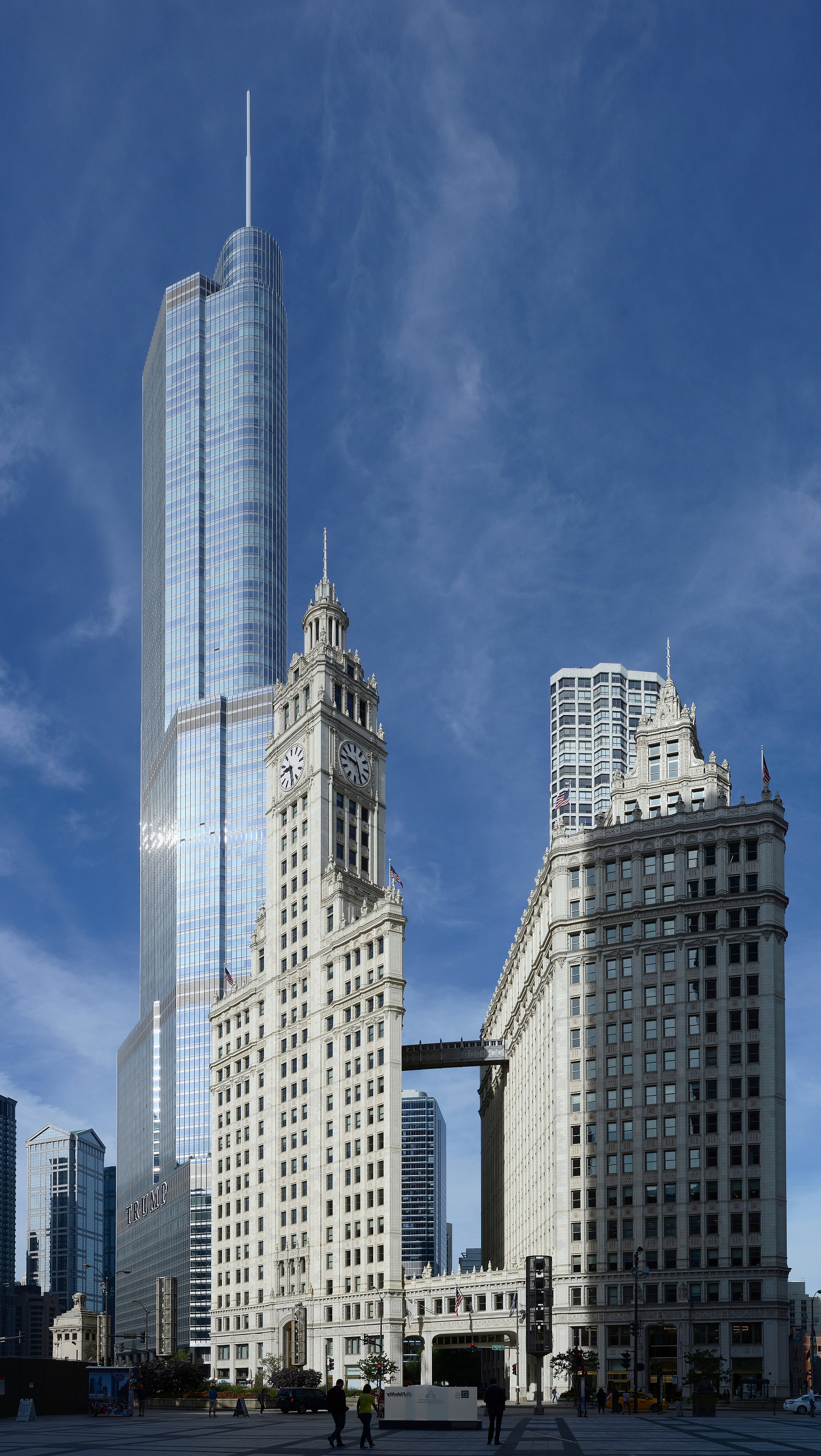
The Wrigley Building is Chicago's white knight — a gleaming terra-cotta twin tower complex that anchors the Magnificent Mile at the Michigan Avenue Bridge and looks like someone dropped a Seville cathedral bell tower into the middle of a business district. Built between 1920 and 1924 for chewing gum magnate William Wrigley Jr., the building was designed by Graham, Anderson, Probst & White in a Spanish Renaissance Revival style that was deliberately theatrical. The white terra-cotta exterior — over 250,000 individually glazed tiles in six different shades of white that get progressively lighter toward the top — was designed to catch the light and make the building visible from miles away. The effect works: on a sunny day, the Wrigley Building glows against the Chicago sky with a brightness that makes neighbouring buildings look dingy by comparison. At night, the building has been floodlit since 1921, making it one of the first buildings in the world to use architectural lighting as a design element. The two towers — the south tower at 30 stories and the north tower at 21 — are connected by walkways at the third and fourteenth floors, creating a courtyard between them that opens onto the river. The building's location at the foot of the Magnificent Mile, directly across the bridge from the Loop, means it's been the first major landmark visitors see when crossing the river northward for over a century. It's the building that established the Michigan Avenue skyline.