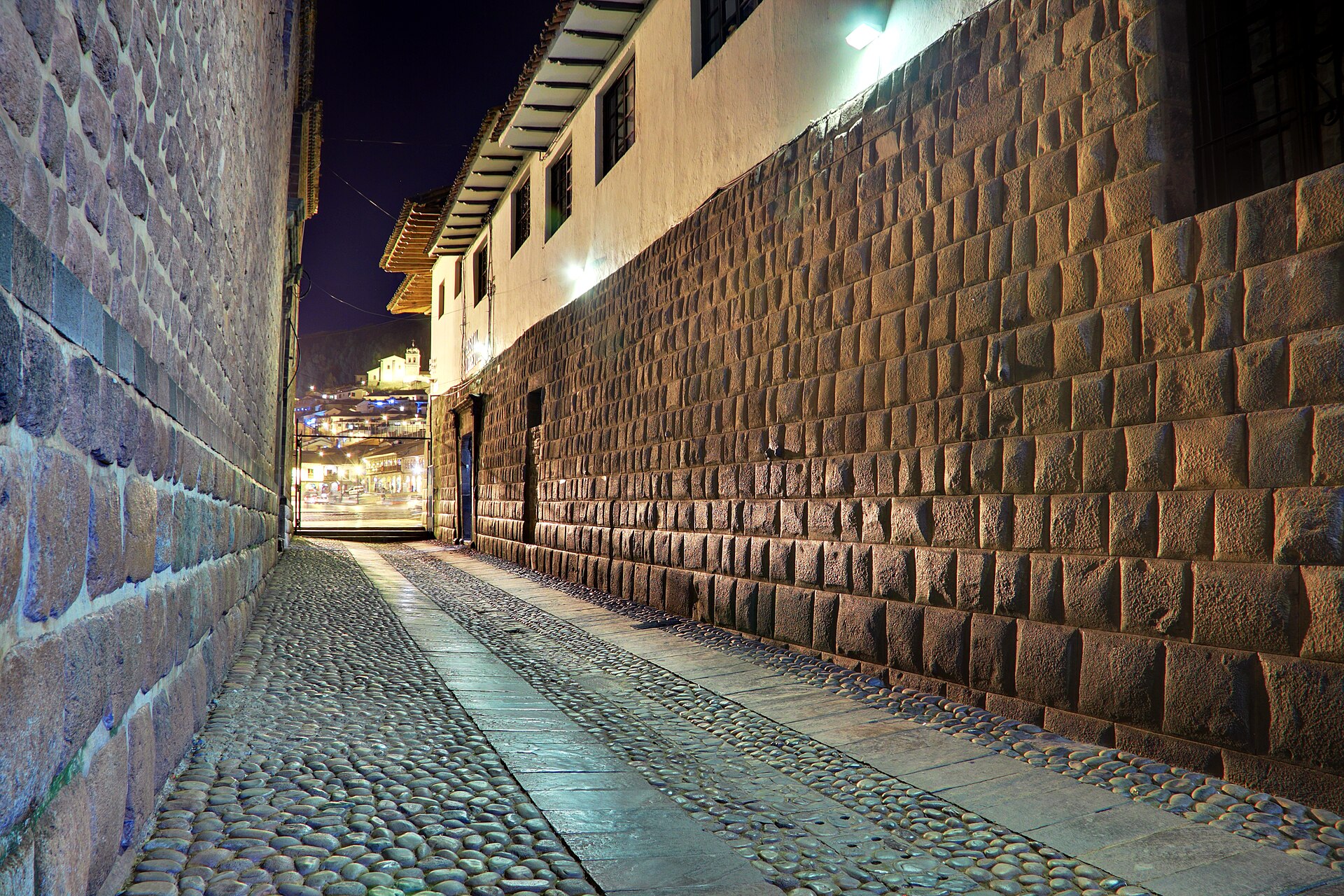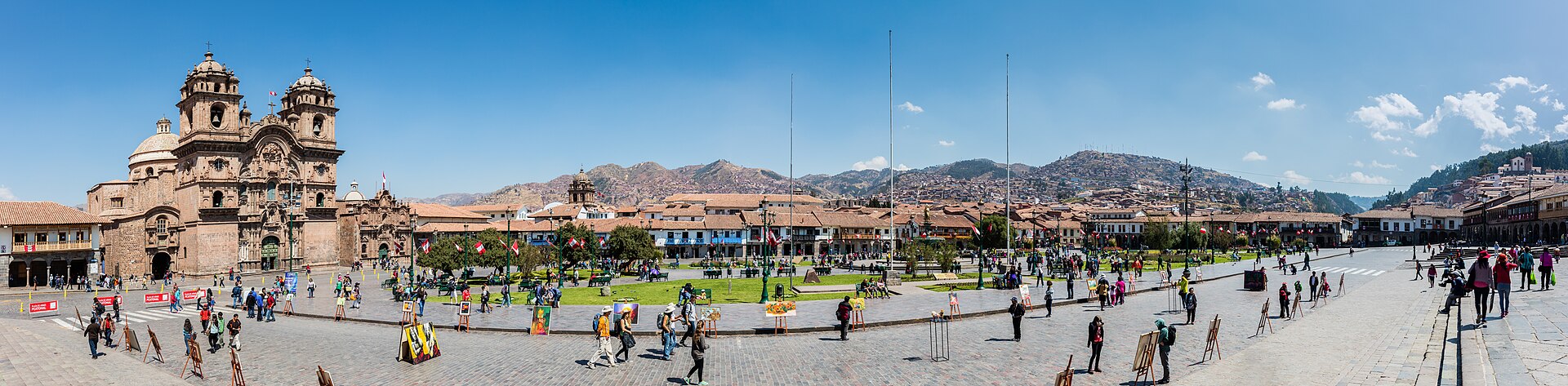
The Plaza de Armas is the heart of Cusco and one of the most historically layered public squares in the Americas — the site of the Inca Huacaypata (the great ceremonial plaza of the Inca Empire), rebuilt by the Spanish as the centre of colonial Cusco, and now a UNESCO World Heritage space surrounded by colonial arcades, Baroque churches, and the restaurants and shops that serve the city's modern tourism economy. Every stone in the square has been placed at least twice — first by the Inca, then by the Spanish who built their city on top.
The Cathedral of Cusco and the Iglesia de la Compañía de Jesús (Church of the Society of Jesus) face each other across the square, and the competition between them — the cathedral asserting episcopal authority, the Jesuits asserting their own — produced two of the finest Baroque churches in South America. The arcaded colonial buildings lining the square's perimeter house restaurants with balcony seating that provides the best people-watching vantage in the city.
The square is the gathering point for every major event in Cusco — Inti Raymi (the June solstice festival recreating the Inca sun ceremony), Corpus Christi, political demonstrations, and the daily social ritual of the paseo (evening stroll). The altitude (3,400 metres) makes the light sharper and the sky bluer than at sea level, and the view from the square — colonial buildings against the mountain backdrop — is the defining image of highland Peru.
Verified Facts
The Plaza de Armas sits on the site of the Inca Huacaypata
Cusco sits at approximately 3,400 metres elevation
Inti Raymi is celebrated at the June solstice
The square is a UNESCO World Heritage Site
Get walking directions
Plaza de Armas, Cusco