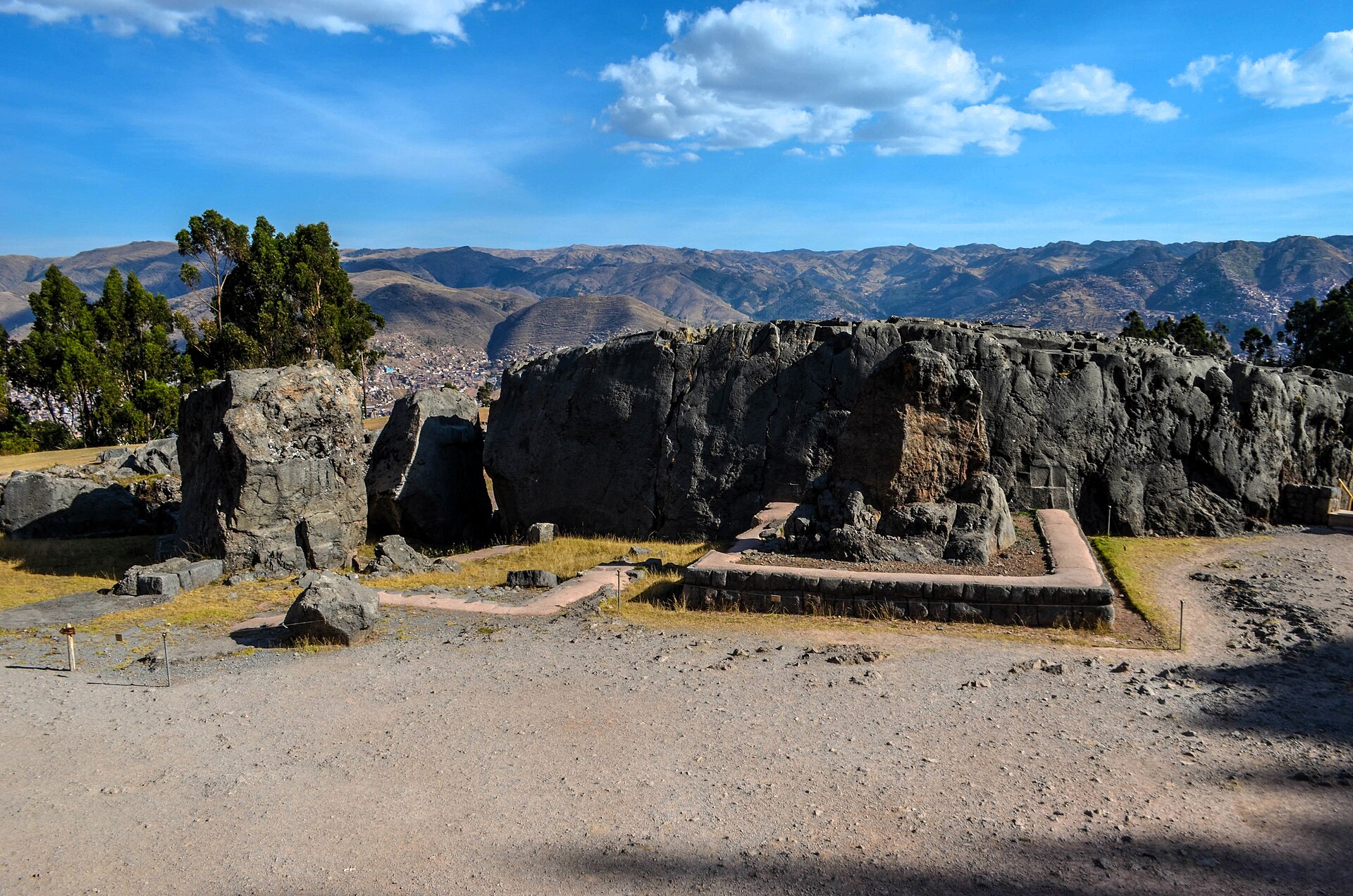
Q'enqo is an Inca ceremonial site carved from a massive limestone outcrop on the road between Cusco and Sacsayhuamán — a sacred rock whose surface is covered with carved channels (the name means 'zigzag' in Quechua, referring to the zigzag channel carved into the rock's surface), niches, steps, and the altar-like platforms that suggest it was used for astronomical observations and ritual ceremonies.
The site's most remarkable feature is the cave beneath the outcrop — a natural chamber with carved stone seats, niches, and a stone table that was likely used for the preparation of mummies or the performance of rituals related to death and the underworld. The Inca's relationship with stone was fundamentally different from European traditions — they saw living rock as sacred (huaca), and sites like Q'enqo represent the Inca practice of carving sacred sites into the landscape rather than building over it.
Q'enqo is a 20-minute walk from Sacsayhuamán and is included on the Boleto Turístico. The site is smaller and less monumental than Sacsayhuamán but provides a more intimate encounter with Inca religious practice — the carved surfaces feel like they were shaped by hands rather than armies.
Verified Facts
Q'enqo means 'zigzag' in Quechua
The site is carved from a single limestone outcrop
Huaca was the Inca term for sacred places in the landscape
The site is included on the Boleto Turístico
Get walking directions
Q'enqo, Cusco