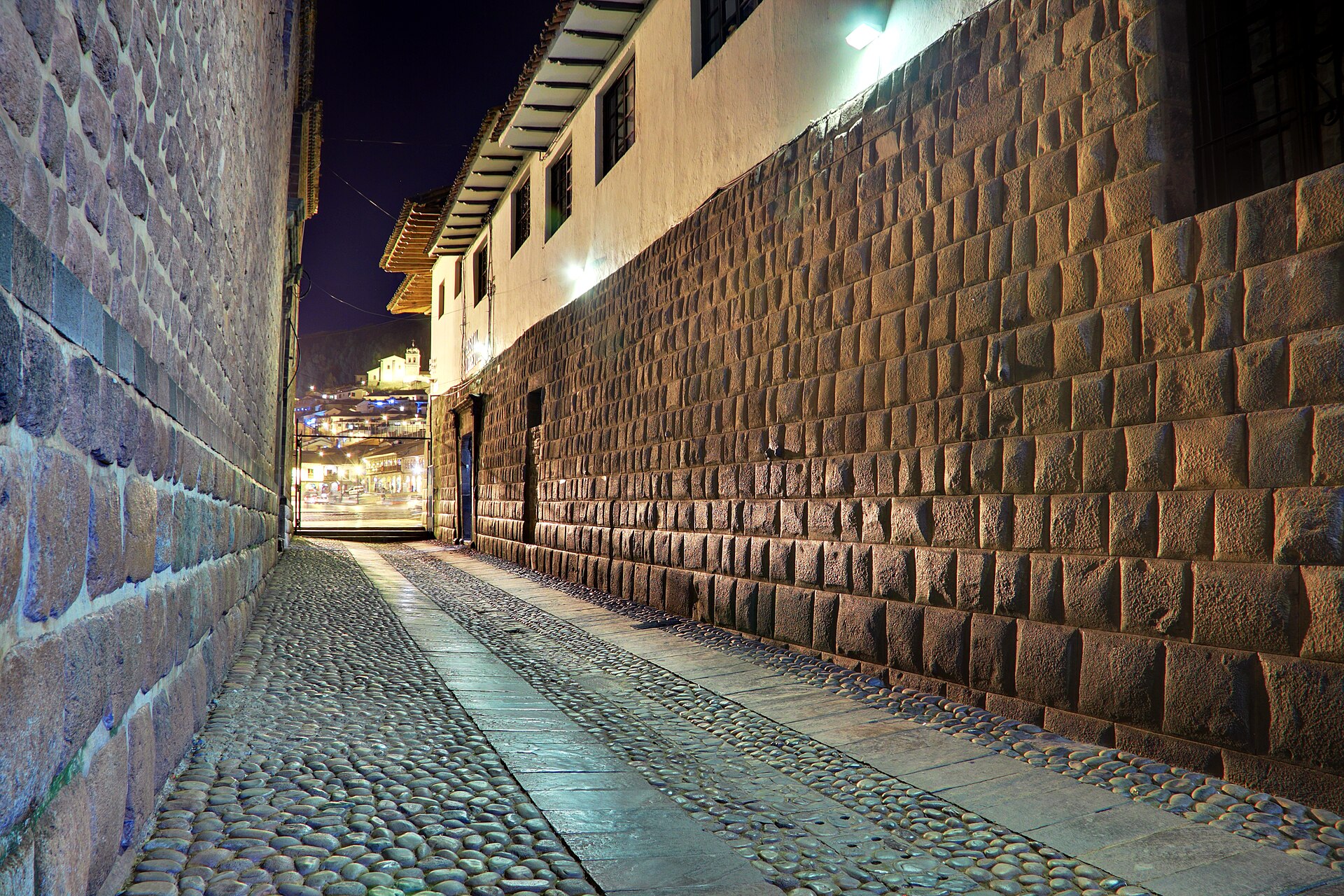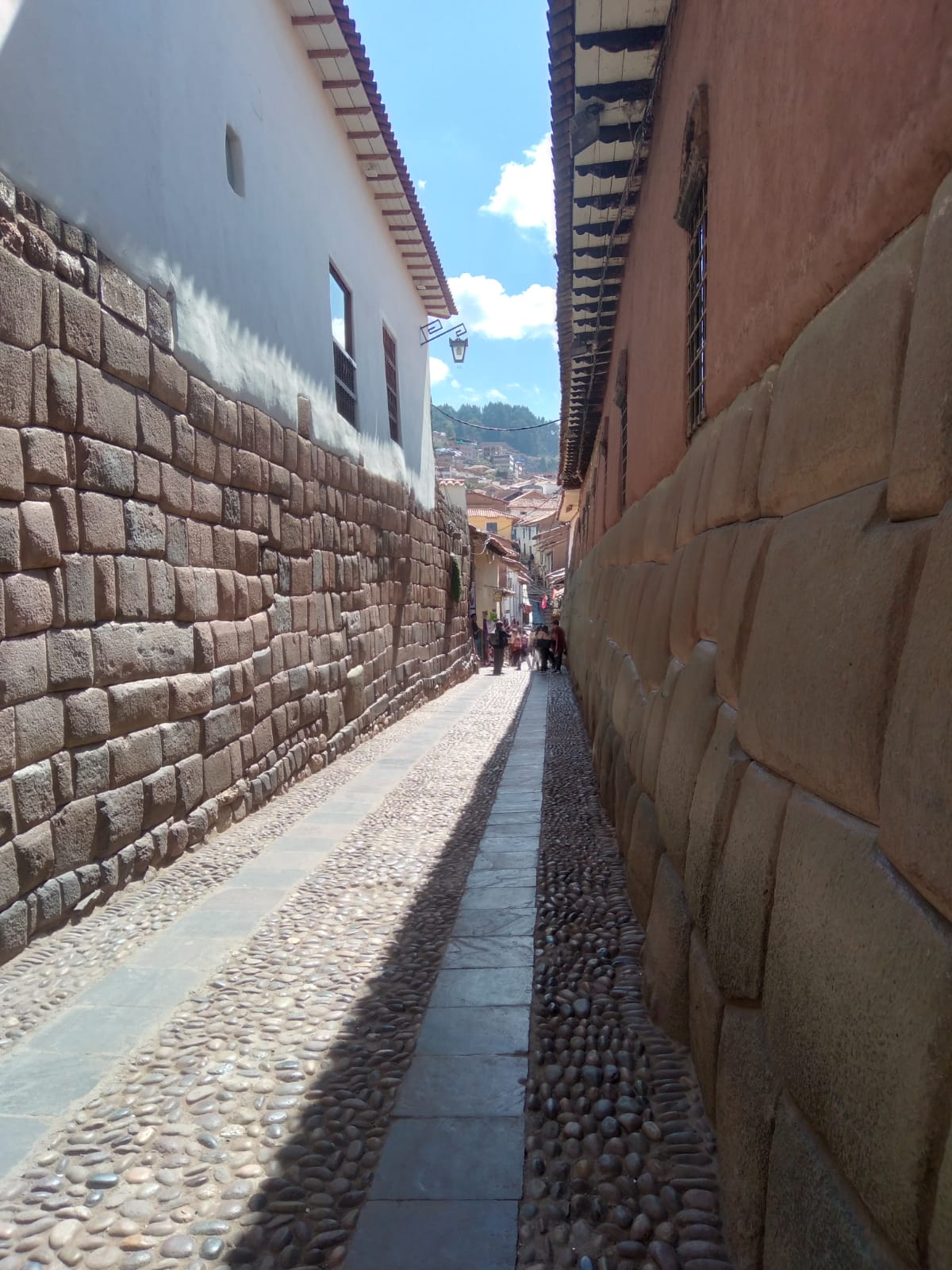
The Twelve-Angle Stone is the most famous individual stone in Inca architecture — a precisely cut andesite block fitted into a wall on Calle Hatunrumiyoc that has twelve angles and edges, each fitting perfectly against the neighbouring stones without mortar. The stone, which forms part of the wall of the former palace of Inca Roca (now the Archbishop's Museum), demonstrates the Inca masonry technique at its most complex — polygonal stones of irregular shapes fitted together like a three-dimensional jigsaw puzzle.
The street itself — Hatunrumiyoc, meaning 'great stone' in Quechua — is one of the best-preserved Inca streets in Cusco, with walls on both sides composed of the precisely fitted stonework that survived every earthquake the Spanish buildings above them did not. The wall containing the Twelve-Angle Stone is part of a longer stretch of Inca masonry that shows how the builders achieved earthquake resistance by using stones of different sizes that interlock under stress rather than separating.
The stone has become a tourism icon — vendors sell miniature replicas, and the constant stream of visitors photographing it (it's free, visible from the street, and guarded by a bored policeman who prevents touching) has made it Cusco's equivalent of the Mona Lisa: small, famous, and the subject of more photographs than its size would suggest. But the engineering it represents — fitting 12 angles to meet 12 corresponding surfaces with sub-millimetre precision — genuinely deserves the attention.
Verified Facts
The stone has twelve angles and is fitted without mortar
Hatunrumiyoc means 'great stone' in Quechua
The wall was part of the palace of Inca Roca
The stone is now part of the Archbishop's Museum wall
Get walking directions
Calle Hatunrumiyoc, Cusco