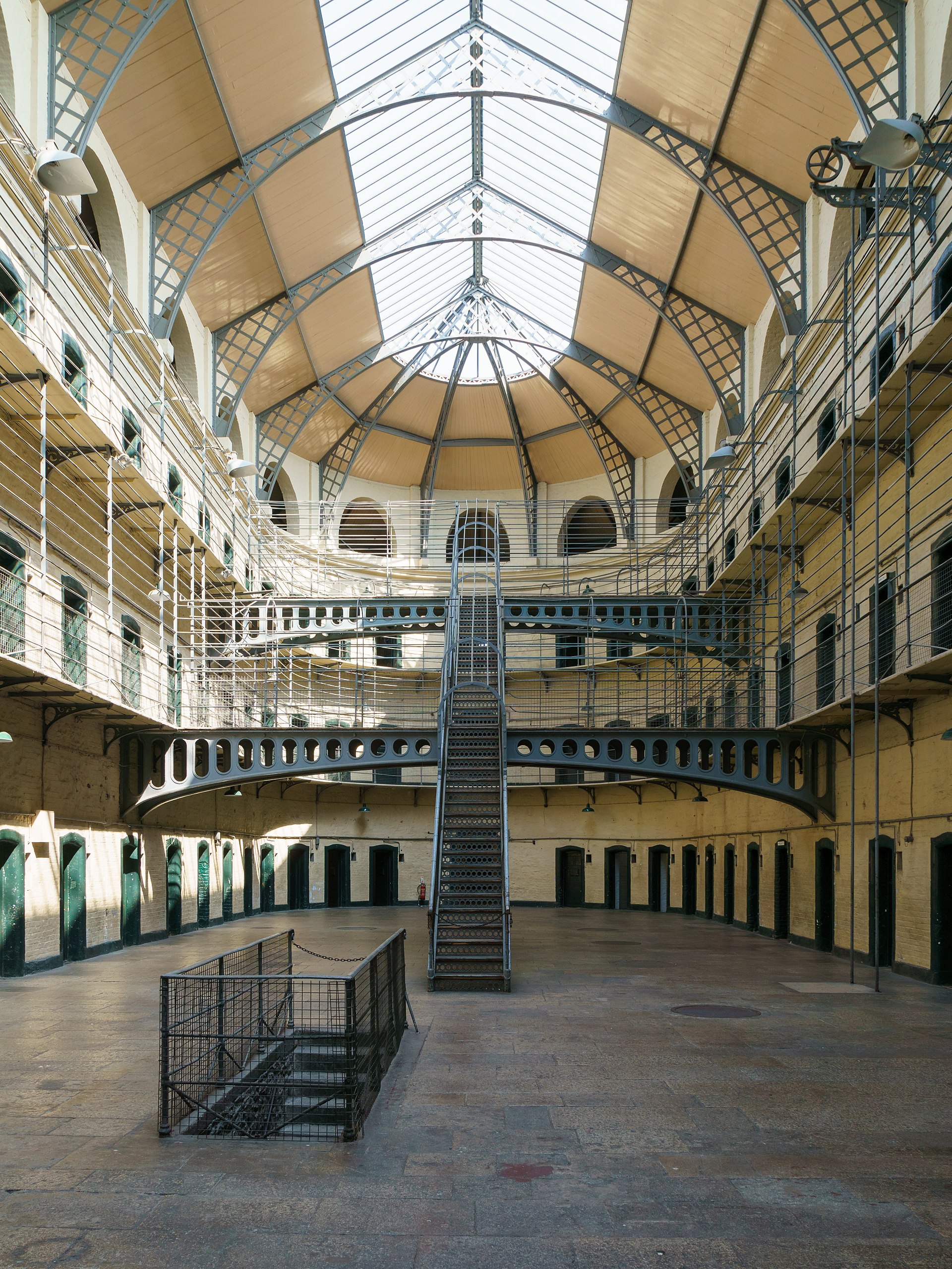
Every major chapter of Ireland's fight for independence played out behind these walls. Kilmainham Gaol opened in 1796 as Dublin's county prison, and from the very start it held political prisoners alongside common criminals. Robert Emmet was held here before his execution in 1803. The Young Irelanders came through in 1848. The Fenians filled the cells in the 1860s. Charles Stewart Parnell did time here. And in May 1916, fourteen leaders of the Easter Rising were marched into the Stonebreaker's Yard and shot by firing squad.
The execution of James Connolly was particularly brutal. He was so badly wounded from the Rising that he couldn't stand, so they strapped him to a chair and shot him sitting down. The executions, carried out over ten days in secrecy, transformed public opinion almost overnight — turning the rebels from reckless adventurers into martyrs and setting in motion the events that led to Irish independence.
Conditions inside were deliberately harsh. During the Great Famine of 1845-52, the prison became grotesquely overcrowded as desperate people committed petty crimes just to get fed. Prisoners were guaranteed at least one meal a day — more than many starving peasants outside could expect. Over 4,000 early prisoners were transported to Australia. Children as young as seven were locked up for stealing food.
The prison was abandoned in 1924 and sat derelict for decades until volunteers began restoring it in the 1960s. President de Valera — himself a former prisoner here — opened it as a museum in 1966 on the 50th anniversary of the Rising. It's now the most visited heritage site in Ireland, and the guided tour through the dim corridors and execution yard is one of the most moving experiences in Dublin.
Verified Facts
Kilmainham Gaol opened in 1796 and held political prisoners including Robert Emmet, Parnell, and leaders of the 1916 Rising
Fourteen leaders of the 1916 Easter Rising were executed by firing squad in the Stonebreaker's Yard
James Connolly was so badly wounded he had to be strapped to a chair for his execution
President de Valera, a former prisoner, reopened it as a museum in 1966 on the 50th anniversary of the Rising
Over 4,000 early prisoners were transported to Australia from Kilmainham Gaol
Get walking directions
Inchicore Road, Kilmainham B, Dublin 8, Ireland