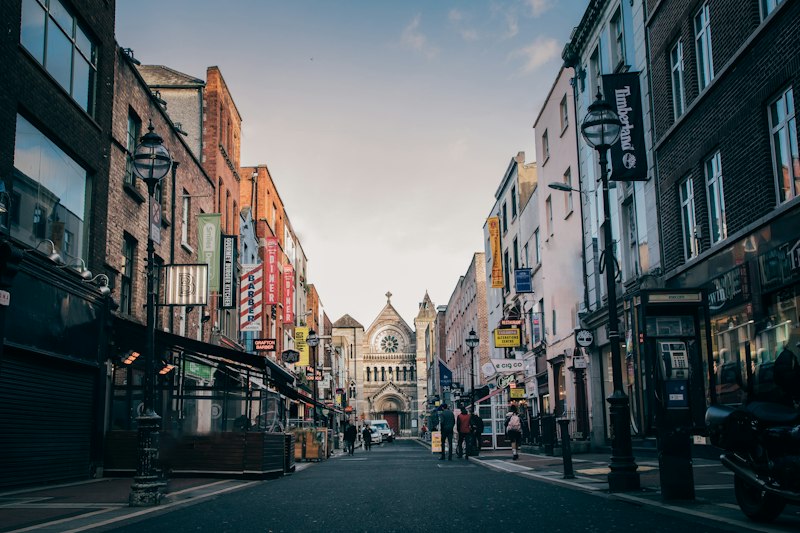
Walking Tours in Dublin
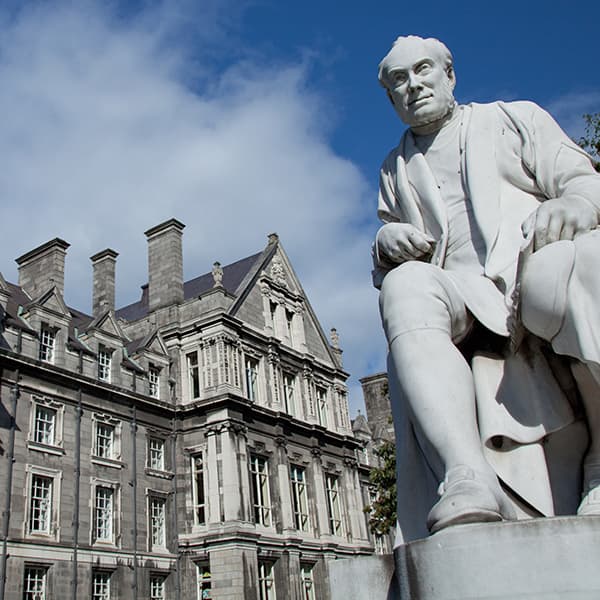
Dublin City Walk 1: South Bank
A 17-stop walking tour through the heart of Ireland. Visit Dublin City Walk: Part One , Walking to Mansion House, Grafton Street, and More Grafton Street — with narrated stories at every stop.
Dublin City Walk 2: O'Connell Street
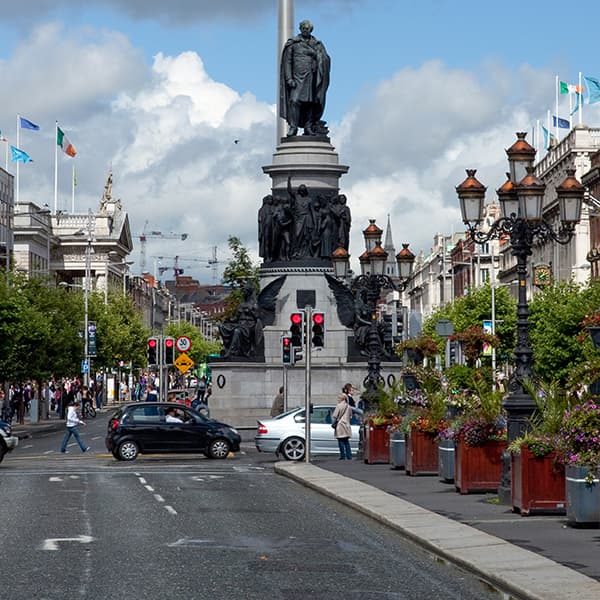
A 10-stop walking tour through the heart of Ireland. Visit Dublin City Walk: Part Two, The Daniel O'Connell Monument, More Statues of Patriots, and The General Post Office — with narrated stories at every stop.
Dublin: Literary Pubs & Georgian Streets
Follow in the footsteps of Joyce, Beckett, and Wilde through Dublin's Georgian squares, the Book of Kells, Temple Bar's cobblestones, and the Guinness Storehouse.
30 Landmarks in Dublin
Book of Kells
College Green, Mansion House A, Dublin 2, D02 PN40, Ireland
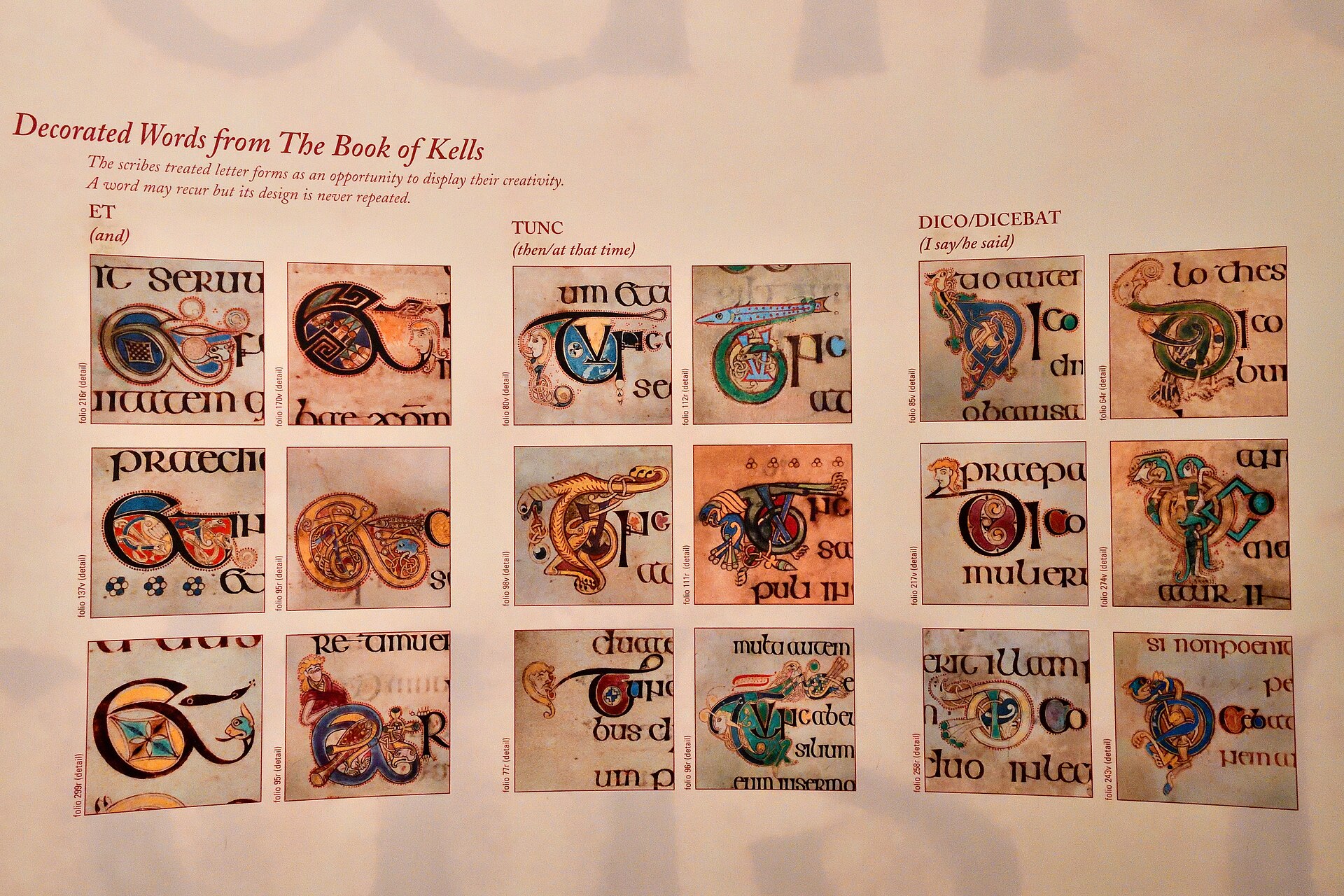
This is an 800-year-old manuscript that monks almost certainly got murdered over. The Book of Kells was created around 800 AD, probably begun on the Scottish island of Iona before a catastrophic Viking raid in 806 killed 68 monks and forced the survivors to flee to Kells in County Meath. They brought the unfinished manuscript with them, and somewhere between Iona and Kells, they completed one of the most lavishly decorated books in human history. The book contains the four Gospels of the New Testament in Latin, but nobody comes here for the theology. They come for the decoration. Every single page is an explosion of interlocking spirals, fantastical animals, and impossibly intricate knotwork rendered in pigments sourced from across the known world — lapis lazuli from Afghanistan, kermes red from Mediterranean insects, orpiment yellow from arsenic sulfide. The monks who painted these pages were working with magnifying tools that wouldn't be invented for another five hundred years, yet some details are so fine they can only be seen under microscope. The manuscript was stolen in 1007 — the Annals of Ulster record it being ripped from its jeweled cover and found months later buried under sod. It survived the English Reformation, Cromwell's armies, and centuries of neglect before landing at Trinity College in 1661, courtesy of Henry Jones, a former scoutmaster in Cromwell's army turned Bishop of Meath. Today, two of its 680 pages are displayed at any one time, rotated every twelve weeks. You'll queue for it, you'll spend maybe three minutes in front of the glass case, and it will be worth every second. There is nothing else like it on earth.
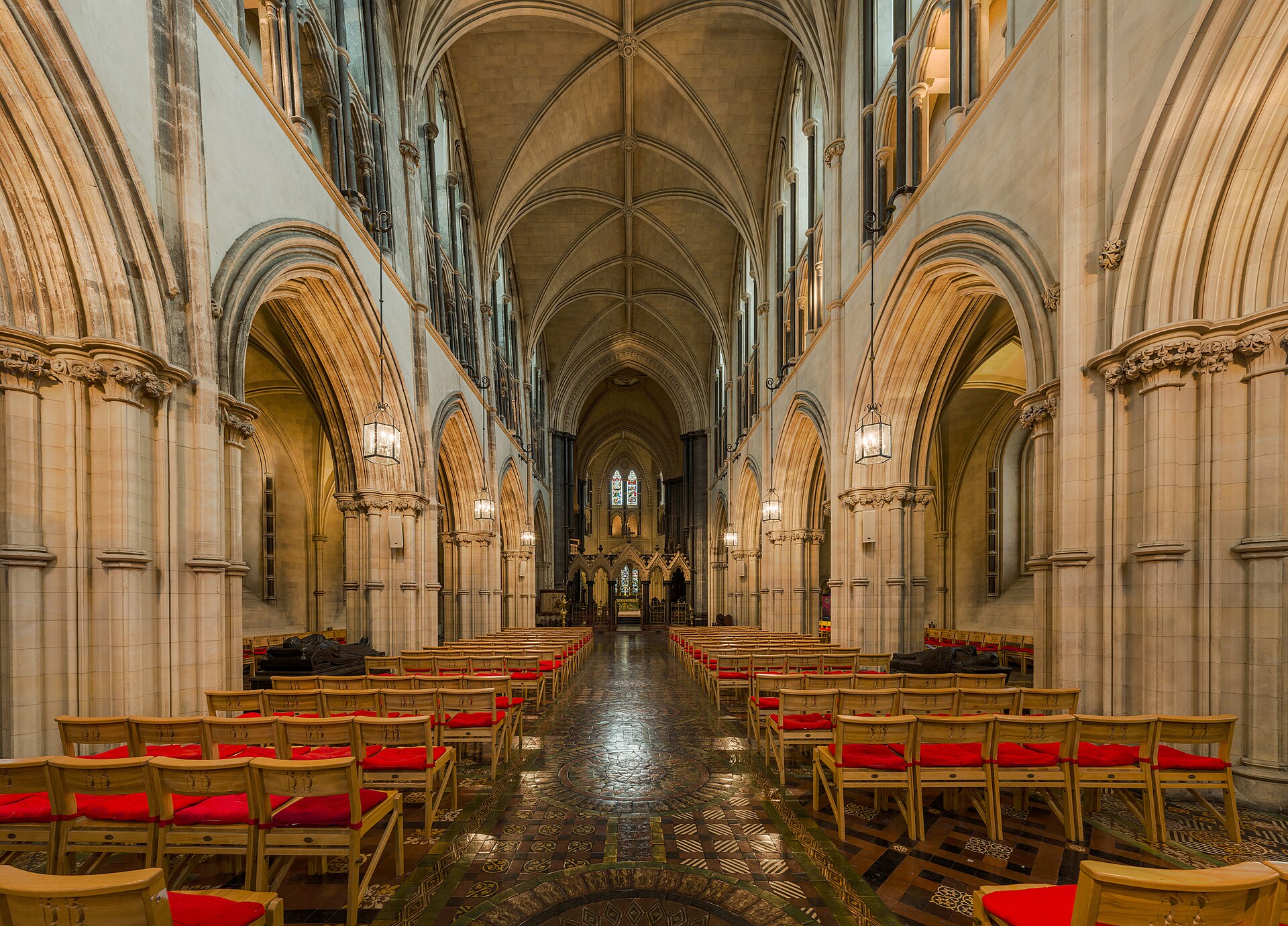
Christ Church Cathedral
Christchurch Place, Wood Quay A, Dublin 8, Ireland
A Viking king built the original version of this cathedral in 1030, which tells you just how long Dublin has been arguing about religion. Sitriuc Silkenbeard, the Norse King of Dublin, founded the first wooden church here, and it was replaced by the massive stone cathedral you see today after the Norman invasion. Strongbow — Richard de Clare, the Anglo-Norman warlord who essentially conquered Ireland — is supposedly buried here, though the tomb you'll see is actually a replacement. The original was destroyed when the roof collapsed in 1562, and the current effigy is modeled on a completely different person, the Earl of Drogheda. The real star of Christ Church is underground. The crypt is the largest cathedral crypt in Britain or Ireland, stretching 63.4 metres beneath the nave. It dates to 1172-1173 and contains a genuinely bizarre collection: the oldest known secular carvings in Ireland, a tabernacle from the cathedral's Catholic days, and — most famously — a mummified cat and rat found trapped together inside an organ pipe, now displayed behind glass. James Joyce referenced this cat and rat in Finnegans Wake, because of course he did. The cathedral has had a rough millennium. Vikings, Normans, the Reformation, Cromwell, structural collapses — the south wall actually leaned almost two feet out of true before a massive Victorian restoration in the 1870s funded by the whiskey distiller Henry Roe, who spent £230,000 of his own money. That's about £25 million in today's terms, spent by a whiskey maker to save a church. Dublin in a nutshell. The bridge connecting Christ Church to the Synod Hall (now Dublinia museum) was added during that restoration and is one of Dublin's most photographed features.
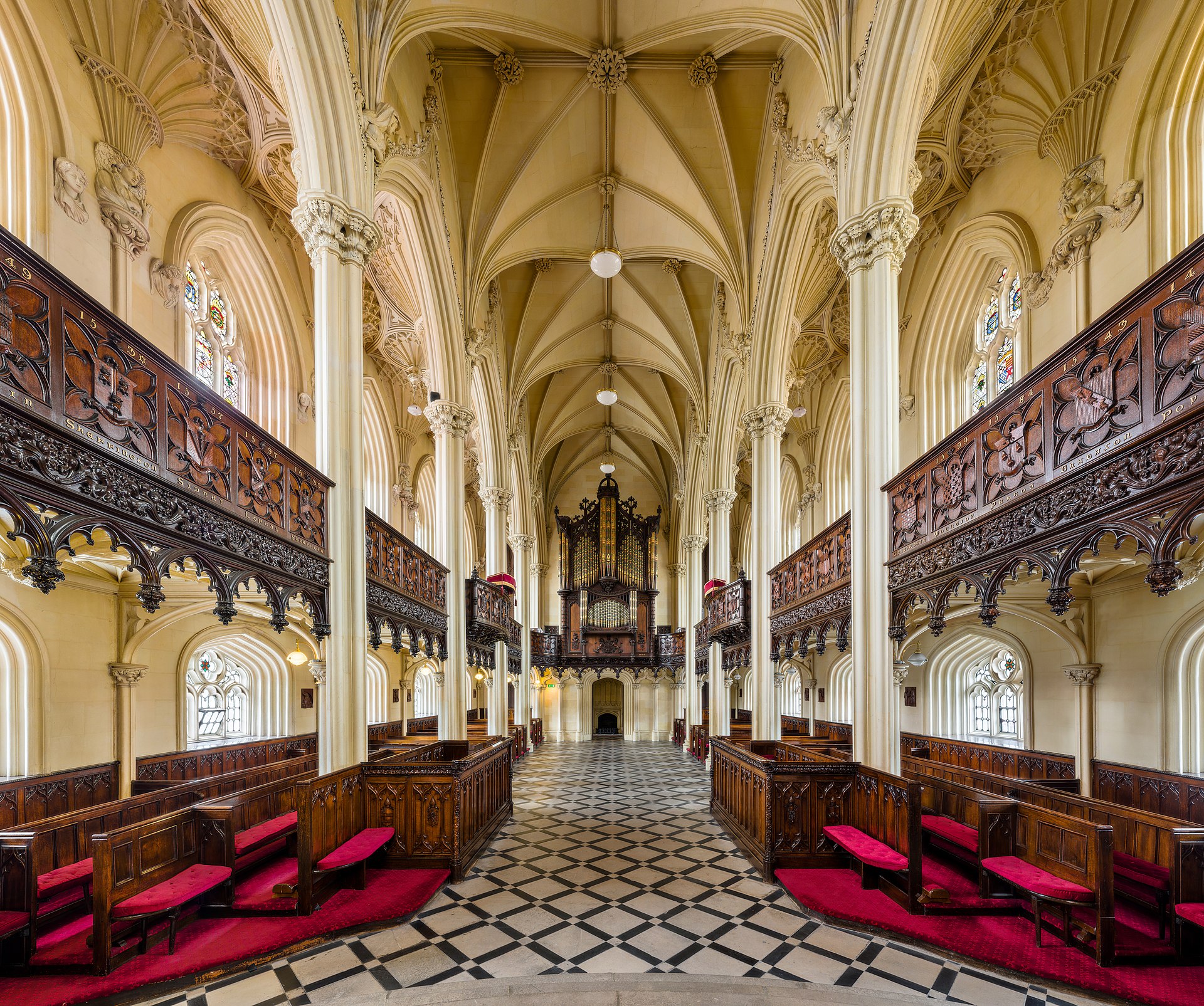
Dublin Castle
Dame Street, Royal Exchange A, Dublin 2, Ireland
For over 700 years, this was the seat of British power in Ireland, and almost nobody in Ireland wanted it to be. King John of England ordered the castle built in 1204 as a defensive fortress, and by 1230 it was a classic Norman courtyard design with four circular corner towers. For centuries it served as the administrative heart of British rule — the place where lord lieutenants governed, taxes were collected, and Irish affairs were managed by people who mostly weren't Irish. Then in 1684, a catastrophic fire destroyed most of the medieval structure. What you see today is largely the Georgian reconstruction — stately, elegant, and deliberately designed to project authority rather than military might. The State Apartments, with their ornate plasterwork and massive chandeliers, are where the serious business of ruling happened. They're still used for presidential inaugurations and state receptions. But the most fascinating part lies underground. Excavations beneath the castle have uncovered sections of the original medieval walls, the castle moat, and — most remarkably — remains of the Viking defences that predated the Norman fortress. The name Dublin itself comes from "Dubh Linn," the dark pool on the River Poddle where Vikings first established their longfort around 841 AD. Recent archaeology has revealed this tidal pool was nearly 400 metres wider than originally thought. The handover of Dublin Castle from British to Irish control in January 1922 was loaded with symbolism. Michael Collins arrived seven minutes late. When the British Viceroy complained, Collins reportedly replied, "We've been waiting 700 years, you can have the seven minutes." The story may be apocryphal, but it captures the mood perfectly.
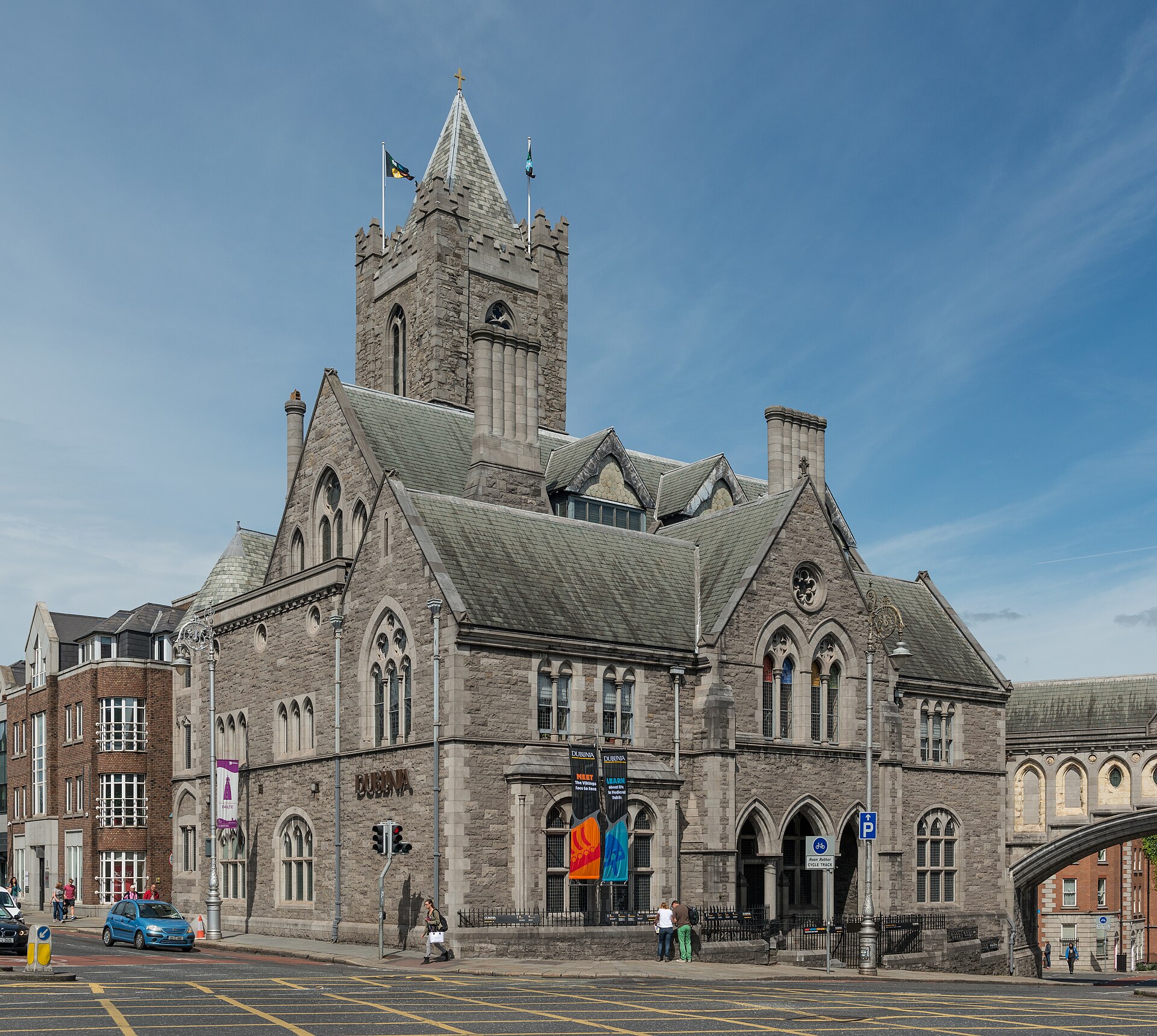
Dublinia
St Michael's Hill, Christchurch, Dublin 8
If you want to know what Dublin smelled like in 1050, this is the place. Dublinia is a hands-on museum dedicated to Viking and medieval Dublin, housed in the former Synod Hall of the Church of Ireland — a neo-Gothic building connected to Christ Church Cathedral by an elegant covered bridge that is one of the most photographed spots in the city. The museum sits at the epicentre of Viking Dublin. Just outside, at Wood Quay, archaeologists in the 1970s and 1980s uncovered the largest Viking settlement ever excavated — over a hundred house foundations along what is now Fishamble Street, plus defensive palisades, streets, paths, and evidence of land reclamation into the river. The anaerobic soil had preserved an astonishing array of objects: furniture, toys, jewelry, tools, coins, even wooden gaming pieces. It was the most significant Viking archaeological find in Europe, and Dubliners fought bitterly (and ultimately unsuccessfully) to prevent the city council from building offices on top of it. Dublinia displays many of these artifacts on permanent loan from the National Museum and recreates Viking and medieval life through interactive exhibits — you can try on armour, see a reconstructed Viking house, and experience the sights and sounds of a medieval fair. One gallery is devoted to the archaeological process itself, showing how these treasures were painstakingly extracted from Dublin's soil. The museum tower offers panoramic views over the city, and the bridge to Christ Church means you can combine both visits. It opened in 1993 and was redeveloped in 2010. For anyone interested in the city's pre-Georgian layers, it's essential.
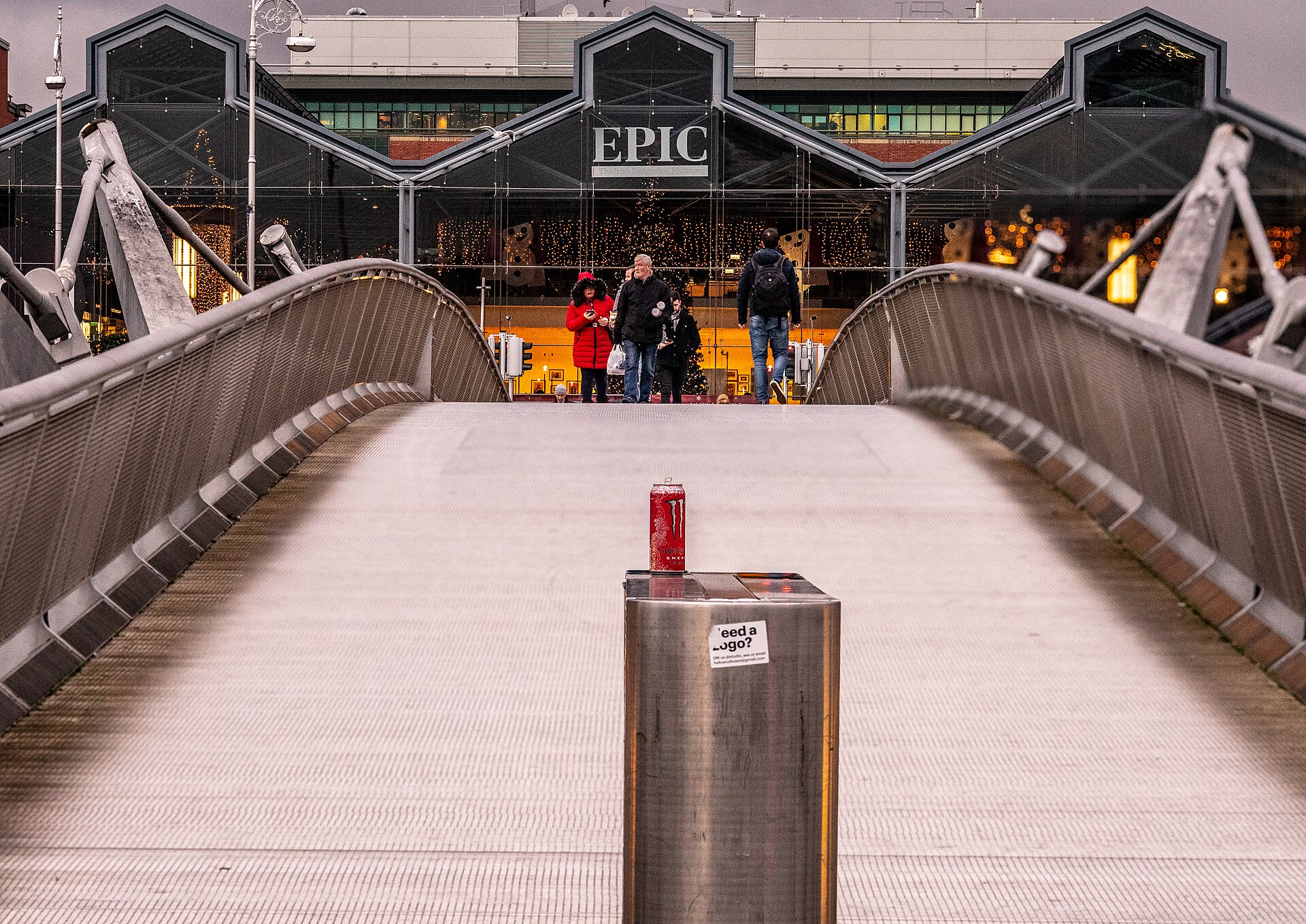
EPIC The Irish Emigration Museum
Custom House Quay, Dublin 1, Ireland
Ten million people left Ireland between 1800 and 1930 — more than the island's current population — and this museum tells their story with a level of technological sophistication that earned it Europe's Leading Tourist Attraction three years running. EPIC is housed in the 200-year-old stone vaults of the CHQ Building, a customs warehouse built between 1817 and 1820 by John Rennie and Thomas Telford to store tobacco, tea, and spirits from incoming ships. The irony of telling an emigration story in a building designed for imports is probably intentional. The museum describes itself as the world's first fully digital museum. There are no artifacts behind glass — instead, twenty themed galleries use projections, interactive touchscreens, and immersive installations to trace the Irish diaspora across the globe. You'll learn how Irish emigrants became presidents (22 US presidents claim Irish ancestry), revolutionaries (Che Guevara's grandmother was from Galway), and cultural forces from Buenos Aires to Sydney. Neville Isdell, former CEO of Coca-Cola and himself a member of the Irish diaspora, bought the CHQ Building in 2013 and funded the museum. It was officially opened in 2016 by former President Mary Robinson. The Irish Family History Centre on the same floor lets visitors trace their own ancestral connections. What makes EPIC genuinely moving is its refusal to sentimentalize. Emigration was often forced — by famine, poverty, political persecution. The galleries don't flinch from this. But they also show how the Irish diaspora reshaped the world, from labour movements to literature to the NYPD. It's a story about loss that somehow ends up being about influence.
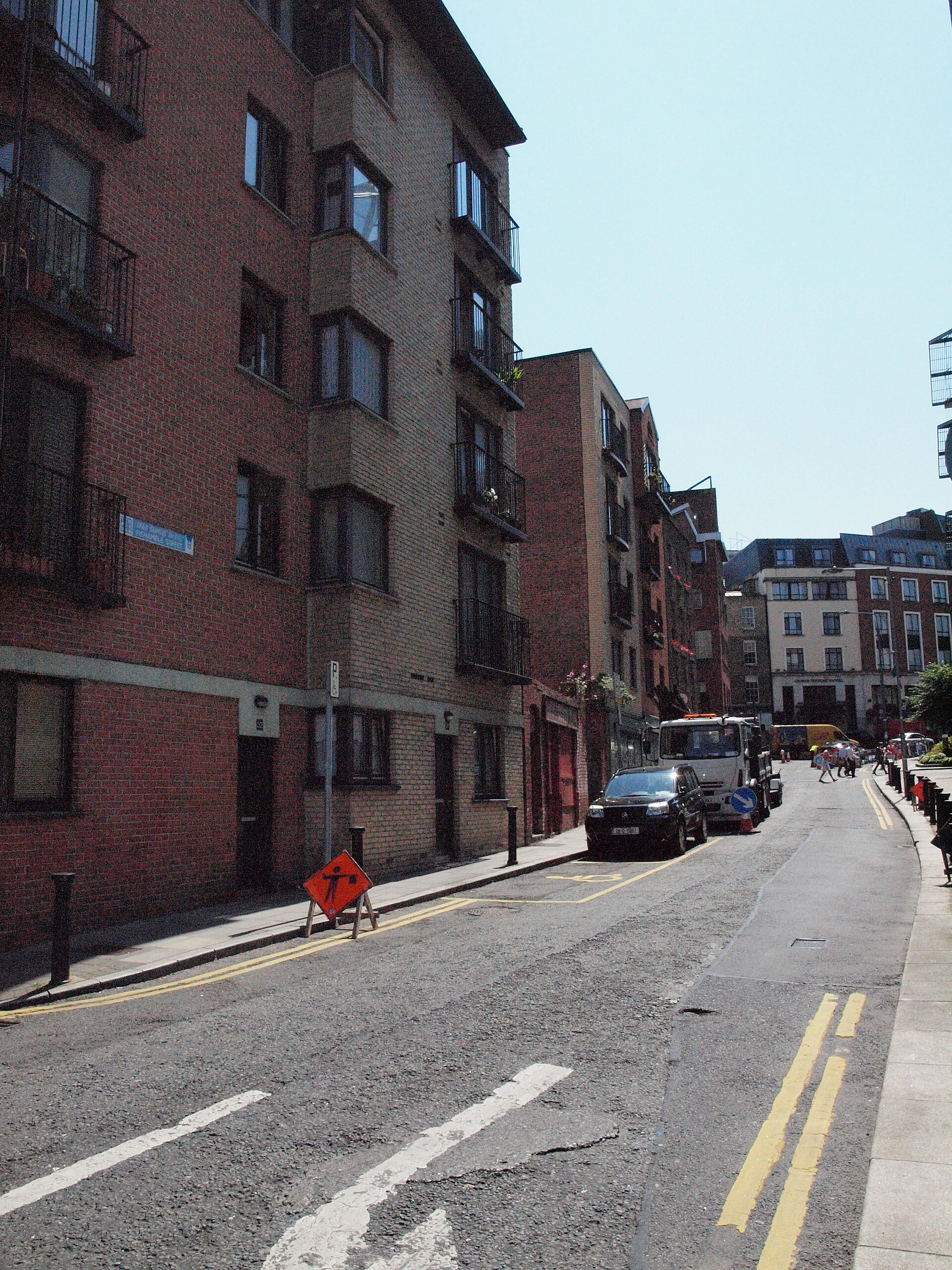
Fishamble Street
Fishamble Street, Wood Quay A, Dublin 8, Ireland
This narrow, unassuming street in the shadow of Christ Church Cathedral is the oldest street in Dublin — and the place where Handel's Messiah was first performed. On April 13, 1742, George Frideric Handel conducted the world premiere of his oratorio at Neal's Music Hall, a newly built venue that held about 700 people. To squeeze in as many paying customers as possible, gentlemen were asked to leave their swords at home and ladies to come without hooped skirts. Handel had his own organ shipped from London for the occasion and declared that "the Musick sounds delightfully in this charming Room." Fishamble Street's history goes back far further than Handel. The name comes from "fish shambles" — the medieval fish market that operated here when this was the commercial heart of Viking and Norman Dublin. Excavations since the 1960s have uncovered the foundations of Viking houses, an amber worker's workshop (the floor was strewn with hundreds of waste flakes), and evidence of a thriving 10th-century settlement. The houses along Fishamble Street were slightly smaller than those found at nearby Castle Street, suggesting a working-class Viking neighborhood. The street today is quiet — a steep downhill lane connecting Christ Church to the quays, lined with a mix of old and new buildings. A small hotel marks the approximate site of the original Music Hall. Every April 13th, the Our Lady's Choral Society performs Messiah on the street itself, keeping a 280-year-old tradition alive in the open air. Walking down Fishamble Street, you're literally walking on layers of civilization: Viking settlement, medieval market, Georgian concert hall, modern city. Very few streets in Europe can match that depth.
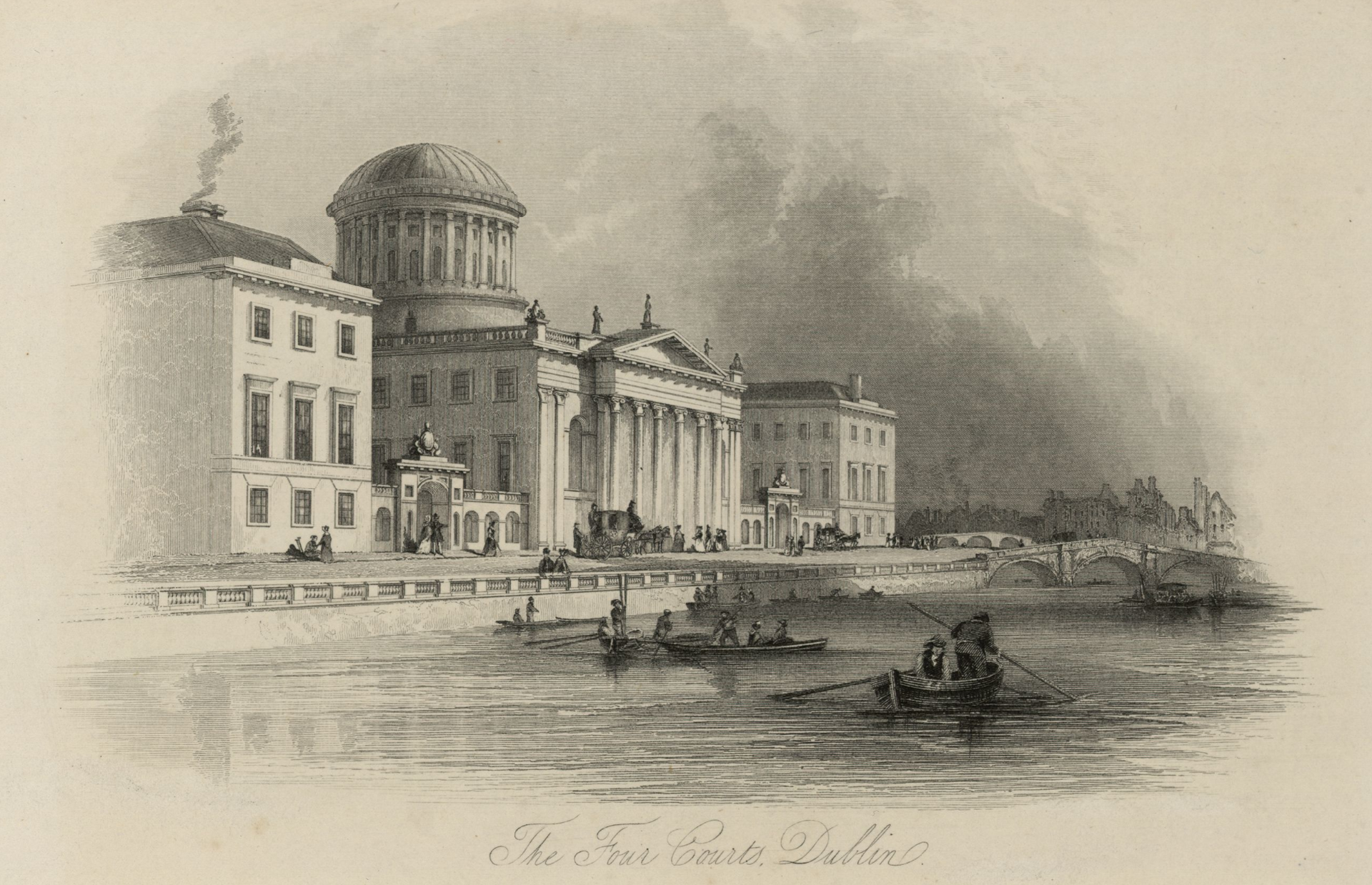
Four Courts
Inns Quay, Inns Quay C, Dublin 7, Ireland
The Four Courts is where Irish law has been argued and decided for over two centuries, and it's also where a thousand years of Irish records went up in smoke during a single catastrophic afternoon. James Gandon designed this building too — the man had a near-monopoly on Dublin's finest public architecture — and it was completed in 1802. The distinctive copper dome and Corinthian portico overlooking the Liffey make it one of the most recognizable buildings in the city. In April 1922, roughly 200 Anti-Treaty IRA fighters occupied the Four Courts in opposition to the Anglo-Irish Treaty that had partitioned Ireland. For two months they held the building in a tense standoff. Then on June 28, the Provisional Government of the new Irish Free State began bombarding them with artillery — two 18-pounder field guns borrowed from the British, positioned across the river. The irony was excruciating: the first act of the new Irish state was to shell its own courthouse. After 375 artillery rounds and 60 hours of fighting, the garrison surrendered. But the worst damage came from an explosion in the Public Record Office, housed in the western block. Whether the blast was caused by shells igniting republican munitions stores or a deliberate detonation is still debated. Either way, a mushroom cloud rose 200 feet over the building, and a millennium of irreplaceable Irish records — birth certificates, wills, church registers, land deeds dating back to the medieval period — was turned to confetti. Charred documents rained down across Dublin for hours. The building was reconstructed in the late 1920s and still serves as Ireland's principal courts building. Lawyers in wigs and gowns hurry through corridors where artillery shells once punched through walls.
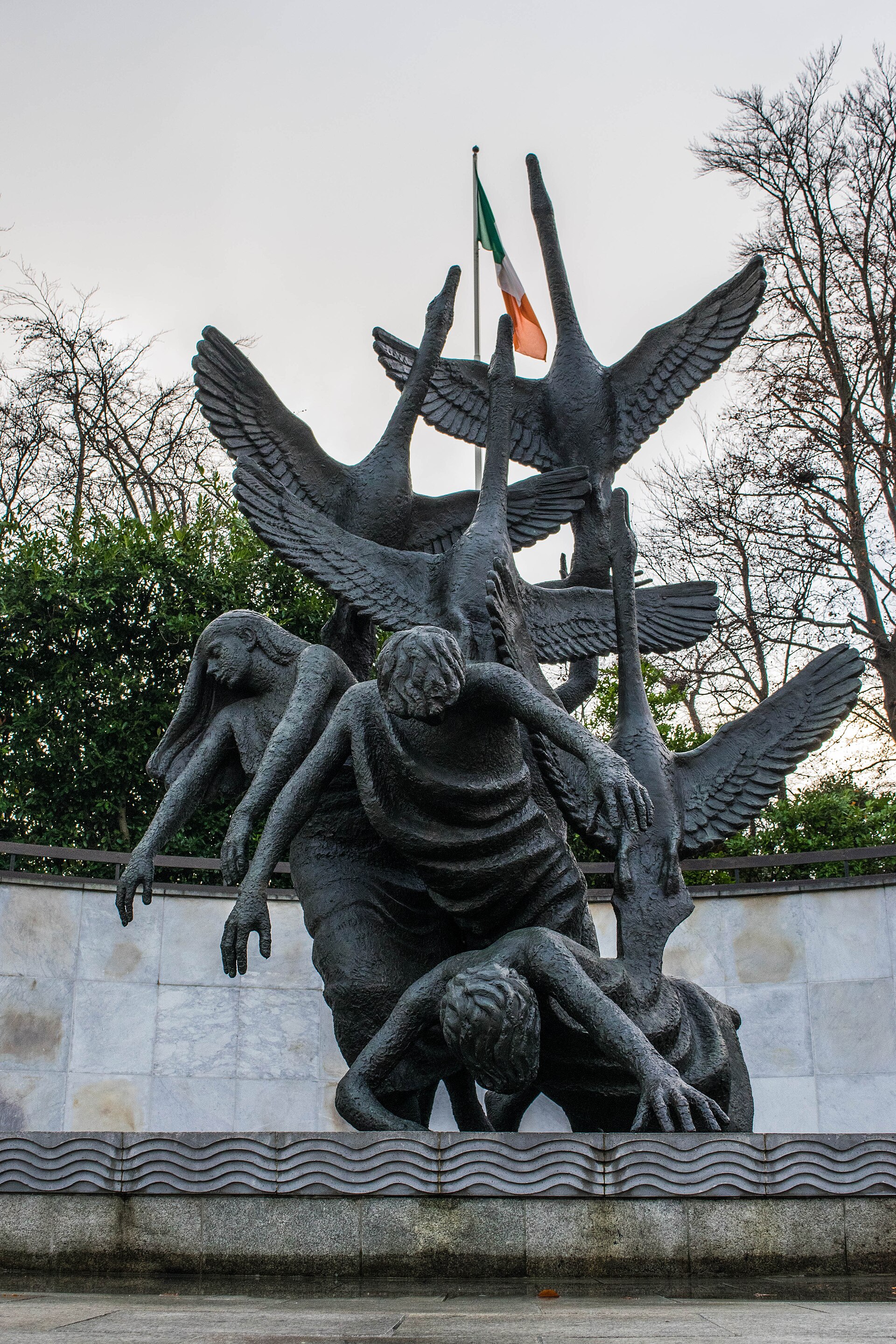
Garden of Remembrance
Parnell Square East, Rotunda B, Dublin 1, Ireland
This quiet memorial garden at the north end of Parnell Square is dedicated to everyone who died in the cause of Irish freedom, and the ground it sits on has earned that dedication several times over. This is where the Irish Volunteers mustered on the eve of the 1916 Rising. Before that, the Rotunda Gardens that occupied this spot saw some of the most important political gatherings in Irish history. Designed by architect Daithi Hanly and opened by President de Valera on April 10, 1966 — exactly the 50th anniversary of the Rising — the garden is built around a sunken cruciform pool lined with mosaic tiles in blue and green wave patterns. Interrupting the waves are tiled representations of broken weapons, drawing on the Celtic tradition of marking the end of battle by throwing weapons into rivers. It's a subtle, powerful symbol that most visitors walk right past. The focal sculpture is Oisin Kelly's Children of Lir, installed in 1971. Based on one of Ireland's great mythological stories, it depicts the moment the children — cursed to spend 900 years as swans — are finally transformed back to human form. The myth is about suffering and redemption, which makes it a pointed choice for a memorial to political martyrs. One of the garden's most significant moments came on May 17, 2011, when Queen Elizabeth II laid a wreath here during the first state visit by a British monarch to the Republic of Ireland. She bowed her head in silence at a memorial to people who had fought against British rule. The gesture was widely praised as a profound act of reconciliation. Sometimes a quiet garden says more than any speech.
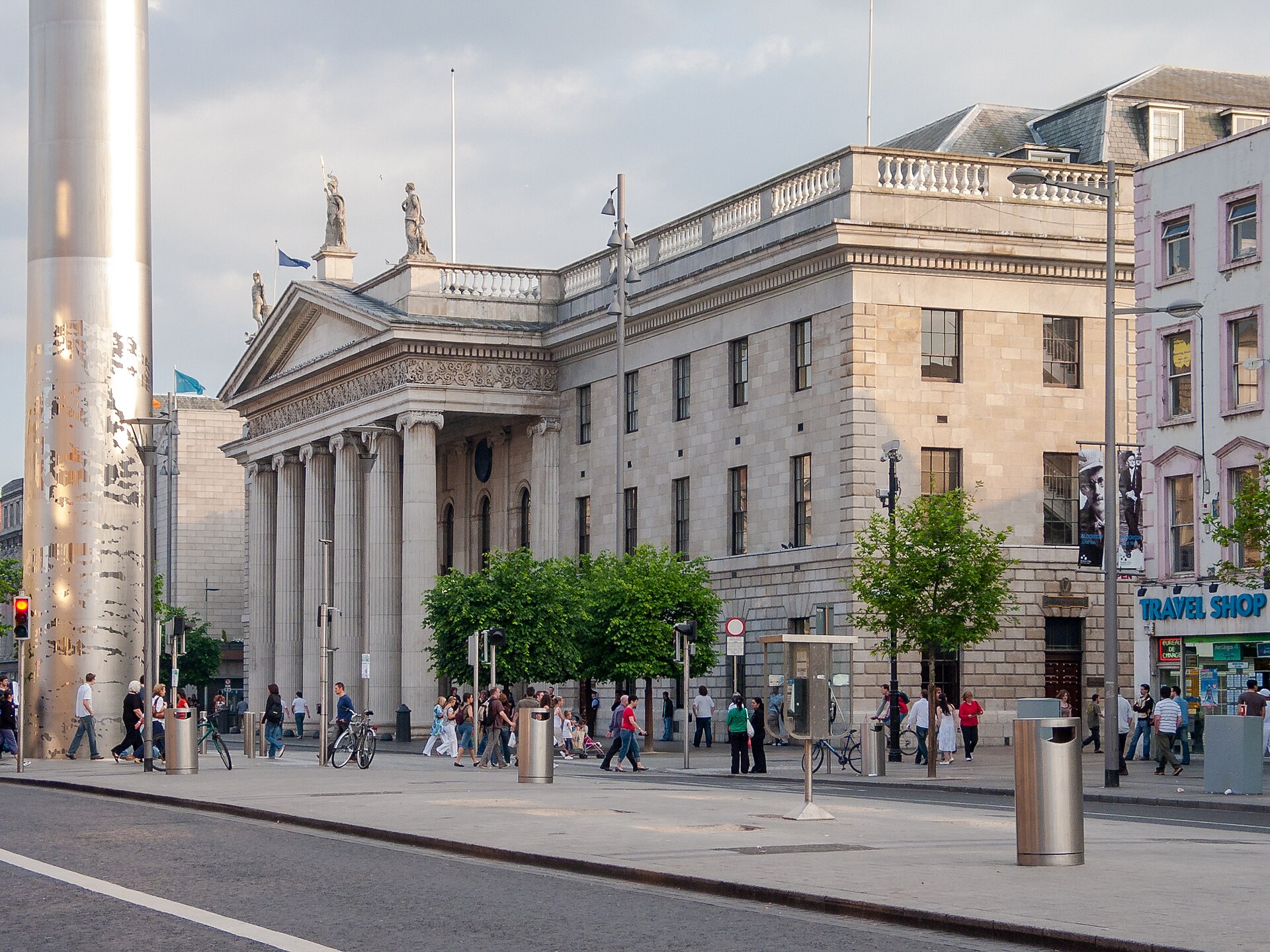
General Post Office (GPO)
O'Connell Street Lower, North City, Dublin 1, Ireland
This is where modern Ireland was born. On Easter Monday, April 24, 1916, Patrick Pearse walked out the front door of the General Post Office and read the Proclamation of the Irish Republic to a mostly bewildered crowd of shoppers. Then he walked back inside, and for the next six days, a few hundred poorly armed rebels held this building as their headquarters against the full might of the British Army. The GPO was a deliberate choice. Built between 1814 and 1818 at a cost of up to £80,000, it was the most visible symbol of British administrative power on Dublin's widest street. Its Ionic portico — six massive columns topped by statues of Hibernia, Mercury, and Fidelity — faced directly down Sackville Street. Seizing it was as much a symbolic act as a military one. The rebels knew they couldn't win. They wanted to make a statement, and they made one that echoed for a century. By the time the rebels surrendered, the GPO was a gutted shell. British artillery and incendiary shells had reduced the interior to charcoal and rubble. The building was rebuilt by the new Irish government and reopened in 1929, but they kept the bullet-scarred columns as a reminder. Run your fingers along the Portland stone and you can still feel the pockmarks. Today it still functions as a working post office — you can buy stamps ten feet from where the Republic was declared. The GPO Museum in the basement uses interactive exhibits to walk you through the Rising hour by hour. It's one of the rare places where a building is simultaneously a national shrine and a place where you can mail a postcard.
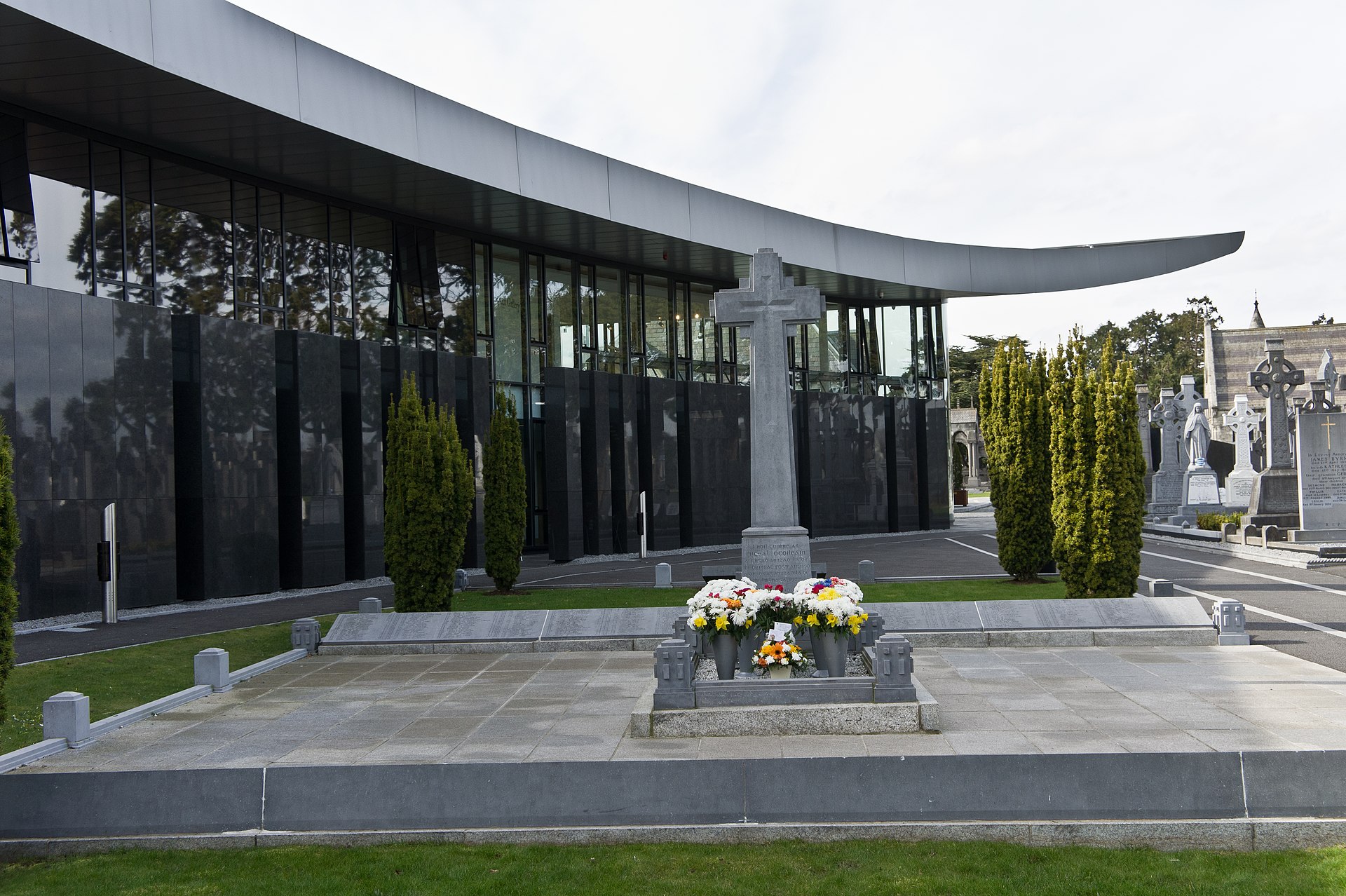
Glasnevin Cemetery
Finglas Road, Botanic A, Dublin 9, Ireland
Ireland's national cemetery began as an act of defiance. Before Daniel O'Connell established Glasnevin in 1832, Ireland's Penal Laws made it effectively illegal for Catholics to conduct burials with any ceremony. Catholic funerals were routinely disrupted, and the dead were buried in unmarked graves. O'Connell created Glasnevin as Ireland's first non-denominational cemetery — a place where anyone, regardless of religion, could be buried with dignity. The first burial was Michael Carey, an eleven-year-old boy from Francis Street, on February 22, 1832. Since then, over 1.5 million people have been interred across the 124-acre grounds, making it one of the largest cemeteries in Europe. The roll call of the buried reads like an encyclopedia of Irish history: Daniel O'Connell himself, Charles Stewart Parnell, Michael Collins, Eamon de Valera, Constance Markievicz, Roger Casement, Brendan Behan, and Luke Kelly of the Dubliners. Michael Collins' funeral in August 1922 was the largest in the cemetery's history. An estimated 500,000 people — one-fifth of Ireland's entire population — lined the streets of Dublin as his coffin passed. He was 31 years old. Nearly 800,000 people are buried in Glasnevin in unmarked mass graves, many from the Great Famine of the 1840s and later cholera epidemics. The 51-metre O'Connell Tower — a round tower modeled on ancient Irish examples — dominates the landscape. You can climb it for views over the entire cemetery and north Dublin. The museum runs guided tours that bring the stories of the dead vividly to life, which is a strange thing to say about a cemetery but entirely accurate.
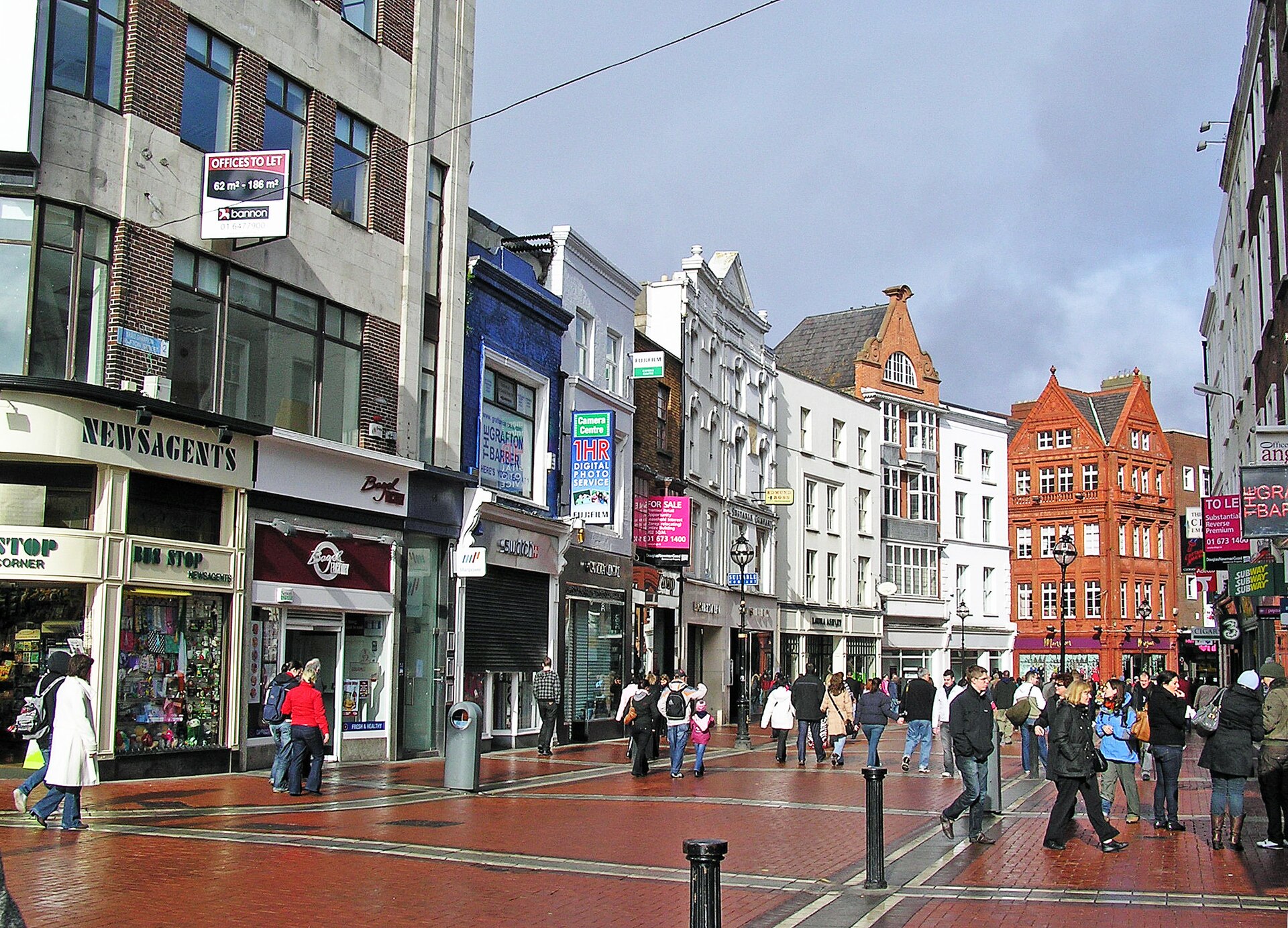
Grafton Street
Grafton Street, Mansion House A, Dublin 2, Ireland
Dublin's premier shopping street has been a catwalk for the city's aspirations since it was first laid out in 1708, connecting Trinity College to St. Stephen's Green. Named after Henry FitzRoy, 1st Duke of Grafton (an illegitimate son of Charles II), the street was pedestrianized in 1982 and has been one of the most expensive retail strips in Europe ever since. It regularly ranks among the top twenty most expensive shopping streets in the world. The first thing you'll notice is the buskers. Grafton Street has a busking tradition that goes back decades, and the quality can be genuinely startling — everyone from Glen Hansard to Bono has played for coins here. The street operates a busking permit system now, which keeps things somewhat organized, but on a good Saturday afternoon the performances roll into each other like an open-air festival. At the Suffolk Street end stands the Molly Malone statue, depicting the fictional fishmonger from Dublin's unofficial anthem. The bronze statue by Jeanne Rynhart was unveiled during the 1988 Dublin Millennium celebrations and was moved to its current spot in 2014 to make way for Luas tram works. Dubliners christened her "The Tart with the Cart" approximately five minutes after she was installed. Bewley's Oriental Cafe, with its Harry Clarke stained glass windows, has anchored the street since 1927 and narrowly escaped closure in 2004 when a public outcry saved it. It's one of those places where the coffee is fine but the real product is atmosphere — marble tables, red velvet banquettes, and the quiet hum of a city that loves its rituals.
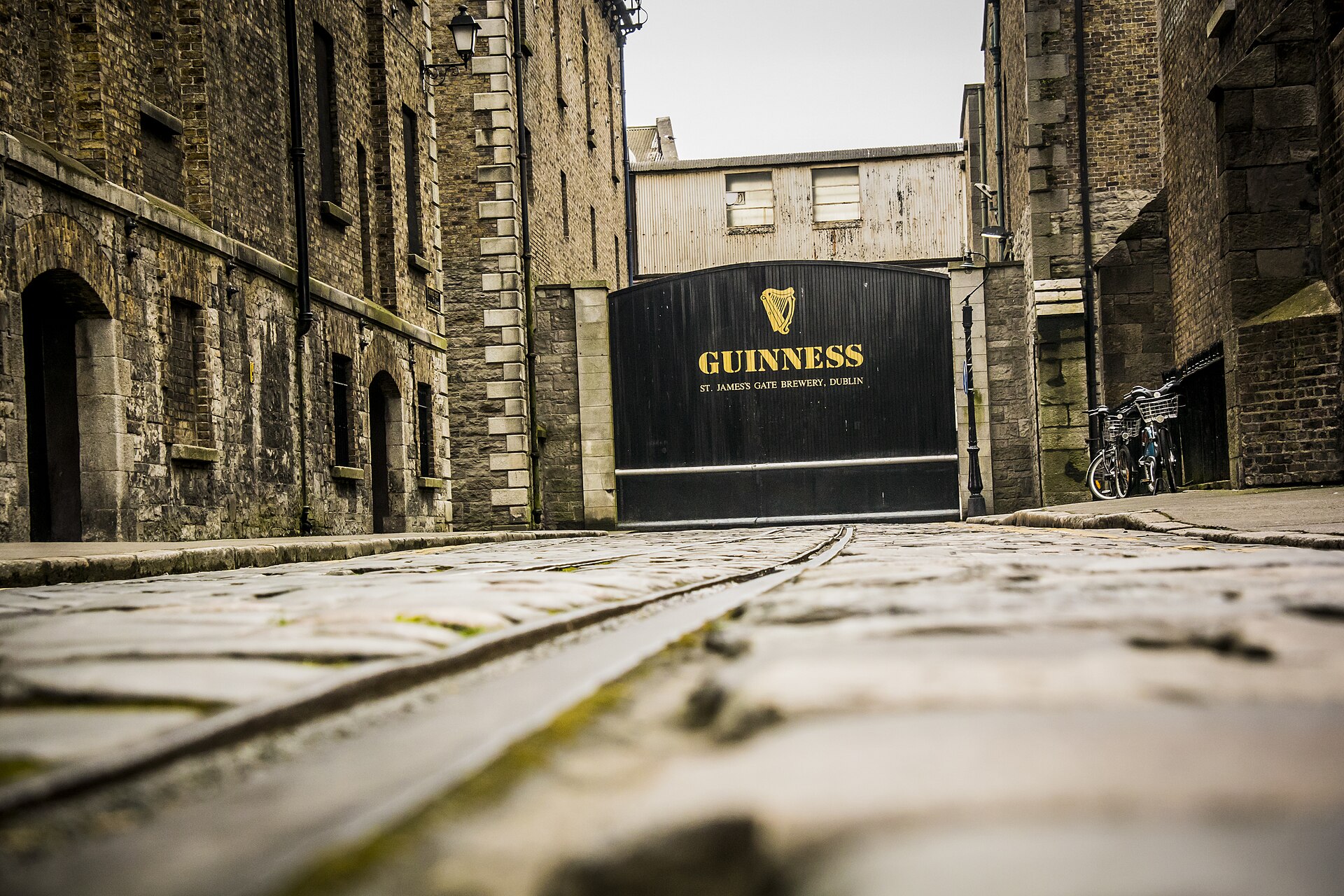
Guinness Storehouse
Saint James's Gate, Dublin 8, Ireland
Arthur Guinness was either supremely confident or completely insane when he signed the lease on this brewery in 1759. He was 34 years old, and he committed to a 9,000-year lease at £45 per year for a disused brewery at St. James's Gate. Nine thousand years. The lease runs until the year 10759, which is either the greatest real estate deal in history or the most optimistic bet ever placed on a pint of beer. It paid off. By 1838, St. James's Gate was the largest brewery in Ireland. By 1886, it was the largest in the world, pumping out 1.2 million barrels a year. In the 1930s, Guinness employed 5,000 workers — practically a city within a city — and the company ran its own railway, fire brigade, and medical clinic for employees. Workers got free pints, which probably helped with retention. The Storehouse itself occupies a 1902 fermentation plant that was the first multi-storey steel-framed building constructed in Ireland, designed in the Chicago School style. When it was converted into a museum in 2000, the architects built the exhibition around a giant glass atrium shaped like a pint glass — 14 million pints' worth, if you're counting. Seven floors take you through the brewing process, the history of Guinness advertising (those toucan posters are genuinely iconic), and finally up to the Gravity Bar on the seventh floor, where your ticket includes a pint with a 360-degree panoramic view of Dublin. Over twenty million people have visited since it opened, making it Dublin's most popular tourist attraction by a landslide. Arthur would be pleased, and he's still got about 8,733 years left on that lease.
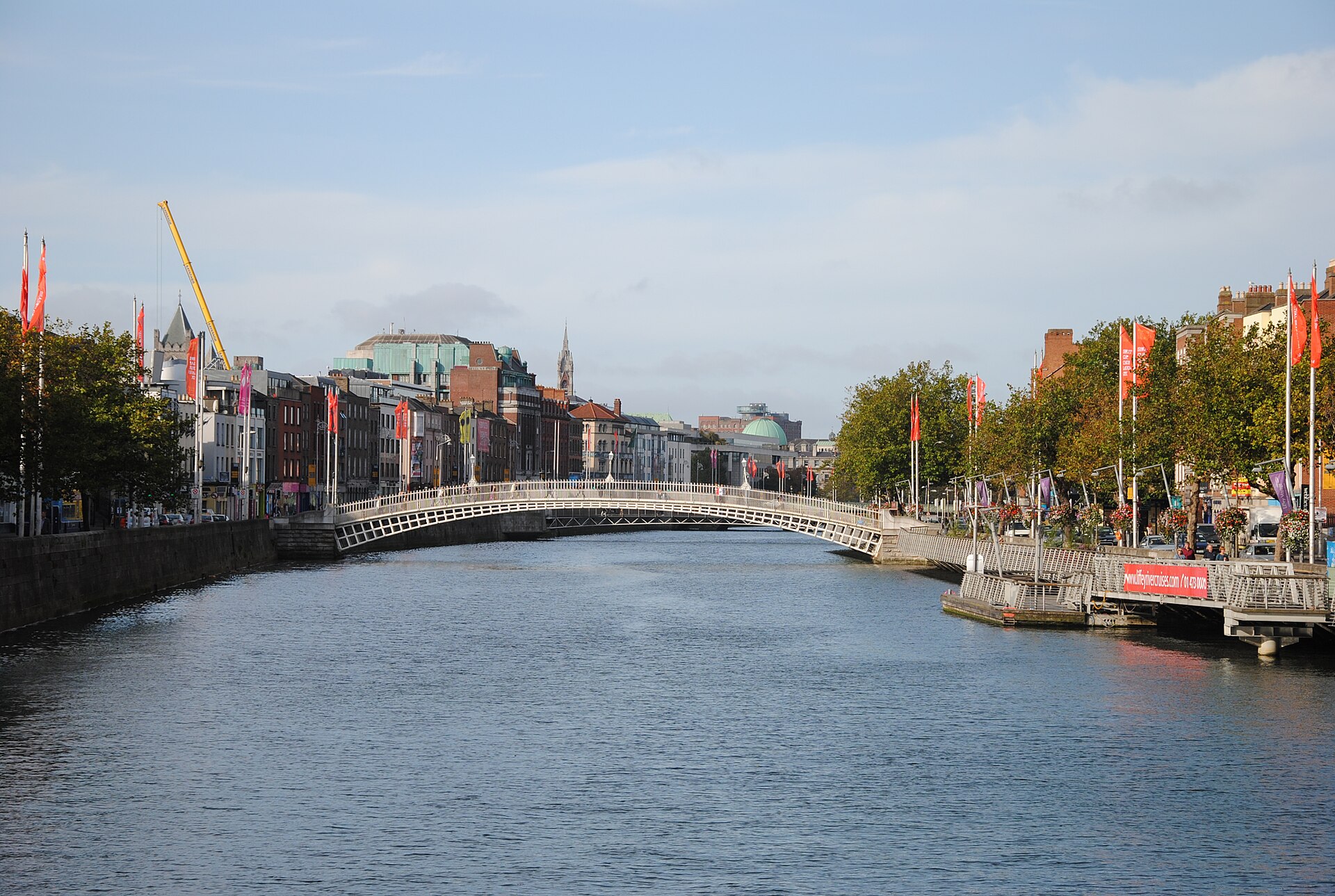
Ha'Penny Bridge
Bachelors Walk, North City, Dublin 1, Ireland
Before this bridge existed, William Walsh operated seven ferries across the Liffey at this spot, and they were falling apart. The city told him to either fix the ferries or build a bridge, so in 1816 he built a bridge — and charged everyone a ha'penny to cross it. The toll was meant to recoup his investment, but it also made the bridge one of the most resented pieces of infrastructure in Dublin. Imagine paying a toll to walk across a river in the middle of your own city. The bridge was one of the first cast-iron bridges in the world, made from ore mined in County Leitrim's Sliabh an Iarainn. The iron ribs were cast in 18 sections and shipped to Dublin for assembly. It cost £3,000 to build and was originally named the Wellington Bridge after the Duke of Wellington, who was born in Dublin. But nobody ever called it that. Everyone called it the Ha'Penny Bridge, and the name stuck even after the toll was dropped in 1919. There was a wonderful safety clause in the original contract: if Dublin's citizens found the bridge "objectionable" within its first year, the entire structure had to be removed at Walsh's expense. Dubliners complained about everything — the toll, the width, the ironwork — but apparently not enough to trigger the clause. At 43 metres long, it's not a grand bridge by any standard. But its elegant white cast-iron arch, reflected in the dark Liffey water, has become the most photographed bridge in Ireland. The ornamental lamp posts were added during a major restoration in 2001. Today three million people cross it every year, and none of them pay a ha'penny.
Iveagh Gardens
Clonmel Street, St. Kevin's, Dublin 2, Ireland
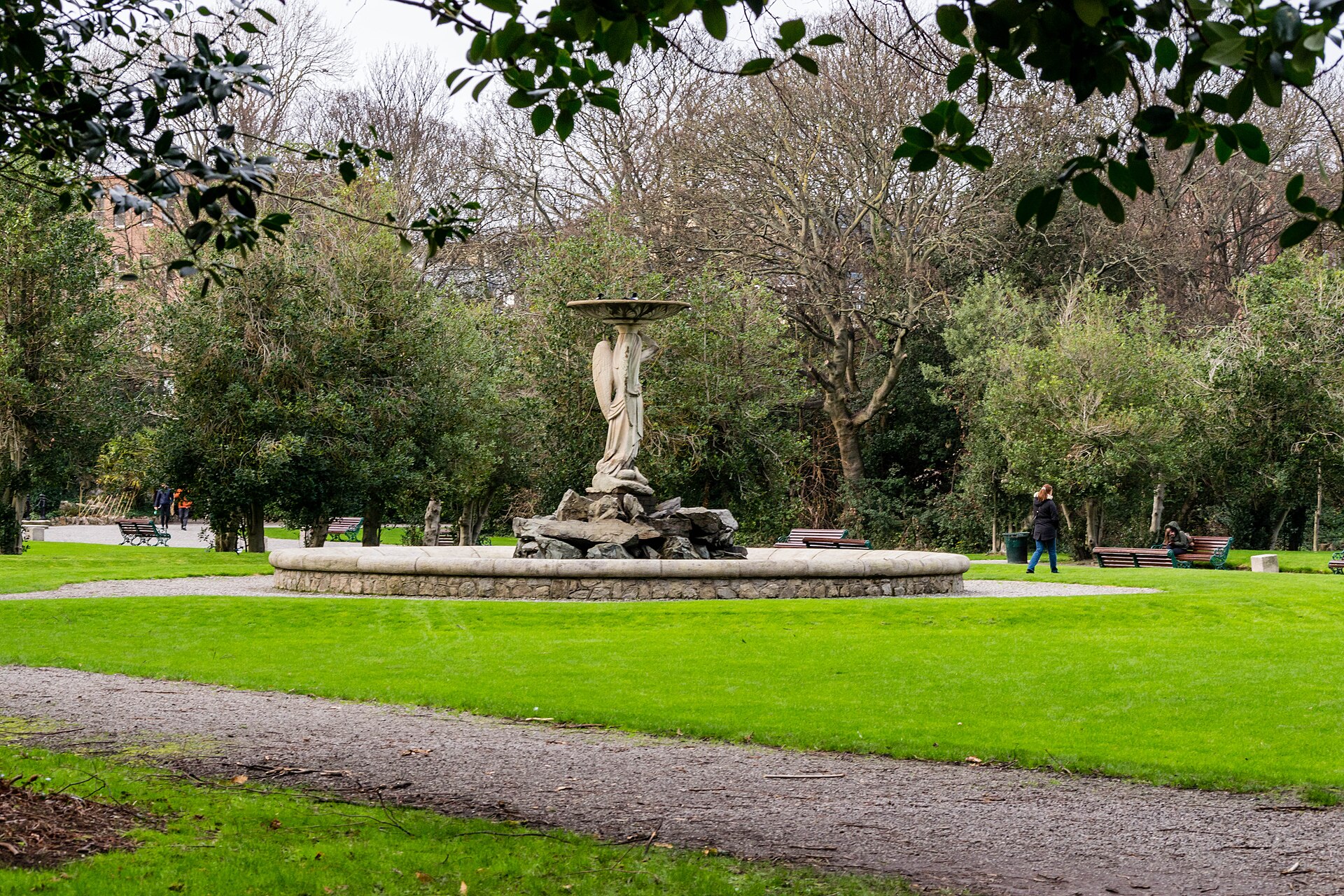
Dublin's best-kept secret is a garden that most Dubliners have never visited. The Iveagh Gardens sit directly behind the National Concert Hall, a two-minute walk from St. Stephen's Green, yet they receive a fraction of the foot traffic. No signs point to them from the main streets. The entrances are discreet — tucked through Clonmel Street or Hatch Street. If you didn't know they were here, you'd walk right past. Designed by Ninian Niven in 1865, the gardens originally served as the grounds of Iveagh House, created when Benjamin Guinness joined two Georgian townhouses on St. Stephen's Green in the 1860s. The Guinness family's connection to Dublin's green spaces is remarkable — they funded the landscaping of St. Stephen's Green too. Iveagh House later passed to Edward Guinness, 1st Earl of Iveagh, whose descendants gave it to the state in 1939. It now houses the Department of Foreign Affairs. The gardens contain a cascade waterfall, a rosarium, a maze of yew hedges, a rustic grotto, and a wide central lawn that feels like it belongs in a country estate rather than the middle of a capital city. There's also a working sundial and an archery range that's been here since the Victorian era. The whole place has a slightly overgrown, romantic quality — as if the gardeners are deliberately cultivating a look of gentle neglect. On summer days, the few people who know about the Iveagh Gardens spread blankets on the lawn and read in a silence that feels impossible this close to Grafton Street. It's the closest thing Dublin has to a secret, and every local who discovers it acts like they've found buried treasure.
Kilmainham Gaol
Inchicore Road, Kilmainham B, Dublin 8, Ireland
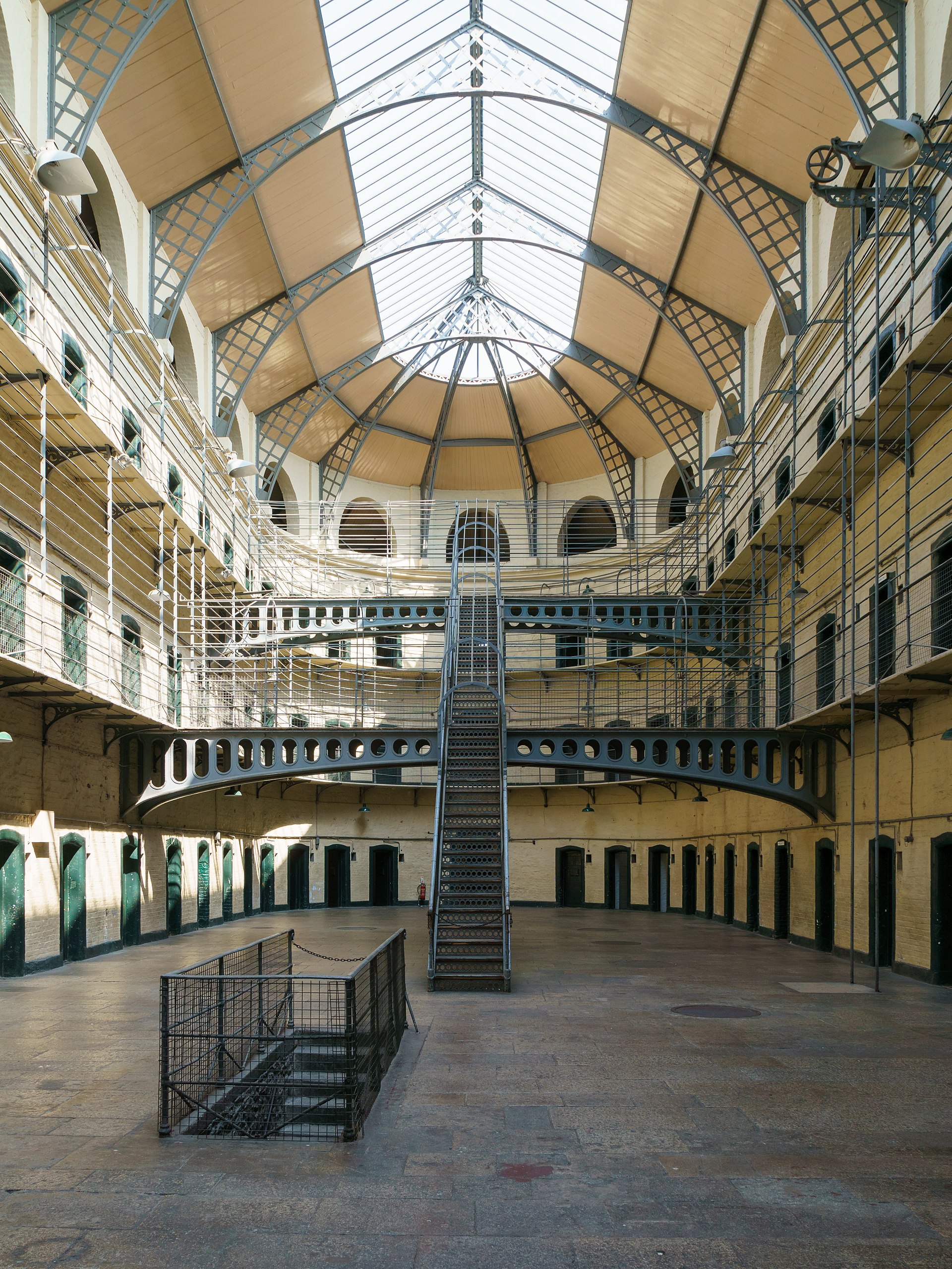
Every major chapter of Ireland's fight for independence played out behind these walls. Kilmainham Gaol opened in 1796 as Dublin's county prison, and from the very start it held political prisoners alongside common criminals. Robert Emmet was held here before his execution in 1803. The Young Irelanders came through in 1848. The Fenians filled the cells in the 1860s. Charles Stewart Parnell did time here. And in May 1916, fourteen leaders of the Easter Rising were marched into the Stonebreaker's Yard and shot by firing squad. The execution of James Connolly was particularly brutal. He was so badly wounded from the Rising that he couldn't stand, so they strapped him to a chair and shot him sitting down. The executions, carried out over ten days in secrecy, transformed public opinion almost overnight — turning the rebels from reckless adventurers into martyrs and setting in motion the events that led to Irish independence. Conditions inside were deliberately harsh. During the Great Famine of 1845-52, the prison became grotesquely overcrowded as desperate people committed petty crimes just to get fed. Prisoners were guaranteed at least one meal a day — more than many starving peasants outside could expect. Over 4,000 early prisoners were transported to Australia. Children as young as seven were locked up for stealing food. The prison was abandoned in 1924 and sat derelict for decades until volunteers began restoring it in the 1960s. President de Valera — himself a former prisoner here — opened it as a museum in 1966 on the 50th anniversary of the Rising. It's now the most visited heritage site in Ireland, and the guided tour through the dim corridors and execution yard is one of the most moving experiences in Dublin.
Little Museum of Dublin
15 St Stephen's Green, Mansion House B, Dublin 2, D02 Y066, Ireland
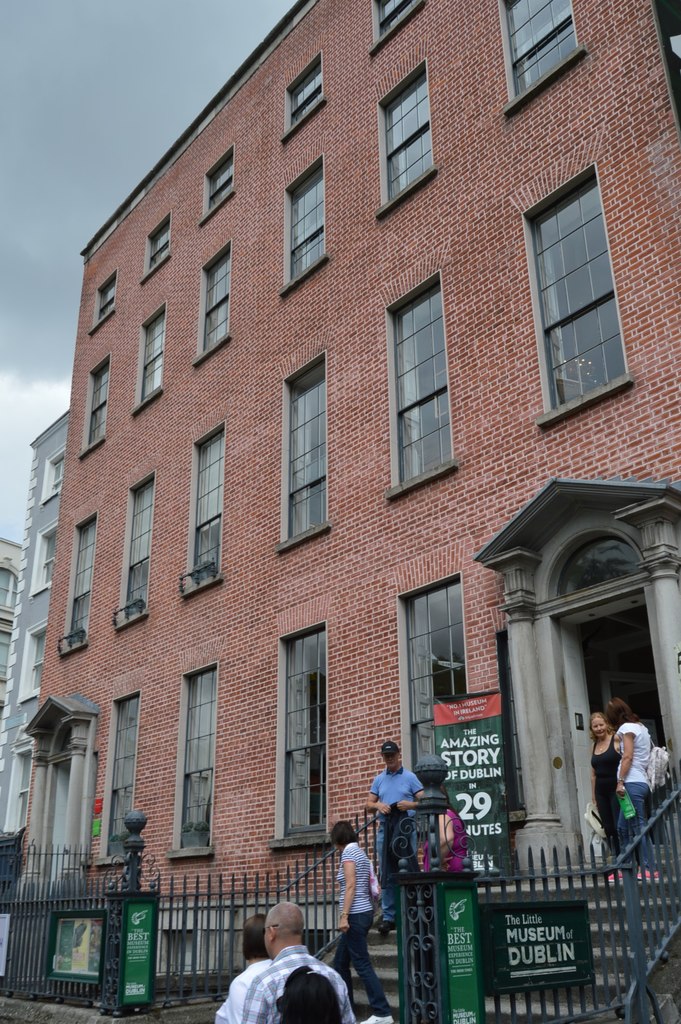
Everything in this museum was donated by Dubliners, which makes it both a history museum and a love letter from a city to itself. The Little Museum opened in 2011 in a Georgian townhouse at 15 St. Stephen's Green, and its entire collection of over 5,000 artifacts came from a public appeal asking ordinary Dublin people to donate objects that told the story of their city. The result is gloriously eclectic. You'll find the lectern used by President John F. Kennedy during his 1963 visit to Ireland, sitting alongside vintage shop signs, old Dublin tram tickets, and faded photographs of streets that no longer exist. There's an original copy of the letter given to the Irish envoys heading to the 1921 Treaty negotiations, and upstairs, an entire room devoted to U2 — this is Dublin, after all. One of the collection's gems is the personal archive of Alfred "Alfie" Byrne, Lord Mayor of Dublin a record ten times between 1930 and 1955. Byrne was famous for shaking the hand of every constituent he met, allegedly managing 500 handshakes a day. His story is quintessentially Dublin: working-class kid made good, devoted public servant, relentless schmoozer. Visits are by guided tour only, which goes on the hour every hour, and the guides are excellent — knowledgeable, funny, and passionate about their city. The museum has been nominated for European Museum of the Year, which is remarkable for a place that started with nothing but a Georgian house and a request for donations. It proves that the best museums aren't always the ones with the biggest budgets.

Marsh's Library
St Patrick's Close, Wood Quay A, Dublin 8, Ireland
When Archbishop Narcissus Marsh told his friends he planned to build a public library in Dublin in 1701, they told him he was mad — neither Oxford nor London had one. He built it anyway, and when Marsh's Library opened to the public in 1707, it became the first public library in Ireland. Over three hundred years later, it's still here, still functioning, and still looks almost exactly as it did the day it opened. The building was designed by William Robinson, Surveyor General of Ireland, and sits tucked behind St. Patrick's Cathedral in a quiet close that most tourists walk right past. Inside, the original dark oak bookcases with their carved and lettered gables line the walls, holding over 25,000 books from the 16th, 17th, and 18th centuries, plus around 300 manuscripts and 80 incunabula — books printed before 1501. The subjects range from theology to medicine, navigation to classical literature. The most extraordinary feature is the three "cages" — small alcoves with wire mesh doors where readers were locked in with rare books to prevent theft. They're still there, perfectly preserved, and you can step inside one. Jonathan Swift, who was Dean of St. Patrick's next door, was one of the library's first governors and a frequent user. His annotated copy of Clarendon's History of the Great Rebellion is in the collection. If you look carefully at some of the bookcases, you'll find bullet holes from the 1916 Easter Rising, when Jacob's Biscuit Factory next door was occupied by rebels. A library catching stray bullets from a biscuit factory: that's Dublin history in its purest form.
Merrion Square
Merrion Square West, Mansion House B, Dublin 2, Ireland
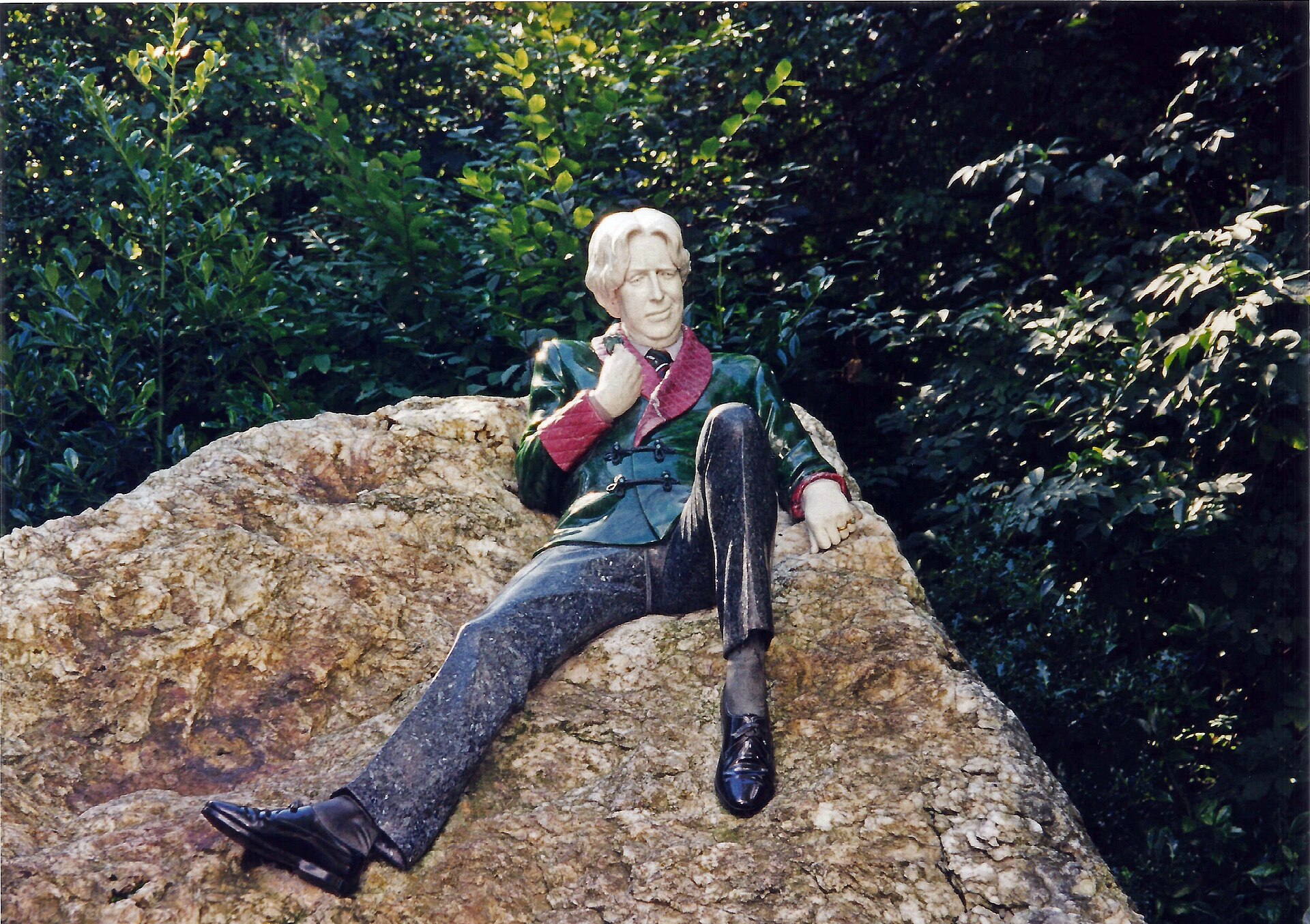
Dublin's finest Georgian square was farmland 250 years ago. Laid out in 1762, three sides are lined with immaculate redbrick townhouses that represent the peak of Georgian domestic architecture in Ireland — each door a different colour, each fanlight a slightly different design. The west side is anchored by Leinster House (now the Irish Parliament), Government Buildings, the Natural History Museum, and the National Gallery. It's an extraordinarily dense concentration of power and culture in a single city block. The house at No. 1 is where Oscar Wilde grew up. His father, Sir William Wilde, was Ireland's leading eye surgeon and a passionate folklorist; his mother, Jane "Speranza" Wilde, ran a famous literary salon. Oscar lived here from 1855 until 1876, and you can now see a statue of him lounging on a rock across the street in the park, permanently smirking at his childhood home. Danny Osborne sculpted the figure from stones from three continents — green nephrite jade from Canada, pink thulite from Norway, and black charnockite from India — and deliberately gave Wilde's face two expressions: one side smiling, the other sombre, representing the wit and the suffering. Other former residents include W.B. Yeats (No. 82), Daniel O'Connell (No. 58), and the poet George Russell (No. 84). The square has been Dublin's literary epicentre for two centuries. On weekends, the park railings are hung with paintings for sale, turning the square into an open-air gallery. The park itself was private until 1974, when the Catholic Archbishop of Dublin — who owned the land — handed it to the city. It's now a public park with a playground, and on weekday lunchtimes it fills with government workers from Leinster House eating sandwiches on the grass.
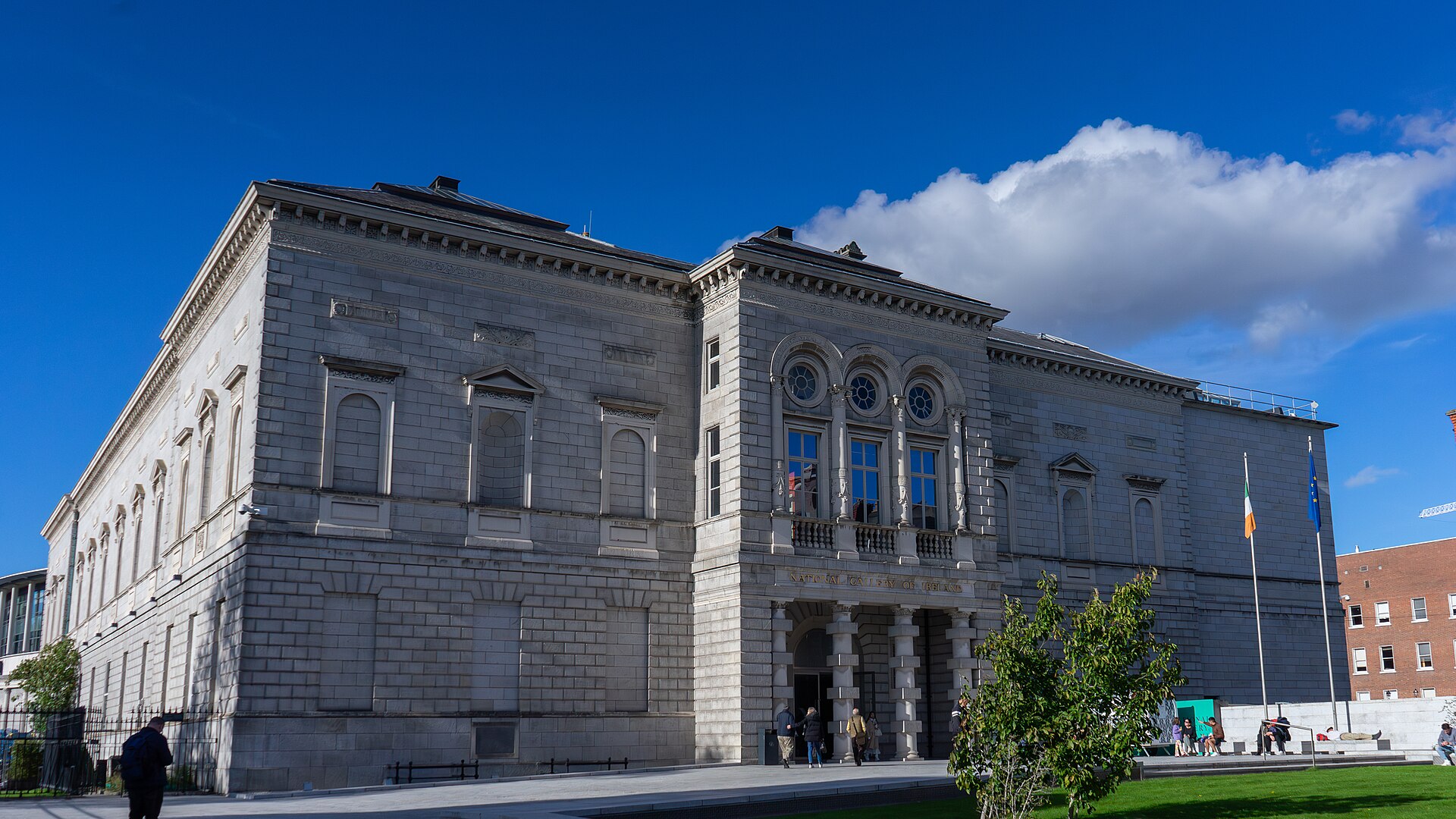
National Gallery of Ireland
Merrion Square West, Dublin 2
This gallery has a Caravaggio that was hiding in a Jesuit dining room for decades, and entry is completely free. The National Gallery of Ireland opened in 1864 and houses over 15,000 works spanning European art from 1300 to the present day. The permanent collection includes Vermeer, Rembrandt, Monet, Picasso, and an entire wing devoted to Jack B. Yeats, whose expressionist paintings of Irish life are among the most important works in Irish art history. But the headline act is Caravaggio's "The Taking of Christ," painted in 1602 and lost for nearly two centuries. It was rediscovered in 1990 by Sergio Benedetti, the gallery's senior conservator, who recognised it hanging in a Jesuit residence in Dublin where it had been attributed to a minor Dutch artist. The painting — depicting the moment Judas betrays Jesus with a kiss — is on indefinite loan from the Jesuits and is worth an estimated €50 million. It's one of the greatest art detective stories of the 20th century. The gallery owes much of its collection to George Bernard Shaw, who left it a third of his estate, including royalties from his plays. Shaw said the gallery had been his education: "I was able to find in it food for the imagination." The Shaw Room, a reading and study space, is named in his honour. His royalties from Pygmalion and its adaptation My Fair Lady alone generated substantial income for the gallery for decades. Free admission was a founding principle, and it applies to the permanent collection and most temporary exhibitions. Talks, tours, and the audioguide are also free. In a city where tourist attractions can be expensive, this is an extraordinary gift.
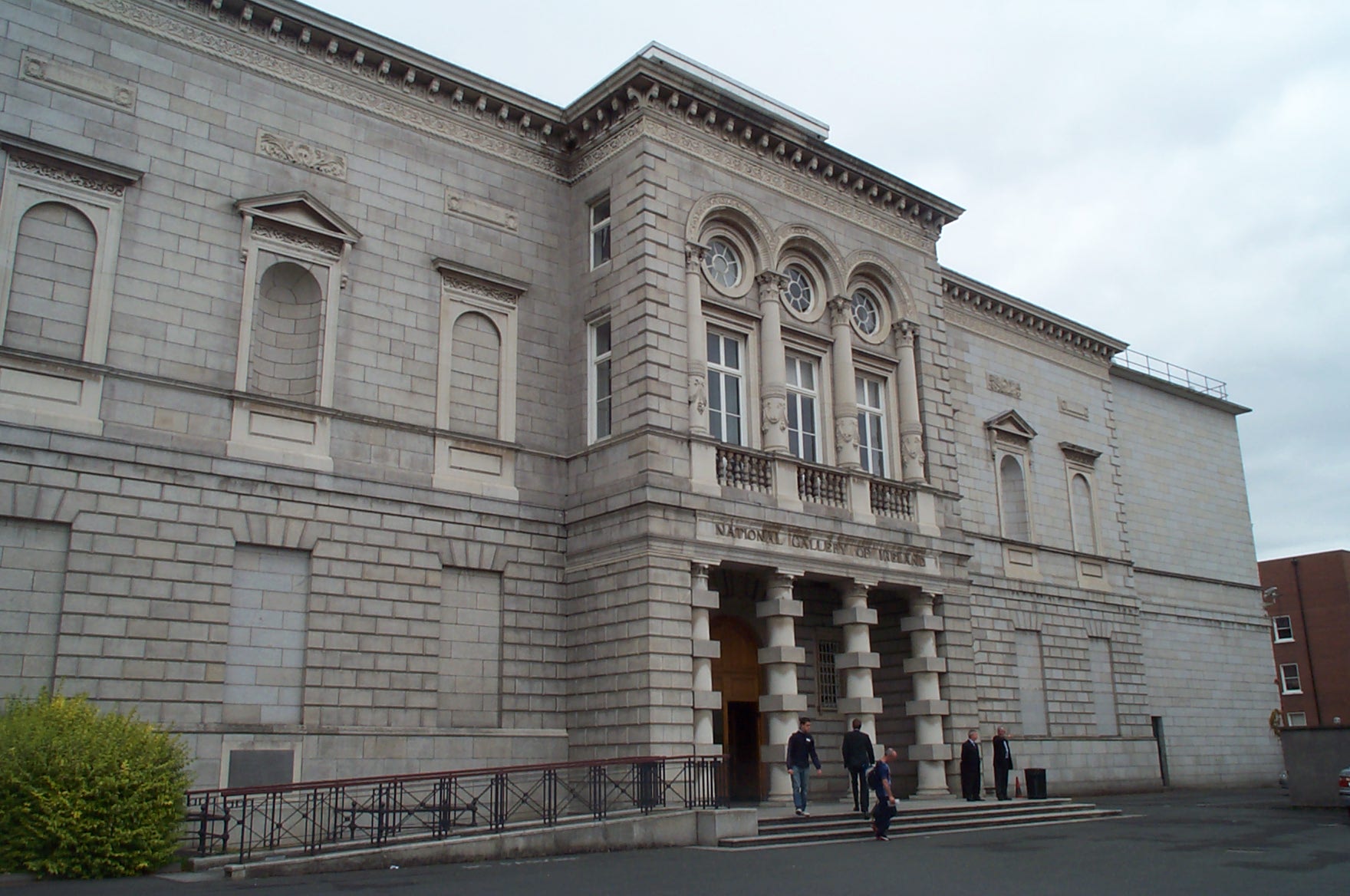
National Museum of Ireland - Archaeology
Kildare Street, Dublin 2
This museum contains the finest collection of Celtic gold in the world, and it won't cost you a cent to see it. The National Museum of Ireland's archaeology branch, housed in a stunning Victorian Palladian building on Kildare Street since 1890, holds treasures that span 7,000 years of Irish civilization — from Mesolithic flint tools to medieval Viking hoards. The gold collection alone is staggering. The Or: Ireland's Gold exhibition displays prehistoric gold objects that were crafted between 2200 and 500 BC — lunulae (crescent-shaped neck pieces), torcs, bracelets, and dress fasteners of extraordinary sophistication. Ireland was one of the major gold-producing regions of prehistoric Europe, and the artisans who made these pieces achieved a technical mastery that still impresses metallurgists today. Then there are the bog bodies. The Kingship and Sacrifice exhibition displays Iron Age human remains preserved in peat bogs for over 2,000 years, their skin, hair, and fingernails still intact. These aren't gentle deaths — the bodies show evidence of extreme violence, and scholars believe they may have been ritual sacrifices of deposed kings. Old Croghan Man, found in County Offaly in 2003, still has his fingernails, and they're manicured. He was a nobleman before someone killed him and buried him in a bog. Other highlights include the Ardagh Chalice and the Tara Brooch — two of the masterpieces of early medieval metalwork — and an extensive Viking collection drawn from excavations across Dublin. The building itself, with its ornate rotunda entrance and mosaic floors, is worth visiting as architecture alone. Free admission means there's no excuse not to come.
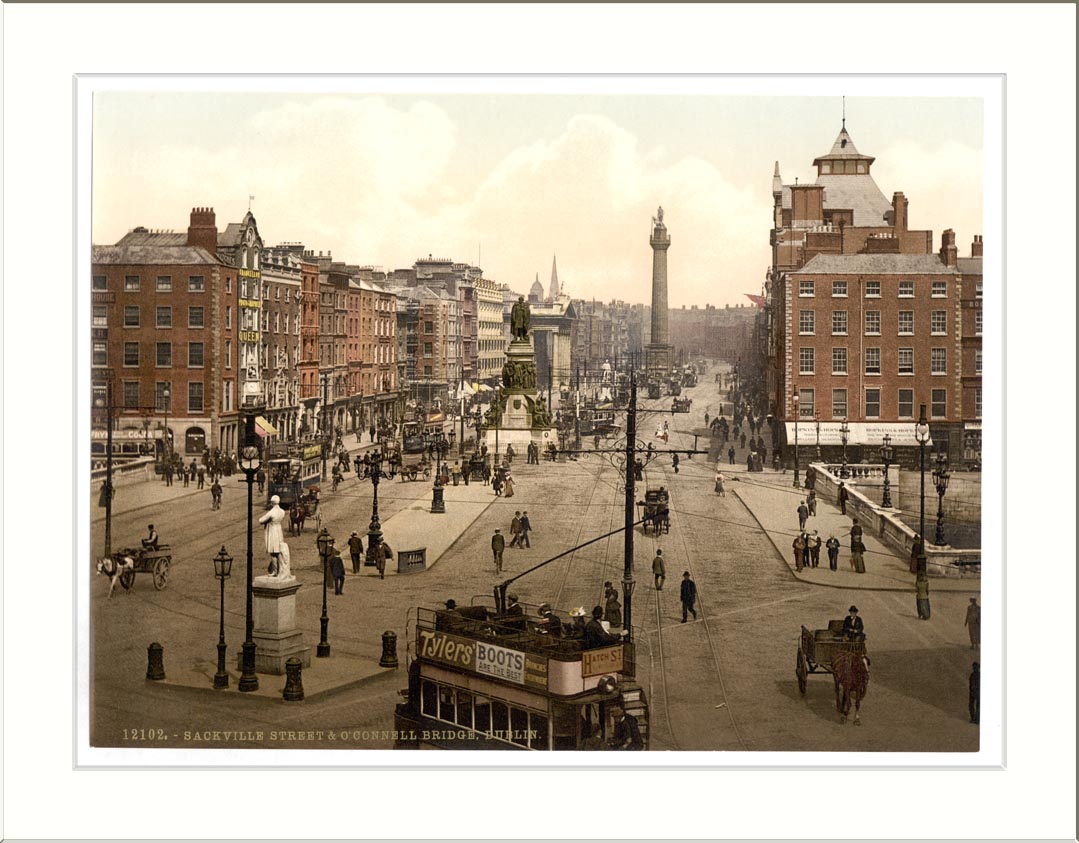
O'Connell Bridge
O'Connell Bridge, Dublin 2
O'Connell Bridge holds a peculiar distinction: it's the only traffic bridge in Europe that is almost exactly as wide as it is long. At approximately 45 metres in both dimensions, it's essentially a square of road suspended over water, which gives it a proportional strangeness that most people don't consciously register but definitely feel. It's a bridge that doesn't quite look like a bridge. The current structure dates to 1880, when it replaced an earlier narrow humpback bridge called Carlisle Bridge, built in 1795. The city needed a wider crossing to handle the increasing traffic between Dublin's north and south sides, and the architects responded by making it so wide you could practically land a plane on it. It was renamed O'Connell Bridge in 1882 after Daniel O'Connell, whose elaborate statue stands at the bridge's northern end, bullet holes from the 1916 Rising still visible on the base. The bridge connects O'Connell Street on the north side to Westmoreland Street and D'Olier Street on the south, making it one of the most heavily trafficked intersections in Ireland. Stand in the middle and you can see upriver to the Ha'Penny Bridge and downriver to the Custom House — two of Dublin's finest architectural landmarks framing the Liffey in either direction. The Liffey underneath is tidal, which means the water level rises and falls with the sea. At low tide, the river can look disappointingly shallow; at high tide, it fills out nicely. Dubliners have a complicated relationship with their river — they love it, complain about it, and make endless jokes about its colour. The bridge is where most of those conversations happen.
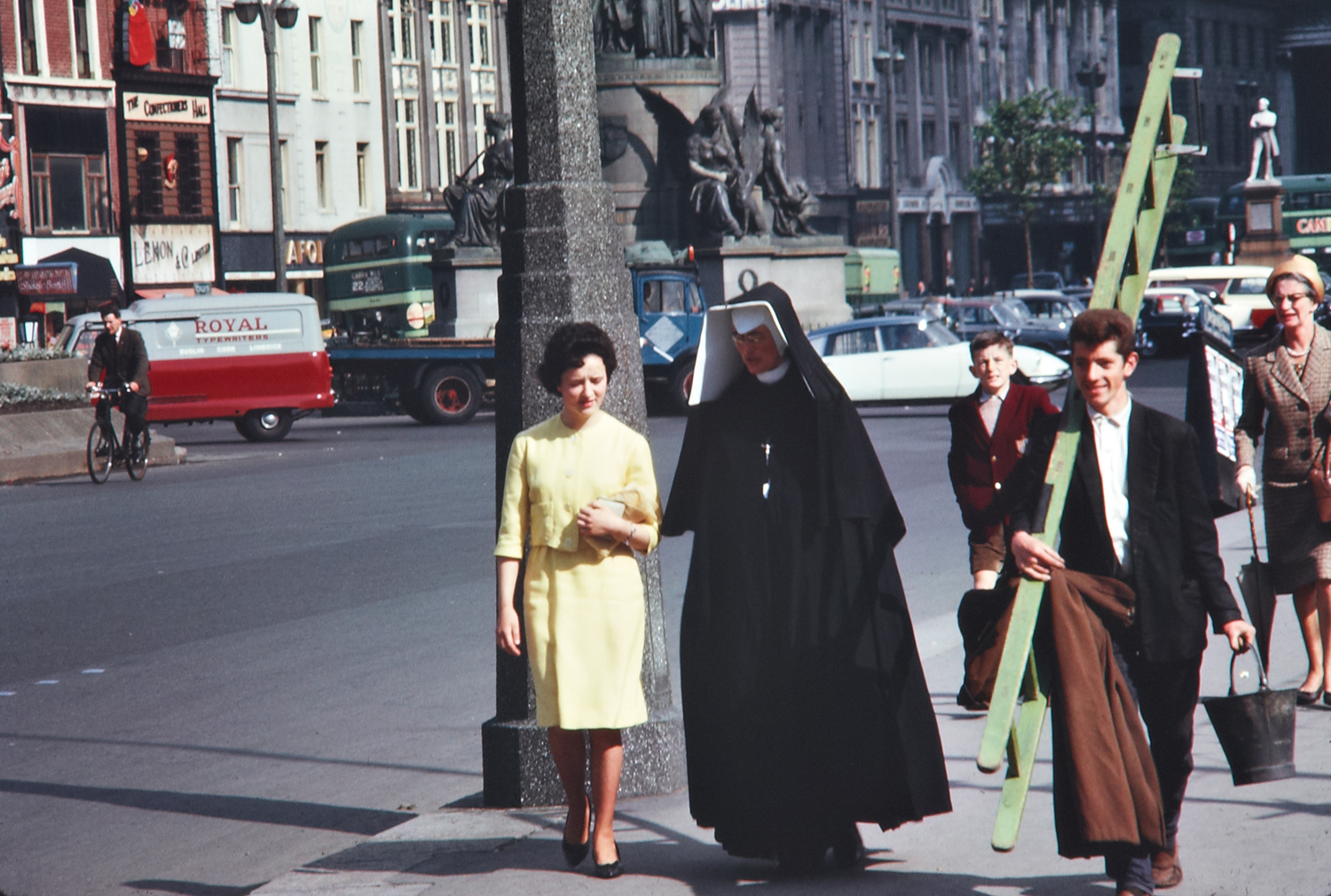
O'Connell Street & The Spire
O'Connell Street, Dublin 1
Dublin's main boulevard has been bombed, shelled, burned, and rebuilt so many times it's practically a phoenix in street form. Originally a narrow lane called Drogheda Street, it was widened in the 1740s by the Wide Streets Commission and renamed Sackville Street. During the 1916 Easter Rising, British artillery reduced most of the street to rubble. During the Civil War in 1922, it was shelled again. And in 1966, the IRA blew up Nelson's Pillar — a 40-metre column that had stood here since 1809, longer than Nelson's Column in London. The gap left by Nelson sat empty for nearly four decades until The Spire arrived in 2003. At 121 metres tall, this tapering stainless steel needle is the tallest piece of freestanding public art in the world. Dubliners, who nickname everything, immediately christened it the "Stiletto in the Ghetto," the "Nail in the Pale," and the "Stiffy by the Liffey." The upper ten metres are lit from within by 11,884 holes that glow after dark. The street is 150 feet wide and lined with monuments to Irish independence: Daniel O'Connell's statue at the southern end, the trade unionist Jim Larkin frozen mid-speech in the middle, and Charles Stewart Parnell at the north. The General Post Office — headquarters of the 1916 Rising — anchors the west side. You can still see bullet holes in its columns. Stand here and you're standing on the fault line of modern Irish history. Every major uprising, protest, and celebration has marched down this street. It's been destroyed and rebuilt so often that the street itself has become a metaphor for the country.
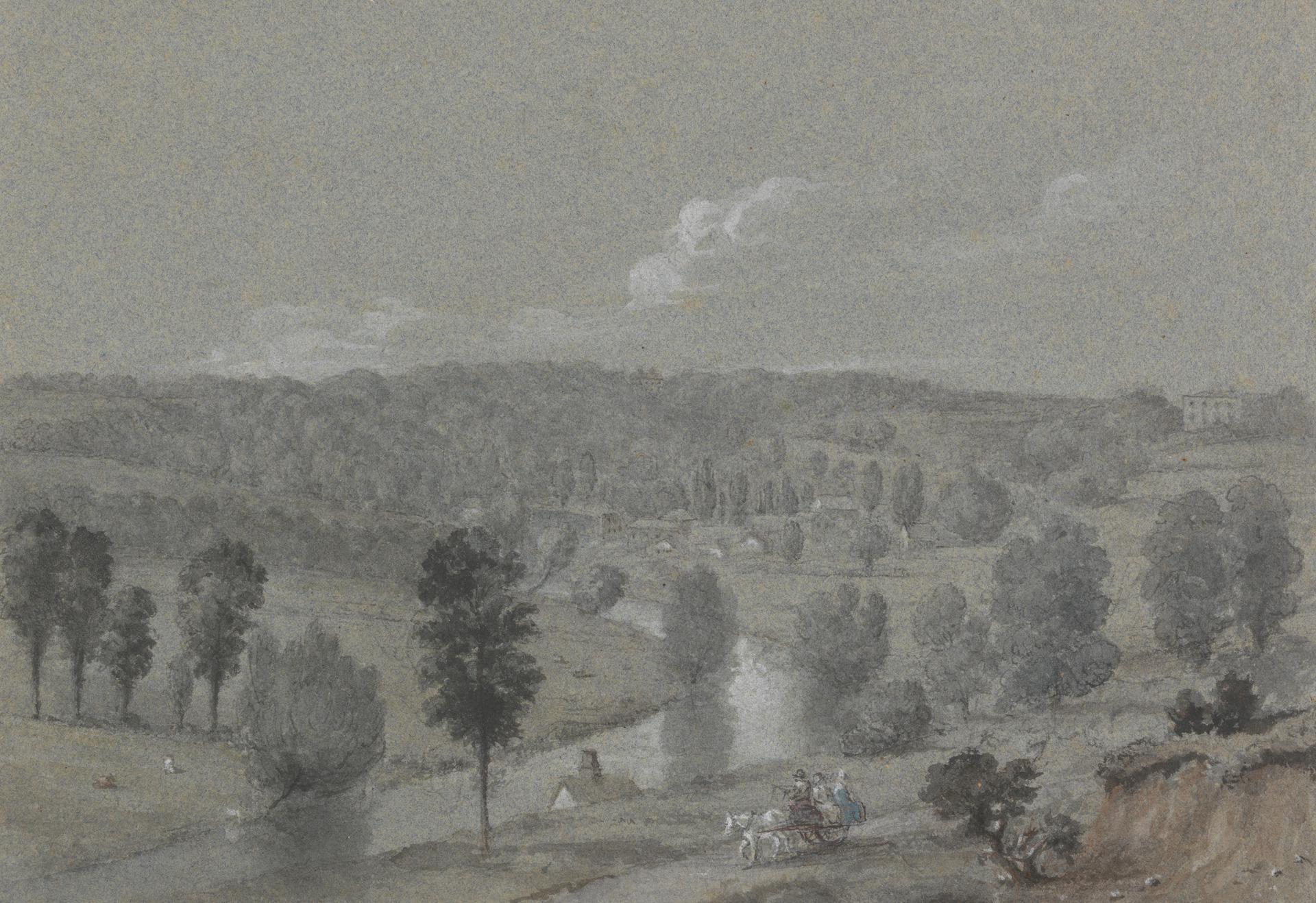
Phoenix Park
Phoenix Park, Dublin 8
At 707 hectares, Phoenix Park is the largest enclosed urban park in Europe — more than twice the size of New York's Central Park. The 11-kilometre perimeter wall encloses a landscape of broad grasslands, ancient woodlands, and a herd of fallow deer that has been here since the 1660s. The deer are genuinely wild, not penned, and watching them graze in the early morning mist with Dublin's skyline in the background is one of the city's most surreal experiences. The Duke of Ormond created the park in 1662 as a royal deer hunting ground, which required walling off 2,000 acres of what had been common land. When the Royal Hospital at Kilmainham was built in 1680, the park was reduced to its present size. It was finally opened to the public by the Earl of Chesterfield in 1745. The name has nothing to do with the mythical bird — it's a corruption of "fionn uisce," Irish for "clear water," referring to a spring in the park. The park contains some remarkable structures. The Wellington Monument is the largest obelisk in Europe at 62 metres. Dublin Zoo, established in 1830, is the fourth-oldest zoo in the world. The Papal Cross marks the spot where Pope John Paul II celebrated Mass on September 29, 1979, before a congregation of over one million people — roughly one-third of Ireland's population at the time. Phoenix Park was also the scene of one of Ireland's most shocking political crimes: the 1882 Phoenix Park Murders, when members of the Irish National Invincibles assassinated the Chief Secretary for Ireland, Lord Frederick Cavendish, and his undersecretary Thomas Henry Burke with surgical knives while they walked near the Viceregal Lodge.
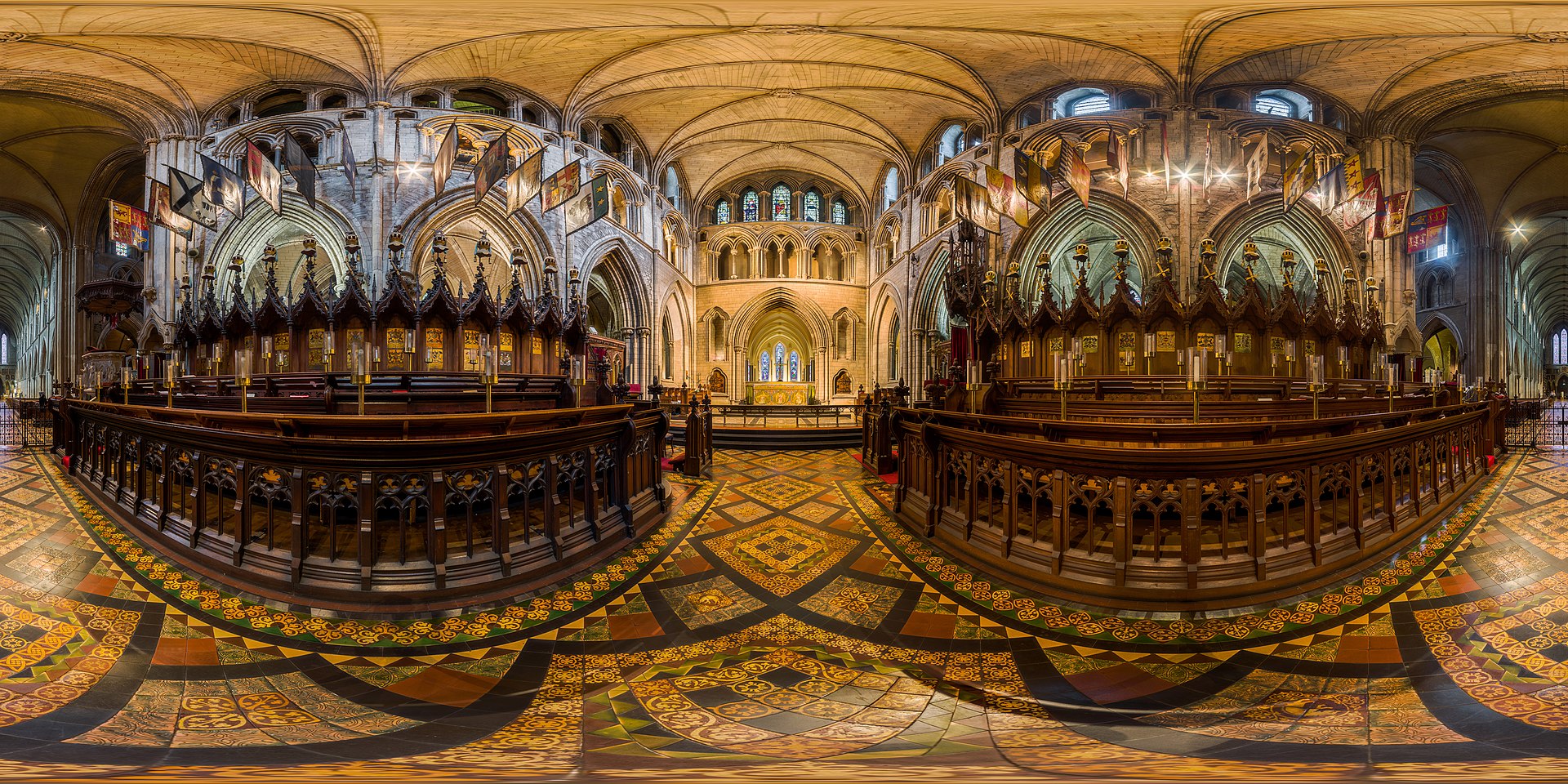
St Patrick's Cathedral
St Patrick's Close, Dublin 8
Ireland's largest church stands on the spot where, legend has it, Saint Patrick himself baptised converts in a well around 450 AD. Whether that's true is anyone's guess, but the well was real — it was rediscovered during excavations in 1901. The current building dates to 1220 and has been through more identity crises than any church should have to endure: Catholic cathedral, Church of Ireland cathedral, Cromwell's horse stable, and finally the meticulously restored Gothic masterpiece you see today. Jonathan Swift — the man who wrote Gulliver's Travels — served as Dean here from 1713 until his death in 1745. He took the job reluctantly, considering it exile from London, but threw himself into championing the Irish poor with savage brilliance. His essay "A Modest Proposal," suggesting the English eat Irish babies to solve the famine problem, remains the most devastating piece of political satire in the English language. He's buried in the nave, and he wrote his own epitaph: "Where savage indignation can no longer lacerate his heart. Go, traveller, and imitate, if you can, this dedicated and earnest champion of liberty." Swift left the bulk of his £12,000 fortune to found a hospital for the mentally ill. St. Patrick's Hospital opened in 1757 and still operates today — making it one of the oldest psychiatric hospitals in the world. Swift himself may have suffered from what we now recognize as Meniere's disease, which causes vertigo and hearing loss. The cathedral floor is paved with hundreds of memorial tablets, and the choir stalls bear the banners of the Knights of St. Patrick, an order of chivalry created in 1783. It's a place where eight centuries of Irish history are literally carved into the stone.
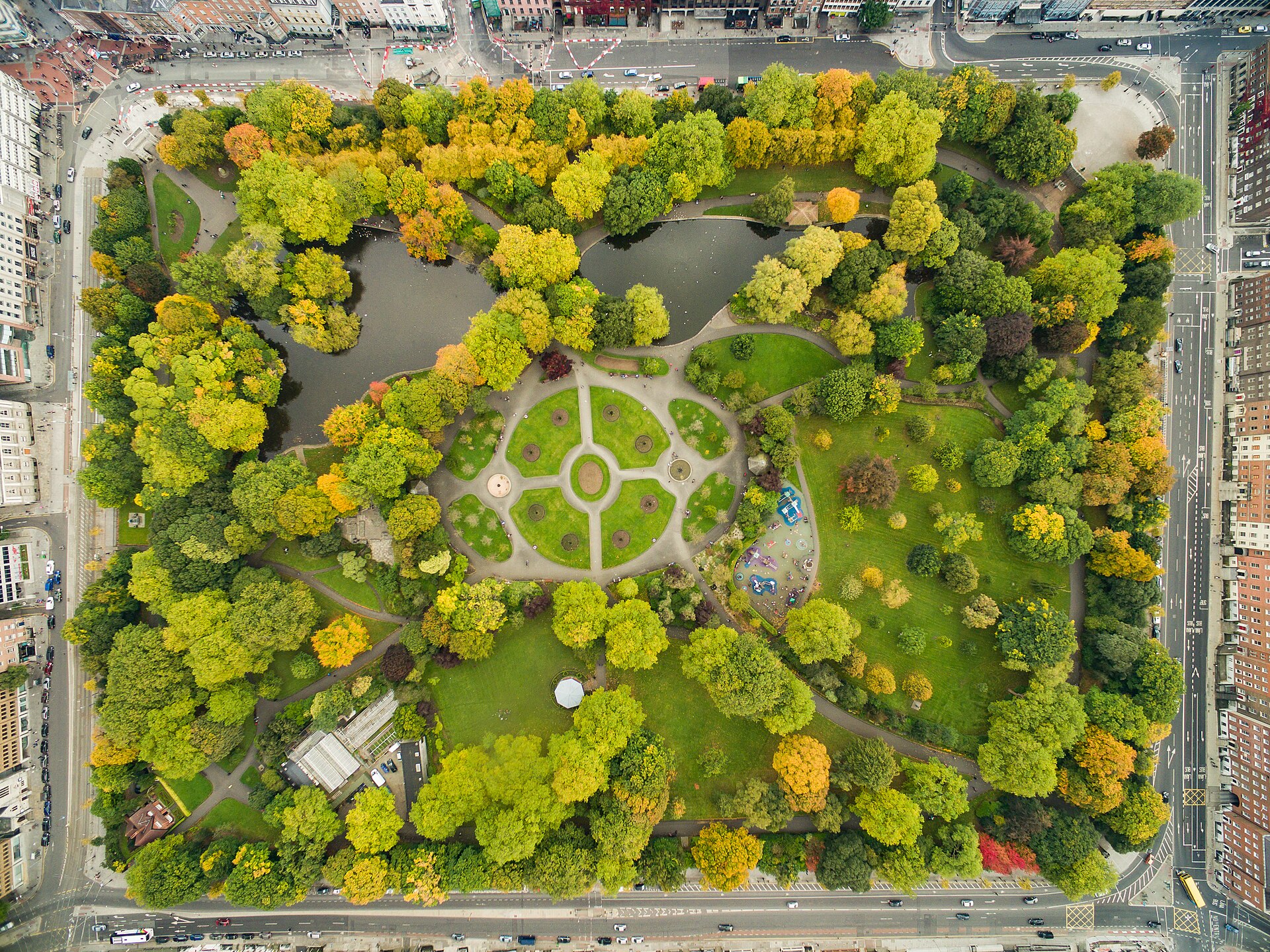
St Stephen's Green
St Stephen's Green, Dublin 2
This elegant 22-acre park at the top of Grafton Street has had more reinventions than a pop star. In medieval times it was a marshy common where livestock grazed, lepers were treated, and public punishments provided the entertainment. In 1663, Dublin's city leaders fenced off 27 acres and sold 96 surrounding plots for housing, launching the Georgian development that still frames the square today. For over two centuries, only residents with keys could enter the park. The rest of Dublin could look through the railings but not walk on the grass. That changed in 1877 when an Act of Parliament reopened it to the public, and Sir Arthur Guinness — yes, that Guinness — personally funded the landscaping in 1880, transforming it into the Victorian pleasure garden you see today, complete with an ornamental lake, bandstand, and meticulously planted flowerbeds. During the 1916 Easter Rising, rebels under Michael Mallin and Constance Markievicz seized the Green and dug trenches around the perimeter. The British commander facing them was a member of the Royal College of Surgeons across the street, and in one of the war's stranger episodes, both sides agreed to a daily ceasefire so the park keeper could feed the ducks. You can't make this stuff up. The park contains a garden for the visually impaired on the northwest corner, with scented plants labelled in Braille — one of the earliest such gardens in Europe. There's also a memorial to the Great Famine by Edward Delaney, and busts of Countess Markievicz and James Joyce. On a sunny Dublin afternoon, the Green fills with office workers, students, and tourists, and you'd never guess this quiet park was once a battlefield.
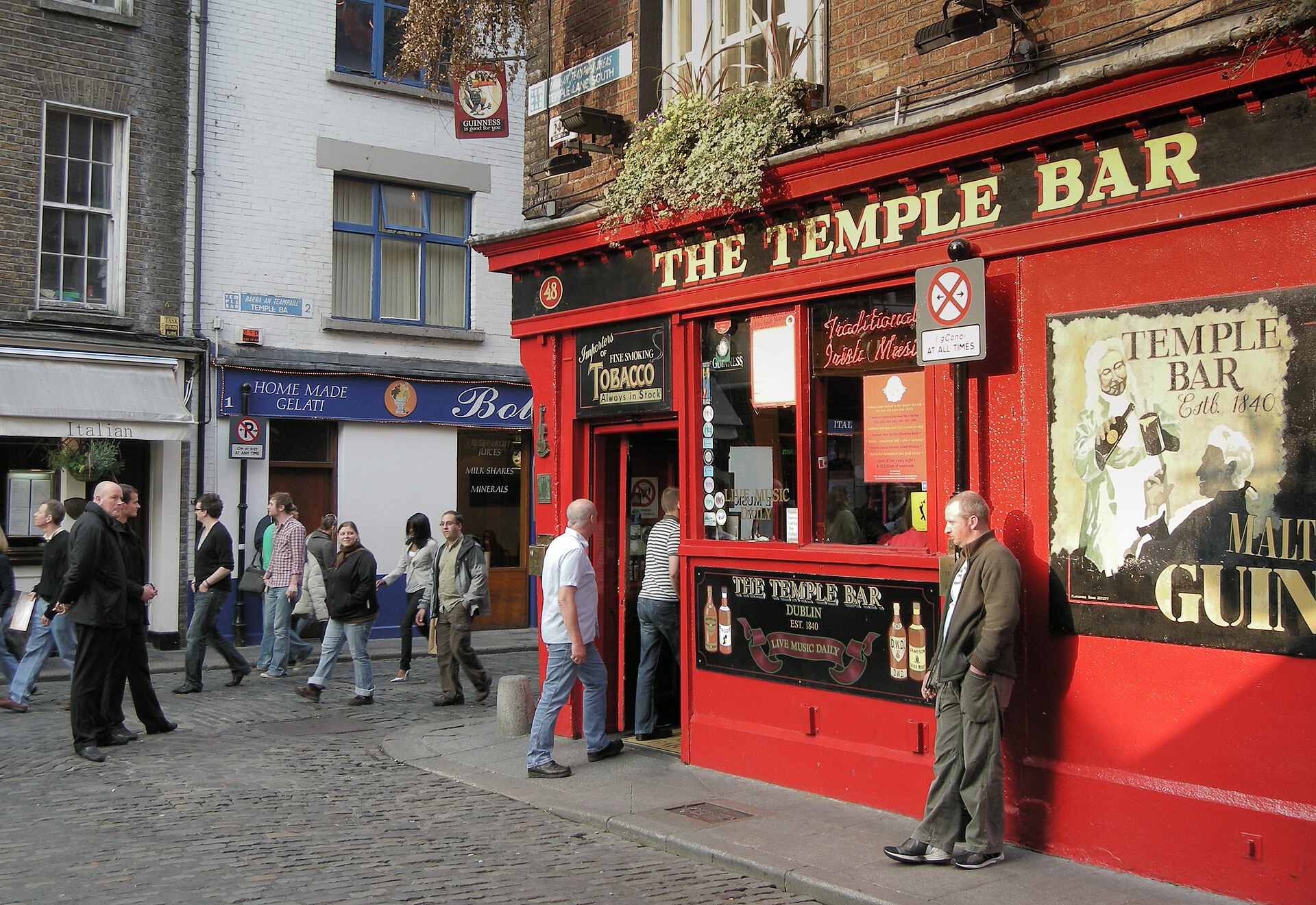
Temple Bar
Temple Bar, Dublin 2
Every city has a neighborhood that tourists flock to and locals roll their eyes at, and Temple Bar is Dublin's version — though the eye-rolling is somewhat unfair. This cobblestoned network of narrow streets between the Liffey and Dame Street was never supposed to survive at all. In the 1980s, Ireland's national bus company, CIE, bought up most of the buildings with plans to demolish the entire area and build a bus depot. While the buildings sat empty waiting for the wrecking ball, artists, musicians, and cheap-rent seekers moved in and accidentally created a bohemian quarter. The bus depot never happened. Instead, in 1991, the government established Temple Bar Properties to regenerate the area as Dublin's official "cultural quarter." The Irish Film Institute, Project Arts Centre, Gallery of Photography, and the Ark children's cultural centre all set up shop. For a while it was genuinely edgy. Then the stag parties found it. The name has nothing to do with bars or temples. Sir William Temple, provost of Trinity College, built a house here in the 1600s, and "bar" likely referred to a riverside walkway. The streets mirror London's Temple area — there's an Essex Street and a Fleet Street here too, in the same relative positions. But here's the thing Temple Bar haters won't tell you: Fishamble Street, on the western edge, is where Handel's Messiah received its world premiere on April 13, 1742. Ladies were asked to come without hooped skirts to fit more people into the hall. There's an annual performance at the same spot every year. Beneath the cobblestones and pint glasses, this neighborhood has layers of history that no amount of tourist tat can erase.
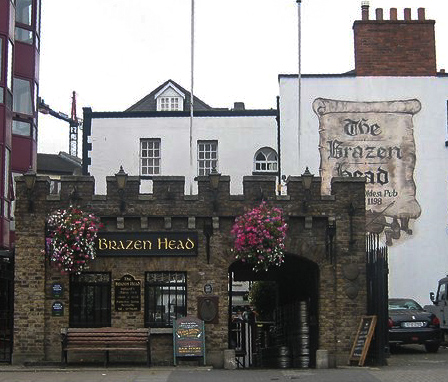
The Brazen Head
20 Lower Bridge Street, Dublin 8
Dublin's oldest pub has been pouring pints since 1198, which means people have been getting drunk on this exact spot for over 800 years. The Brazen Head sits on Bridge Street, the very location from which Dublin originally got its Irish name — Baile Atha Cliath, "the town of the ford of the hurdles," referring to the ancient river crossing that predates the city itself. The present building dates to 1754, when it was rebuilt as a coaching inn, but the pub's documented history stretches much further back. It received its ale licence in 1661, and the first recorded mention as an inn dates to 1668. The low ceilings, dark wood, and warren-like layout feel genuinely medieval, even if the walls have been rebuilt a few times. The Brazen Head's real claim to fame is revolutionary. The United Irishmen used it as a meeting place to plan their insurrection, and in 1803, Robert Emmet stayed here in a room overlooking the main door — deliberately positioned so he could spot approaching enemies. The pub was essentially a revolutionary safe house with a bar license. Jonathan Swift, Patrick Kavanagh, and Brendan Behan all drank here at various points across three centuries, which gives you a sense of the institutional memory in these walls. Today it's a working pub with live traditional music sessions most evenings, decent food, and a courtyard that catches the afternoon sun. It's tucked away from the main tourist drag, which keeps it slightly more authentic than you'd expect from a pub that can legitimately claim to be Ireland's oldest. The low doorways will crack you on the head if you're tall, which feels appropriate for a place that's been humbling visitors since the Crusades.
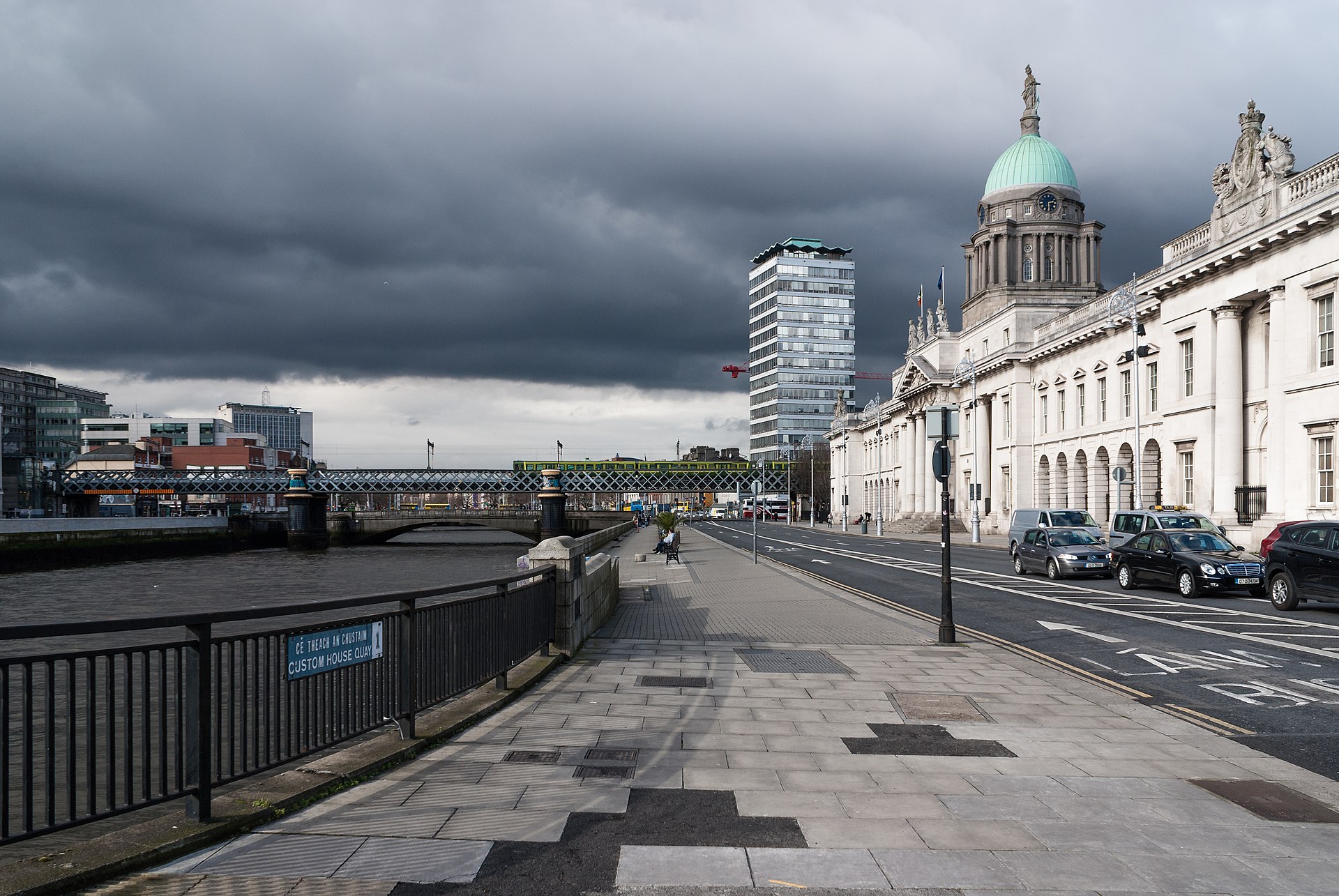
The Custom House
Custom House Quay, Dublin 1
James Gandon's neoclassical masterpiece took ten years to build and about ten hours to burn. Completed in 1791 at a cost of £200,000 — an astronomical sum at the time — the Custom House is widely considered the finest 18th-century public building in Ireland. Its 114-metre-long facade along the Liffey is a symphony of Portland stone, Doric porticos, and an elegantly proportioned copper dome crowned by a statue of Commerce. The four facades are decorated with sculptures by Edward Smyth representing Ireland's rivers — the heads of the Liffey, Shannon, Boyne, and ten others gaze out from keystones above the windows. They're masterful works of allegorical sculpture that most people passing on the bus never even notice. On May 25, 1921, during the War of Independence, the IRA burned the Custom House to destroy British tax records and administrative files. Gandon's original interior was completely destroyed, the dome collapsed, and centuries of irreplaceable records were lost. Five IRA volunteers were killed and over eighty were captured — it was a military disaster but a propaganda triumph, demonstrating that British administration in Ireland could no longer function. The building was rebuilt in 1928 using Ardbraccan limestone (the original Portland stone was unavailable in sufficient quantities), and a further restoration was completed in 1991 for its bicentenary. Today it houses the Department of Housing, and its reflection in the Liffey at sunset is one of Dublin's most painterly views. Gandon, incidentally, was English — hired by John Beresford after the original architect died — and he was so despised by Dublin merchants who opposed the project that he needed an armed guard during construction.
Trinity College
College Green, Dublin 2
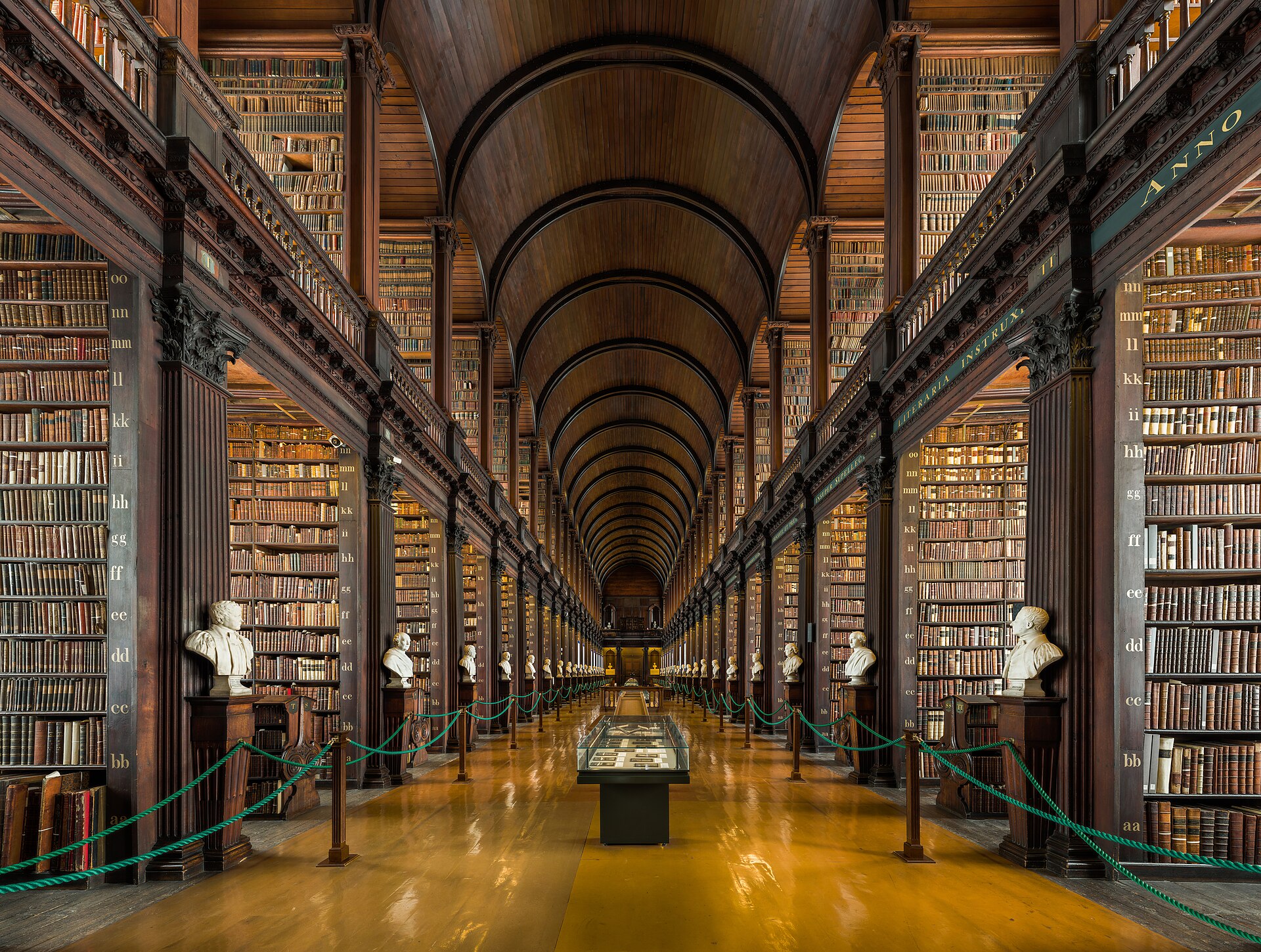
Queen Elizabeth I founded this university in 1592 on the grounds of a confiscated Augustinian monastery, and for the next two hundred years it existed solely to educate Protestant gentlemen. Catholics were technically allowed to enroll from 1793, but the Catholic Church banned its own flock from attending without special permission — a ban that lasted until 1970. So for almost four centuries, Trinity was either legally or socially off-limits to the majority of Ireland's population. Now it's the country's most prestigious university, and nobody seems to hold a grudge. The campus is a 47-acre sanctuary of cobblestones and cricket pitches dropped right in the middle of Dublin's busiest shopping district. Walk through the front arch and the city just vanishes. The Campanile bell tower, erected in 1853, marks the spot where the original monastery chapel once stood. Parliament Square looks like something out of an English period drama, which is exactly the point — the architects were deliberately aping Oxford and Cambridge. But the real draw is the Old Library and its Long Room, a 65-metre barrel-vaulted cathedral of books that holds 200,000 of Trinity's oldest volumes. The busts lining both sides were added in the 1840s, and the room itself was originally flat-ceilinged — the soaring barrel vault was a later renovation to squeeze in more shelf space. It's also home to the Book of Kells, but that deserves its own stop. Trinity's alumni list reads like an Irish literary hall of fame: Jonathan Swift, Oscar Wilde, Bram Stoker, Samuel Beckett. Four Nobel laureates have walked these grounds. Stand in Front Square and you're standing where Ireland learned to argue with the world.
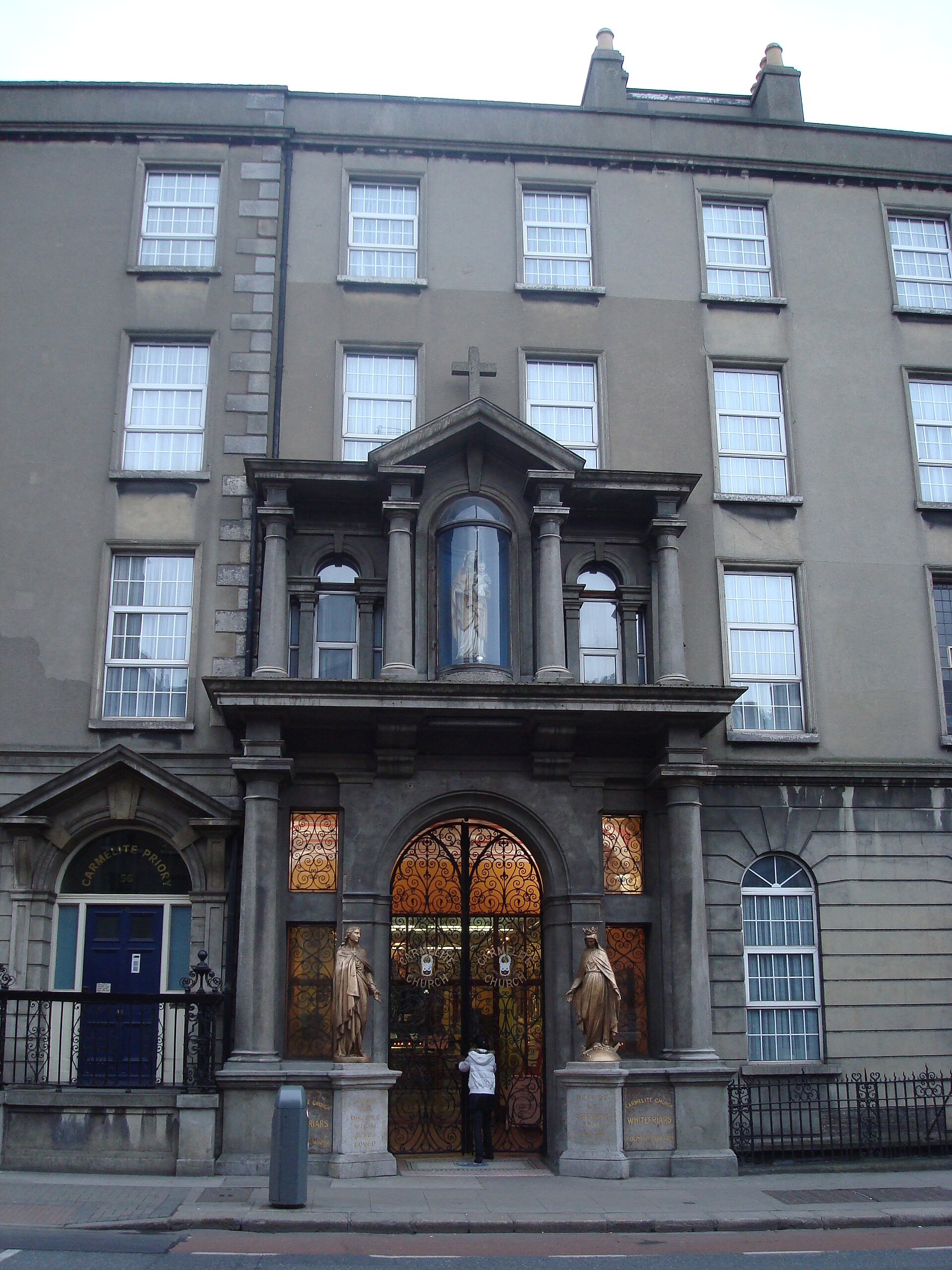
Whitefriar Street Church
Aungier Street, Dublin 2
Dublin is the last place you'd expect to find the remains of St. Valentine, patron saint of romantic love, yet here they are — in a modest Carmelite church on Aungier Street that most tourists walk past without a second glance. The relics were a gift from Pope Gregory XVI to Father John Spratt, a Dublin Carmelite friar whose preaching in Rome in 1835 was so electrifying that the Pope decided to send him a present. That present was a reliquary containing "the bones and a small vessel tinged with blood" of St. Valentine, removed from the cemetery of St. Hippolytus on the Via Tiburtina in Rome. The relics arrived in Dublin on November 10, 1836, and were received by Archbishop Murray in a solemn procession. They were placed under the high altar for safekeeping during church renovations — and then everyone basically forgot about them. The reliquary sat under the altar, gathering dust, until it was rediscovered in 1940. A proper shrine wasn't erected until 1956, featuring a statue by Dublin sculptor Irene Broe. Today the shrine draws visitors year-round, but the real action happens on February 14th, when the church holds two special masses at 11:30 AM and 3 PM that include a blessing of rings. Couples come from across Ireland and overseas to have their rings blessed at the shrine of the actual saint whose feast day it is. It's a genuinely touching scene in a church that feels nothing like a tourist attraction. The wooden casket containing the relics is sealed with red silk ribbon and official papal seals. Whether you're a believer or a skeptic, there's something wonderfully Dublin about the patron saint of love ending up in a side street in the Liberties because a Pope was impressed by a good sermon.