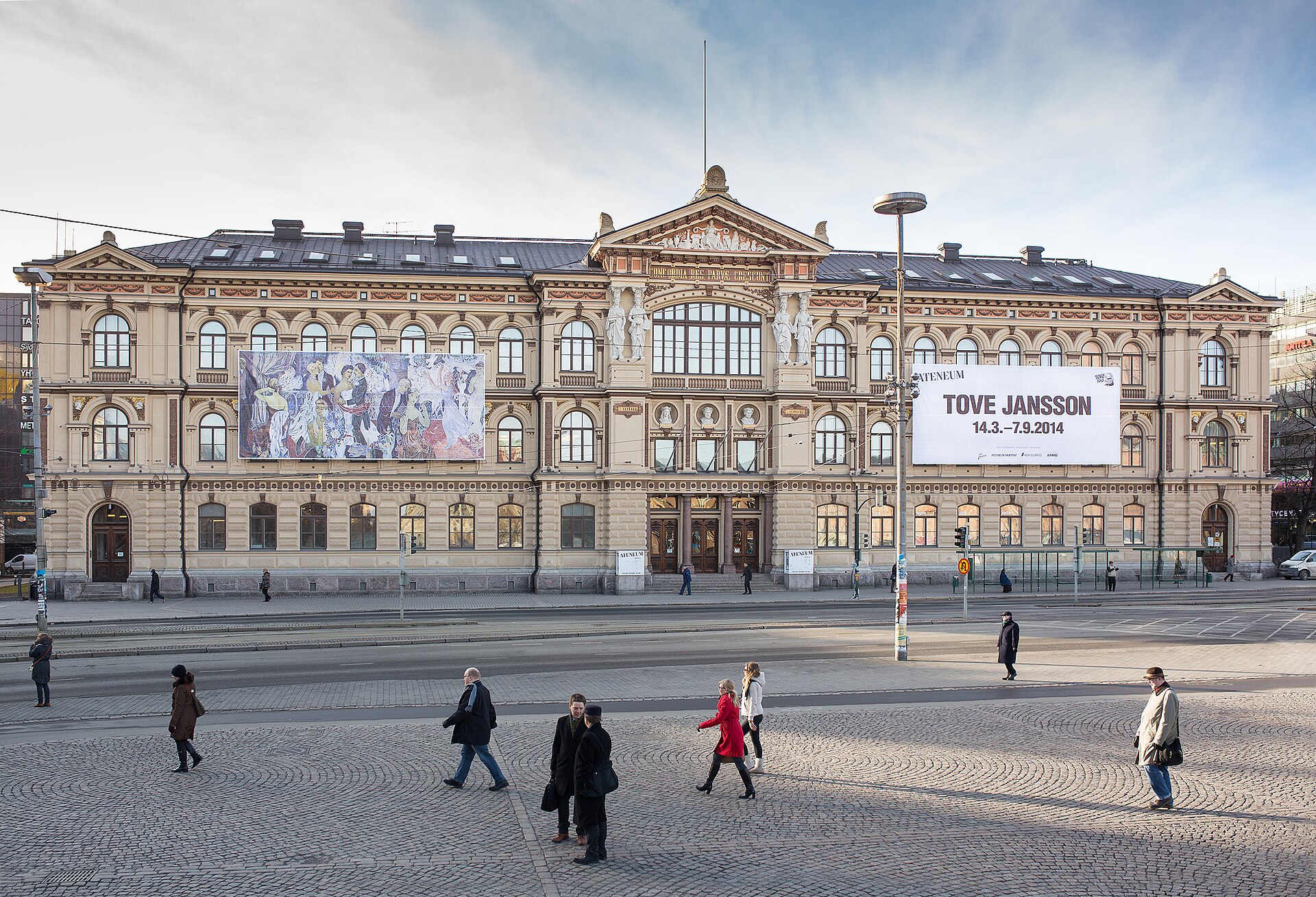
The Ateneum is Finland's most important art museum — a Renaissance Revival building from 1887 that houses the national collection of Finnish art from the 18th century to the 1950s, including the defining works of Finnish visual culture: Akseli Gallen-Kallela's Kalevala paintings, Albert Edelfelt's Parisian-influenced portraits, and Hugo Simberg's strange, haunting allegories that remain among the most recognisable images in Nordic art.
The collection traces Finnish art from the period when Finland was a Russian Grand Duchy seeking a national identity, through independence and the early 20th century, to the post-war modernism that connected Finnish art to international movements. Gallen-Kallela's Kalevala cycle — monumental paintings depicting scenes from the Finnish national epic in a style that combines Symbolism with Finnish landscape painting — is the centrepiece and the visual equivalent of Sibelius's music: art that created Finnish identity as much as it reflected it.
The building sits on the Railway Square (Rautatientori), directly opposite the Central Railway Station, and the architectural dialogue between Saarinen's granite station and the Ateneum's ornate facade captures the tension between modernity and tradition that has driven Finnish culture for a century. The Ateneum is part of the Finnish National Gallery (alongside Kiasma and the Sinebrychoff Art Museum), and a combined ticket allows visits to all three — a progression from classical Finnish art (Ateneum) through contemporary (Kiasma) that traces the full arc of the country's visual culture.
Verified Facts
The Ateneum was built in 1887 in Renaissance Revival style
It houses the Finnish national art collection from the 18th century to the 1950s
Akseli Gallen-Kallela's Kalevala paintings are in the collection
The Ateneum is part of the Finnish National Gallery
Get walking directions
Kaivokatu 2, 00100 Helsinki