Walking Tours in Helsinki
30 Landmarks in Helsinki
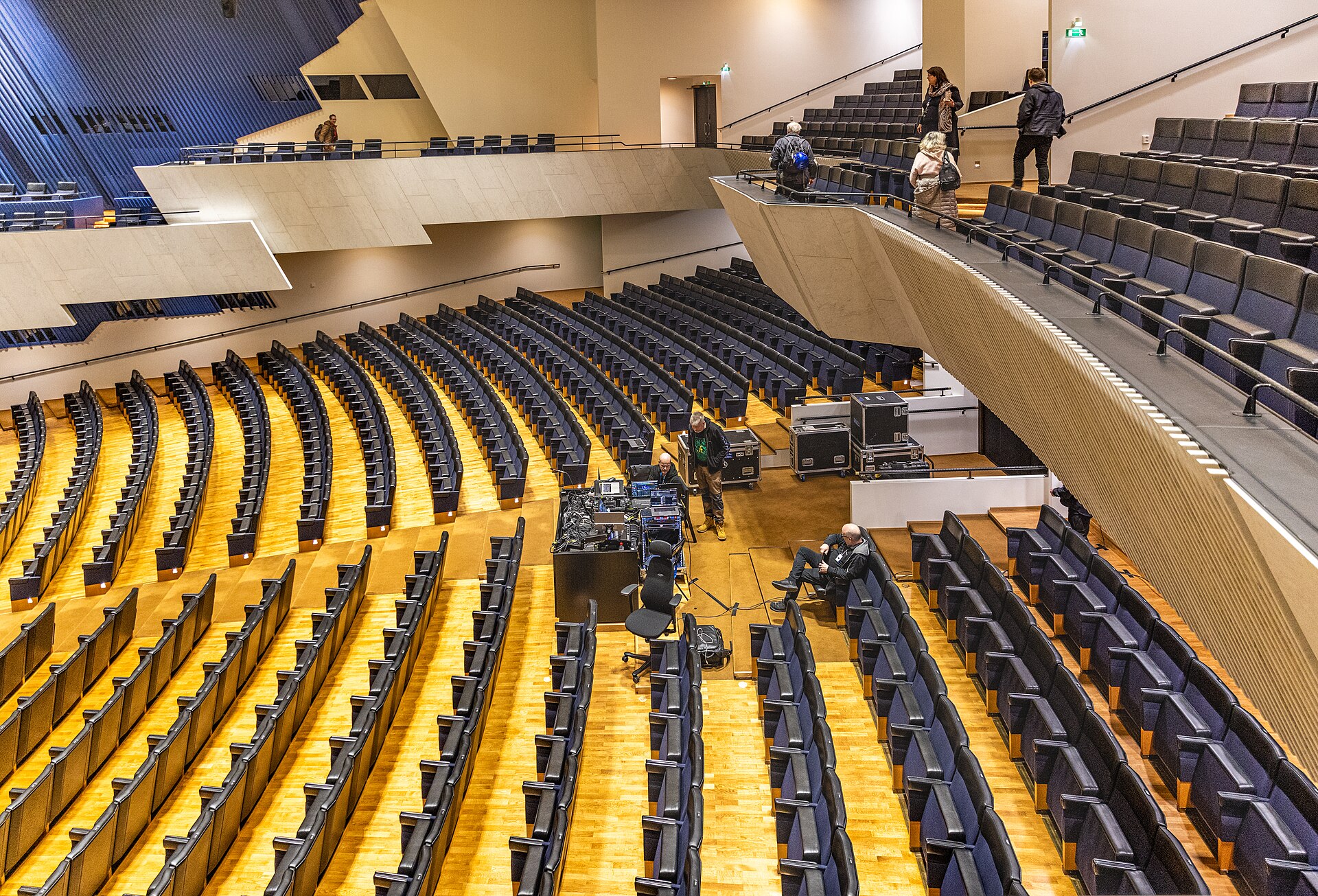
Alvar Aalto's Finlandia Hall
Mannerheimintie 13e, 00100 Helsinki
Finlandia Hall is Alvar Aalto's most prominent building in Helsinki — a concert and convention hall completed in 1971 that sits on the shore of Töölönlahti Bay like a ship made of white Carrara marble. Aalto, Finland's greatest architect and one of the most important figures in 20th-century design, conceived Finlandia Hall as part of a never-completed master plan for Helsinki's civic centre, and the building — with its angular roofline, ribbon windows, and the pristine white marble that has caused maintenance headaches for decades — represents his mature style at its most confident. The marble cladding is the building's most discussed feature. Aalto insisted on Italian Carrara marble, which looks stunning but warps and discolours in the Finnish climate — the panels bow outward as moisture penetrates the stone, requiring ongoing replacement. The debate about whether to re-clad the building in a more practical material has been running for years, and the fact that Finland keeps choosing to restore the original marble says something about the country's relationship with Aalto: his buildings are treated as national heritage, and heritage requires sacrifice. The interior is vintage Aalto — undulating wooden ceilings, asymmetric floor plans, and the integration of furniture, lighting, and architecture into a unified design that makes every Aalto building feel like a complete world. The main concert hall seats 1,700 and has acoustics that are warm if not world-class. Guided architecture tours run regularly, and the building's lakeside setting — with views across Töölönlahti to the Oodi library and the National Museum — places it in a landscape of civic architecture that is Helsinki's greatest urban ensemble.
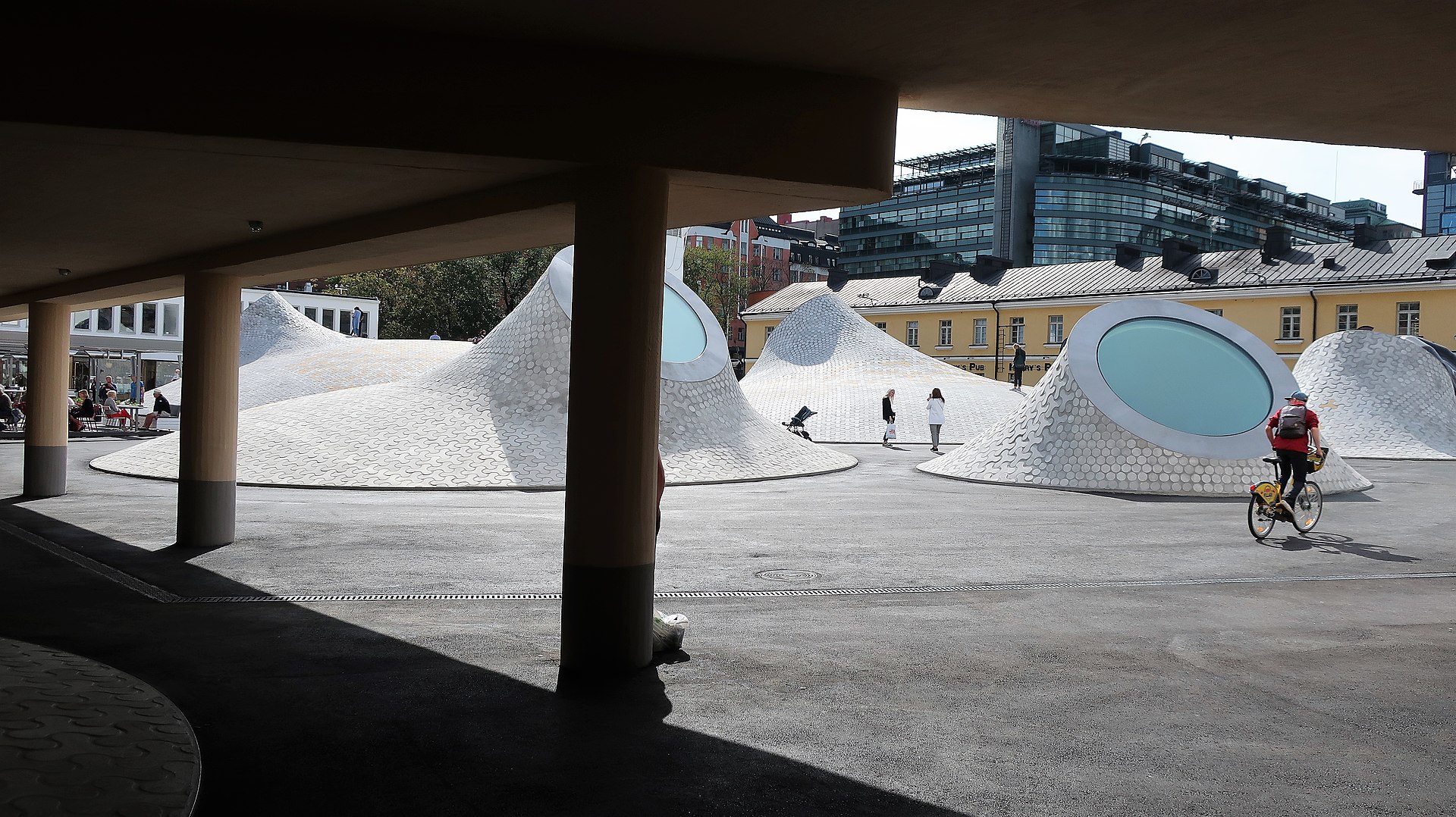
Amos Rex
Mannerheimintie 22-24, 00100 Helsinki
Amos Rex is Helsinki's most exciting contemporary art museum — an underground gallery beneath Lasipalatsi (Glass Palace) Square whose presence is announced by a series of domed skylights that bulge from the plaza surface like bubbles rising from the earth. The museum, opened in 2018, was designed by JKMM Architects, and the decision to build downward rather than upward — creating gallery space beneath a public square rather than displacing it with a building — is the kind of civic generosity that Helsinki does with quiet confidence. The skylights are the museum's signature — convex glass domes that bring natural light into the underground galleries while creating a sculptural landscape on the plaza above. Children climb and slide on the domes, which is encouraged, and the sight of people playing on top of a museum while art is displayed beneath them captures something about Finland's relationship between culture and public space that is genuinely distinctive. The exhibition programme focuses on immersive, large-scale installations and digital art — the teamLab exhibition that inaugurated the museum drew 270,000 visitors in three months, establishing Amos Rex as a destination for the kind of experiential contemporary art that traditional gallery spaces can't accommodate. The Lasipalatsi building above (a functionalist cinema and commercial building from 1936, recently restored) provides the museum's entrance, café, and the Bio Rex cinema that has been showing films on this site since the 1930s.
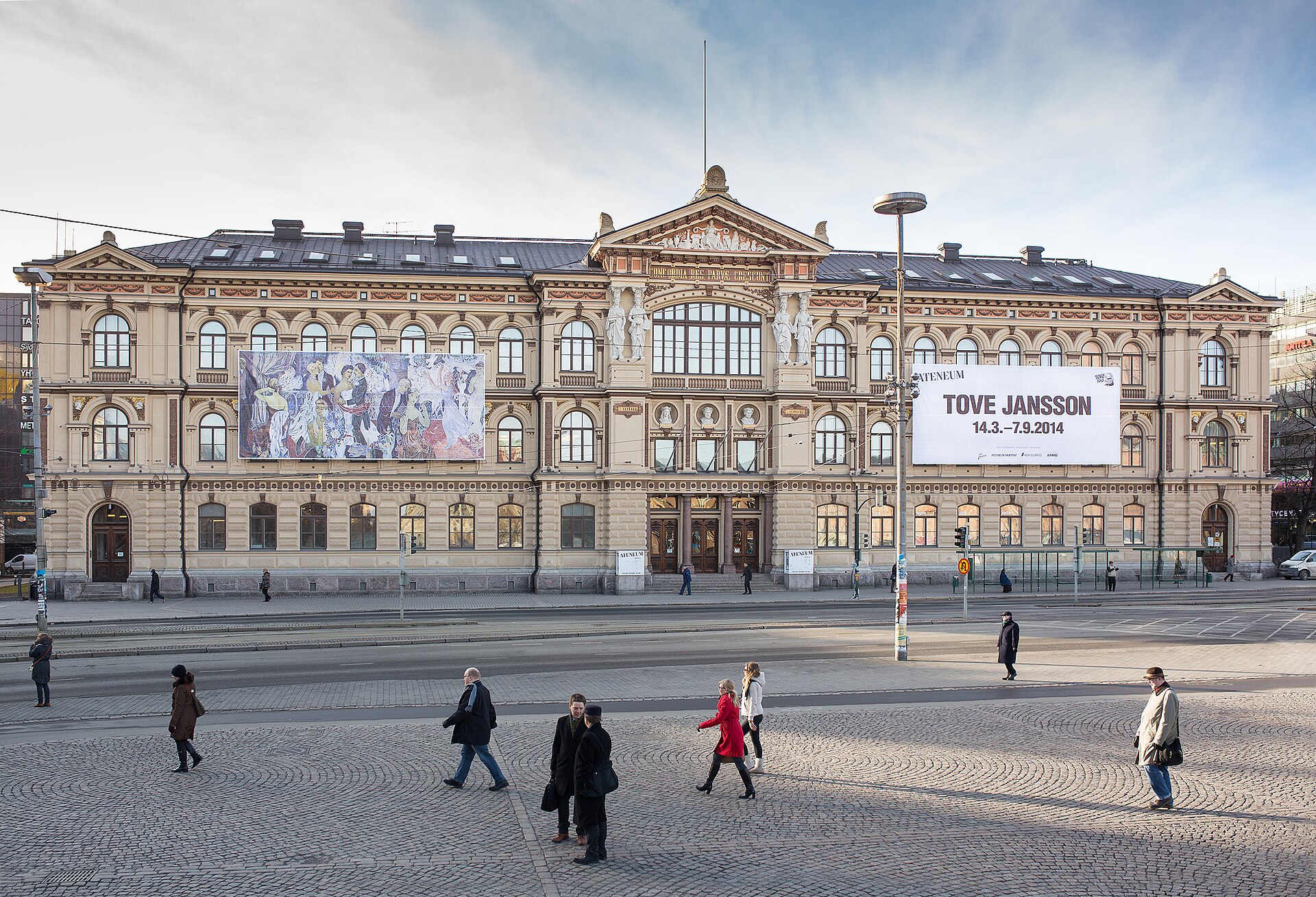
Ateneum Art Museum
Kaivokatu 2, 00100 Helsinki
The Ateneum is Finland's most important art museum — a Renaissance Revival building from 1887 that houses the national collection of Finnish art from the 18th century to the 1950s, including the defining works of Finnish visual culture: Akseli Gallen-Kallela's Kalevala paintings, Albert Edelfelt's Parisian-influenced portraits, and Hugo Simberg's strange, haunting allegories that remain among the most recognisable images in Nordic art. The collection traces Finnish art from the period when Finland was a Russian Grand Duchy seeking a national identity, through independence and the early 20th century, to the post-war modernism that connected Finnish art to international movements. Gallen-Kallela's Kalevala cycle — monumental paintings depicting scenes from the Finnish national epic in a style that combines Symbolism with Finnish landscape painting — is the centrepiece and the visual equivalent of Sibelius's music: art that created Finnish identity as much as it reflected it. The building sits on the Railway Square (Rautatientori), directly opposite the Central Railway Station, and the architectural dialogue between Saarinen's granite station and the Ateneum's ornate facade captures the tension between modernity and tradition that has driven Finnish culture for a century. The Ateneum is part of the Finnish National Gallery (alongside Kiasma and the Sinebrychoff Art Museum), and a combined ticket allows visits to all three — a progression from classical Finnish art (Ateneum) through contemporary (Kiasma) that traces the full arc of the country's visual culture.
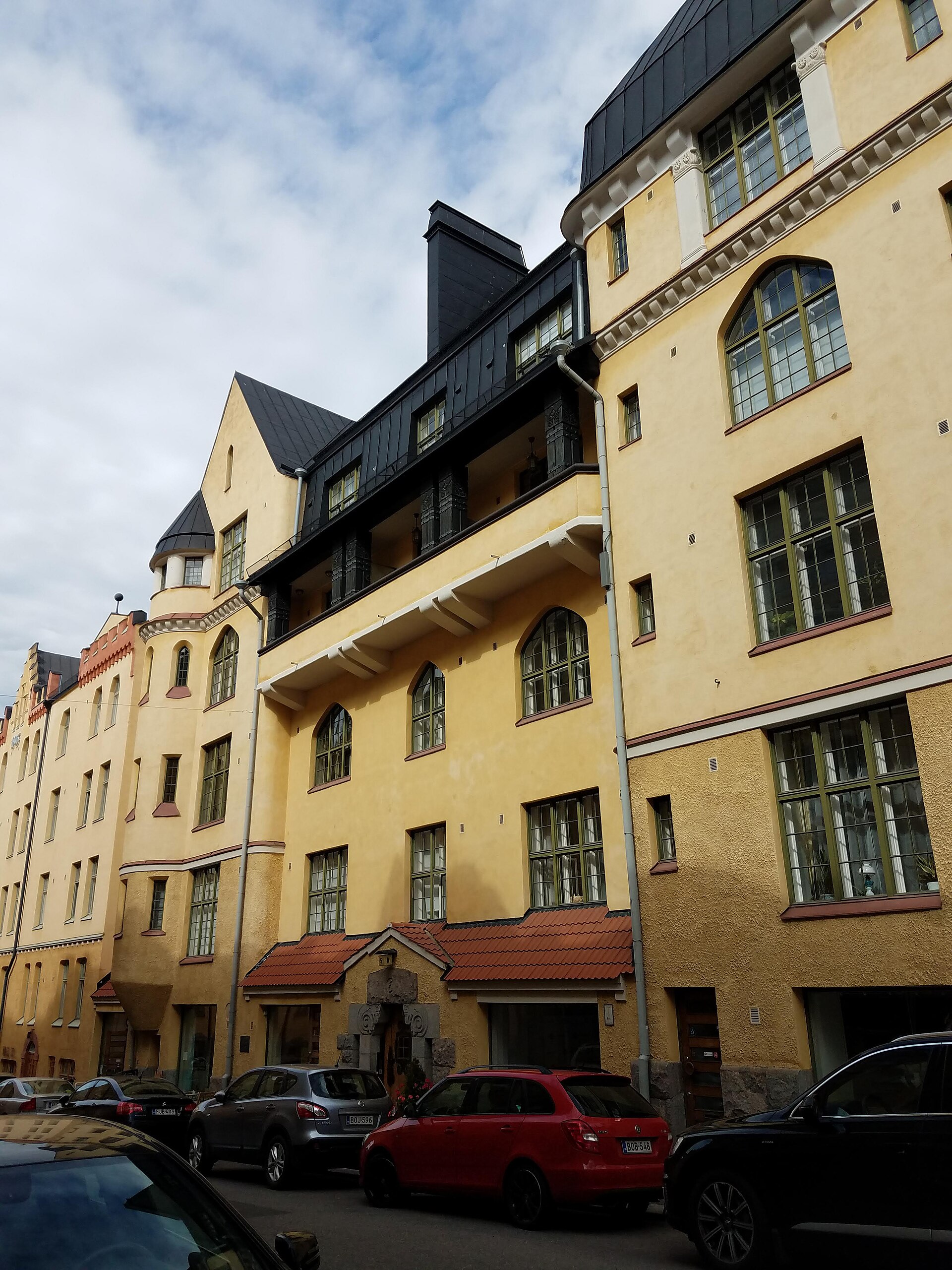
Design District Helsinki
Punavuori, Helsinki, Finland
The Design District is a 25-block neighbourhood in Punavuori and Ullanlinna that concentrates over 200 design shops, galleries, studios, and museums into a walkable area that represents Finnish design culture at its most accessible. Finland's contribution to 20th-century design — Alvar Aalto's furniture, Marimekko's textiles, Iittala's glassware, Arabia's ceramics — is one of the country's most significant cultural exports, and the Design District is where you experience it as a living practice rather than a museum collection. The shops range from established brands (Artek, the furniture company Aalto co-founded; Marimekko's flagship store) to independent designers working in ceramics, jewellery, textiles, and furniture. The Design Museum, in a 19th-century school building on Korkeavuorenkatu, traces Finnish design history from the Arts and Crafts movement through modernism to contemporary practice, and the permanent collection includes the iconic objects (Aalto's Savoy vase, Wirkkala's Kantarelli mushroom vases) that define Finnish design internationally. The neighbourhood's architecture — a mix of Art Nouveau apartment buildings, converted industrial spaces, and the occasional modernist insertion — provides the backdrop, and the cafés and restaurants scattered through the district practice the same design consciousness that the shops sell. Design District Helsinki is less a formal institution than a branded neighbourhood, but the concentration of creative businesses within walking distance is genuine, and the experience of browsing Finnish design in its natural habitat is more rewarding than any department store.
Esplanadi Park
Pohjoisesplanadi, Kaartinkaupunki, Helsinki, 00130, Finland
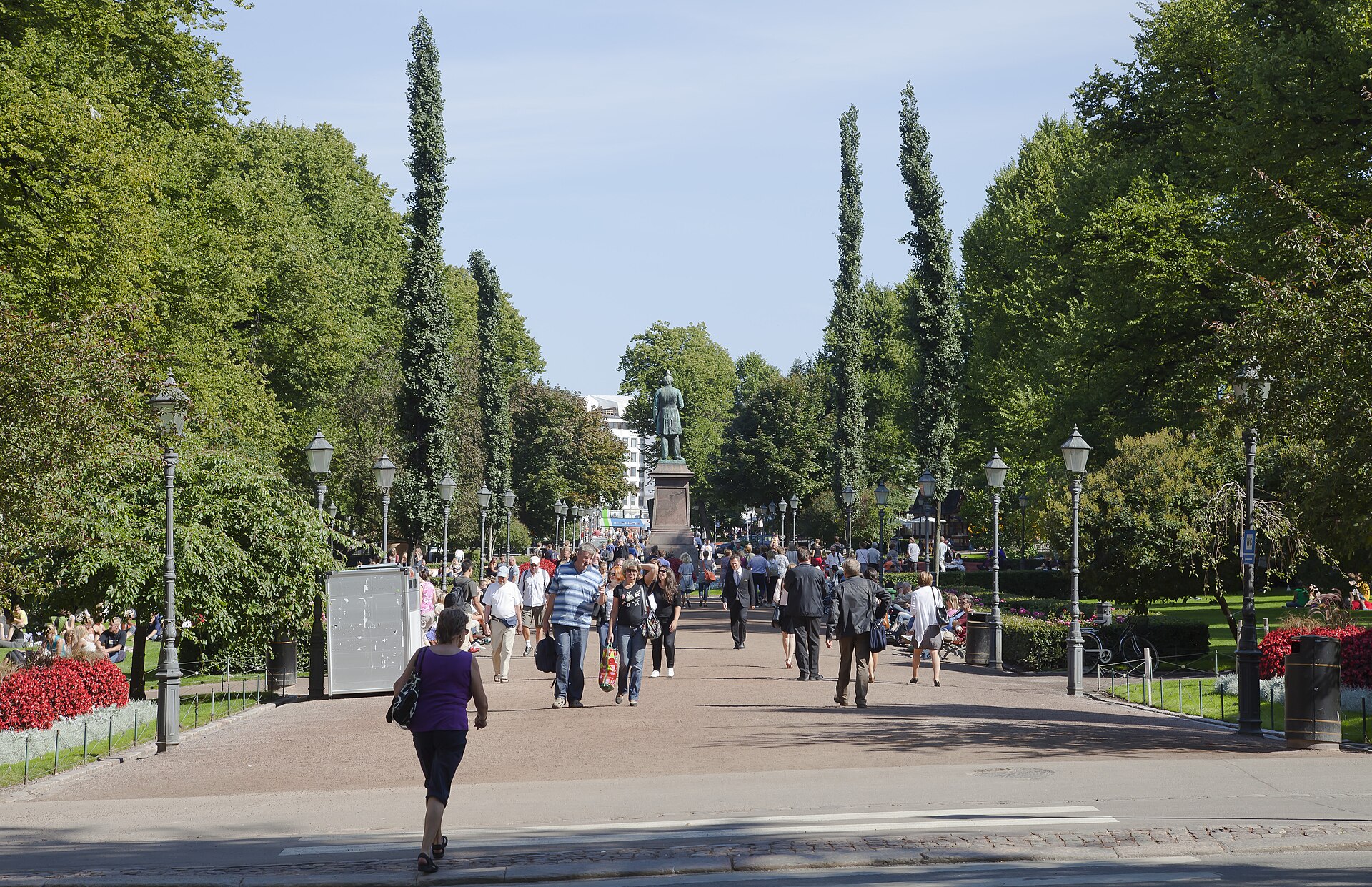
Esplanadi is Helsinki's most beloved park — a linear green space running from the Swedish Theatre to the Market Square between two avenues of shops, cafés, and the kind of civilised urban life that makes Helsinki feel more like a small-scale Vienna than a Nordic capital. The park, designed in the 1830s, is lined with linden trees, dotted with statues and flower beds, and anchored at its eastern end by the Kappeli restaurant — a glass pavilion that has been serving beer and Finnish food since 1867. The park is where Helsinkians come to see and be seen, particularly in summer when the city's long daylight hours (up to 19 hours in June) extend the outdoor season into something approaching Mediterranean levels of public sociability. The Esplanadi Stage, a bandstand in the park's centre, hosts free concerts throughout the summer — jazz, folk, pop, and the Finnish tango (a distinctive variation of Argentine tango that became a national dance form in the 1930s and is treated with a seriousness that would surprise Argentines). The avenues flanking the park — Pohjoisesplanadi (North Esplanade) and Eteläesplanadi (South Esplanade) — contain some of Helsinki's best shops, including the Marimekko and Iittala flagships, the Stockmann department store (Finland's most famous), and the Academic Bookstore (designed by Aalto, with a top-lit atrium that is one of Helsinki's finest interior spaces). The park-as-living-room model, where green space, commerce, and cultural programming coexist within a few hundred metres, is Finnish urbanism at its best.
Hakaniemi Market Hall
Hämeentie 1A, 00530 Helsinki
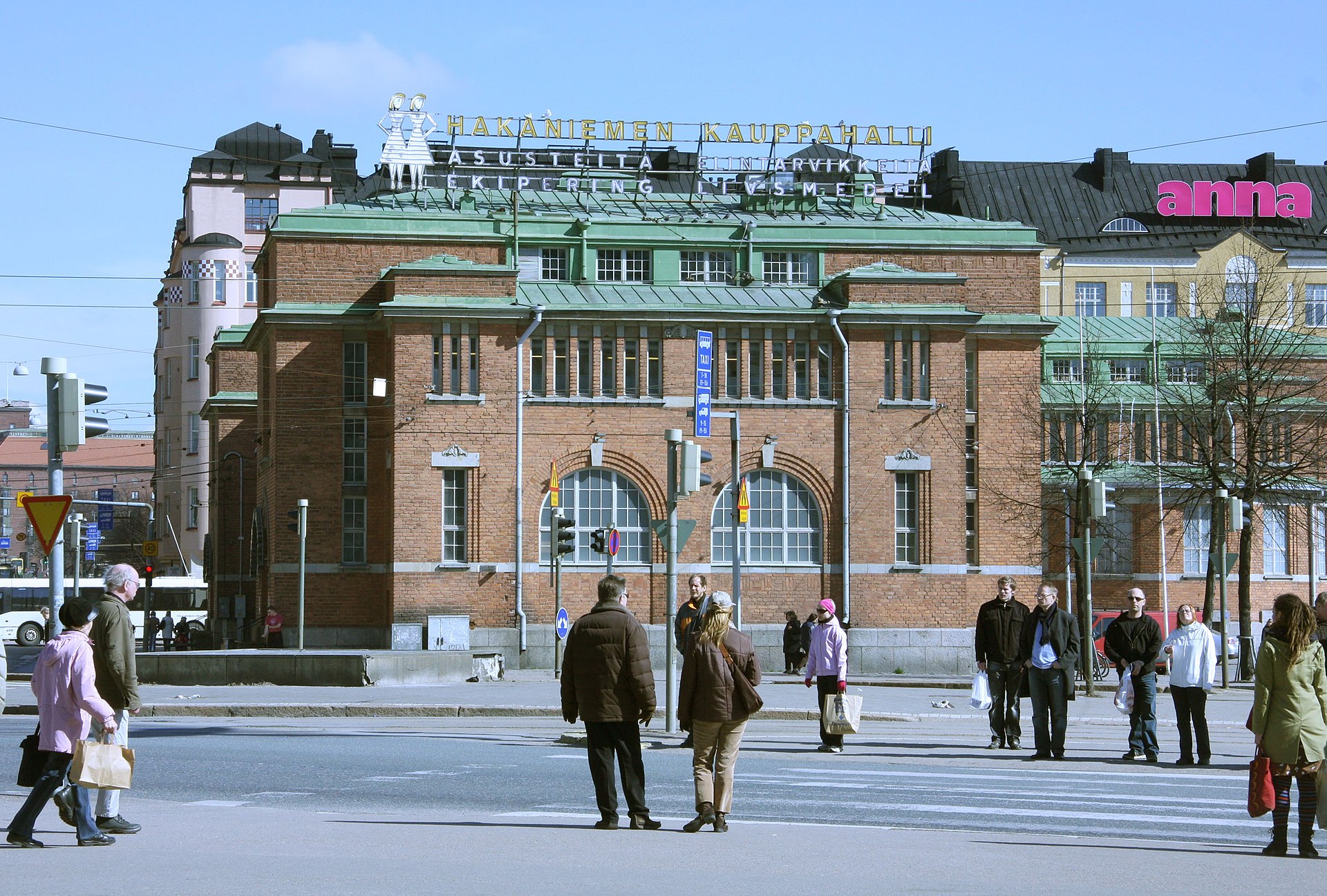
Hakaniemi Market Hall is Helsinki's most authentic food market — a two-storey brick building from 1914 at the edge of the Kallio neighbourhood that houses traditional Finnish food vendors on the ground floor and craft, textile, and secondhand dealers upstairs. Unlike the Old Market Hall near the harbour (which caters partly to tourists), Hakaniemi serves the surrounding working-class neighbourhood and prices reflect it. The ground floor is a Finnish food hall at its best: butchers selling reindeer, elk, and bear meat; fishmongers with Baltic herring, salmon, and whitefish; cheese vendors stocking the Lappi and Oltermanni varieties that are staples of the Finnish table; and the bakeries selling pulla (cardamom bread), karjalanpiirakka (Karelian pies), and the rye bread that Finland treats as a constitutional right. The coffee stalls serve kahvi (coffee) in the quantities and at the frequency that Finnish culture demands. The outdoor market in the square outside operates daily (largest on Saturdays) and adds seasonal produce, flowers, and the kind of miscellaneous goods that open-air markets specialise in. Hakaniemi sits at the foot of the Kallio bridge, and the combination of market shopping and Kallio neighbourhood exploration makes a natural half-day itinerary that shows a more local side of Helsinki than the tourist-oriented city centre.
HAM Helsinki Art Museum
8 Eteläinen Rautatiekatu, Kamppi, Helsinki, 00100, Finland
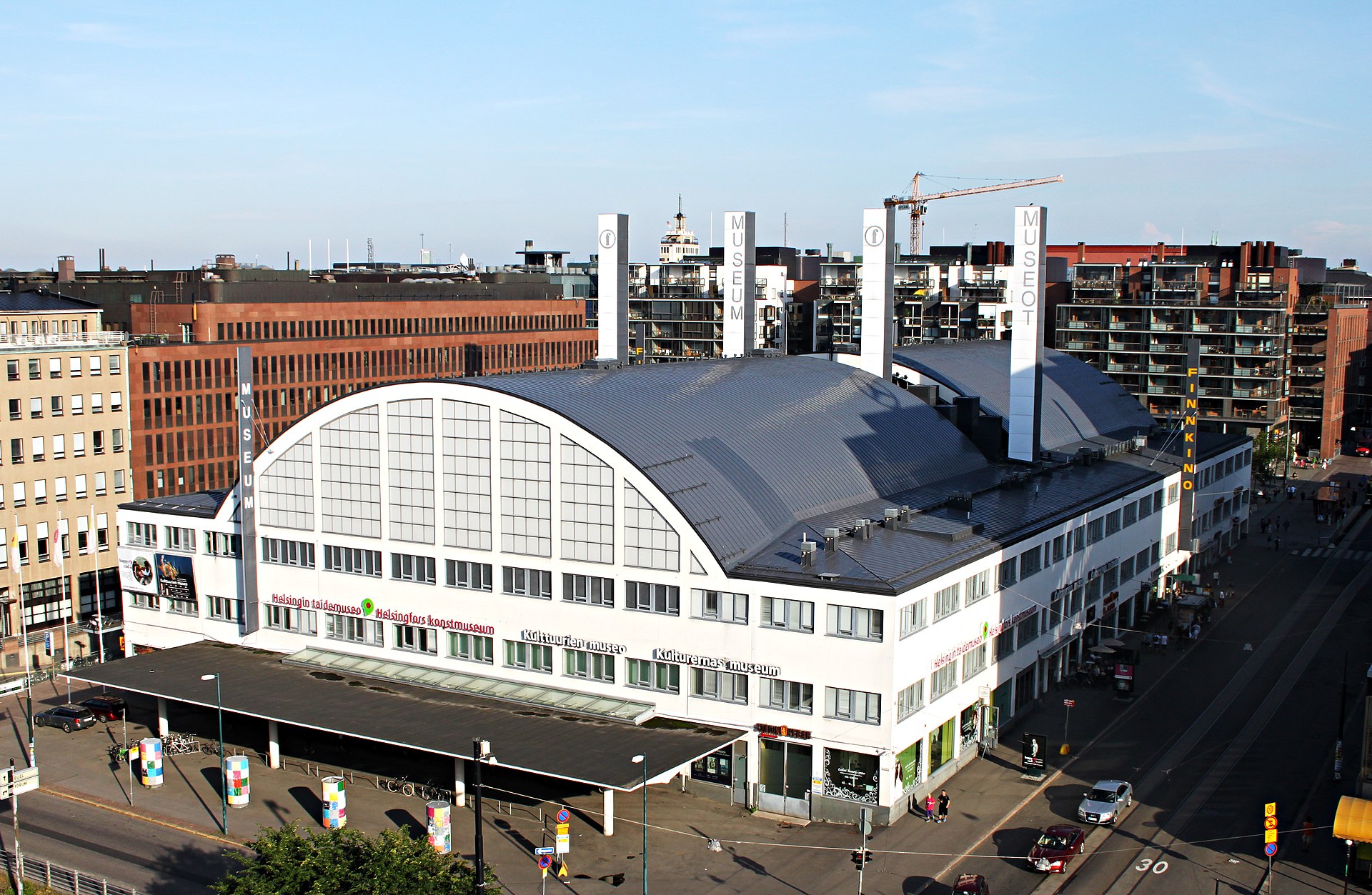
HAM is Helsinki's city art museum — housed in the Tennispalatsi (Tennis Palace), a functionalist building from 1938 that was originally built as a tennis court for the 1940 Olympics (which were cancelled due to World War II) and has served as a cinema, entertainment centre, and since 2015, Helsinki's primary venue for contemporary art exhibitions and the city's public art collection. The museum's permanent collection of over 9,000 works includes the city's public art holdings — sculptures, paintings, and site-specific works installed in Helsinki's parks, buildings, and streets — and the temporary exhibition programme brings major international contemporary art to a museum that is consistently ambitious relative to its size. The building's industrial interior (high ceilings, open floor plans, the remnant geometry of tennis courts) provides flexible gallery spaces that work well for the large-scale installations the programme favours. HAM's most distinctive feature is its management of Helsinki's public art collection — over 500 outdoor works scattered across the city, from the Havis Amanda fountain on the Market Square to contemporary sculptures in parks and housing estates. The museum publishes walking tour maps of the outdoor collection, making it possible to experience a HAM-curated exhibition by walking through the city rather than through gallery doors. This integration of museum and city is quintessentially Finnish — pragmatic, democratic, and designed to make art accessible without making it precious.
Helsinki Cathedral (Tuomiokirkko)
Unioninkatu 29, 00170 Helsinki
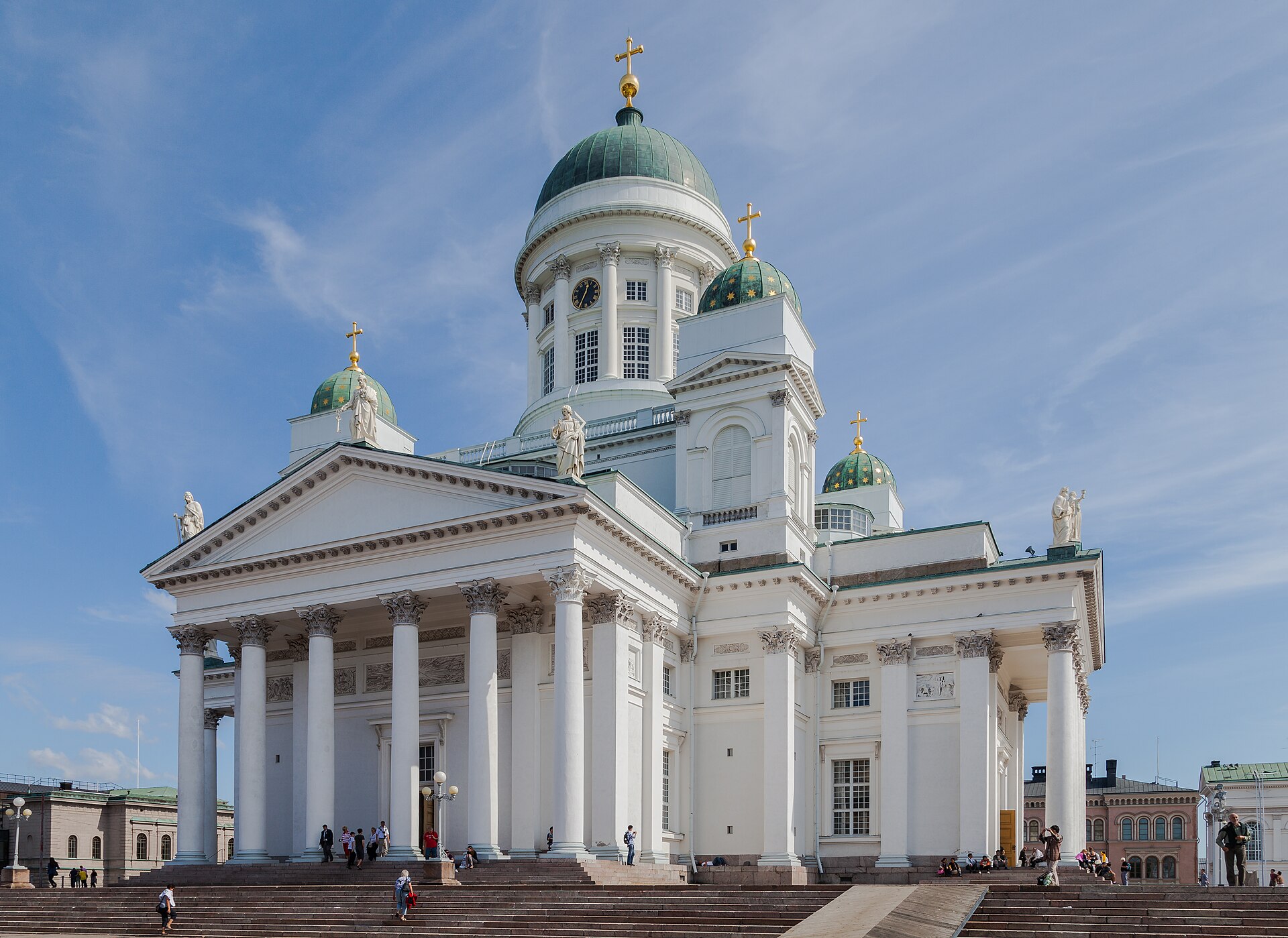
Helsinki Cathedral is the white neoclassical landmark that defines the city's skyline — a domed church sitting atop a monumental flight of steps on Senate Square that is visible from the harbour and has been the symbol of Helsinki since Carl Ludvig Engel completed it in 1852. The building is pure Nordic Neoclassicism: white walls, green copper dome, Corinthian columns, and a severity of line that makes Mediterranean churches look hysterical by comparison. The interior is deliberately austere — white walls, minimal decoration, and a simplicity that reflects the Lutheran theology of the Finnish church. After the ornate excess of Catholic and Orthodox churches elsewhere in Europe, the emptiness of Helsinki Cathedral is either a relief or a disappointment depending on your tolerance for decorative restraint. The organ, built by Kangasala in 2004, is the exception — a magnificent instrument whose concerts fill the nave with sound that the plain walls reflect with remarkable clarity. Senate Square below the cathedral is Engel's masterwork — a neoclassical ensemble of the cathedral, the University of Helsinki, the Government Palace, and the National Library that was designed as a unified composition and represents Finland's most complete neoclassical urban space. The square is the gathering point for Helsinki's major public events — Independence Day celebrations on December 6, New Year's Eve, and the summer market that fills the cobblestones with stalls. The statue of Tsar Alexander II at the centre is a reminder that Finland was a Russian Grand Duchy when the square was built, and that the Finns have a complicated relationship with the empire that gave them their most beautiful architecture.
Helsinki Central Railway Station
Kaivokatu 1, 00100 Helsinki
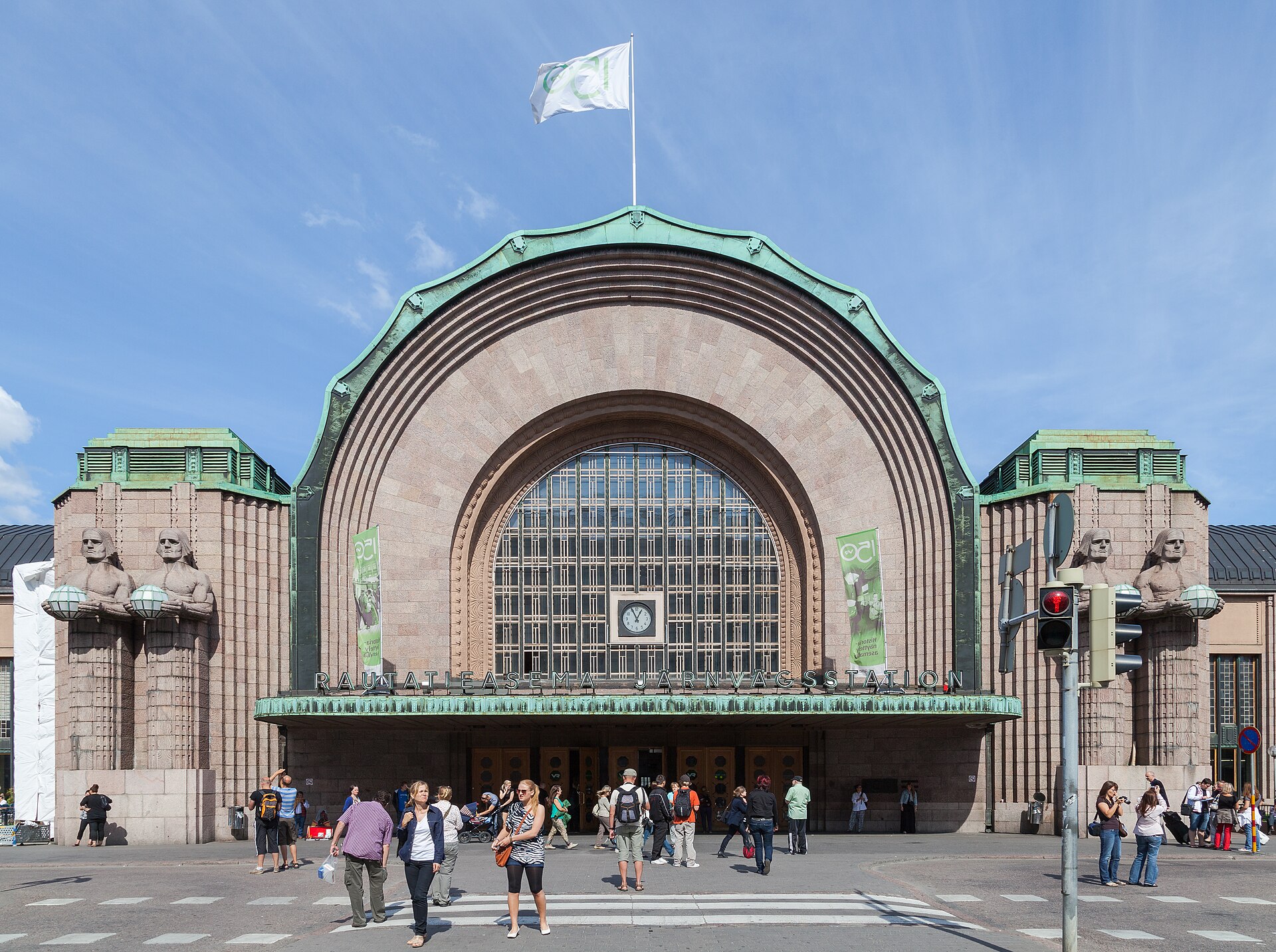
Helsinki Central Station is the most recognisable building in Finland — a granite Art Nouveau-meets-Art Deco railway station designed by Eliel Saarinen and completed in 1919, whose clock tower, arched entrance, and four stone giants holding globe-shaped lamps have become the symbol of Helsinki as surely as the cathedral. The station handles 200,000 passengers daily and is the busiest building in Finland, but its architectural quality is so high that it transcends its function — this is a building that makes arriving by train feel like arriving at a temple. Saarinen originally designed the station in the National Romantic style (medieval references, rough stone, organic forms), but public criticism led him to redesign it in a stripped, geometric style that anticipated Art Deco by a decade. The result — clean granite surfaces, geometric detailing, and the famous lamp-bearing giants by Emil Wikström flanking the entrance — influenced station design internationally and established Saarinen's reputation (he later moved to America, where his son Eero designed the Gateway Arch and TWA Terminal). The station's central hall, with its high vaulted ceiling and natural light from the arched windows, is one of Helsinki's finest public interiors. The building sits at the intersection of Mannerheimintie and Kaivokatu, at the exact centre of Helsinki's urban geography, and every major destination in the city is within walking distance or a short tram ride from its doors. The station's status as a national landmark is such that when it was cleaned in 2010 (decades of soot removed from the granite), Helsinkians were startled to discover their dark, familiar station was actually light grey.
Hietaniemi Beach
11 Hiekkarannantie, Etu-Töölö, Helsinki, 00100, Finland
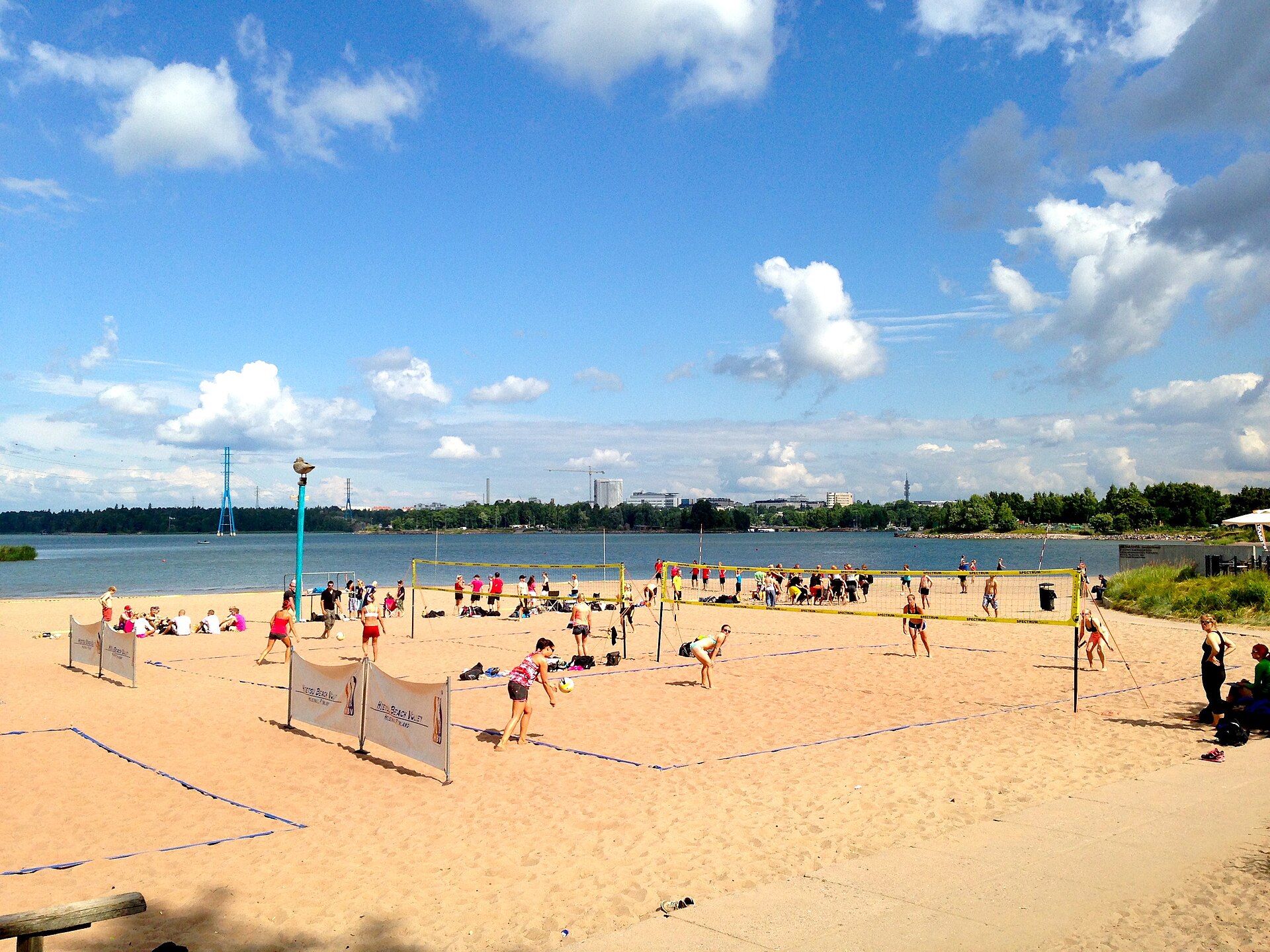
Hietaniemi is Helsinki's city beach — a sandy stretch on the western shore that becomes the city's unofficial summer living room from June through August, when the long days (up to 19 hours of daylight in midsummer) and relatively warm water temperatures bring out Helsinkians in numbers that contradict every stereotype about Nordic reserve. The beach is divided into sections — the main public beach, a women's beach, and a naturist section — and the facilities (changing rooms, kiosk, beach volleyball courts) are basic but functional. The sand is genuine (not imported — this is a natural beach, not a constructed one), the water is Baltic Sea (clean but never warm by Mediterranean standards; 18-20°C in July is considered excellent), and the atmosphere on a sunny weekend afternoon — families, swimmers, sunbathers, and the occasional group playing mölkky (a Finnish throwing game) — is as relaxed as Helsinki gets. Hietaniemi is the beach where the June tradition of staying out all night begins — as the sun barely dips below the horizon in midsummer, groups of friends gather on the sand with blankets, food, and the Finnish tradition of sitting outdoors until 3am because the sky is still light and nobody wants to go inside. The Hietaniemi cemetery, adjacent to the beach, is one of Helsinki's most important burial grounds — a memorial park where Finnish presidents, artists, and war dead are buried among birch trees, creating a characteristic Finnish juxtaposition of life and death within a few hundred metres.
Kaivopuisto Park
Kaivopuisto, Helsinki, Finland
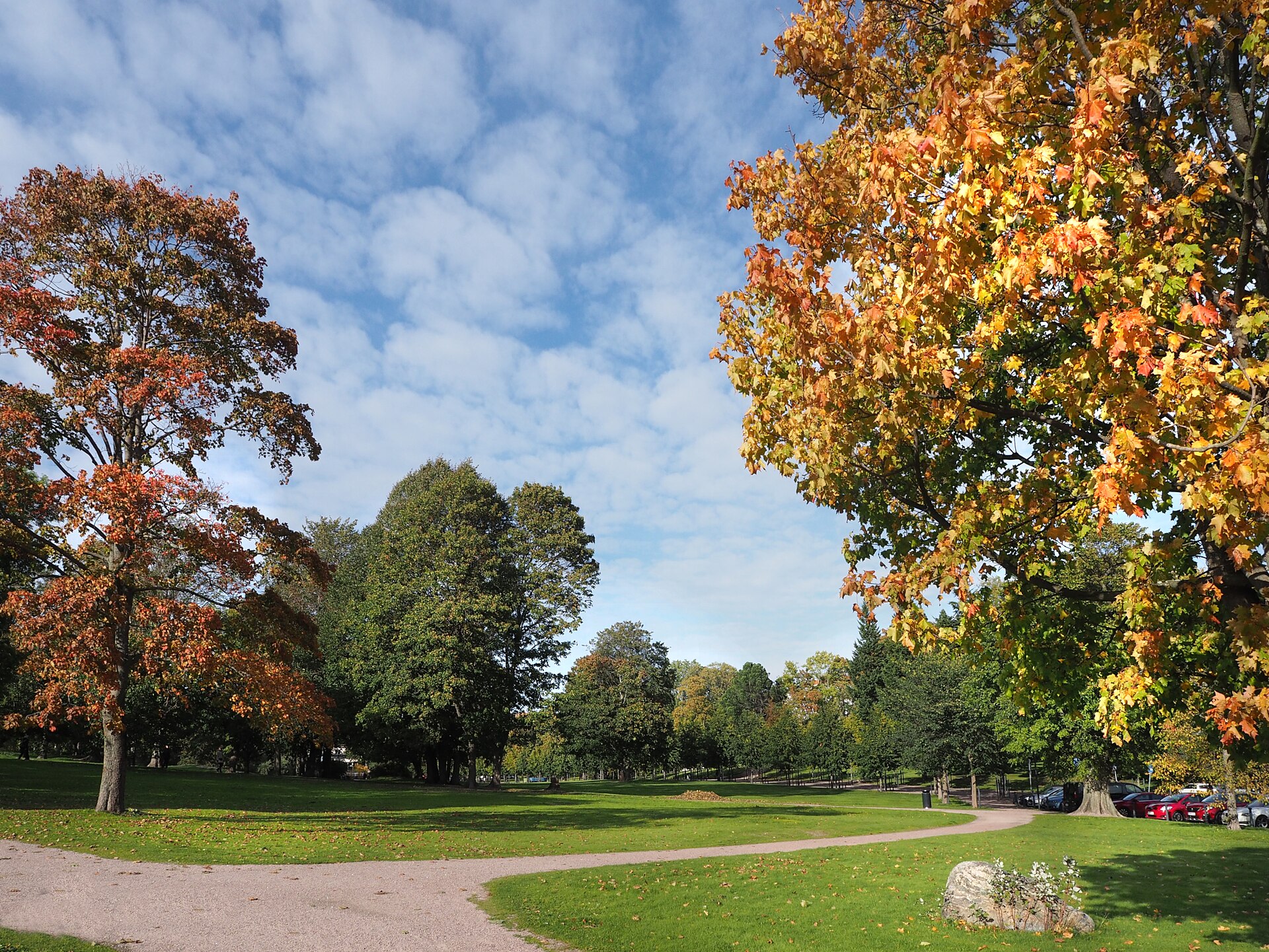
Kaivopuisto is Helsinki's oldest park and its most scenic — a seaside green space on the southern tip of the city peninsula that provides views across the harbour to Suomenlinna, the open Baltic, and the islands of the Helsinki archipelago. The park was established in the 1830s as a spa resort (kaivopuisto means 'well park,' named after the mineral spring that attracted the spa's original visitors) and has evolved into the neighbourhood park for Helsinki's most exclusive residential district. The park slopes from the embassy quarter at its northern edge down to a rocky shoreline where Helsinkians swim, picnic, and watch the ferries pass in summer. The view from the Ursa Observatory at the park's highest point — looking south across the water to the islands and the open sea beyond — is one of Helsinki's great panoramas, particularly at sunset when the western sky turns the water gold. Vappu (May Day, May 1) celebrations in Kaivopuisto are Helsinki's biggest annual outdoor event — tens of thousands of people gather with picnic blankets, champagne, and the white student caps that are the symbol of Finnish graduation tradition, creating an all-day celebration of spring's arrival that is part bacchanalian, part civic, and entirely Finnish. The park's cafés (Café Ursula on the waterfront is the most popular) serve throughout the summer, and the Mannerheim Museum (the preserved home of Finnish military leader Carl Gustaf Emil Mannerheim) sits on the park's northern edge.
Kallio
Hämeentie, Kallio, Helsinki, 00530, Finland
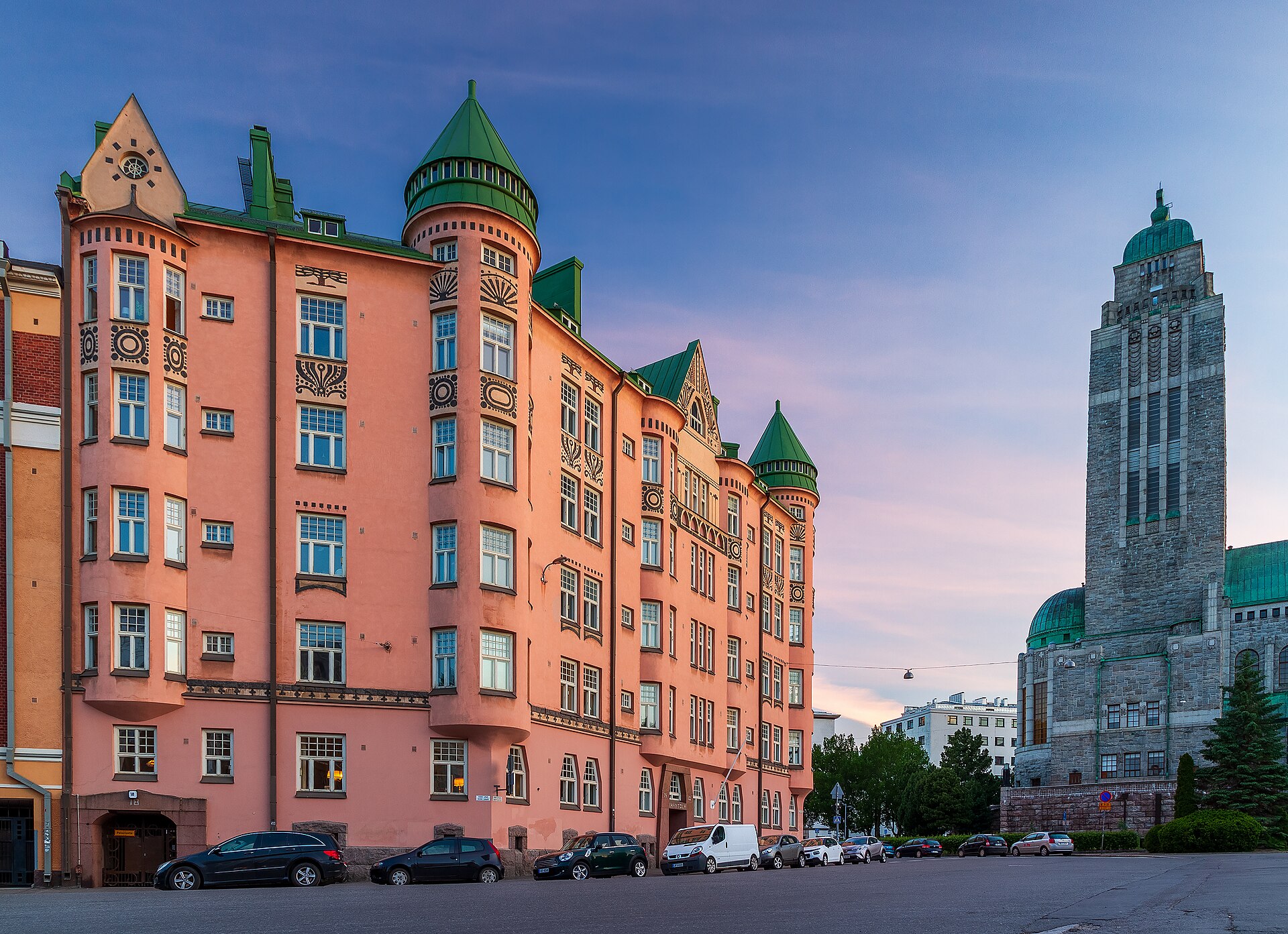
Kallio is Helsinki's most characterful neighbourhood — a hilly, working-class district north of the city centre that has been the home of students, artists, immigrants, and the counter-culture since the early 20th century. The neighbourhood climbs from the Long Bridge (Pitkäsilta) — which historically marked the boundary between bourgeois Helsinki and proletarian Kallio — up a steep hill crowned by the Kallio Church, a granite Art Nouveau tower that is the neighbourhood's landmark. The Kallio Church (1912, designed by Lars Sonck) is worth visiting for its architecture alone — a National Romantic style that uses rough-hewn granite, medieval references, and the vertical drama of its hilltop position to create a building that looks more like a fortress than a church. The bells play Sibelius's 'Finlandia' at noon and 6pm, and the sound carrying across the rooftops is one of Helsinki's daily rituals. Kallio's food and drink scene is the city's most democratic — neighbourhood bars where a beer costs half what it does in the centre, ethnic restaurants (Vietnamese, Nepalese, Ethiopian, Somali) that reflect the neighbourhood's immigrant communities, and the craft coffee shops and natural wine bars that arrive when creative-class residents discover affordable rent. The Bear Park (Karhupuisto), a small green square at the neighbourhood's heart, fills with locals on summer evenings in the kind of relaxed, unselfconscious neighbourhood socialising that Helsinki's more formal areas can't replicate.
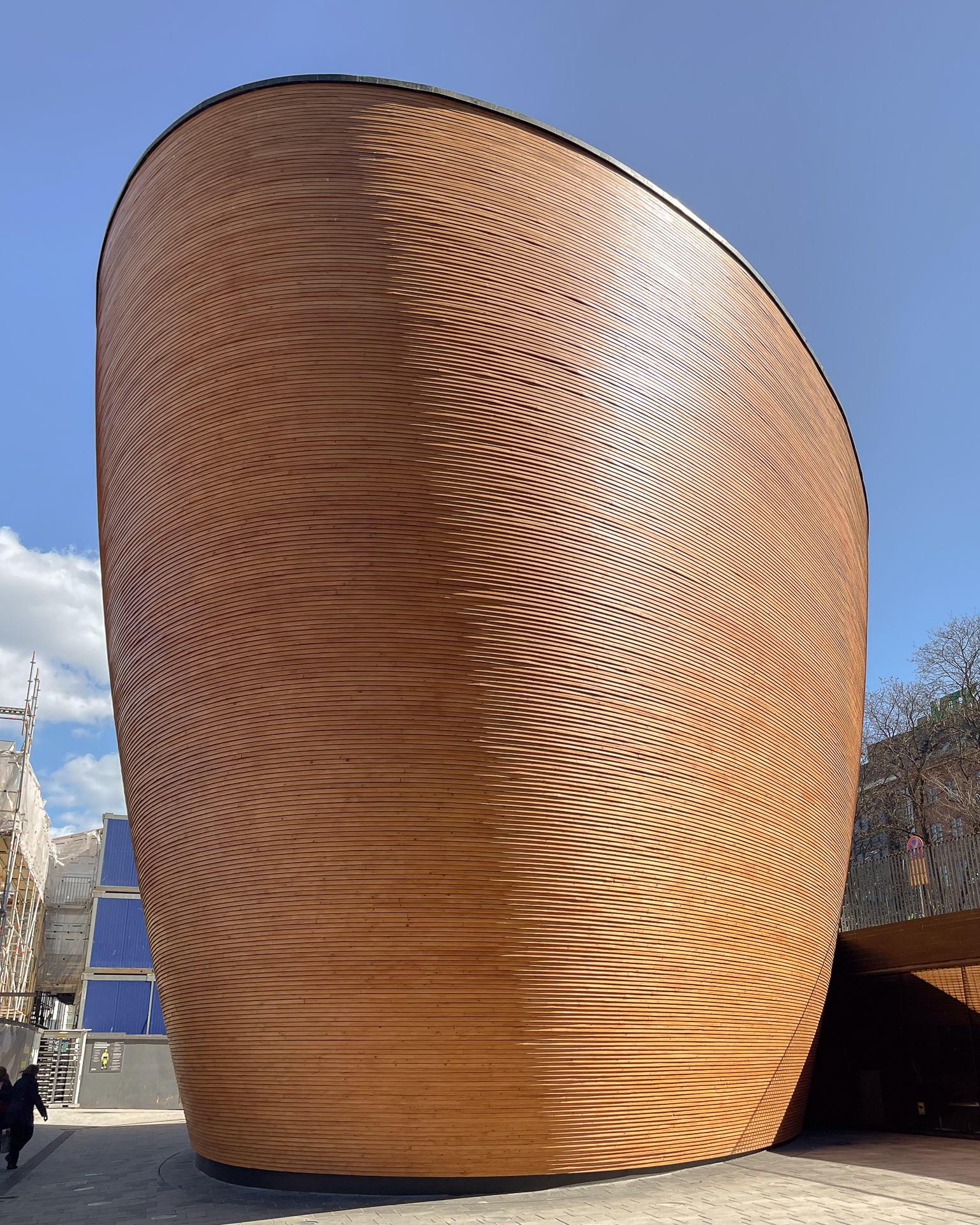
Kamppi Chapel of Silence
Simonkatu 7, 00100 Helsinki
The Kamppi Chapel is a curved wooden vessel of silence in the middle of Helsinki's busiest shopping district — a small, doorless chapel designed by K2S Architects and completed in 2012 that serves no religious denomination and exists solely as a place of quiet in a noisy city. The building, made of spruce planks bent into a curved form that looks like a giant wooden egg, sits in the Narinkkatori square between the Kamppi shopping centre and the bus terminal, and the contrast between the commercial chaos outside and the absolute silence inside is the most dramatic architectural transition in Helsinki. The interior seats about 60 people on simple wooden benches, lit by a single skylight in the curved ceiling. There is no altar, no religious imagery, and no programme — the chapel is simply a quiet room, open to anyone who needs one. The acoustic isolation is extraordinary: the triple-layer walls (spruce, insulation, alder) block virtually all external noise, and the curved interior surfaces absorb rather than reflect sound, creating a silence so complete it becomes an active presence. The chapel was commissioned by the Helsinki parish union and the city social services department as a response to the mental health needs of an increasingly urban, stressed population — a recognition that silence is a public service as essential as clean water or public transport. The building is free, open during daylight hours, and is used by people seeking meditation, mourning, decompression, or simply a few minutes away from the relentless sensory input of the city outside.
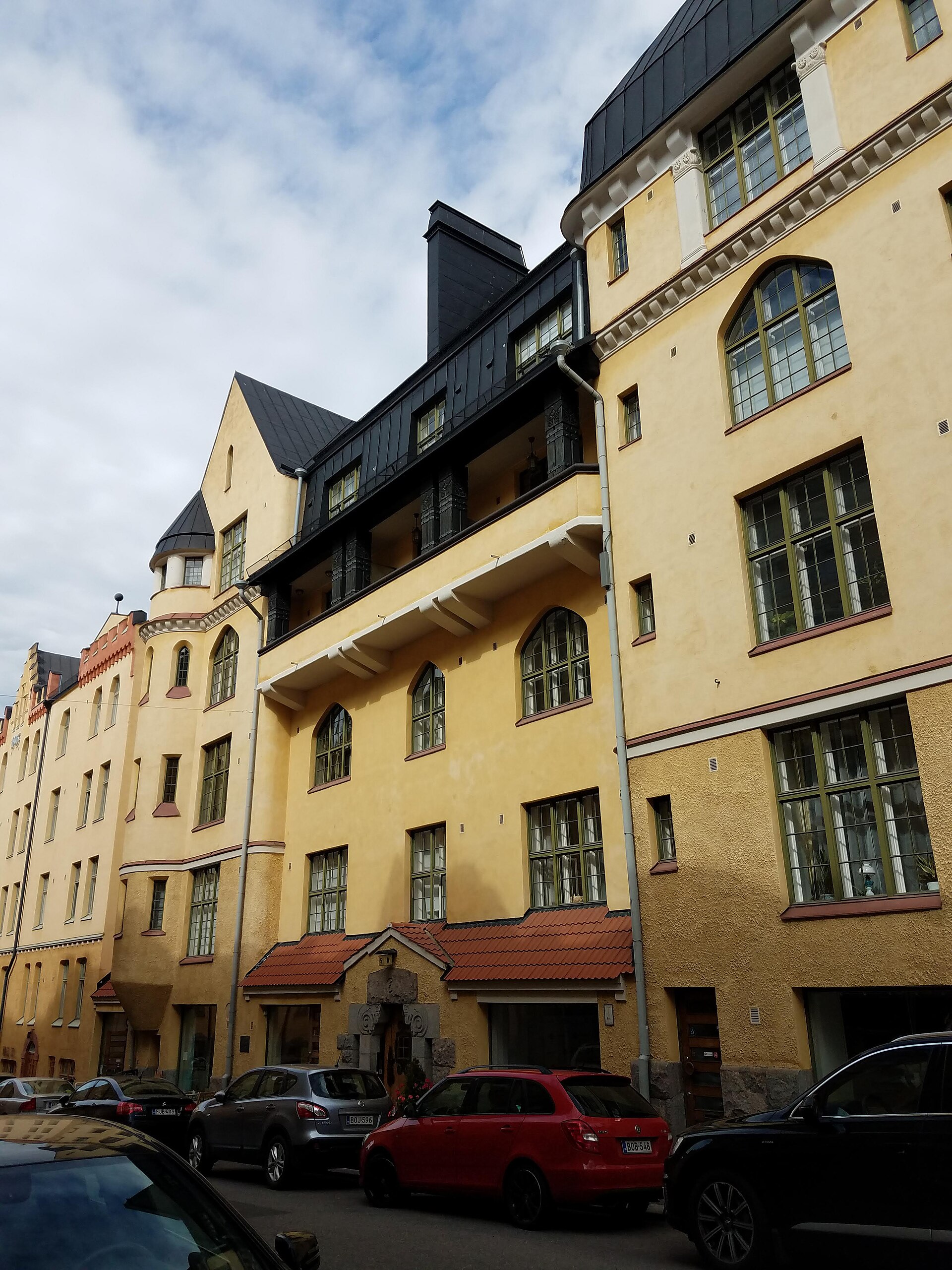
Katajanokka Art Nouveau District
Luotsikatu, Katajanokka, Helsinki, 00160, Finland
Katajanokka is Helsinki's finest Art Nouveau neighbourhood — a peninsula east of the Market Square where nearly every residential building was designed in the Finnish National Romantic or Jugendstil style between 1900 and 1910, creating a streetscape of carved stone facades, turrets, organic ornamentation, and the mythological creatures from Finnish folklore that the architects used as decorative motifs. Finnish Art Nouveau (known as Jugendstil, the German term) drew inspiration from the Kalevala, Finland's national epic, and from the country's natural landscape — bears, pine trees, squirrels, and the sinuous lines of northern forests appear on building facades throughout the district. The buildings on Luotsikatu, Vyökatu, and Kauppiaankatu are the finest examples, and walking the streets with your eyes on the upper floors reveals a density of decorative stonework that rivals Brussels or Barcelona for quality if not for quantity. Katajanokka is also home to the Uspenski Cathedral, the icebreaker fleet (visible in the harbour basin), and Hotel Katajanokka — a former county prison converted into a boutique hotel where guests sleep in renovated cells. The neighbourhood's residential character means it's quieter than the city centre, and the experience of walking streets where every building is a century-old work of decorative art — in a city that takes design seriously enough to maintain them — is one of Helsinki's great understated pleasures.
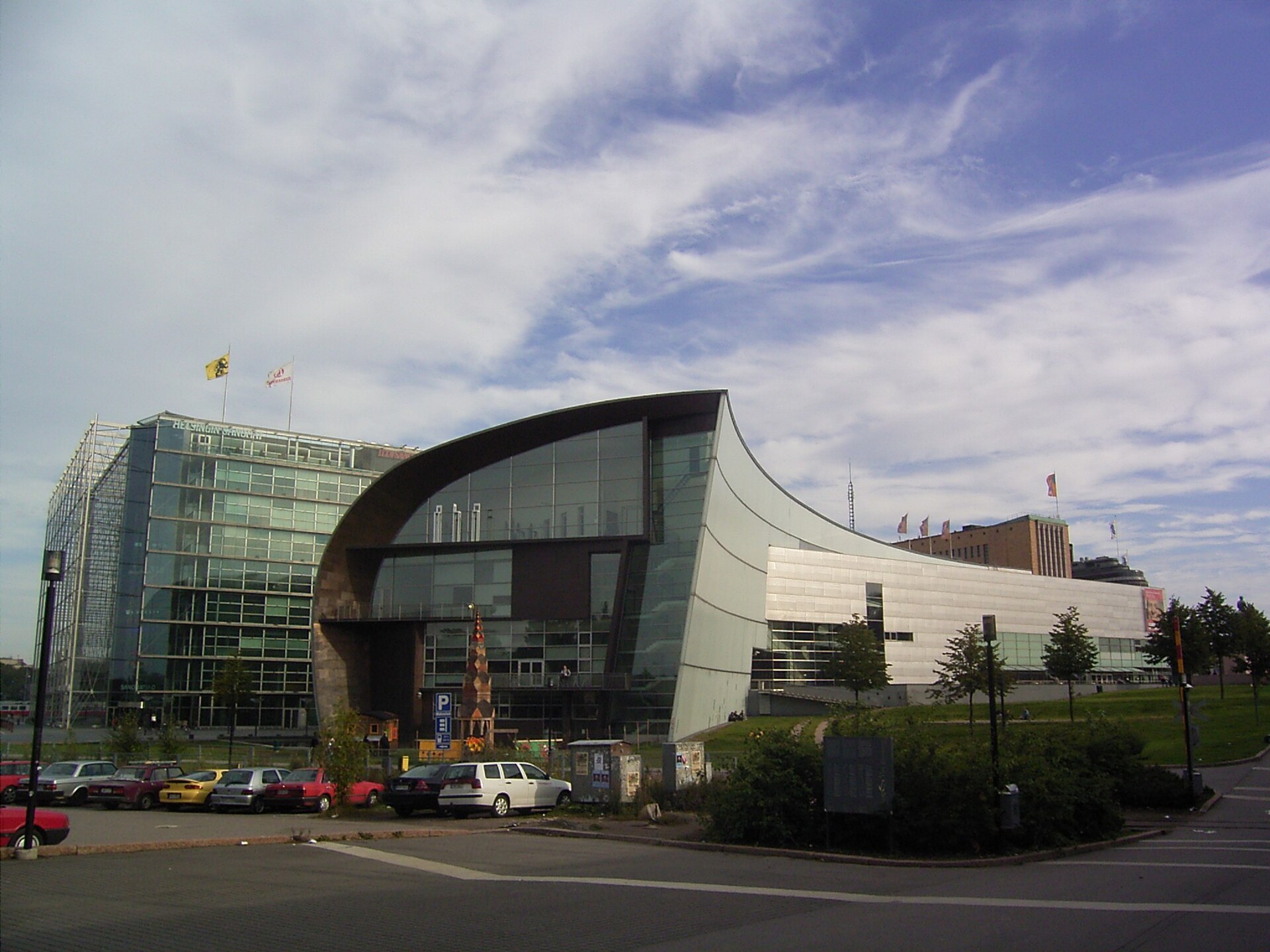
Kiasma Museum of Contemporary Art
Mannerheiminaukio 2, 00100 Helsinki
Kiasma is Finland's national museum of contemporary art — a curving, asymmetric building designed by American architect Steven Holl and completed in 1998 that was controversial when it opened (Finns are not natural enthusiasts of asymmetry) and has since become one of Helsinki's most important cultural landmarks. The building's form — which Holl described as an 'intertwining' of the building with the landscape and light of Helsinki — creates a series of curved galleries where natural light enters through skylights and slots in the walls, producing lighting conditions that change throughout the day and across the seasons. The name 'Kiasma' comes from the chiasma, the point where optical nerve fibres cross in the brain, and the building's architecture literalises this crossing — the curved form is a meeting point between the city grid and the waterfront, between geometric and organic, between the building's interior light and the Finnish sky outside. The galleries, which wind through the building in a spiralling sequence, display works from the collection of the Finnish National Gallery alongside temporary exhibitions that lean toward installation, video, and the immersive formats that the curved spaces are particularly suited to. Kiasma sits on Mannerheimintie between the Parliament building and the central railway station, and its location — at the intersection of Helsinki's civic, commercial, and cultural axes — makes it a natural stop on any city walk. The museum's programme extends beyond the galleries to include performance, cinema, and the kind of participatory events that blur the boundary between audience and artwork.
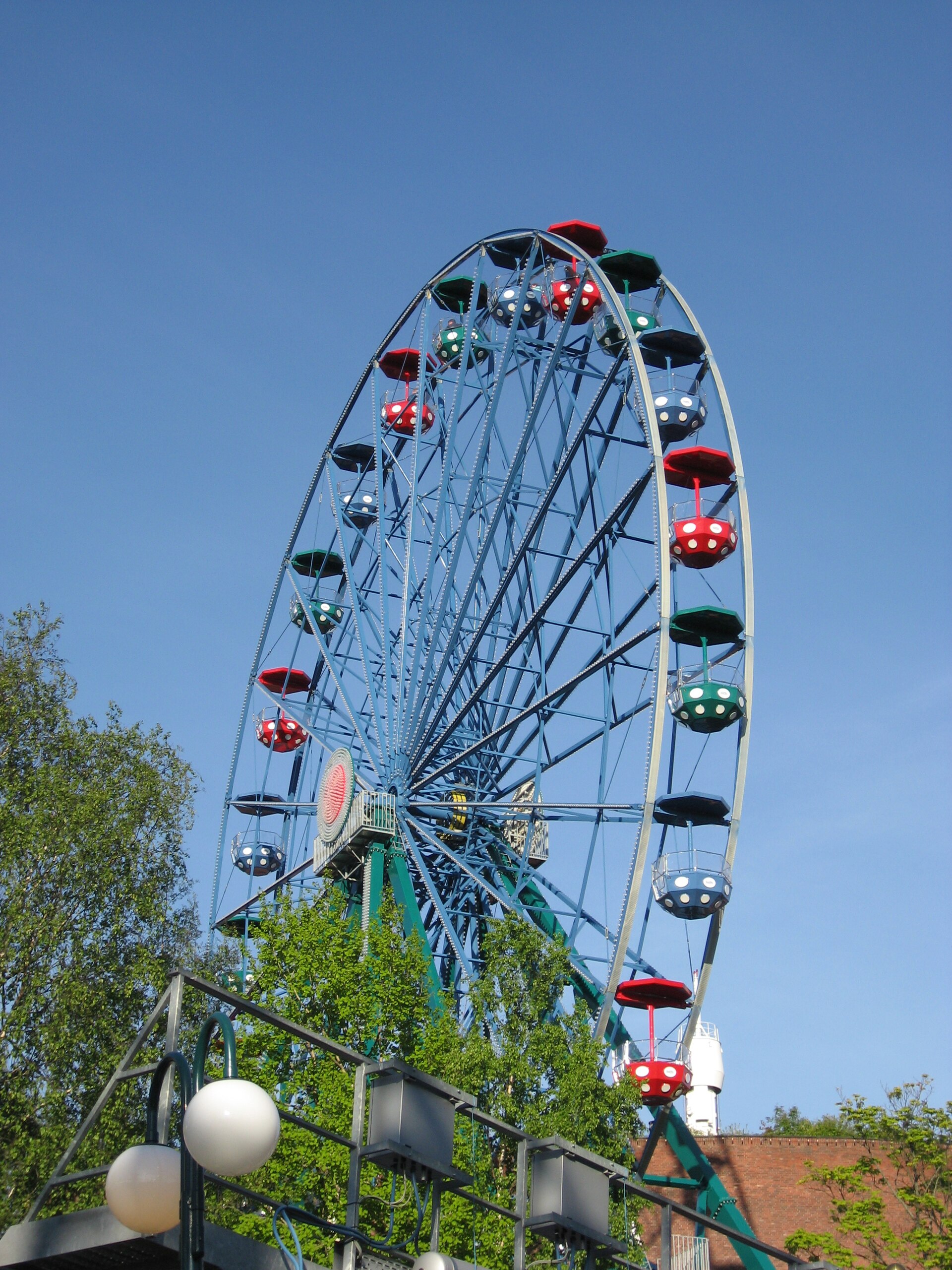
Linnanmäki Amusement Park
Tivolikuja 1, 00510 Helsinki
Linnanmäki is Finland's most popular amusement park — a hilltop fairground operating since 1950 that is owned by a children's welfare charity, which means every ride you take helps fund child welfare services in Finland. The park has free admission (you pay per ride or buy a wristband), which makes it a public gathering space as much as a theme park — Helsinkians come for the atmosphere, the views, and the summer evening crowd as much as for the rides. The park's 43 rides range from the Vuoristorata (a wooden roller coaster from 1951 that is the oldest in Finland and rattles with the honest impermanence of wood and gravity) to modern steel coasters, a log flume, and the Panoraama observation tower that provides 360-degree views across Helsinki, the harbour, and the surrounding archipelago. The wooden coaster is the sentimental favourite — it's been terrifying Finnish children for over 70 years, and the fact that it's still operating (maintained with obsessive care) is a testament to Finnish engineering and Finnish sentimentality in equal measure. Linnanmäki is in the Alppila/Kallio area, and the evening view from the hilltop — the city lights spreading below, the harbour visible through the rides, the sunset lasting until 11pm in June — makes the park one of Helsinki's most atmospheric experiences. The Sea Life aquarium, at the park's base, adds an indoor option for rainy days. The charity model (all profits go to the Children's Day Foundation) means the park operates with a civic purpose that commercial theme parks lack, and Finns support it accordingly — Linnanmäki is the most visited attraction in the country.
Löyly Sauna
4 Hernesaarenranta, Länsisatama, Helsinki, 00150, Finland
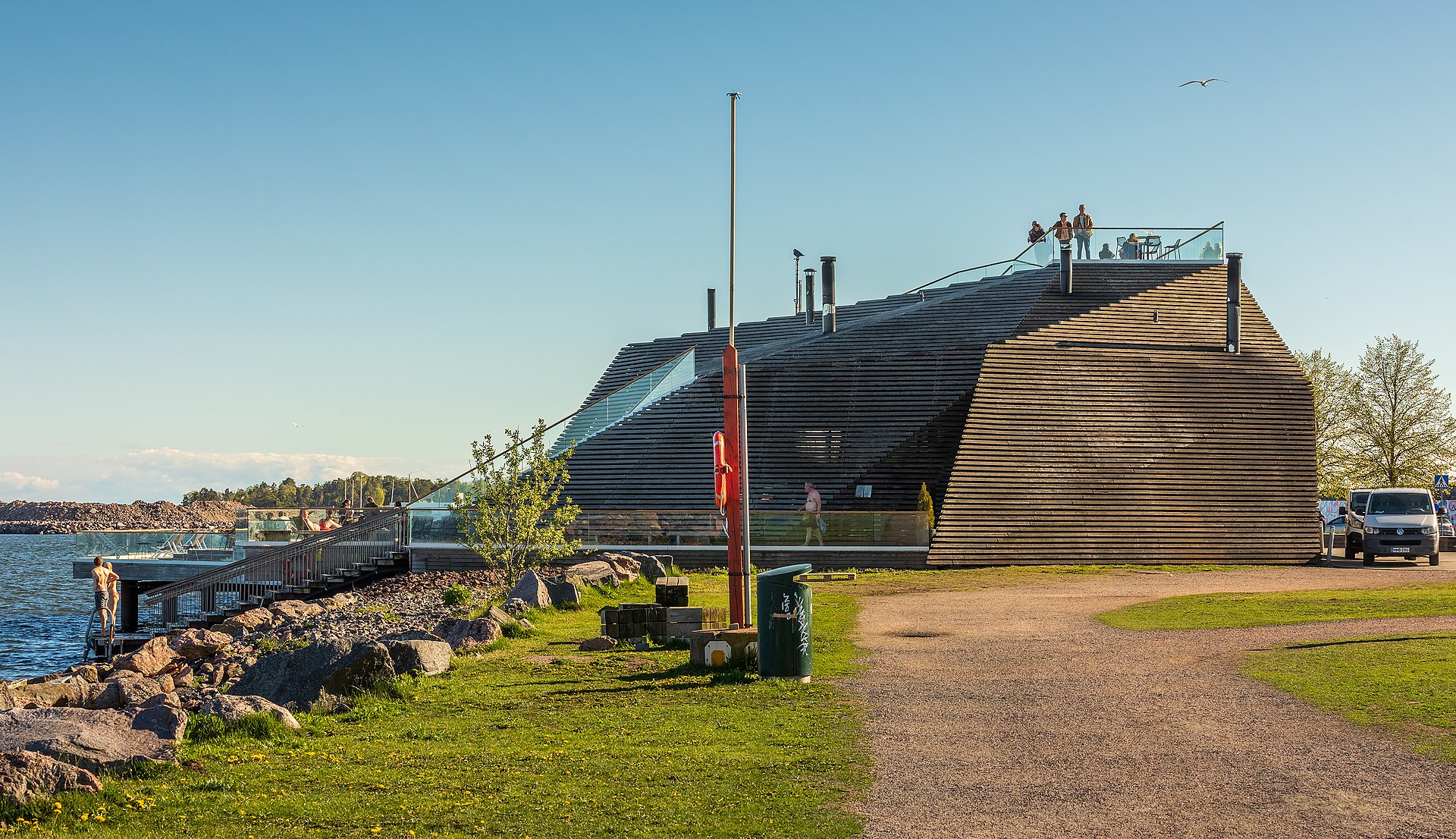
Löyly is Helsinki's most architecturally significant public sauna — a waterfront building of slatted timber that steps down to the sea like a wooden wave, designed by Avanto Architects and opened in 2016 as part of Helsinki's efforts to make its sauna culture accessible to visitors. Finland has 3.3 million saunas for a population of 5.5 million, and the sauna is not a luxury but a basic component of Finnish life — the word 'sauna' is the only Finnish word in the English language, and the practice (heating to 80°C, throwing water on hot stones to create steam, cooling in the sea or a lake) is the closest thing Finland has to a national religion. Löyly has three saunas — a wood-burning sauna (the traditional type), a smoke sauna (savusauna, considered the most authentic, where the smoke from the fire fills the room before being vented), and a steam sauna. Between rounds, bathers cool off by swimming in the Baltic Sea directly from the terrace, which in winter means entering water that is barely above freezing — an experience that Finns describe as 'refreshing' and that non-Finns describe using vocabulary that is not suitable for print. The building itself won the International Architecture Award in 2016, and its timber-clad exterior — designed to weather to silver-grey over time, blending with the maritime environment — has become an architectural landmark on the Hernesaari waterfront. The restaurant and terrace, accessible without using the sauna, serve Finnish cuisine and provide harbour views. Löyly is the public sauna for visitors; for the authentic neighbourhood experience, the older Kotiharjun Sauna in Kallio (operating since 1928, wood-burning, no tourists) is the local choice.
Market Square (Kauppatori)
Kauppatori, 00170 Helsinki
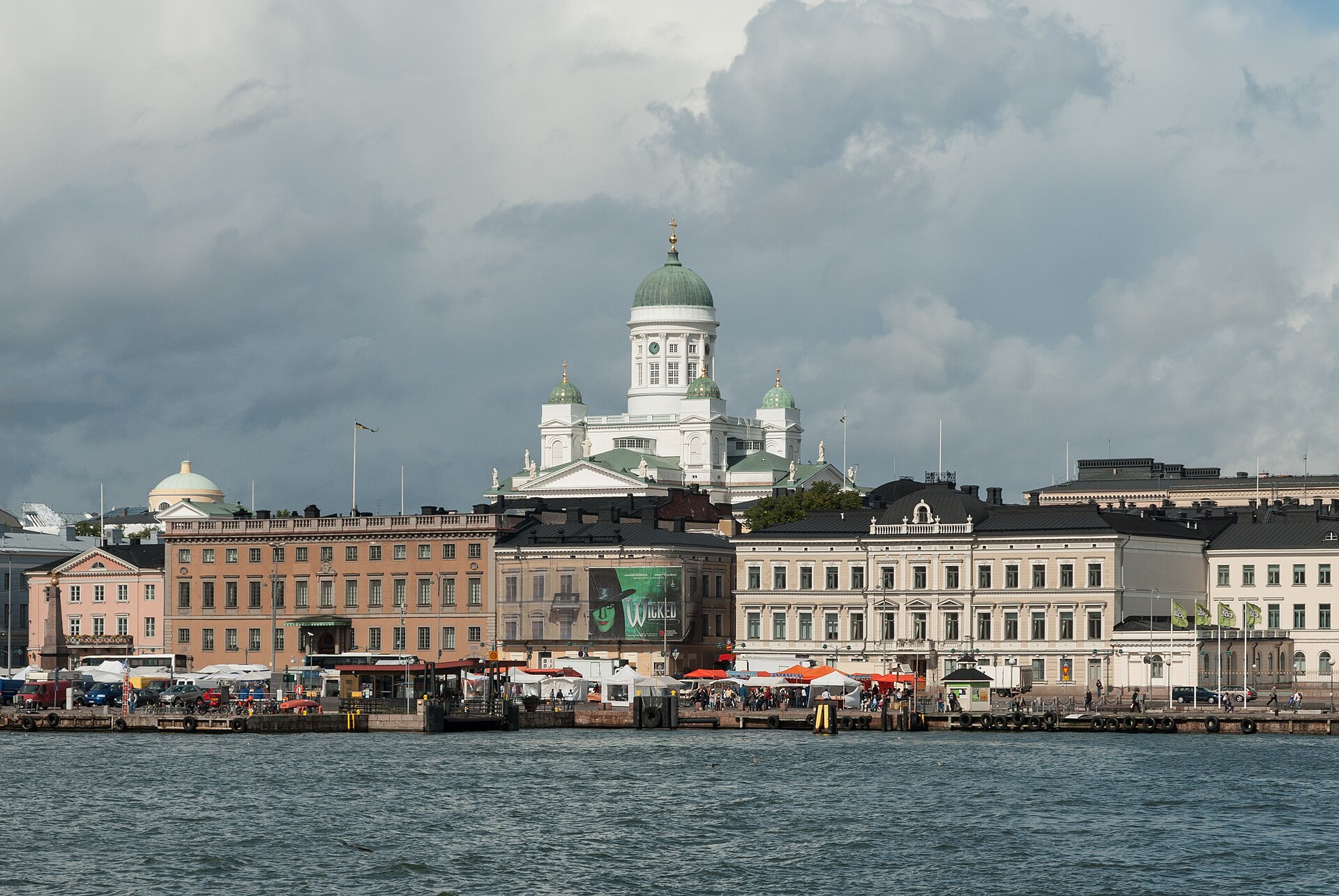
Kauppatori is Helsinki's harbour-front market square — an open-air market where vendors sell fresh fish, berries, vegetables, and Finnish street food from canvas-topped stalls with the harbour, the Presidential Palace, and the cathedral visible in every direction. The market has been operating in this location since the 1830s, and on a summer morning it's the most pleasant public space in the city. The food stalls are the draw — fried vendace (muikku, a small freshwater fish, battered and fried whole), salmon soup (lohikeitto, creamy and dill-heavy), Karelian pies (karjalanpiirakka, rice-filled rye pastry), and the fresh berries that appear in Finnish markets with the intensity of a people making up for lost time after eight months of winter. The coffee culture is strong — Finns consume more coffee per capita than any other nation, and the market stalls serve it in the quantities required. The Old Market Hall (Vanha Kauppahalli), a brick market building from 1889 on the square's western edge, houses permanent vendors selling reindeer meat, smoked fish, Finnish cheese, and the artisanal food products that Finland's small-scale producers are increasingly known for. The market square is also the departure point for the Suomenlinna ferry, boat tours of the archipelago, and the seasonal herring market (silakkamarkkinat) in October — a week-long celebration of Baltic herring that has been held annually since 1743.
National Museum of Finland
Mannerheimintie 34, 00100 Helsinki
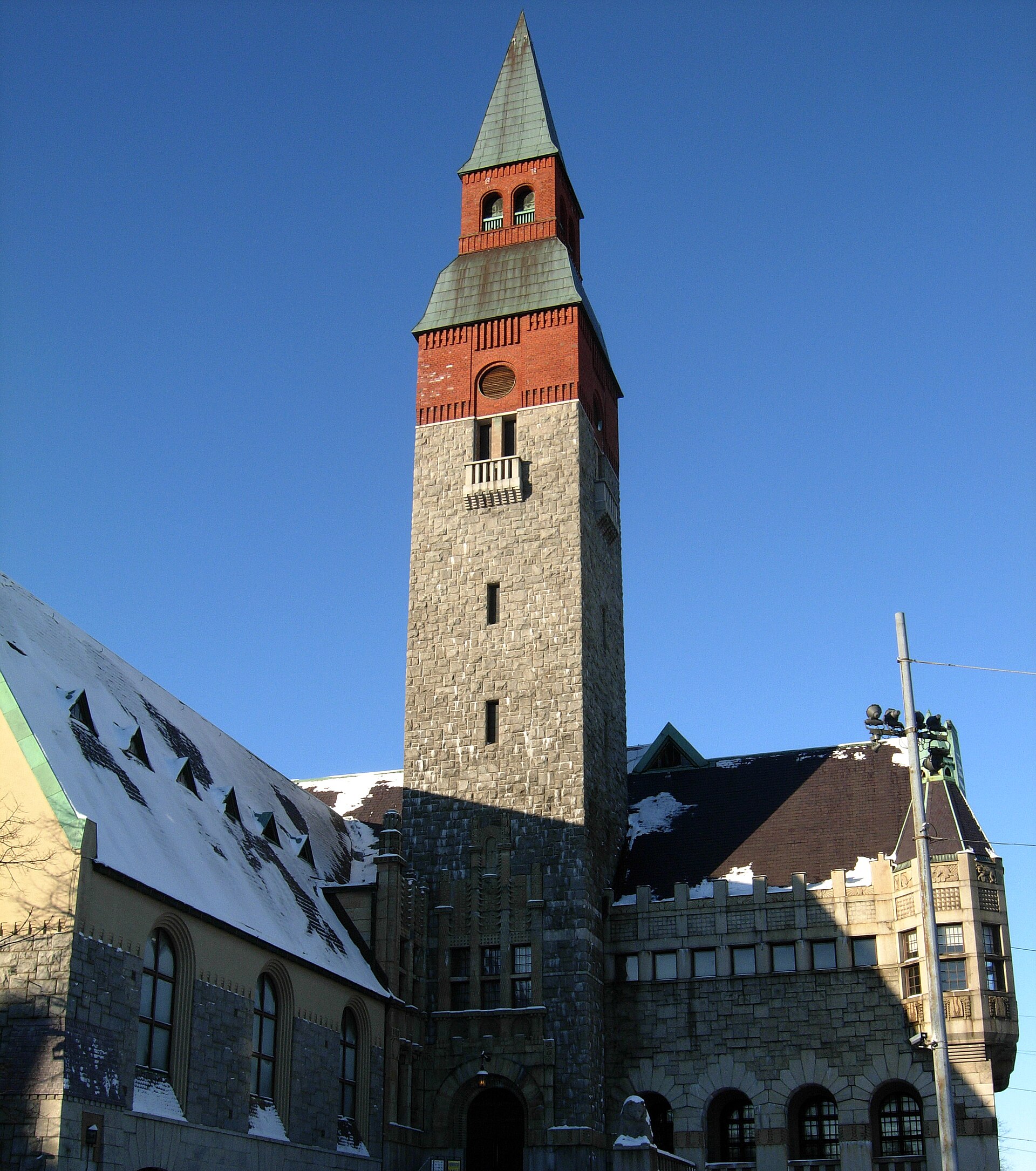
The National Museum of Finland is housed in one of the finest examples of Finnish National Romantic architecture — a castle-like building designed by the trio of Gesellius, Lindgren, and Saarinen (Eliel Saarinen, father of Eero) and completed in 1910, with a tower modelled on medieval Finnish churches, a bear-motif entrance, and frescoes by Akseli Gallen-Kallela depicting scenes from the Kalevala, Finland's national epic. The museum traces Finnish history from prehistoric times to the present, and the story it tells — of a small, poor, northern people who survived Swedish rule, Russian rule, a devastating civil war, two wars against the Soviet Union, and post-war transformation into one of the wealthiest and most stable societies on Earth — is compelling in its arc from obscurity to success. The prehistoric section contains remarkable finds from Finland's Stone Age and Iron Age. The medieval section covers the Swedish period. The modern section addresses independence, civil war, and the Winter War against the Soviet Union with a directness that doesn't shy from the difficult parts. The building's entrance hall, with Gallen-Kallela's ceiling frescoes depicting the mythological hero Väinämöinen and scenes from the Kalevala (the 19th-century compilation of Finnish oral poetry that became the foundation of Finnish national identity), sets the tone — the museum treats Finnish history not as a sequence of dates but as a narrative of cultural survival. The museum is located on Mannerheimintie, Helsinki's main boulevard, between the Parliament building and the Finlandia Hall.
Old Market Hall (Vanha Kauppahalli)
Eteläranta, Kaartinkaupunki, Helsinki, 00130, Finland
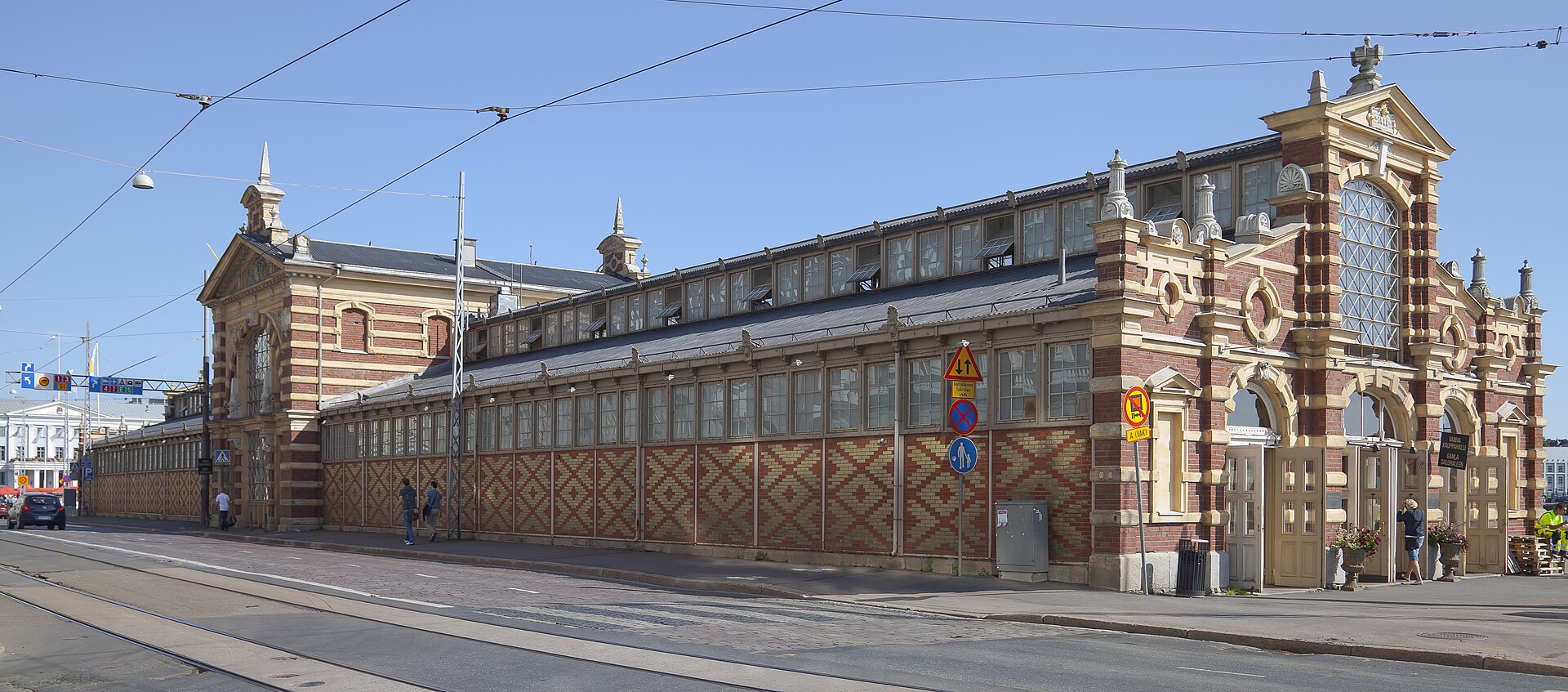
The Old Market Hall is Helsinki's most charming food market — a brick building from 1889 on the harbour front that houses permanent food vendors in a space that combines Victorian market architecture with the Finnish obsession with quality ingredients. The hall is small (about 30 vendors), which keeps it manageable and ensures that every stall maintains the quality that a loyal local clientele demands. The vendors represent Finnish food culture at its most refined: Saarioinen's reindeer products (smoked, dried, cured), the fish counters selling Baltic herring, salmon, and the smoked vendace that is Finland's contribution to the world of preserved fish, the cheese stalls with Finnish specialities, and the bakeries selling the rye bread and cinnamon rolls (korvapuusti, literally 'slapped ears') that fuel Finnish daily life. The Story café-restaurant, occupying one end of the hall, serves Finnish-Scandinavian cuisine with harbour views. The hall sits between the Market Square and the harbour, and its location — at the intersection of every major walking route in central Helsinki — makes it a natural stop for anyone exploring the waterfront. The building's red-brick exterior, with its arched windows and clock tower, is a landmark in its own right, and the interior — wooden vendor stalls, cast-iron columns, and the general atmosphere of a food market that has been operating in the same space for over 130 years — provides one of Helsinki's most satisfying browsing experiences.
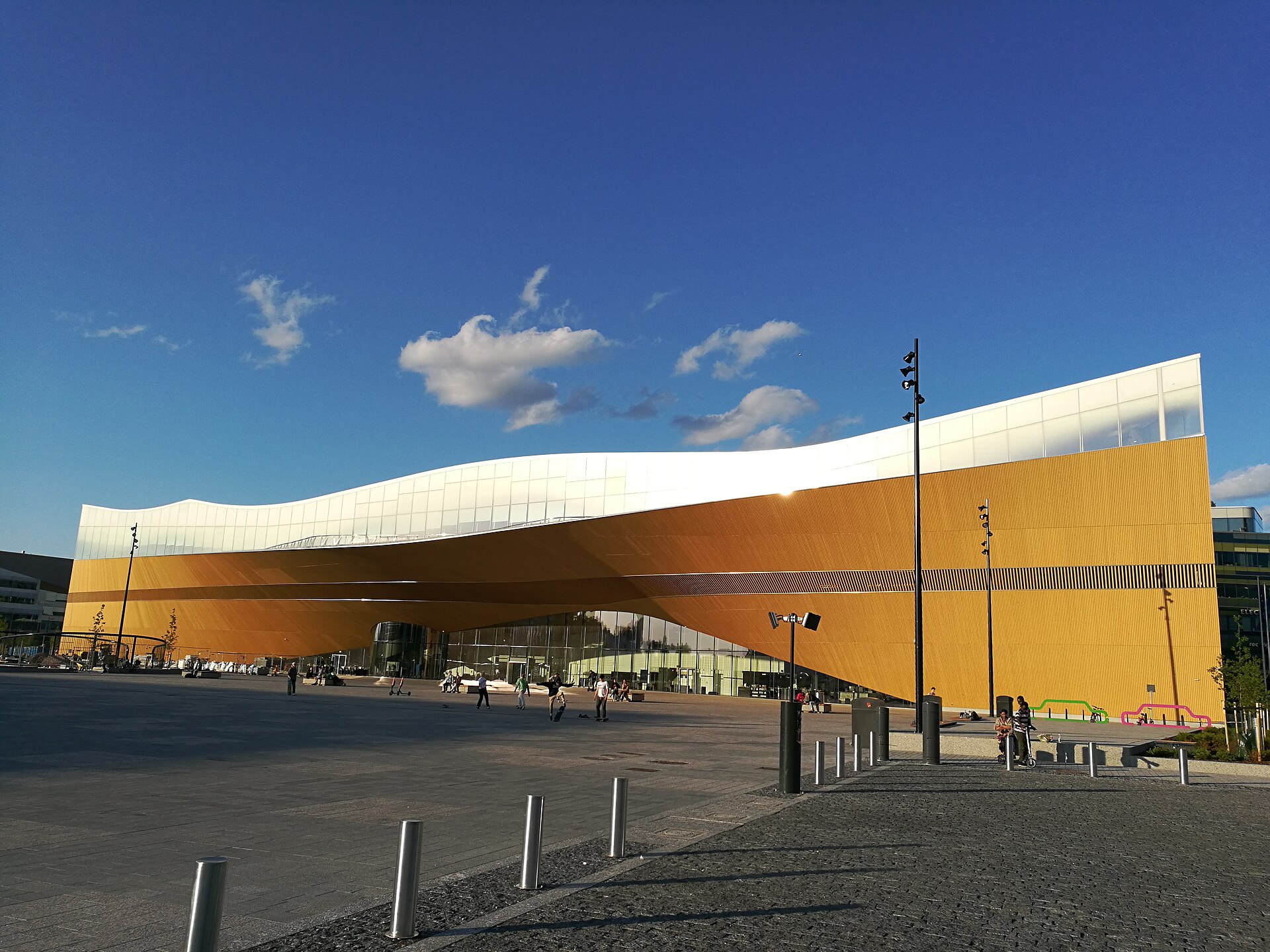
Oodi Central Library
Töölönlahdenkatu 4, 00100 Helsinki
Oodi is the most ambitious public library built in the 21st century — a sinuous, ship-like building of wood, glass, and steel that opened in 2018 directly opposite the Finnish Parliament and has become both a national architectural landmark and a symbol of Finland's commitment to the radical idea that public services can be beautiful, free, and genuinely used by everyone. The building, designed by ALA Architects, is organised into three floors with distinct characters. The ground floor is an open civic space — a covered square that extends the public realm from the street into the building. The second floor contains the 'making' spaces — 3D printers, laser cutters, sewing machines, recording studios, and video editing suites, all free to use. The third floor is the 'book heaven' — a vast, undulating wooden ceiling over open reading areas, with views of the Parliament building through floor-to-ceiling windows. The message is architectural: the library (knowledge, creativity, community) faces the Parliament (governance) as an equal. Oodi was the most visited library in Finland within months of opening — over 3 million visits in its first year — and the building has been cited as evidence that physical libraries are not obsolete but evolving. The café on the third floor, the cinema, the gaming rooms, and the urban workshop spaces attract users who have never checked out a book, which is exactly the point. The library as community infrastructure rather than book warehouse is Finland's gift to the international library debate.
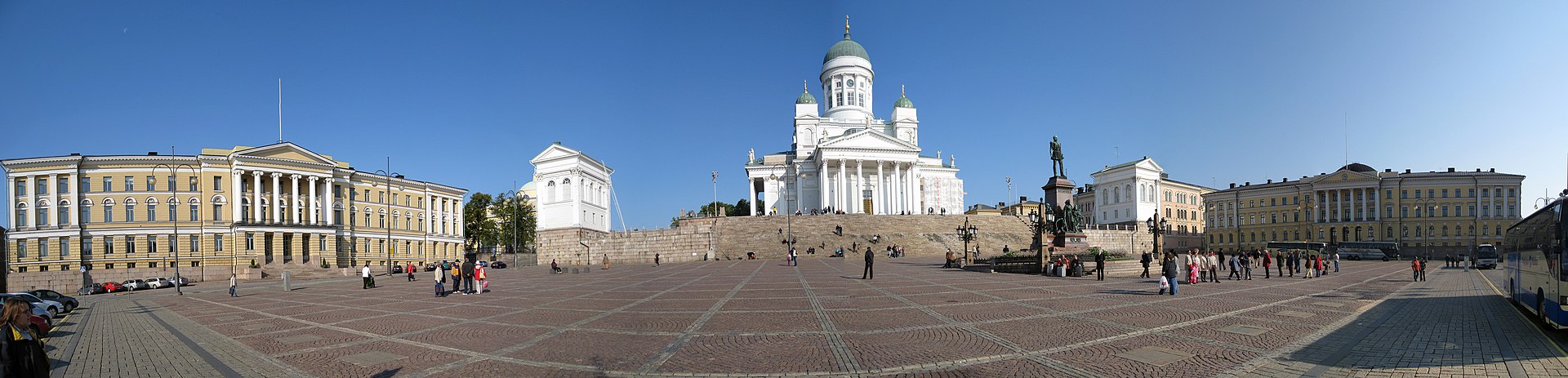
Senate Square (Senaatintori)
Senaatintori, 00170 Helsinki
Senate Square is Helsinki's most architecturally complete public space — a neoclassical ensemble designed by Carl Ludvig Engel in the 1820s and 1830s that groups the Cathedral, the University of Helsinki, the Government Palace, and the National Library around a cobblestone square with the precision of an architectural model. The square is often called the finest neoclassical ensemble in Northern Europe, and the unity of style — every building is white, columned, and disciplined in a way that makes Greek Revival look relaxed — reflects the ambition of Tsar Alexander I to create a capital worthy of the Russian Empire's newest Grand Duchy. The square slopes gently down from the cathedral steps to Aleksanterinkatu, and the view from the cathedral terrace — looking down across the square to the harbour and the Orthodox Uspenski Cathedral on its rocky promontory — captures Helsinki's dual European identity: Western neoclassicism facing Eastern Orthodoxy across a harbour that connects to both the Baltic and the Russian interior. Senate Square hosts Helsinki's major public events — the Christmas market (which fills the square with stalls and a Christmas tree in December), the Independence Day celebrations on December 6 (when university students march to the square carrying candles), and the occasional concert or festival that uses the cathedral steps as a natural auditorium. The square's emptiness on a normal day — open stone, white buildings, northern light — is itself the experience: the proportions, the silence, and the architectural restraint create a quality of civic space that busier, more decorated squares can't achieve.
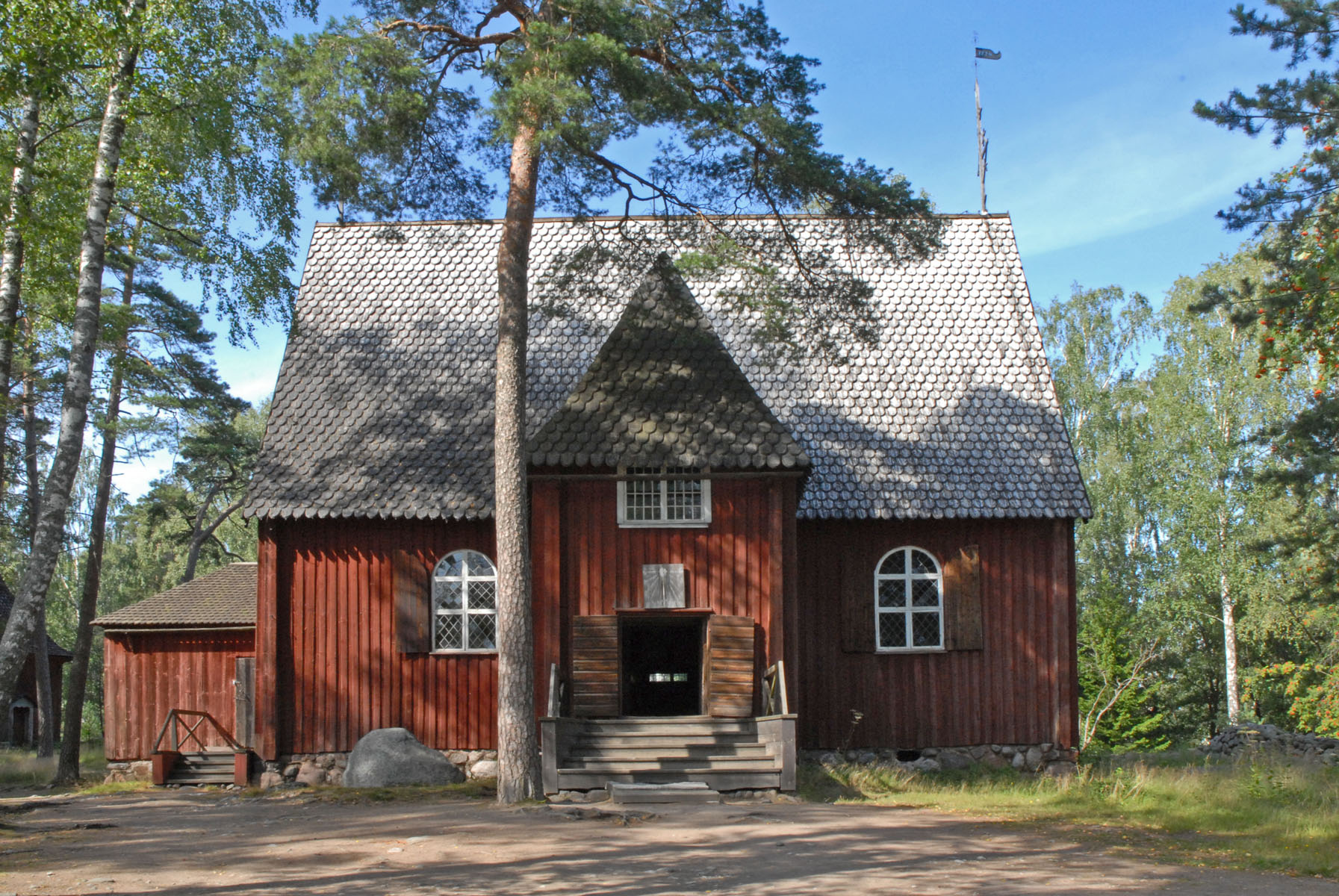
Seurasaari Open-Air Museum
Meilahti, Helsinki, Finland
Seurasaari is a forested island connected to the mainland by a wooden footbridge that houses Finland's national open-air museum — a collection of 87 historic buildings from across the country, relocated here between 1909 and the present to preserve traditional Finnish wooden architecture. The buildings span from the 17th century to the early 20th century and include farmhouses, a church, manors, saunas, and the vernacular buildings that sheltered Finnish life before industrialisation. The museum's genius is its setting — the buildings are scattered through the island's pine and birch forest, positioned on terrain that matches their original environments, so that walking the island feels like walking through a Finnish landscape from two centuries ago rather than visiting a museum. The Niemelä farmstead, a complete 19th-century farm compound from Konginkangas, is the most impressive ensemble — the main house, barn, sauna, smoke house, and outbuildings arranged around a courtyard show how Finnish farming families lived, worked, and survived winters that lasted half the year. The island is also a public park, free to enter (the museum buildings charge admission in summer), and popular with joggers, picnickers, and the squirrels that are so tame they eat from visitors' hands. Midsummer's Eve (Juhannus) celebrations on Seurasaari — with a bonfire on the beach, folk dancing, and the midnight sun — are one of Helsinki's most beloved annual traditions, and the only occasion when the normally reserved Finns collectively agree that staying up all night to dance beside a lake is appropriate behaviour.
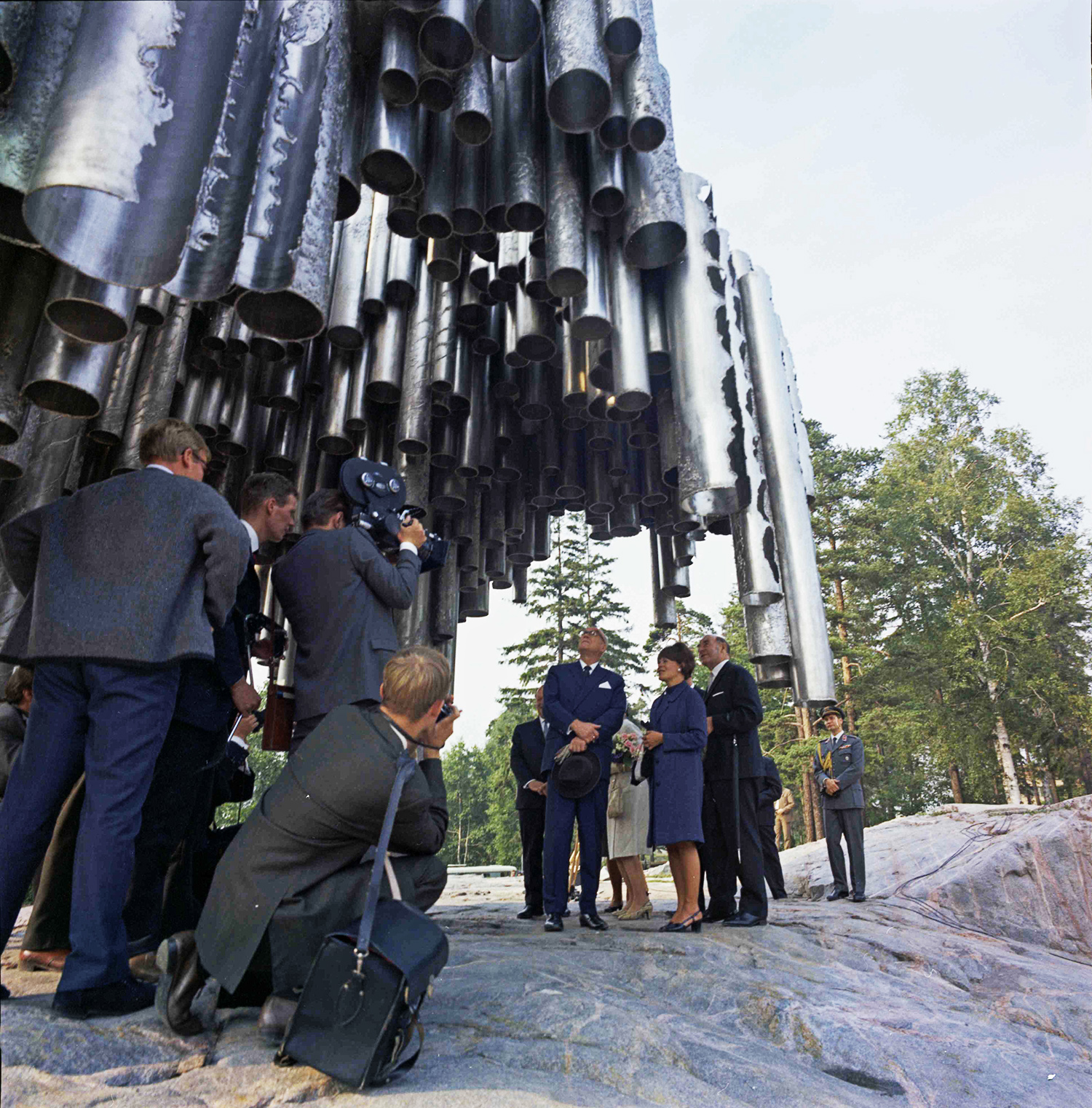
Sibelius Monument
39 Mechelininkatu, Taka-Töölö, Helsinki, 00250, Finland
The Sibelius Monument is Finland's most famous public sculpture — a cluster of over 600 hollow steel pipes welded together into an abstract wave form that honours Jean Sibelius, Finland's greatest composer and one of the most important figures in the country's cultural identity. Designed by Eila Hiltunen and unveiled in 1967, the sculpture was controversial at first (critics wanted a figurative likeness, and Hiltunen added a portrait bust nearby as a compromise) but has since become so identified with Helsinki that it appears on nearly every tourist brochure. The pipes, which range in size from narrow tubes to wide cylinders, are arranged to suggest both organ pipes and a natural formation — a frozen wave, a cluster of birch trees, or the sound of Sibelius's music made physical. The sculpture weighs 24 tonnes and, when the wind passes through the hollow pipes, produces a faint humming that visitors strain to hear and that may or may not be audible depending on conditions and imagination. Sibelius Park, surrounding the monument, is a pleasant green space in the Töölö neighbourhood with views of the sea through the trees. Sibelius's importance to Finnish identity cannot be overstated — his tone poem 'Finlandia' (1899) became an anthem of Finnish resistance to Russian rule and is still played at national events. The monument's location in a residential neighbourhood rather than a ceremonial square reflects the Finnish preference for integrating culture into daily life rather than setting it apart on a pedestal.
Suomenlinna Sea Fortress
Suomenlinna, Helsinki, Finland
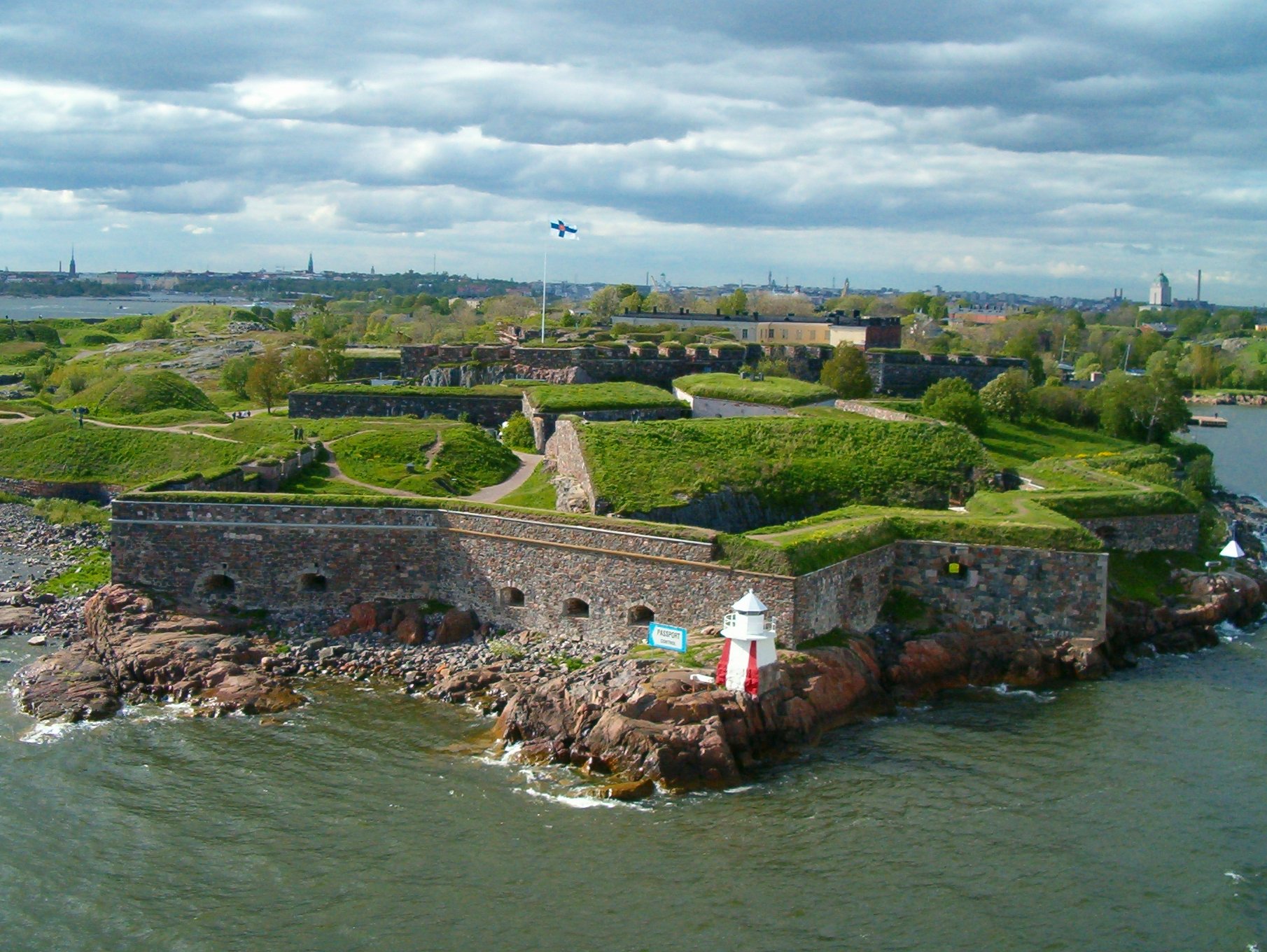
Suomenlinna is a UNESCO World Heritage sea fortress spread across six islands at the entrance to Helsinki harbour — built by the Swedes in 1748, captured by the Russians in 1808, handed to the Finns in 1918, and now a residential neighbourhood, museum, and one of the most popular day trips in Finland. The 15-minute ferry from the Market Square deposits you on an island where 800 people live year-round among the bastions, tunnels, and cannon emplacements of an 18th-century military installation that has been turned into one of the most atmospheric public spaces in the Nordic countries. The fortress was built to defend the Swedish kingdom's eastern border against Russian expansion — a project so ambitious that it consumed a quarter of Sweden's military budget and involved engineering that was state-of-the-art for the 18th century. The fortifications — stone walls, moats, underground tunnels, and gun positions covering every approach from the sea — are preserved and walkable, and the experience of exploring them (particularly the King's Gate, the main ceremonial entrance on the southern shore) gives a visceral sense of the military architecture that once made this the 'Gibraltar of the North.' Beyond the military history, Suomenlinna is simply a beautiful place to spend a day. The islands have beaches, walking trails, cafés, a brewery, and the kind of wildflower meadows that grow on abandoned military ground with particular enthusiasm. The Suomenlinna Museum tells the fortress's story, the Toy Museum is inexplicably popular, and the dry dock (built in 1760, the oldest in Finland) is still used for maintaining traditional wooden boats. Come in summer when the ferry runs frequently and the islands are green, or in winter for a starkly beautiful experience of Nordic light, ice, and stone.
Suvilahti & Kalasatama
22 Sörnäisten rantatie, Sörnäinen, Helsinki, 00540, Finland
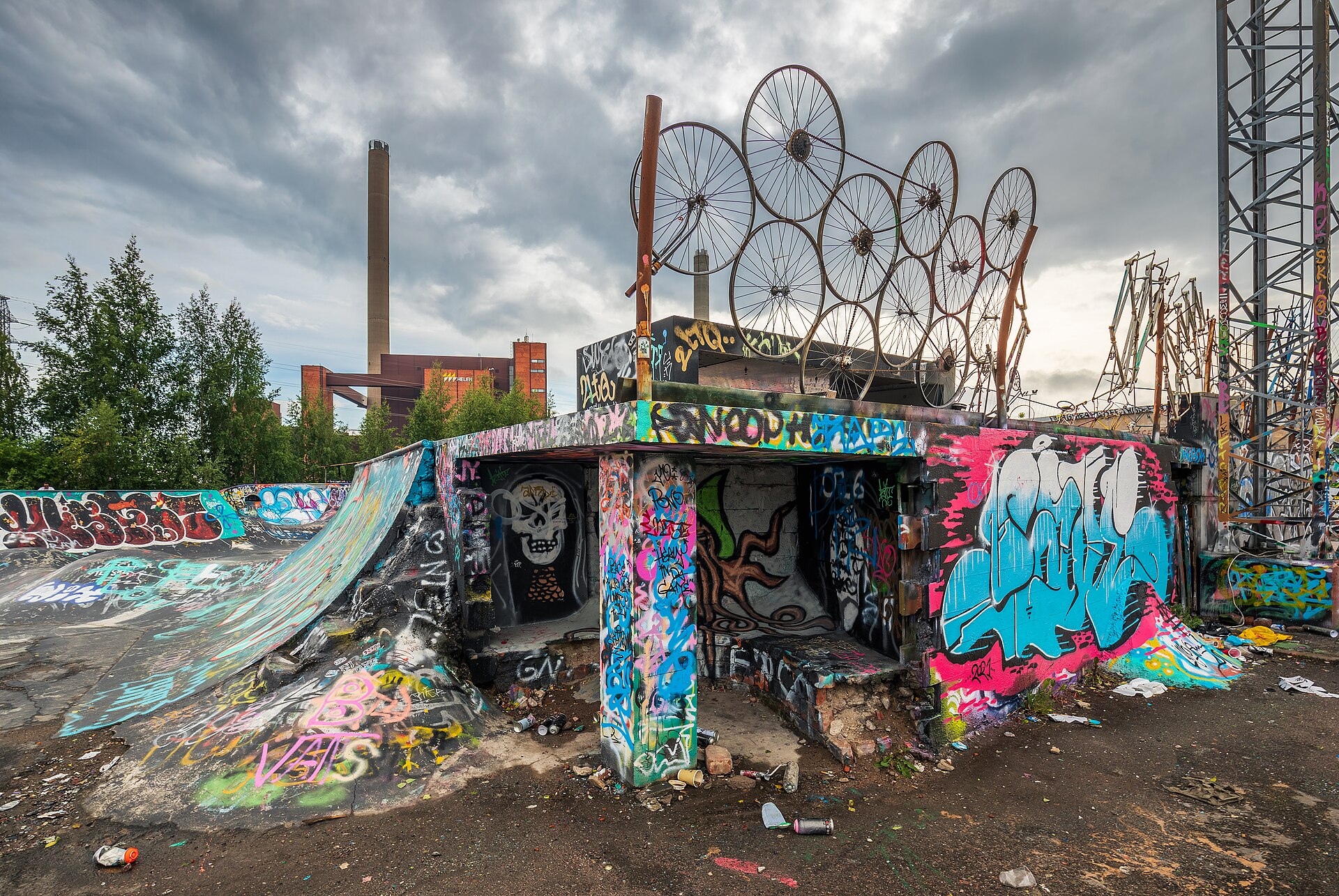
Suvilahti is Helsinki's creative district — a former power station and gasworks on the eastern waterfront that has been converted into event spaces, artist studios, and the kind of post-industrial cultural hub that every European city aspires to but few achieve as organically as Helsinki. The red-brick industrial buildings, dating from the early 20th century, now house rehearsal spaces, gallery projects, and the venues that host Flow Festival (Helsinki's premier music festival) every August. The surrounding Kalasatama district is Helsinki's most ambitious urban development — a former harbour area being transformed into a new city quarter with residential towers, a public library, a health centre, and the stated goal of becoming a '15-minute city' where all daily needs are accessible within a short walk. The development is half-complete, which gives the area a frontier energy where finished apartment buildings overlook construction sites and container-based restaurants serve food in the shadow of cranes. The graffiti and street art on the Suvilahti power station buildings is the most significant in Helsinki — a curated collection of large-scale murals by Finnish and international artists that has been developing since the buildings were earmarked for cultural use. The Container Garden (Konttipuisto), a public space made from repurposed shipping containers housing cafés, workshops, and event spaces, captures the neighbourhood's spirit: temporary, creative, and cheerfully unbothered by the polished permanence of the city centre.
Temppeliaukio Church (Rock Church)
Lutherinkatu 3, 00100 Helsinki
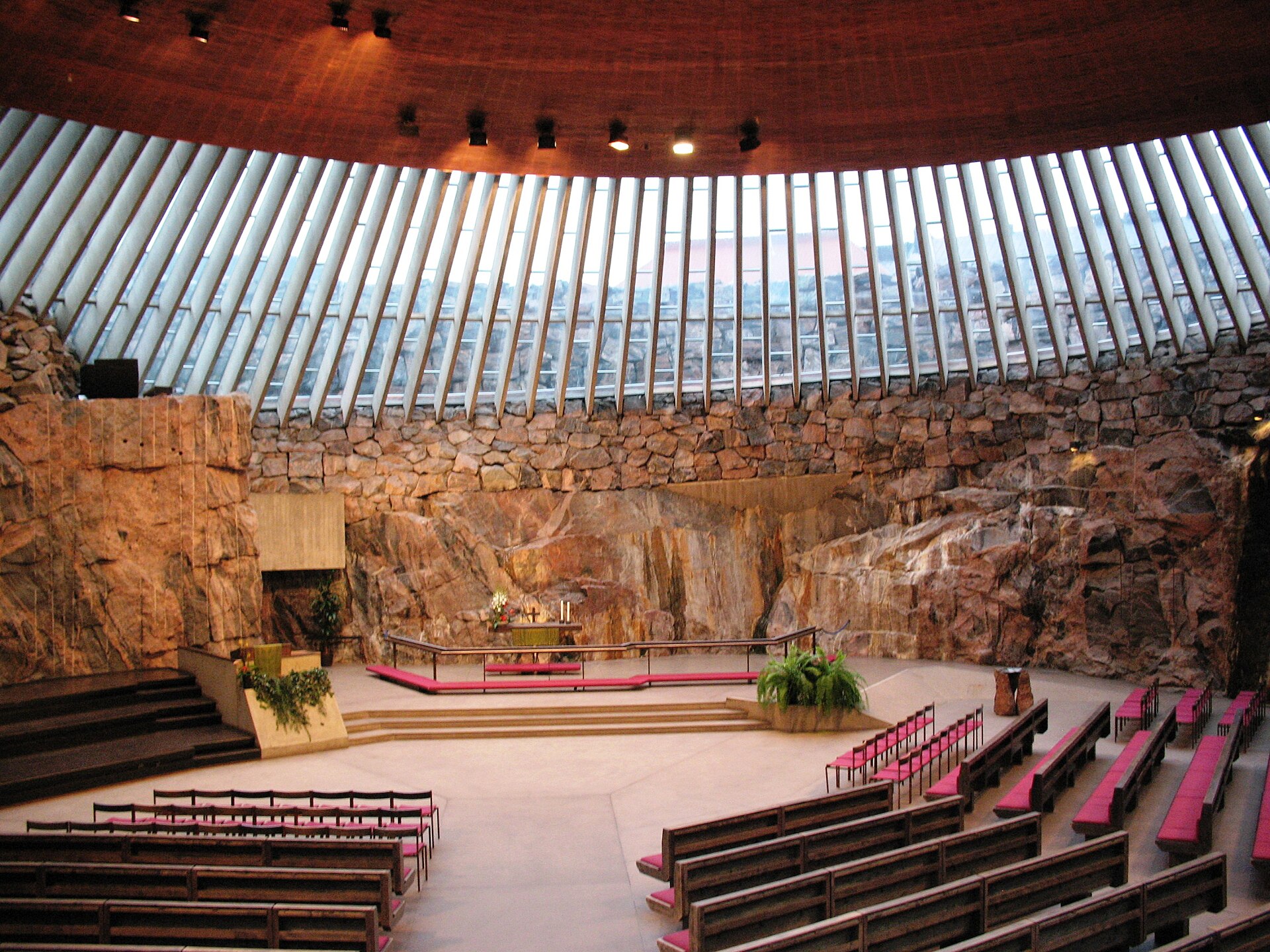
Temppeliaukio Church is a church carved directly into solid granite — a circular space blasted out of a rocky outcrop in the Töölö neighbourhood and topped with a copper dome that spirals above a ring of windows letting natural light flood the rough stone walls. Completed in 1969 by architects Timo and Tuomo Suomalainen, it's the most visited church in Helsinki and one of the most architecturally significant religious buildings of the 20th century. The interior is extraordinary. The walls are raw, unfinished granite — the drill marks and blast patterns from the excavation are visible in the stone, and the acoustic properties of the rock, combined with the copper dome, create a natural reverberant space that makes the church one of the best concert venues in Helsinki. The ring of glass between the rock walls and the copper dome lets daylight enter horizontally, washing across the stone surface and creating patterns that change throughout the day. The church is nearly invisible from outside — the entrance is at ground level on a residential street, and the dome barely rises above the surrounding rock. The surprise of descending into a subterranean cathedral of raw stone after walking through an ordinary Helsinki neighbourhood is part of the design's power. The church hosts regular concerts (classical, choral, and the occasional rock performance that takes the venue's nickname literally), and the acoustics in the stone chamber are warm, full, and entirely unlike any conventional concert hall.
Töölönlahti Bay & Winter Garden
1 Hammarskjöldintie, Taka-Töölö, Helsinki, 00250, Finland
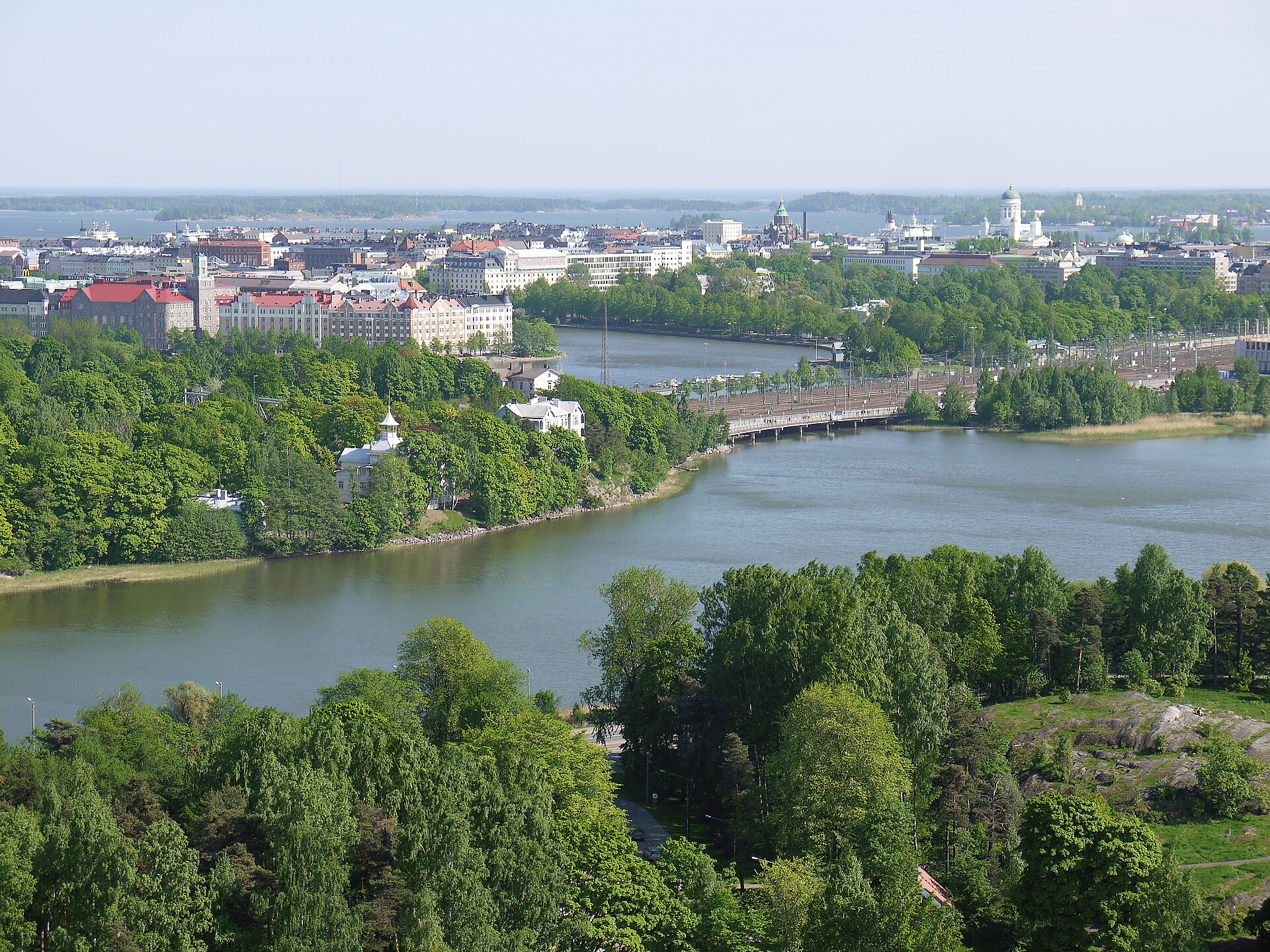
Töölönlahti Bay is the body of water at the centre of Helsinki's civic landscape — a shallow inlet surrounded by the National Museum, Finlandia Hall, the Oodi library, the Parliament building, and the National Opera, making its shores the most culturally dense waterfront promenade in the Nordic countries. The path around the bay (about 2km) passes through a sequence of institutions and green spaces that together represent Helsinki's investment in public culture. The Helsinki Winter Garden (Talvipuutarha), on the bay's eastern shore, is a free Victorian greenhouse complex dating to 1893 that houses tropical and subtropical plants in glass pavilions heated year-round — a warm, green refuge that is particularly valuable during the five months when the world outside is frozen. The main palm house, with its 10-metre palms and humid air, provides a sensory contrast to the Finnish winter that feels almost medicinal. The bay itself is a gathering place: joggers circle it, families picnic on the grass in summer, and the frozen surface becomes an ice-skating path in winter. The view from the southern shore — across the water to the National Museum's tower and the Finlandia Hall's white marble facade — is one of Helsinki's most composed urban landscapes, and the path connecting the bay to the Botanical Garden and the harbour provides a continuous waterside walk through the entire city centre.
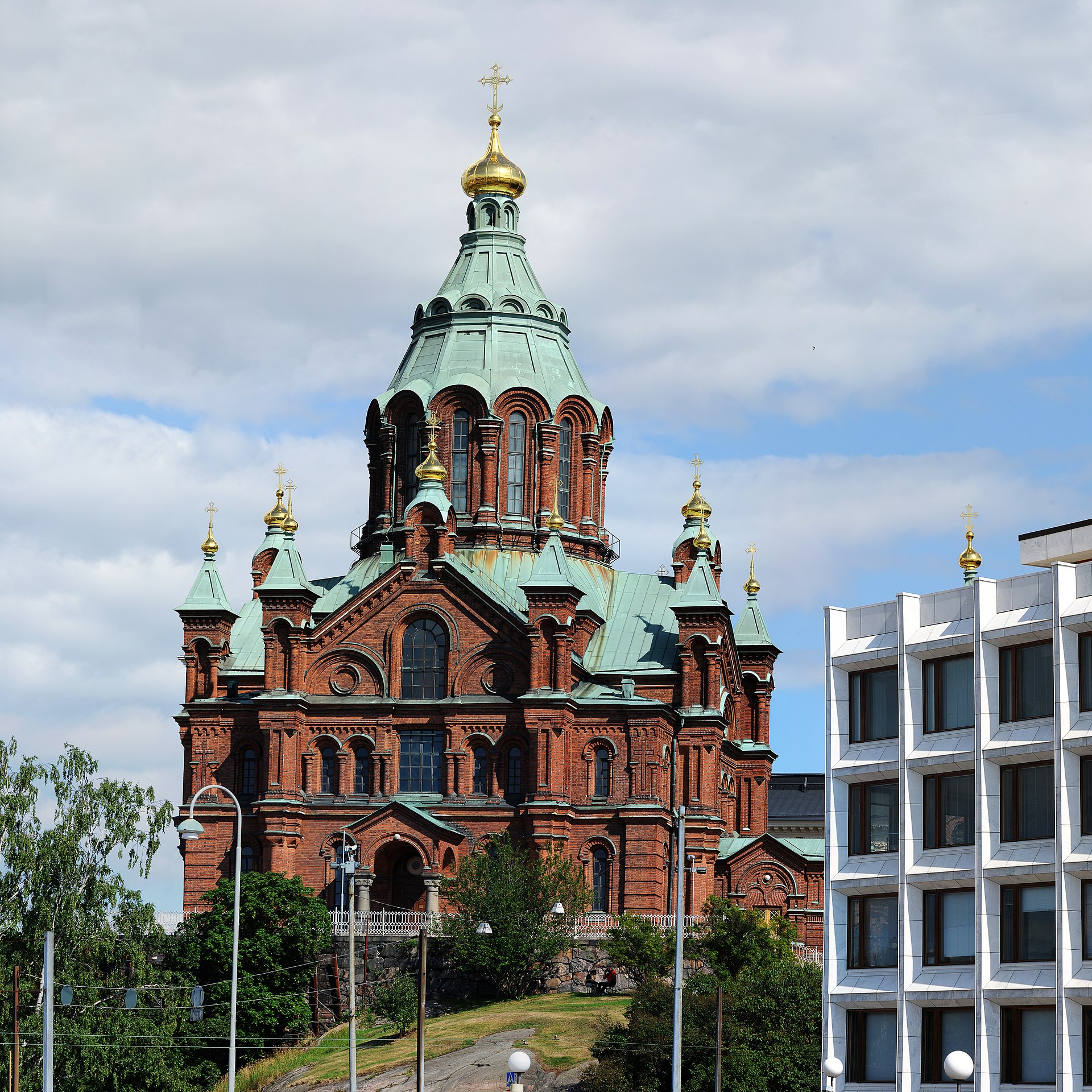
Uspenski Cathedral
1 Kanavakatu, Katajanokka, Helsinki, 00160, Finland
Uspenski Cathedral is the largest Orthodox church in Western Europe — a red-brick Russian Revival structure with golden onion domes that sits on a rocky promontory overlooking the harbour, providing a dramatic counterpoint to the white Lutheran cathedral across the square. The building was designed by Russian architect Aleksei Gornostayev and completed in 1868, during the period when Finland was part of the Russian Empire, and its presence on the Helsinki skyline is a permanent reminder of the eastern cultural influence that distinguishes Finland from its Scandinavian neighbours. The interior is decorated in the Orthodox tradition — icons covering the walls, an ornate iconostasis (the screen separating the nave from the sanctuary), gilded surfaces, and the smell of incense that fills the space during services. The contrast with the stripped-back Lutheran interior of Helsinki Cathedral is total: where the Lutheran church uses emptiness to create reverence, the Orthodox church uses visual abundance. Both approaches work, and seeing them within the same city provides an education in how architecture expresses theology. The cathedral sits in the Katajanokka district, a neighbourhood of Art Nouveau apartment buildings that is one of Helsinki's most architecturally rewarding walking areas. The climb to the cathedral terrace provides one of the best harbour views in the city, and the perspective from the top — looking west across the harbour to the Market Square and the Lutheran cathedral — captures Helsinki's position between East and West in a single panorama.
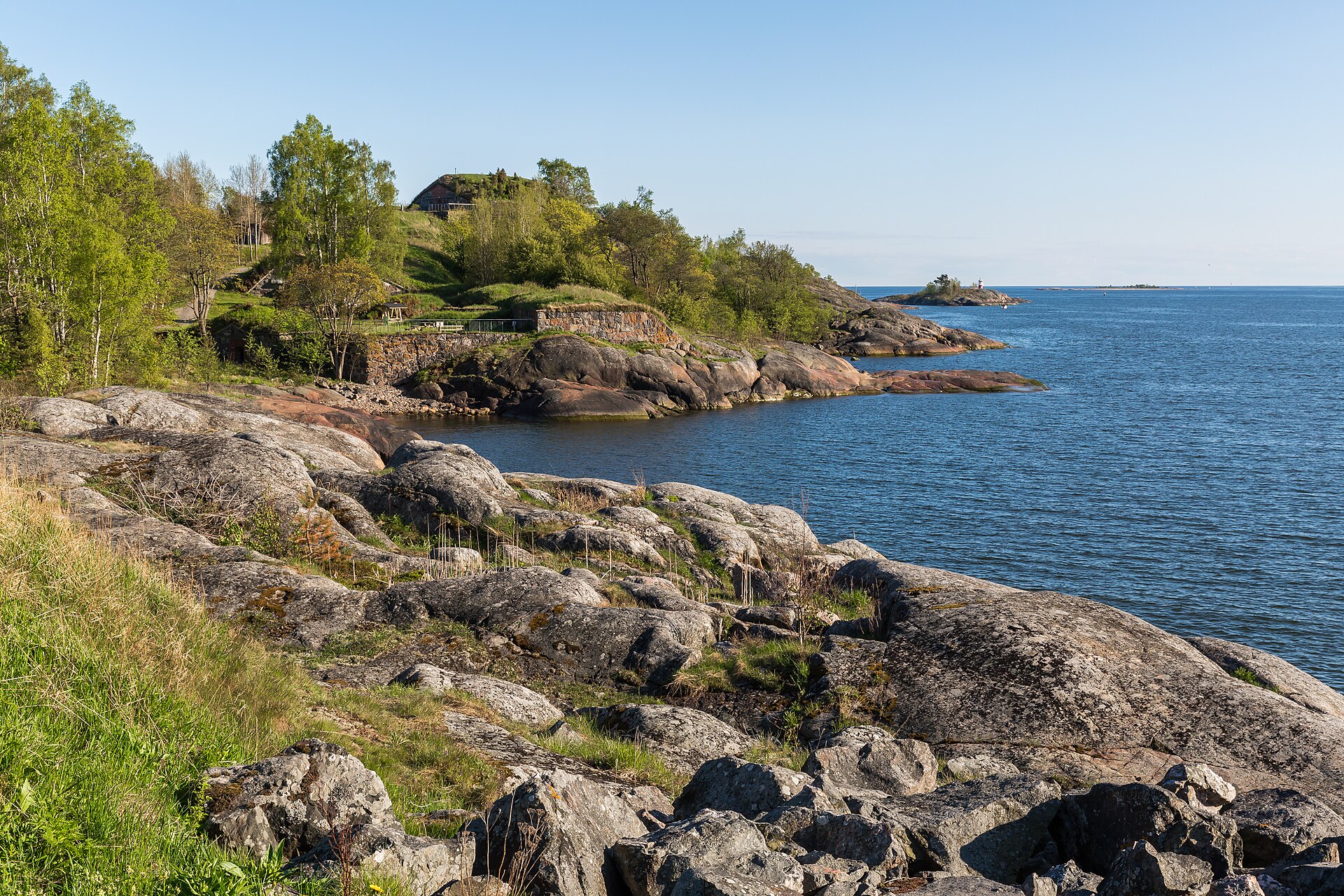
Vallisaari Island
Helsinki, Finland
Vallisaari is a former military island that was opened to the public in 2016 after being closed for 200 years — a 33-hectare nature reserve and heritage site in the harbour archipelago that has been reclaimed by forests, wildflowers, and the rare species that thrived during two centuries of human absence. The island is a 10-minute ferry ride from the Market Square (or Suomenlinna) and provides the most unexpected nature experience accessible from central Helsinki. The military history is visible in the abandoned fortifications, ammunition stores, and barracks that were part of Helsinki's harbour defence system from the early 19th century onward. The buildings are deliberately not restored — they're left in various states of picturesque decay, with trees growing through roofs and wildflowers colonising parade grounds, creating a post-military landscape that is part nature reserve, part time capsule. The island's vegetation is remarkably diverse for its size — the 200-year closure allowed plant communities to develop without human interference, and botanists have recorded over 400 plant species, including several that are rare in mainland Finland. Walking trails cross the island through forests, meadows, and along the rocky shoreline, and the views from the eastern cliffs — across the open Baltic toward Estonia — remind you that Helsinki is a maritime city sitting at the edge of a very large, very cold sea. Vallisaari is open from May to October and has a café but no other facilities, which keeps it wild in a way that Suomenlinna's managed accessibility doesn't allow.