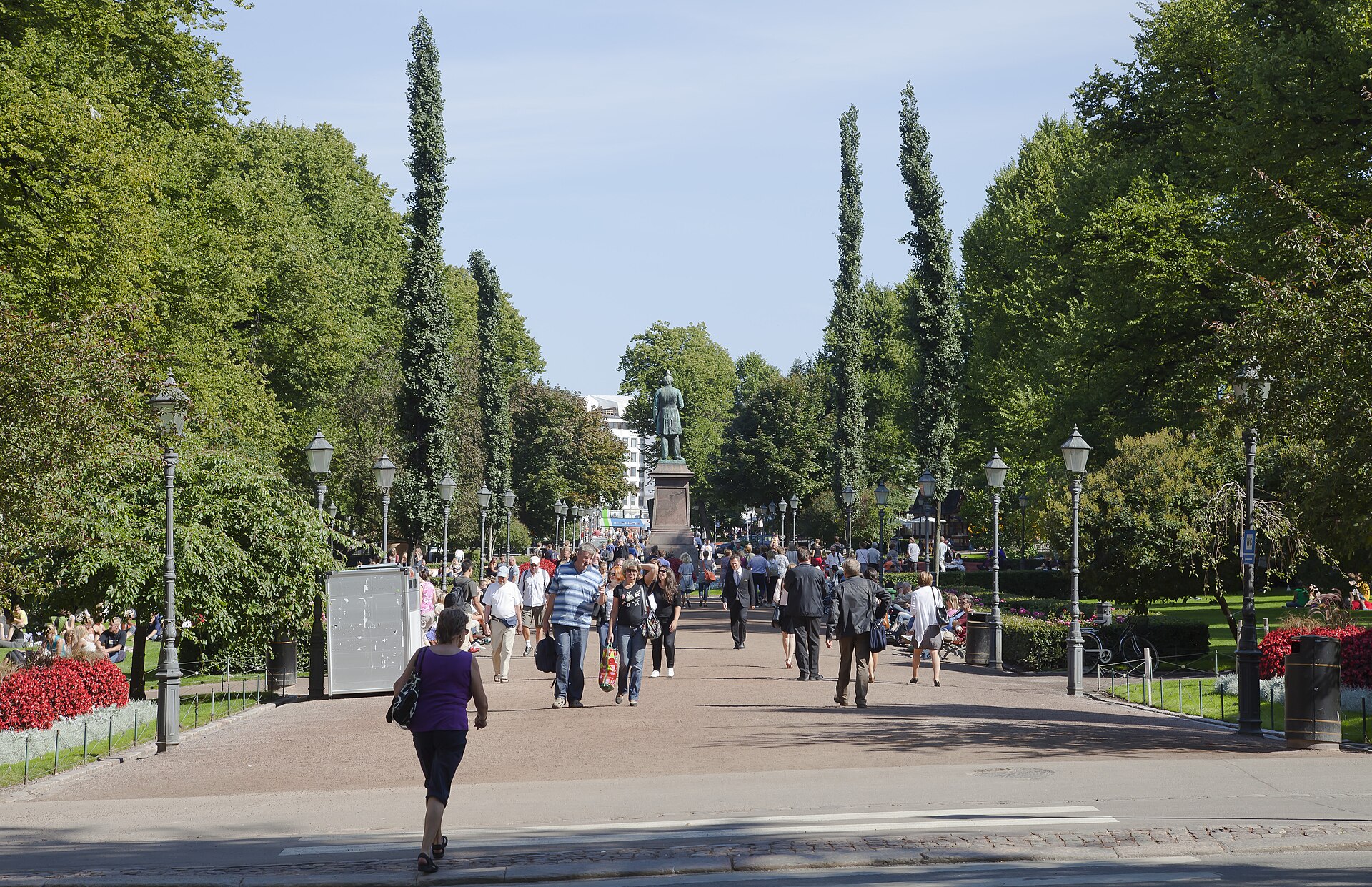
Esplanadi is Helsinki's most beloved park — a linear green space running from the Swedish Theatre to the Market Square between two avenues of shops, cafés, and the kind of civilised urban life that makes Helsinki feel more like a small-scale Vienna than a Nordic capital. The park, designed in the 1830s, is lined with linden trees, dotted with statues and flower beds, and anchored at its eastern end by the Kappeli restaurant — a glass pavilion that has been serving beer and Finnish food since 1867.
The park is where Helsinkians come to see and be seen, particularly in summer when the city's long daylight hours (up to 19 hours in June) extend the outdoor season into something approaching Mediterranean levels of public sociability. The Esplanadi Stage, a bandstand in the park's centre, hosts free concerts throughout the summer — jazz, folk, pop, and the Finnish tango (a distinctive variation of Argentine tango that became a national dance form in the 1930s and is treated with a seriousness that would surprise Argentines).
The avenues flanking the park — Pohjoisesplanadi (North Esplanade) and Eteläesplanadi (South Esplanade) — contain some of Helsinki's best shops, including the Marimekko and Iittala flagships, the Stockmann department store (Finland's most famous), and the Academic Bookstore (designed by Aalto, with a top-lit atrium that is one of Helsinki's finest interior spaces). The park-as-living-room model, where green space, commerce, and cultural programming coexist within a few hundred metres, is Finnish urbanism at its best.
Verified Facts
Esplanadi Park was designed in the 1830s
Kappeli restaurant has been operating since 1867
Finnish tango became a national dance form in the 1930s
The Academic Bookstore was designed by Alvar Aalto
Get walking directions
Pohjoisesplanadi, Kaartinkaupunki, Helsinki, 00130, Finland