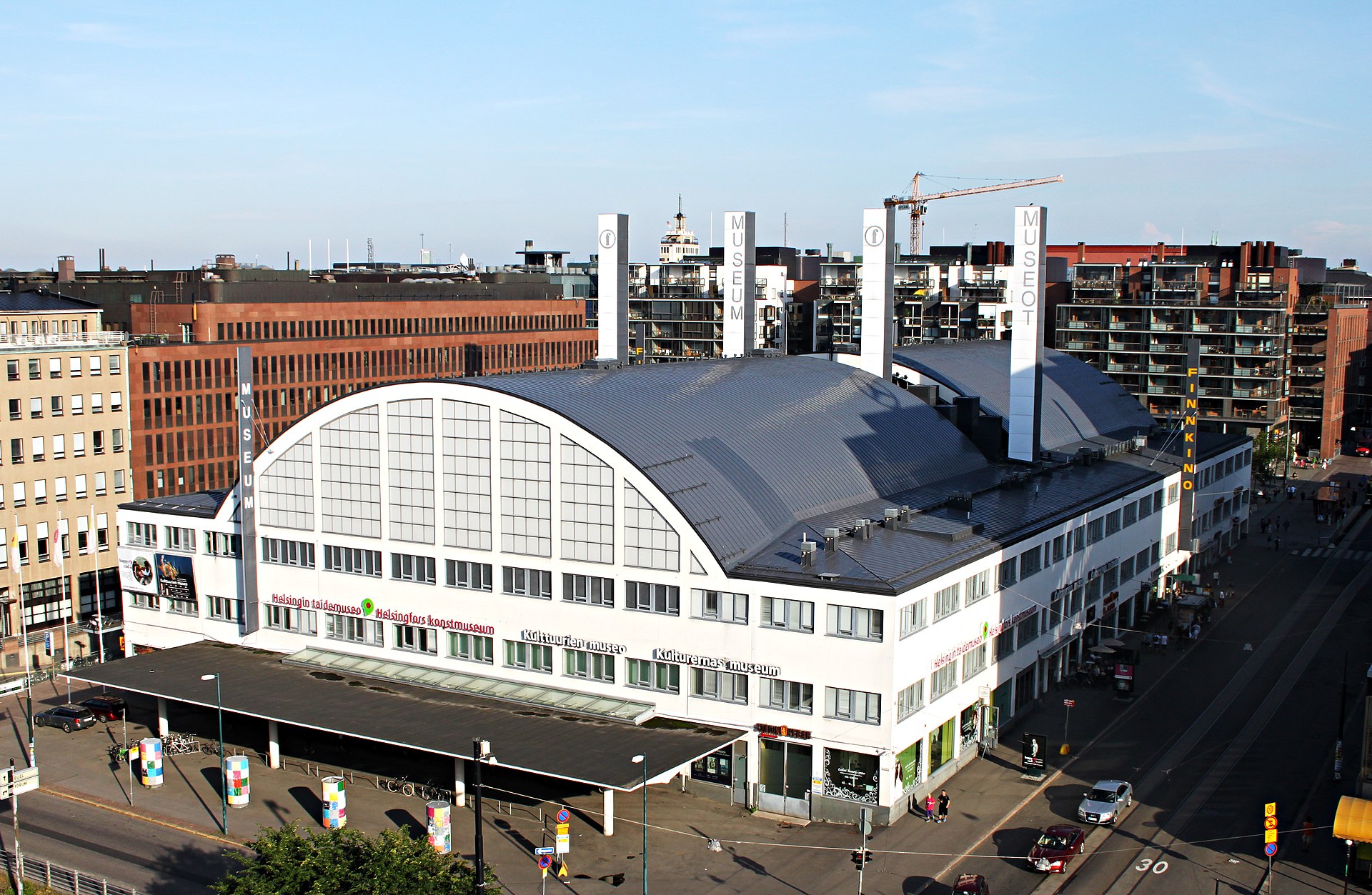
HAM is Helsinki's city art museum — housed in the Tennispalatsi (Tennis Palace), a functionalist building from 1938 that was originally built as a tennis court for the 1940 Olympics (which were cancelled due to World War II) and has served as a cinema, entertainment centre, and since 2015, Helsinki's primary venue for contemporary art exhibitions and the city's public art collection.
The museum's permanent collection of over 9,000 works includes the city's public art holdings — sculptures, paintings, and site-specific works installed in Helsinki's parks, buildings, and streets — and the temporary exhibition programme brings major international contemporary art to a museum that is consistently ambitious relative to its size. The building's industrial interior (high ceilings, open floor plans, the remnant geometry of tennis courts) provides flexible gallery spaces that work well for the large-scale installations the programme favours.
HAM's most distinctive feature is its management of Helsinki's public art collection — over 500 outdoor works scattered across the city, from the Havis Amanda fountain on the Market Square to contemporary sculptures in parks and housing estates. The museum publishes walking tour maps of the outdoor collection, making it possible to experience a HAM-curated exhibition by walking through the city rather than through gallery doors. This integration of museum and city is quintessentially Finnish — pragmatic, democratic, and designed to make art accessible without making it precious.
Verified Facts
HAM is housed in the Tennispalatsi, built in 1938 for the 1940 Olympics
The permanent collection contains over 9,000 works
HAM manages over 500 outdoor public artworks across Helsinki
The 1940 Helsinki Olympics were cancelled due to World War II
Get walking directions
8 Eteläinen Rautatiekatu, Kamppi, Helsinki, 00100, Finland