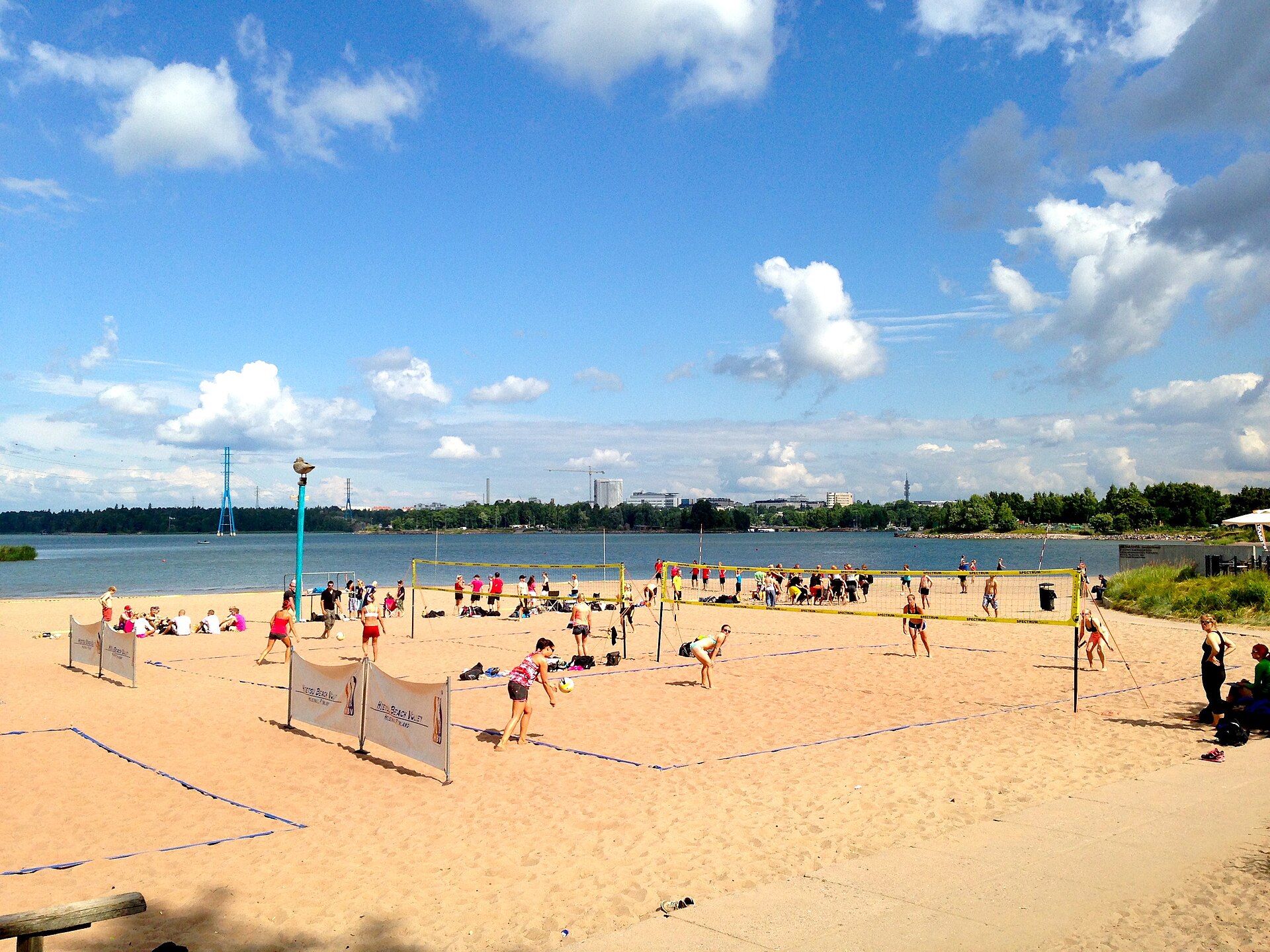
Hietaniemi is Helsinki's city beach — a sandy stretch on the western shore that becomes the city's unofficial summer living room from June through August, when the long days (up to 19 hours of daylight in midsummer) and relatively warm water temperatures bring out Helsinkians in numbers that contradict every stereotype about Nordic reserve.
The beach is divided into sections — the main public beach, a women's beach, and a naturist section — and the facilities (changing rooms, kiosk, beach volleyball courts) are basic but functional. The sand is genuine (not imported — this is a natural beach, not a constructed one), the water is Baltic Sea (clean but never warm by Mediterranean standards; 18-20°C in July is considered excellent), and the atmosphere on a sunny weekend afternoon — families, swimmers, sunbathers, and the occasional group playing mölkky (a Finnish throwing game) — is as relaxed as Helsinki gets.
Hietaniemi is the beach where the June tradition of staying out all night begins — as the sun barely dips below the horizon in midsummer, groups of friends gather on the sand with blankets, food, and the Finnish tradition of sitting outdoors until 3am because the sky is still light and nobody wants to go inside. The Hietaniemi cemetery, adjacent to the beach, is one of Helsinki's most important burial grounds — a memorial park where Finnish presidents, artists, and war dead are buried among birch trees, creating a characteristic Finnish juxtaposition of life and death within a few hundred metres.
Verified Facts
Hietaniemi is Helsinki's main city beach
Helsinki gets up to 19 hours of daylight in midsummer
Baltic Sea water temperatures reach 18-20°C in July
The adjacent Hietaniemi cemetery contains graves of Finnish presidents
Get walking directions
11 Hiekkarannantie, Etu-Töölö, Helsinki, 00100, Finland