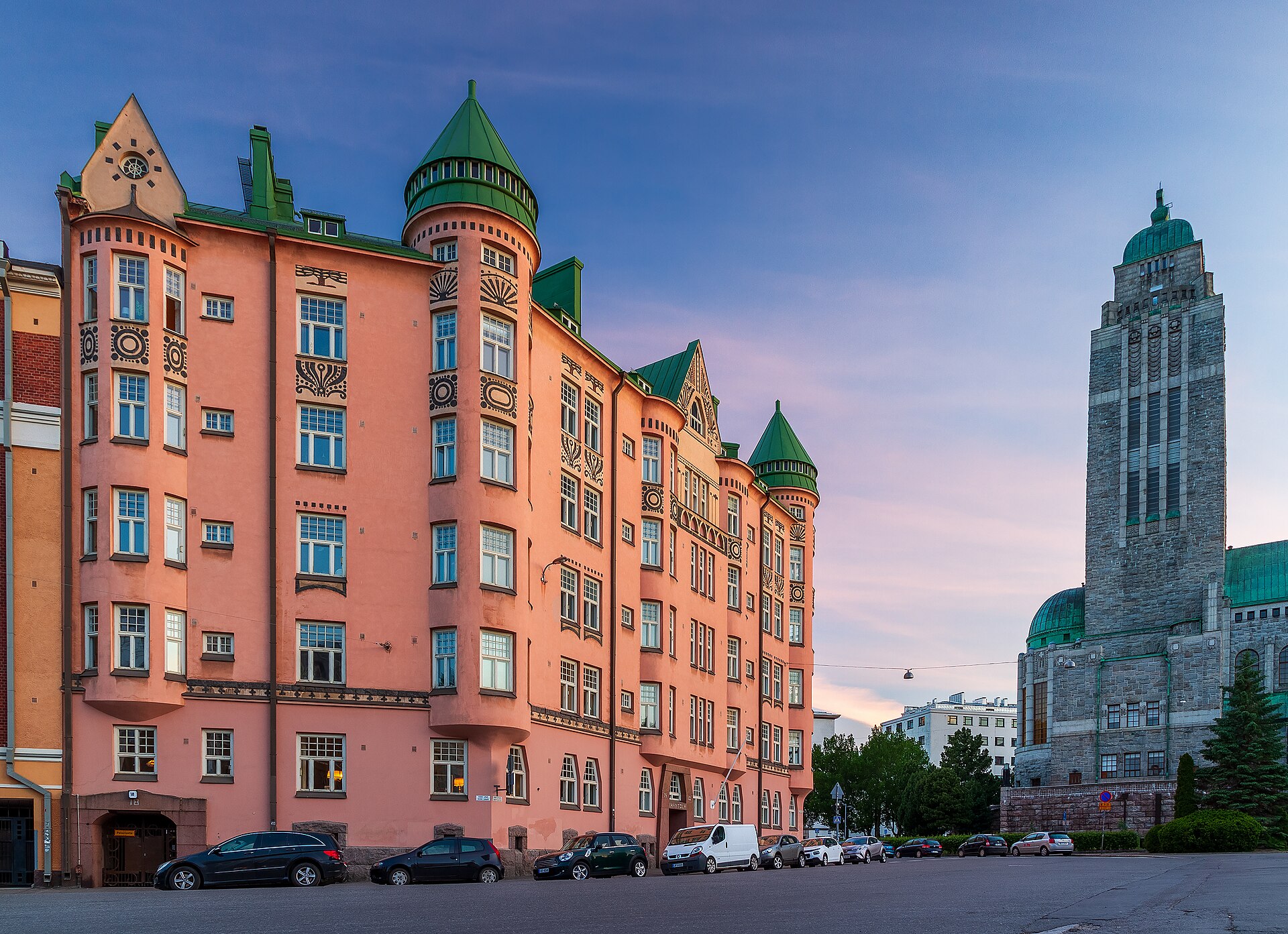
Kallio is Helsinki's most characterful neighbourhood — a hilly, working-class district north of the city centre that has been the home of students, artists, immigrants, and the counter-culture since the early 20th century. The neighbourhood climbs from the Long Bridge (Pitkäsilta) — which historically marked the boundary between bourgeois Helsinki and proletarian Kallio — up a steep hill crowned by the Kallio Church, a granite Art Nouveau tower that is the neighbourhood's landmark.
The Kallio Church (1912, designed by Lars Sonck) is worth visiting for its architecture alone — a National Romantic style that uses rough-hewn granite, medieval references, and the vertical drama of its hilltop position to create a building that looks more like a fortress than a church. The bells play Sibelius's 'Finlandia' at noon and 6pm, and the sound carrying across the rooftops is one of Helsinki's daily rituals.
Kallio's food and drink scene is the city's most democratic — neighbourhood bars where a beer costs half what it does in the centre, ethnic restaurants (Vietnamese, Nepalese, Ethiopian, Somali) that reflect the neighbourhood's immigrant communities, and the craft coffee shops and natural wine bars that arrive when creative-class residents discover affordable rent. The Bear Park (Karhupuisto), a small green square at the neighbourhood's heart, fills with locals on summer evenings in the kind of relaxed, unselfconscious neighbourhood socialising that Helsinki's more formal areas can't replicate.
Verified Facts
The Long Bridge historically divided bourgeois Helsinki from working-class Kallio
Kallio Church was designed by Lars Sonck in 1912 in National Romantic style
The church bells play Sibelius's 'Finlandia' at noon and 6pm
Kallio has been a working-class and counter-cultural neighbourhood since the early 1900s
Get walking directions
Hämeentie, Kallio, Helsinki, 00530, Finland