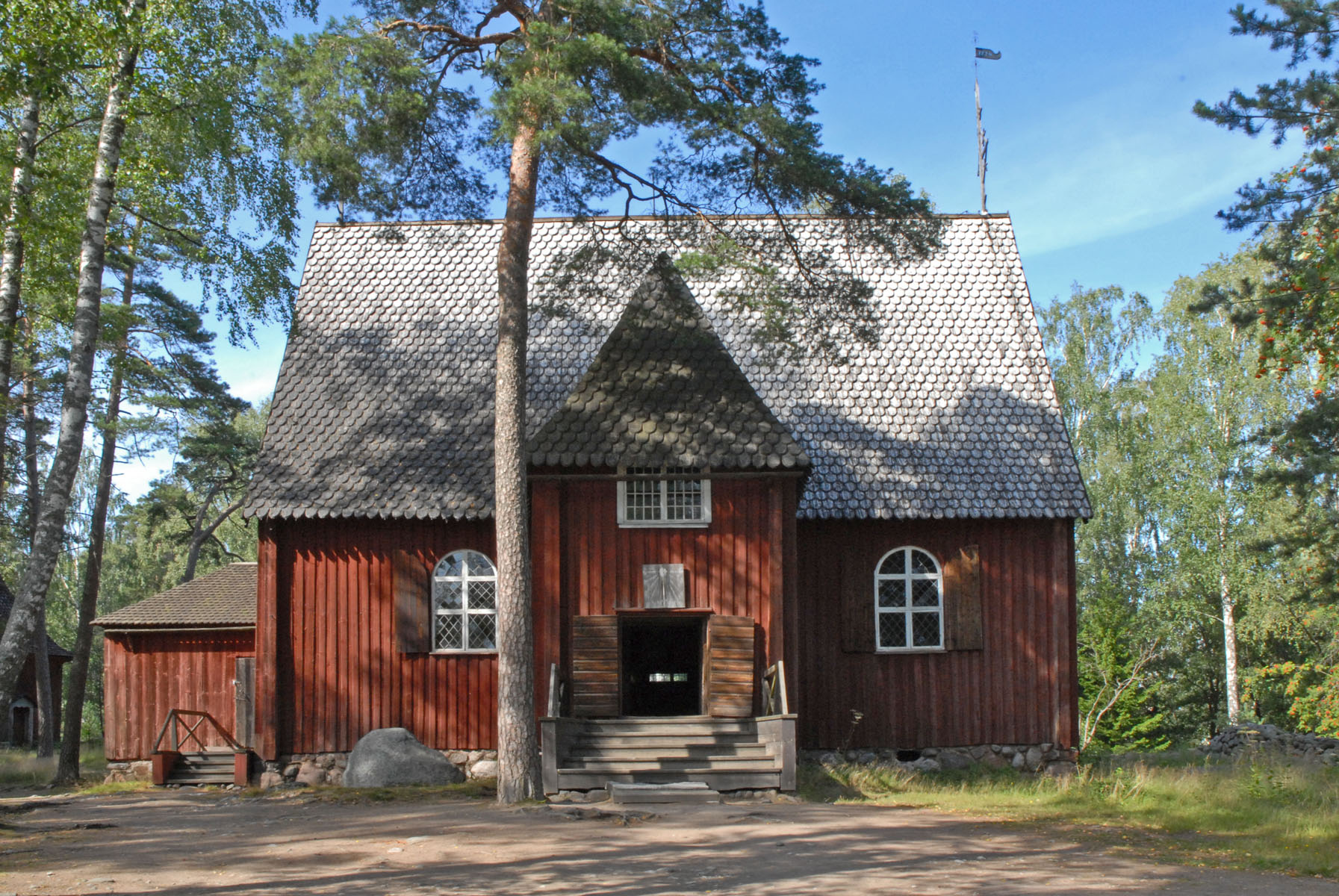
Seurasaari is a forested island connected to the mainland by a wooden footbridge that houses Finland's national open-air museum — a collection of 87 historic buildings from across the country, relocated here between 1909 and the present to preserve traditional Finnish wooden architecture. The buildings span from the 17th century to the early 20th century and include farmhouses, a church, manors, saunas, and the vernacular buildings that sheltered Finnish life before industrialisation.
The museum's genius is its setting — the buildings are scattered through the island's pine and birch forest, positioned on terrain that matches their original environments, so that walking the island feels like walking through a Finnish landscape from two centuries ago rather than visiting a museum. The Niemelä farmstead, a complete 19th-century farm compound from Konginkangas, is the most impressive ensemble — the main house, barn, sauna, smoke house, and outbuildings arranged around a courtyard show how Finnish farming families lived, worked, and survived winters that lasted half the year.
The island is also a public park, free to enter (the museum buildings charge admission in summer), and popular with joggers, picnickers, and the squirrels that are so tame they eat from visitors' hands. Midsummer's Eve (Juhannus) celebrations on Seurasaari — with a bonfire on the beach, folk dancing, and the midnight sun — are one of Helsinki's most beloved annual traditions, and the only occasion when the normally reserved Finns collectively agree that staying up all night to dance beside a lake is appropriate behaviour.
Verified Facts
Seurasaari houses 87 historic buildings from across Finland
The museum was established in 1909
The island is connected to the mainland by a wooden footbridge
Midsummer's Eve celebrations are a major annual tradition on the island
Get walking directions
Meilahti, Helsinki, Finland