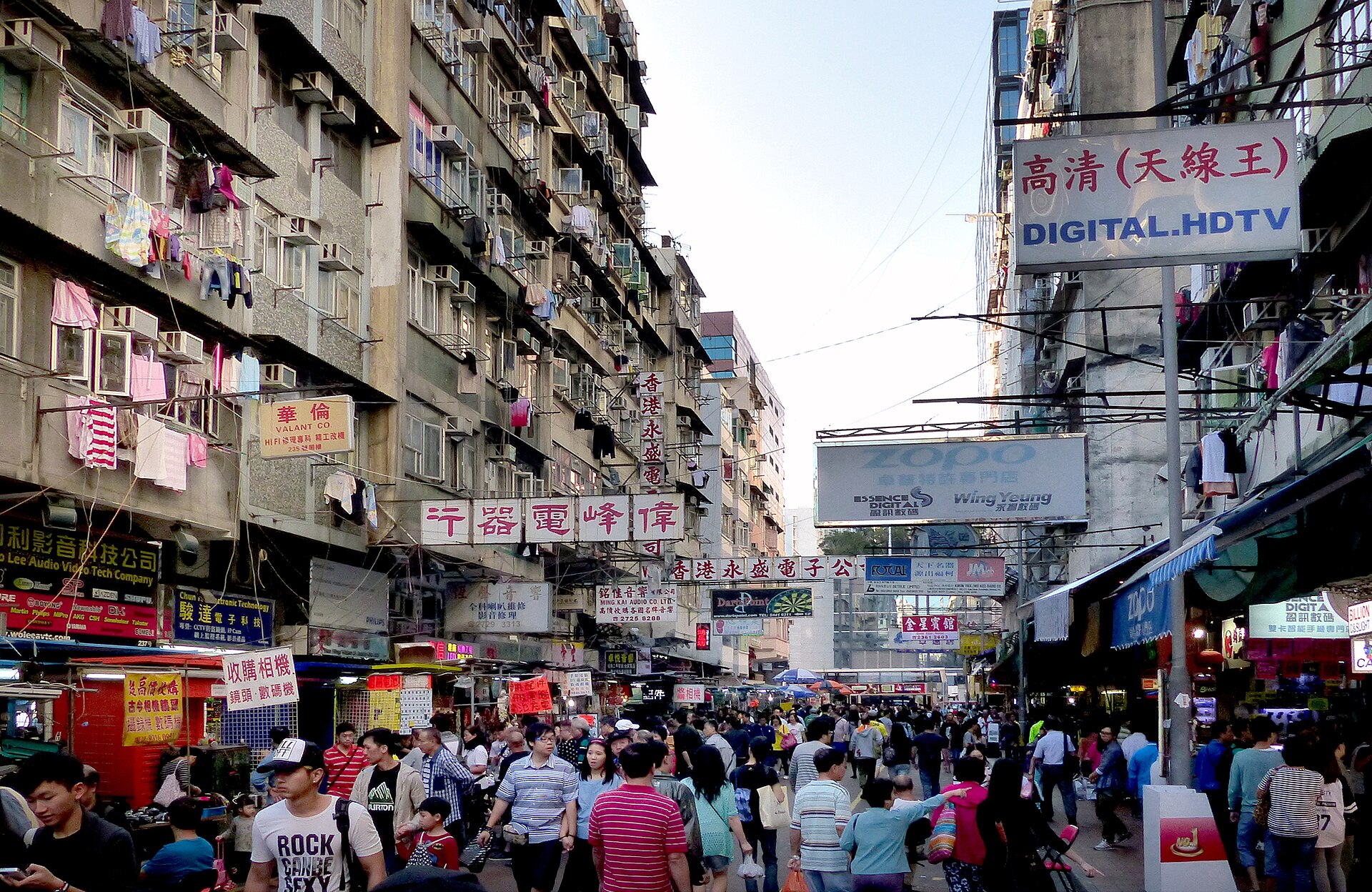
Mong Kok is the densest neighbourhood in the world — a grid of narrow streets in Kowloon that packs more people, shops, restaurants, and noise per square metre than any other urban area on Earth. The neighbourhood's speciality markets — Ladies' Market (clothing and accessories on Tung Choi Street), the Goldfish Market (Tung Choi Street North), the Flower Market (Flower Market Road), and the Bird Garden (Yuen Po Street) — create a commercial ecosystem that is quintessentially Hong Kong: chaotic, efficient, and endlessly entertaining.
Ladies' Market is the most visited — a kilometre-long corridor of stalls selling clothing, bags, accessories, electronics, and souvenirs at prices that reward haggling (start at half the asking price and meet somewhere in the middle). The Goldfish Market — a block of shops with aquariums stacked floor to ceiling and plastic bags of tropical fish hanging from hooks outside — is surreal and photogenic. The Flower Market, best visited in the week before Chinese New Year when the entire neighbourhood fills with orchids, pussy willows, and kumquat trees, is Hong Kong's domestic ritual made visible.
The food in Mong Kok is outstanding and cheap. The street food stalls along Fa Yuen Street sell curry fishballs, egg waffles (gai daan jai), stinky tofu, and the cheung fun (rice noodle rolls) that are the breakfast of the Cantonese working class. The dai pai dong in the back streets serve wonton noodles, roast goose, and the late-night congee that sustains Mong Kok's nocturnal population.
Verified Facts
Mong Kok is one of the most densely populated areas in the world
Ladies' Market runs along Tung Choi Street
The Goldfish Market, Flower Market, and Bird Garden are nearby specialty markets
Egg waffles (gai daan jai) are a signature Hong Kong street food
Get walking directions
Mong Kok, Hong Kong SAR, China