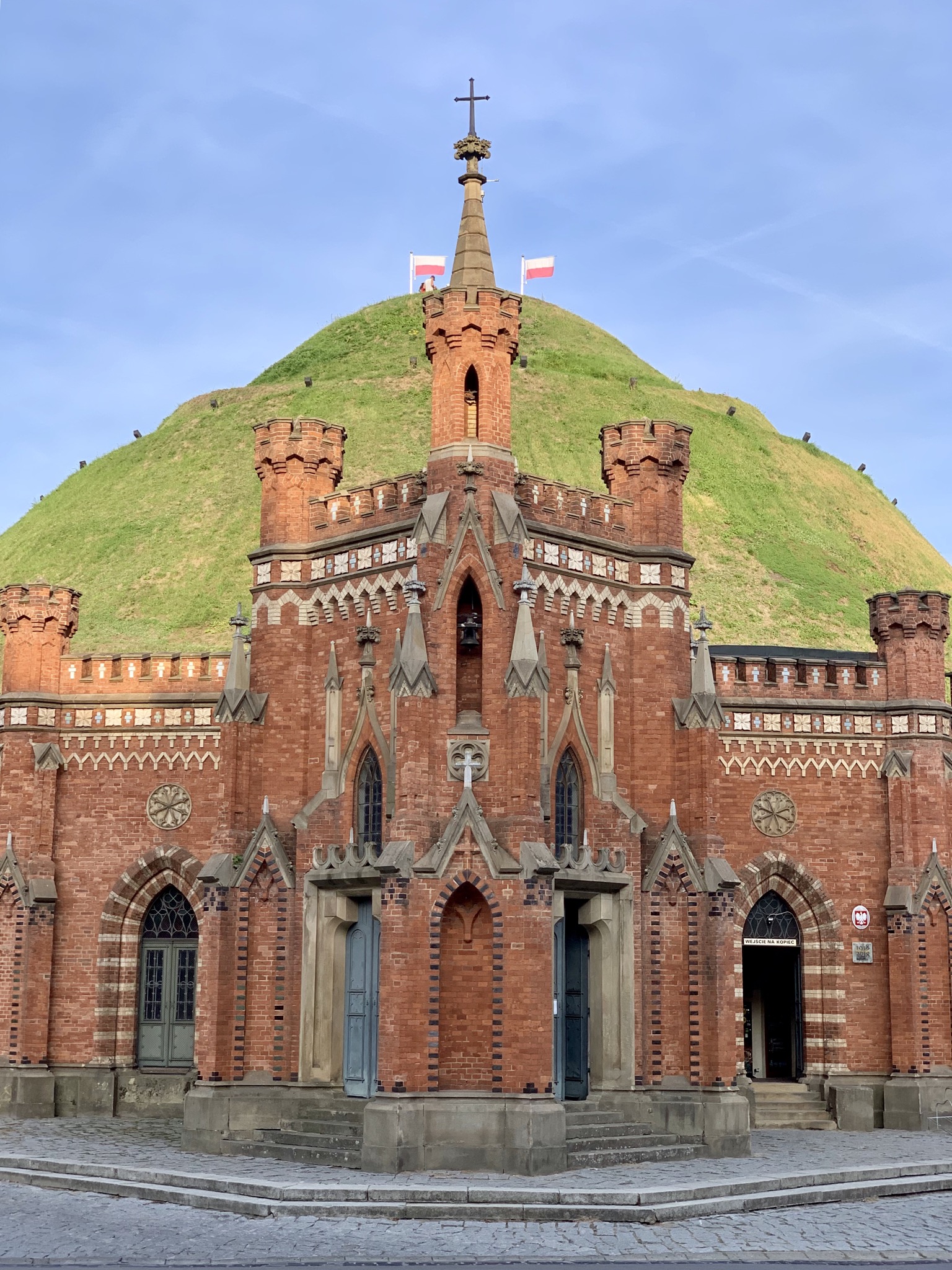
Kościuszko Mound is an artificial hill built between 1820 and 1823 by the citizens of Kraków as a memorial to Tadeusz Kościuszko — the Polish-Lithuanian military engineer who fought in both the American Revolution and the Polish uprising against Russia. The mound stands 34 metres high and is made entirely of earth carried to the site by volunteers, including soil brought from battlefields in Poland and the United States where Kościuszko fought.
The view from the top is the best panorama in Kraków — a full 360 degrees that takes in the Old Town, Wawel Castle, the Vistula River, and on clear days the Tatra Mountains 100 kilometres to the south. The climb is a spiral path that winds around the mound like a corkscrew, and reaching the top feels like a small achievement — not because it's difficult, but because the view keeps getting better with every turn.
The mound sits within a 19th-century Austrian brick fortress that was built around it during the partition, which gives the hilltop a military atmosphere that Kościuszko — a soldier above all else — would probably have appreciated. There's a small museum inside the fortress about Kościuszko's life, including his role as a colonel of engineers in the Continental Army during the American Revolution, where he designed the fortifications at West Point. The fort is a pleasant half-hour walk or short bus ride from the Old Town, and it's worth timing the visit for late afternoon when the light on the city is golden.
Verified Facts
The mound was built between 1820 and 1823 as a memorial to Tadeusz Kościuszko
The mound stands 34 metres high
Earth was brought from battlefields in both Poland and the United States
Kościuszko served as a colonel of engineers in the American Revolution
He designed the fortifications at West Point
Get walking directions
Aleja Waszyngtona 1, Kraków