Walking Tours in Kraków
Kraków: Royal Route & Kazimierz
Walk Poland's royal capital — from the medieval Barbican through Market Square and up Wawel Hill to the castle, then into the moving Jewish quarter of Kazimierz.
Kraków: The Royal Route — Barbican to Wawel
Walk the same stones the kings of Poland walked on their coronation day. This is the Royal Route, two kilometres of medieval spine from the Barbican gate at the northern wall down to Wawel Cathedral where every Polish king from 1320 to 1795 was crowned. Along the way: the largest medieval square in Europe, a trumpet call broken off mid-note, the 15th-century altarpiece the Nazis stole and the Americans returned, the desk where the eighteen-year-old Copernicus enrolled in university, the window where a Polish Pope blessed a million people at a time, and a dragon that still breathes fire.
30 Landmarks in Kraków
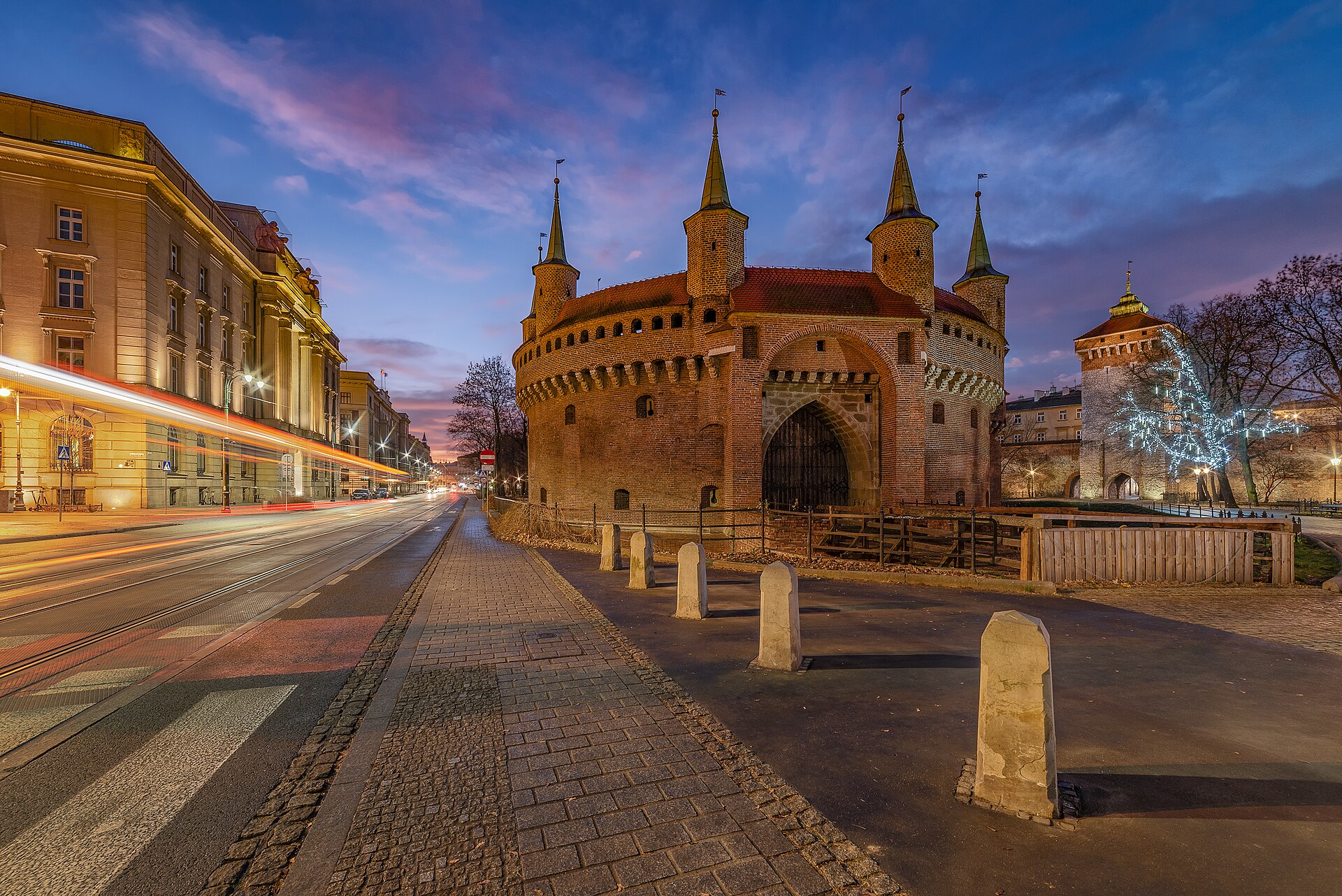
Barbican
Basztowa, Kraków
The Barbican is a circular brick fortress that once guarded the main gate into medieval Kraków, and it's the best-preserved example of its kind in Europe. Built in 1498 when the Ottomans were a genuine threat, it's a masterpiece of defensive architecture — three-metre-thick walls, 130 loopholes for crossbowmen, a 24-metre diameter, and a moat that's now a dry ditch filled with tourists taking photos. The fortress was connected to the Floriańska Gate by a covered passageway that allowed defenders to retreat behind the city walls if the Barbican was overrun. That passageway is gone, but the gate and the Barbican still face each other across a short stretch of the Planty park, and walking between them gives you a compressed experience of approaching a medieval fortified city — open ground, fortress, gate, city. Inside, the Barbican hosts temporary exhibitions and occasional concerts in summer, but the building itself is the main attraction. The upper gallery, reached by narrow stairs built into the walls, gives you a defender's-eye view of the approach — you can see exactly how exposed an attacker would be, caught between the Barbican's loopholes and the archers on the city walls. It's small enough to see in 20 minutes and atmospheric enough to remember.
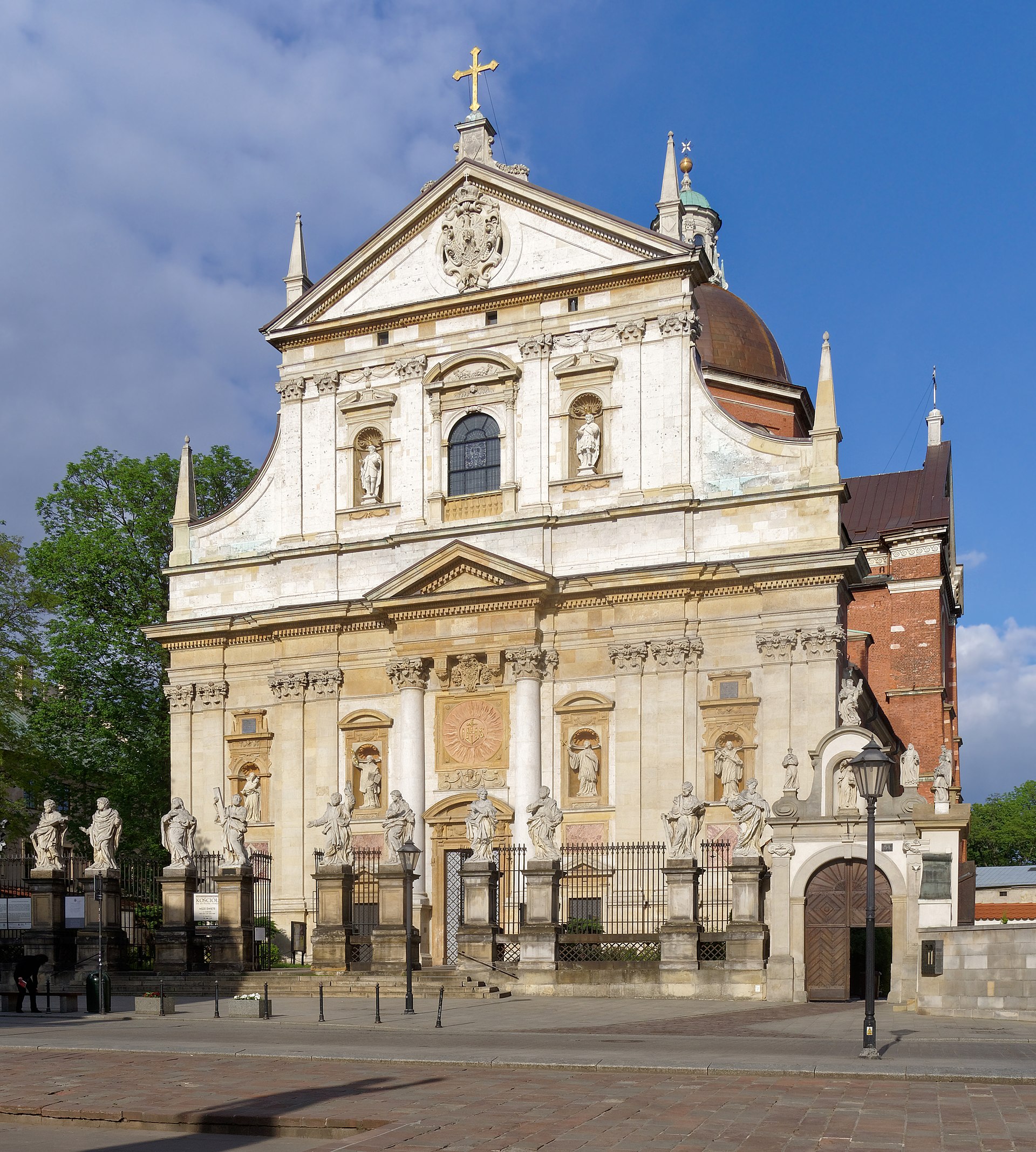
Church of Saints Peter and Paul
Grodzka 52a, Kraków
The Church of Saints Peter and Paul is the first Baroque building in Kraków and one of the finest in Poland — a white-faced Italian import on a street of Gothic and Renaissance neighbours that announced, when it was completed in 1635, that the Counter-Reformation had arrived and it had budget. The Jesuits built it to impress, and the façade — modelled on Il Gesù in Rome — succeeds spectacularly. The twelve apostle statues lining the fence in front of the church are the most photographed sculptures in Kraków. Carved in the early 18th century, they stand on pedestals like a receiving line, each identifiable by their traditional attributes — Peter with his keys, Paul with his sword, Andrew with his X-shaped cross. The originals were too weathered by pollution and had to be replaced with copies in the 1980s; the originals are inside. The interior is a single-nave barrel vault of white stucco that feels vast and bright after the dark Gothic churches elsewhere in the Old Town. The acoustics are extraordinary, and the church hosts regular classical concerts — Bach, Vivaldi, Chopin — that take full advantage of the Baroque space. A Foucault's pendulum hangs in the nave, swinging to demonstrate the Earth's rotation, which is either a statement about the church's relationship with science or just a very cool thing to put in a church.
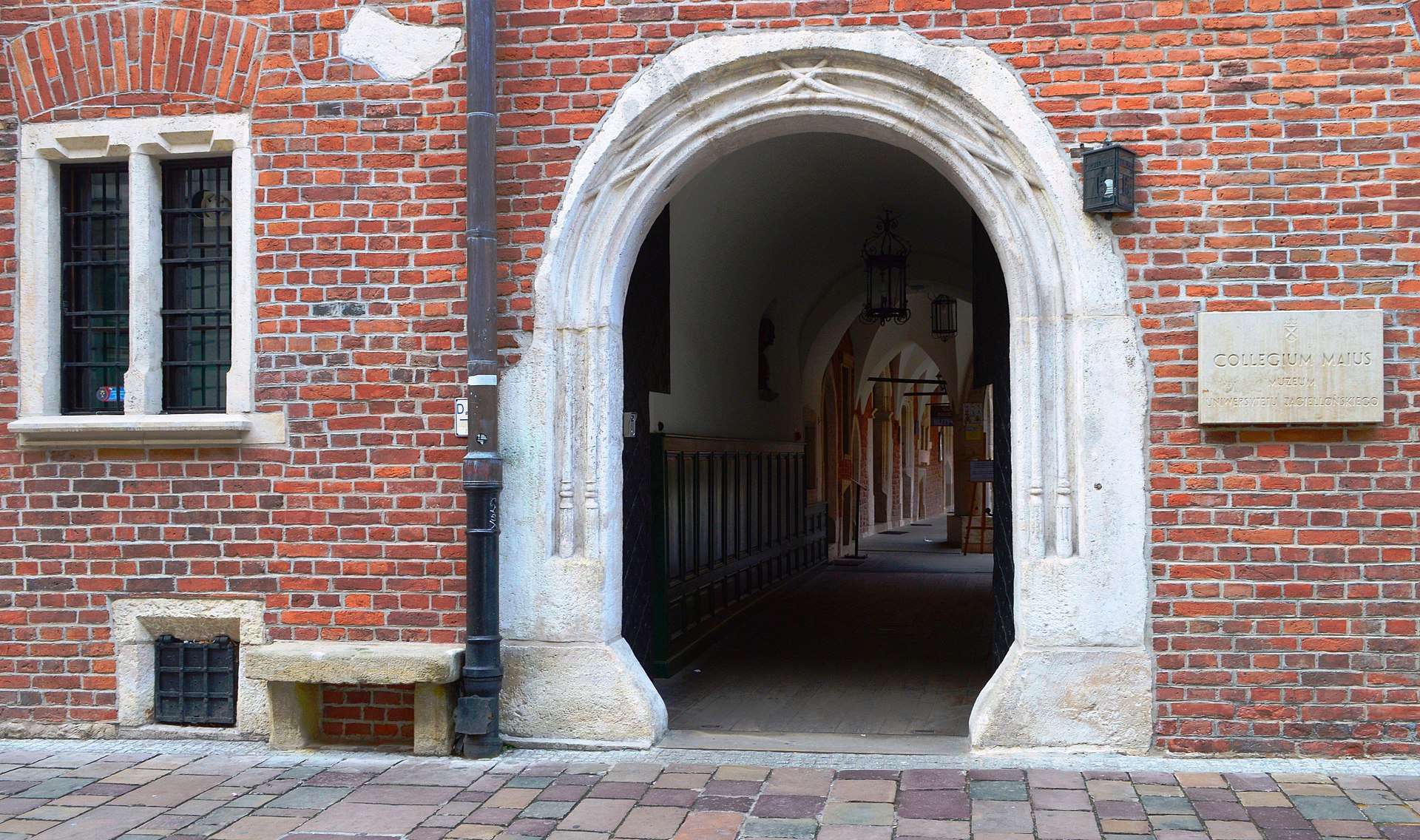
Collegium Maius (Jagiellonian University)
Jagiellońska 15, Kraków
Collegium Maius is the oldest university building in Poland and one of the oldest in Europe, built in the 15th century for the Jagiellonian University — which itself was founded in 1364, making it the second-oldest university in Central Europe after Prague. Copernicus studied here. So did Pope John Paul II. The building wears its intellectual pedigree with appropriate gravitas. The Gothic arcaded courtyard is one of the most beautiful small spaces in Kraków — red brick arches on three sides, a well in the centre, and a gallery of pointed arches that belong more in a cloister than a university. Every day at noon, a mechanical clock above the courtyard plays a student song while carved wooden figures of university rectors parade across the clock face — a charming piece of academic self-celebration. The museum inside contains the university's collection of scientific instruments, including what's claimed to be the oldest surviving astronomical globe to show the Americas — the Jagiellonian Globe, made around 1510, just 18 years after Columbus. There are also medieval astronomical instruments, academic maces, and the lecture rooms where Copernicus sat in the 1490s working out that the Earth was not, in fact, the centre of the universe. Tours are required for the museum interior but the courtyard is free to enter.
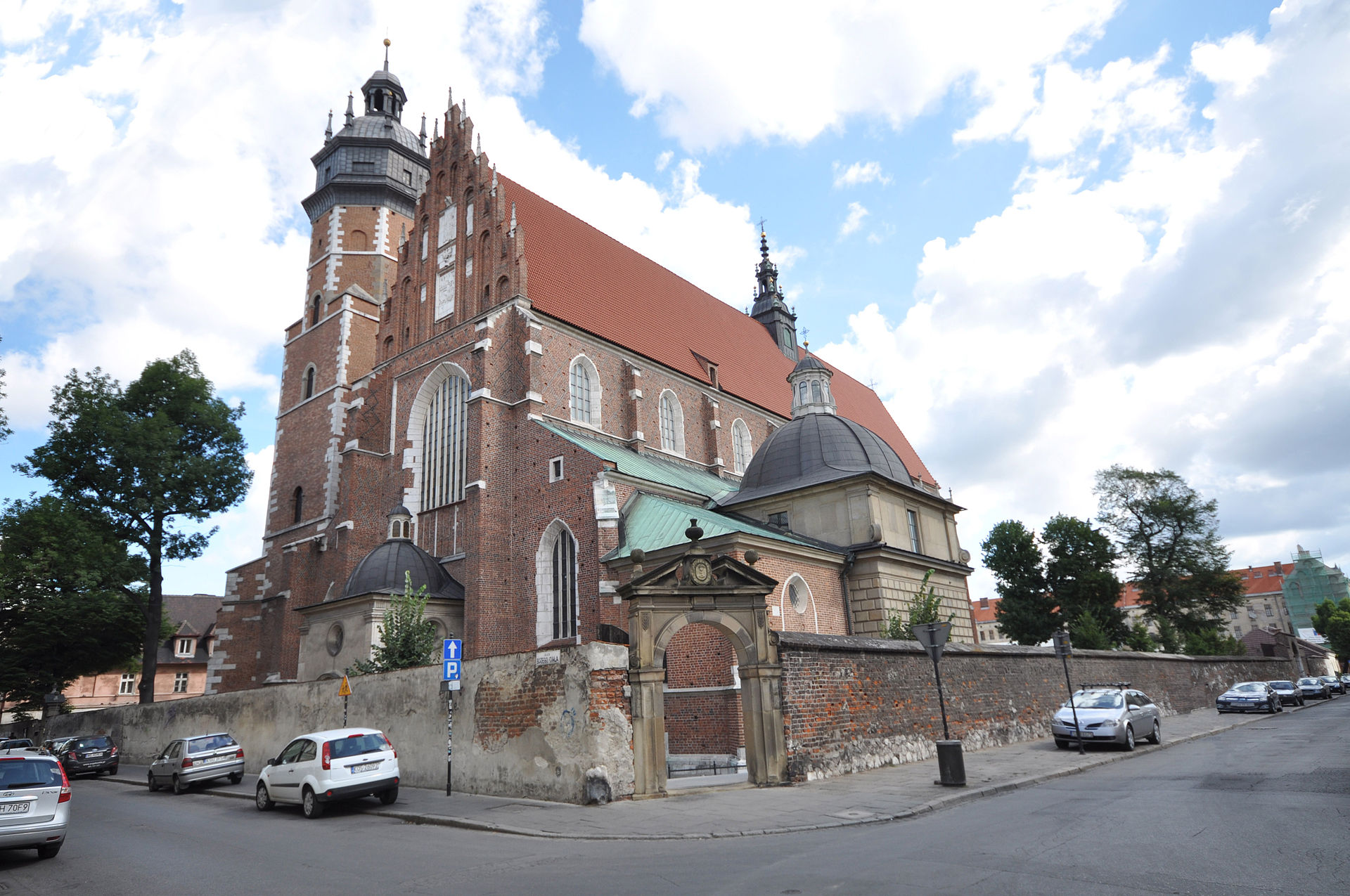
Corpus Christi Basilica
Bożego Ciała 26, Kraków
Corpus Christi is the main parish church of Kazimierz — the Christian half, which most visitors don't realise was a distinct area from the Jewish quarter. Founded in 1340 by King Casimir the Great, it's a massive Gothic basilica with a Baroque interior that rivals anything in the Old Town but sees a fraction of the tourists. The interior is a riot of gilded woodwork, painted vaulting, and a Baroque pulpit in the shape of a boat that's one of the most elaborate in Poland. The stalls in the presbytery are carved with such intricacy that the monks who commissioned them reportedly went bankrupt. A painting of the Nativity attributed to the circle of Tommaso Dolabella — the Italian painter who became the leading artist at the Polish court in the early 17th century — hangs in a side chapel that most visitors walk past. The church sits on Bożego Ciała Street at the western edge of Kazimierz, marking the boundary between what was the Christian town and the Jewish quarter. The fact that these two communities lived side by side for centuries — sometimes in harmony, sometimes in tension, always in proximity — is the essential story of Kazimierz, and standing between Corpus Christi and the Old Synagogue 300 metres away, you can feel the geography of that coexistence.
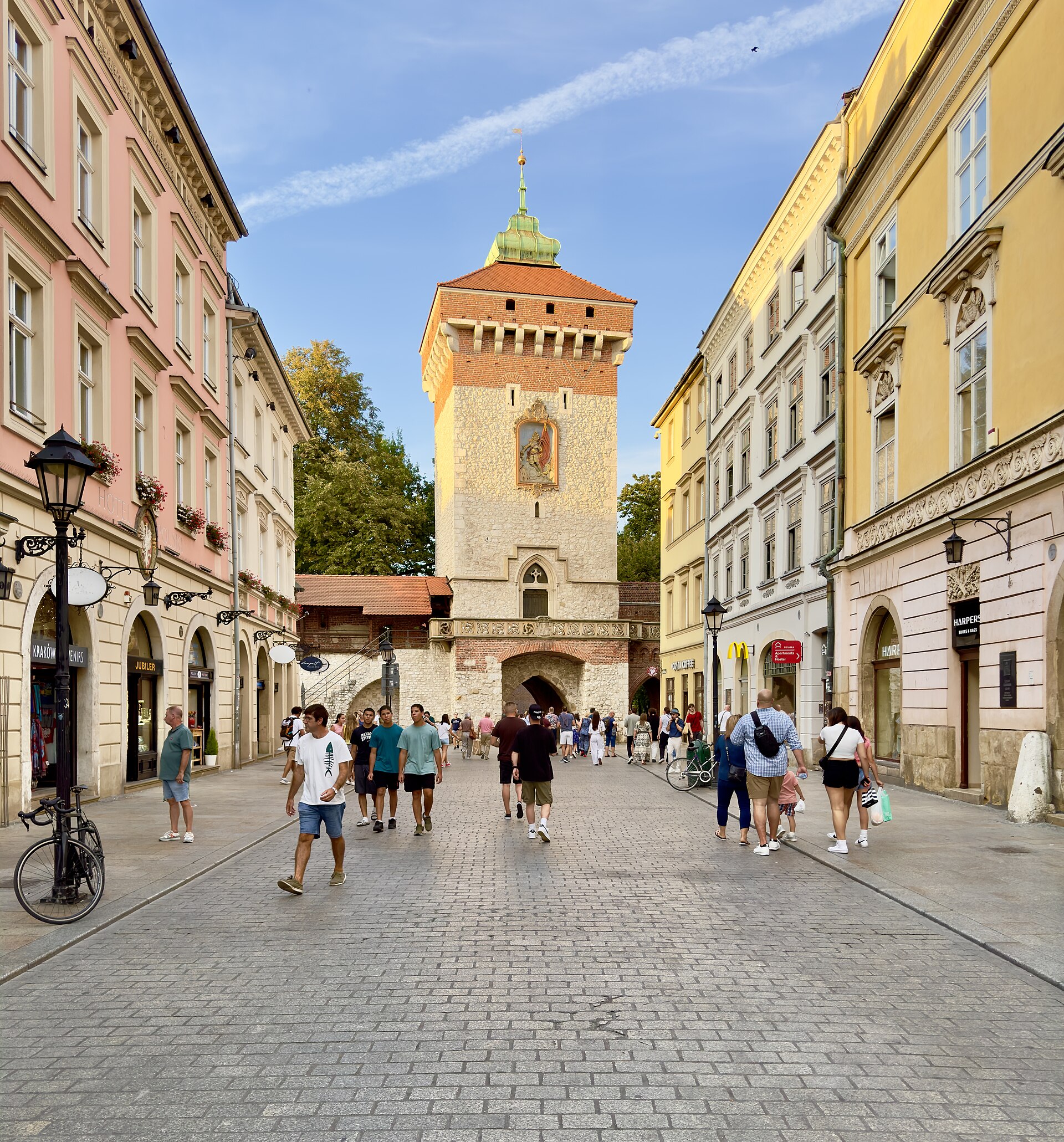
Floriańska Gate & Street
Floriańska, Kraków
Floriańska Gate is the only surviving gate of Kraków's original medieval fortifications, and the street bearing its name that runs from the gate to the Main Square is the most historic walk in the city — a straight 335-metre line from the city walls to the heart of town that every Polish king, invading army, and tourist has walked for 700 years. The gate itself is a square Gothic tower from the 14th century, topped with a Baroque cap added later, with a small painting of the Madonna on the city-facing side that has been receiving prayers from travellers entering Kraków since the Middle Ages. Walking through the gate from the Planty side into the Old Town is one of those threshold moments that cities rarely offer anymore — you pass from 19th-century parkland into a medieval streetscape in a single step. Floriańska Street is lined with historic townhouses now occupied by restaurants, galleries, and shops, including Jama Michalika — a café that's been operating since 1895 and was the headquarters of Kraków's bohemian art scene in the early 1900s. The Art Nouveau interior, complete with satirical puppet shows from the Young Poland movement, is preserved as a functioning café-museum. Have a coffee and a szarlotka (Polish apple cake) in a room where the century-old wall paintings look down with mild disapproval.
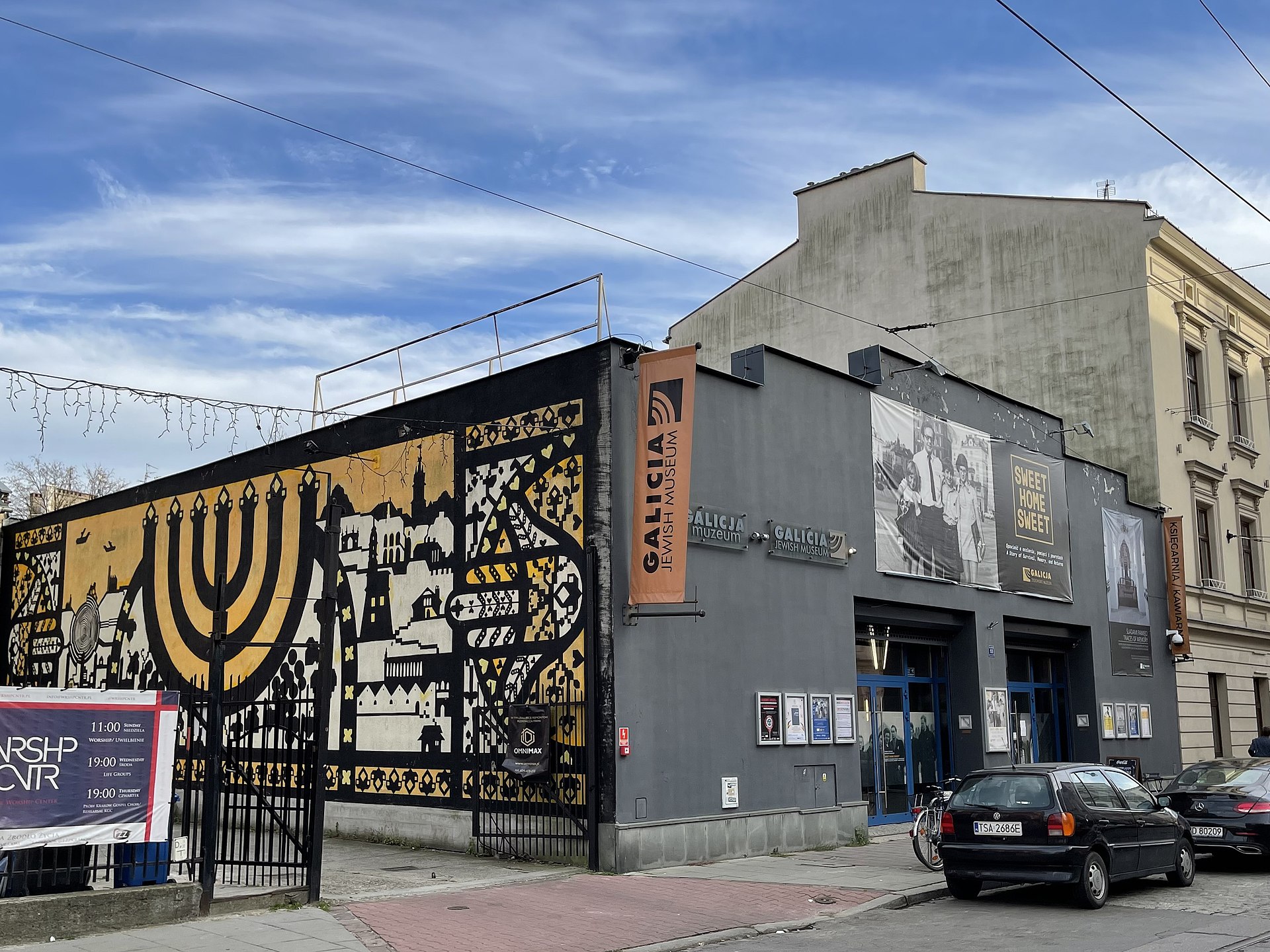
Galicia Jewish Museum
Dajwór 18, Kraków
The Galicia Jewish Museum does something most Holocaust museums don't — it looks forward as well as back. Founded in 2004 by British photographer Chris Schwarz, the museum's permanent exhibition 'Traces of Memory' uses large-format photographs of Jewish sites across southern Poland to show what remains, what's been destroyed, and what's been reclaimed. A restored synagogue sits beside an overgrown cemetery. A memorial stands in a field where a town once was. The images are beautiful and devastating in equal measure. The museum occupies a renovated industrial building in Kazimierz and deliberately avoids the darkness-and-horror approach of many Holocaust exhibitions. Instead, it presents Jewish heritage as a living subject — temporary exhibitions cover contemporary Jewish art, culture, and the revival of Jewish life in Poland. There's a bookshop with the best selection of English-language books on Polish-Jewish history in the city. Schwarz died in 2007, three years after opening the museum, but his vision of telling the story through what exists now — rather than archive footage of what was destroyed — gives the museum an immediacy that more traditional exhibitions lack. You leave thinking about the present, not just the past, which in a city with Kraków's history feels like an achievement.
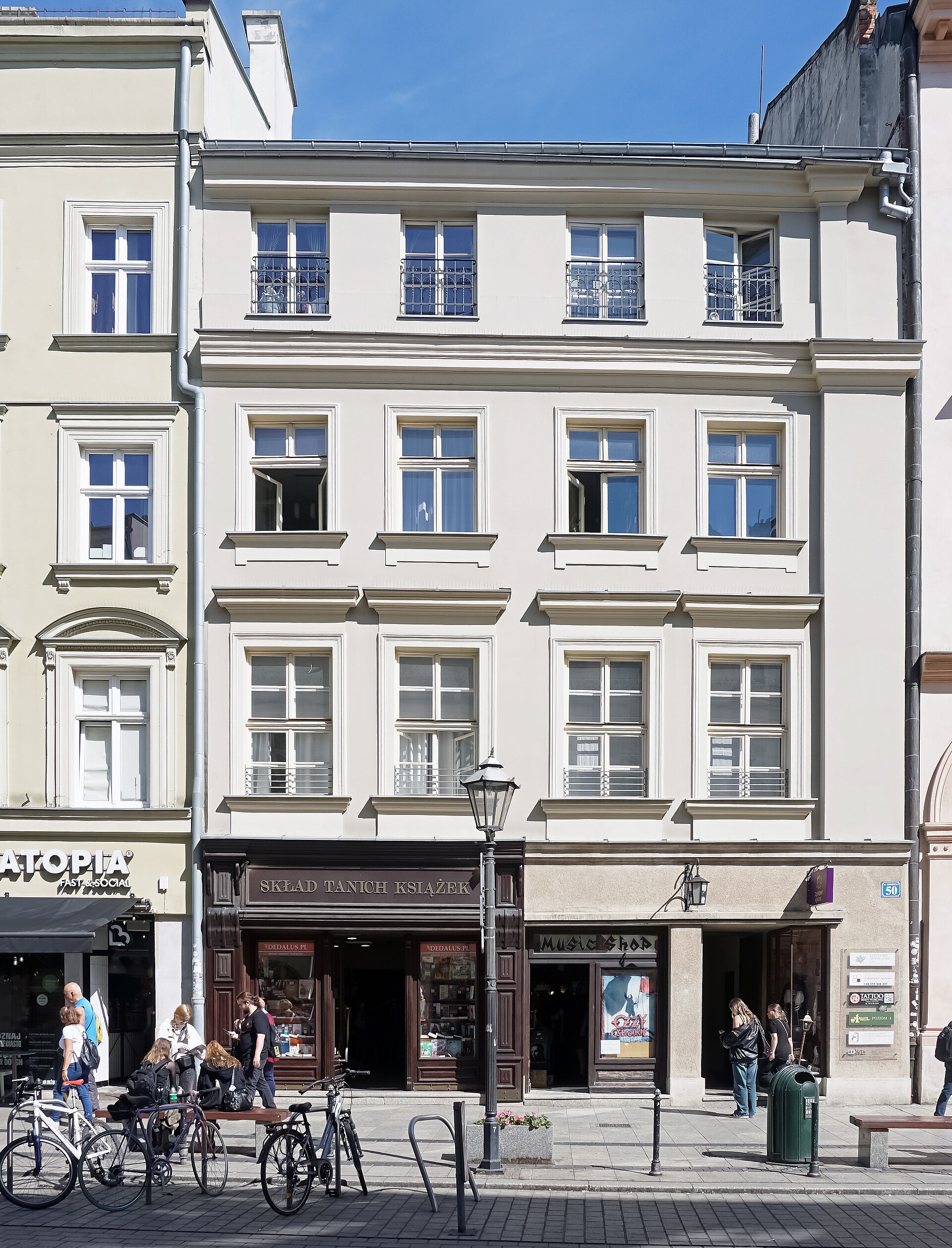
Grodzka Street
Grodzka, Kraków
Grodzka is the oldest street in Kraków — part of the ancient trade route that connected the Baltic Sea to the Mediterranean — and walking its 500-metre length from the Main Square to Wawel Castle is essentially a stroll through a thousand years of Polish architecture. Every building tells a story, and most of them are considerably older than they look. The street's curve follows the original medieval path between the market and the royal castle, and the buildings flanking it span every period of European architecture — Romanesque foundations beneath Gothic facades beneath Renaissance doorways beneath Baroque ornaments. The Church of Saints Peter and Paul (Kraków's first Baroque building) faces the Romanesque Church of St Andrew across the street in an architectural face-off that covers 500 years of stylistic evolution in a single glance. Grodzka is also where Kraków's academic, religious, and commercial lives intersect. The Dominican monastery, one of the oldest in Poland, has a Gothic cloister you can enter for free. Small galleries and antique shops occupy ground floors that have been commercial spaces since the Middle Ages. And the street itself narrows as it approaches Wawel, funnelling you toward the castle hill in a way that medieval town planners absolutely intended — the approach to power was supposed to feel dramatic.
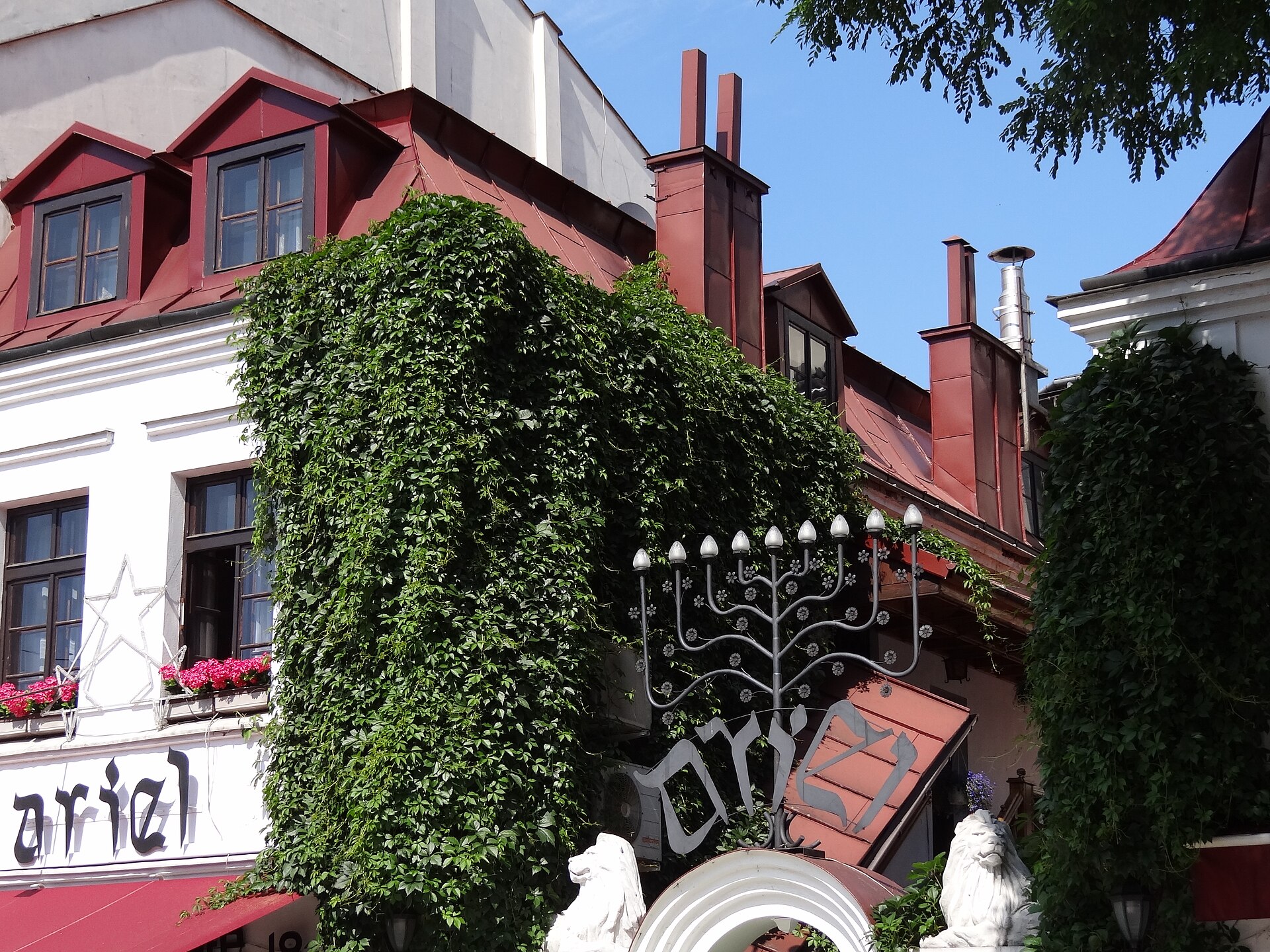
Kazimierz (Jewish Quarter)
Kazimierz, Kraków
Kazimierz was once a separate town — founded in 1335 by King Casimir the Great — that became the centre of Jewish life in Kraków for over 500 years. By the outbreak of World War II, 65,000 Jews lived here in a community of synagogues, schools, theatres, and markets that was one of the most vibrant in Europe. The Holocaust destroyed almost all of it. What remains — and what has grown back — is one of the most emotionally complex neighbourhoods in any European city. The district spent decades after the war in neglect, its synagogues empty, its buildings crumbling. The revival began in the 1990s, partly driven by Spielberg's Schindler's List (much of which was filmed here), and Kazimierz has since become Kraków's coolest neighbourhood — a labyrinth of bars, galleries, vintage shops, and restaurants occupying buildings whose walls still bear traces of Hebrew inscriptions and mezuzah marks. The Old Synagogue on Szeroka Street — the oldest surviving synagogue in Poland, dating to the 15th century — is now a museum of Jewish history. The Remuh Synagogue next door is still active, and its Renaissance-era cemetery contains tombstones that were used as paving stones by the Nazis and later recovered and reassembled. Plac Nowy, the neighbourhood's scruffy central square, is famous for zapiekanka — a baguette-sized open-faced sandwich loaded with mushrooms and cheese that's become Kraków's signature street food. Come during the Jewish Culture Festival in June and the streets fill with klezmer music, lectures, and a spirit of remembrance and celebration that captures exactly what Kazimierz is.
Kościuszko Mound
Aleja Waszyngtona 1, Kraków
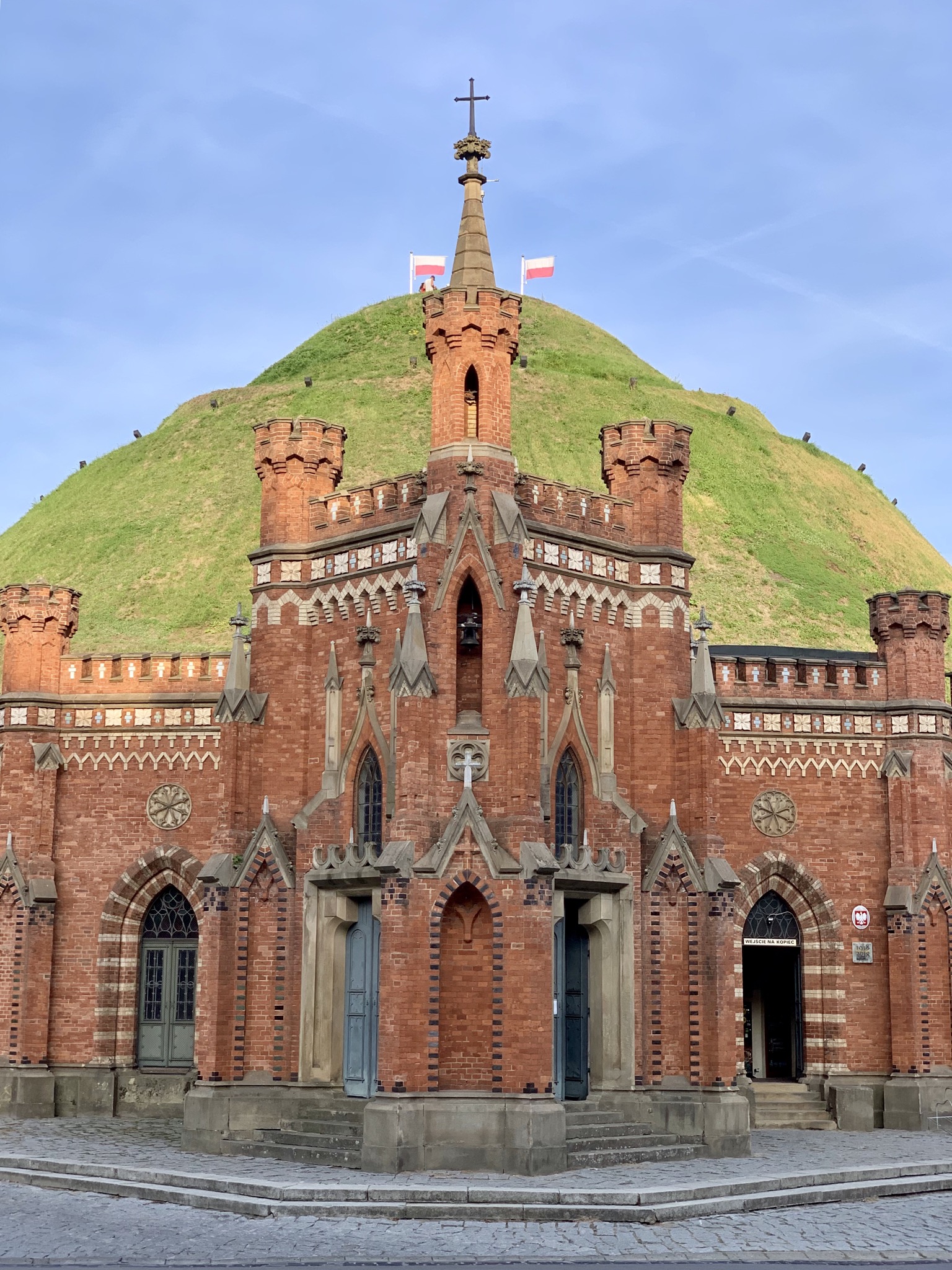
Kościuszko Mound is an artificial hill built between 1820 and 1823 by the citizens of Kraków as a memorial to Tadeusz Kościuszko — the Polish-Lithuanian military engineer who fought in both the American Revolution and the Polish uprising against Russia. The mound stands 34 metres high and is made entirely of earth carried to the site by volunteers, including soil brought from battlefields in Poland and the United States where Kościuszko fought. The view from the top is the best panorama in Kraków — a full 360 degrees that takes in the Old Town, Wawel Castle, the Vistula River, and on clear days the Tatra Mountains 100 kilometres to the south. The climb is a spiral path that winds around the mound like a corkscrew, and reaching the top feels like a small achievement — not because it's difficult, but because the view keeps getting better with every turn. The mound sits within a 19th-century Austrian brick fortress that was built around it during the partition, which gives the hilltop a military atmosphere that Kościuszko — a soldier above all else — would probably have appreciated. There's a small museum inside the fortress about Kościuszko's life, including his role as a colonel of engineers in the Continental Army during the American Revolution, where he designed the fortifications at West Point. The fort is a pleasant half-hour walk or short bus ride from the Old Town, and it's worth timing the visit for late afternoon when the light on the city is golden.
MOCAK (Museum of Contemporary Art)
Lipowa 4, Kraków
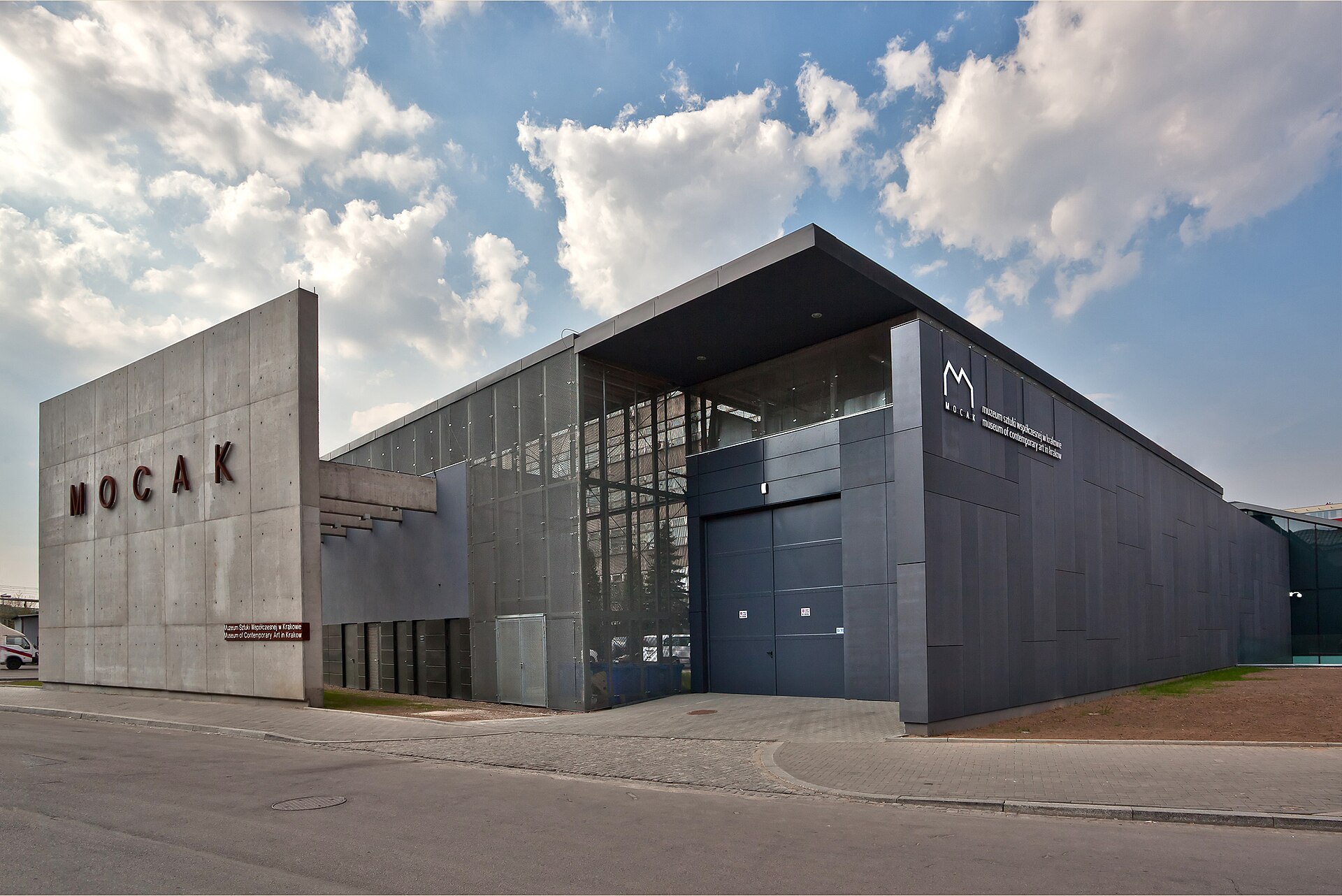
MOCAK sits on the grounds of Oskar Schindler's factory — literally next door to the famous museum — but where Schindler's factory looks back, MOCAK looks relentlessly forward. Opened in 2011 in a building designed by Italian architect Claudio Nardi, it's Poland's first museum dedicated to contemporary art, and its programme is ambitious, international, and occasionally provocative. The building is part of the appeal — clean white volumes arranged around courtyards, with the preserved brick walls of the original factory incorporated as texture. The permanent collection includes works by Polish and international artists, and the temporary exhibitions change regularly with a focus on art that engages with social and political issues. The museum takes its location seriously — art about memory, identity, and the ethics of representation appears frequently, which given the site's history, feels appropriate rather than exploitative. The Zabłocie district surrounding MOCAK has transformed from an industrial wasteland into Kraków's most dynamic new neighbourhood — galleries, studios, restaurants, and a riverfront that's being developed with considerably more taste than the Communist-era buildings it's replacing. MOCAK anchors the transformation and gives the area a cultural gravity that justifies the walk across the river from Kazimierz.
National Museum (Main Building)
3 Maja 1, Kraków
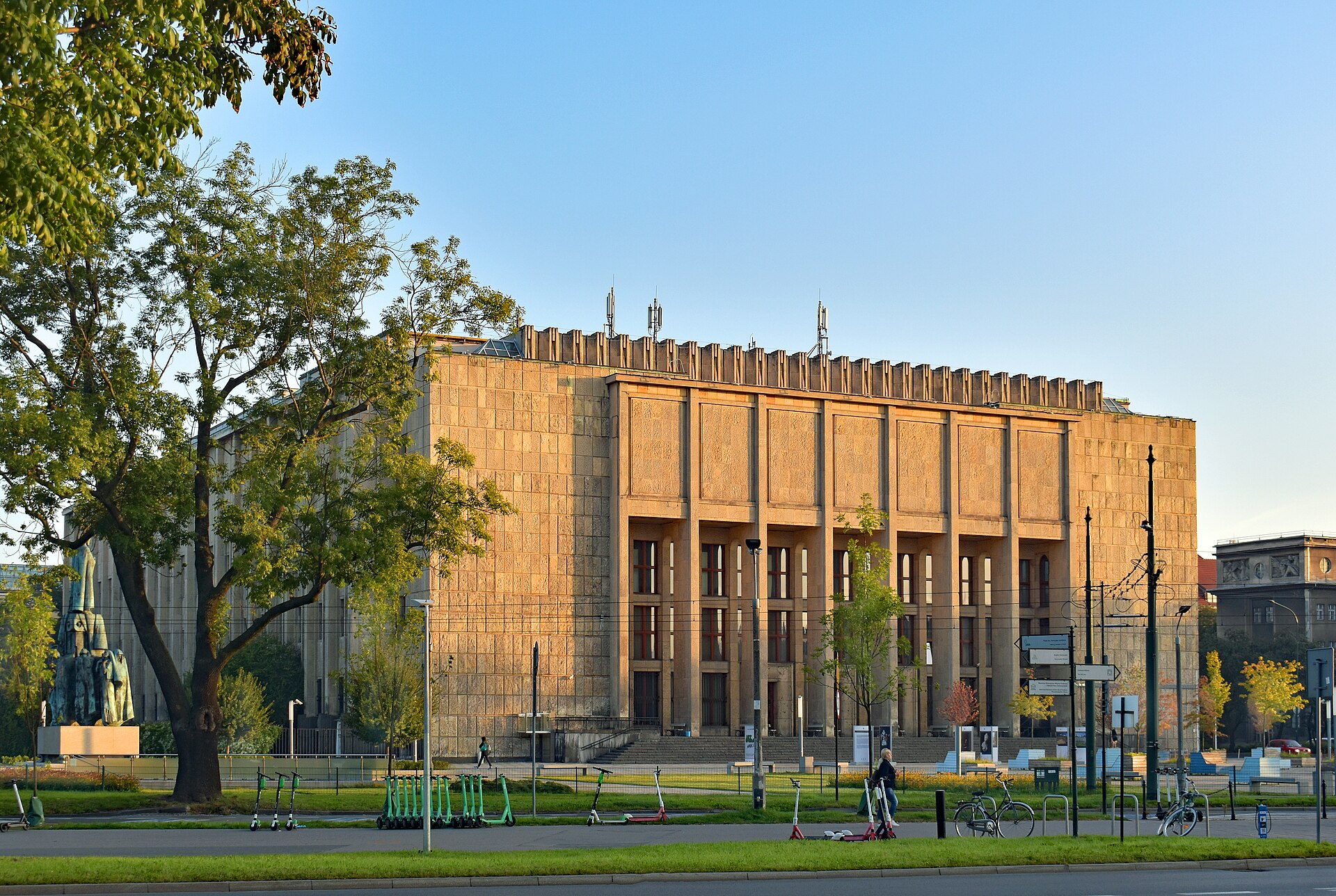
The National Museum's main building is a 1930s modernist block that holds the most comprehensive collection of Polish art in the country — and, somewhat improbably, Leonardo da Vinci's 'Lady with an Ermine,' one of only four surviving Leonardo portraits and arguably the most valuable painting in Poland. The Leonardo arrived in Poland in 1798 when Prince Adam Jerzy Czartoryski bought it in Italy for his mother's private museum. It survived both world wars — hidden from the Nazis, recovered by Allied forces, returned to Poland — and has been the subject of ownership disputes between the Czartoryski family and the Polish state for decades. The painting is displayed in its own room with climate control and security that would satisfy a Bond villain. It's smaller than you expect and more beautiful than photographs suggest — the ermine's fur and Cecilia Gallerani's fingers are rendered with a precision that explains why Leonardo only finished about 20 paintings in his lifetime. Beyond the Leonardo, the collection spans Polish art from the Middle Ages to the 20th century, with particular strength in 19th-century historical painting — Jan Matejko's enormous battle scenes are here — and the Polish Art Nouveau movement (known as Young Poland), which produced some of the most distinctive decorative art in Europe.
Nowa Huta
Nowa Huta, Kraków
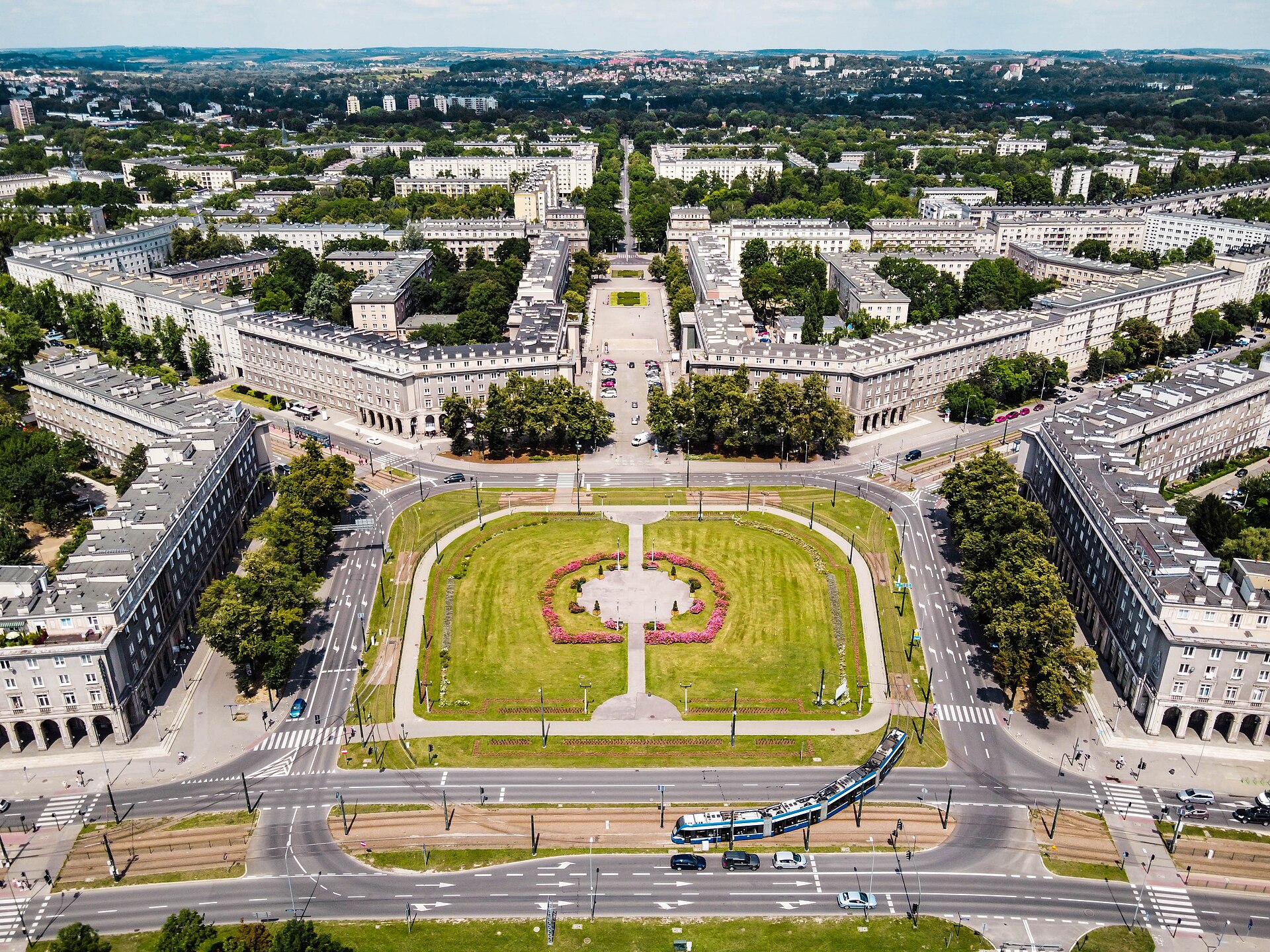
Nowa Huta is the neighbourhood that Stalin built to show Kraków what the future looked like. Constructed from scratch in the late 1940s as a 'model socialist city' attached to a massive steelworks, it was designed to be everything medieval Kraków wasn't — planned, industrial, atheist, and proletarian. The irony is that Nowa Huta became one of the strongest centres of anti-communist resistance in Poland. The architecture is fascinating — wide, tree-lined boulevards radiating from a central square (originally called Lenin Square, now Ronald Reagan Square, which tells you how history went), flanked by Socialist Realist apartment blocks with classical columns, decorative friezes, and the kind of monumental scale that was supposed to make workers feel important. The style is often called 'wedding cake architecture,' and walking the main avenue is like visiting a parallel universe where the Soviet Union won the culture war. The resistance story is the better one. When the communist government refused to allow a church in their atheist utopia, the workers of Nowa Huta fought for 20 years — through protests, riots, and sheer stubbornness — until they built the Arka Pana (Lord's Ark Church) in 1977, a modernist church shaped like a ship whose cornerstone contains a piece of rock from the moon, given by NASA. The steelworks still operates, much reduced, and guided tours of Nowa Huta in vintage Trabant cars are one of Kraków's most unexpectedly entertaining activities.
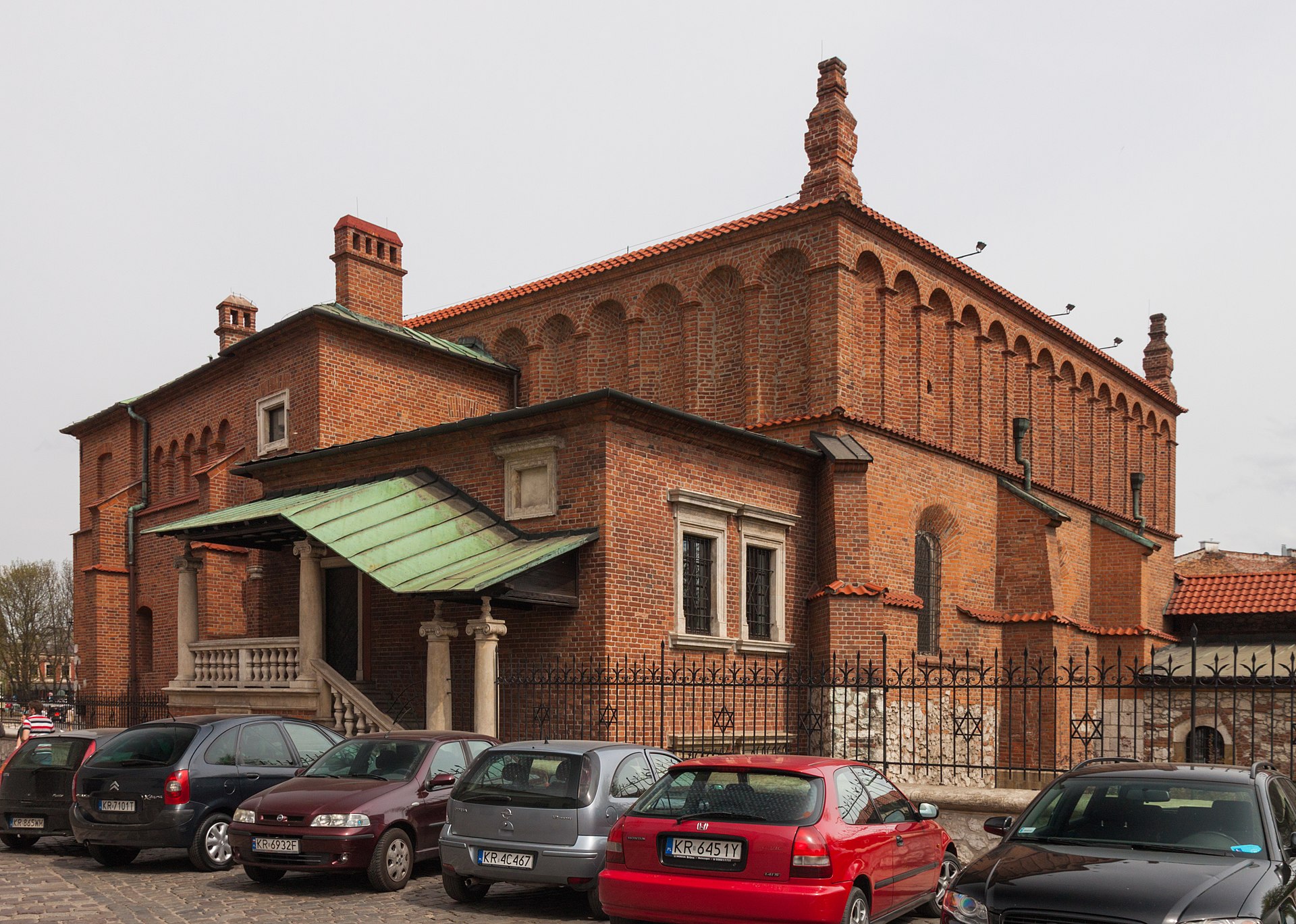
Old Synagogue (Stara Synagoga)
Szeroka 24, Kraków
The Old Synagogue on Szeroka Street is the oldest surviving synagogue in Poland — a fortress-like building dating to the 15th century that was the spiritual and administrative centre of Kraków's Jewish community for 500 years. Its thick walls and defensive appearance reflect the precarious position of medieval Jews, who needed their sacred buildings to double as places of refuge. The building was severely damaged by the Nazis, who used it as a warehouse, and was restored after the war as a branch of the Historical Museum of Kraków dedicated to Jewish history and culture. The two-nave prayer hall, with its Gothic vaulting supported by a central column, has been reconstructed to show the original layout, and the exhibition covers Jewish religious practice, daily life, and the history of the Kazimierz community from its founding to its destruction. Szeroka Street itself — the wide square-like street that the synagogue faces — was the heart of Jewish Kazimierz. It's now lined with restaurants serving Jewish-style food (potato pancakes, cholent, herring) and is the main venue for the annual Jewish Culture Festival. On a summer evening, with klezmer music drifting from restaurant doorways and the synagogue lit against the darkening sky, the street achieves a bittersweet atmosphere that captures the essence of what Kazimierz is — a place where memory and renewal coexist.
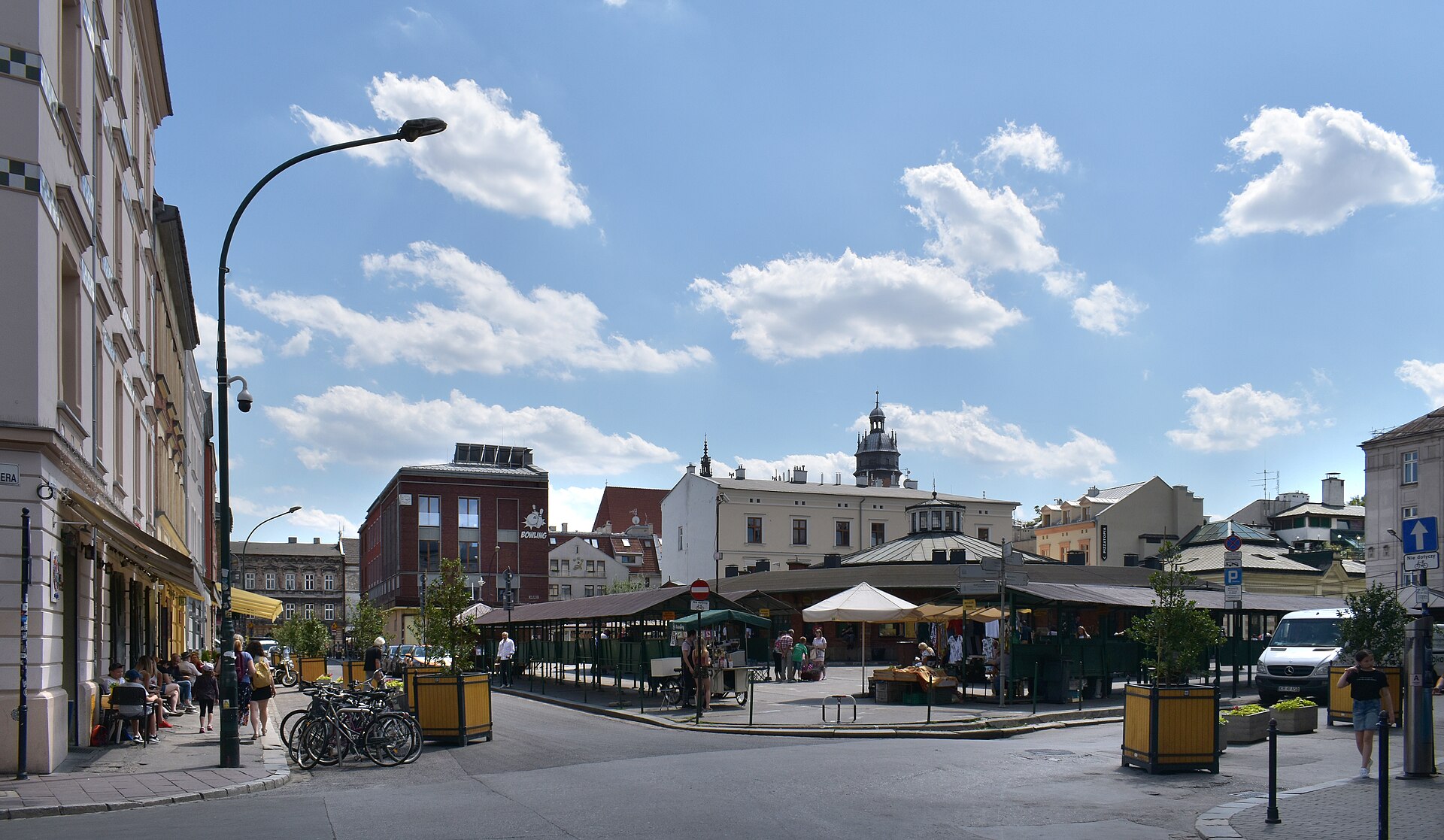
Plac Nowy (Kazimierz)
Plac Nowy, Kraków
Plac Nowy is Kazimierz's scruffy, loveable heart — a circular market square centred on a rotunda building that was once a ritual slaughterhouse for kosher meat and is now surrounded by the windows of Kraków's most famous zapiekanka vendors. Zapiekanka is a half-baguette loaded with mushrooms, cheese, and whatever else fits, toasted until bubbling, and consumed standing up at 2am. It is the official food of Polish nightlife. During the day, the square hosts a flea market — uneven tables of secondhand clothes, communist-era military gear, vinyl records, old cameras, and the kind of objects that could be junk or treasure depending on your eye. The surrounding streets have filled with bars, galleries, and restaurants that have made Kazimierz Kraków's nightlife centre, but Plac Nowy retains an ungentrified grittiness that the cocktail bars haven't quite managed to polish away. On Saturday mornings, the flea market expands and the square fills with local families, vintage hunters, and people who are quite clearly still out from the night before. The rotunda in the centre — a circular building with arched openings on every side — has zapiekanka windows cut into it like a medieval food court. Each window has its own menu and its own queue, and loyalties between vendors run deep. Pick one, eat it on the square, and come back for a second from a different window. That's the proper Plac Nowy experience.
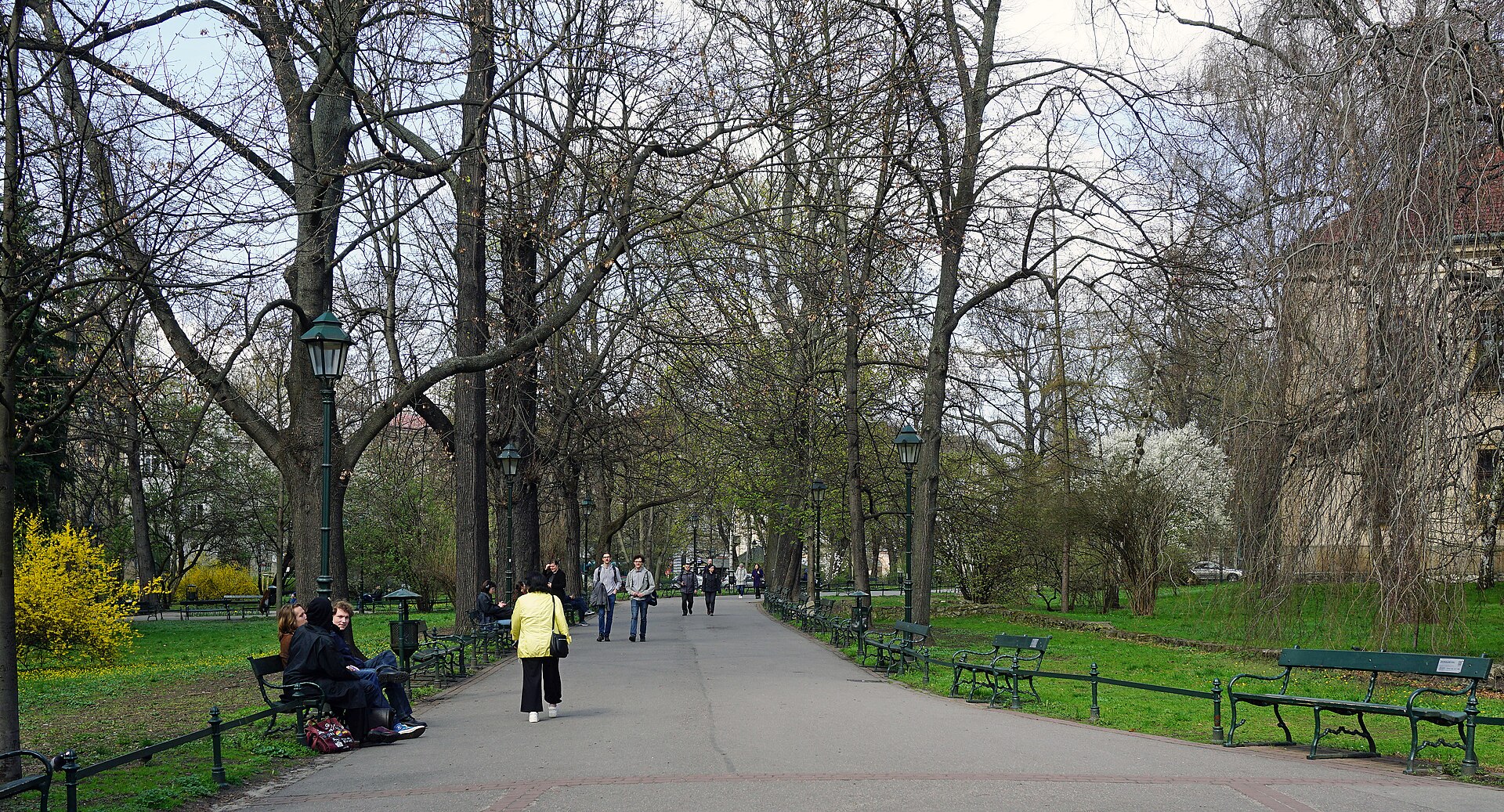
Planty Park
Planty, Kraków
Planty is a ring of green that circles Kraków's Old Town in place of the medieval city walls that were demolished in the early 19th century. The Austrians — who controlled Kraków at the time — tore down the fortifications and planted a 4-kilometre belt of gardens, pathways, and chestnut trees that became one of the most elegant urban parks in Central Europe. The full circuit takes about 45 minutes and passes through a succession of distinct sections — formal gardens with fountains and statues near the university, wilder stretches near the Barbican, and shaded avenues behind the National Museum. Locals use it for everything: morning jogs, lunchtime walks, evening strolls, clandestine park bench drinking, and the specifically Polish activity of walking very slowly while eating ice cream. The Barbican — a 15th-century fortified outpost that once guarded the Floriańska Gate — sits at the northern end of the Planty where the walls once connected it to the old city. It's the best-preserved example of its kind in Europe, a circular brick fortress with 130 loopholes for archers and walls three metres thick. The Floriańska Gate itself still stands, and walking through it from the Planty into the Old Town gives you a visceral sense of entering the medieval city that no amount of reading can replicate.
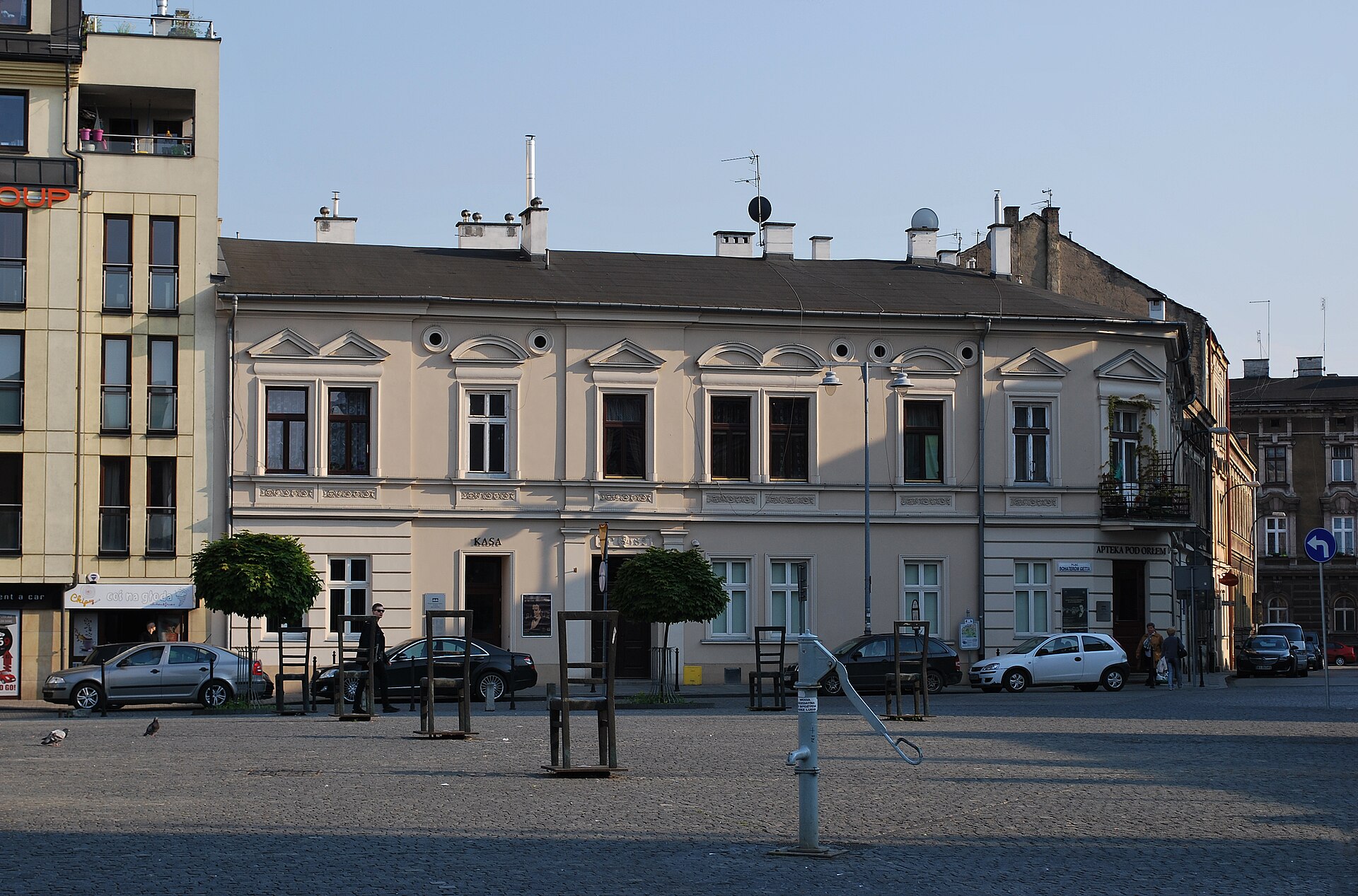
Podgórze & Ghetto Heroes Square
Plac Bohaterów Getta, Kraków
Ghetto Heroes Square is where Kraków confronts its darkest chapter with stark, unforgettable public art. The square, in the Podgórze district south of the river, was the central square of the Jewish ghetto that the Nazis established in March 1941. Today, 70 oversized bronze chairs stand scattered across the empty square — each one representing a thousand of the ghetto's inhabitants. The chairs are vacant. The people are gone. The memorial, designed by Piotr Lewicki and Kazimierz Łatak and installed in 2005, is devastatingly effective in its simplicity. The chairs face in different directions, some alone, some in groups, all empty. At night they're lit from below, casting long shadows across the square. Children sometimes sit on them, which is encouraged — the memorial is meant to be interacted with, not roped off. The contrast between a playing child and the absence the chair represents is part of the point. Podgórze itself is worth exploring beyond the memorial. The Pharmacy Under the Eagle, on the corner of the square, is a museum in the building where Tadeusz Pankiewicz — the only non-Jewish Pole permitted to remain in the ghetto — ran his pharmacy as a front for smuggling food, messages, and false documents to ghetto residents. A fragment of the ghetto wall, built in the shape of Jewish tombstones as a deliberate humiliation, survives on Lwowska Street. And Schindler's factory is a 10-minute walk east.
Podgórze Market Square
Rynek Podgórski, Kraków
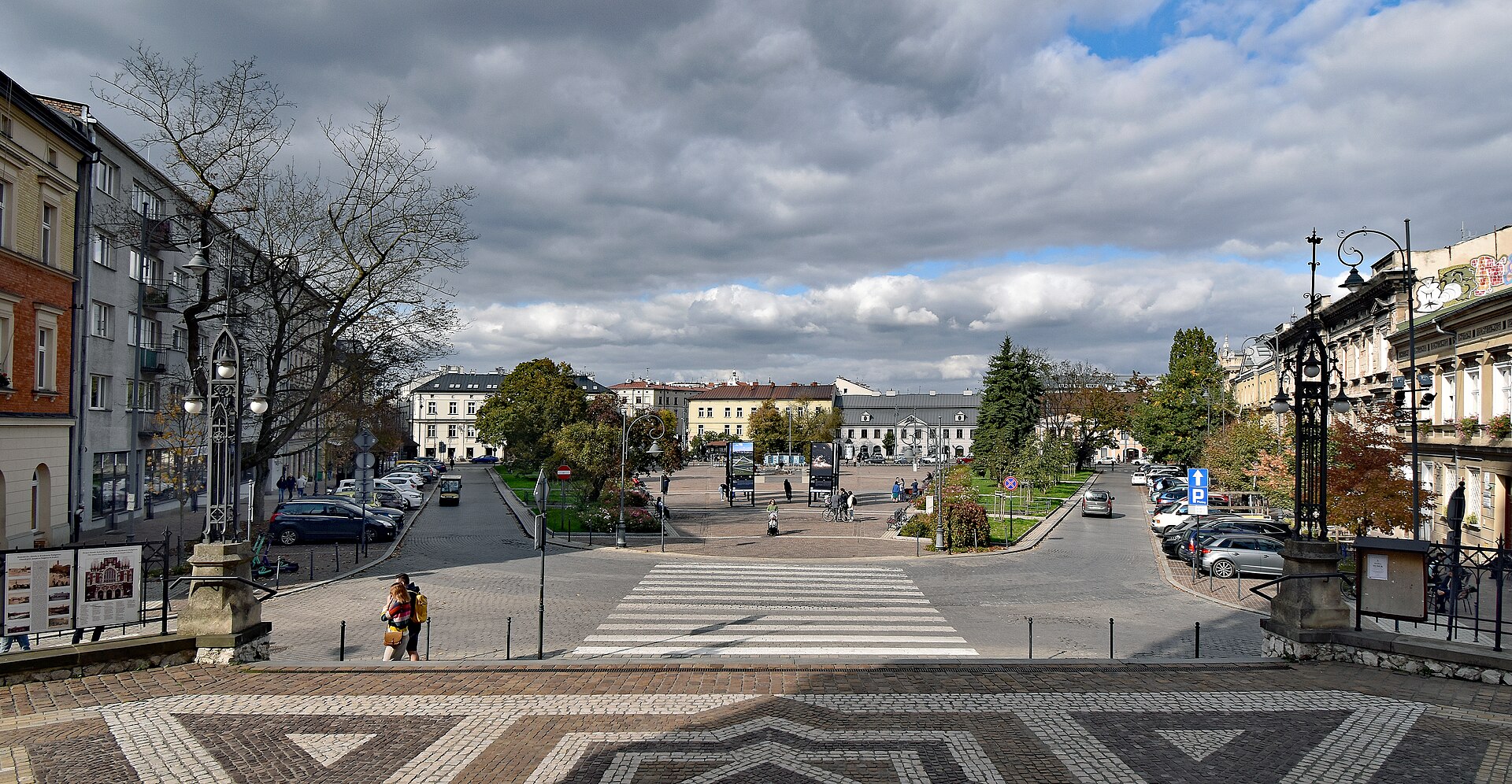
Podgórze's market square is the anti-Rynek Główny — a modest triangular plaza south of the river that most tourists cross without stopping on their way to Schindler's factory. That's their loss. The square has a quiet, neighbourhood charm that the Old Town hasn't possessed for decades, with a daily market selling fruit, flowers, and cheese, a few unpretentious restaurants, and the kind of unhurried atmosphere that lets you drink a coffee without feeling like a transaction. The district of Podgórze was an independent town until 1915, when it was absorbed into Kraków, and it retains a distinct identity — slightly grittier, slightly more real, and increasingly interesting as artists and entrepreneurs move in from the overpriced Old Town. The St Joseph's Church on the square, with its twin Neo-Gothic towers, anchors the space with a solemnity that the fruit sellers and dog walkers cheerfully ignore. Podgórze's darker history is inescapable — this is where the Nazi ghetto was established in 1941, and the Ghetto Heroes Square is a five-minute walk south. But the square itself is about everyday life continuing in a place that has seen the worst and survived. The market vendors, the kids on scooters, the old men playing chess on benches — it's all aggressively, beautifully normal, which in Podgórze counts as a triumph.
Remuh Synagogue & Cemetery
Szeroka 40, Kraków
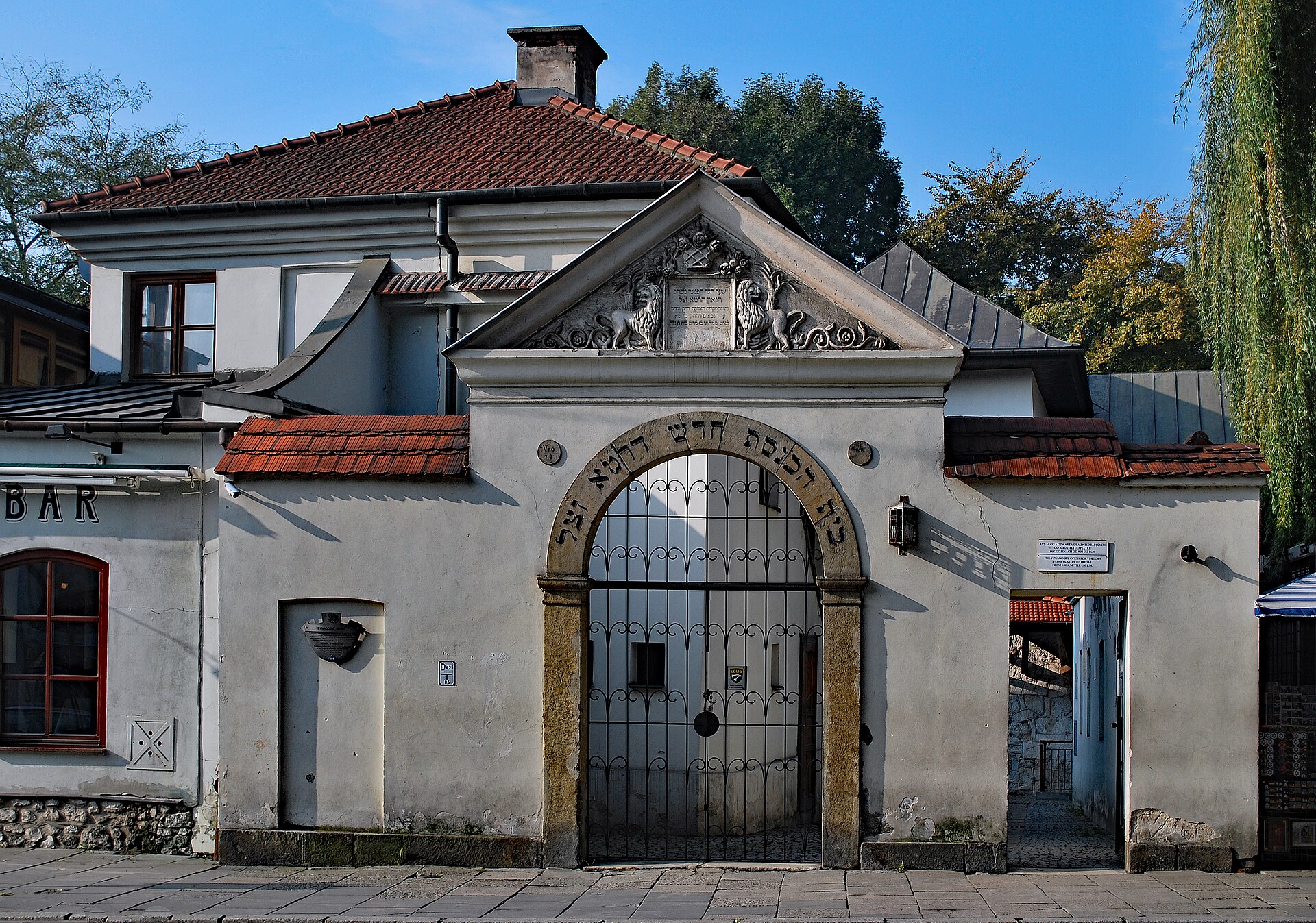
The Remuh Synagogue is the smallest active synagogue in Kraków and one of only two in Kazimierz still holding regular services — a quiet, resilient fact given that this neighbourhood was once home to one of the largest Jewish communities in Europe. Built in 1553 by a wealthy merchant in memory of his son, Rabbi Moses Isserles (known as Remuh), it has survived wars, pogroms, and the Holocaust through a combination of luck, obscurity, and the devotion of the tiny community that remained. The Renaissance-era cemetery behind the synagogue is one of the most important Jewish burial sites in Poland. Many of the tombstones were used as paving material by the Nazis, who destroyed the cemetery systematically. After the war, the recovered fragments were reassembled into a Wailing Wall — a mosaic of broken headstones set into the cemetery's boundary wall, each fragment a piece of a destroyed life. New tombstones were placed where originals could be identified, but many graves remain unmarked. Rabbi Isserles's own tomb, dating to 1572, is a place of pilgrimage — visitors leave small stones and written prayers on the grave in the Jewish tradition. The synagogue interior is intimate and unchanged — wooden benches, a bimah (reading platform) in the centre, whitewashed walls — and attending a Friday evening service here, in a synagogue that by all logic should no longer exist, is one of the most moving experiences Kraków offers.
Rynek Główny (Main Market Square)
Rynek Główny, Kraków
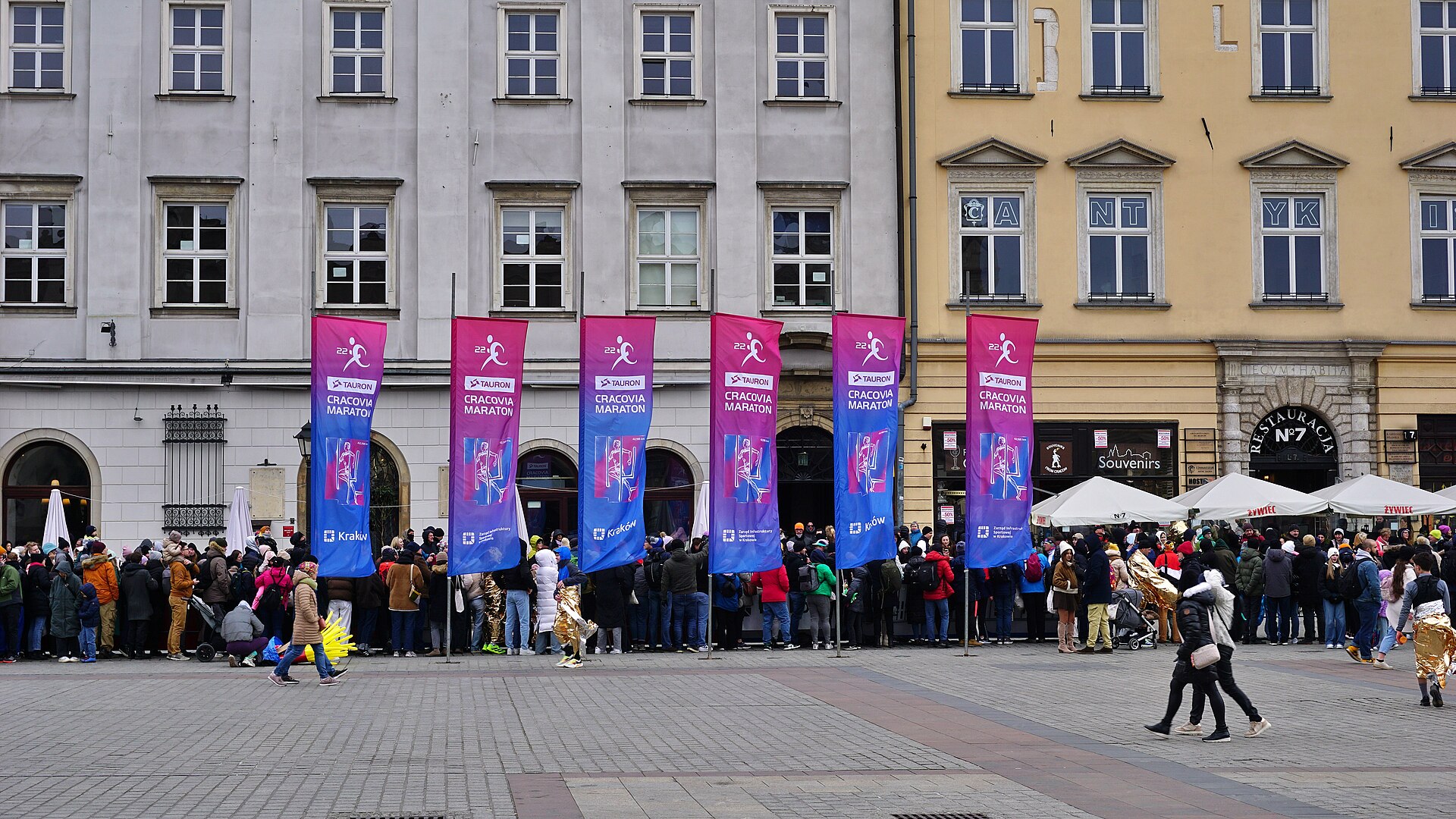
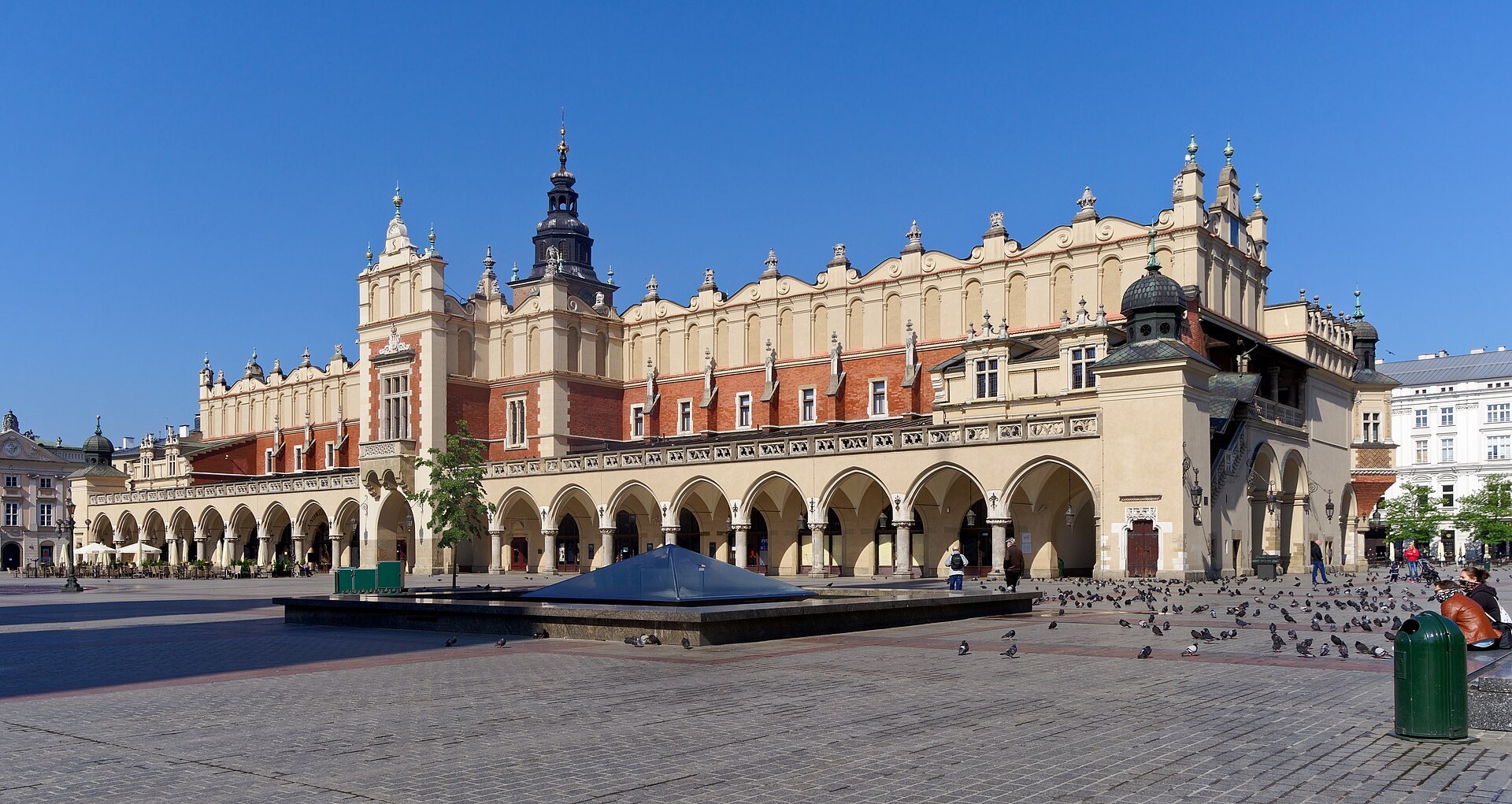
Rynek Główny is the largest medieval town square in Europe — 40,000 square metres of open space ringed by townhouses, churches, and pavement cafés that has been the beating heart of Kraków since the city was laid out on a grid in 1257. Stand in the centre and you're surrounded by 800 years of history doing a very good job of pretending to be a pleasant afternoon. The square was designed as a marketplace, and the Cloth Hall (Sukiennice) that runs down its centre has been fulfilling that role since the 14th century — it's considered the oldest shopping mall in the world, though the souvenir amber and lace on sale today is a slight step down from the medieval cloth trade that made Kraków rich. The hall's Renaissance arcade, rebuilt after a fire in 1555, is gorgeous — arched loggias on the upper floor now house a gallery of 19th-century Polish art. Every hour, a trumpeter plays the Hejnał mariacki from the taller tower of St Mary's Basilica — a five-note melody that cuts off mid-phrase, commemorating a 13th-century watchman who was shot through the throat by a Tatar arrow while sounding the alarm during the Mongol invasion. The tradition has continued unbroken for centuries, and the melody is broadcast live on Polish radio at noon every day. At Christmas, the square hosts one of Europe's most atmospheric markets. In summer, it's a vast outdoor living room where half of Kraków seems to be drinking beer and watching the world pass.
Rynek Underground Museum
Rynek Główny 1, Kraków
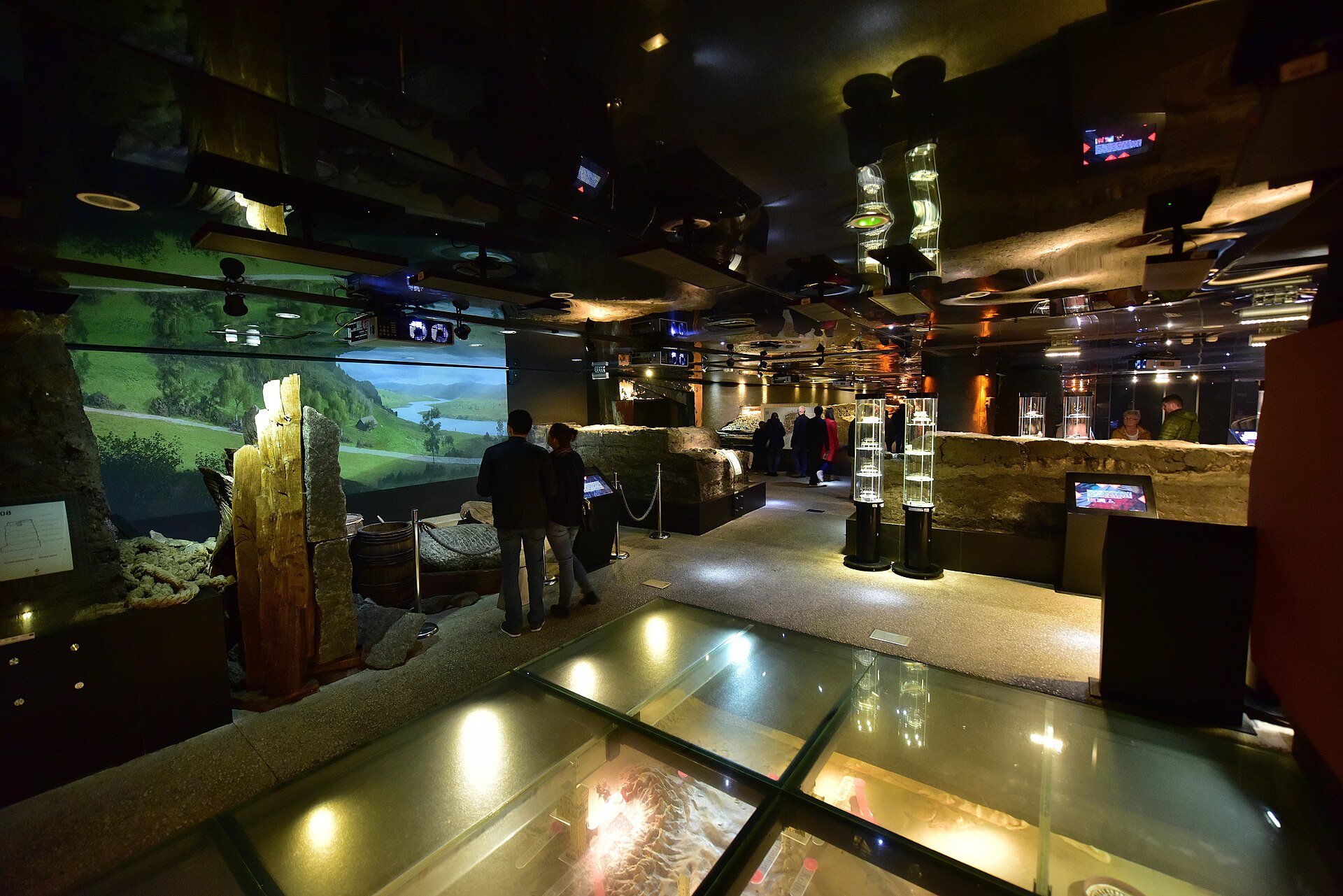
Four metres beneath the Main Market Square lies a medieval city that was accidentally rediscovered in 2005 during renovation work. The Rynek Underground is an archaeological museum built inside the excavation — a 4,000-square-metre space where you walk along the original 11th-century roads, past the foundations of market stalls that were buried when the square was raised and repaved over centuries. The exhibition uses holograms, interactive screens, and atmospheric lighting to bring the medieval market to life without sanitising it. You see the original cobblestones worn smooth by centuries of feet. The foundations of buildings that were demolished in the 1800s. A medieval blacksmith's forge. And the remnants of the goods that passed through — coins, pottery shards, fabric fragments, and the bones of animals slaughtered and sold in a market that was noisier, smellier, and considerably more alive than the tourist-friendly square above. The most remarkable find was a series of perfectly preserved medieval water pipes made from hollowed-out logs — Kraków had a piped water system in the Middle Ages, which most cities didn't achieve until centuries later. The museum is a masterclass in archaeological presentation, and because it's underground with limited capacity, it feels more like a discovery than an exhibition. Book tickets online — it sells out, especially in summer.
Schindler's Factory Museum
Lipowa 4, Kraków
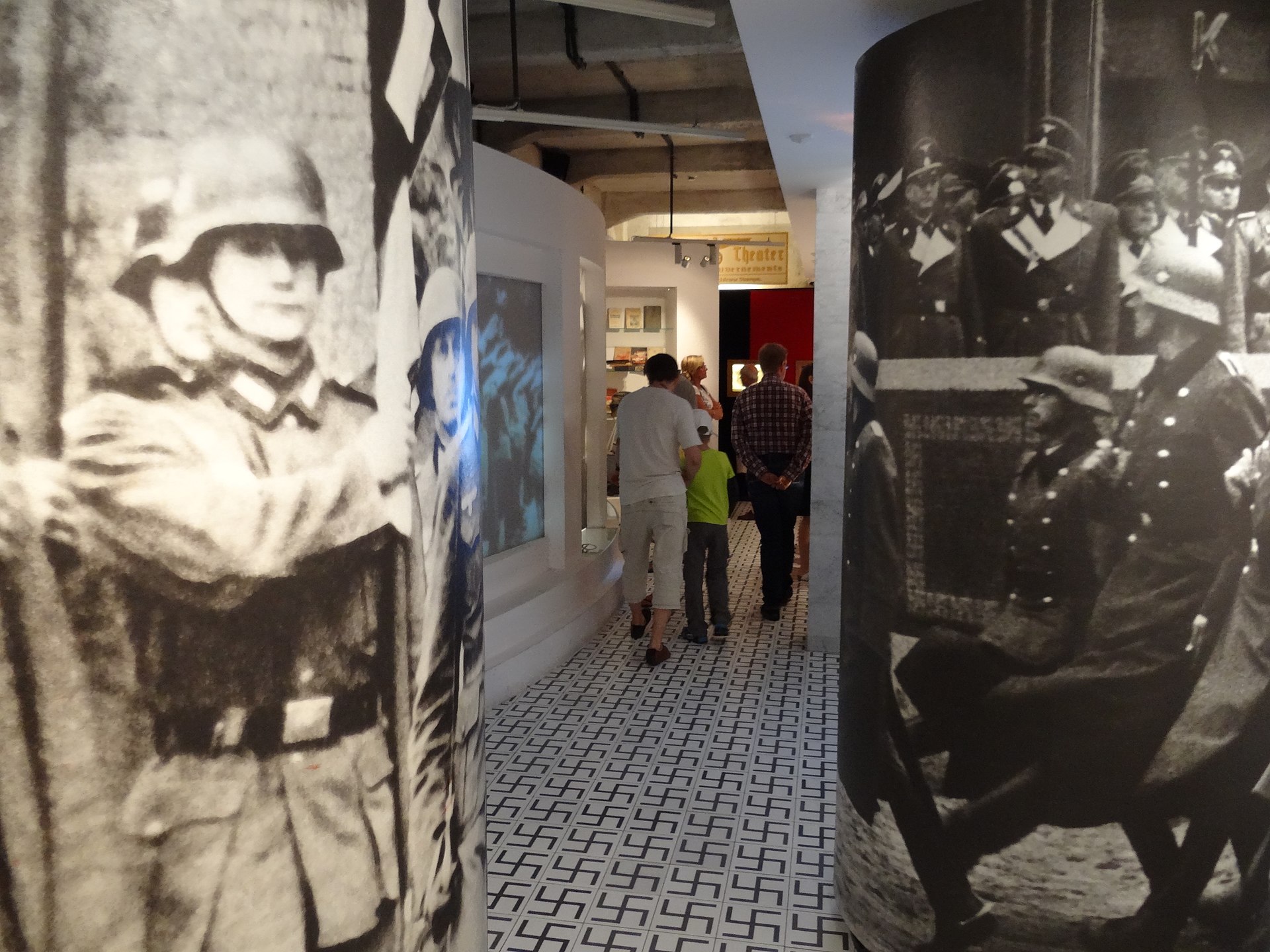
Oskar Schindler's enamelware factory is now one of the most powerful museums in Europe — not because of Schindler himself, but because of the way it tells the story of Kraków under Nazi occupation through the details of ordinary life. The exhibition, called 'Kraków under Nazi Occupation 1939-1945,' uses photographs, documents, film footage, and reconstructed environments to show how a cultured European city was systematically dismantled. You walk through rooms designed to look like a Kraków street, a tram, a photographer's studio, a prison cell. The sound design is extraordinary — radios play wartime broadcasts, boots echo on cobblestones, doors slam. Every room layer peels back another aspect of the occupation: the propaganda, the restrictions, the ghetto, the deportations, the resistance, and Schindler's intervention. The famous list — the names of the 1,200 Jews he employed in his factory to save them from the camps — is displayed in a room of its own. The factory is in the Zabłocie district, across the river from Kazimierz, in an area that was the forced labour zone during the war. The building itself has been preserved with its original floors and industrial character, and the exhibition design — by a team of Polish historians and designers — is considered one of the best museum experiences in the country. Book tickets online in advance; the museum limits visitor numbers to prevent overcrowding, and it sells out regularly.
St Florian's Church
Warszawska 1B, Kraków
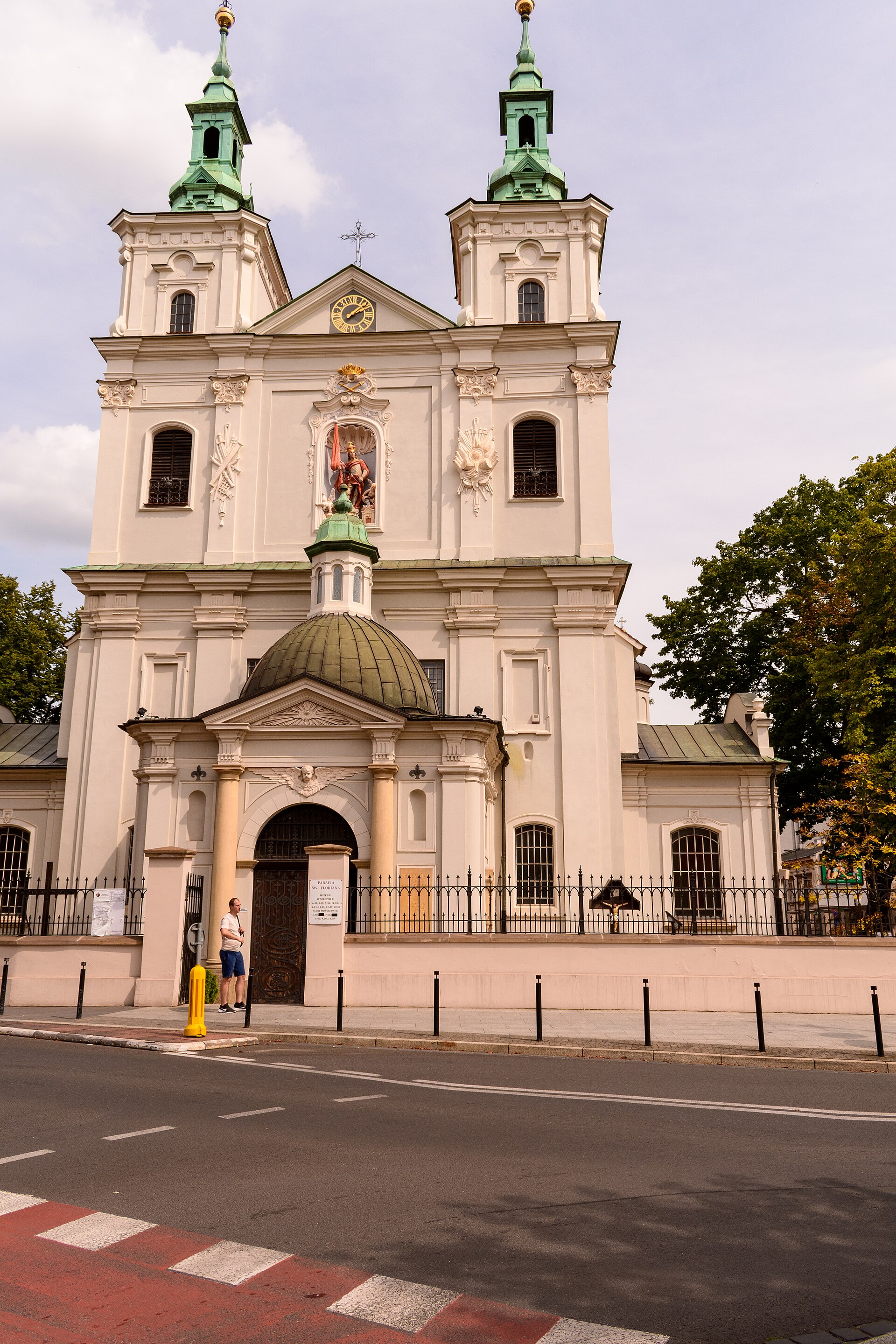
St Florian's Church sits just outside the Old Town walls at the start of the Royal Road — the ceremonial route along which kings processed from the city gate to Wawel Castle for their coronation. It's an elegant Baroque church that would be famous in any other city but gets overshadowed in Kraków by the Gothic and Renaissance heavyweights inside the walls. The church's modern significance comes from a young priest named Karol Wojtyła — the future Pope John Paul II — who served here as a vicar in 1949. The connection is commemorated inside, and elderly parishioners still remember his sermons. When Wojtyła became pope in 1978, St Florian's went from a pleasant neighbourhood church to a pilgrimage site, and the steady stream of Polish visitors lighting candles and saying prayers adds a layer of living devotion to the architectural interest. The church has been rebuilt multiple times after fires and invasions — the current Baroque exterior dates to the 17th century, but the site has been sacred since at least 1185. The Matejko Square in front of it, named after the painter Jan Matejko who lived nearby, hosts the Barbican at one end and provides a useful orientation point between the Old Town and the Kleparz neighbourhood to the north.
St Mary's Basilica
Plac Mariacki 5, Kraków
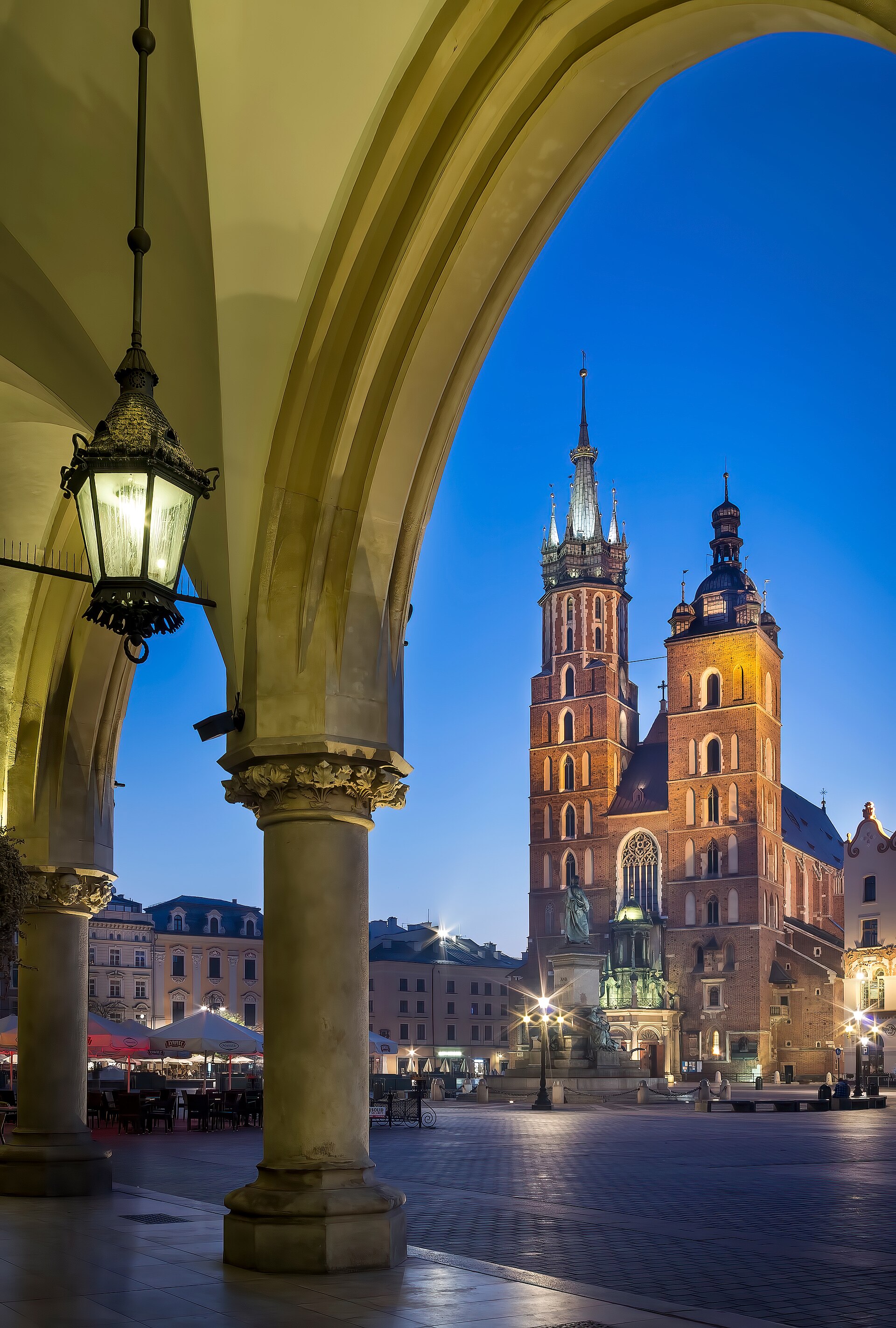
St Mary's Basilica dominates the Main Square with two mismatched towers — one 81 metres tall, the other 69 — which, according to legend, were built by two brothers in competition. The taller brother killed the shorter one and then, overcome with guilt, threw himself from his tower. The knife he used is supposedly hanging in the Cloth Hall as a warning. Whether any of this is true is beside the point — the towers are magnificent, and the asymmetry gives the church a personality that symmetrical buildings lack. The interior is one of the most extraordinary church spaces in Central Europe. Every surface is painted — walls, ceiling, columns — in a polychrome scheme of blue, red, and gold that was restored to its medieval intensity by Jan Matejko in the 1890s. The effect is overwhelming, like walking into a jewelled box. But the centrepiece is the altarpiece — Veit Stoss's masterwork, carved between 1477 and 1489 from linden wood. At 13 metres tall and 11 metres wide when open, it's the largest Gothic altarpiece in the world. The central panel depicts the Dormition of the Virgin in figures so expressive that you can read individual emotions on faces carved over 500 years ago. The altarpiece opens at noon every day in a ceremony that draws crowds — the wooden wings swing apart to reveal the painted interior panels, and the carved figures seem to emerge from the wood. Veit Stoss spent 12 years on the piece, and when the Nazis looted it during World War II, Poles dismantled and hid the individual figures before the Germans could ship the whole thing to Nuremberg. It was recovered after the war and restored to the basilica in 1957.
Stary Kleparz Market
Rynek Kleparski, Kraków
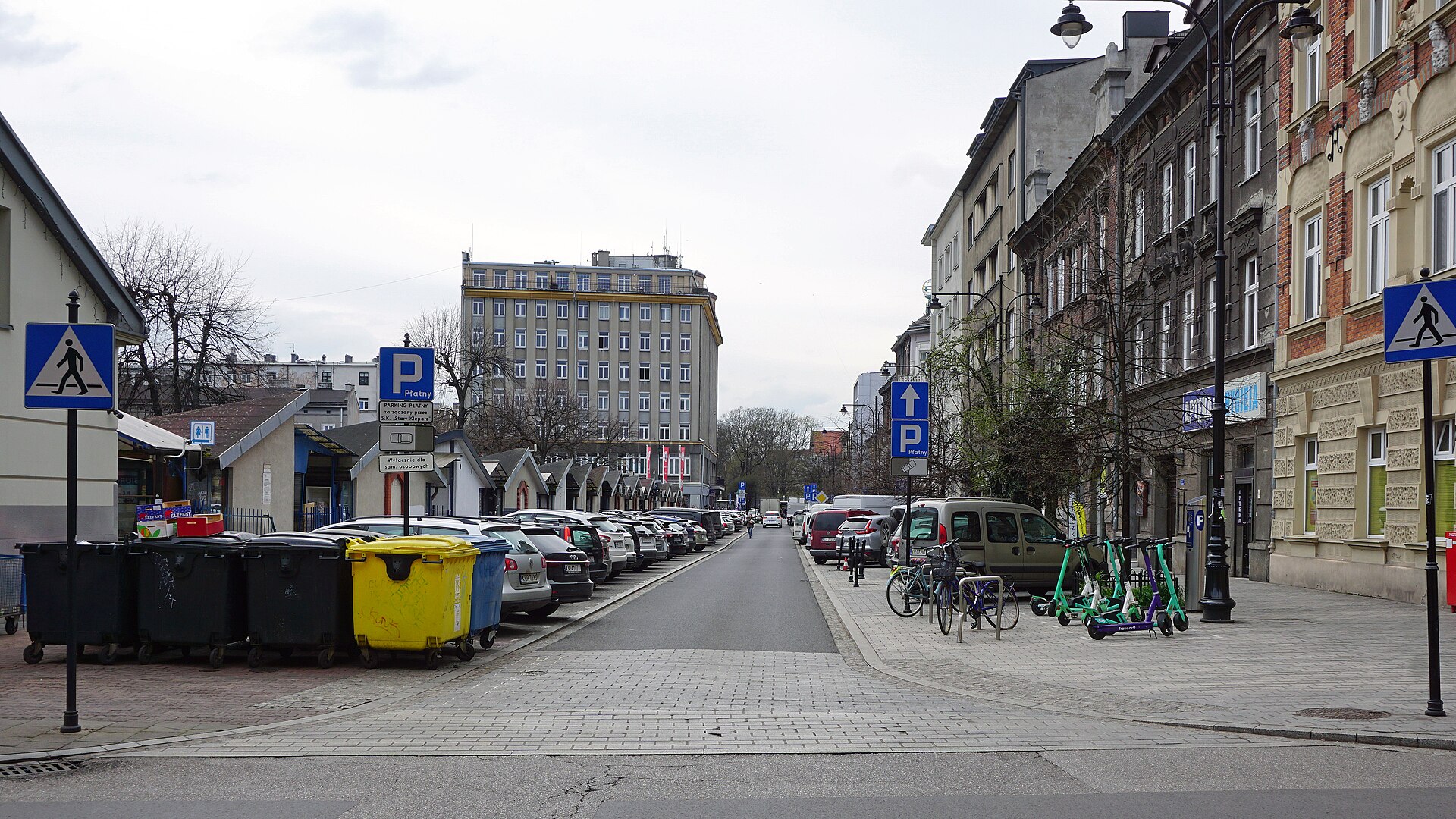
Stary Kleparz is the market where Kraków actually shops — not the Cloth Hall with its tourist amber, but a proper open-air produce market that's been operating since 1903 and feels like it hasn't changed much since. Stalls under green canvas awnings sell seasonal fruit and vegetables, wheels of oscypek (smoked sheep's cheese from the Tatra Mountains), fresh bread, sausages, pickles, and flowers in quantities that suggest Kraków's grandmothers still cook for armies. The market is just north of the Old Town, through the Barbican and across the Planty, in an area that was once the separate town of Kleparz before Kraków absorbed it. The vendors are mostly women of a certain age who will tell you exactly which tomato to buy and give you a look of deep disappointment if you try to pick your own. The cheese section is the highlight — oscypek comes in spindle-shaped smoked forms and is traditionally made by shepherds in the mountains using unpasteurised sheep's milk. It's sold grilled with cranberry sauce from carts throughout Kraków, but the market is where the serious versions live. Come on Saturday morning when the market is fullest and the surrounding streets fill with overflow stalls selling everything from honey to handmade brooms. It's a five-minute walk from the Main Square but it feels like a different city — unhurried, unglamorous, and completely authentic.
Sukiennice (Cloth Hall)
Rynek Główny 1/3, Kraków
The Cloth Hall is a Renaissance arcade sitting in the dead centre of Europe's largest medieval square, and it's been operating as a marketplace since the 14th century — which arguably makes it the world's oldest shopping mall, though the comparison does it a disservice. The current building dates from a 1555 reconstruction after a fire, and its arched loggias, grotesque masks, and decorative parapets are a masterclass in Polish Renaissance style. The ground floor is still a market, though the cloth merchants who gave it its name have been replaced by stalls selling amber jewellery, wooden chess sets, embroidered tablecloths, and leather goods. The quality varies, but the experience of buying souvenirs inside a 500-year-old trading hall beats any shopping mall. Haggling is not traditional here — the prices are the prices — but the vendors are friendly and most speak enough English to guide you through the amber grades. The upper floor, reached by a staircase at the eastern end, houses a branch of the National Museum — the Gallery of 19th-Century Polish Art. The collection includes some of Poland's most important paintings, including Józef Chełmoński's 'Four-in-Hand' and Henryk Siemiradzki's enormous 'Nero's Torches.' The gallery is uncrowded, reasonably priced, and offers views of the square from the upper arcade windows that alone justify the climb.
Vistula River Boulevards
Bulwar Czerwieński, Kraków
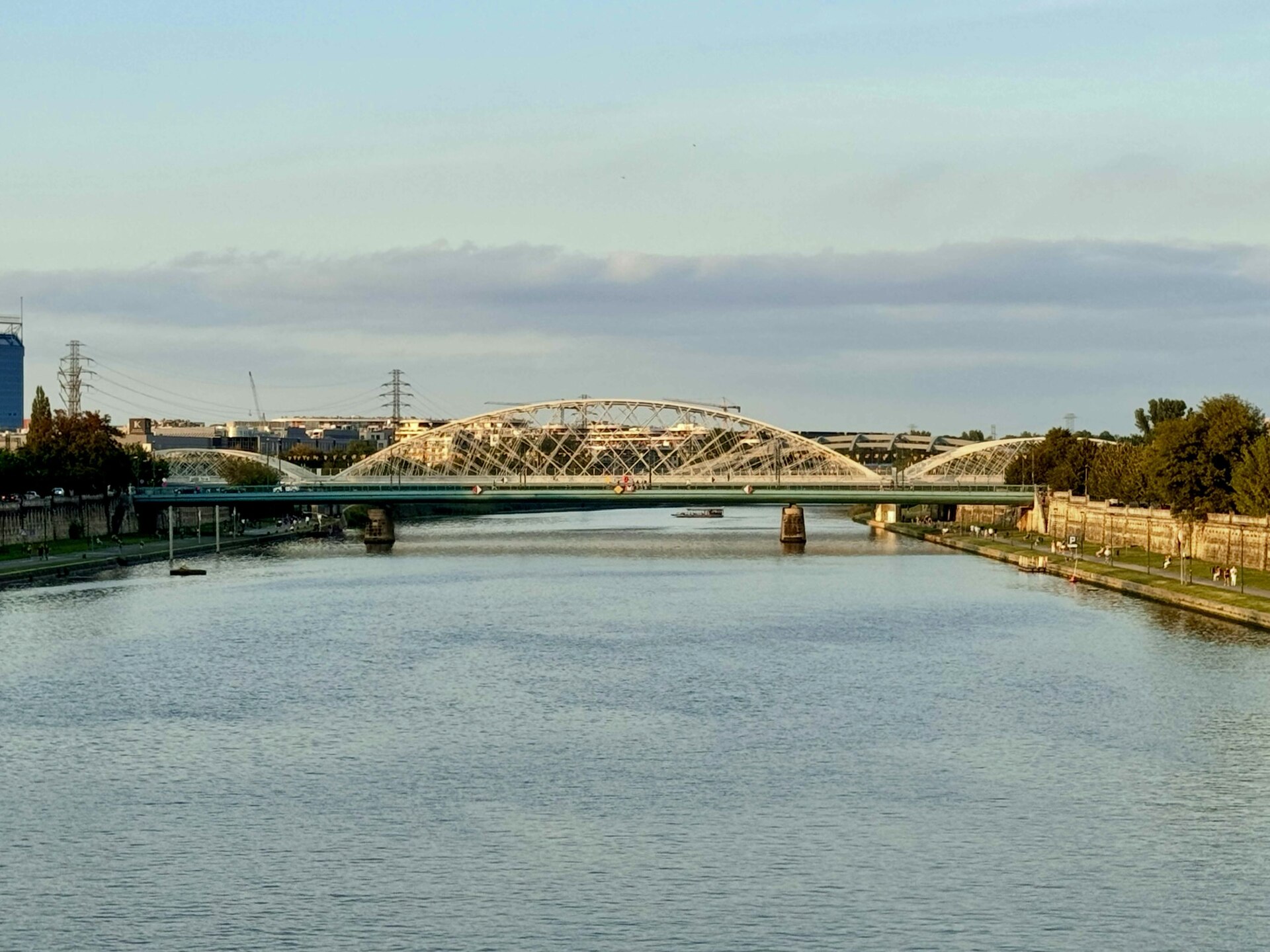
The Vistula boulevards are where Kraków relaxes — a long stretch of riverside promenades, lawns, and cycling paths that run beneath Wawel Castle and along both banks of the river. Renovated and extended over the past decade, the boulevards have become the city's outdoor living room, especially in summer when every patch of grass fills with sunbathers, picnickers, and people drinking beer with a view of the castle reflected in the river. The north bank beneath Wawel is the most scenic stretch — you walk at water level with the castle walls rising above you, the Pauline Church on the opposite bank, and the graceful curve of the river disappearing under bridges. Floating barges moored along the bank have been converted into bars, restaurants, and even a nightclub, creating a party strip that's at its best on warm summer evenings when the entire length of the riverbank pulses with music and conversation. The south bank is quieter and more residential, with a cycling path that runs uninterrupted for several kilometres. The best views of Wawel are from the south bank at sunset, when the castle catches the last light and the river turns copper. In winter, the boulevards empty and the river occasionally freezes at the edges, which gives the whole scene a different kind of beauty — quiet, cold, and very Polish.
Wawel Cathedral
Wawel 3, Kraków
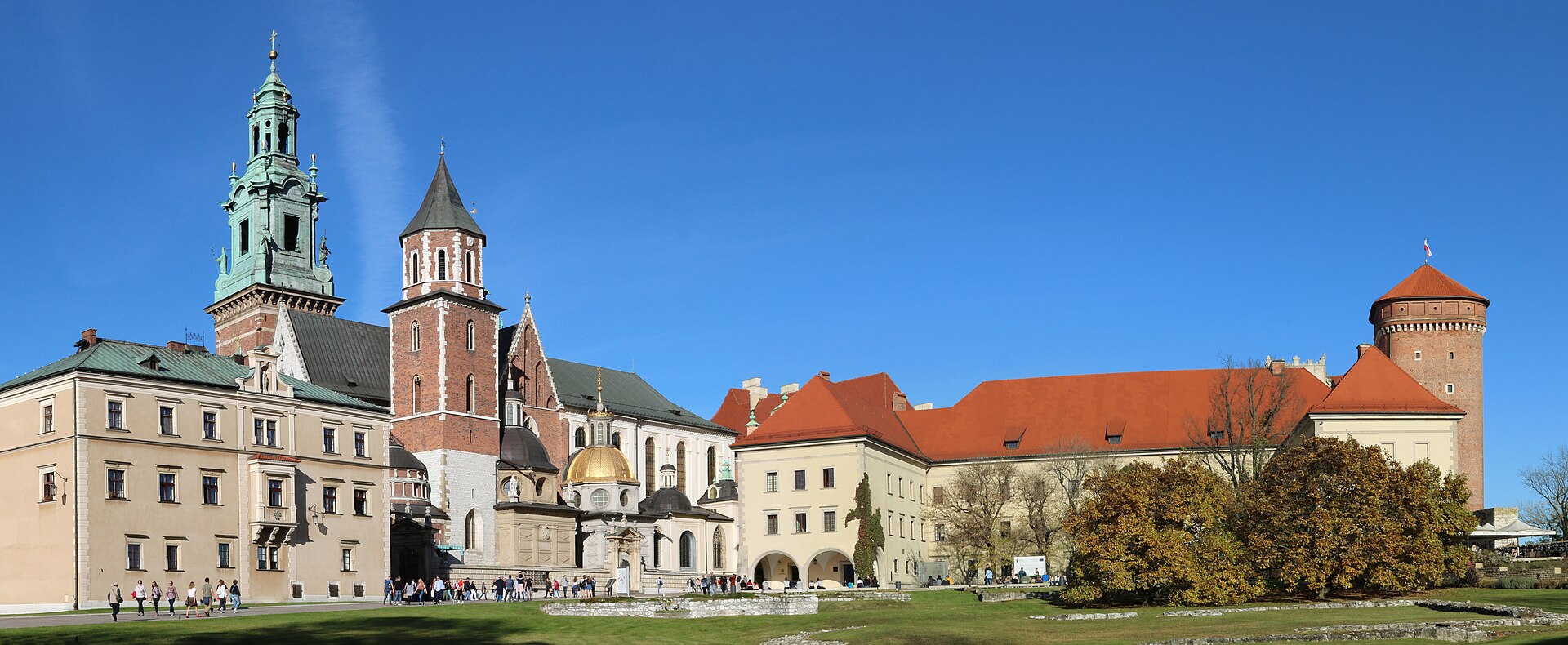
Wawel Cathedral is where Poland crowns its kings and buries its heroes — and the list of people interred here reads like a complete history of the nation. Kings, queens, poets, military commanders, and two presidents rest in the crypts beneath a building that has been Poland's most important church since the 14th century. The cathedral is a palimpsest of architectural styles — Romanesque foundations, Gothic vaults, Renaissance chapels, Baroque additions — that somehow cohere into a building of immense presence. The Sigismund Chapel, built in the 1530s with a golden dome, is considered the finest example of Renaissance architecture north of the Alps. The Sigismund Bell, cast in 1520 and weighing 11 tonnes, hangs in the cathedral tower and is rung only on occasions of national significance — papal visits, independence day, and national tragedies. The crypts are the emotional core. You descend narrow stairs to find the sarcophagi of medieval kings alongside the tomb of Marshal Józef Piłsudski — the father of modern Polish independence — and the coffins of President Lech Kaczyński and his wife, killed in the 2010 Smolensk air disaster. The poet Adam Mickiewicz and the national hero Tadeusz Kościuszko are here too. It's less a church than a national shrine, and Polish visitors treat it with a reverence that transcends religion.
Wawel Dragon's Den
Wawel 5, Kraków
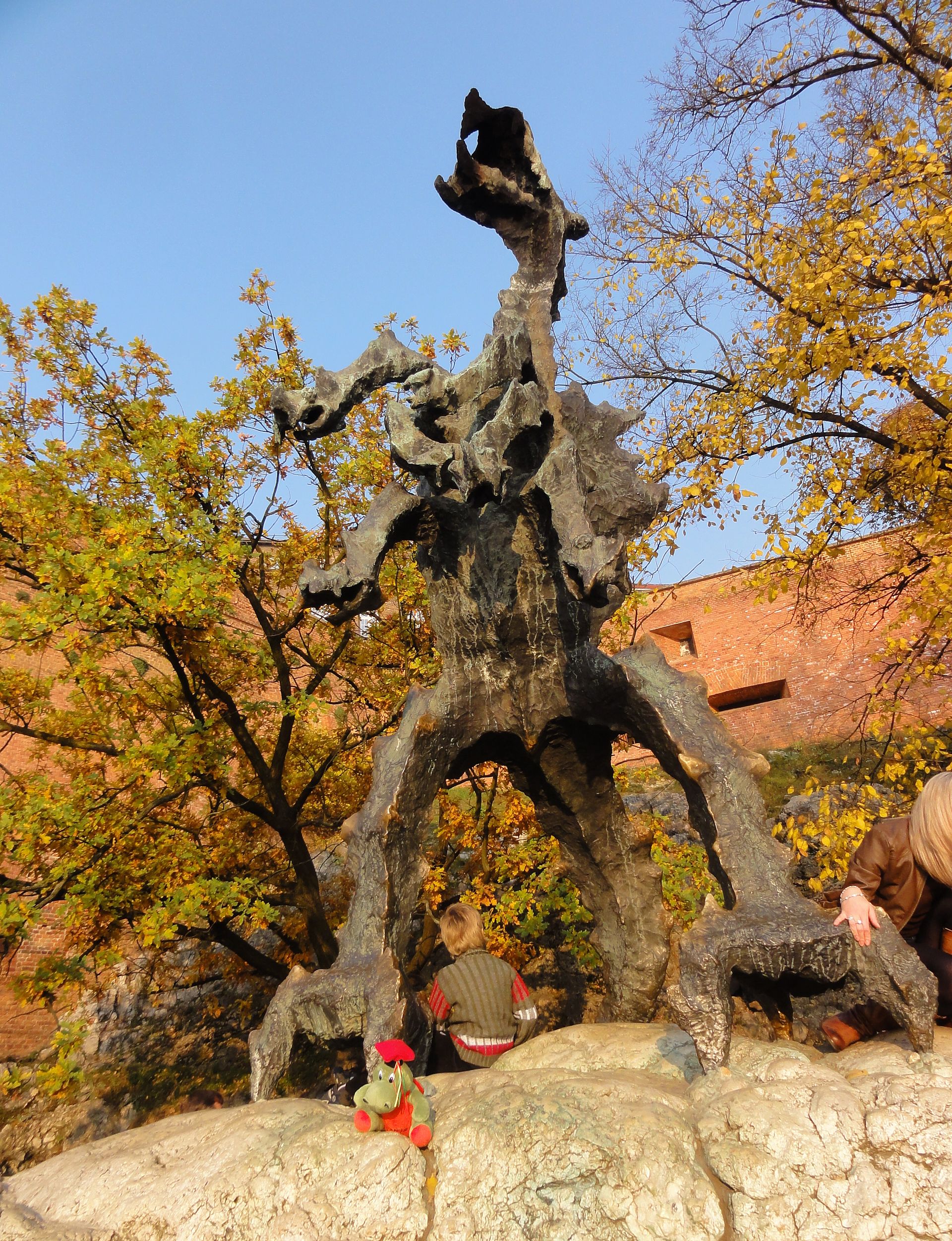
Beneath Wawel Castle, a limestone cave plunges 15 metres through the rock to emerge at the riverbank — and this, according to legend, is where the Wawel Dragon lived. The story goes that a terrible dragon terrorised medieval Kraków, devouring livestock and the occasional maiden, until a clever cobbler named Skuba fed it a sheep stuffed with sulphur. The dragon drank so much Vistula water to cool the burning in its belly that it exploded. The cave is genuinely old — geological evidence suggests it's been a natural formation for millions of years, and archaeological finds indicate human habitation dating back 50,000 years. It was used as an inn, a brothel, and a storage space before being turned into a tourist attraction. The descent through the cave takes about 10 minutes via 135 spiral steps cut into the rock, and the chambers — while not vast — are atmospheric enough to make the dragon story feel plausible. You emerge blinking into sunlight on the Vistula riverbank, where a bronze dragon sculpture by Bronisław Chromy breathes real fire every few minutes (fuelled by natural gas). Children love it. Adults take photos. The fire is triggered by sending a text message to a specific number, which is the most 21st-century detail in a story that dates to the 12th century. The cave is only open in summer and costs a few złoty — enter from Wawel Hill and exit at the river.
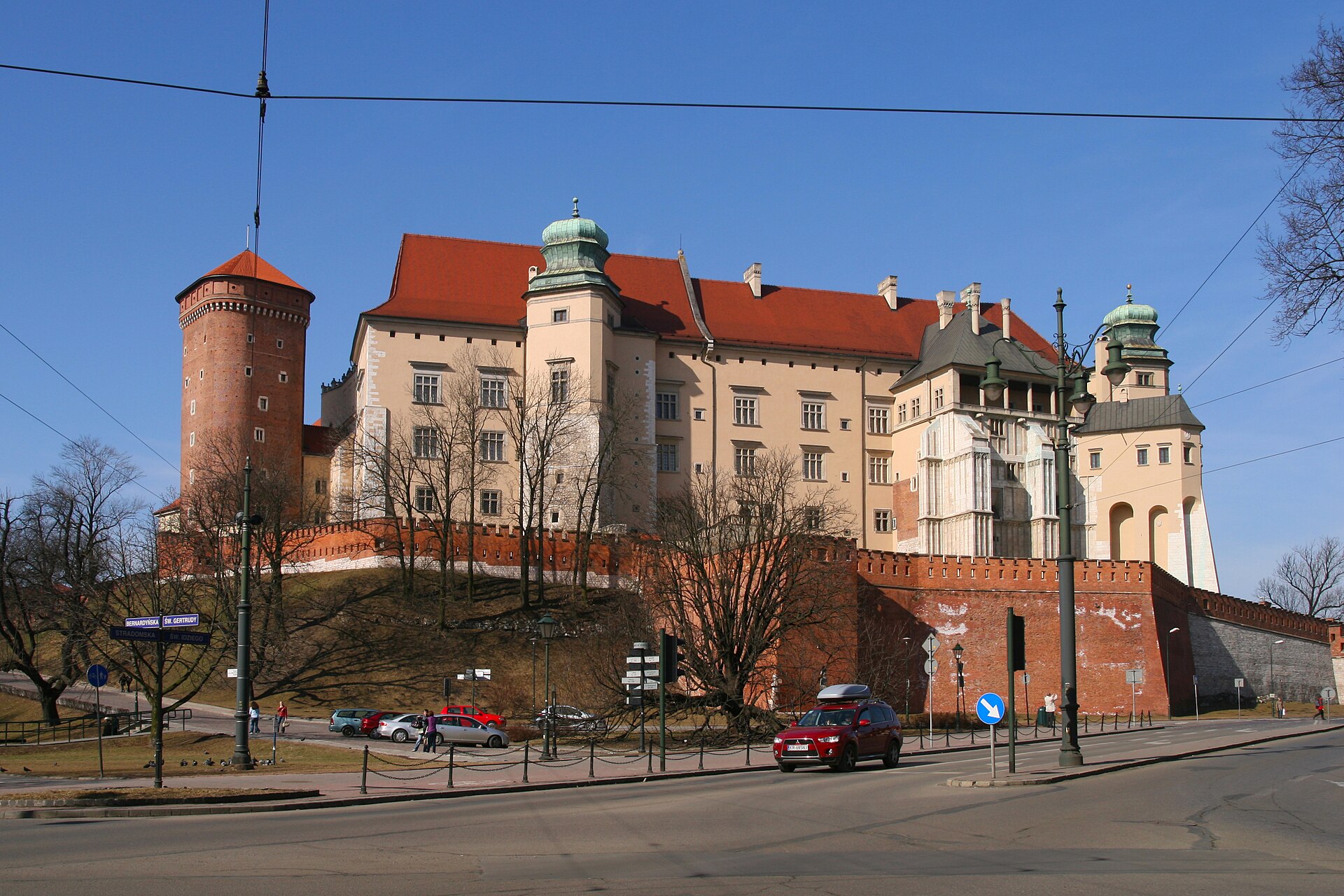
Wawel Royal Castle
Wawel 5, Kraków
Wawel Castle sits on a limestone hill above the Vistula River and has been the seat of Polish power since the 11th century. Kings were crowned here, ruled here, and are buried in the cathedral next door. When Poland's capital moved to Warsaw in 1596, Wawel didn't lose its significance — it gained mystique. This is where Poles come to feel Polish. The castle is actually a complex of buildings spanning nearly a thousand years of architecture — Romanesque foundations, Gothic towers, a stunning Renaissance courtyard added by Italian architects in the 16th century that makes you feel like you've been teleported to Florence. The State Rooms contain one of Europe's finest collections of Flemish tapestries — 136 pieces commissioned by King Sigismund Augustus in the 16th century, each one the size of a wall and depicting biblical scenes with the kind of detail that took teams of weavers years to complete. The most mysterious thing on Wawel Hill is the Smok Wawelski — the Wawel Dragon. According to legend, a dragon lived in a cave beneath the castle and terrorised the city until a clever cobbler fed it a sheep stuffed with sulphur, causing it to drink so much water from the Vistula that it exploded. The dragon's cave is open to visitors (you exit at the riverbank), and a metal dragon sculpture by the entrance breathes actual fire every few minutes, which delights children and alarms pigeons in equal measure.
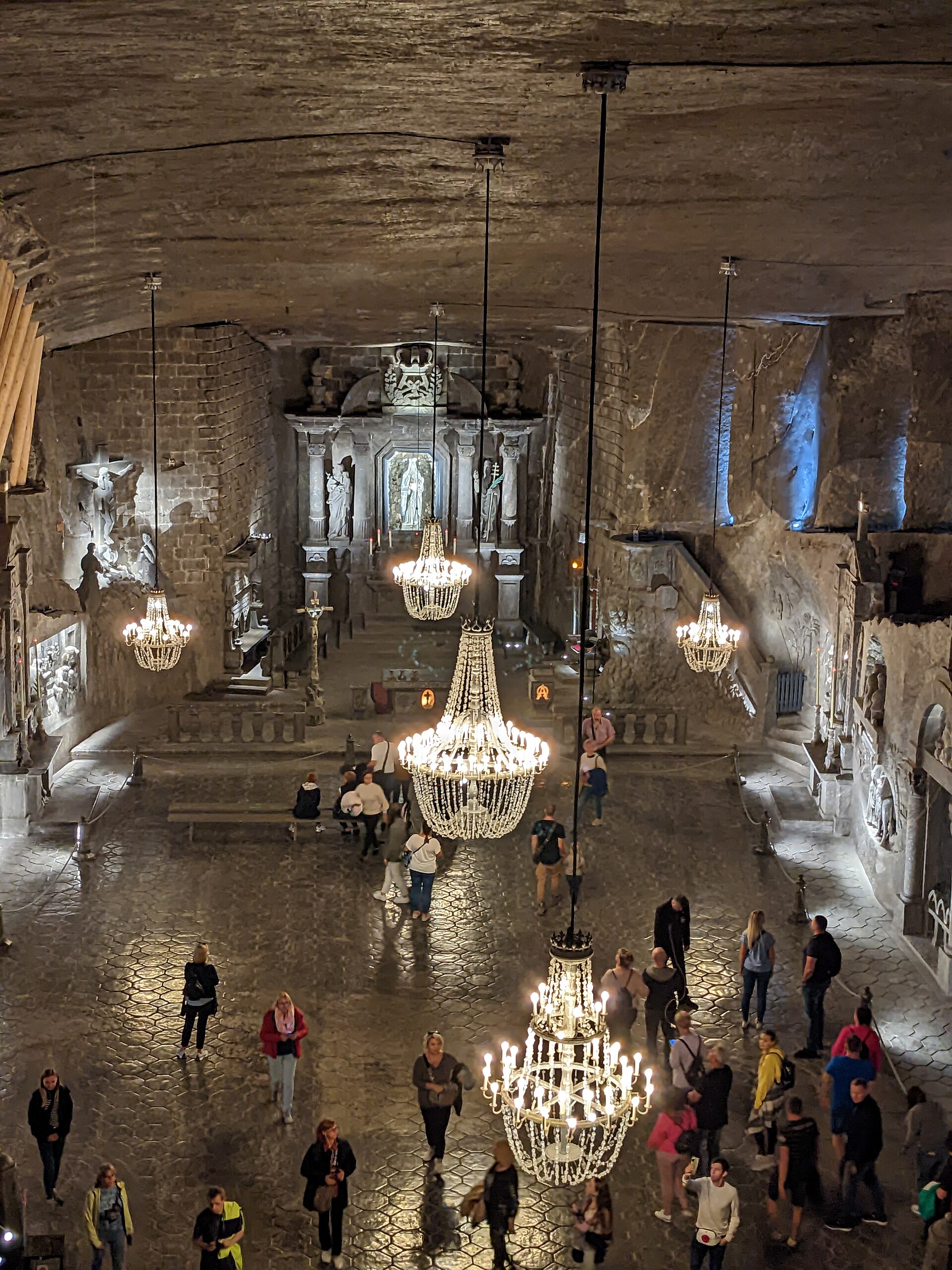
Wieliczka Salt Mine
Daniłowicza 10, Wieliczka
Wieliczka is what happens when miners spend 700 years underground and get bored. This UNESCO World Heritage salt mine, 14 kilometres from Kraków, has been in continuous operation since the 13th century, and over the centuries the miners carved the salt into an underground cathedral, complete with chandeliers, altarpieces, statues, and an entire chapel — all made from rock salt. The Chapel of St. Kinga, 101 metres below the surface, is the centrepiece. It's the size of a large church, entirely carved from salt — the floor, walls, ceiling, and even the chandeliers (which are made of salt crystals dissolved and reconstituted into translucent forms). The bas-relief scenes on the walls include a salt version of The Last Supper and a salt Nativity scene. Miners carved it over 67 years between 1895 and 1963, working in their spare time as an act of devotion that doubles as the most impressive hobby project in history. The tourist route covers about 3.5 kilometres over 3 hours, descending 135 metres through chambers connected by wooden staircases and tunnels. The mine extends much further — over 300 kilometres of passages on nine levels — but most of it is off-limits. The temperature underground is a constant 14°C regardless of the season, so bring a layer. The most surreal moment is when the guide turns off the lights in one of the deeper chambers and you experience total darkness — the kind your eyes never adjust to, the kind that miners worked in for centuries with nothing but a candle.