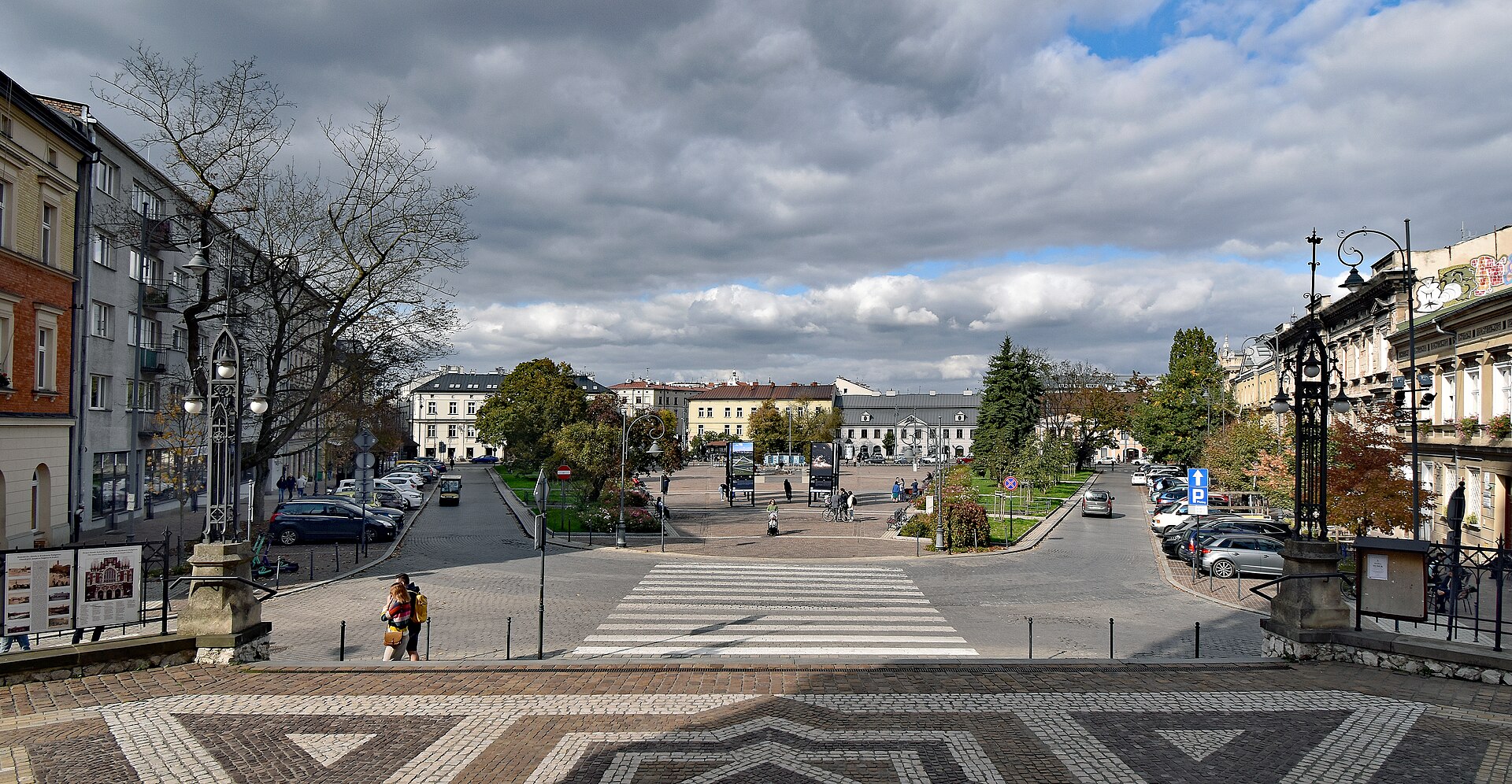
Podgórze's market square is the anti-Rynek Główny — a modest triangular plaza south of the river that most tourists cross without stopping on their way to Schindler's factory. That's their loss. The square has a quiet, neighbourhood charm that the Old Town hasn't possessed for decades, with a daily market selling fruit, flowers, and cheese, a few unpretentious restaurants, and the kind of unhurried atmosphere that lets you drink a coffee without feeling like a transaction.
The district of Podgórze was an independent town until 1915, when it was absorbed into Kraków, and it retains a distinct identity — slightly grittier, slightly more real, and increasingly interesting as artists and entrepreneurs move in from the overpriced Old Town. The St Joseph's Church on the square, with its twin Neo-Gothic towers, anchors the space with a solemnity that the fruit sellers and dog walkers cheerfully ignore.
Podgórze's darker history is inescapable — this is where the Nazi ghetto was established in 1941, and the Ghetto Heroes Square is a five-minute walk south. But the square itself is about everyday life continuing in a place that has seen the worst and survived. The market vendors, the kids on scooters, the old men playing chess on benches — it's all aggressively, beautifully normal, which in Podgórze counts as a triumph.
Verified Facts
Podgórze was an independent town until it was absorbed by Kraków in 1915
The Nazi ghetto was established in the Podgórze district in 1941
St Joseph's Church features twin Neo-Gothic towers
Get walking directions
Rynek Podgórski, Kraków