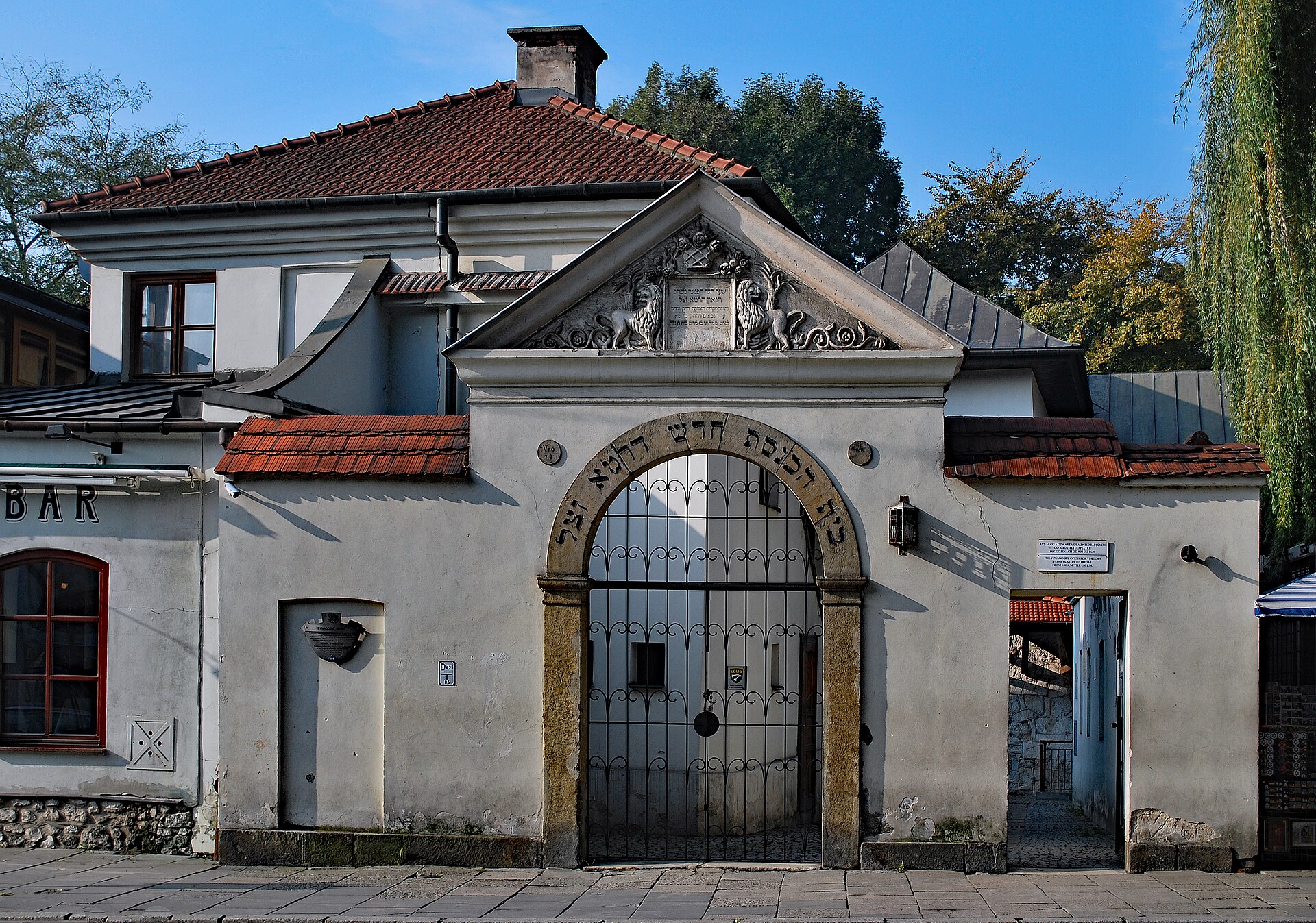
The Remuh Synagogue is the smallest active synagogue in Kraków and one of only two in Kazimierz still holding regular services — a quiet, resilient fact given that this neighbourhood was once home to one of the largest Jewish communities in Europe. Built in 1553 by a wealthy merchant in memory of his son, Rabbi Moses Isserles (known as Remuh), it has survived wars, pogroms, and the Holocaust through a combination of luck, obscurity, and the devotion of the tiny community that remained.
The Renaissance-era cemetery behind the synagogue is one of the most important Jewish burial sites in Poland. Many of the tombstones were used as paving material by the Nazis, who destroyed the cemetery systematically. After the war, the recovered fragments were reassembled into a Wailing Wall — a mosaic of broken headstones set into the cemetery's boundary wall, each fragment a piece of a destroyed life. New tombstones were placed where originals could be identified, but many graves remain unmarked.
Rabbi Isserles's own tomb, dating to 1572, is a place of pilgrimage — visitors leave small stones and written prayers on the grave in the Jewish tradition. The synagogue interior is intimate and unchanged — wooden benches, a bimah (reading platform) in the centre, whitewashed walls — and attending a Friday evening service here, in a synagogue that by all logic should no longer exist, is one of the most moving experiences Kraków offers.
Verified Facts
The Remuh Synagogue was built in 1553
Rabbi Moses Isserles (Remuh) died in 1572 and is buried in the adjacent cemetery
Nazi forces used tombstones as paving material during the occupation
Recovered fragments were assembled into a Wailing Wall after the war
Get walking directions
Szeroka 40, Kraków