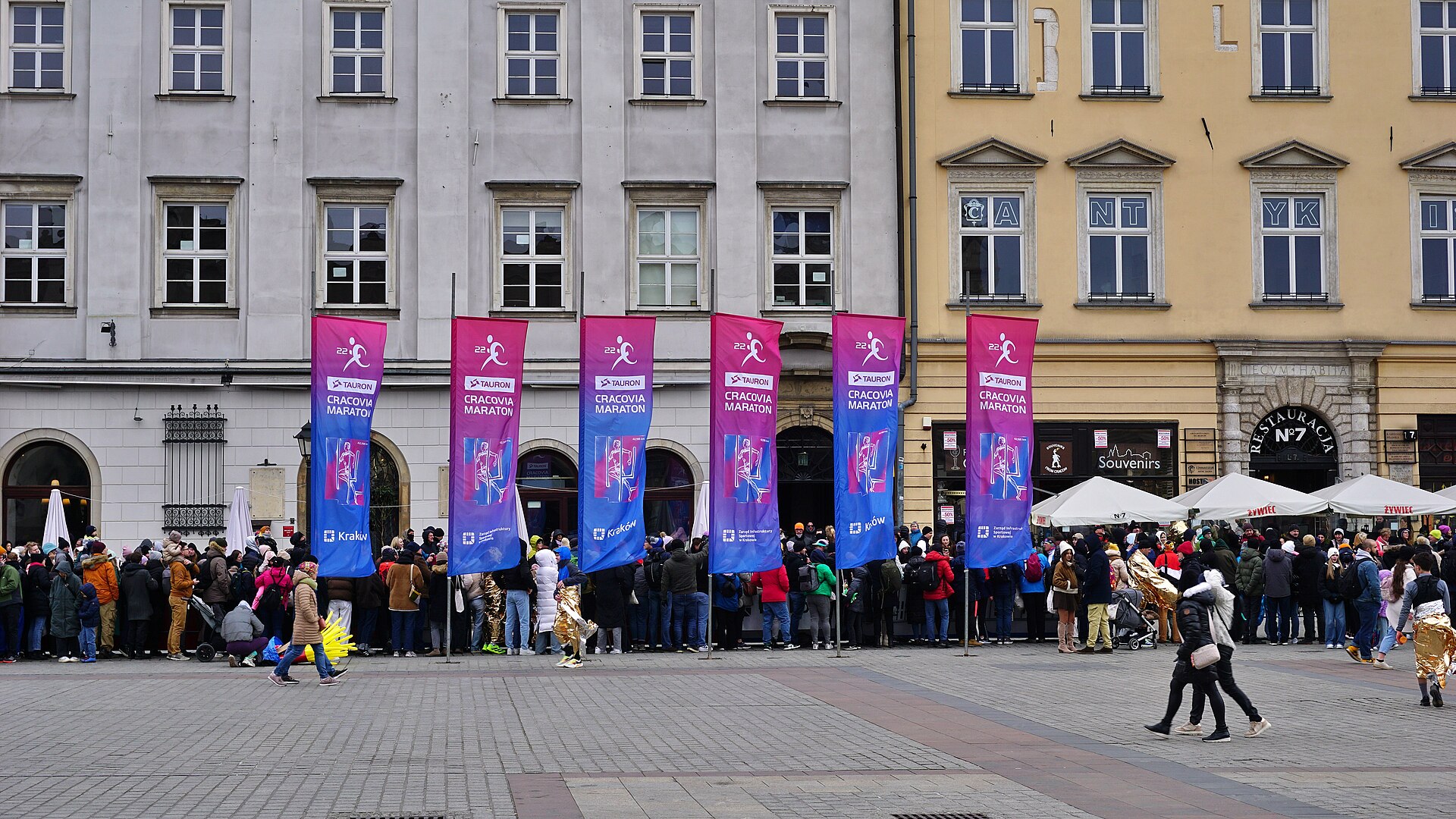
Rynek Główny is the largest medieval town square in Europe — 40,000 square metres of open space ringed by townhouses, churches, and pavement cafés that has been the beating heart of Kraków since the city was laid out on a grid in 1257. Stand in the centre and you're surrounded by 800 years of history doing a very good job of pretending to be a pleasant afternoon.
The square was designed as a marketplace, and the Cloth Hall (Sukiennice) that runs down its centre has been fulfilling that role since the 14th century — it's considered the oldest shopping mall in the world, though the souvenir amber and lace on sale today is a slight step down from the medieval cloth trade that made Kraków rich. The hall's Renaissance arcade, rebuilt after a fire in 1555, is gorgeous — arched loggias on the upper floor now house a gallery of 19th-century Polish art.
Every hour, a trumpeter plays the Hejnał mariacki from the taller tower of St Mary's Basilica — a five-note melody that cuts off mid-phrase, commemorating a 13th-century watchman who was shot through the throat by a Tatar arrow while sounding the alarm during the Mongol invasion. The tradition has continued unbroken for centuries, and the melody is broadcast live on Polish radio at noon every day. At Christmas, the square hosts one of Europe's most atmospheric markets. In summer, it's a vast outdoor living room where half of Kraków seems to be drinking beer and watching the world pass.
Verified Facts
Rynek Główny is the largest medieval town square in Europe at approximately 40,000 square metres
The square was laid out in 1257 as part of Kraków's medieval city plan
The Hejnał trumpet call is played every hour from St Mary's tower and broadcast on Polish radio at noon
The Sukiennice (Cloth Hall) has been a marketplace since the 14th century
The trumpet melody stops mid-phrase commemorating a watchman killed during a Mongol invasion
Get walking directions
Rynek Główny, Kraków