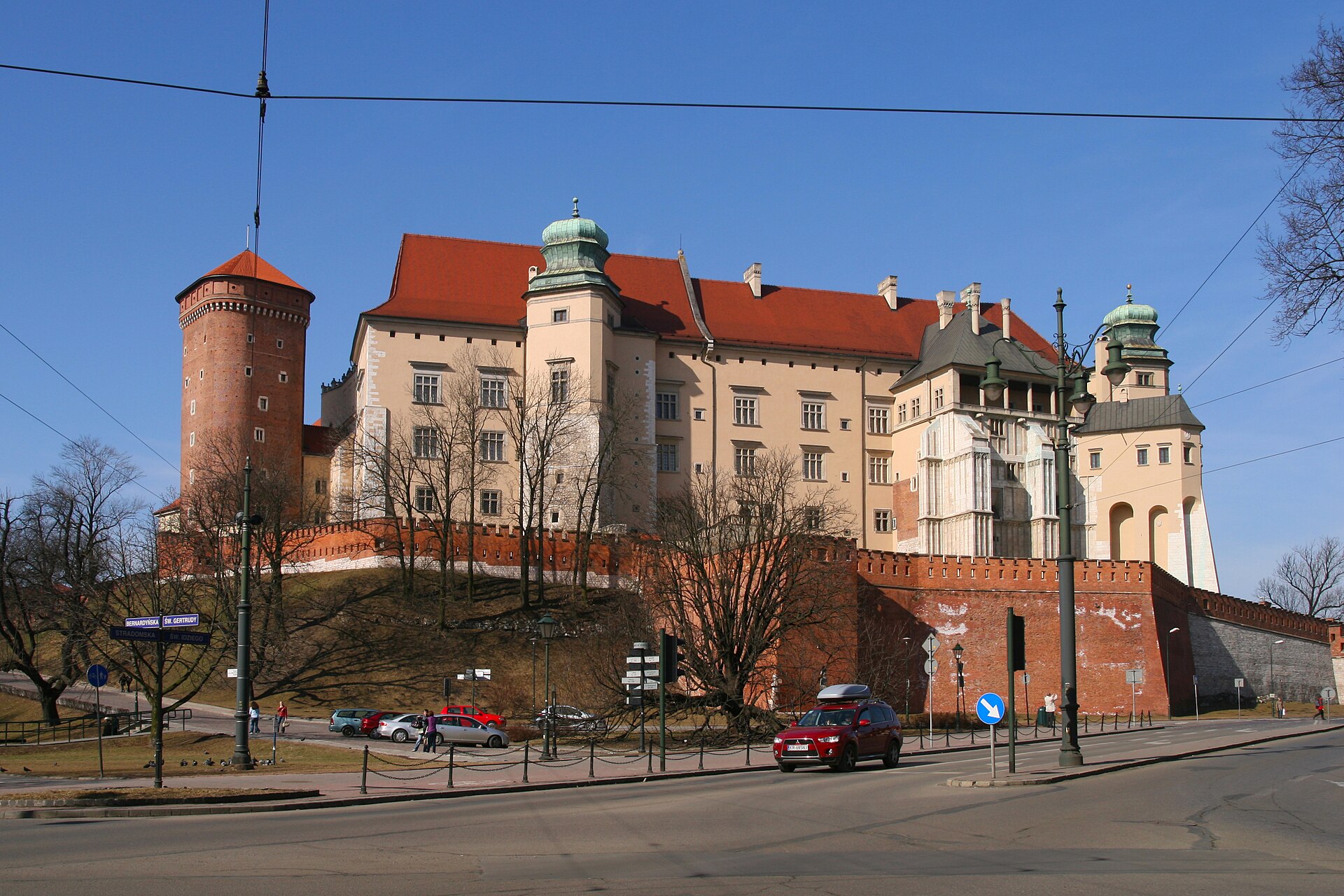
Wawel Castle sits on a limestone hill above the Vistula River and has been the seat of Polish power since the 11th century. Kings were crowned here, ruled here, and are buried in the cathedral next door. When Poland's capital moved to Warsaw in 1596, Wawel didn't lose its significance — it gained mystique. This is where Poles come to feel Polish.
The castle is actually a complex of buildings spanning nearly a thousand years of architecture — Romanesque foundations, Gothic towers, a stunning Renaissance courtyard added by Italian architects in the 16th century that makes you feel like you've been teleported to Florence. The State Rooms contain one of Europe's finest collections of Flemish tapestries — 136 pieces commissioned by King Sigismund Augustus in the 16th century, each one the size of a wall and depicting biblical scenes with the kind of detail that took teams of weavers years to complete.
The most mysterious thing on Wawel Hill is the Smok Wawelski — the Wawel Dragon. According to legend, a dragon lived in a cave beneath the castle and terrorised the city until a clever cobbler fed it a sheep stuffed with sulphur, causing it to drink so much water from the Vistula that it exploded. The dragon's cave is open to visitors (you exit at the riverbank), and a metal dragon sculpture by the entrance breathes actual fire every few minutes, which delights children and alarms pigeons in equal measure.
Verified Facts
Wawel has been a seat of Polish power since the 11th century
Poland's capital moved from Kraków to Warsaw in 1596
The castle contains 136 Flemish tapestries commissioned by King Sigismund Augustus
The dragon sculpture at the entrance breathes real fire
The Dragon's Den cave is open to visitors
Get walking directions
Wawel 5, Kraków