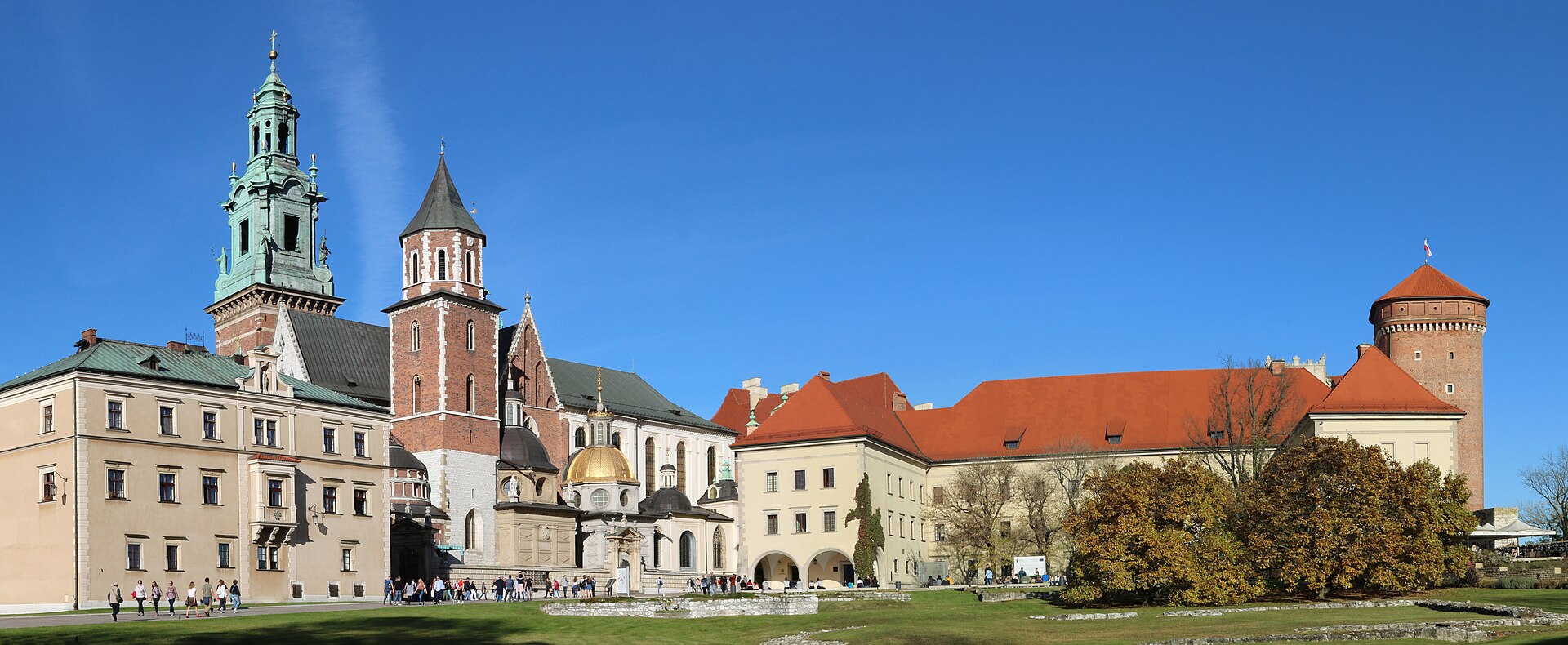
Wawel Cathedral is where Poland crowns its kings and buries its heroes — and the list of people interred here reads like a complete history of the nation. Kings, queens, poets, military commanders, and two presidents rest in the crypts beneath a building that has been Poland's most important church since the 14th century.
The cathedral is a palimpsest of architectural styles — Romanesque foundations, Gothic vaults, Renaissance chapels, Baroque additions — that somehow cohere into a building of immense presence. The Sigismund Chapel, built in the 1530s with a golden dome, is considered the finest example of Renaissance architecture north of the Alps. The Sigismund Bell, cast in 1520 and weighing 11 tonnes, hangs in the cathedral tower and is rung only on occasions of national significance — papal visits, independence day, and national tragedies.
The crypts are the emotional core. You descend narrow stairs to find the sarcophagi of medieval kings alongside the tomb of Marshal Józef Piłsudski — the father of modern Polish independence — and the coffins of President Lech Kaczyński and his wife, killed in the 2010 Smolensk air disaster. The poet Adam Mickiewicz and the national hero Tadeusz Kościuszko are here too. It's less a church than a national shrine, and Polish visitors treat it with a reverence that transcends religion.
Verified Facts
Polish kings were coronated at Wawel Cathedral for centuries
The Sigismund Bell weighs 11 tonnes and was cast in 1520
The Sigismund Chapel is considered the finest Renaissance architecture north of the Alps
President Lech Kaczyński was buried in the cathedral after the 2010 Smolensk crash
Get walking directions
Wawel 3, Kraków