The Agdal Gardens are the oldest gardens in Marrakech — a 400-hectare walled orchard south of the royal palace that has been irrigated by a 12th-century khettara (underground water channel) system since the Almohad dynasty created it as a pleasure garden and agricultural reserve nearly 900 years ago. The gardens are less visited than Majorelle but more historically significant, and their scale — larger than most European parks — reflects the ambition of the dynasty that built them.
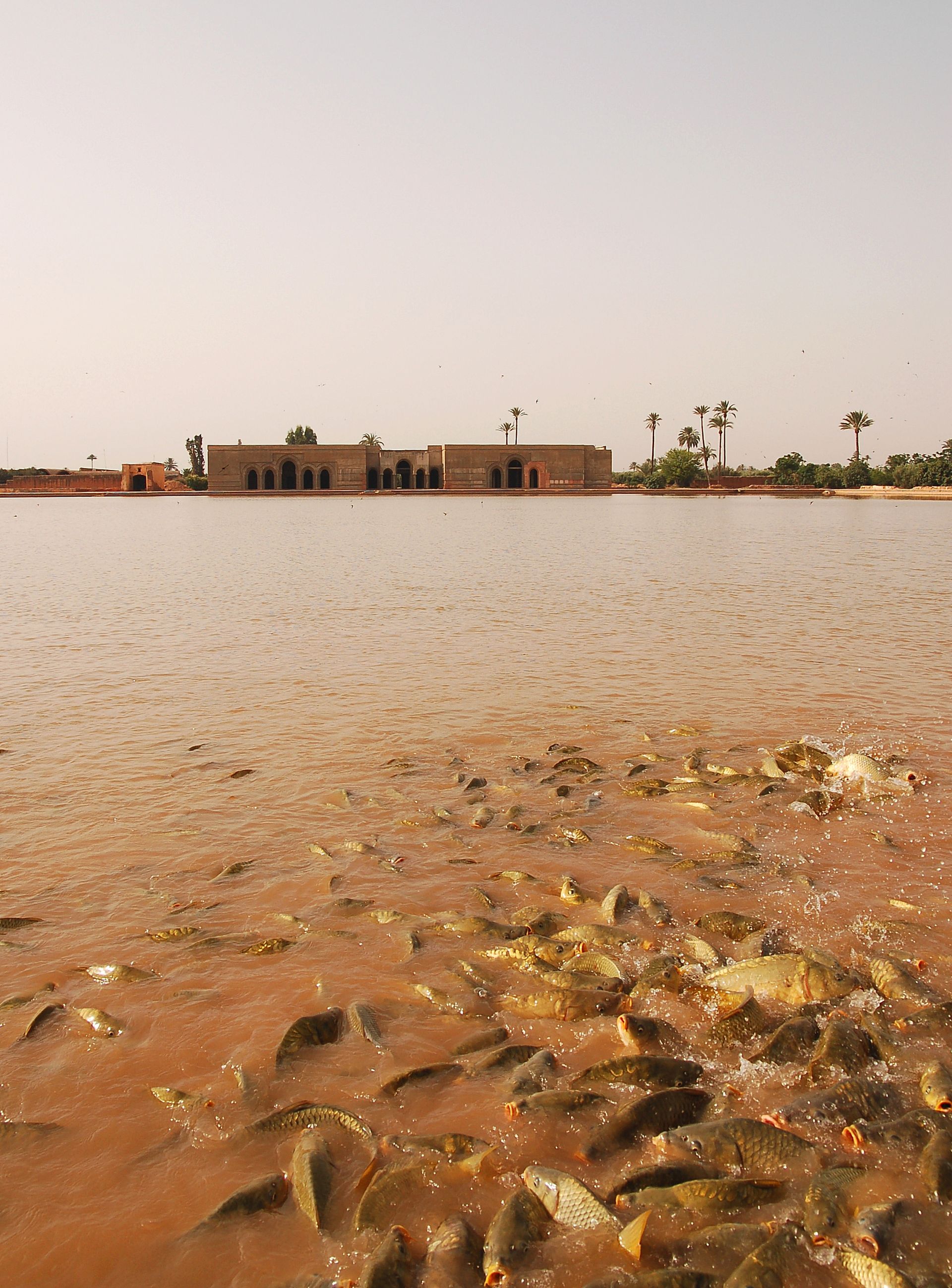
The gardens contain olive groves, citrus orchards, pomegranate trees, and fig trees arranged around a series of large reflecting pools that were used for swimming and boating by the royal court. The largest pool, the Sahraj el-Hana (the Basin of Health), is over 200 metres long and was originally fed by the khettara system — a network of underground channels that brought snowmelt from the Atlas Mountains 30 kilometres away without the use of pumps, using only gravity and the precise engineering of North African hydraulic tradition.
The gardens are only open on Fridays and Sundays (when the royal family is not in residence at the adjacent Dar el-Makhzen palace), which limits their tourist impact and preserves an atmosphere of agricultural tranquility that the more popular gardens can't match. The walk through the orchards — with the Atlas Mountains visible above the garden walls and the sound of water moving through the ancient irrigation channels — is one of the most peaceful experiences available in Marrakech.
Verified Facts
The Agdal Gardens were created by the Almohad dynasty approximately 900 years ago
The gardens cover approximately 400 hectares
Water is supplied by a 12th-century khettara underground channel system
The gardens are open to the public only on Fridays and Sundays
Get walking directions
Marrakesh, Morocco