Walking Tours in Marrakech
30 Landmarks in Marrakech
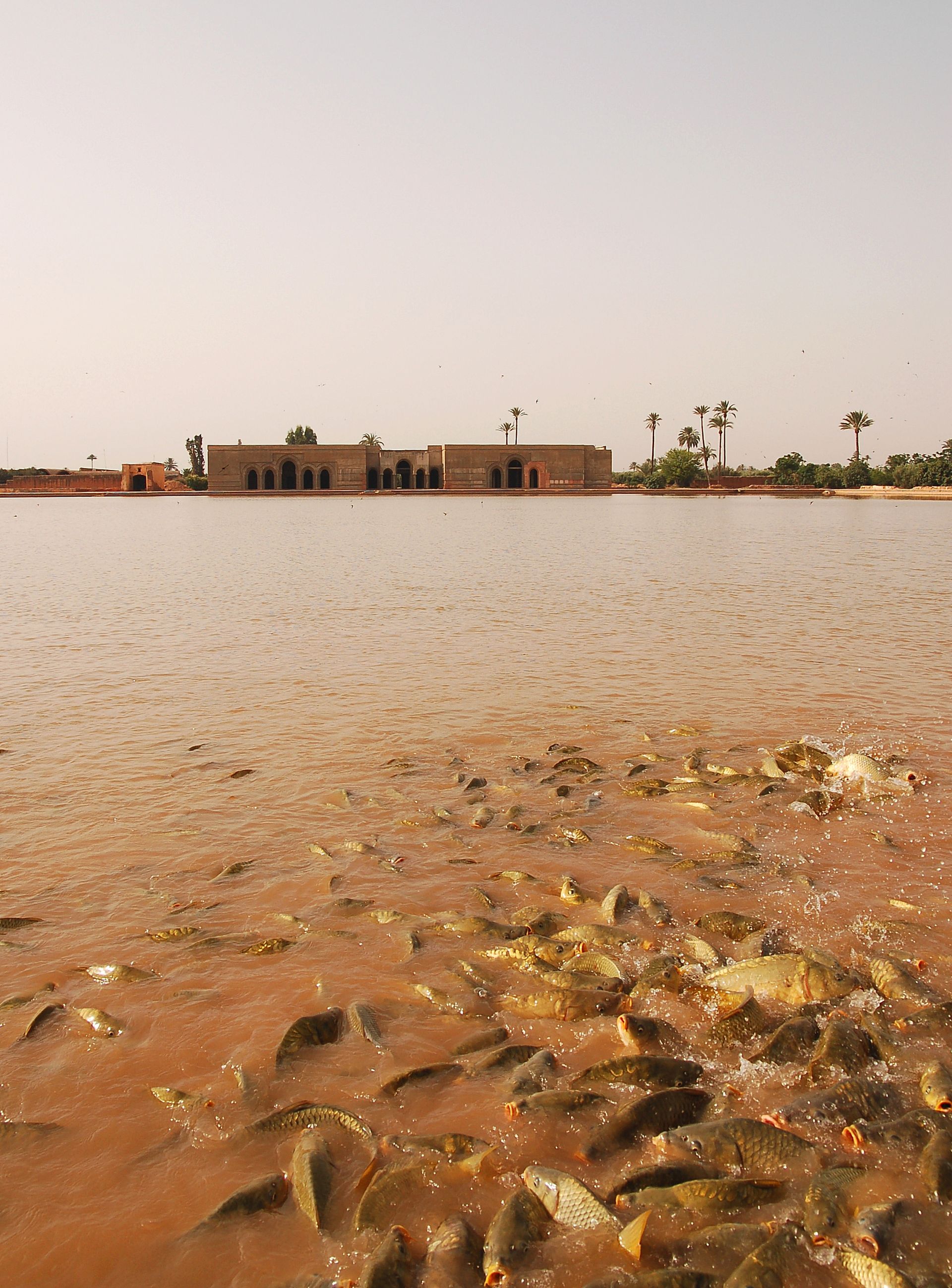
Agdal Gardens
Marrakesh, Morocco
The Agdal Gardens are the oldest gardens in Marrakech — a 400-hectare walled orchard south of the royal palace that has been irrigated by a 12th-century khettara (underground water channel) system since the Almohad dynasty created it as a pleasure garden and agricultural reserve nearly 900 years ago. The gardens are less visited than Majorelle but more historically significant, and their scale — larger than most European parks — reflects the ambition of the dynasty that built them. The gardens contain olive groves, citrus orchards, pomegranate trees, and fig trees arranged around a series of large reflecting pools that were used for swimming and boating by the royal court. The largest pool, the Sahraj el-Hana (the Basin of Health), is over 200 metres long and was originally fed by the khettara system — a network of underground channels that brought snowmelt from the Atlas Mountains 30 kilometres away without the use of pumps, using only gravity and the precise engineering of North African hydraulic tradition. The gardens are only open on Fridays and Sundays (when the royal family is not in residence at the adjacent Dar el-Makhzen palace), which limits their tourist impact and preserves an atmosphere of agricultural tranquility that the more popular gardens can't match. The walk through the orchards — with the Atlas Mountains visible above the garden walls and the sound of water moving through the ancient irrigation channels — is one of the most peaceful experiences available in Marrakech.
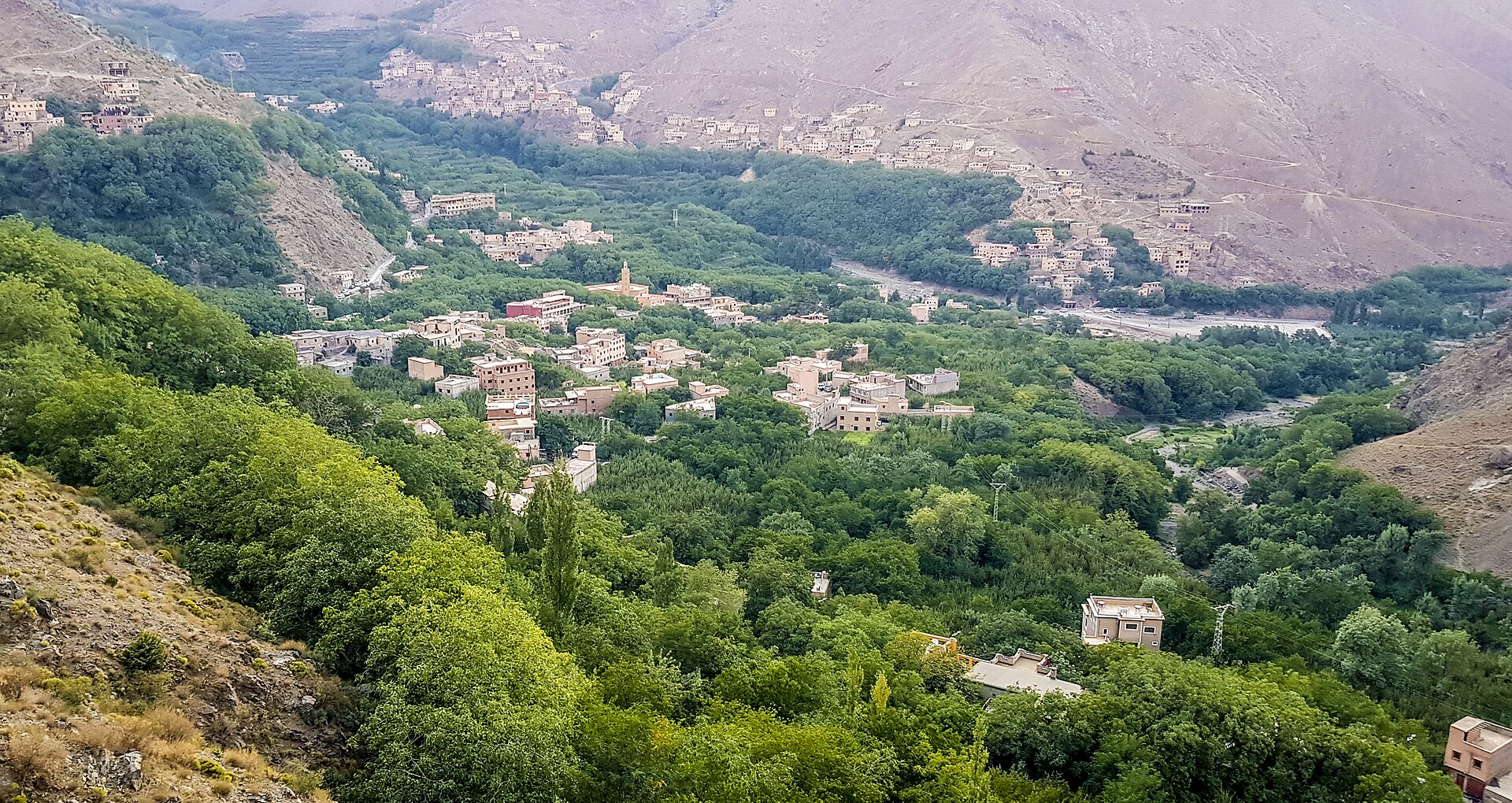
Atlas Mountains Day Trip
Bab Atlas, Municipalité de Marrakech, 40000, Morocco
The Atlas Mountains rise directly behind Marrakech — a wall of peaks reaching over 4,000 metres that provides the city's most dramatic backdrop and the most accessible mountain experience in North Africa. Imlil, a Berber village 60 kilometres south of Marrakech at 1,740 metres elevation, is the most popular base for Atlas excursions and can be reached in 90 minutes by road through a landscape that transitions from arid plains to terraced mountain valleys. The drive to Imlil passes through increasingly dramatic scenery — the Ourika Valley (with its waterfalls and Berber villages), the switchback road climbing through walnut and cherry orchards, and the first views of Jebel Toubkal (4,167 metres, the highest peak in North Africa) as you approach the village. Imlil itself is a cluster of stone and mud-brick houses surrounded by terraced fields, with guesthouses and a handful of cafés catering to hikers. The full Toubkal ascent is a 2-day trek requiring mountain equipment, but day hikes from Imlil — to the Armed Refuge, through the Berber villages of Aremd and Setti Fatma, or along the valley floor — provide mountain scenery and encounters with traditional Berber life that are accessible to anyone with reasonable fitness. The Berber hospitality tradition — mint tea offered to guests in every village — makes Atlas hiking as much a cultural as a physical experience. Organised day trips from Marrakech (available through most riads and tour agencies) provide transport and guides, making the mountains accessible even to visitors with limited time.
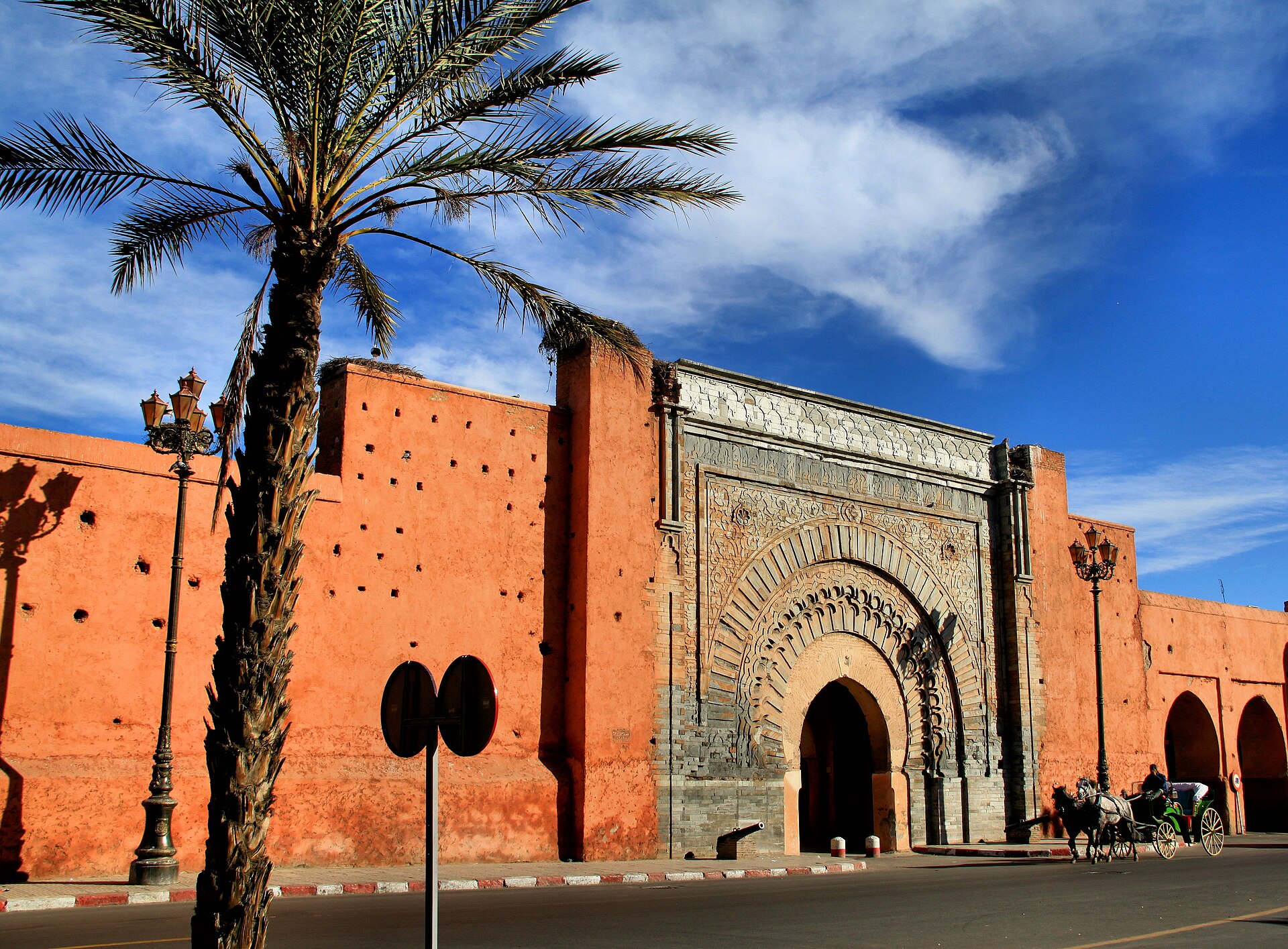
Bab Agnaou Gate
Rue Bab Agnaou, Marrakesh, 40008, Morocco
Bab Agnaou is the most beautiful gate in Marrakech — a 12th-century Almohad stone gateway that served as the ceremonial entrance to the royal kasbah quarter and is the finest example of Almohad monumental architecture surviving in the city. The gate's name is disputed — it may derive from the Berber word 'agnaw' (meaning mute or hornless), possibly referring to the sheep that were traded at a market outside the gate, or from 'agnaou' (a type of black wood). The gate's decoration is austere by later Moroccan standards but extraordinarily refined — concentric horseshoe arches carved in blue-grey Guéliz stone, with geometric patterns and a band of Kufic calligraphy running above the archway. The Almohad aesthetic — monumental scale, geometric precision, and the principle that decoration should enhance structure rather than conceal it — is expressed here with a purity that the more elaborate Saadian and Merinid work that followed never quite matched. Bab Agnaou stands at the junction of the medina's commercial streets and the kasbah — the fortified royal quarter that contains the Saadian Tombs, El Badi Palace, and the Dar el-Makhzen (the Royal Palace, still in use and closed to the public). Passing through the gate is the transition from commercial Marrakech to royal Marrakech, and the change in atmosphere — from the noise and commerce of the souks to the quieter, wider streets of the kasbah — is immediate and dramatic.
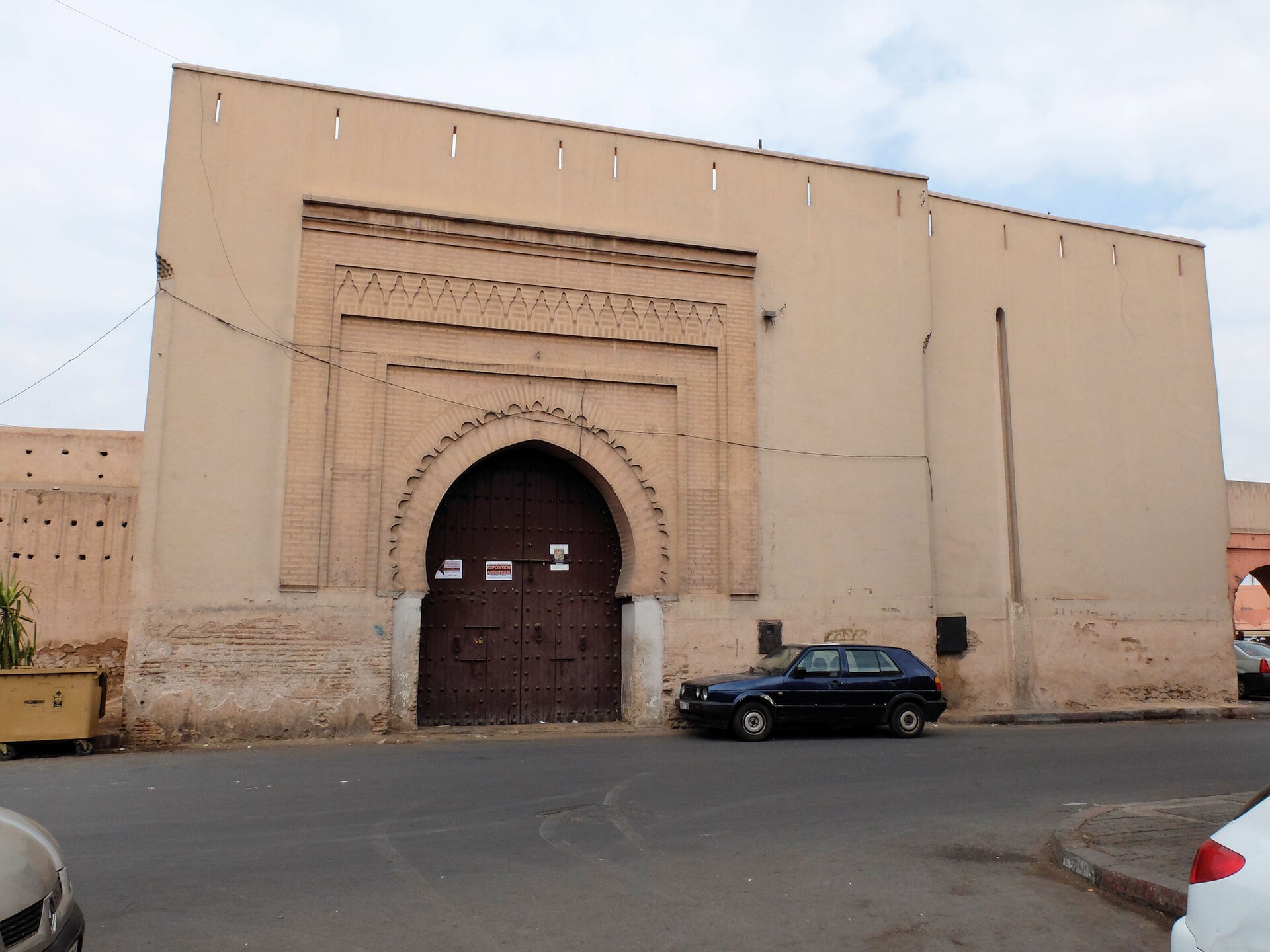
Bab Doukkala Mosque & Neighbourhood
Rue Bab Doukkala, Marrakesh, 40030, Morocco
Bab Doukkala is the medina gate that leads to the most authentically local neighbourhood in central Marrakech — a quarter of residential streets, neighbourhood mosques, and the daily food market that serves the surrounding community without any concession to tourism. The gate itself, one of the medina's 20 original gates, is a massive pisé archway that frames the transition between the French-built ville nouvelle and the medieval medina. The Bab Doukkala Mosque, the neighbourhood's spiritual centre, is a 16th-century Saadian mosque with an associated hammam and fountain complex that demonstrates the traditional integrated design of Marrakech's neighbourhood infrastructure. The streets around the mosque are where Marrakech residents buy their daily bread (from neighbourhood bakeries where dough is brought from home and baked in communal ovens), their vegetables (from hand-carts that circulate through the alleys), and their meat (from the butcher stalls near the gate). The food in Bab Doukkala is local Moroccan cooking at its most unmediated — tagine restaurants serving lunch to workers, street stalls selling msemen (pan-fried flatbread), and the neighbourhood cafés where men gather for mint tea and conversation. A walk through Bab Doukkala provides the counterpoint to the tourist medina around Jemaa el-Fna — the same architecture, the same cooking smells, the same call to prayer, but without the performative element that tourism introduces. This is the medina as it functions when no one is watching.
Bahia Palace
Rue Imam Al Ghazali, Marrakesh, 40008, Morocco
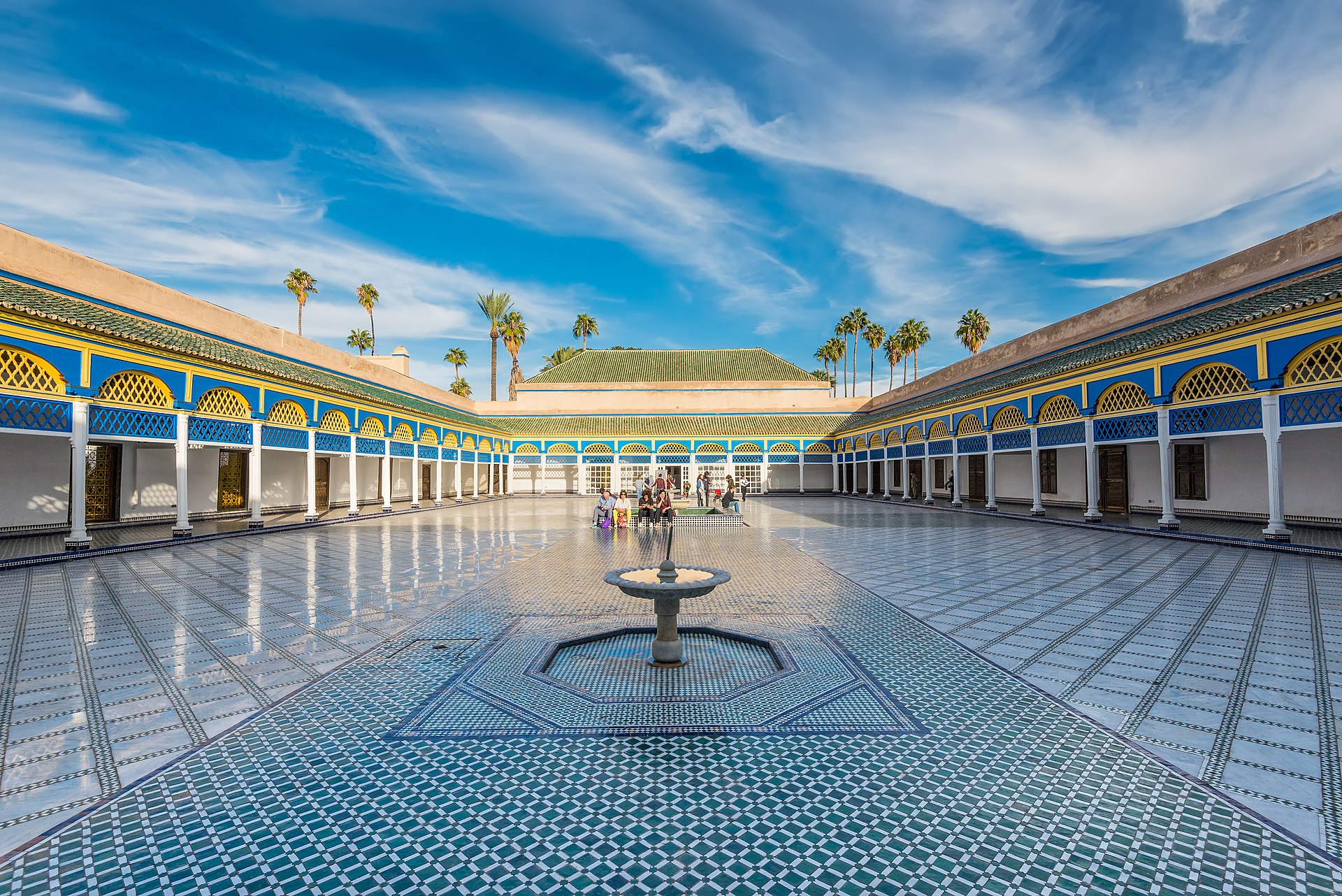
The Bahia Palace is the finest example of Moroccan palatial architecture open to visitors — a 19th-century palace built over 14 years (1866-1900) for Si Moussa, the grand vizier of Sultan Hassan I, and later expanded by his son Bou Ahmed, who intended it to be the greatest palace ever built in Morocco. The name Bahia means 'brilliance,' and the palace delivers: carved cedar ceilings, zellige (geometric mosaic tilework) in every colour, stucco carved with arabesques and Quranic calligraphy, and painted wooden ceilings that represent the peak of Moroccan decorative arts. The palace covers 8,000 square metres and is organised around a series of courtyards — the largest open to the sky, paved in marble, and planted with fruit trees. The rooms opening onto each courtyard served different functions: reception halls, private apartments for the vizier's four wives and 24 concubines, a harem (the private quarters, not the Western misinterpretation of the word), and servants' quarters. The scale of the establishment — Bou Ahmed employed hundreds of craftsmen for over a decade — reflects the power of the Moroccan grand viziers, who in the late 19th century often wielded more influence than the sultan. The palace was partially looted after Bou Ahmed's death in 1900 (the sultan's court stripped it of furnishings), and the bare rooms, while architecturally magnificent, lack the furnishings that would complete the picture. French general Hubert Lyautey used the palace as his residence during the Protectorate period, and parts are still used by the Moroccan royal family. The palace is open daily, and visiting in the morning (before the tour groups arrive) allows you to appreciate the craftsmanship without crowds.
Café Culture & Mint Tea Ritual
Various cafés, Jemaa el-Fna & Medina, Marrakech
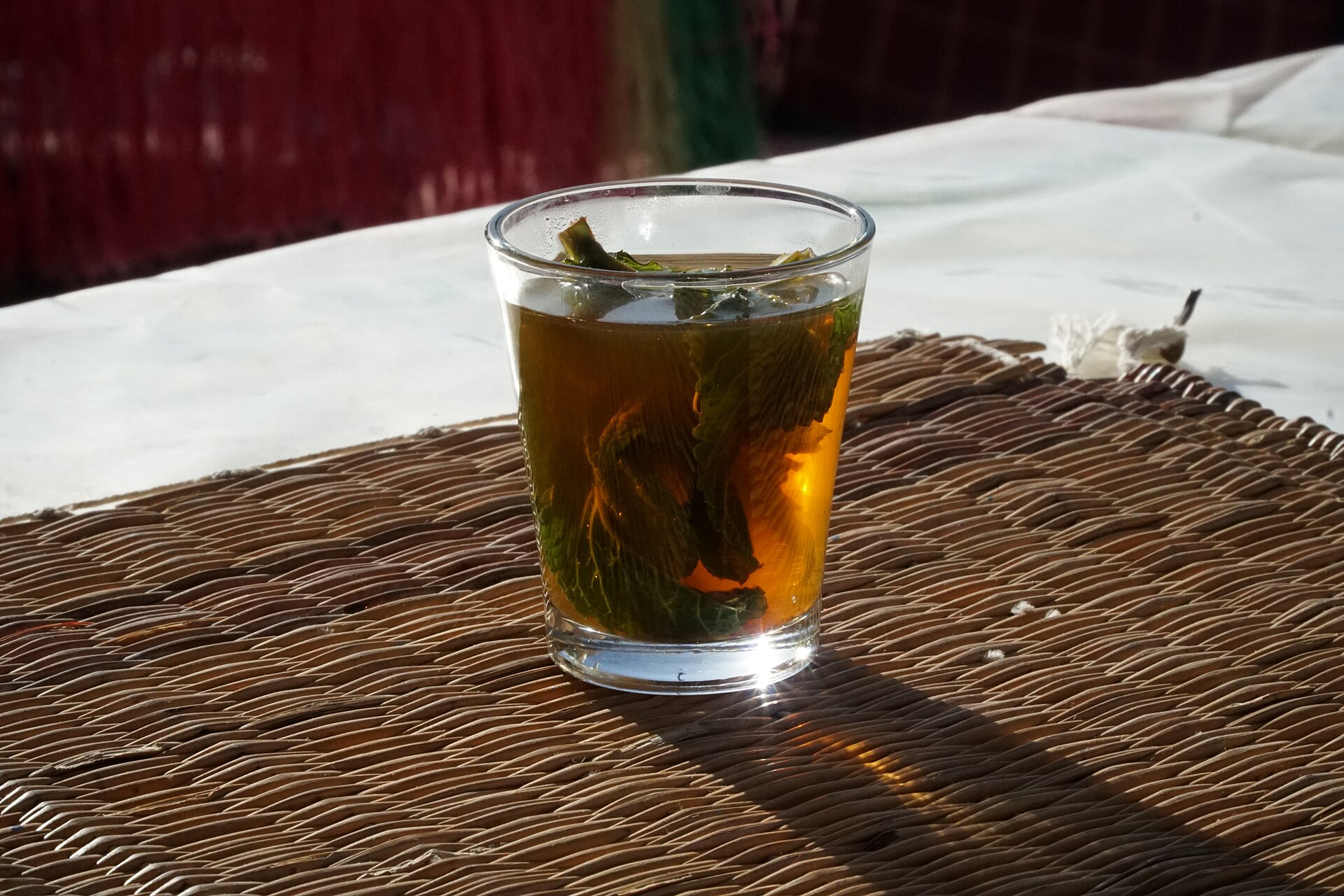
Mint tea (atay) is Morocco's national drink and Marrakech's social lubricant — a mixture of Chinese gunpowder green tea, fresh spearmint, and a quantity of sugar that would alarm a dentist, brewed in a silver teapot and poured from height (the higher the pour, the better the froth) into small glass cups. The tea is served everywhere — in cafés, in shops during bargaining, in homes as a gesture of hospitality, and in the souks as a prelude to any commercial transaction. Refusing tea is considered impolite; accepting it is an acceptance of relationship. The rooftop cafés surrounding Jemaa el-Fna — Café de France, Café Glacier, Nomad, Terrasse des Épices — provide the most theatrical setting for tea, with views across the square to the Koutoubia Mosque and the Atlas Mountains. The ground-level cafés in the medina's quieter streets — where men sit on low stools watching football on wall-mounted televisions while sipping tea — provide the more authentic version. The café is Morocco's third space (after home and mosque), and the ritual of sitting, sipping, and watching the world pass is the social practice that holds Moroccan community life together. The tea preparation itself is a minor performance — the tea is brewed in the pot, poured into a glass and back into the pot (to mix the sugar), and then poured from as high as the server can manage without missing the glass. The pour is functional (it aerates the tea and creates foam) and theatrical (it demonstrates skill and hospitality). Three glasses is the traditional number — 'the first glass is as gentle as life, the second is as strong as love, the third is as bitter as death,' according to the Moroccan proverb.
Dar Si Said Museum
Derb Riad Zitoun Jdid El Arsa Medina, Marrakesh, 40030, Morocco
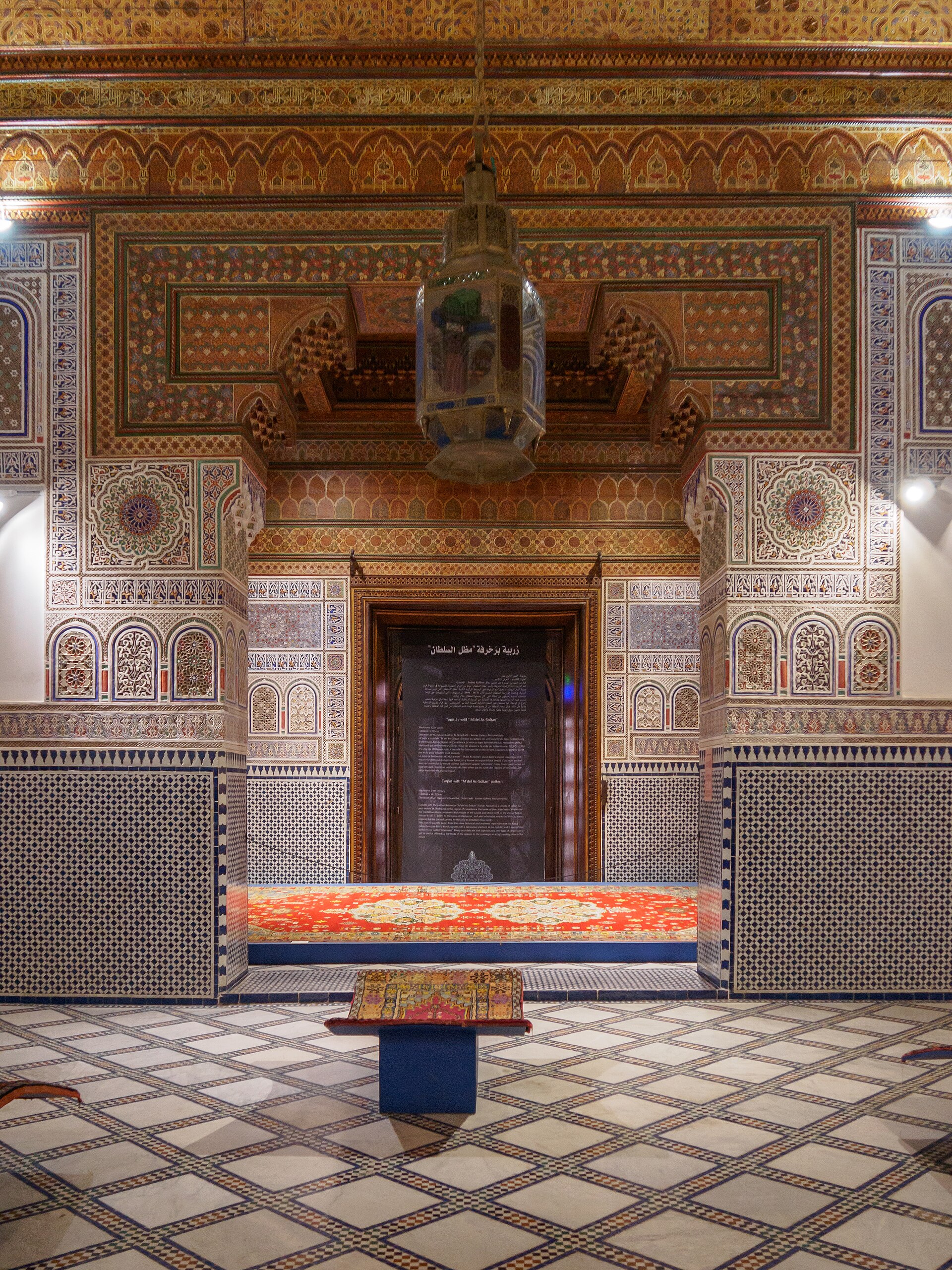
Dar Si Said is a 19th-century palace that houses the Museum of Moroccan Arts — a collection of woodwork, ceramics, jewellery, carpets, and weapons displayed in rooms whose own decoration (carved cedar ceilings, zellige tilework, stucco arabesques) is as impressive as the objects they contain. The palace was built by Si Said, brother of Grand Vizier Bou Ahmed (who built the larger Bahia Palace nearby), and the sibling rivalry between the two palaces — both competing to demonstrate wealth and taste through decorative excess — produced two of the finest domestic interiors in Morocco. The collection's highlights include an 11th-century marble basin from Córdoba (a reminder of the cultural connections between Moorish Spain and Morocco), Berber jewellery from the Atlas Mountains and the Sahara, and the wooden mashrabiya screens and carved lintels that demonstrate the exceptional quality of Moroccan woodwork. The carpet collection spans the full range of Moroccan weaving traditions — urban carpets from Rabat and Fez alongside the bold, geometric kilims of the Middle Atlas Berbers. The palace's garden courtyard, with its central fountain and orange trees, provides the cool, shaded resting space that the medina's narrow streets lack. The museum is less crowded than the Bahia Palace and offers a more intimate experience of Moroccan palatial architecture — the rooms are smaller, the decoration is more refined, and the objects on display add the domestic detail that empty palace rooms can't provide.
El Badi Palace
Ksibt Nhass, Marrakesh, 40040, Morocco
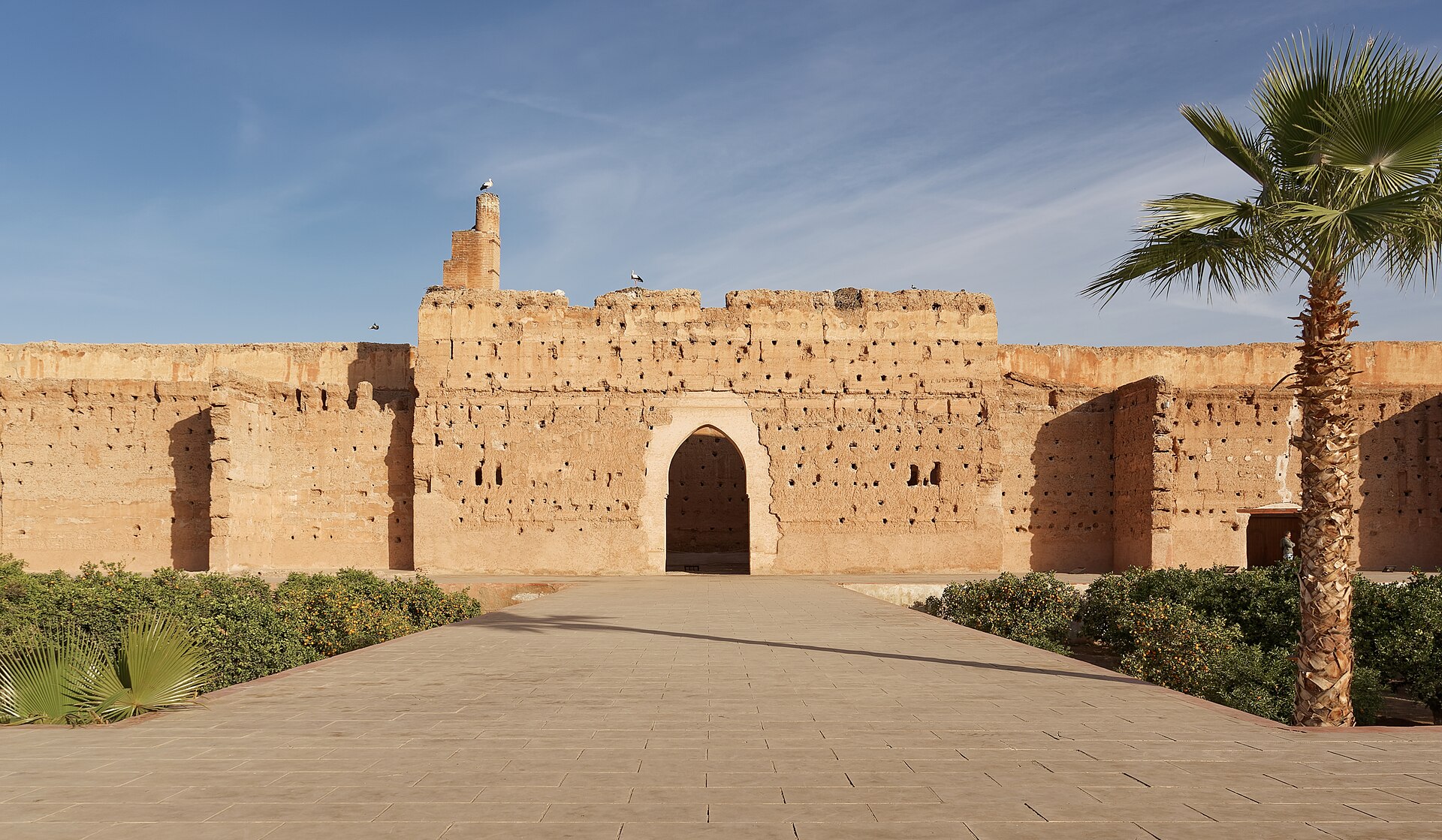
El Badi Palace is the magnificent ruin of what was once the greatest palace in Morocco — built by the Saadian sultan Ahmad al-Mansur in 1578 to celebrate his victory over the Portuguese at the Battle of the Three Kings, using materials so expensive (Italian marble, Irish oak, Indian onyx, Chinese gold) that the palace's name, 'The Incomparable,' was not considered an exaggeration. What remains today is a vast sunken courtyard of crumbling walls, orange trees, and stork nests, which is somehow more impressive in its ruined state than many intact palaces. The palace was stripped of its decoration by the Alaouite sultan Moulay Ismail in the late 17th century, who spent 12 years dismantling El Badi and transporting its marble, cedarwood, and gold leaf to his own palace in Meknes. What remains is the structural shell — massive pisé (rammed earth) walls 6 metres thick, a sunken garden with a central pool 90 metres long, and the underground chambers and passages that once served the palace's domestic infrastructure. The rooftop terraces of El Badi provide some of the best views in the medina — looking north across the rooftops to the Koutoubia minaret, east to the Atlas Mountains, and down into the palace courtyard where storks nest on the ruined walls every spring. The underground khettara (water channels) that supplied the palace's fountains are partially accessible, and the minbar (pulpit) from the Koutoubia Mosque — a 12th-century masterwork of carved cedar and ivory — is displayed in a chamber inside the ruins.
Fondouk el-Nejjarine (Woodworkers' Fondouk)
Place des Ferblantiers, Marrakesh, 40034, Morocco
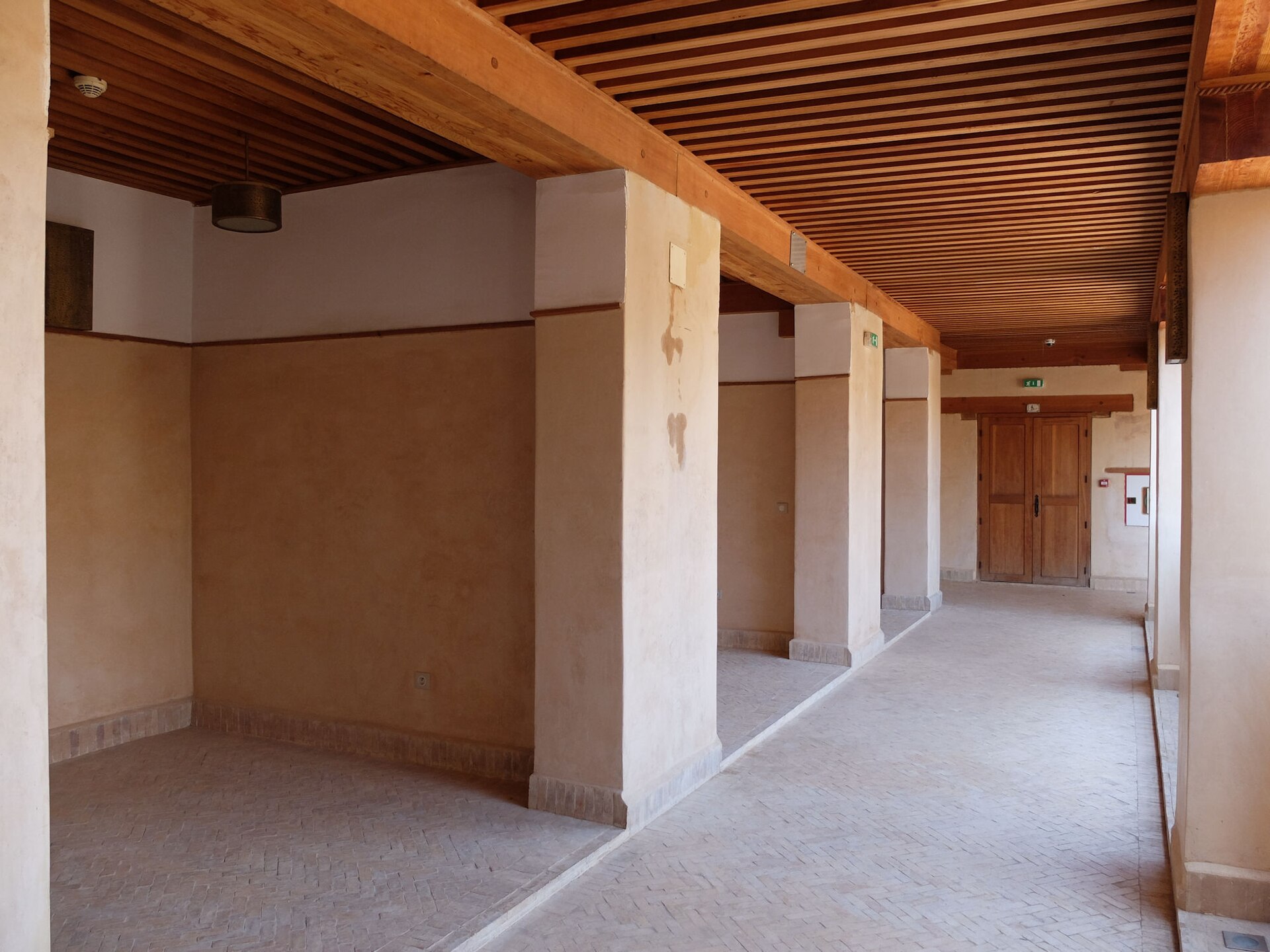
A fondouk (also spelled funduq or foundouk) is a medieval caravanserai — an inn and trading post where merchants stored goods and animals on the ground floor and slept on the upper floors. Marrakech once had over 140 fondouks serving the caravan trade routes that connected the Sahara to the Mediterranean; today, about 40 survive in various states of preservation, and several have been converted into craft workshops, art spaces, and the kind of adaptive-reuse projects that give the medina its creative energy. The fondouks near the souks — particularly those on the alleys between the Souk Semmarine and the Medersa Ben Youssef — contain woodworkers, metalworkers, and leather craftsmen whose workshops occupy the ground-floor stalls that once held camels and goods. The architecture is consistent: a central courtyard open to the sky, surrounded by arched galleries on two storeys, with the ground floor for commerce and storage and the upper floor for accommodation. The form is identical across the Islamic world from Morocco to India, reflecting the standardised infrastructure of medieval long-distance trade. Several fondouks have been restored as cultural spaces — hosting art exhibitions, craft workshops, and the kind of creative projects that use the medina's historic buildings for contemporary purposes. The experience of discovering a fondouk — ducking through an unmarked doorway off a souk alley into a quiet courtyard where craftsmen work in the same spaces that medieval merchants used — is one of the medina's most rewarding architectural surprises.
Guéliz (Ville Nouvelle)
Boulevard Mohammed V, Marrakesh, 40008, Morocco
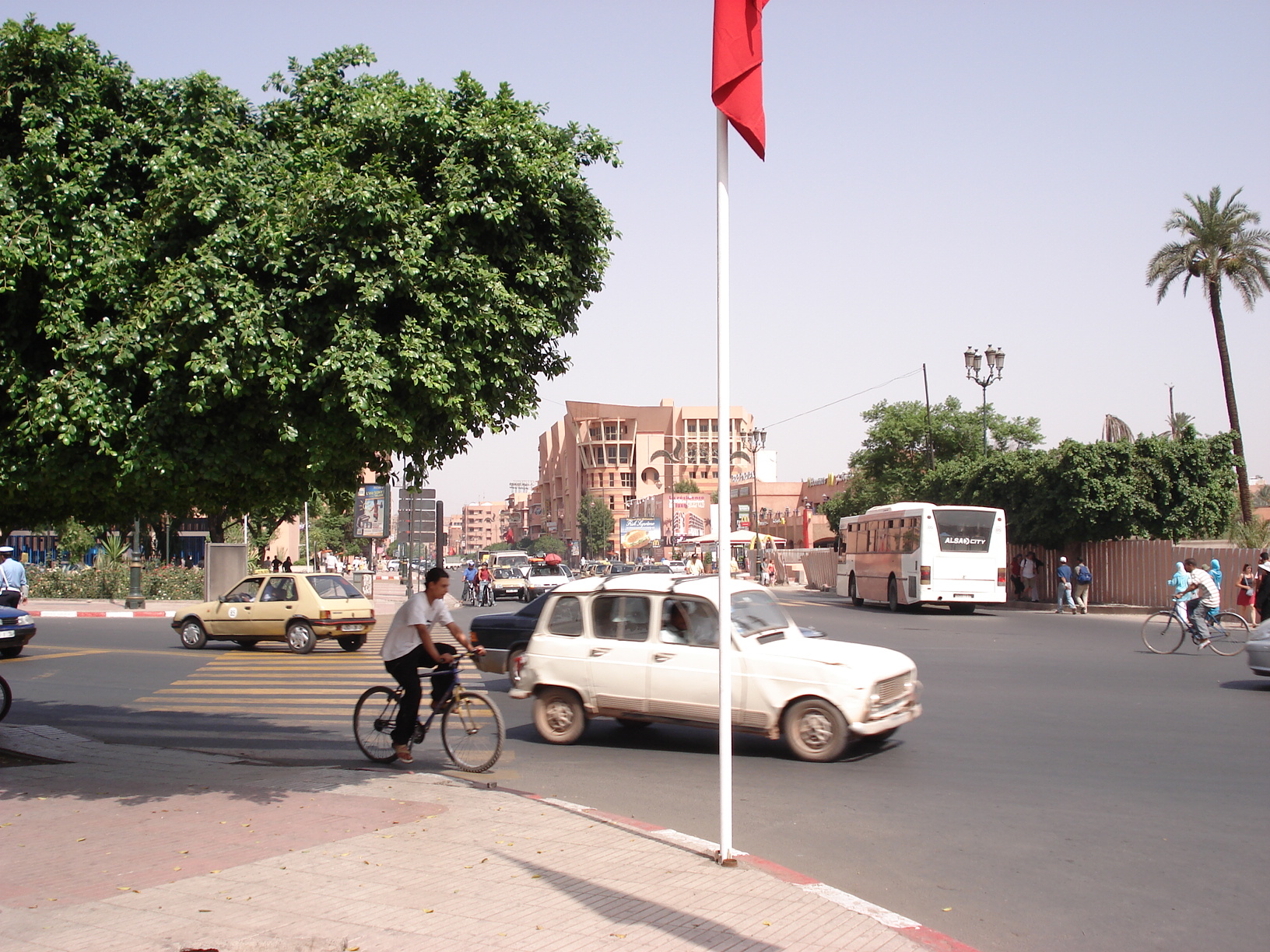
Guéliz is Marrakech's French-built new town — a grid of Art Deco and Modernist buildings laid out during the Protectorate period (1912-1956) that provides the counterpoint to the medina's labyrinthine chaos. Avenue Mohammed V, the main boulevard connecting the medina to Guéliz, is lined with cafés, banks, and commercial buildings that could be in any French provincial city, and the contrast between the medieval density of the medina and the wide, tree-lined avenues of Guéliz — created by French urban planner Henri Prost under the direction of Resident-General Hubert Lyautey — captures the dual identity of modern Marrakech. The Art Deco architecture of Guéliz is underappreciated — the cinema, the post office, the Marché Central (central market), and the residential buildings along Boulevard Mohammed Zerktouni represent a tropical adaptation of French Art Deco that uses the Moroccan palette (ochre, white, turquoise) and local craft traditions (zellige, carved plaster) alongside European geometric forms. The result is a hybrid style — Art Deco Marocain — that exists only in the former protectorate cities. The food scene in Guéliz has evolved beyond French colonial pastry shops (though those survive, and the croissants at Amandine are excellent) to include the contemporary Moroccan restaurants, juice bars, and rooftop terraces that cater to a younger, more cosmopolitan Marrakech. The Marché Central, a covered market selling meat, fish, vegetables, and spices in a less tourist-oriented setting than the medina souks, provides the most authentic local shopping experience in the new town.
Hammam Experience
Marrakesh, Morocco
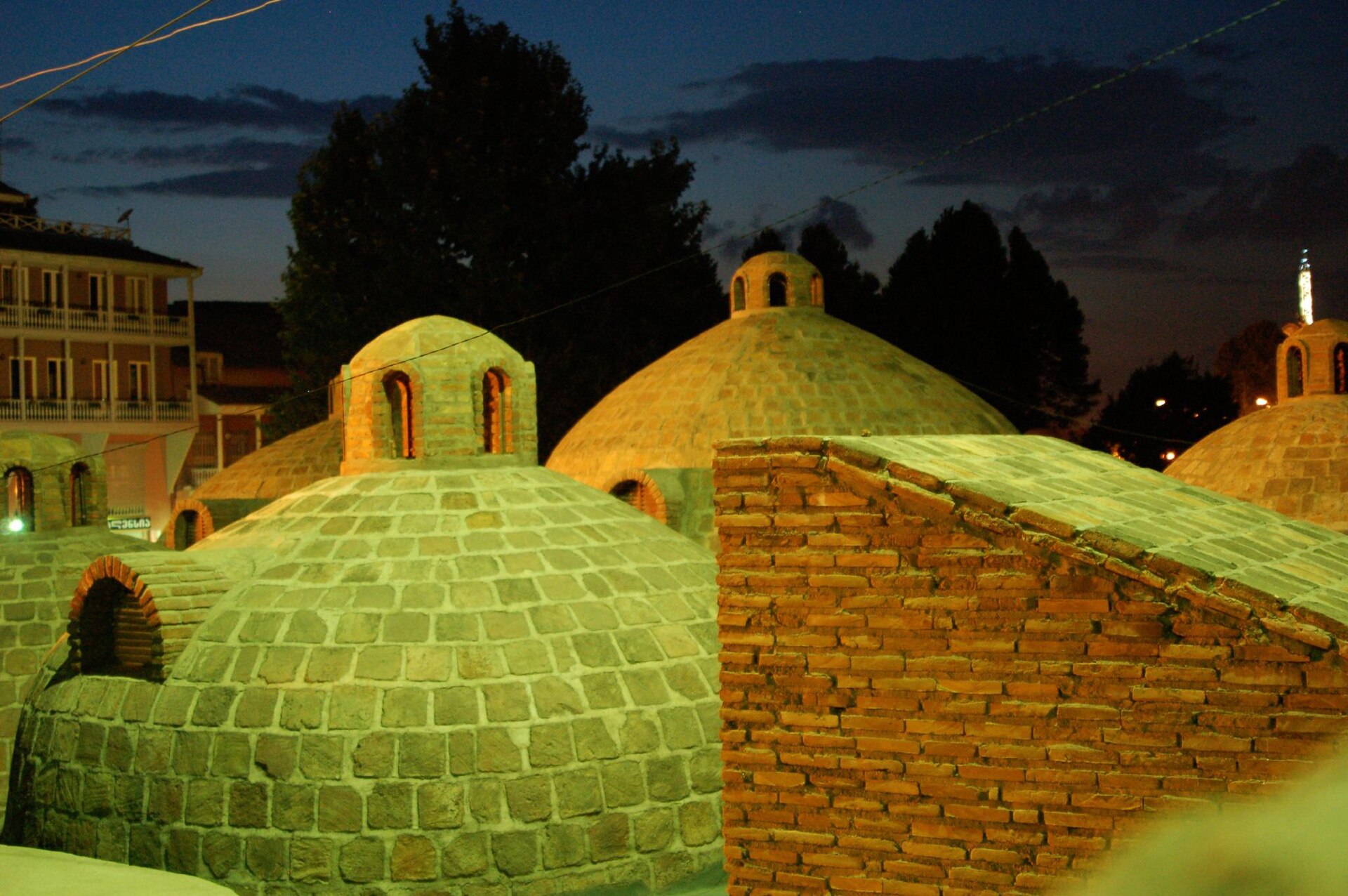
The hammam is the quintessential Moroccan bathing ritual — a communal steam bath that has been a cornerstone of social and hygienic life in Marrakech since the city was founded. The traditional hammam consists of three rooms of progressively increasing heat (cold, warm, hot), where bathers wash using black soap (savon noir, made from olive oil and eucalyptus), are scrubbed with a rough exfoliating glove (kessa), and emerge feeling simultaneously raw and reborn. Marrakech has hundreds of hammams ranging from neighbourhood establishments (basic, cheap, and authentic, where you bring your own soap and bucket) to luxury spa hammams (Le Bain Bleu, Hammam de la Rose, Heritage Spa) that add essential oils, massage, and the kind of service that turns a bath into a three-hour pampering session. The neighbourhood hammams cost a few dirhams and provide the genuine communal experience — men and women bathe at separate times, conversation echoes off the tiled walls, and the ritual of being scrubbed clean by a complete stranger becomes strangely intimate and entirely normal. The hammam tradition predates Islam in North Africa (the Romans built bathhouses across their African provinces), but the Islamic emphasis on ritual cleanliness made the hammam a religious as well as social institution. Every mosque in Marrakech historically had an associated hammam, and the architectural relationship between the two — shared water systems, adjacent locations, complementary functions — reflects the integration of spiritual and physical cleanliness in Moroccan culture.
Jardin Majorelle & Yves Saint Laurent Museum
Rue Yves Saint Laurent, Guéliz, Marrakech
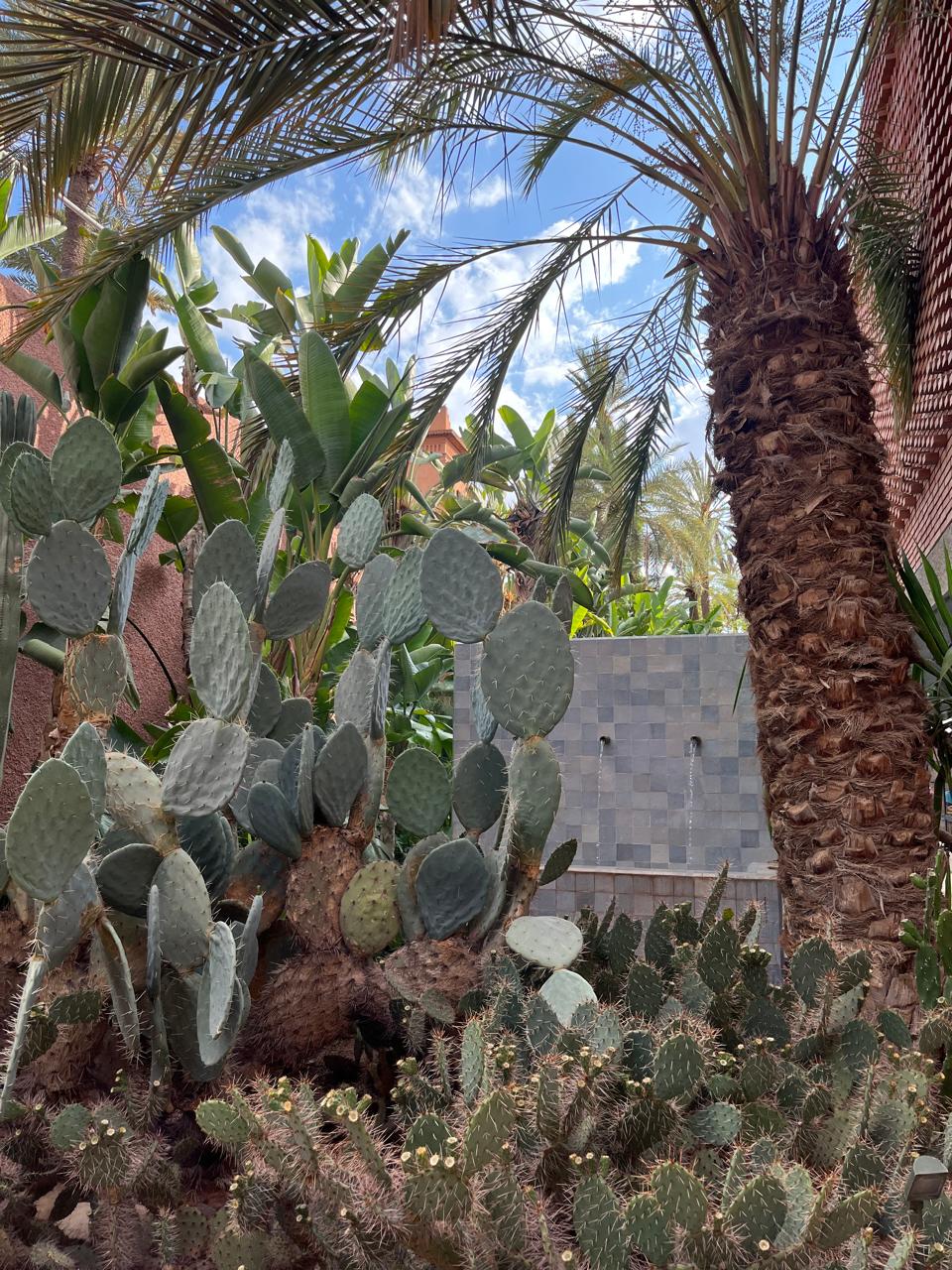
Jardin Majorelle is the most famous garden in Morocco — a 1-hectare Art Deco botanical garden created by French painter Jacques Majorelle over 40 years beginning in 1923, rescued from development by Yves Saint Laurent and Pierre Bergé in 1980, and now the most visited attraction in Marrakech after Jemaa el-Fna. The garden's signature is Majorelle Blue — a vivid cobalt colour used on the buildings, pots, and structures throughout the garden that Majorelle developed specifically for this site and that has become as associated with Marrakech as the red of the medina walls. The garden is a dense, lush collection of cacti, bougainvillea, bamboo, palms, and the tropical plants that Majorelle collected from five continents, arranged around reflecting pools and pathways that create a sense of walking through a painting. The studio building, painted in Majorelle Blue with yellow accents, houses the Berber Museum, which displays a collection of North African textiles, jewellery, and costumes that Yves Saint Laurent and Bergé assembled over decades. The Musée Yves Saint Laurent Marrakech, opened in 2017 in a purpose-built terracotta building adjacent to the garden, displays the designer's haute couture work in rotating exhibitions that demonstrate why Saint Laurent considered Marrakech his spiritual home. The building, designed by Studio KO, uses brick in patterns inspired by the warp and weft of fabric, and the interior spaces — austere, precisely lit, and climate-controlled — provide museum-quality conditions for the delicate garments. The garden and museum together represent the intersection of French fashion, Moroccan craft, and botanical art that has made Marrakech a creative destination since the 1960s.
Jemaa el-Fna
Jemaa el-Fna, Medina, Marrakech
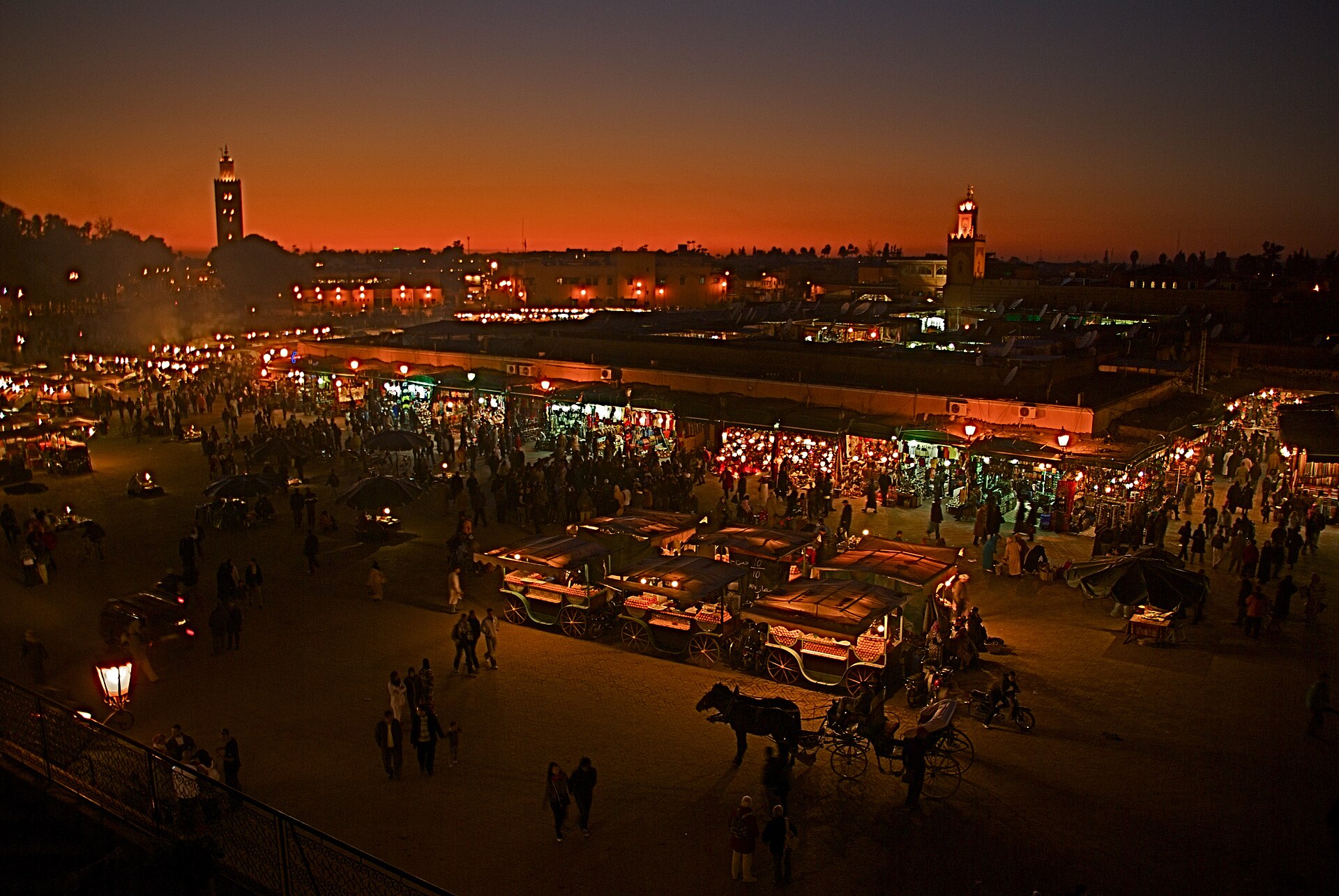
Jemaa el-Fna is the most extraordinary public square in the world — a vast, irregular plaza at the entrance to Marrakech's medina that transforms from a daytime market of orange juice sellers, snake charmers, and henna artists into a nighttime open-air theatre of food stalls, storytellers, musicians, and the general spectacle of a city that has been performing for its own entertainment since the 11th century. UNESCO designated Jemaa el-Fna a Masterpiece of the Oral and Intangible Heritage of Humanity in 2001, recognising it as a living cultural space rather than a fixed monument. The evening transformation is the main event. As the sun sets, the square fills with over 100 food stalls — each numbered, each specialising in a few dishes — serving grilled meats, snail soup, sheep's head, harira (tomato and lentil soup), fresh bread, and the Moroccan salads (zaalouk, taktouka, carrot and orange) that precede every meal. The smoke from a hundred charcoal grills creates a haze that catches the light from hanging bulbs, and the combined noise of the vendors shouting, the musicians playing, and the crowds negotiating creates an atmosphere that no other square in any city can match. The square's edges are lined with café terraces — Café de France, Café Glacier — where you can sit above the action and watch the choreography of the square from elevation. The view from the Café de France terrace at sunset, looking across the square to the Koutoubia Mosque's minaret with the Atlas Mountains behind, is one of the most photographed perspectives in Morocco.
Koubba Almoravid
Rue El Youssi, Marrakesh, 40070, Morocco
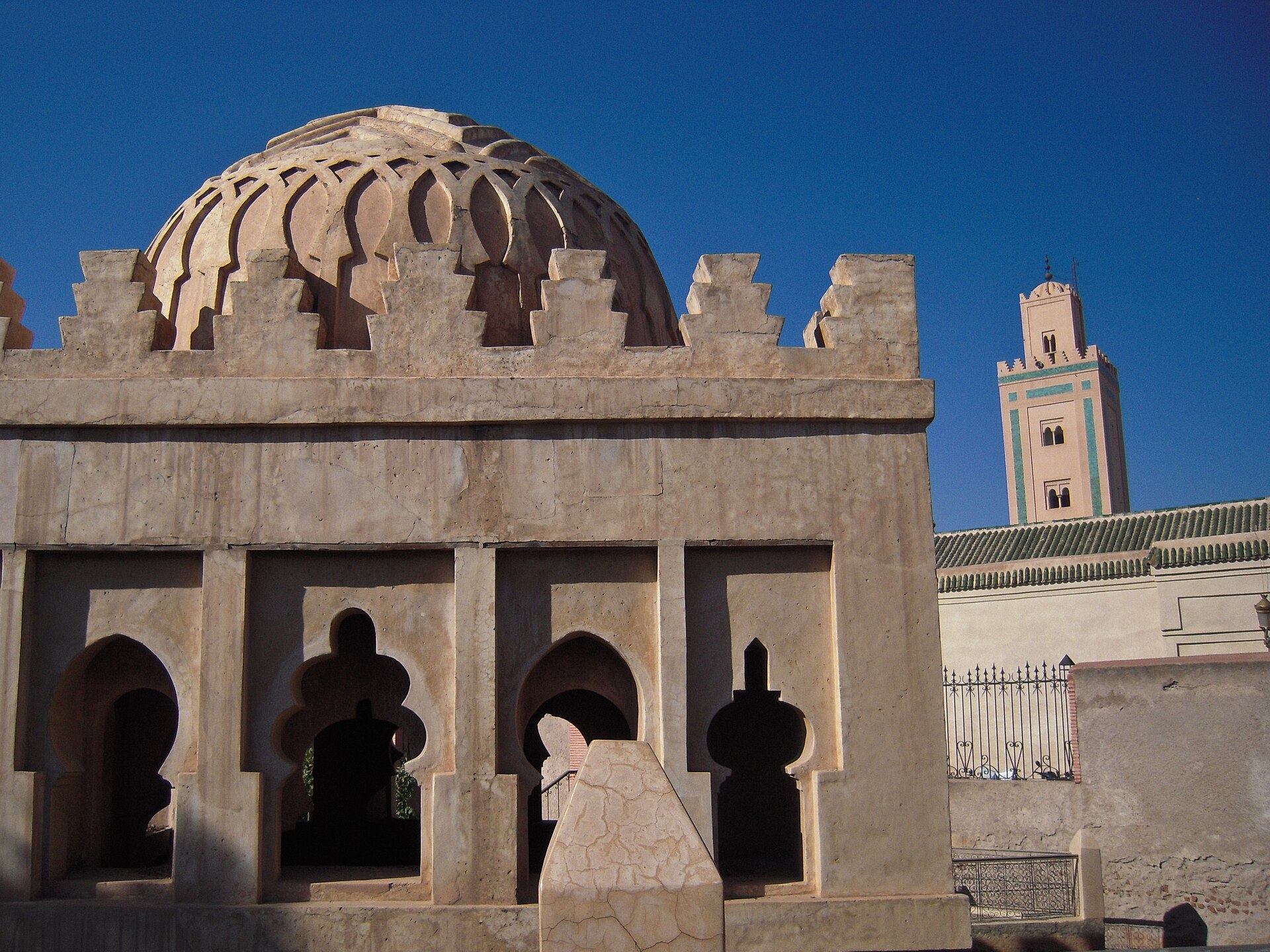
The Koubba Almoravid is the only surviving Almoravid building in Marrakech — an 11th-century ablution pavilion (koubba) that was buried beneath later construction and rediscovered in 1948. The building is a small, domed structure that originally served as the ablution facility for the Almoravid mosque that once stood on the site of the current Ben Youssef Mosque, and its survival — in a city where every other building from the founding dynasty was demolished by their Almohad successors — makes it one of the most architecturally significant structures in Morocco. The dome's interior is decorated with carved plaster in geometric and floral patterns that represent the earliest surviving example of the Hispano-Moorish decorative style that would later produce the Alhambra in Granada and the great mosques of Fez. The architectural vocabulary — horseshoe arches, interlocking geometric patterns, carved stucco — appears here for the first time in Morocco, making the Koubba the root from which seven centuries of Moroccan decorative art grew. The Koubba sits below the current street level (the medina has risen over the centuries as layers of construction accumulated) in a small excavated pit on Place Ben Youssef. The building is modest in size but enormous in historical significance — standing beside it, you're looking at the only physical remnant of the dynasty that founded Marrakech in 1070 and built the empire that controlled both Morocco and Islamic Spain.
Koutoubia Mosque
15 bis Rue Fhal Smar, Marrakesh, 40008, Morocco
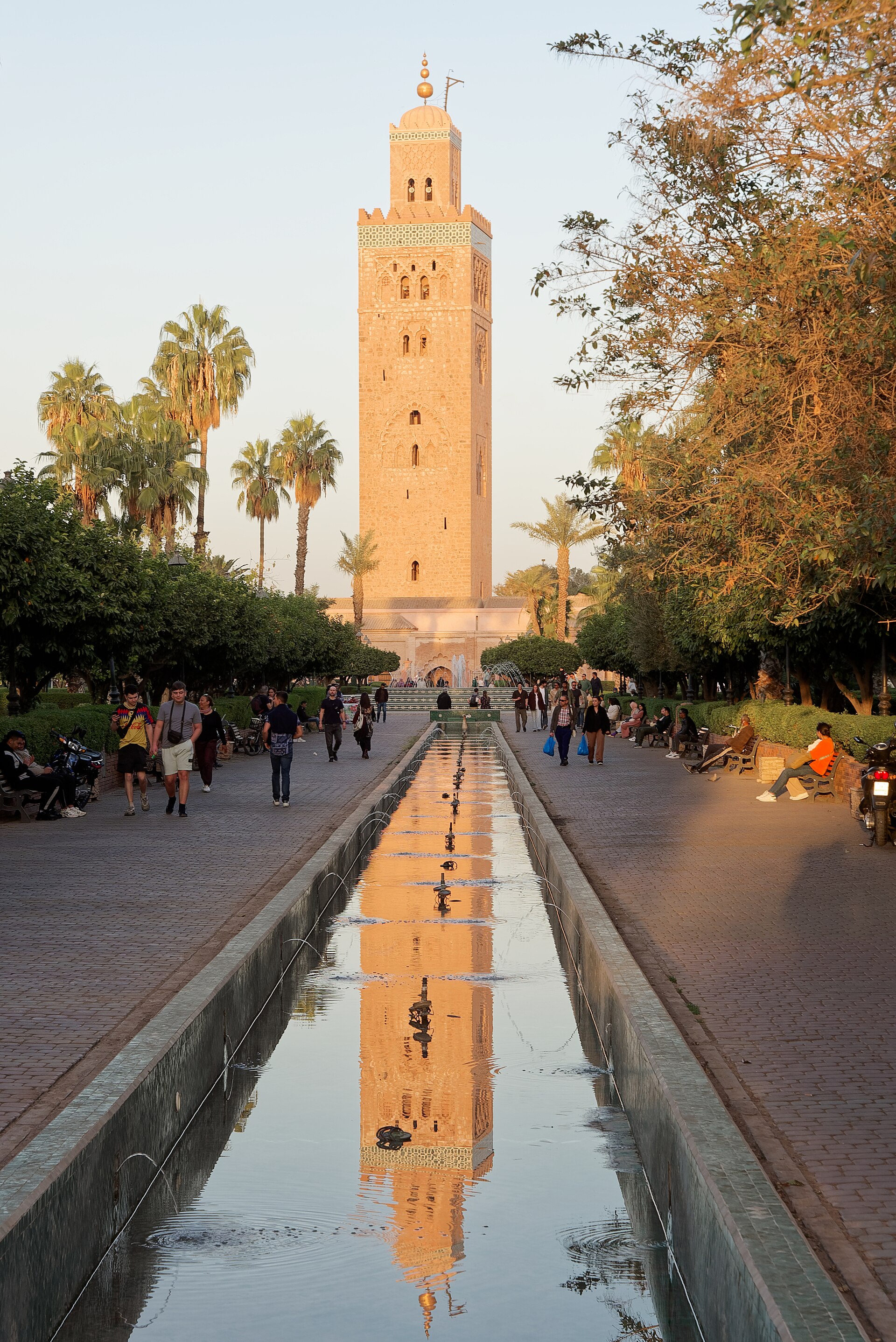
The Koutoubia Mosque is Marrakech's defining landmark — a 12th-century Almohad mosque whose 77-metre minaret is the tallest structure in the city and the model for the Giralda in Seville and the Hassan Tower in Rabat. The mosque was completed during the reign of the Almohad caliph Yaqub al-Mansur around 1195, and its minaret — decorated with carved stone, ceramic tilework, and a band of arched windows on each face — established the template for Moroccan mosque architecture that has been followed for eight centuries. Non-Muslims cannot enter the mosque (as with virtually all mosques in Morocco), but the exterior and the surrounding gardens are public. The minaret is visible from much of the medina and serves as the primary navigational landmark in a city whose labyrinthine streets were designed to confuse invaders and continue to confuse tourists with equal efficiency. The gardens surrounding the mosque — palm trees, orange trees, and rose beds — provide a rare open space in the dense medina and are a popular gathering place for locals at sunset. The four copper balls at the top of the minaret are said to have originally been gold, donated by the wife of Yaqub al-Mansur as penance for breaking her fast during Ramadan. Whether the legend is true (historians doubt it), the balls have been catching the light above the medina for over 800 years, and the muezzin's call to prayer from the Koutoubia — amplified by speakers now, but following a tradition that predates amplification by centuries — is the sound that defines Marrakech five times daily.
Le Jardin Secret
Derb Habib Allah, Marrakesh, 40030, Morocco
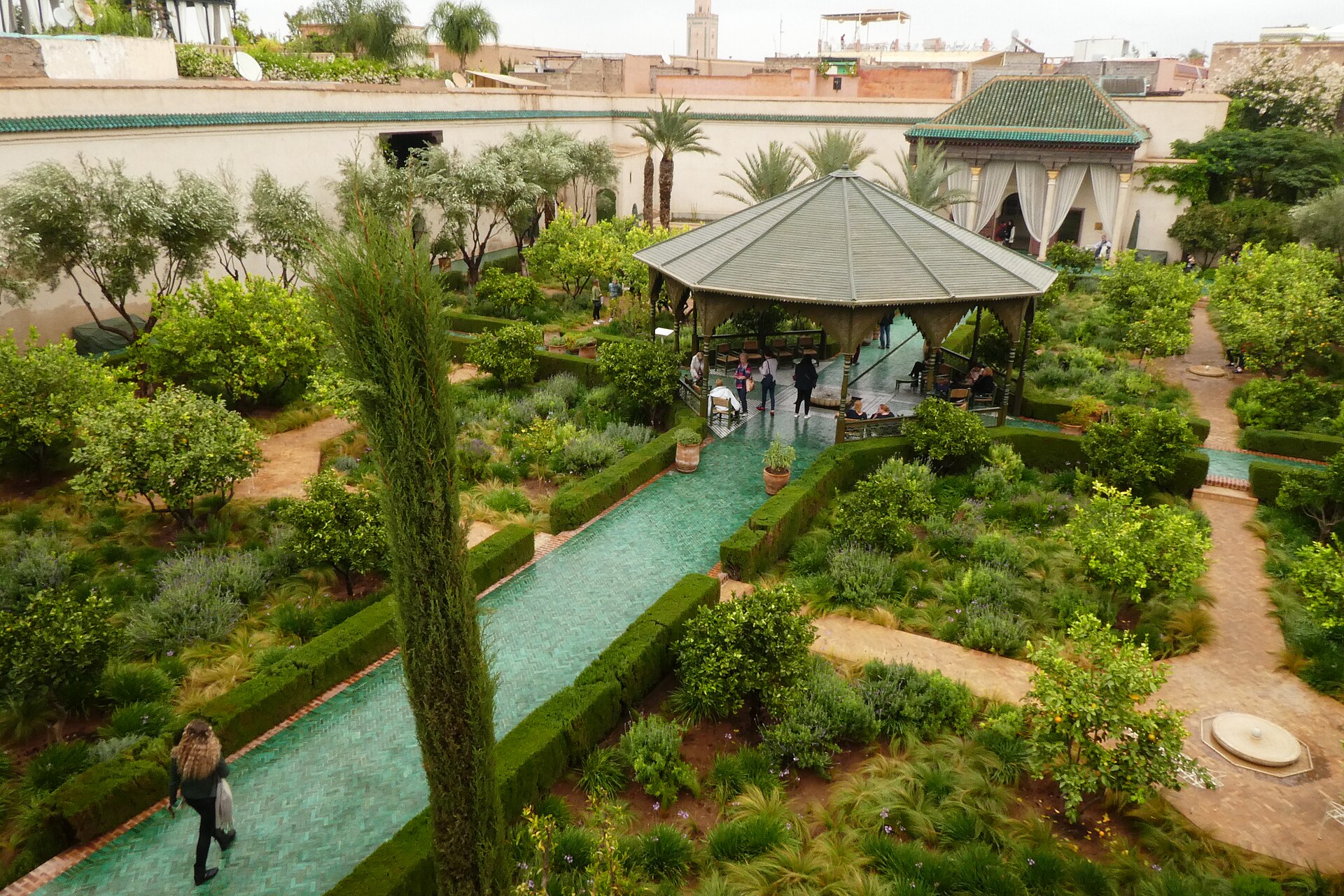
Le Jardin Secret is a restored riad garden in the heart of the medina — a 16th-century courtyard complex that was abandoned for decades before a meticulous restoration completed in 2016 returned its Islamic garden to working order, including the original khettara (underground water channel) system that has been feeding the garden since the Saadian era. The garden is divided into two sections following the traditional Islamic chahar bagh (four-garden) design — an exotic garden planted with tropical species from around the world, and an Islamic garden of olive, citrus, and pomegranate trees arranged around fountains and water channels in the geometric patterns prescribed by Islamic garden tradition. The water system — visible through glass panels in the garden floor — shows the khettara channels that bring water from the Atlas Mountains to this courtyard, a continuous flow that has been maintained (with interruptions) for 500 years. The tower provides one of the few publicly accessible elevated viewpoints in the medina — a rooftop terrace with 360-degree views across the rooftops to the Koutoubia, the Atlas Mountains, and the medina walls. The garden's restoration is a model of heritage conservation — the traditional garden, the water system, and the architectural elements were restored using the same materials and techniques as the original, and the result is a living museum of Islamic garden design that functions as a place of beauty rather than a museum exhibit.
Maison de la Photographie
46 Rue Ahal Fès, Medina, Marrakech
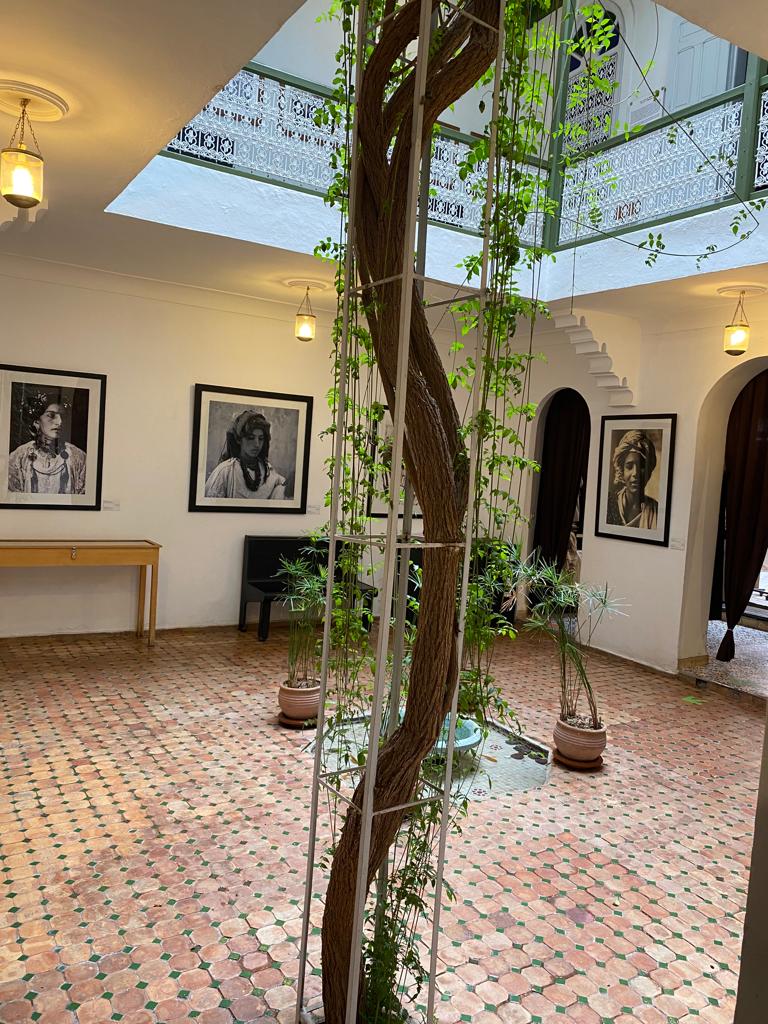
The Maison de la Photographie is a small, essential museum in the northern medina that houses a collection of over 10,000 photographs, glass negatives, and postcards documenting Morocco from the 1870s to the 1960s — a visual record of a country transitioning from traditional kingdom through colonial protectorate to modern nation. The museum occupies a restored riad (traditional courtyard house) whose cool, tiled rooms provide the ideal setting for prints that are themselves studies in light and shadow. The photographs show a Morocco that has largely disappeared — Berber villages, desert caravans, Jewish communities, French colonial officials, the Jemaa el-Fna before cars and electricity, and the everyday life of Moroccans whose world was changing faster than they could document it. The images are displayed chronologically, and walking through the galleries is like watching a time-lapse of modernisation — traditional dress gives way to Western clothing, donkeys are replaced by cars, and the medina's open spaces gradually fill with the buildings that now occupy them. The rooftop café, accessible from the museum's top floor, provides one of the best panoramic views of the medina — the Koutoubia minaret, the Ben Youssef Mosque, and the rooftop terrace landscape of riads and satellite dishes that is the medina's secret skyline. The museum is privately run, charges a modest admission fee, and is consistently praised as one of the best small museums in Morocco. It's the kind of discovery that makes walking the medina's side streets rewarding — you turn a corner, find a doorway, and inside is a collection that reframes everything you've seen outside.
Medersa Ben Youssef
Derb Kaat Benahid, Marrakesh, 40030, Morocco
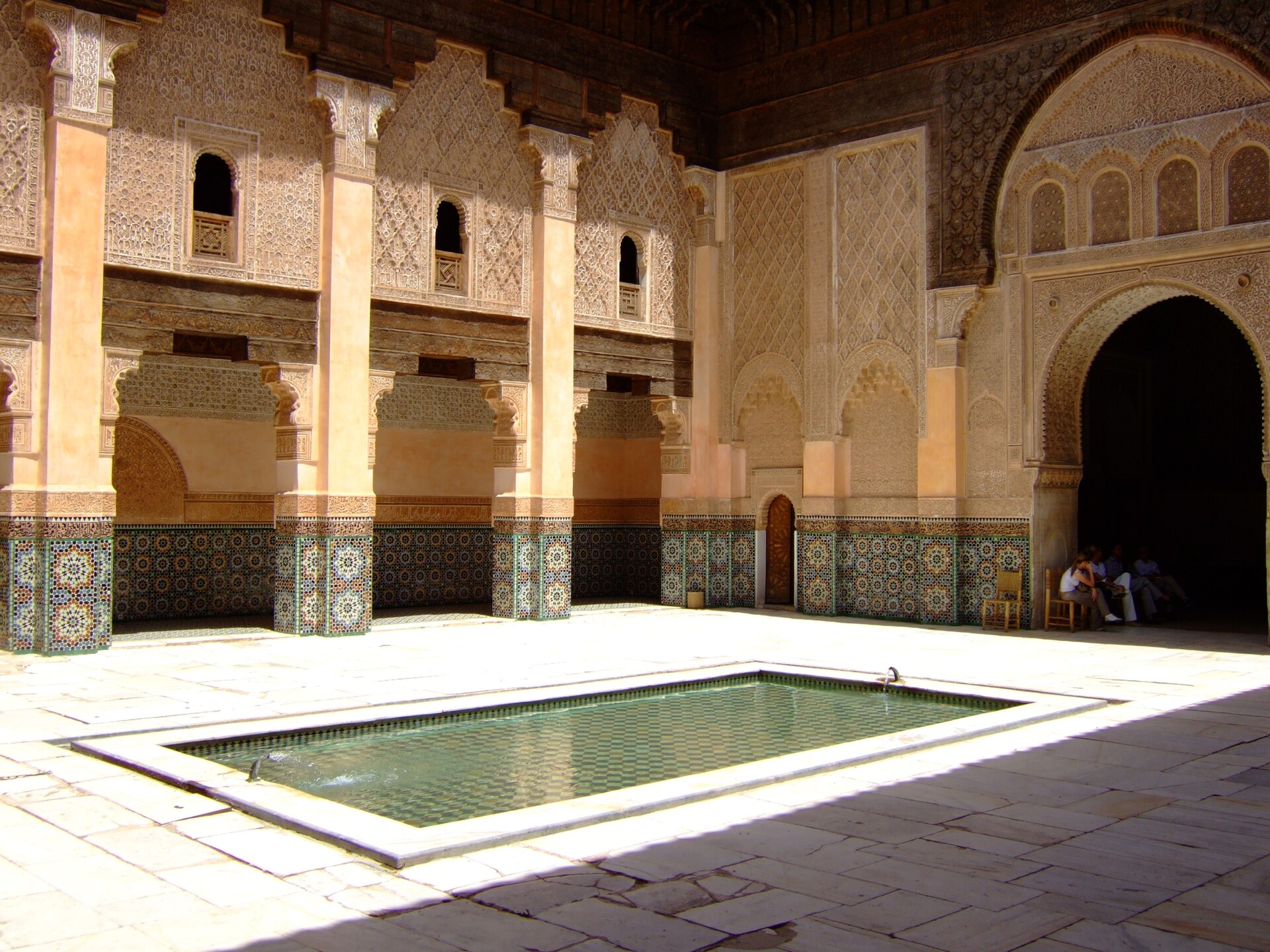
The Medersa Ben Youssef is the largest and most important historical theological college in Morocco — a 14th-century Islamic school (rebuilt in the 16th century under the Saadian dynasty) that once housed 900 students in cells arranged around a courtyard of such architectural perfection that it is considered the finest example of Moorish architecture in North Africa. The medersa closed as a functioning school in 1960 and has been open to visitors since — the only major medersa in Morocco where non-Muslims can enter and experience the full interior. The central courtyard is the masterwork — a rectangular pool surrounded by marble floors, zellige tilework rising to waist height, carved stucco above, and cedar woodwork at the top, creating three bands of decoration that progress from geometric (the tilework) through organic (the stucco arabesques) to Quranic calligraphy (the cedar carving). The principle of Islamic decoration — that geometric patterns represent the infinite order of creation, floral patterns represent the garden of paradise, and calligraphy transmits the word of God — is demonstrated here with a clarity and beauty that makes the architectural theory feel like a spiritual practice. The student cells on the upper floors — small rooms opening onto the courtyard through wooden screens — show how 900 students lived, studied, and memorised the Quran in a space that was simultaneously a dormitory, a library, and a mosque. The medersa underwent a major renovation completed in 2022, and the restored tilework and carved surfaces have a freshness that the centuries of use had softened.
Medina Walls & Gates
Rue Bab Agnaou, Marrakesh, 40008, Morocco
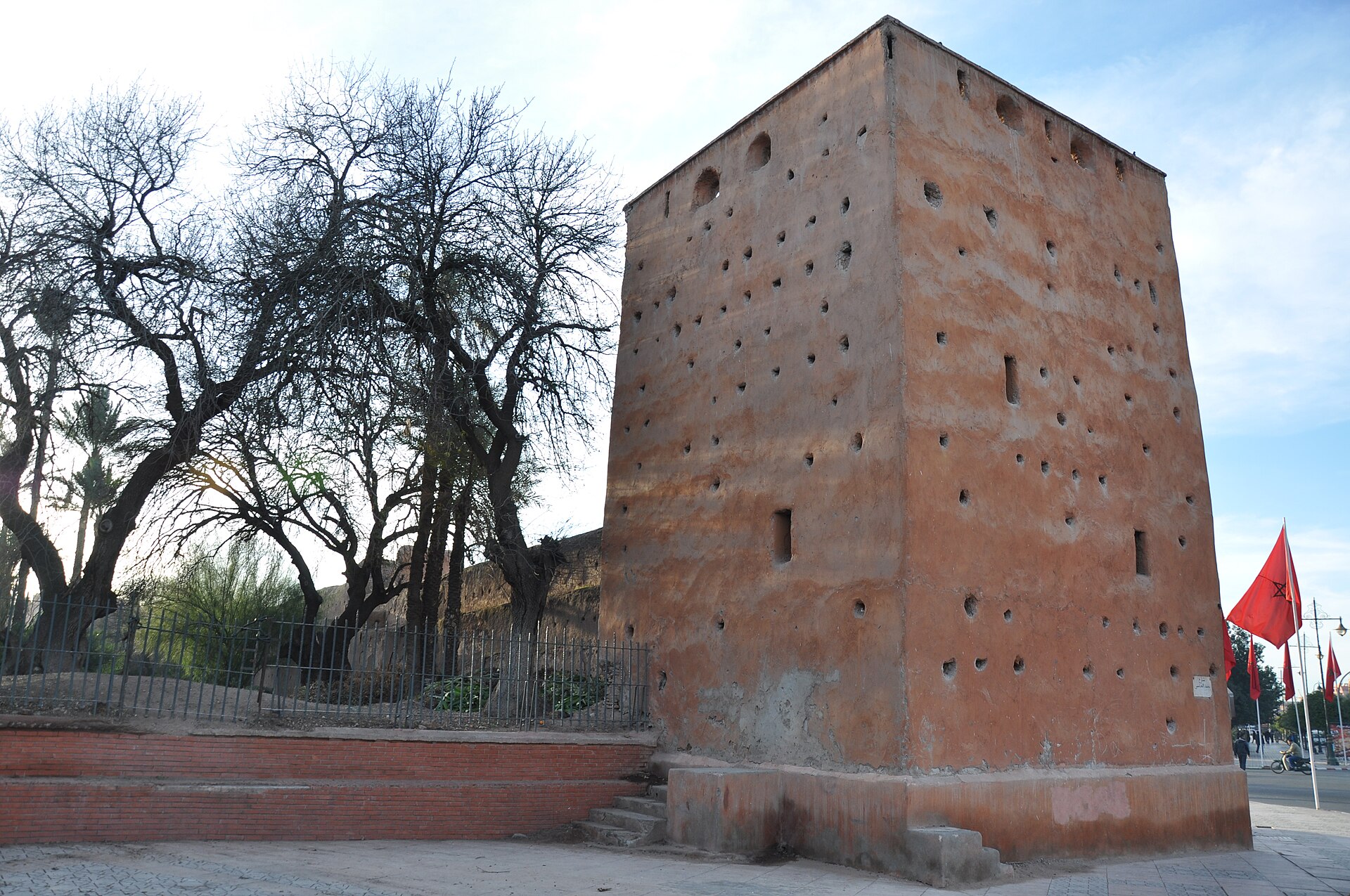
The medina walls of Marrakech are one of the most complete medieval fortification systems in the world — 19 kilometres of 12th-century pisé (rammed earth) walls, 10 metres high and 2 metres thick, encircling the old city in a continuous red-ochre barrier punctuated by 20 gates and 200 towers. The walls give Marrakech its nickname — the Red City — and their colour, which comes from the iron-rich clay of the Haouz Plain, glows gold at sunset in a daily spectacle that has been performing for 900 years. Bab Agnaou, the most ornate of the medina gates, is a masterpiece of Almohad stonework — a horseshoe arch carved with geometric patterns and Quranic calligraphy that served as the ceremonial entrance to the royal kasbah quarter. The gate's decoration — concentric arches of carved stone, each progressively more elaborate — demonstrates the Almohad principle that architectural decoration should lead the viewer's eye inward toward a centre that represents divine unity. Walking along the outside of the medina walls — particularly the stretch between Bab Agnaou and Bab Doukkala — provides a perspective on the city that the dense interior streets can't offer. The walls were built using a tabiya technique (rammed earth between wooden formwork, the same method used to build the Alhambra's walls in Granada), and the construction lines are still visible in the surface, showing where each section of formwork was placed. The walls are remarkably well-preserved given their age, a testament to the durability of rammed earth in the dry Moroccan climate.
Mellah (Jewish Quarter)
Municipalité de Marrakech, Morocco
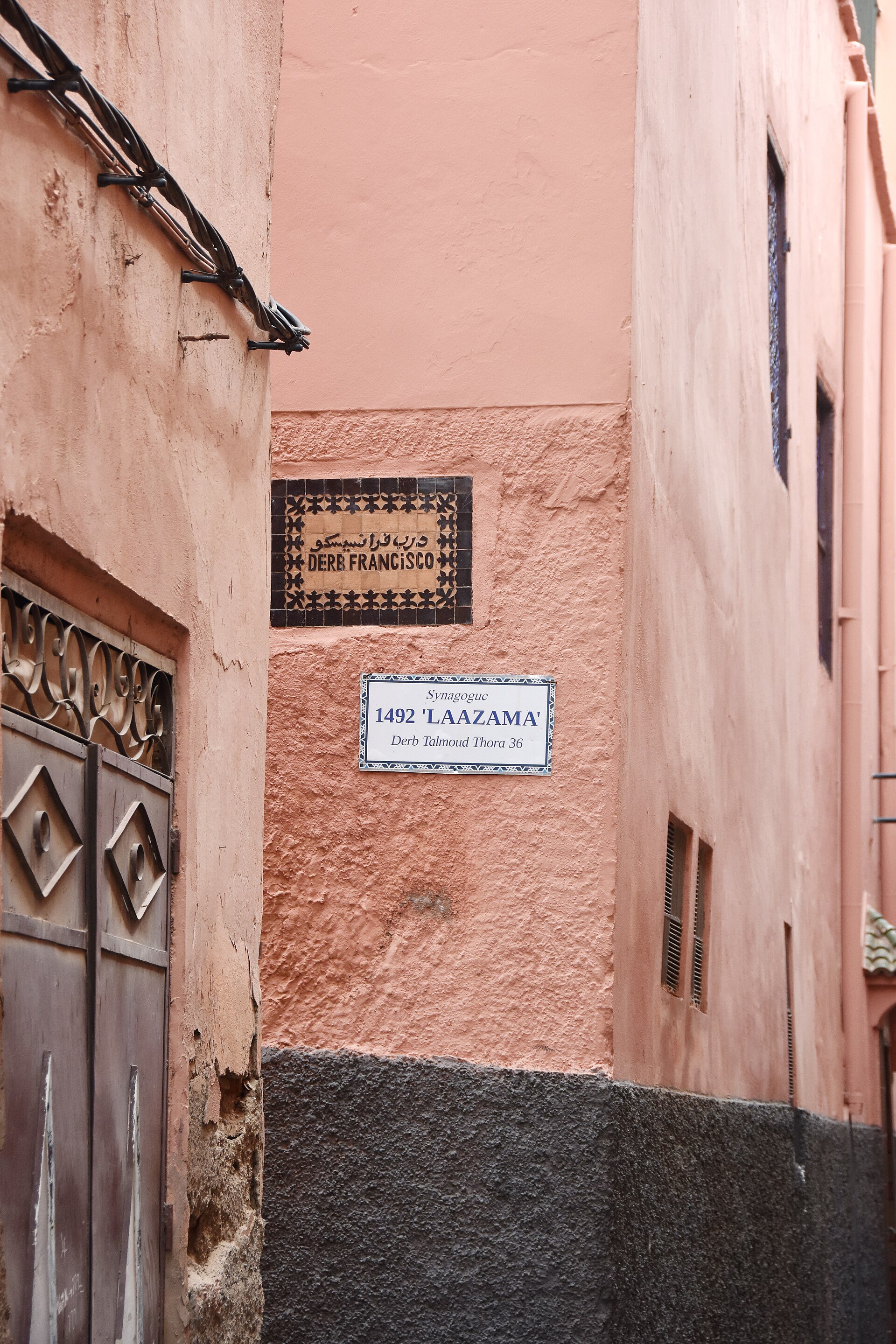
The Mellah is Marrakech's historic Jewish quarter — a walled neighbourhood established in 1558 when the Saadian sultan relocated the Jewish community from the medina to a separate quarter adjacent to the royal palace. The name mellah (meaning 'salt' in Arabic) may derive from the community's historical role in the salt trade, or from the salty land on which the quarter was built, and the term has since been adopted across Morocco to describe any Jewish quarter. Marrakech's Jewish community, which once numbered over 30,000, has largely emigrated (primarily to Israel and France since the 1950s), and the Mellah today is a predominantly Muslim neighbourhood that retains the architectural traces of its Jewish past. The Lazama Synagogue, a small 16th-century building decorated with zellige tiles and carved plaster, is the most important surviving religious building and is open to visitors. The Jewish cemetery (Miâara), one of the largest Jewish cemeteries in Morocco, contains whitewashed tombs stretching across a hillside adjacent to the palace walls. The Mellah's architecture differs from the rest of the medina — the houses have outward-facing balconies and windows (unusual in Moroccan Islamic architecture, which faces inward to a courtyard), reflecting the different domestic traditions of the Jewish community. The Mellah market (now selling spices, textiles, and household goods to Muslim residents) was historically the commercial centre of the Jewish quarter, and the fondouk (caravanserai) buildings that once housed Jewish merchants are being slowly restored. Walking the Mellah's streets — past the balconied houses, the synagogue, the market, and the cemetery — provides a window into a community that shaped Marrakech for 500 years.
Menara Gardens
Avenue de la Menara, Marrakesh, 40020, Morocco
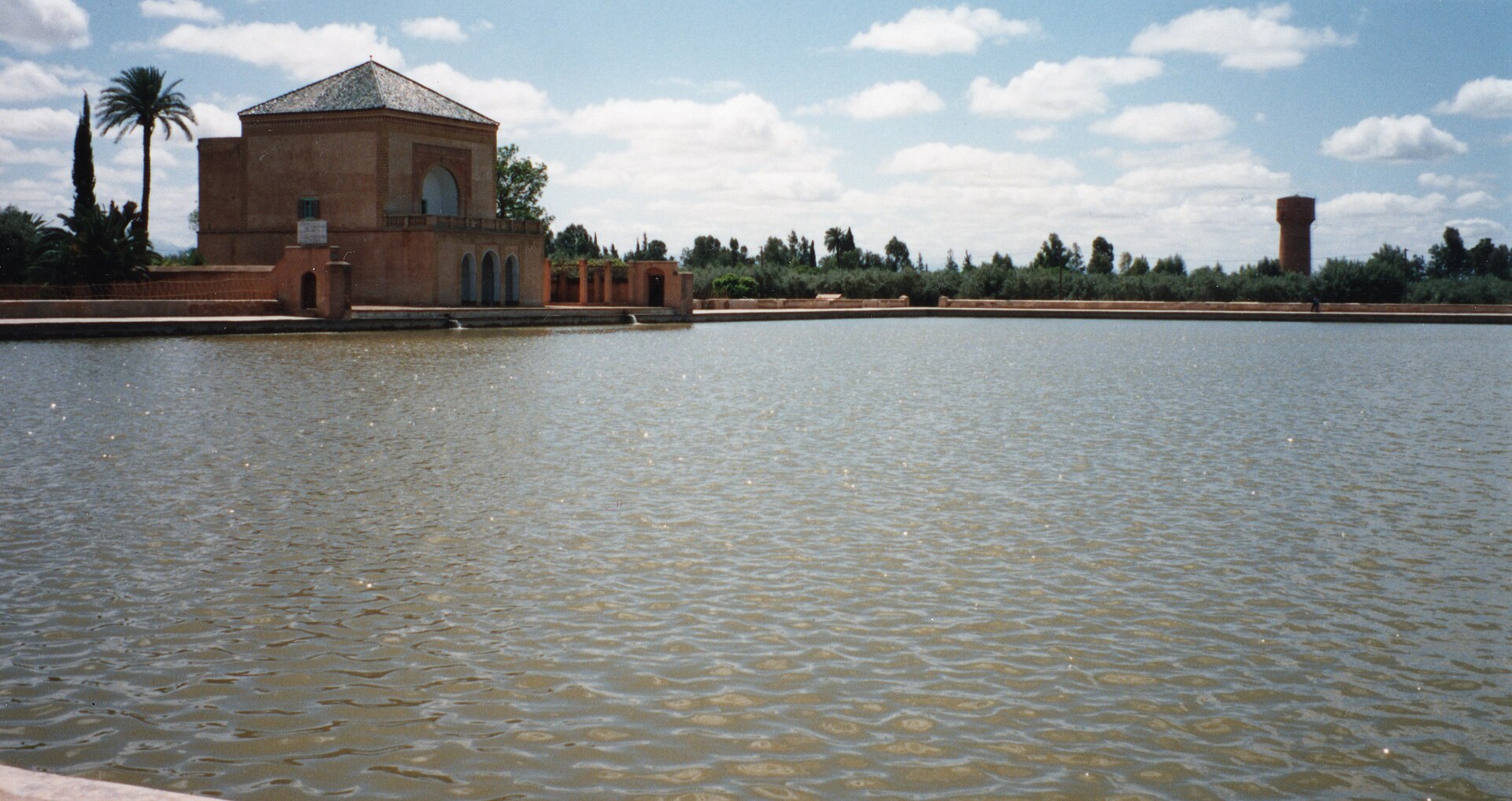
The Menara Gardens are Marrakech's most iconic landscape — a 12th-century Almohad olive grove surrounding a vast reflecting pool that, on a clear day, mirrors the snow-capped Atlas Mountains in a composition that has been the defining image of Marrakech for nearly 900 years. The gardens were created by the Almohad caliph Abd al-Mu'min around 1130 as an agricultural estate and royal retreat, and the combination of ancient olive trees, still water, and the mountain backdrop creates a scene of extraordinary simplicity. The pavilion (menzeh) at the pool's edge — a green-roofed structure from the 19th century, replacing an earlier Saadian pavilion — provides the viewpoint for the classic photograph: the pavilion framed by olives with the Atlas reflected in the pool. The pool itself is fed by the same khettara (underground channel) system that irrigates the Agdal Gardens, bringing snowmelt from the mountains 30 kilometres away without pumps. The gardens are free to enter (there's a small fee for the pavilion) and are best visited in the late afternoon, when the light is warm and the Atlas Mountains are most visible. The olive grove — over 100 hectares of ancient trees — provides shade that makes the gardens one of the few comfortable outdoor spaces in Marrakech's summer heat. The gardens are a 45-minute walk from the Jemaa el-Fna or a short taxi ride, and the approach through the Bab Jdid gate provides a dramatic transition from the medina's density to the garden's open landscape.
Mouassine Mosque & Fountain
35 Derb El Arsa, Marrakesh, 40008, Morocco
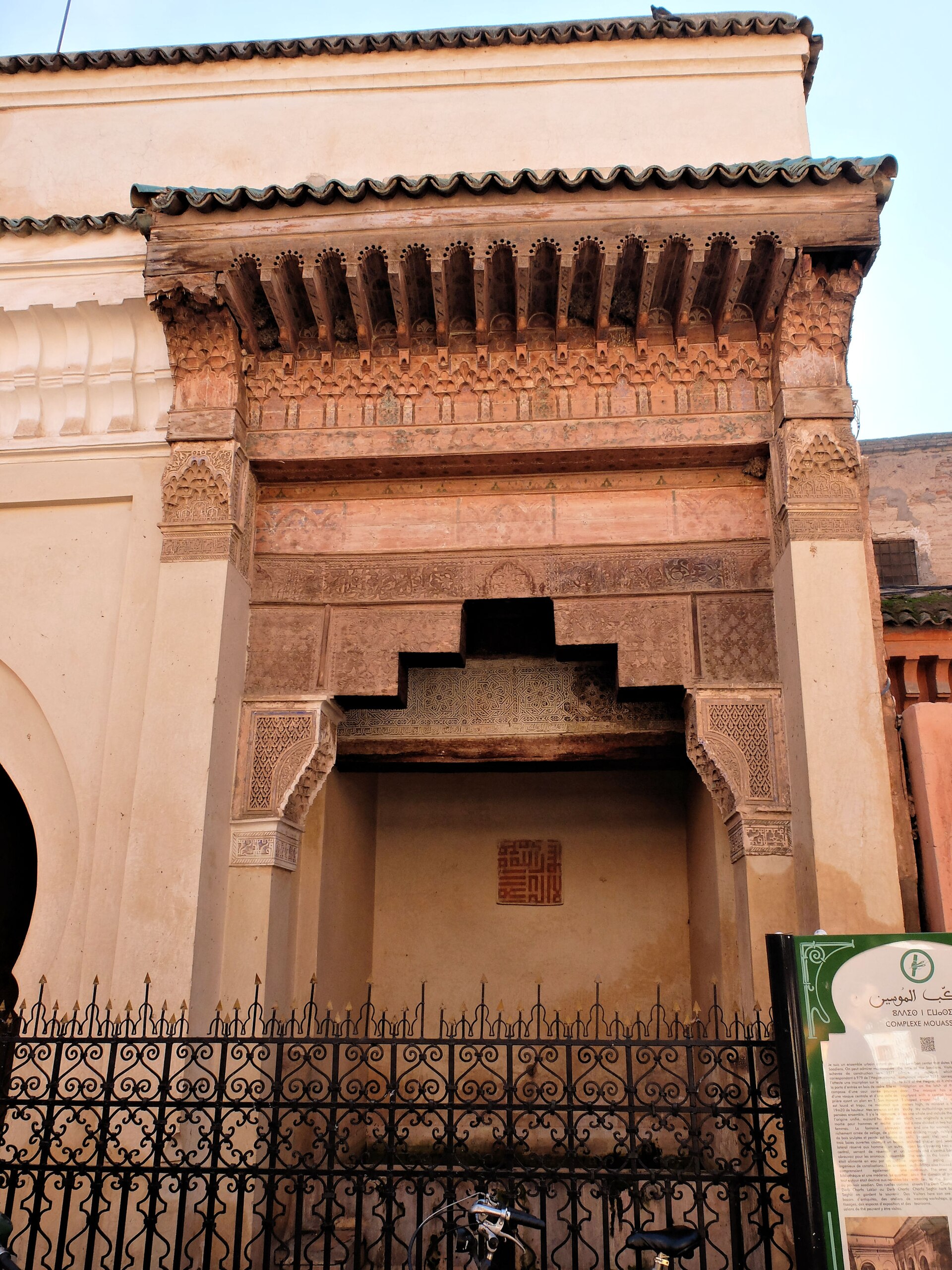
The Mouassine Mosque is a 16th-century Saadian mosque at the centre of one of the medina's most atmospheric neighbourhoods — a quarter of narrow alleys, restored riads, and the Mouassine Fountain, a monumental public fountain that served the neighbourhood's ritual ablution needs for 500 years. The fountain, with its carved cedar canopy, zellige-tiled walls, and three arched bays (one for people, one for animals, one for leather workers), is one of the finest examples of Saadian civic architecture. The Mouassine quarter has become the epicentre of Marrakech's riad hotel scene — the narrow alleys around the mosque contain some of the city's most beautifully restored traditional houses, converted into boutique guesthouses whose interiors (hidden behind plain medina doors) are studies in Moroccan decorative art. The contrast between the alleys (narrow, plain, giving nothing away) and the riads (lush, tiled, fountained) is the essential Marrakech experience — beauty is always hidden behind walls. The neighbourhood's recent renovation has added concept stores, art galleries, and the kind of craft shops that sell to design-conscious visitors rather than souvenir hunters. The Mouassine Museum, in a restored 12th-century hammam, documents the neighbourhood's history and the traditional functions of the mosque complex (mosque, hammam, fountain, madrasa) that made each Marrakech neighbourhood a self-contained community.
Musée de Marrakech
Rue El Youssi, Marrakesh, 40070, Morocco
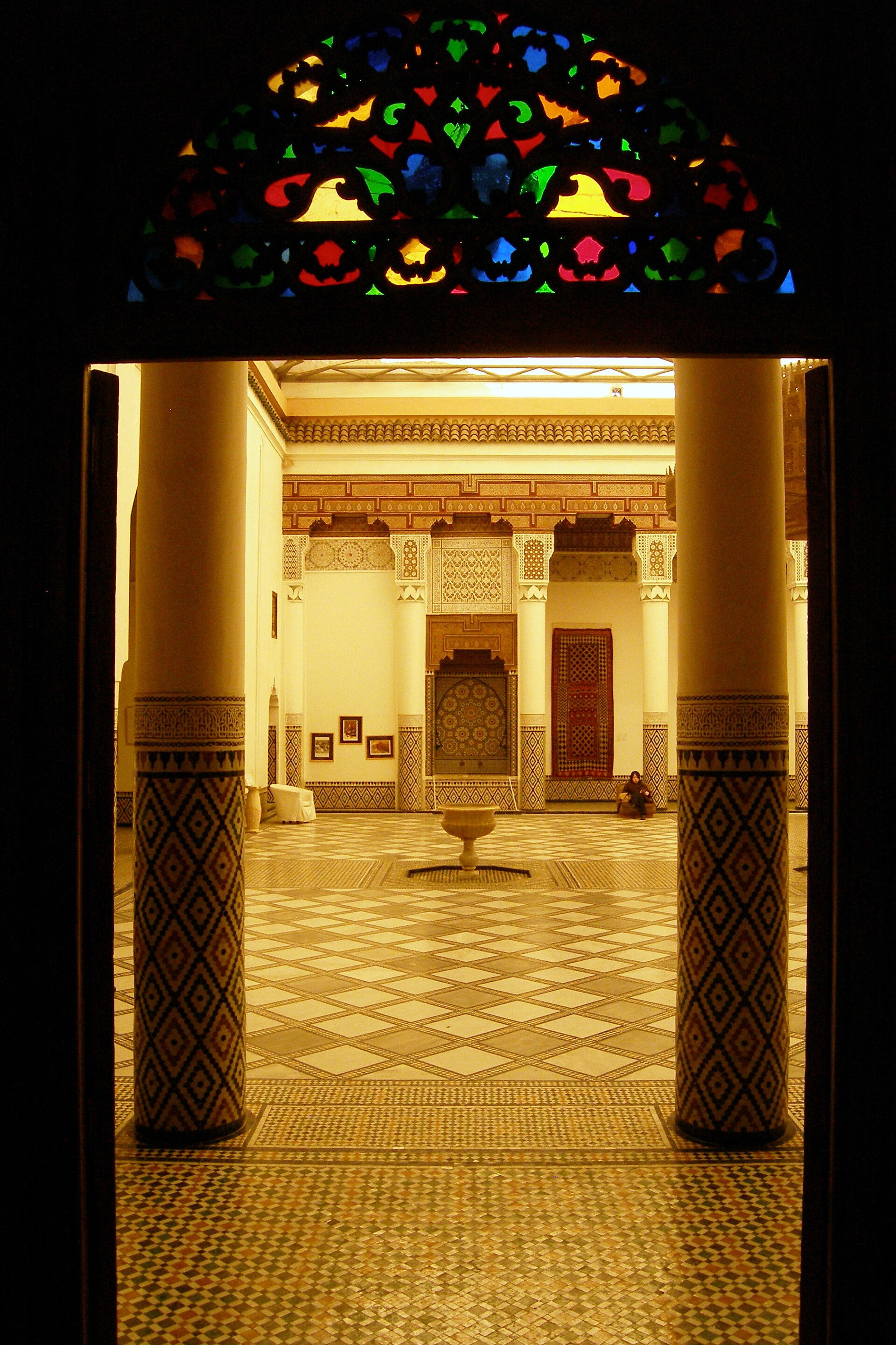
The Musée de Marrakech occupies the Dar Menebhi Palace — a 19th-century palace on Place Ben Youssef that was restored by the Omar Benjelloun Foundation and opened as a museum in 1997. The palace itself is the primary exhibit — a central courtyard of breathtaking proportions with a massive brass lantern hanging from the ceiling, surrounded by rooms decorated with carved stucco, zellige, and painted wood that demonstrate the full vocabulary of Moroccan decorative arts. The museum's art collection is secondary to the architecture — rotating exhibitions of Moroccan and international contemporary art, Berber craft, and historical displays share the palace's rooms without dominating them. The hammam in the palace's basement has been restored and is open for viewing, providing a rare opportunity to see the interior of a traditional palace hammam with its vaulted ceilings, star-shaped light openings, and the warming systems that heated the water and floors. The museum's location on Place Ben Youssef, adjacent to the Medersa Ben Youssef and the Koubba Almoravid (the only surviving Almoravid building in Marrakech, an 11th-century ablution pavilion with an ornate dome), creates a triangle of historical architecture that covers 900 years of Marrakech's building tradition in a single square. The combined ticket for the museum, medersa, and Koubba is the best-value heritage experience in the medina.
Museum of African & Amazigh Art (MACAAL)
Route de l'Ourika, Marrakesh, 40000, Morocco
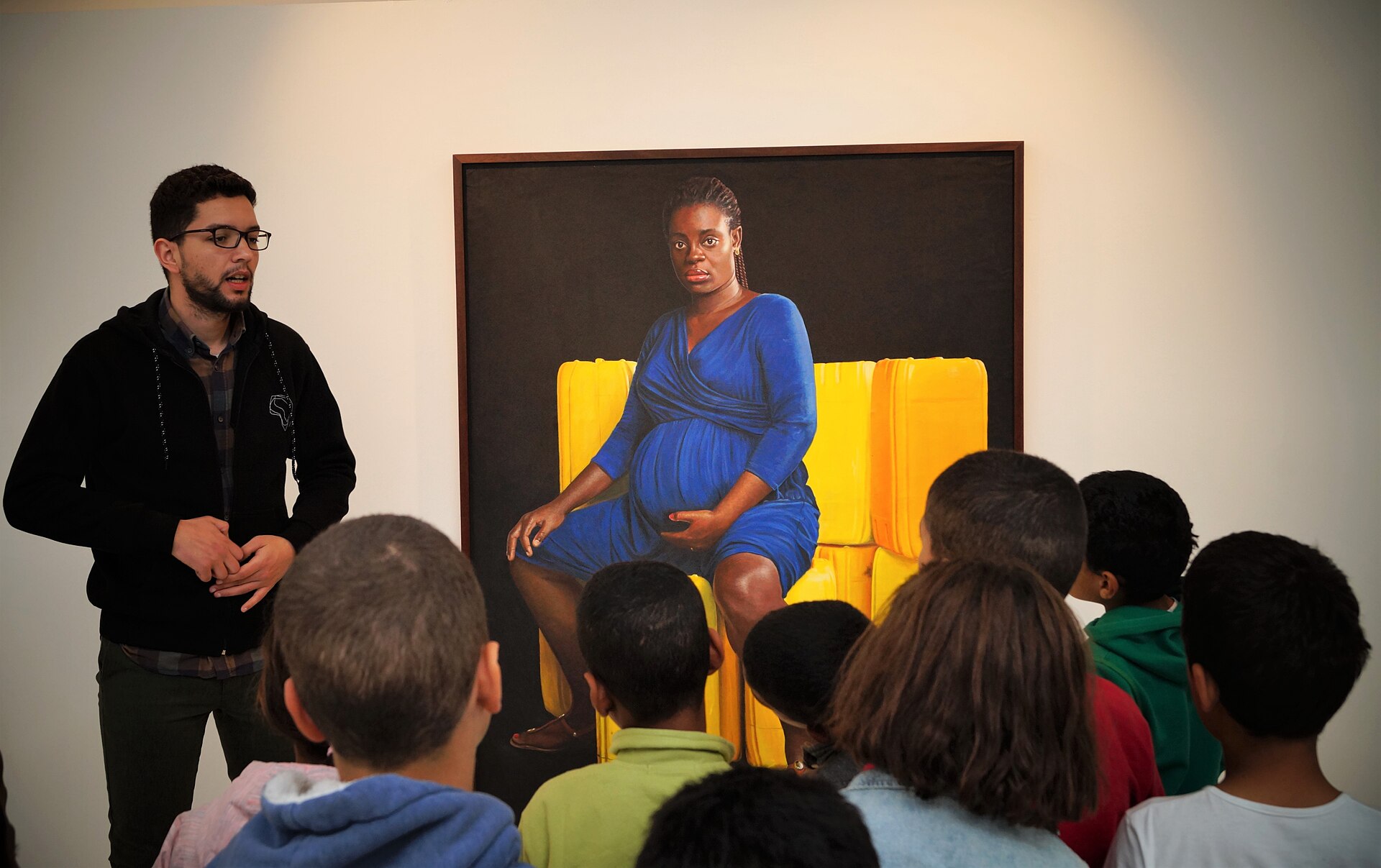
MACAAL (Musée d'Art Contemporain Africain Al Maaden) is North Africa's first museum dedicated to contemporary African art — a purpose-built gallery on the outskirts of Marrakech that houses the collection of the Al Maaden Foundation alongside rotating exhibitions of contemporary African artists. The museum, opened in 2018, positions itself as a pan-African institution — showing art from across the continent in a region where North African and sub-Saharan art worlds rarely intersect. The collection focuses on contemporary painting, sculpture, photography, and installation by African artists working on the continent and in the diaspora. The exhibition programme has featured major solo shows by Hassan Hajjaj (the Moroccan artist known as 'the Andy Warhol of Marrakech'), South African artist William Kentridge, and group exhibitions that map the connections between contemporary art practices across the continent. The museum's location in the Al Maaden golf resort and residential development, 15 minutes south of the medina, places it firmly outside the tourist circuit — visiting requires intention and transport. But the quality of the exhibitions, the quiet of the gallery spaces, and the opportunity to see African contemporary art in an African institution (rather than filtered through a Western museum's lens) make MACAAL one of the most intellectually rewarding museum experiences in Marrakech.
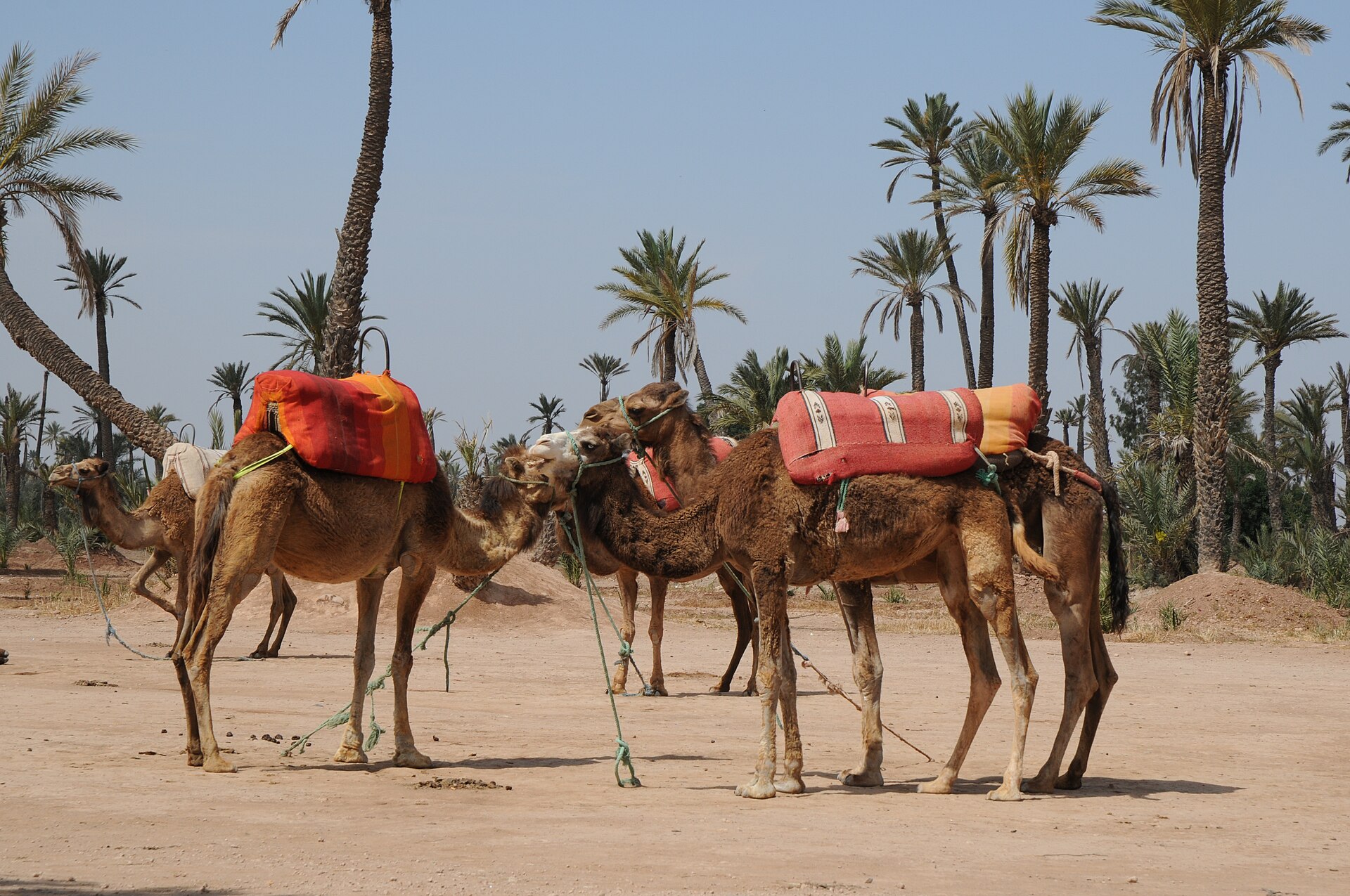
Palmeraie
Circuit de la Palmeraie, Marrakech
The Palmeraie is a 13,000-hectare palm grove on the northern edge of Marrakech — a landscape of over 100,000 date palms planted during the Almoravid dynasty in the 11th century that has been both an agricultural resource (the dates, olives, and gardens irrigated by the khettara system) and a recreational retreat for nine centuries. The palm grove is traditionally said to have grown from date stones discarded by the Almoravid army as they ate their provisions during the siege of Marrakech. The Palmeraie's character has changed dramatically in recent decades — luxury hotels, golf courses, and gated residential compounds have colonised much of the grove, and the traditional irrigation system (which sustained the palms for centuries) has been disrupted by groundwater extraction for the new developments. The tension between heritage preservation and commercial development is one of Marrakech's most visible environmental debates. Despite the development, the central sections of the Palmeraie retain their agricultural character, and a camel ride or quad bike excursion through the palm groves provides a glimpse of the landscape that has surrounded Marrakech since its founding. The golden light filtering through the palm canopy in the late afternoon creates the kind of luminous atmosphere that has attracted painters and photographers since Orientalist artists began visiting Morocco in the 19th century. The Palmeraie is a 15-minute drive from the medina.
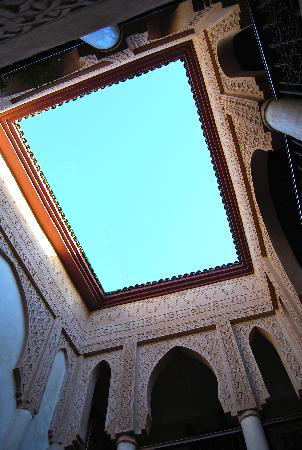
Riad Architecture & Courtyard Culture
Various riads, Medina, Marrakech
The riad is Marrakech's defining architectural form — a traditional courtyard house built around a central garden (the word riad comes from the Arabic ryad, meaning garden) that turns its back on the street and opens inward to light, water, and plantings. The riad's blank exterior walls — giving nothing away to the street — and its lush interior courtyard — fountains, zellige tiles, orange trees, bougainvillea — create the contrast between public austerity and private beauty that defines Moroccan domestic architecture. Hundreds of riads in the medina have been converted into boutique hotels since the early 2000s, when French and European investors began purchasing derelict medina houses and restoring them to a standard of luxury that exceeds anything the original owners could have imagined. The best riad hotels (Riad Jardin Secret, Riad Goloboy, La Mamounia's smaller properties) demonstrate Moroccan craftsmanship at its finest — carved plaster, painted cedar ceilings, hand-cut zellige, and the courtyard gardens that provide the cool, green heart of every riad. The riad design is a response to climate — the courtyard creates a microclimate several degrees cooler than the surrounding streets, the thick walls absorb heat during the day and release it at night, and the rooftop terrace (essential for evening socialising) catches the breeze above the medina walls. Staying in a riad is the most immersive accommodation experience in Marrakech, and the nightly ritual of climbing to the rooftop to watch the sunset over the medina — minarets silhouetted, swallows circling, the call to prayer rising from the mosques below — is one of the great travel moments in Morocco.
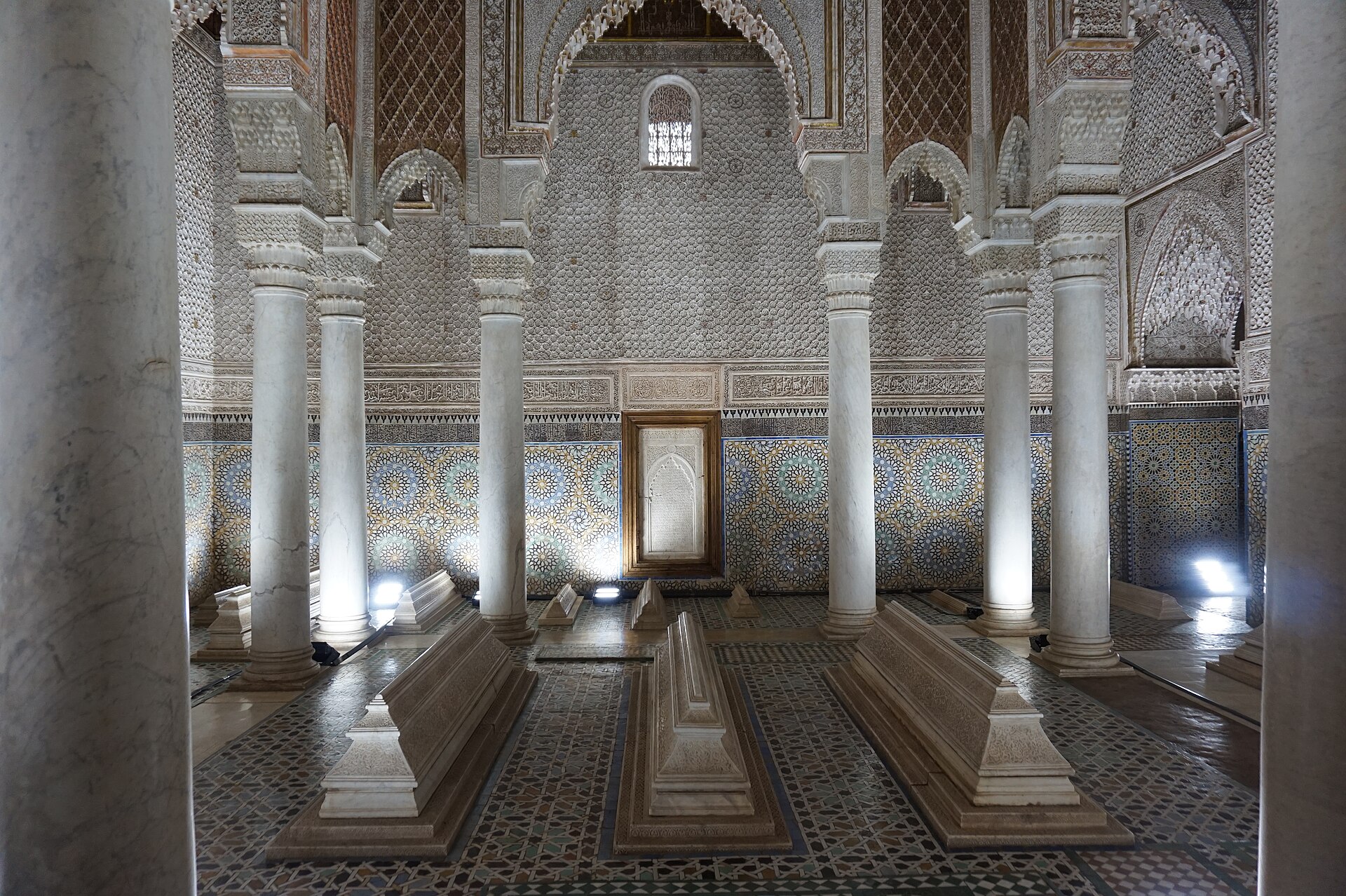
Saadian Tombs
Rue de la Kasbah, Marrakesh, 40040, Morocco
The Saadian Tombs are the most exquisite funerary architecture in Morocco — a 16th-century royal mausoleum complex that was sealed and forgotten for centuries until the French discovered it during an aerial survey in 1917. The tombs date to the reign of Sultan Ahmad al-Mansur (1578-1603), who built the Hall of Twelve Columns as his own mausoleum using Italian Carrara marble, carved cedar, gold leaf, and the finest zellige tilework that Moroccan craftsmen could produce. The Hall of Twelve Columns is the centrepiece — a chamber of 12 marble columns supporting a carved cedar dome, with the sultan's tomb at the centre and the tombs of his family members surrounding it. The craftsmanship is extraordinary: the muqarnas (honeycomb vaulting) above the tomb is carved from cedar and gilded, the marble columns were imported from Italy at enormous expense, and the zellige tilework on the lower walls uses patterns so precise that the geometric perfection was understood as a reflection of divine order. The tombs were sealed by the Alaouite dynasty (which overthrew the Saadians in the 17th century) to prevent them from becoming a pilgrimage site that might legitimise the rival dynasty's claim to power. The sealing preserved the tombs from the weather, looting, and the general entropy that has damaged so many Moroccan historical sites. The narrow passage through which visitors enter — the only access the French left open — creates a dramatic transition from the dusty kasbah streets to the cool, tiled splendour of the mausoleums.
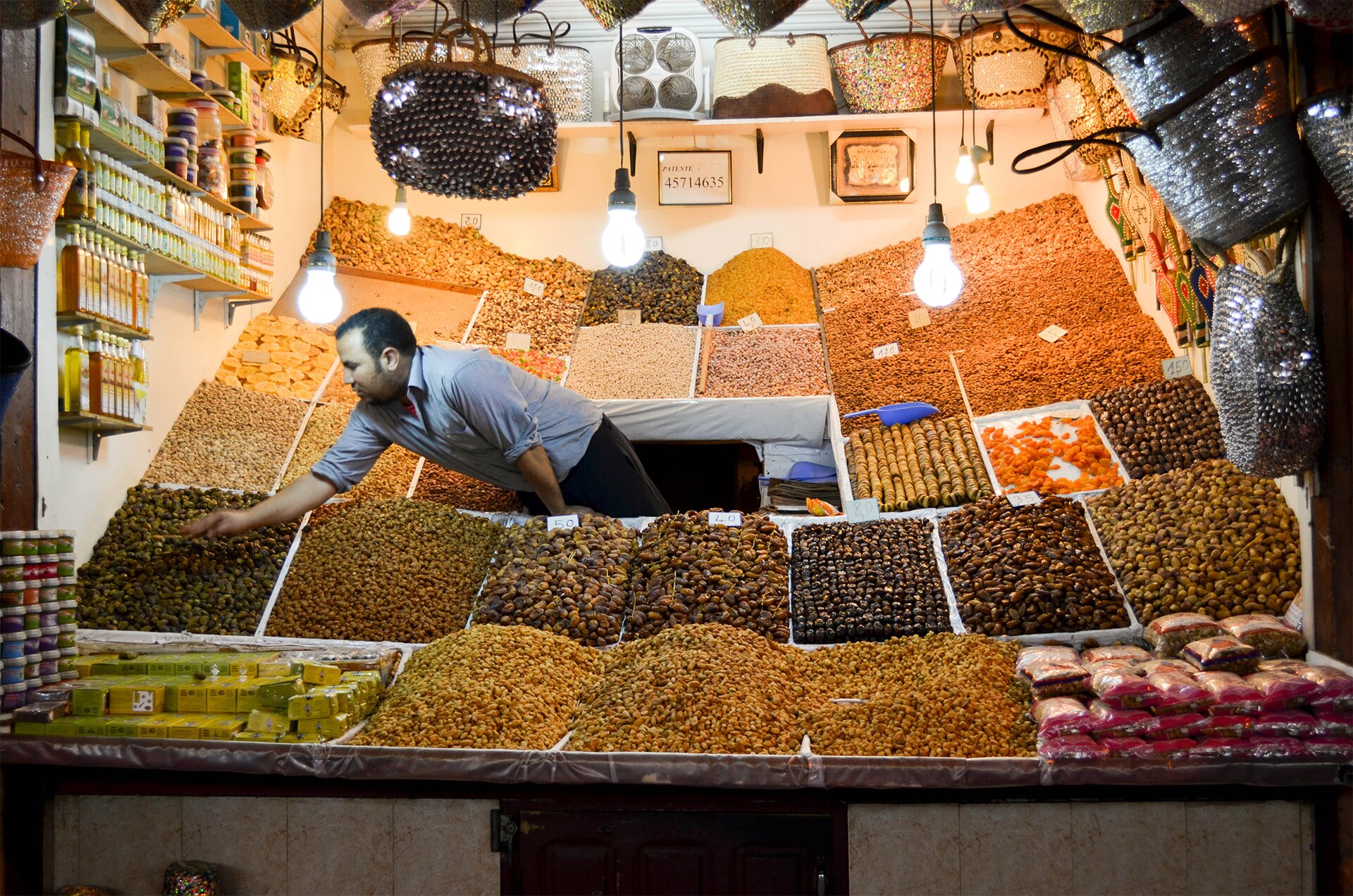
Souks of Marrakech
Souk Semmarine, Marrakesh, 40008, Morocco
The souks of Marrakech are the largest traditional market in Morocco — a labyrinth of covered alleyways radiating north from Jemaa el-Fna that is organised by trade: leather workers in one section, metalworkers in another, spice merchants, textile dealers, woodworkers, basket weavers, and the lamp shops whose pierced brass lanterns cast starfield patterns on the walls and ceiling. The souk system has been operating since the city was founded in the 11th century, and the principle — grouping trades together so buyers can compare — is the medieval ancestor of the modern shopping mall. Souk Semmarine is the main artery — a wide, covered passage that branches into narrower alleys as you move north, each specialising in a different craft. The dyers' souk (Souk des Teinturiers), where freshly dyed wool and silk hangs from bamboo poles above the alley in cascading skeins of saffron, indigo, and crimson, is the most photogenic. The spice souk fills the air with cumin, cinnamon, saffron, and the ras el hanout spice blend that is Morocco's contribution to the world's pantry. The leather souk leads to the tanneries, where animal hides are treated in stone vats using methods that haven't changed since the Middle Ages. Navigation in the souks requires surrendering to disorientation — the alleys twist, fork, and dead-end in ways that GPS cannot reliably track, and getting lost is not a risk but a certainty. The compensation for being lost is discovering workshops, fondouks (caravanserais, the medieval inns where traders stored goods), and pockets of quiet craftwork that the main tourist routes never reach. Bargaining is expected and is a social interaction rather than a commercial confrontation — the process involves tea, conversation, and the mutual performance of outrage at prices offered and rejected.
Spice Market (Rahba Kedima)
Rahba Kedima, Medina, Marrakech
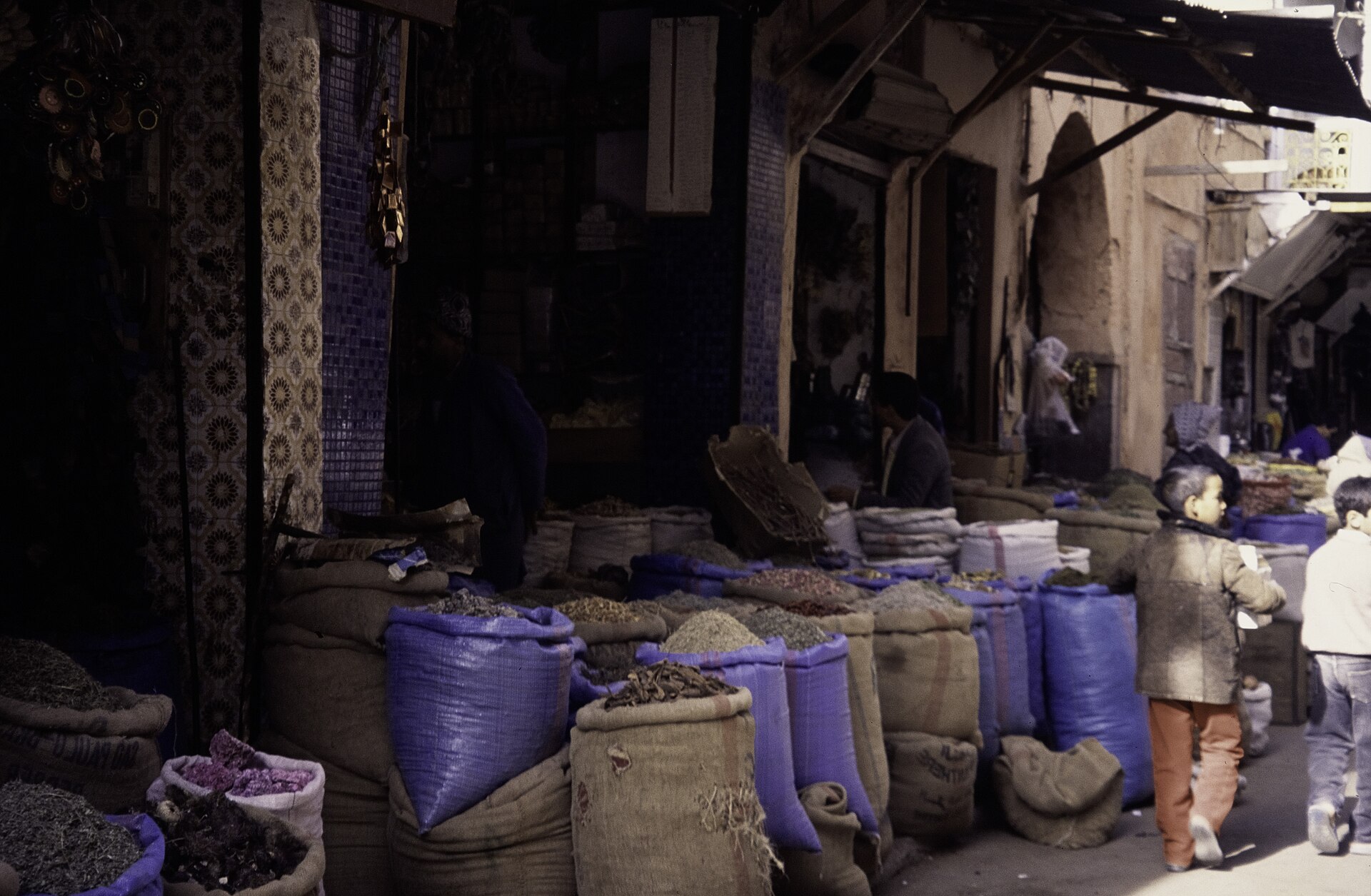
Rahba Kedima (the Old Square) is the spice market at the heart of Marrakech's souk system — a small, irregular plaza surrounded by stalls selling the spices, herbs, cosmetics, and traditional remedies that have been traded in this location since the city's founding. The square is sometimes called the Place des Épices (Spice Square) and is the most aromatically intense space in the medina — pyramids of cumin, saffron, turmeric, cinnamon, and paprika create a palette of colour and scent that overwhelms first-time visitors. The spice vendors are among the most knowledgeable merchants in the souk — the best (identifiable by the locals buying from them rather than tourists) can explain the origin, quality, and use of every spice in their display, and the education you receive from a good spice merchant is worth more than the spices you buy. Saffron (Morocco is a significant producer), ras el hanout (the complex spice blend whose name means 'head of the shop,' meaning the merchant's best blend), and argan oil (produced from the nuts of a tree that grows only in Morocco) are the essential purchases. The square also houses traditional apothecary stalls selling kohl (eye liner), ghassoul (clay used for hair and skin washing), and the herbal preparations that straddle the line between cosmetic and medicine. The terrace cafés overlooking the square (Café des Épices, Le Jardin) provide elevated views across the spice displays and the souk traffic, and the afternoon spent sitting above the square with a mint tea, watching the spice trade in action, is one of Marrakech's most contemplative experiences.
Tanneries of Marrakech
Municipalité de Marrakech, Morocco
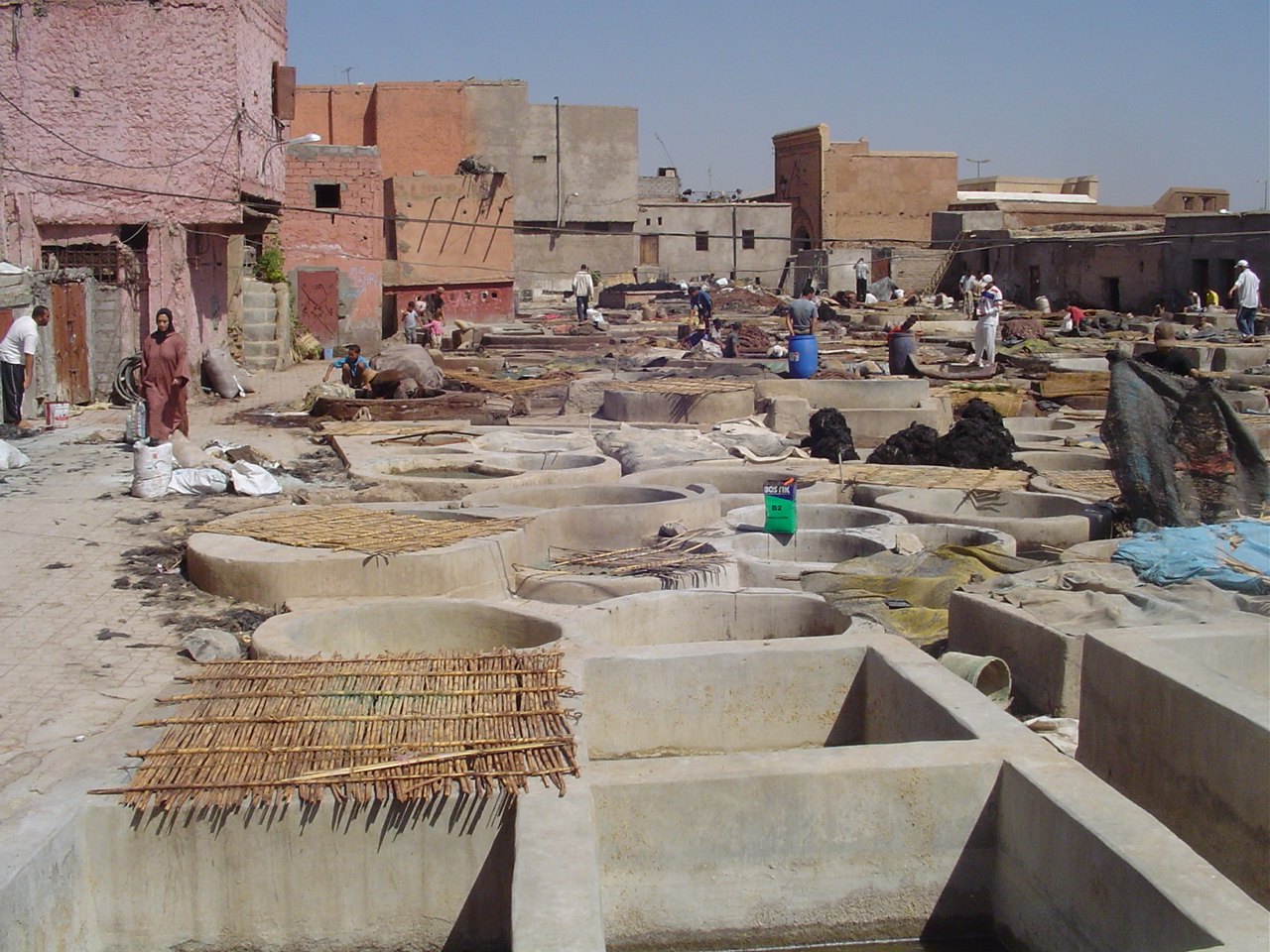
The tanneries of Marrakech are where leather is made the way it has been made for a thousand years — animal hides soaked in vats of pigeon dung, quicklime, and vegetable dyes in open-air pits that produce the leather goods sold throughout the souks. The process is physically demanding, visually dramatic, and olfactorily challenging — the smell of the tanneries, a combination of animal skin, dung, and chemical treatment, is intense enough that visitors are traditionally offered sprigs of mint to hold under their noses. The main tannery complex near Bab Debbagh consists of dozens of stone vats sunk into the ground, each filled with a different coloured liquid — white (lime for hair removal), brown (tanning agents), red (poppy), yellow (saffron), and blue (indigo). Workers stand in the vats up to their waists, treading the hides with their feet in a process that relies on human labour rather than machinery. The view from the surrounding leather shops' terraces — looking down into the pits of colour with the medina walls behind — is one of Marrakech's most photographed scenes. The tanneries are a functioning workplace, not a tourist attraction, and visiting requires navigating the leather shops that surround the viewing terraces (the shopkeepers grant access in exchange for the expectation, though not the obligation, of a purchase). The leather goods — bags, shoes, belts, jackets — are made from the hides tanned in the pits below, and buying directly from the tannery shops (with appropriate bargaining) can produce quality leather at prices significantly below the tourist souks.