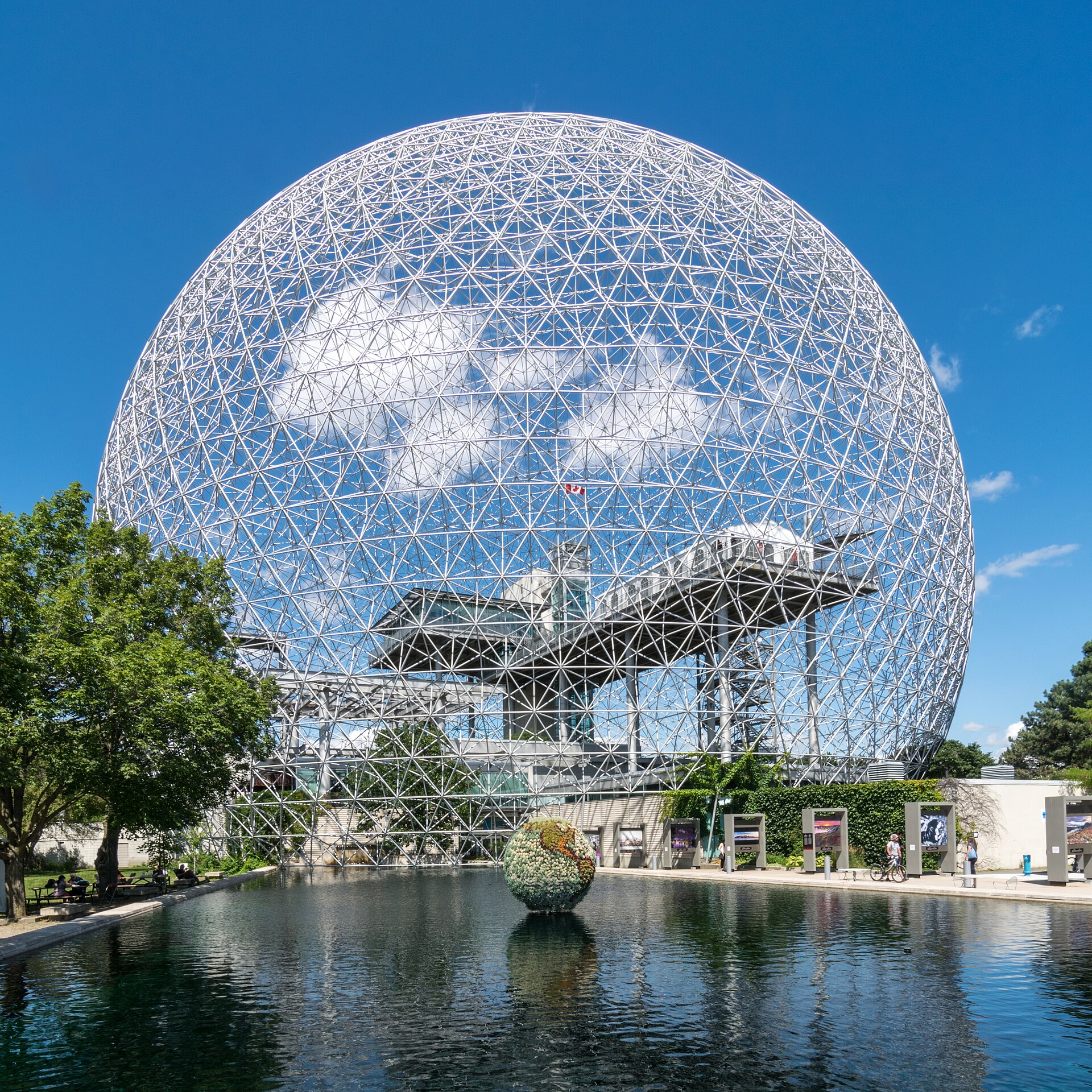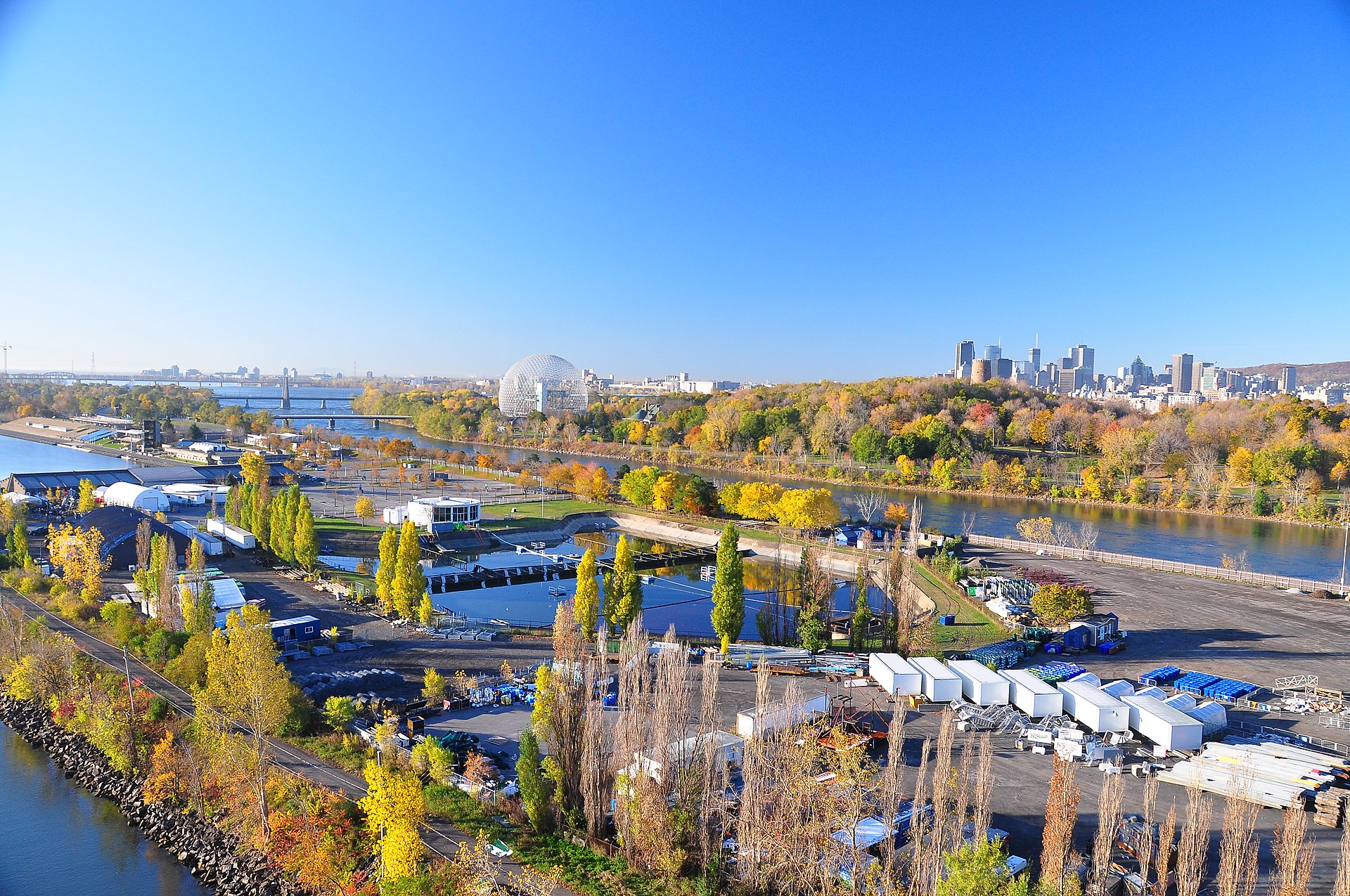
Parc Jean-Drapeau occupies two islands in the St. Lawrence River — Île Sainte-Hélène and Île Notre-Dame — that together form Montreal's most versatile public space: a park, a beach, a Formula 1 circuit, a casino, a concert venue, and the site of the Biosphère, all connected by paths and accessible by metro (one of the few island parks in the world with its own subway station).
Île Notre-Dame was entirely man-made — built from the earth excavated for the metro system in the 1960s, shaped into an island, and used as the site of Expo 67. The Circuit Gilles-Villeneuve, the track used for the Canadian Grand Prix, wraps around the island and is open to cyclists and inline skaters when the race isn't on. The casino (housed in the former French and Quebec Expo pavilions) occupies the island's centre, and the beach on the island's southern shore is one of the few swimmable beaches in Montreal.
Île Sainte-Hélène has been a park since 1874 and contains the Biosphère, the Stewart Museum (military history in an 1820s British fort), and the outdoor amphitheatre that hosts Osheaga (Montreal's largest music festival). Alexander Calder's monumental sculpture 'Man' — a 21-metre steel stabile commissioned for Expo 67 — stands on the island's hillside and is one of the largest outdoor Calder works in the world. The park is reachable by metro (Jean-Drapeau station) or by the Jacques-Cartier Bridge pedestrian path, and the views of the Montreal skyline from the island — particularly at sunset — are among the best in the city.
Verified Facts
Île Notre-Dame was built from earth excavated for the metro system
The Canadian Grand Prix is held on the Circuit Gilles-Villeneuve
Calder's 'Man' sculpture was commissioned for Expo 67
The park is accessible via the Jean-Drapeau metro station
Get walking directions
Île Sainte-Hélène, Montreal