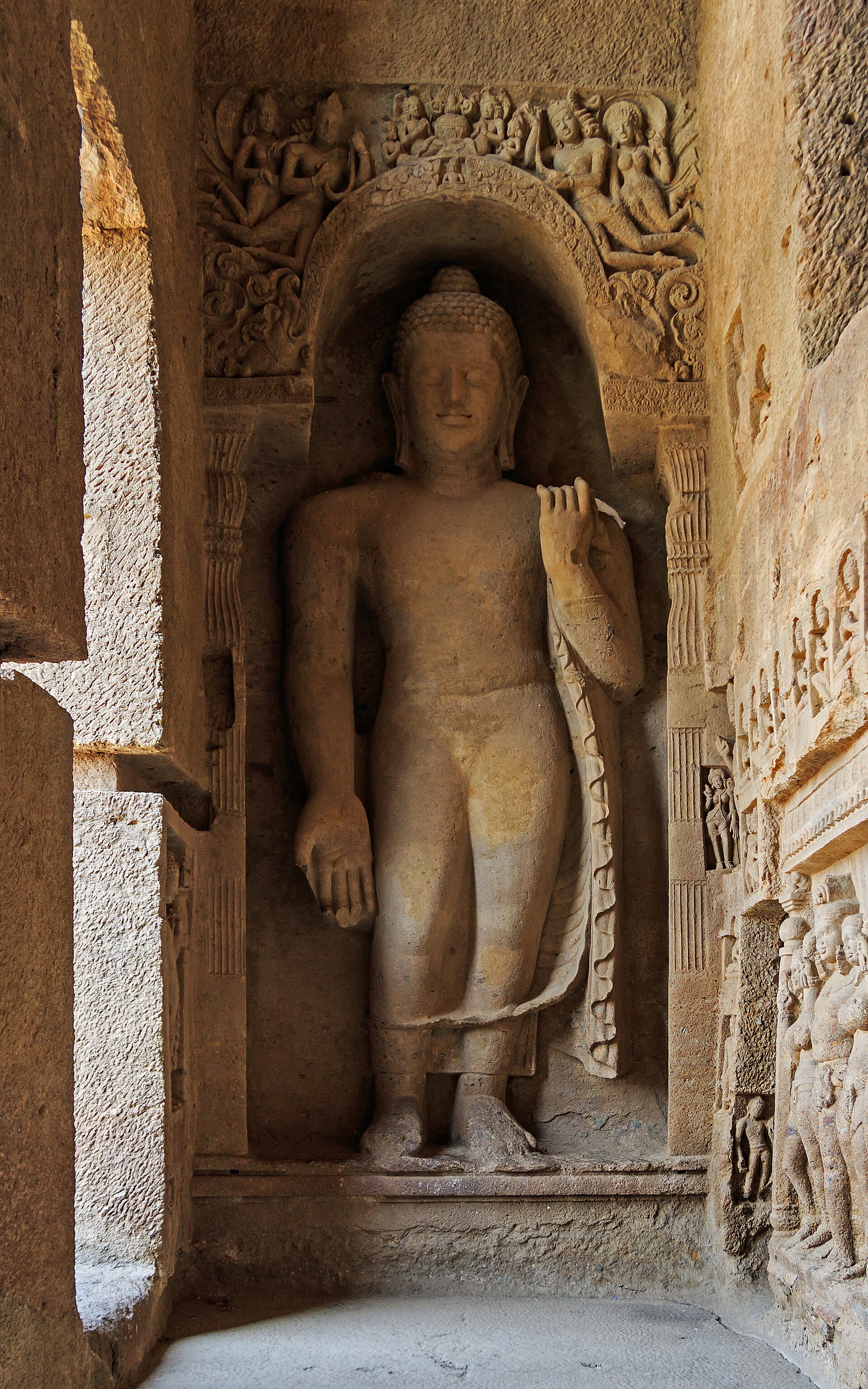
The Kanheri Caves are a complex of 109 rock-cut Buddhist caves carved into a basalt hillside in Sanjay Gandhi National Park between the 1st century BC and 10th century AD — making them one of the longest continuously inhabited monastic sites in India. The caves include viharas (monasteries), chaityas (prayer halls with stupas), and an elaborate water management system of cisterns and channels carved into the rock that supplied the community of hundreds of monks who lived here when Mumbai was still a remote trading post.
The main chaitya (Cave 3) has a vaulted ceiling, carved columns, and a 5-metre-tall stupa that creates a space of extraordinary acoustic and spiritual power. The caves sit within Sanjay Gandhi National Park — a 104-square-kilometre forest inside Mumbai's city limits that also contains a lion and tiger safari, and where leopards from the park occasionally wander into the surrounding suburbs.
Verified Facts
The Kanheri Caves comprise 109 rock-cut Buddhist caves
They were carved between the 1st century BC and 10th century AD
Sanjay Gandhi National Park covers 104 square kilometres
The main chaitya (Cave 3) contains a 5-metre-tall stupa
Get walking directions
Mumbai Suburban, Mumbai, 400066, India