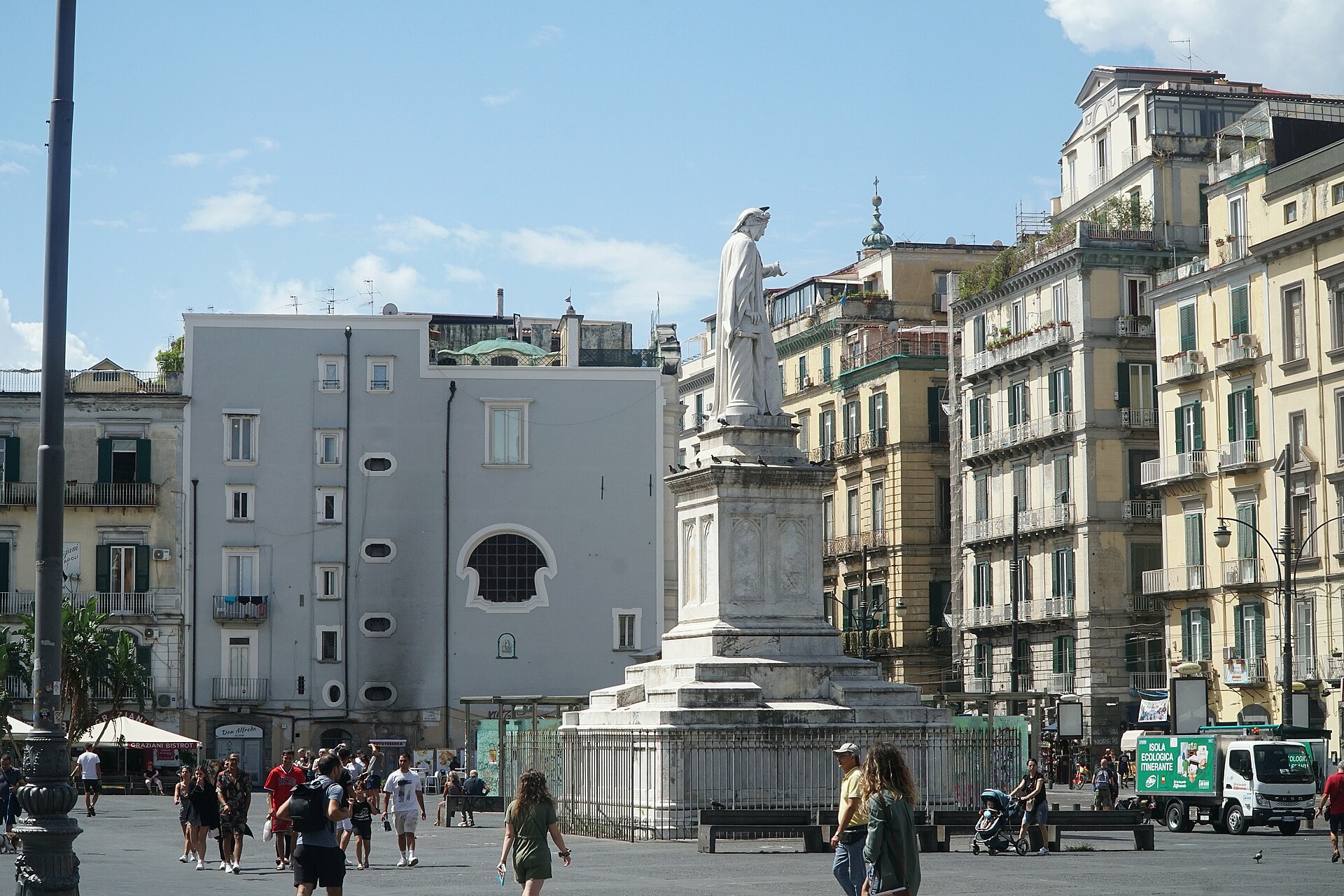
Before it was Piazza Dante, this was the Largo del Mercatello — the "little market" — and for centuries it was where Naples came to buy, sell, argue, and occasionally riot. The semicircular colonnade that curves around the eastern side was designed by Luigi Vanvitelli in 1757 for Charles III of Bourbon, originally intended to frame a massive statue of the king. The statue was never built, the Bourbons fell, and in 1871 a statue of Dante Alighieri was plunked in the center instead, giving the square its current name.
Vanvitelli's colonnade is a masterclass in political architecture that outlived its original purpose. Twenty-six statues representing the virtues of Charles III line the rooftop, silently praising a king nobody here cares about anymore. But the architecture works regardless — it creates a theatrical backdrop that makes the piazza feel like a stage set, which is fitting because this square has always been a place of public performance, from market vendors to political rallies.
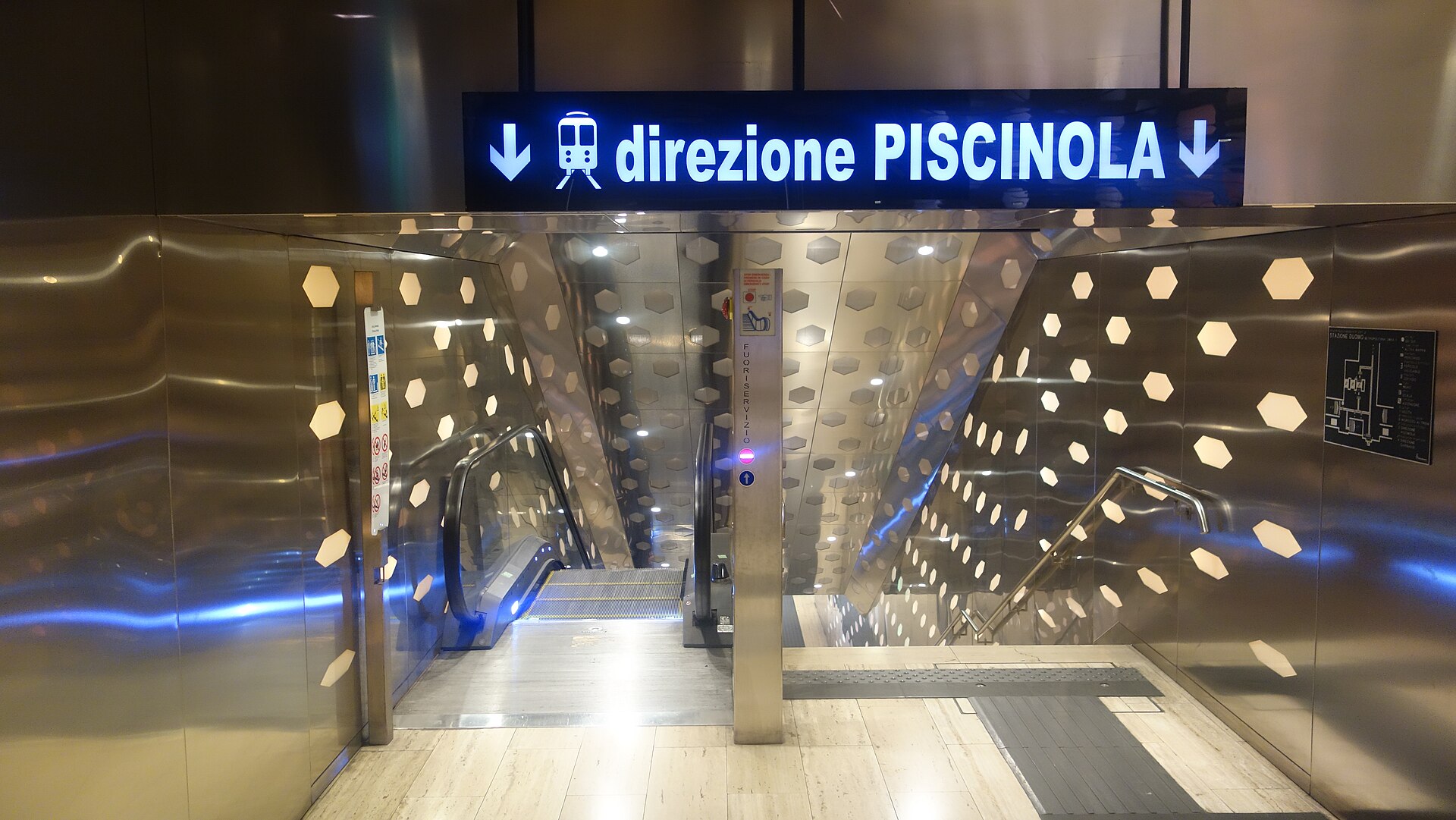
Today Piazza Dante is a major transit hub — the Art Metro station beneath it, designed by Gae Aulenti, is one of the most beautiful subway stations in the world, all clean lines and natural light. The square sits at the junction between the old city and the Spanish Quarter, and it's the gateway Rick Steves uses to funnel visitors into Spaccanapoli through the old Port'Alba gate, where you'll find Naples' historic row of bookshops, established in 1625.
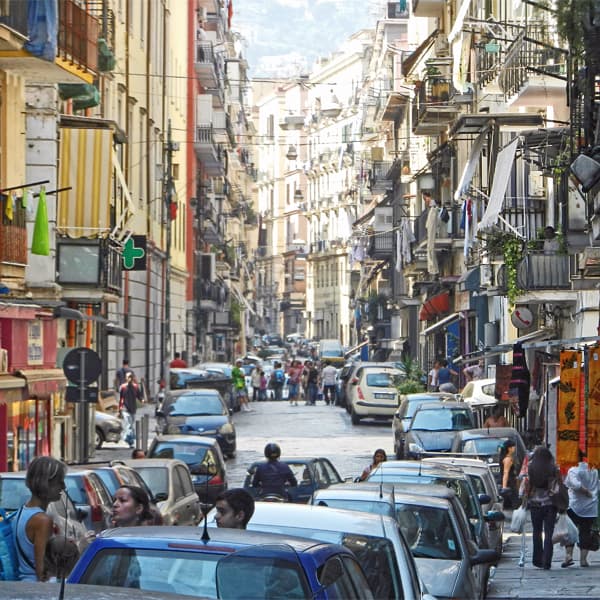
The square buzzes at all hours. Students from the nearby university cluster on the benches, elderly men play cards at outdoor tables, and the whole place smells of coffee and sfogliatelle from the surrounding pastry shops.
Verified Facts
The semicircular colonnade was designed by Luigi Vanvitelli in 1757 for King Charles III of Bourbon
The square was renamed from Largo del Mercatello to Piazza Dante in 1871 when a statue of Dante Alighieri was installed
Port'Alba, the gate connecting Piazza Dante to Spaccanapoli, has hosted bookshops since 1625
The Art Metro station beneath the piazza was designed by architect Gae Aulenti
Get walking directions
Municipalità 2, Naples, Italy