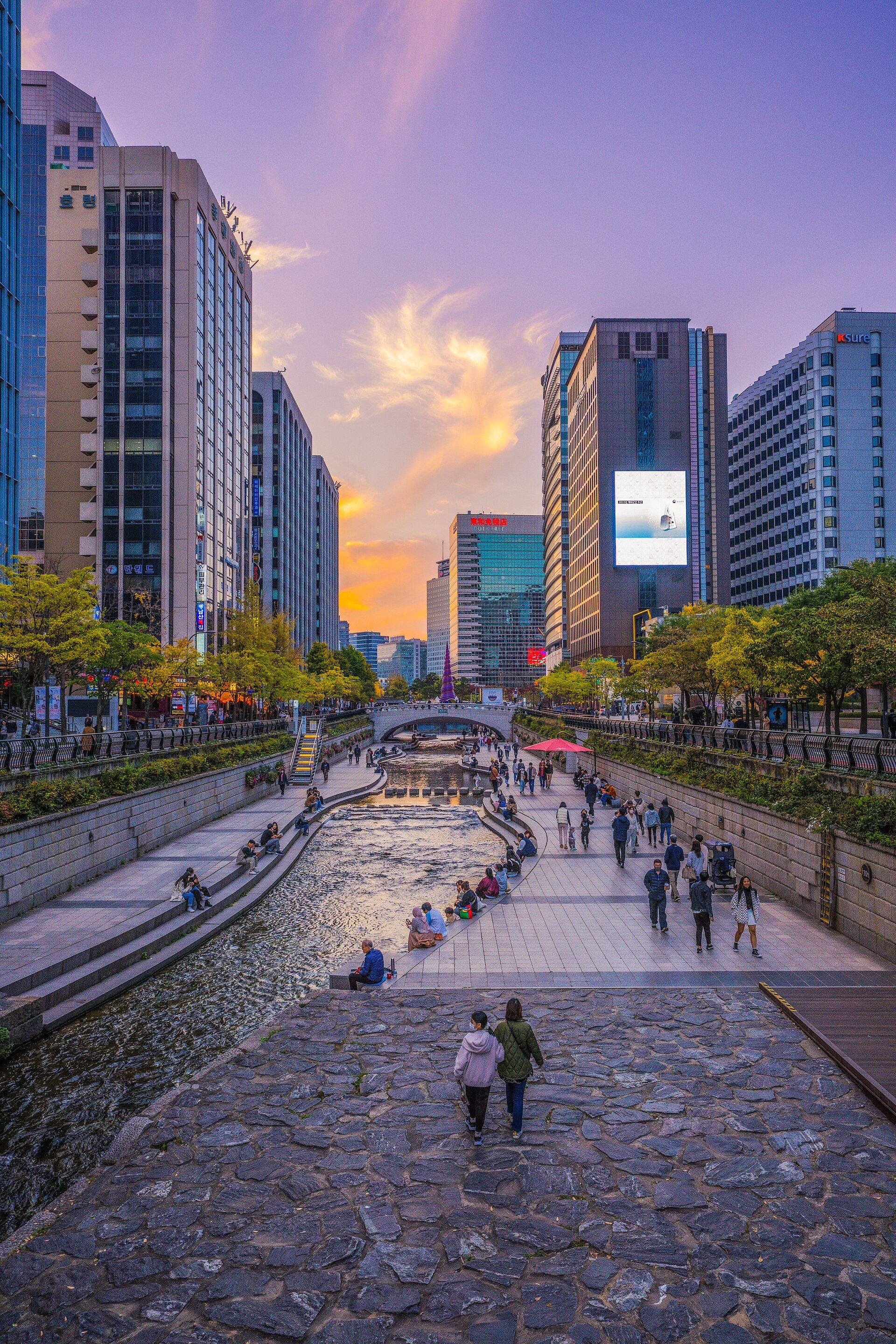
Cheonggyecheon is an 11-kilometre stream running through the centre of Seoul that spent most of the 20th century buried under a highway and was restored in 2005 in one of the most ambitious urban renewal projects in the world. The highway was demolished, the stream was excavated and re-lined, and a sunken linear park was created five metres below street level that has become Seoul's most popular public space — a place where office workers eat lunch, couples walk at sunset, and the sound of running water replaces the traffic noise that previously defined this corridor.
The restoration was controversial and expensive ($900 million, or about the same as a mid-size Korean film studio's annual output), but the result is difficult to argue with. The stream runs from a modern sculpture at Cheonggye Plaza near City Hall through the traditional markets of Jongno and Dongdaemun to the Han River, and walking its length takes you from the contemporary business district through progressively older and more characterful neighbourhoods. The path is mostly flat, well-lit, and accessible from street level via stairways at regular intervals.
At night, the stream is lit with subtle lighting that makes the water and the stone walls glow, and the evening walk from Gwanghwamun to Dongdaemun — about 5 kilometres — passes under 22 bridges, each with its own design, and through sections that alternate between planted gardens and open water. The seasonal installations (a Christmas light festival in winter, lotus flowers in summer) add variety, but the stream itself — clean, flowing, and alive in the middle of a megacity — is the attraction.
Verified Facts
Cheonggyecheon was buried under a highway for decades and restored in 2005
The restoration cost approximately $900 million
The stream runs 11 kilometres through central Seoul
The stream path passes under 22 bridges
Get walking directions
Cheonggyecheon-ro, Seoul, South Korea