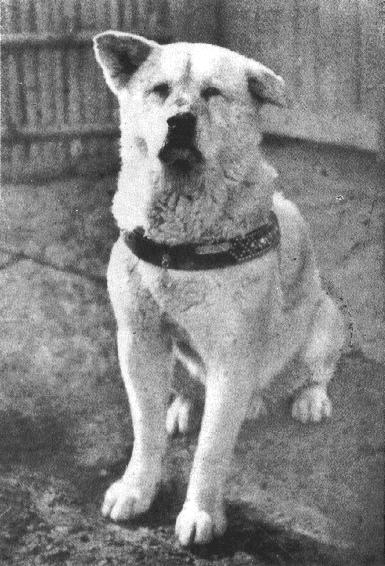
Everyone knows the story of the loyal dog who waited for his owner. But hardly anyone knows what actually happened to the statue you are looking at right now. This is not the original. The first bronze statue of Hachiko was unveiled in nineteen thirty-four, and here is the incredible part — the dog himself was present at his own unveiling ceremony. He was still alive, still coming to the station every day, still waiting for Professor Ueno who had died of a cerebral aneurysm at work nearly ten years earlier, in nineteen twenty-five.
Hachiko died on March eighth, nineteen thirty-five, and Tokyo treated it like a human death. There was a funeral. People sent flowers and telegrams of condolence. But then came the war. During the Second World War, the Japanese military melted the original statue down for its metal. Bullets and artillery shells — that is what happened to the monument to loyalty. The replacement you see now was sculpted in nineteen forty-eight by the original artist's son, Ando Takeshi.
What most people also miss is that Hachiko was not beloved from the start. For years, he was just a stray dog hanging around the station. People kicked him, shooed him away, ignored him. It was only after a newspaper article in nineteen thirty-two that he became famous overnight. Suddenly the same commuters who had mistreated him were bringing him food and posing for photographs.
Hachiko's preserved body is on display at the National Museum of Nature and Science in Ueno. His organs are in a jar at the University of Tokyo, where Professor Ueno taught. And there is a newer statue at the university campus showing Hachiko reunited with his owner. That one was unveiled in twenty fifteen, eighty years after the dog died still waiting.
Verified Facts
Hachiko attended the unveiling of his own statue in 1934
Original statue melted for metal during WWII, replacement sculpted 1948 by original artist's son
Professor Ueno died of cerebral aneurysm in 1925, Hachiko waited nearly 10 years until 1935
Hachiko was mistreated by commuters before a 1932 newspaper article made him famous
Preserved body displayed at National Museum of Nature and Science in Ueno
Get walking directions
1 Dogenzaka 2-Chōme, Dogenzaka, Shibuya, 150-0043, Japan