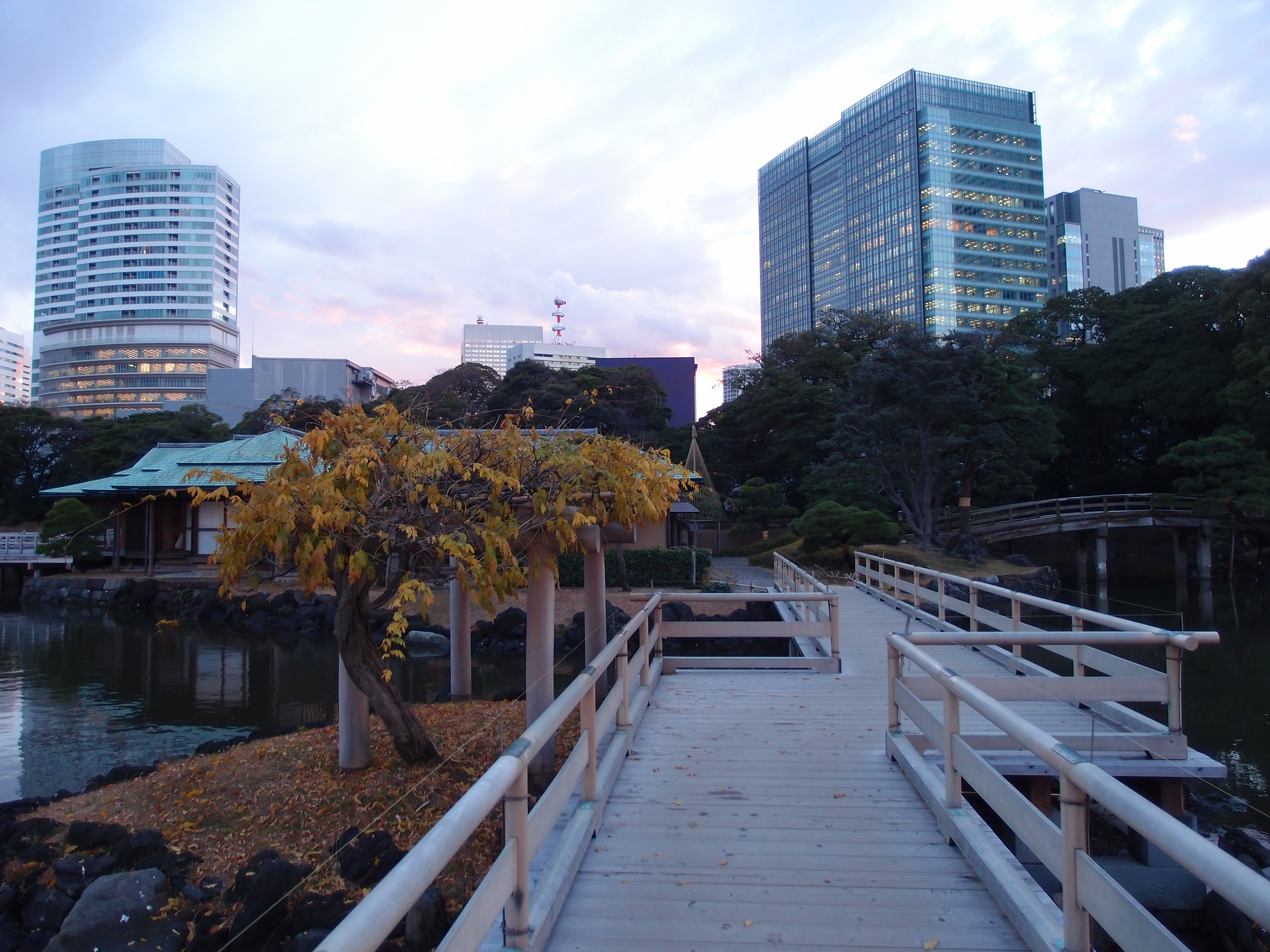
The pond in front of you is filled with ocean water. Not metaphorically. Actual seawater from Tokyo Bay flows in and out through sluice gates, regulated by the tides. This is the only Edo-period garden in Tokyo with a tidal seawater pond, and the water level and appearance change throughout the day as the tides shift. What you see in the morning will look different by afternoon.
The garden was originally reclaimed from Edo Bay in sixteen fifty-four by Tokugawa Tsunashige, grandson of the shogun Iemitsu. He built a villa and duck hunting grounds here. The Nakajima teahouse, sitting on a platform over the tidal pond, has been serving tea since seventeen oh four. For its first two centuries, only shoguns and aristocrats were allowed to drink here. Now you can sit in the same spot and have a bowl of matcha for a few hundred yen while skyscrapers from the Shiodome district rise directly behind you. The contrast between the ancient garden and the glass towers is almost absurd.
Hama-rikyu has been through the worst Tokyo can throw at a place. It burned in the nineteen twenty-three Great Kanto Earthquake. It burned again in the nineteen forty-five firebombing. In November nineteen forty-five, just months after the war ended, the garden was transferred from the Imperial Household to the Tokyo Metropolitan Government and opened to the public the following April. The city was in ruins, and one of the first things they did was open a garden.
The three hundred year old pine tree near the entrance was planted by the sixth shogun himself. It has been pruned and maintained continuously since the early seventeen hundreds — through earthquakes, firebombing, and occupation. Somehow, it is still here.
Verified Facts
Only Edo-period garden in Tokyo with a seawater tidal pond
Originally reclaimed from Edo Bay in 1654 by Tokugawa Tsunashige
Nakajima teahouse has served tea since 1704, originally to shoguns only
Burned in 1923 earthquake and 1945 firebombing; transferred to public April 1946
Get walking directions
Hamarikyuteien, Hamarikyuteien, Chuo, Japan