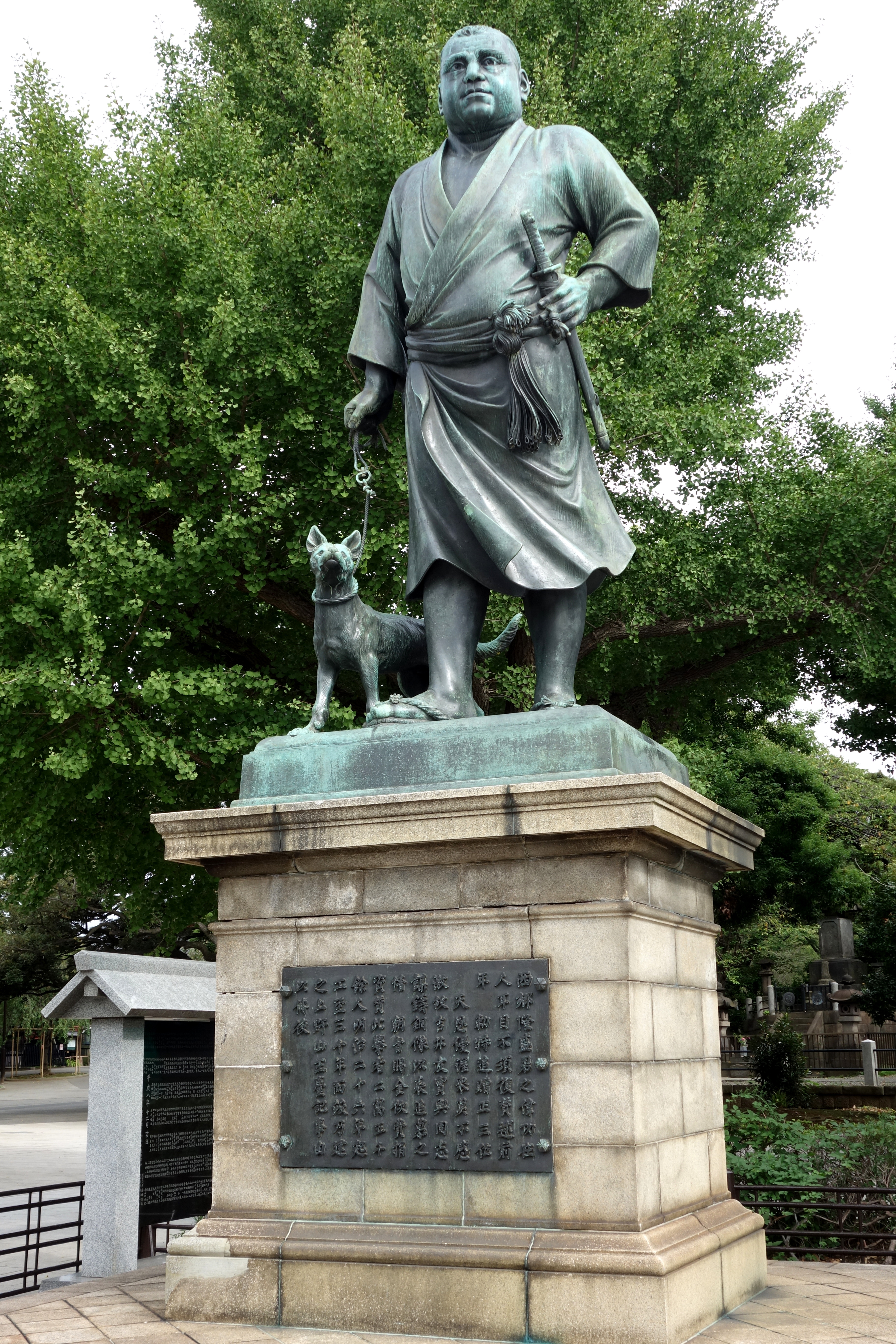
You are looking at Japan's most famous samurai. Saigo Takamori — the man they call the last true samurai, the inspiration behind the Tom Cruise film. But the best story about this statue is not about the man. It is about his wife. When this bronze was unveiled in eighteen ninety-eight, Saigo's widow Itoko took one look and reportedly shrieked that it looked nothing like her husband. She was mortified. In life, Saigo was apparently a man of the utmost decorum who always wore formal hakama. The sculptor depicted him in casual clothes, walking his dog. She was furious.
The truly strange thing is that this statue exists at all. Saigo Takamori led the Satsuma Rebellion in eighteen seventy-seven — an armed uprising against the very government that commissioned this statue. He fought the Meiji state, lost, and died. Twenty-one years later, that same government decided to honour him with a monument in Ueno Park. It would be like the British government erecting a statue of a rebel leader who tried to overthrow Parliament.
The sculptor, Takamura Koun, used a distinctive Japanese technique — he carved a detailed wooden model first using blades, which gave the bronze casting far crisper detail than typical European methods of the era. That original wooden model survived for decades before being destroyed in a Second World War air raid.
Saigo is shown with his hunting dog, a breed called Satsuma-inu that is now essentially extinct. He stands at the southern entrance to Ueno Park, looking out over the city that he tried to change by force. Every guidebook mentions him, but almost nobody stops to read the plaque. They just use him as a meeting point.
Verified Facts
Wife Itoko said 'It looks nothing like my husband!' at the 1898 unveiling
Led Satsuma Rebellion 1877 against the government that later erected his statue
Sculptor Takamura Koun carved wooden model first, destroyed in WWII air raid
Often called 'the last true samurai,' inspired the Tom Cruise film
Get walking directions
110 Takao, Takao, Akiruno, 190-0154, Japan