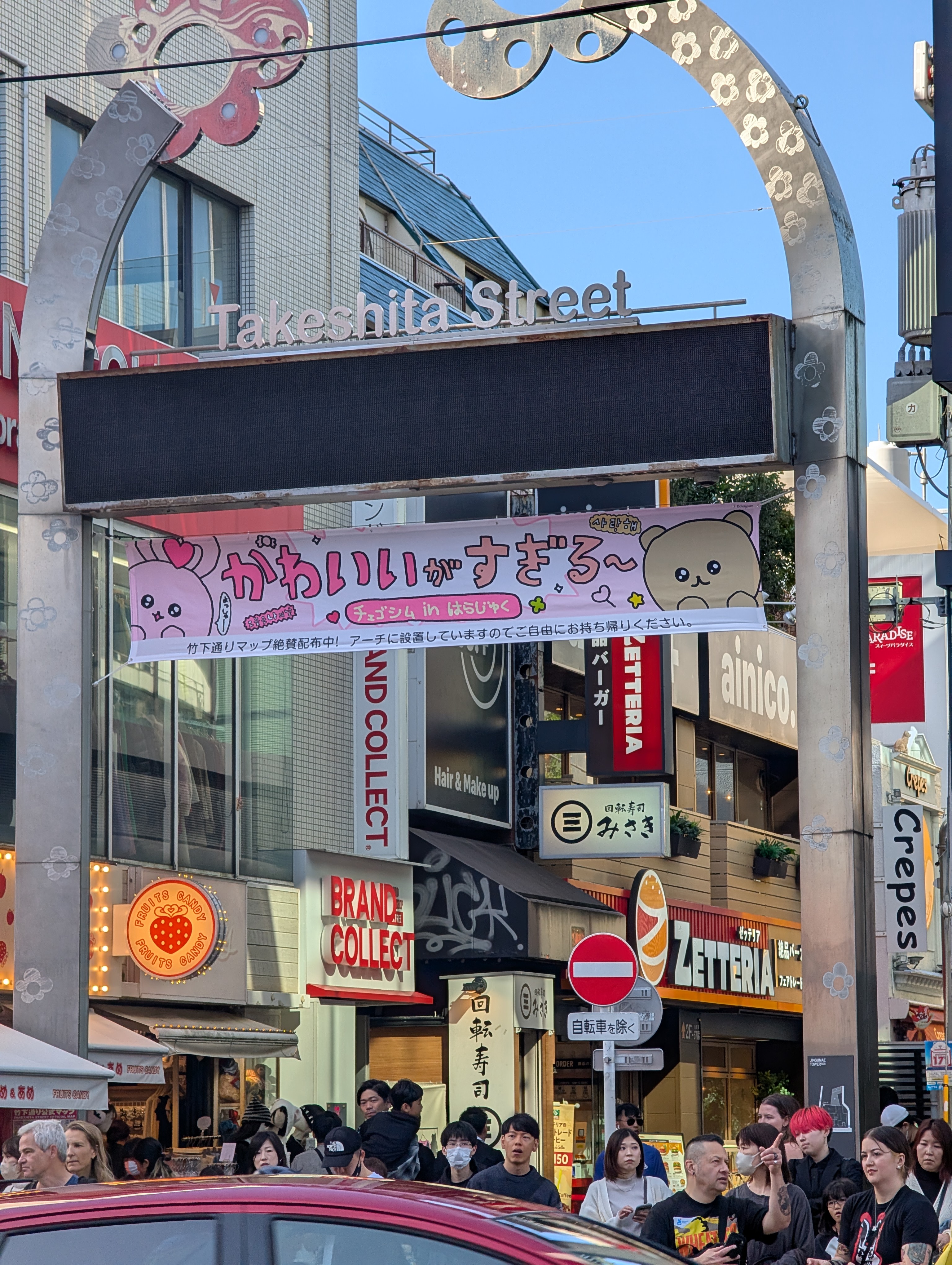
You are standing at the entrance of a three hundred and fifty metre pedestrian street that basically invented an entire global aesthetic movement. Kawaii culture — the obsession with all things cute that now permeates fashion, design, and pop culture worldwide — was born right here in Harajuku. This tiny strip of road became the epicentre where Japanese teenagers created a visual language that spread across the planet.
In the late nineteen seventies, crepe stands started popping up along the street, and eating a crepe while walking Takeshita-dori became the definitive Harajuku experience. Those crepe shops are still here, still doing the same thing, nearly fifty years later. But the real magic happened in the nineteen eighties, when the street was overtaken by takenoko-zoku — teenage dance gangs who dressed in outlandish costumes and performed choreographed routines on the pavement. Picture dozens of kids in matching neon outfits dancing in formation while bewildered salarymen tried to squeeze past. The name literally means 'bamboo shoot tribe.'
The Harajuku Takeshita Street Association was formalised in nineteen seventy-seven, which is remarkable because back then this was just a quiet residential street lined with traditional houses. Nobody planned for it to become a fashion mecca. It happened organically, driven entirely by teenagers who wanted a place to express themselves without adult supervision.
Sebastian Masuda, one of the key creative forces behind kawaii culture and the owner of the iconic shop six percent Doki Doki, was named Japan's Cultural Envoy in twenty seventeen. The Japanese government officially recognised that a youth subculture from one small Harajuku street had become a legitimate cultural export. Not bad for three hundred and fifty metres of pavement.
Verified Facts
350m pedestrian street, birthplace of kawaii culture
Crepes became iconic street food in the late 1970s
Takenoko-zoku teen dance gangs dominated the street in the 1980s
Takeshita Street Association formed 1977, was previously traditional residential
Sebastian Masuda named Japan's Cultural Envoy in 2017
Get walking directions
Jingumae, Jingumae, Shibuya, Japan