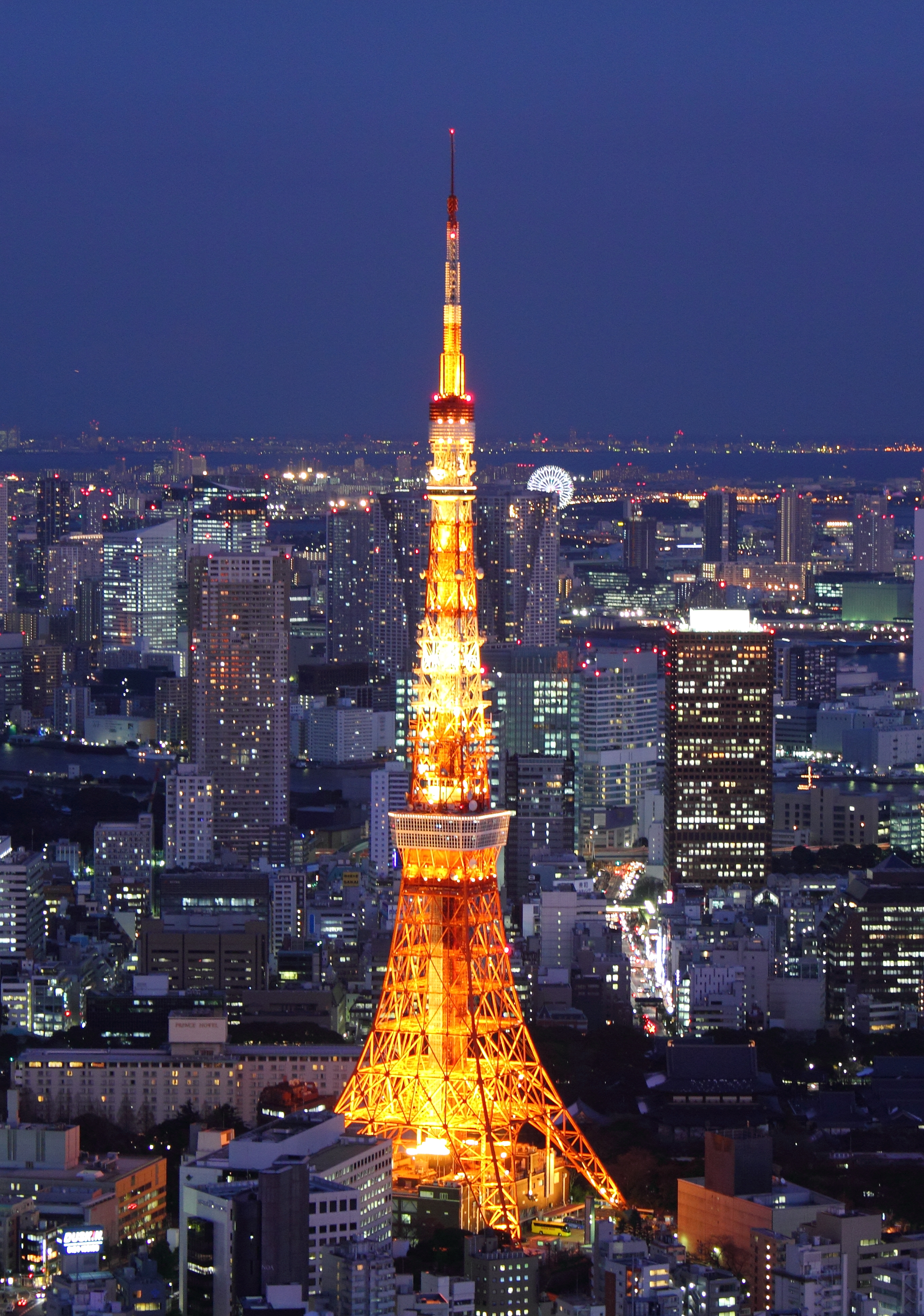
Look up. One-third of this tower is made from recycled American tanks. That is not a metaphor. When Tokyo Tower was built in nineteen fifty-eight, Japan sourced steel from US military tanks that had been damaged and scrapped during the Korean War. The wreckage was melted down and reforged into the lattice structure above your head. It is one of the most potent symbols of Japan's postwar transformation — literally turning weapons of war into a symbol of peace and modernity.
The tower stands three hundred and thirty-three metres tall, deliberately built to be nine metres taller than the Eiffel Tower. But here is the engineering flex — despite being taller, Tokyo Tower weighs three thousand three hundred tons less than its Parisian counterpart. Four thousand tons versus seven thousand three hundred. Japanese engineers achieved the same visual impact with far less material, partly because they had to — postwar Japan could not waste steel. The foundation goes exactly thirty-three metres underground, making the thirty-three and three-thirty-three symmetry intentional.
Maintaining this thing is a monumental task. Repainting takes an entire year, requires thirty-four thousand litres of paint, and employs four thousand two hundred workers who hand-paint ninety-four thousand square metres of steel surface. This happens every five years. The distinctive orange-and-white colour scheme was not an aesthetic choice — it is mandated by international aviation safety regulations.
The original plan was even more ambitious. Designers wanted the tower to exceed the Empire State Building at three hundred and eighty-one metres, but funding and materials ran short. Even so, Tokyo Tower served as the city's primary television and radio broadcast antenna for decades, before Tokyo Skytree took over most broadcasting duties in twenty twelve.
Verified Facts
One-third of the steel came from scrapped US tanks from the Korean War
333m tall, 9m taller than Eiffel Tower but 3,300 tons lighter
Foundation extends exactly 33m underground
Repainting takes 1 year, 34,000 liters of paint, 4,200 workers, every 5 years
Originally planned to exceed Empire State Building height but funding fell short
Get walking directions
8 Shiba 2-Chōme, Shiba, Minato, 105-0014, Japan