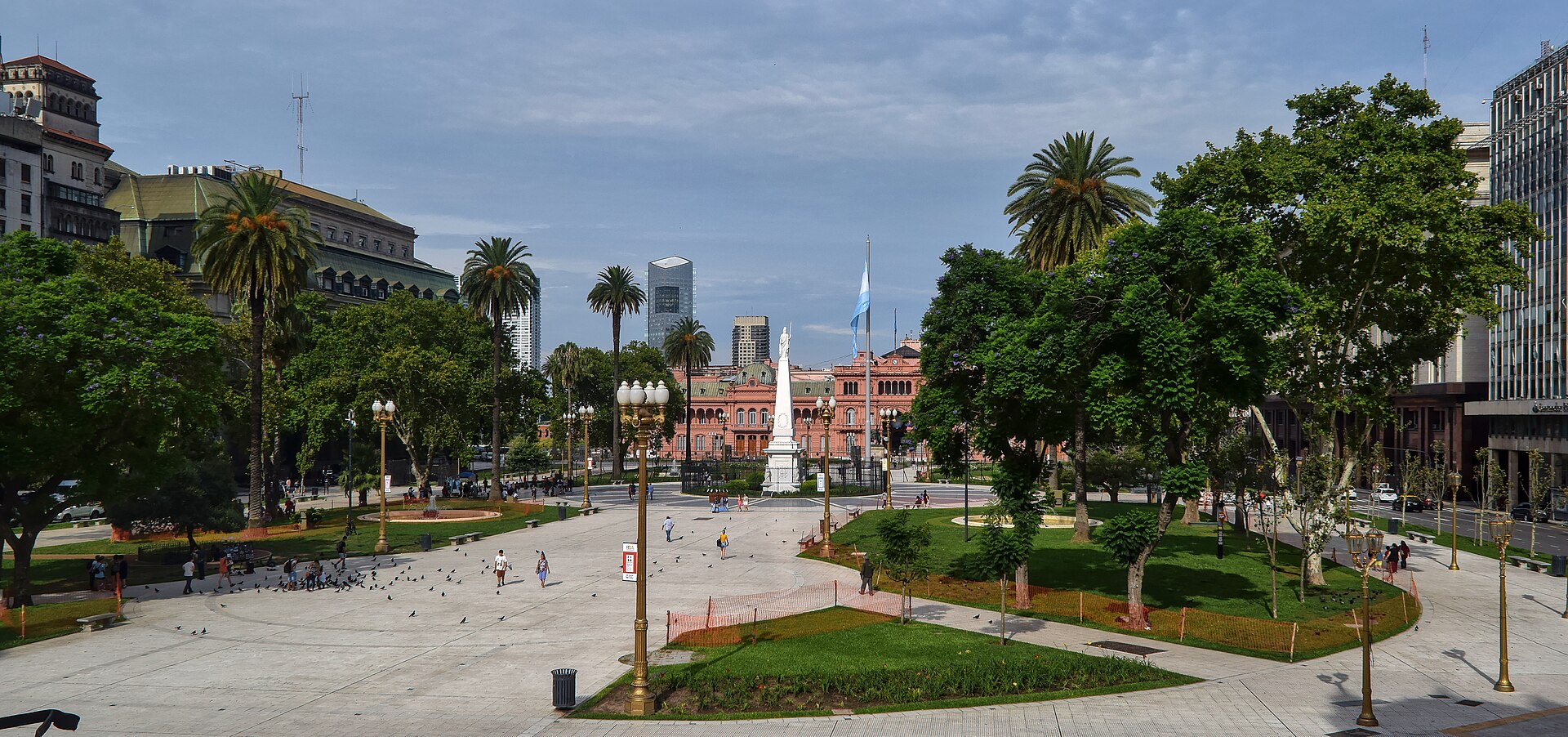
Plaza de Mayo is the political heart of Argentina — the square where every major event in the nation's history has played out, from the May Revolution of 1810 that gave the plaza its name to Eva Perón's balcony speeches to the Mothers of the Plaza de Mayo who marched every Thursday for decades demanding information about their children 'disappeared' by the military dictatorship.
The plaza is framed by the institutions that define Argentina: the Casa Rosada (the pink presidential palace, whose balcony is the most famous in South America), the Metropolitan Cathedral (where Pope Francis served as archbishop), the Cabildo (the colonial town hall where independence was debated), and the Banco de la Nación Argentina. The white scarves painted on the pavement — representing the headcoverings worn by the Mothers of the Plaza de Mayo — are a permanent memorial to the estimated 30,000 people who were kidnapped, tortured, and killed during the Dirty War (1976-1983).
The Casa Rosada's distinctive pink colour has been attributed to everything from President Sarmiento's attempt to blend the red of the Federalists with the white of the Unitarians, to the practice of mixing ox blood into whitewash (a common colonial technique). Whatever the origin, the pink facade against the Argentine sky has become one of South America's most recognisable political images. Free tours of the Casa Rosada (including the famous balcony) run on weekends and must be booked in advance.
Verified Facts
The plaza is named after the May Revolution of 1810
The Mothers of the Plaza de Mayo marched every Thursday demanding justice
An estimated 30,000 people were disappeared during the Dirty War (1976-1983)
Pope Francis served as Archbishop of Buenos Aires at the Metropolitan Cathedral
Get walking directions
Plaza de Mayo, Monserrat, Buenos Aires