Walking Tours in Cartagena
30 Landmarks in Cartagena
Bazurto Market
Puente de Bazurto, El Bosque, Cartagena, Colombia
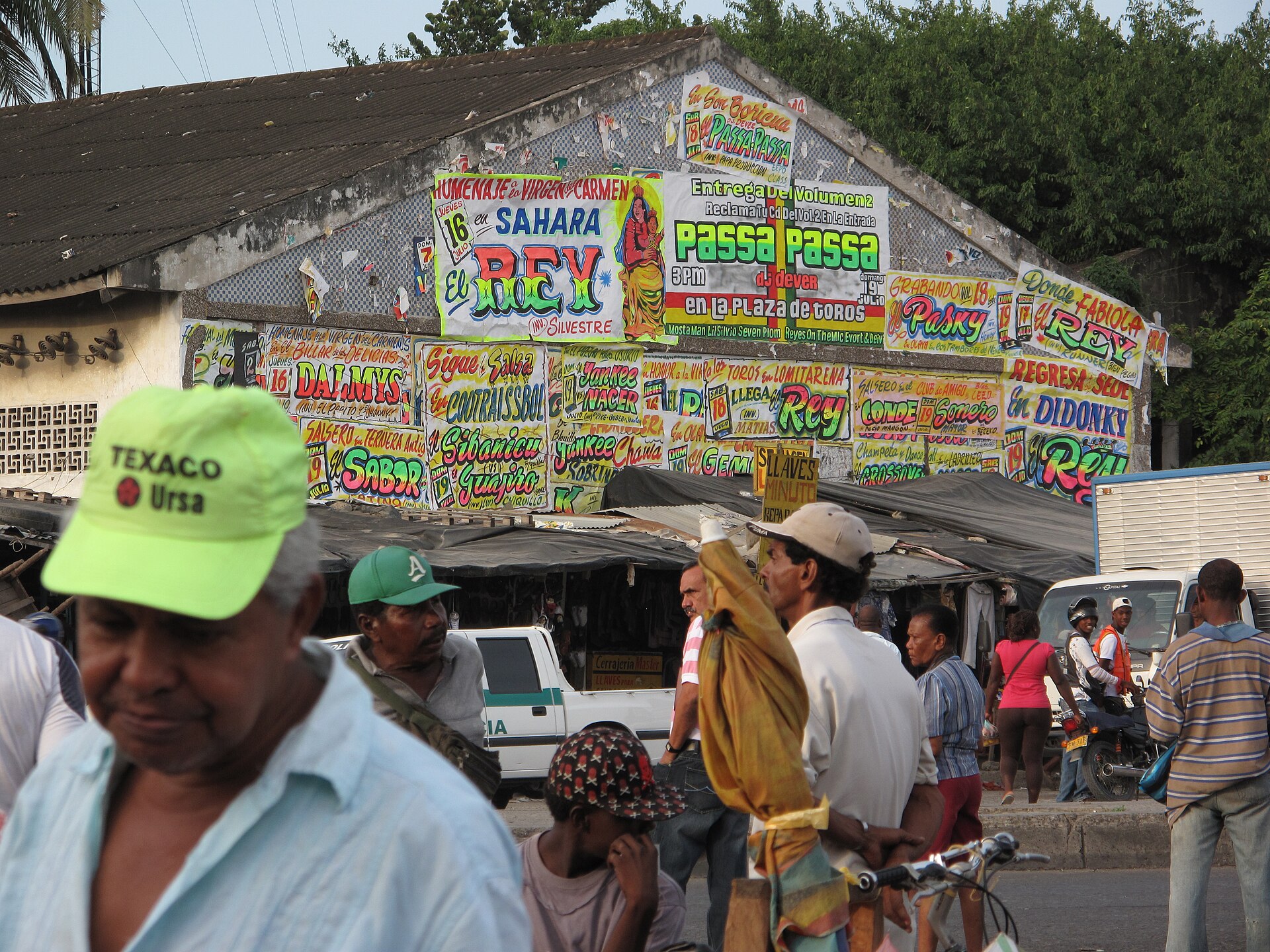
Bazurto is Cartagena's real market — a sprawling, chaotic, intensely local market outside the tourist zone where the city's working population buys their fish, meat, fruit, and vegetables at prices that the walled city's restaurants charge three times more for. The market is not tourist-friendly (it's hot, crowded, and requires street-smart navigation), but for visitors willing to venture beyond the colonial district, it provides the most authentic encounter with Cartagena's daily commercial life. The fish section is extraordinary — the Caribbean's catch displayed on tables of ice, with whole snappers, shrimp, octopus, and the shellfish that Cartagena's ceviche vendors will prepare to order. The fruit section sells the tropical varieties (zapote, níspero, guanábana, maracuyá) that Colombia's climate produces in abundance, and the juice vendors blend them into fresh drinks for a fraction of the old-city prices. Bazurto is where Cartagena's champeta music was born — the sound systems and the energy of the market's commercial activity created the musical culture that has become the city's most distinctive cultural contribution. Visiting with a guide (several food tour companies include Bazurto) is recommended for first-timers.
Bocagrande Beach & Modern Cartagena
Barrio Bocagrande, Cartagena, Colombia
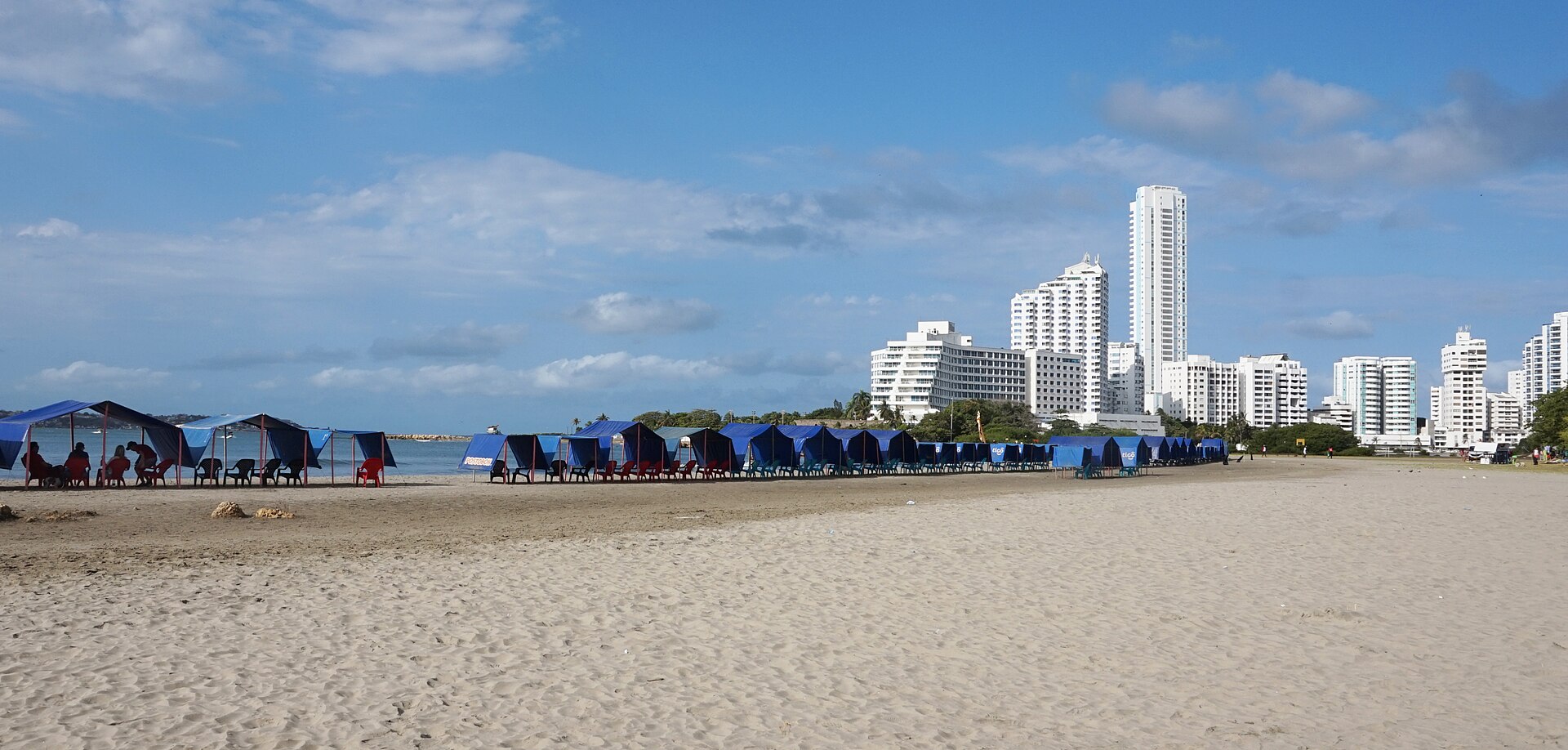
Bocagrande is Cartagena's modern beachfront district — a peninsula of high-rise hotels, condominiums, and the Caribbean beach that provides the swimming, sunbathing, and seafront promenade that the walled city's harbour location can't offer. The beach is urban (vendors, music, beach chairs for rent) rather than pristine, but the warm Caribbean water and the view back toward the old city's skyline give it a character that resort beaches lack. Bocagrande's restaurant and nightlife scene caters to a mix of Colombian holidaymakers and international tourists — the seafood restaurants along the waterfront serve the Caribbean cuisine that Cartagena does best (fried fish, coconut rice, patacones), and the bars and clubs along Carrera 2 provide the after-dark entertainment that the quieter walled city winds down from after dinner. The contrast between Bocagrande (modern, high-rise, commercial) and the walled city (colonial, low-rise, heritage) captures Cartagena's dual identity — a city that is simultaneously one of the best-preserved colonial centres in the Americas and a modern Colombian beach resort. The two are connected by a 20-minute walk along the waterfront, and the transition from one to the other is the urban design equivalent of time travel.
Café del Mar Wall Walk
Cartagena City Walls, Centro, Cartagena, Colombia
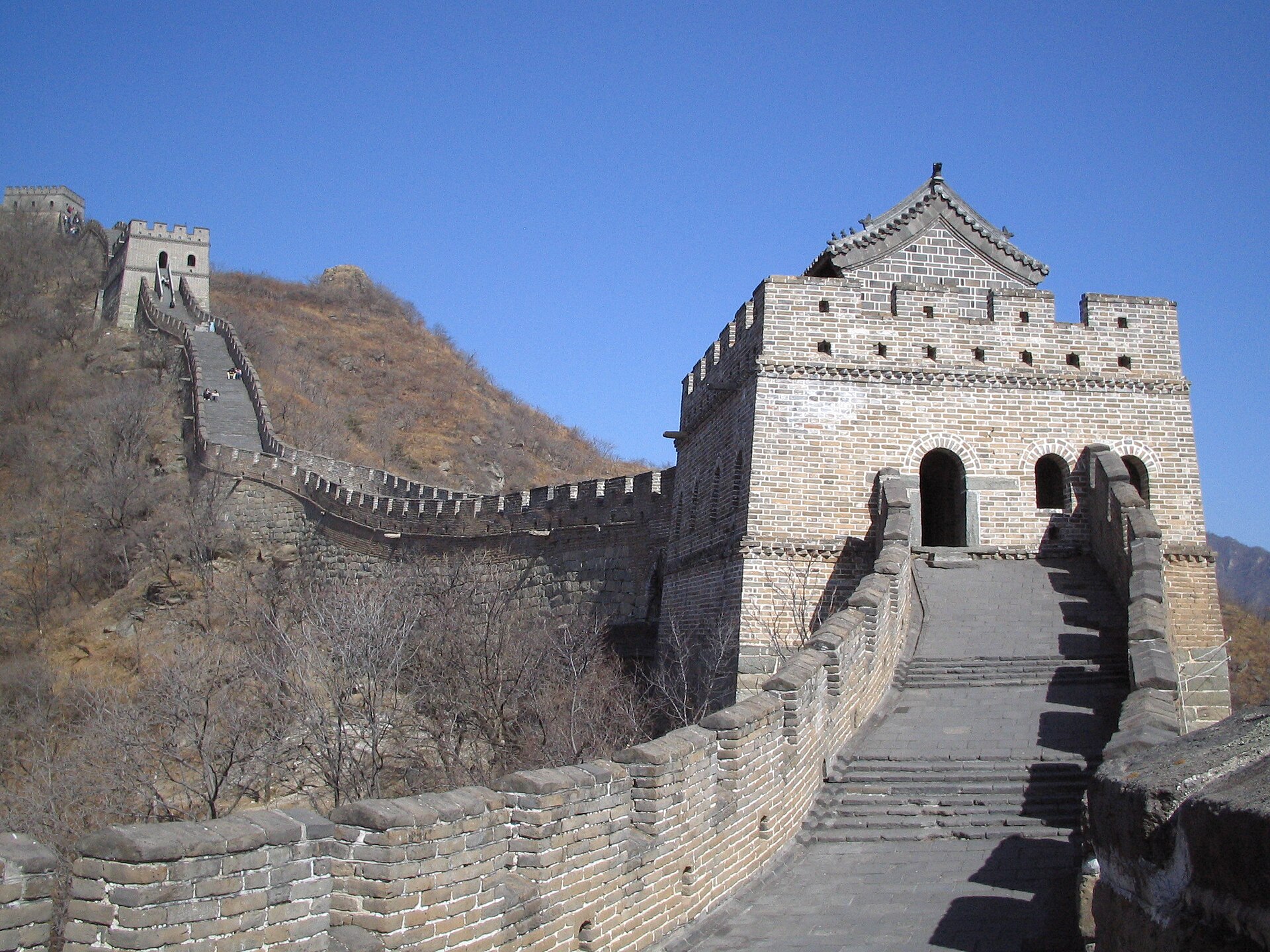
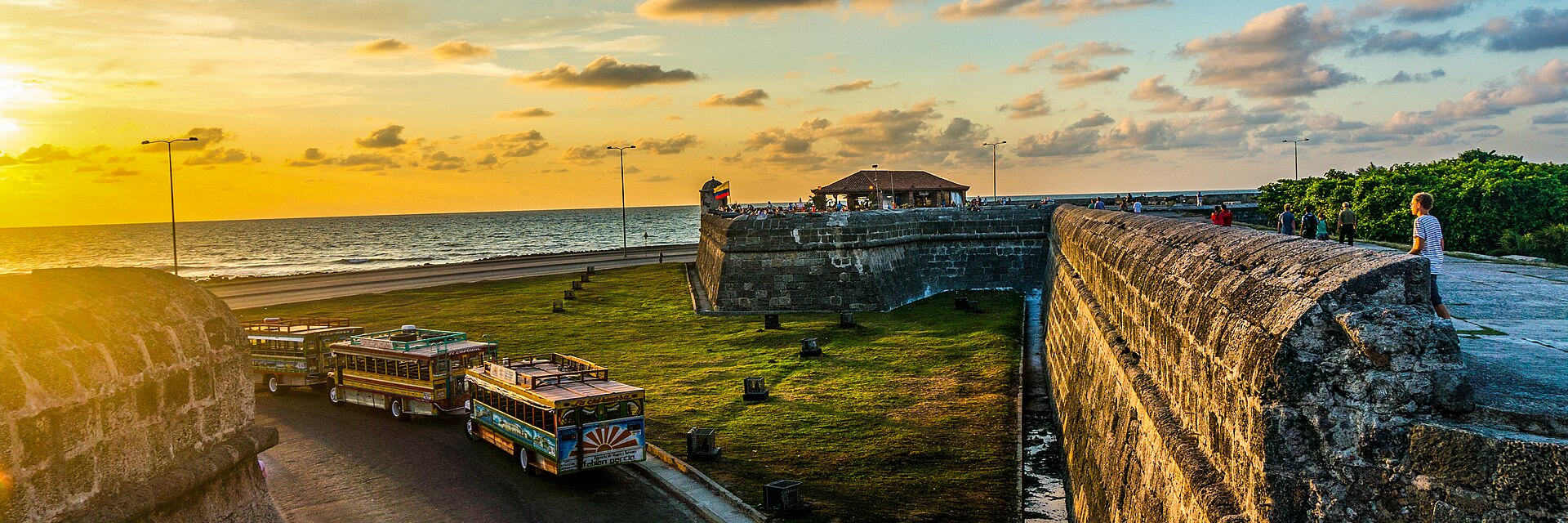
The walk along the top of Cartagena's colonial walls from Café del Mar south to the Plaza de Santa Teresa is the classic Cartagena sunset experience — a 1.5-kilometre stretch of wall walk with views over the Caribbean on one side and the red-roofed walled city on the other, passing bastions, cannons, and guard towers that have barely changed since Pedro Zapata de Mendoza completed the fortifications in 1612. The walls were built with coral limestone quarried from nearby islands and reinforced with crushed oyster shells mixed into the mortar — the same technique used in Havana and Old San Juan. The wall walk is free (unlike many historic walls in Europe), open 24 hours, and most atmospheric at sunset (around 6 PM year-round) or at night when the city lights come on. Café del Mar at the northern end serves overpriced drinks but the real attraction is the view.

Café Havana & Salsa Culture
Calle de la Media Luna, Getsemaní, Cartagena, Colombia
Café Havana is Cartagena's most famous bar — a live-music venue on the corner of Getsemaní's two main streets that has been the epicentre of the city's salsa scene since it opened and has hosted everyone from Hillary Clinton to the backpackers who discover that salsa dancing in Cartagena is not an optional activity but a social requirement. The bar plays live salsa and Cuban son Thursday through Saturday nights, and the dance floor — a small, packed space surrounded by tables and the bar — provides the kind of intimate, sweaty, musically excellent experience that large salsa venues can't replicate. The crowd is a mix of Colombians and tourists, and the social convention is straightforward: if someone asks you to dance, you dance, regardless of your skill level. Cartagena's salsa culture extends well beyond Café Havana — the champeta music (an Afro-Caribbean genre unique to Colombia's Caribbean coast, mixing African rhythms with Caribbean and electronic influences) plays in the sound systems of Getsemaní's bars and the picós (mobile sound systems) that animate street parties. The combination of salsa, champeta, vallenato, and reggaetón creates a musical landscape that is the most diverse and energetic in Colombia.
Calle del Arsenal
Calle del Arsenal, Getsemaní, Cartagena, Colombia
Calle del Arsenal is the main nightlife street in Getsemaní — a colourful narrow street running from Plaza de la Trinidad towards the Muelle de la Bodeguita that hosts the highest concentration of bars, clubs, and salsa venues in Cartagena. Bars like Café Havana (the city's most famous salsa venue since 1996, notable for its Cuban live band and no-reservation policy that creates queues around the block) and Donde Fidel anchor the scene, with smaller venues spilling between them. The street comes alive after 10 PM and stays busy until dawn, with a mix of locals, Cartageneros from other neighbourhoods who come here specifically for salsa, and international visitors. The open doors of each venue spill music into the street, creating a layered audio experience that is Getsemaní at its most vibrant. Daytime the street is quieter and the colourful façades make for good photography.
Cartagena Street Food & Ceviche
Cruce por Centro Comercial Getsemaní, Getsemaní, Cartagena, Colombia
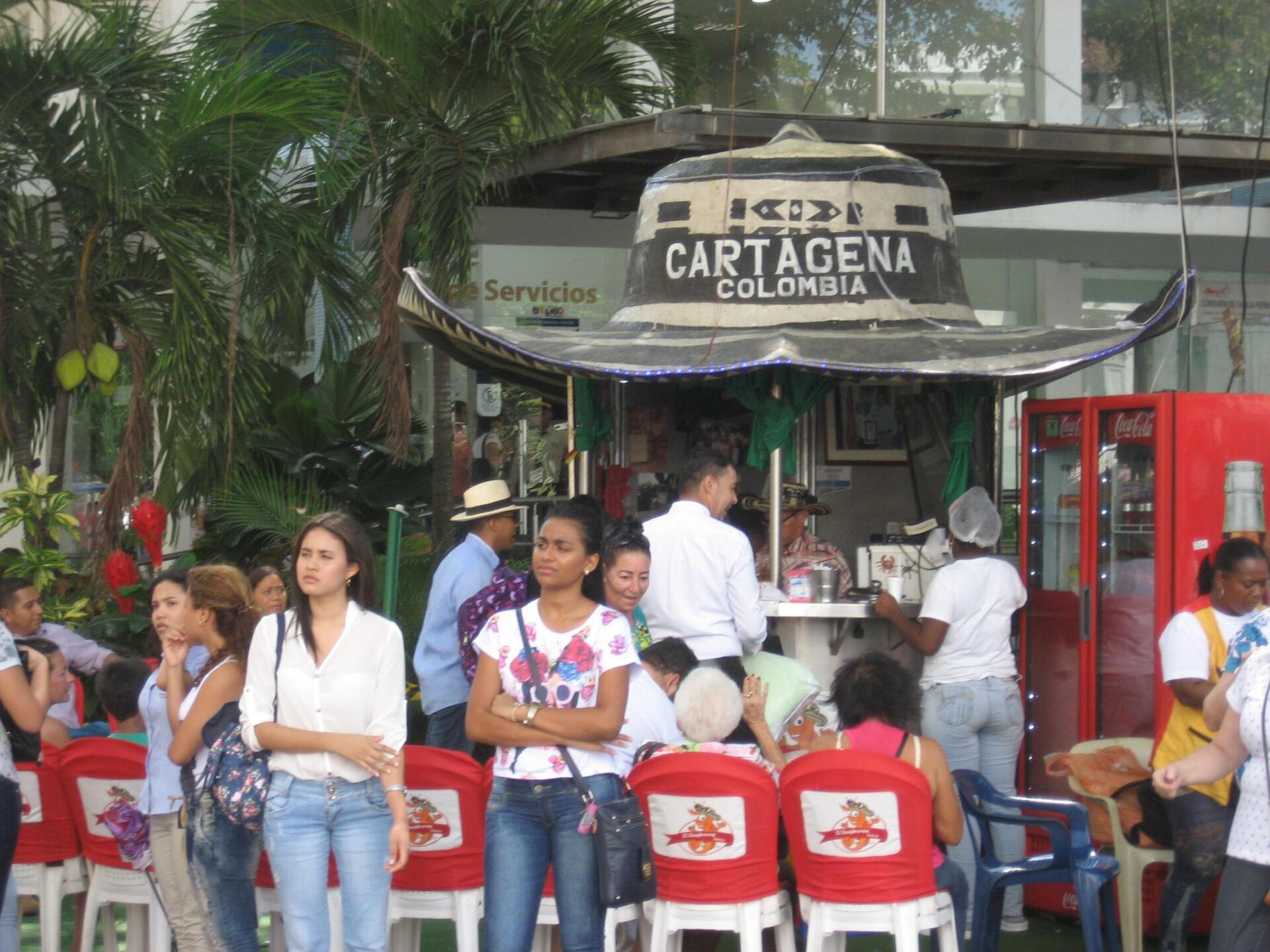
Cartagena's street food is Caribbean Colombia at its most flavourful — a cuisine built on seafood, coconut, plantain, and the African-influenced cooking traditions that distinguish the Caribbean coast from the rest of Colombia. The arepas de huevo (deep-fried corn cakes filled with egg), the ceviche (served from plastic cups by vendors who circulate through the streets), and the fresh fruit juices (mango, lulo, corozo, tamarindo) that are sold from carts throughout the old city represent a street food culture that is cheap, ubiquitous, and excellent. The seafood is the star — Cartagena's fish market (Mercado de Bazurto, chaotic and authentic, or the tourist-friendly La Cevichería in the walled city) serves the catch from the Caribbean coast: red snapper, shrimp, lobster, and the octopus that is prepared as ceviche, grilled, or in the coconut-based soups (sancocho de pescado) that are the Caribbean coast's comfort food. The palenquera fruit sellers — women from San Basilio de Palenque who carry bowls of cut fruit on their heads and sell them through the streets in colourful traditional dress — are both a food source and a cultural icon, connecting Cartagena's tourist district to its African heritage with every slice of mango and papaya.
Castillo Grande
Barrio Bocagrande, Cartagena, Colombia
The Fuerte de San Juan de Manzanillo (known locally as Castillo Grande) is a small 17th-century fortress on the tip of the Bocagrande peninsula that guarded the southern entrance to Cartagena Bay — now sitting among the modern high-rises of the resort district. The fort is low, compact (only 55 metres across), and often overlooked by visitors, but it was strategically crucial during the siege of Cartagena by Admiral Vernon's English fleet in 1741 (one of the largest naval operations of the 18th century, which the Spanish under Blas de Lezo famously repelled). The fort is free to enter and is mostly empty, which gives it an atmospheric quality that the more famous San Felipe lacks. The position provides Bocagrande's best sea-level view of the walled city across the water — particularly at sunset when the colonial skyline glows against the Caribbean.
Castillo San Felipe de Barajas
Corredor Vial de Cartagena, Mamonal, Cartagena, Colombia
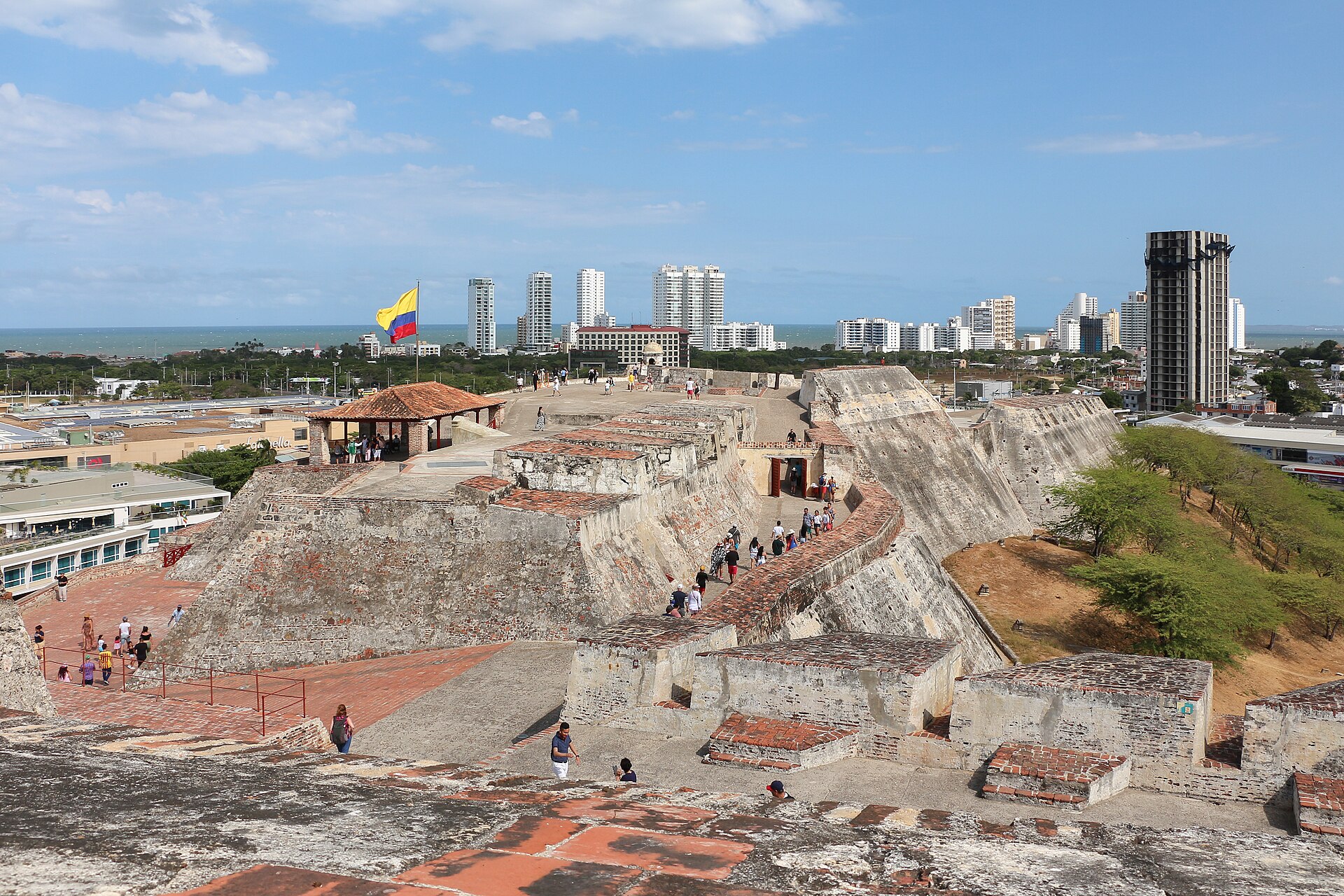
San Felipe de Barajas is the largest Spanish fortress in the Americas — a massive stone fortification on the Hill of San Lázaro that was built between 1536 and 1657 and successfully repelled every attack launched against it, including the 1741 siege by British Admiral Edward Vernon (who arrived with 186 ships and 23,600 men — one of the largest amphibious forces assembled before D-Day — and was defeated by a Spanish garrison of 3,000 led by the one-eyed, one-armed, one-legged commander Blas de Lezo). The fortress's most impressive feature is its tunnel system — a network of underground passages designed so that any sound in the tunnels would echo to the defenders, making a surprise underground attack impossible. Walking through the tunnels (some lit, some dark enough to require a phone flashlight) provides a visceral encounter with colonial military engineering. The fortress provides the best elevated view of Cartagena — looking across the old city's rooftops to the Caribbean, with the modern city visible to the south and the mangrove-fringed bay stretching inland.
Cerro de La Popa
Cerro de la Popa, Cartagena, Colombia
Cerro de La Popa is Cartagena's highest point — a 150-metre hill east of the walled city crowned by the Convento de la Popa, a 17th-century Augustinian monastery that was the city's spiritual sentinel for three centuries. The convent houses the shrine of the Virgen de la Candelaria (the patroness of Cartagena), a small museum of religious art, and a viewpoint that provides the best panoramic view of Cartagena — the walled city, the harbour, Bocagrande, Manga island, and the Caribbean all visible from the edge of the cliff. The convent was captured and used as a fort during the 1815-1816 Spanish re-conquest of Cartagena (when the city was briefly independent during the Wars of Independence), and later by independence forces during the 1820s. Access to the hilltop is only safe by taxi or guided tour — the slopes are steep and the surrounding neighbourhoods are not recommended for walking up. The view alone justifies the trip.
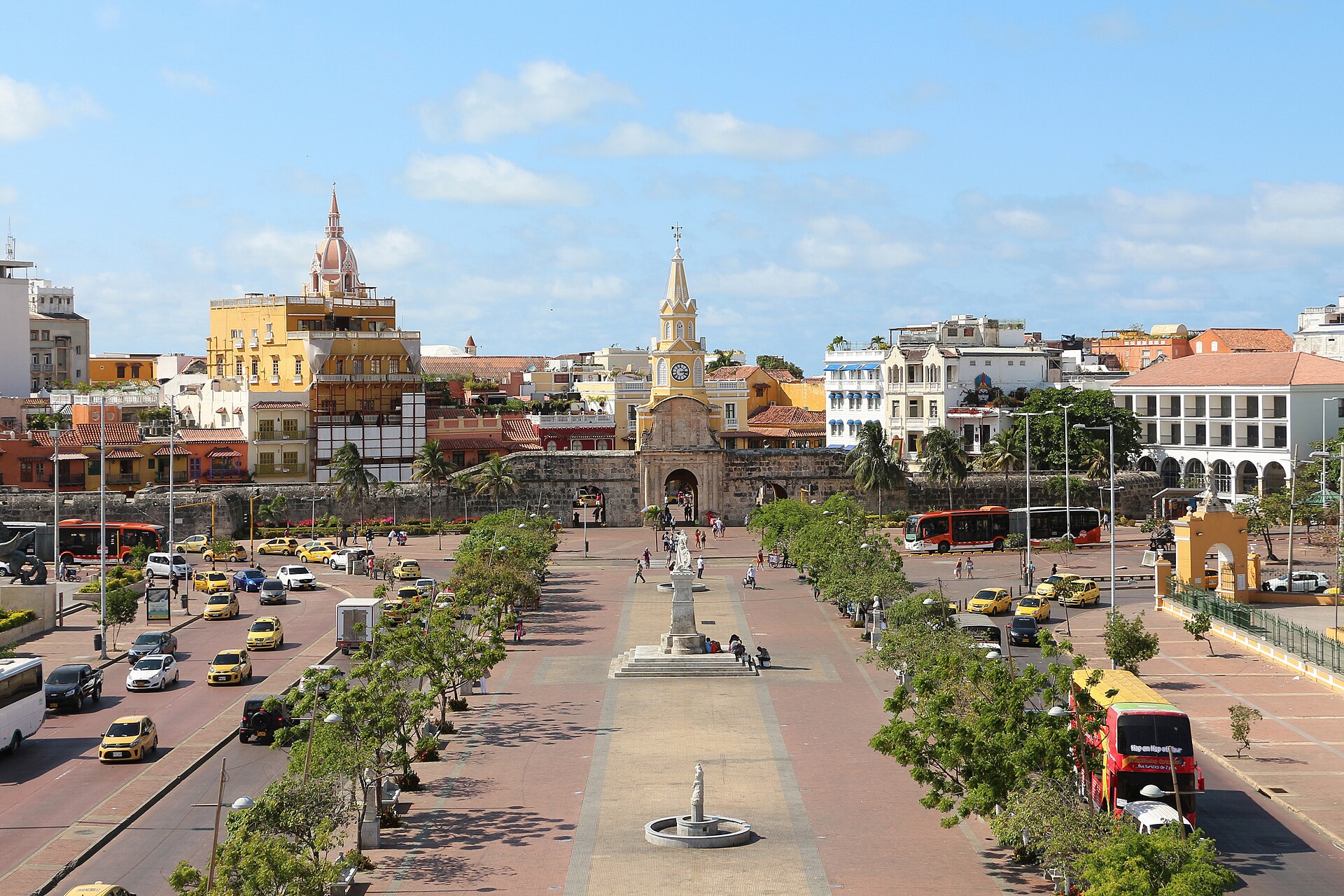
Clock Tower Gate (Torre del Reloj)
3-13 Calle 35, Centro, Cartagena, 130001, Colombia
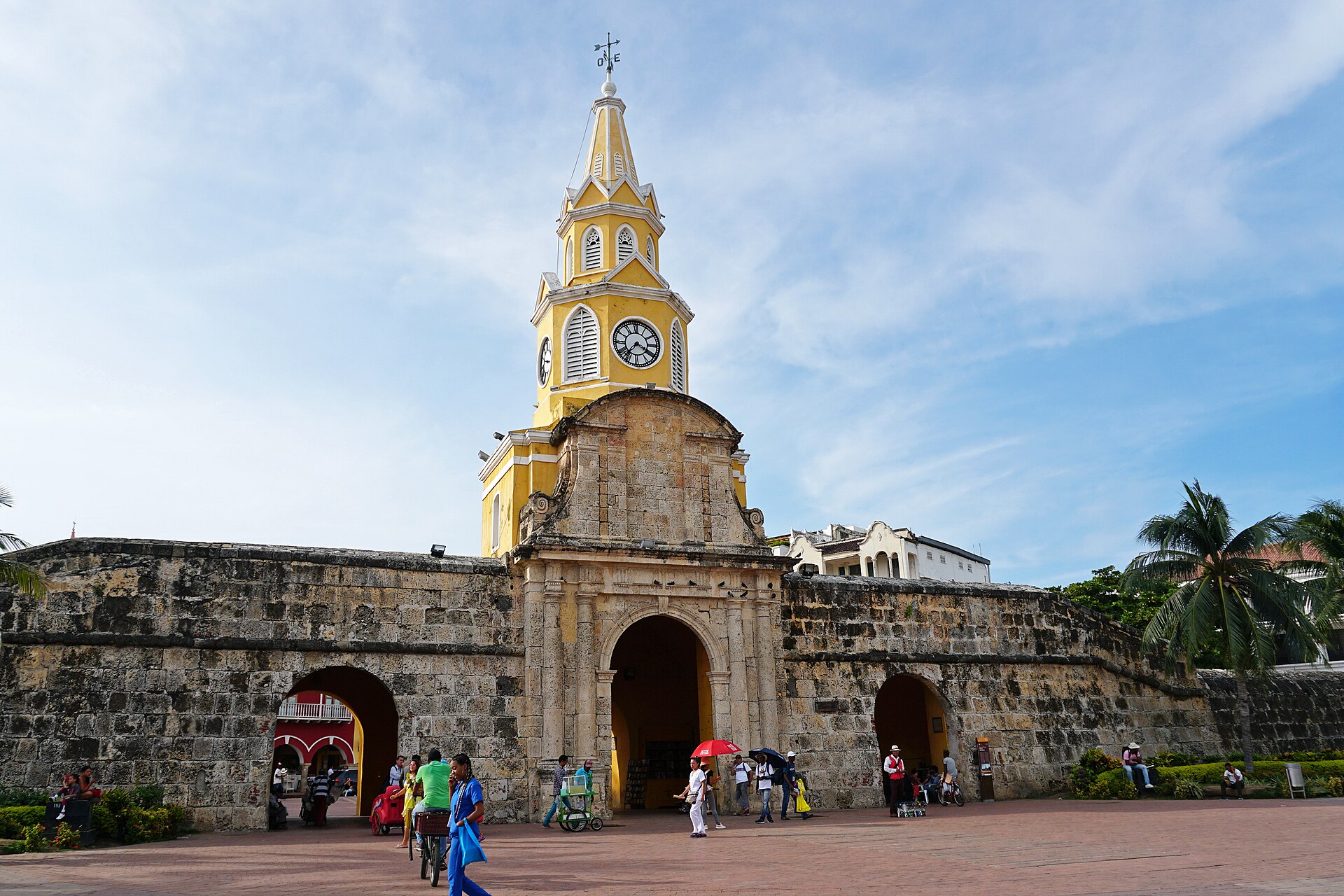
The Clock Tower is the main entrance to Cartagena's walled city — a yellow gateway originally built in the 16th century as a simple military entrance and later crowned with the clock tower that has become the symbol of the city. The gate opens onto Plaza de los Coches (Carriage Square), the plaza where enslaved Africans were bought and sold — a history that the plaza's current festive atmosphere (candy vendors, juice stalls, and the Portal de los Dulces arcade selling traditional sweets) deliberately does not erase but uncomfortably coexists with. The Portal de los Dulces (Sweet Portal), an arcade on the plaza's south side, sells the traditional Caribbean sweets — cocadas (coconut candies), bolas de tamarindo (tamarind balls), and the dulce de leche variations that Colombian confectionery produces in abundance. The vendors, mostly Afro-Colombian women, maintain a tradition of sweet-making that connects the colonial-era market function of the plaza to its contemporary commercial use. The Clock Tower is the most photographed structure in Cartagena — its position at the entrance to the walled city, framed by the colonial walls on both sides, creates the classic arrival shot that every visitor captures. The square behind the tower is the natural starting point for any walk through the old city.
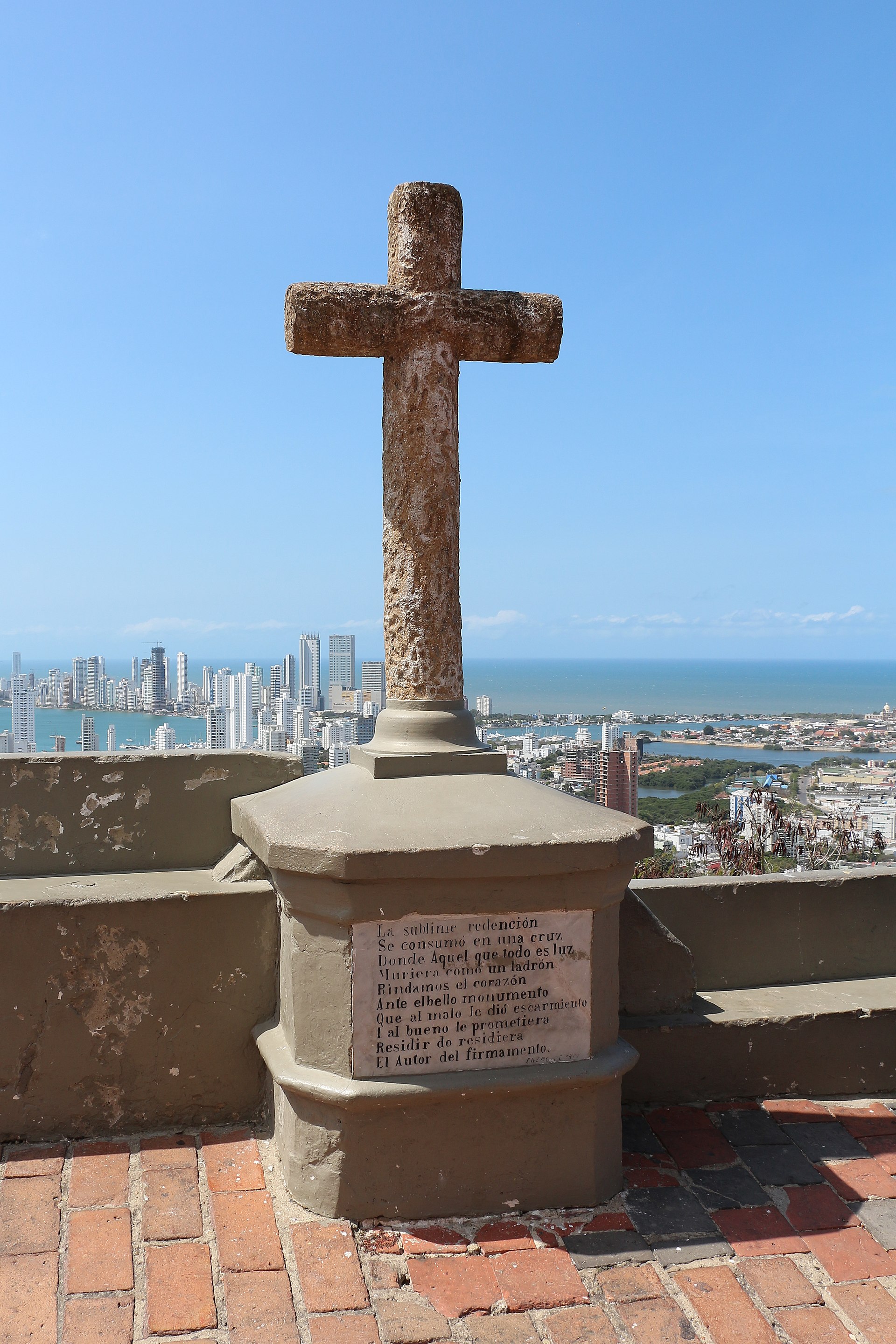
Convento de la Popa
Cerro de la Popa, Cartagena, Colombia
The Convento de la Popa is a 17th-century Augustinian monastery on the highest hill in Cartagena — the Cerro de la Popa (150 metres), whose summit provides the most comprehensive panoramic view of the city: the walled old city, the harbour, Bocagrande, the islands offshore, and the Caribbean stretching to the horizon. The monastery, founded in 1607, is named after its hilltop location, which from the harbour resembles the popa (stern) of a ship. The convent's chapel houses the image of the Virgen de la Candelaria, Cartagena's patron saint, and the annual festival on February 2 (Día de la Candelaria) is the city's most important religious celebration. The cloistered courtyard, with its colonial arches and the bougainvillea-draped walls, is one of the most peaceful spaces in a city that is otherwise energetically noisy. The hilltop location means the Convento is reached by road (taxi or tour) rather than on foot, and the approach — winding up through the residential neighbourhood on the hillside — provides a transition from the flat, dense city to the elevated monastery that the 17th-century monks chose for its combination of strategic height and spiritual distance from the commerce below.
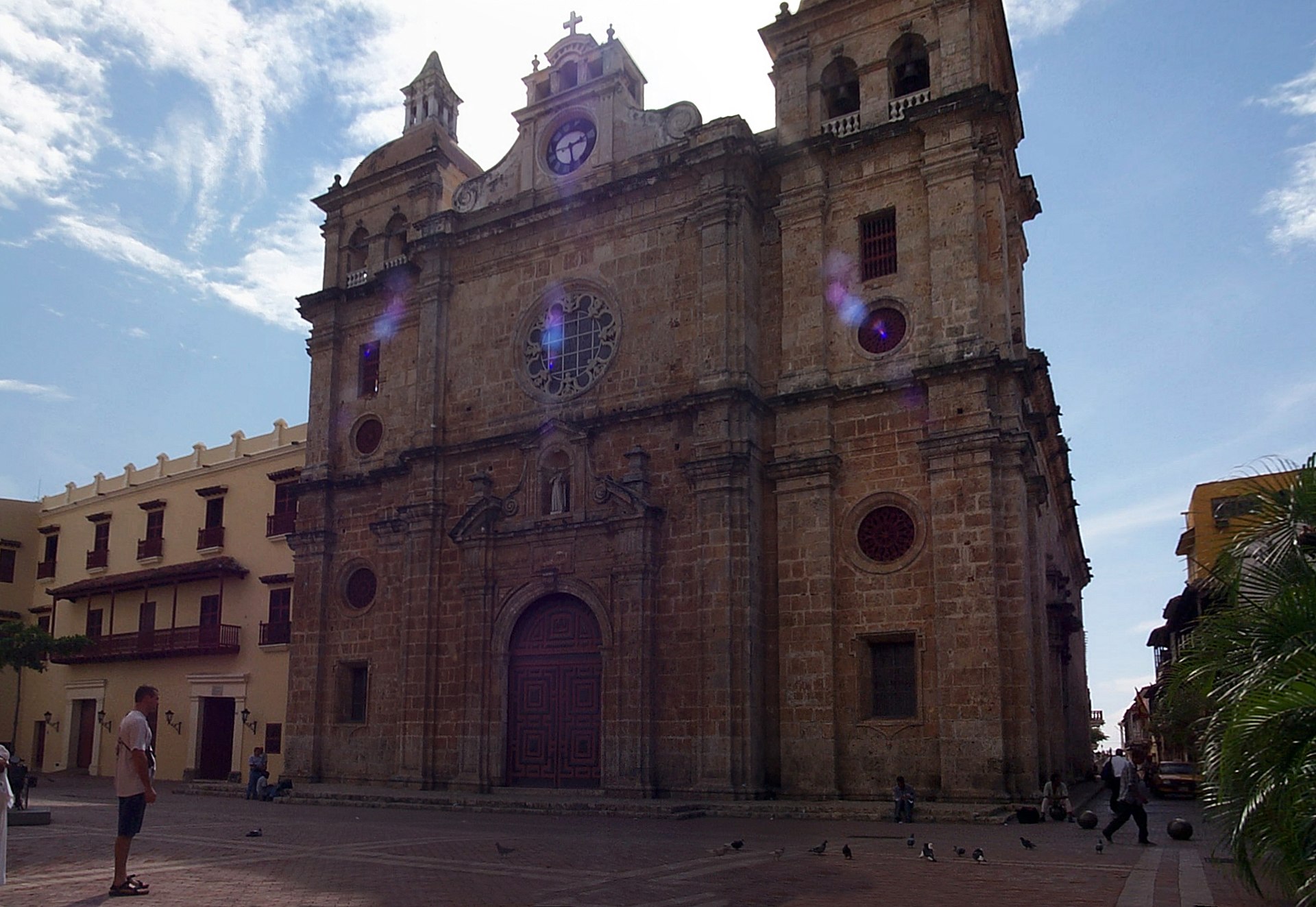
Convento de San Pedro Claver Courtyard
Calle San Pedro Claver, Centro, Cartagena, Colombia
The courtyard of the San Pedro Claver convent — accessible via a separate ticket from the main church — is one of the most beautiful Baroque cloisters in Colombia, a two-storey arcaded square in cream-coloured coral stone with a central well, carved columns, and a fruit garden that has been preserved from the colonial period. Peter Claver lived, taught, and died in the small cell on the upper floor (preserved as a chapel-museum), and walking the arcades provides a tangible sense of daily Jesuit life in 17th-century Cartagena. The second-floor gallery gives access to small rooms that display religious objects, maps of the Caribbean slave routes, and a collection of pre-Columbian artifacts. The courtyard's peaceful atmosphere — fountain, fruit trees, the sound of prayer from the church — makes it one of the best spots in the walled city to escape the midday heat.
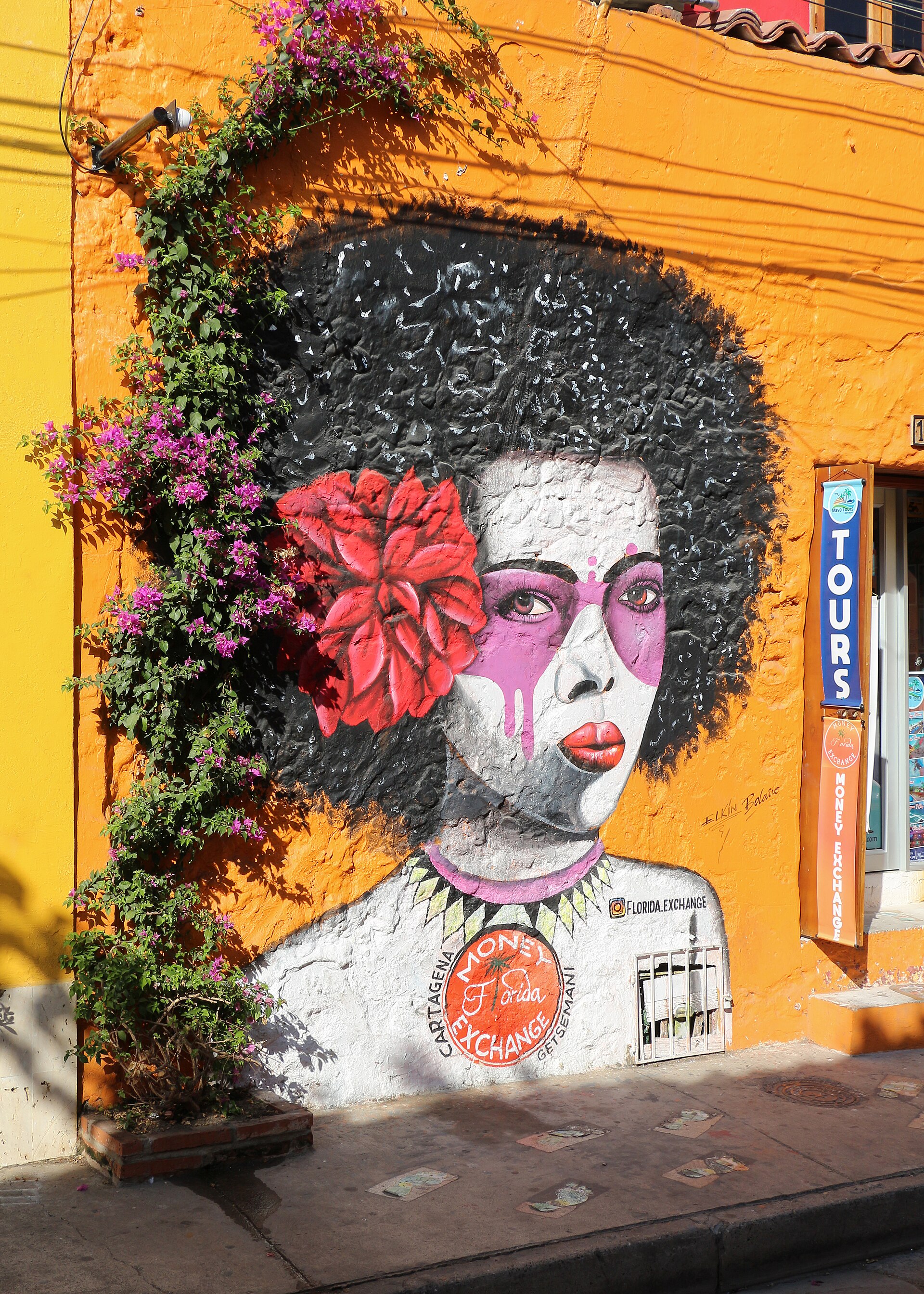
Getsemaní
Cartagena, Colombia
Getsemaní is Cartagena's most vibrant neighbourhood — a former working-class district adjacent to the Walled City that has transformed into the city's creative, nightlife, and street art epicentre while retaining the community character that the heavily touristed centro has lost. The streets around Plaza de la Trinidad are lined with murals by Colombian and international artists, and the evening scene — domino games on the plaza, salsa music from the bars, street food vendors selling arepas and empanadas — captures Cartagena's Afro-Caribbean energy. Plaza de la Trinidad is Getsemaní's living room — a small church square where residents gather every evening, children play, and the line between tourist entertainment and neighbourhood social life is deliberately blurred. The bars and restaurants on Calle de la Media Luna and the surrounding streets serve cocktails, Caribbean seafood, and the kind of creative Colombian food that has made Cartagena a culinary destination. Getsemaní's gentrification is a live and contested process — long-term residents face rising rents as boutique hotels and restaurants move in, and the neighbourhood's future hangs on whether the community character that attracts visitors will survive the commercial pressure that visitors create.
Iglesia de San Pedro Claver
Calle San Pedro Claver, Centro, Cartagena, Colombia
The church and convent of San Pedro Claver — a Jesuit complex completed in 1654 — is the most important site in Cartagena for the history of the African slave trade. Saint Peter Claver (1581-1654), a Catalan Jesuit known as 'the slave of the slaves,' lived here for 40 years and ministered to an estimated 300,000 African slaves who arrived at Cartagena (the major slave port of Spanish South America) during his lifetime, baptising them, distributing food and medicine, and advocating for better treatment. Claver's tomb is in the cathedral-like church, and the attached museum in the former convent has exhibits on slavery, indigenous Colombian cultures, and contemporary Afro-Colombian art. The plaza outside, with its bronze sculptures by Edgardo Carmona depicting everyday Cartageneros (a seamstress, a chess player, a fruit vendor), provides a counterpoint to the serious history inside.
Las Bóvedas
Calle 34, Centro, Cartagena, Colombia
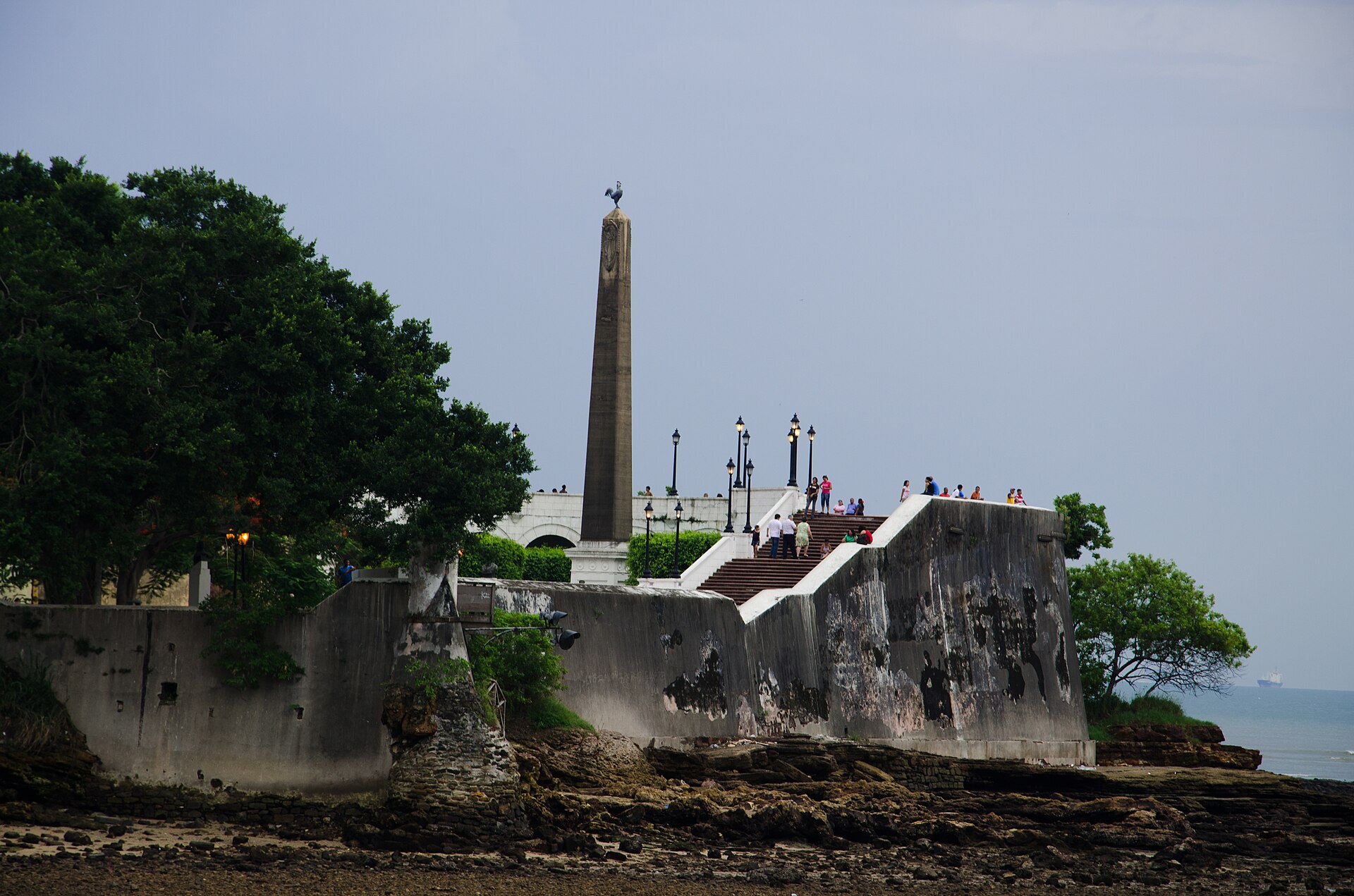
Las Bóvedas are 23 barrel-vaulted dungeons built into the city walls in 1798 at the northern corner of the walled city — originally military storerooms for gunpowder and munitions, later used as prisons during the 19th-century independence wars, and now converted into artisan craft shops selling hammocks, mochilas (woven bags), Colombian coffee, and the emerald jewellery for which Colombia is famous (the country produces an estimated 55% of the world's emeralds). The vaulted spaces — with 15-metre-thick walls that give the interiors a constant cool temperature — are among the most atmospheric shopping environments in Cartagena, and the quality of craft is generally higher than in the casual beach vendors in Bocagrande. The view from Las Bóvedas over the walls towards the Caribbean is one of the best in the old town, and the evening drumming groups that sometimes play outside the arches add to the ambiance.
Museo del Oro Zenú
Plaza de Bolívar, Centro, Cartagena, Colombia
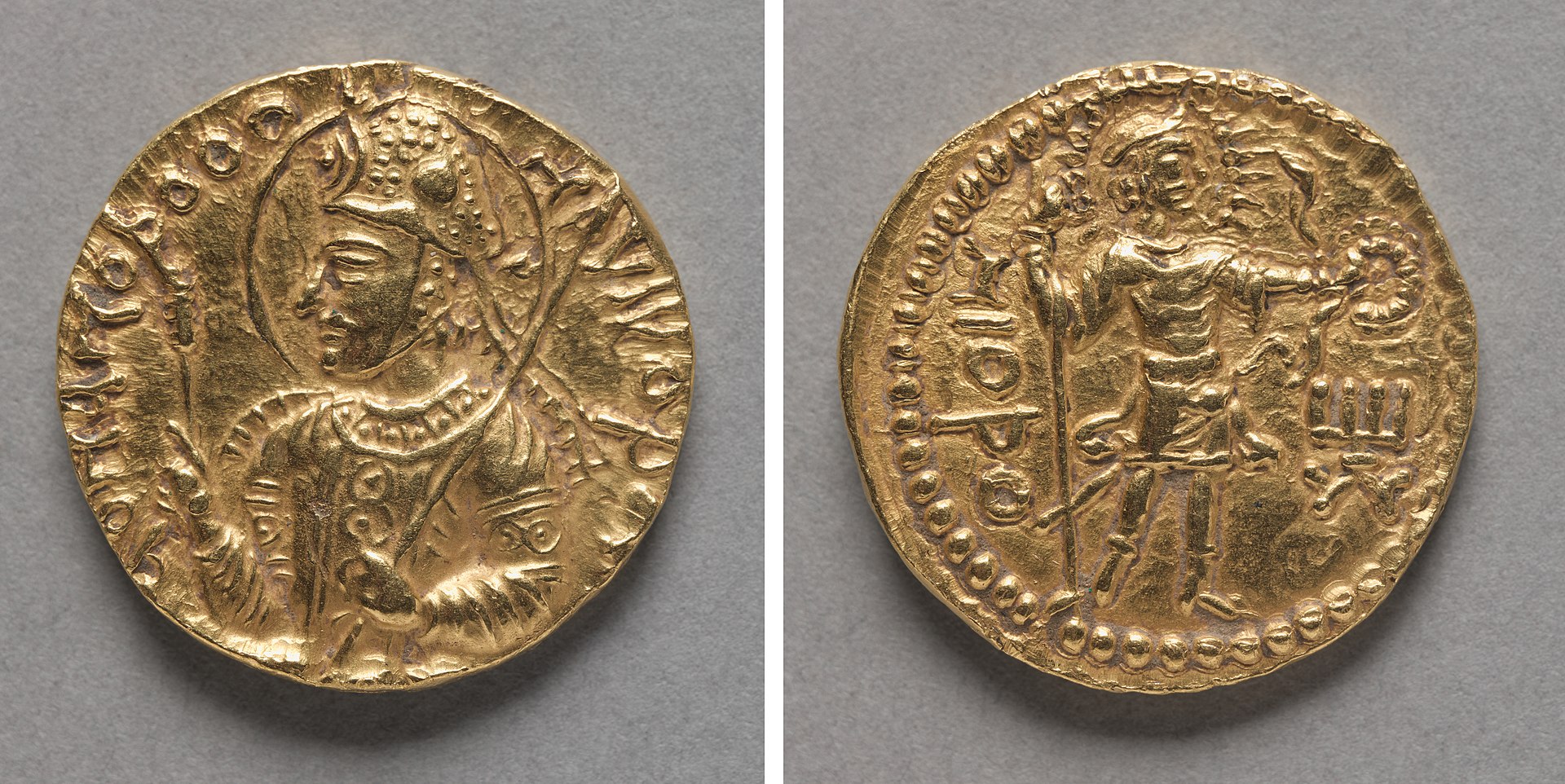
The Museo del Oro Zenú is Cartagena's branch of Colombia's famous Gold Museum system — a compact museum on Plaza de Bolívar dedicated to the Zenú culture, a pre-Columbian civilisation that inhabited the Colombian Caribbean coast from approximately 200 BC to 1600 AD and produced some of the most sophisticated filigree gold work of pre-colonial America. The Zenú were engineers — their earthwork canal systems drained 500,000 hectares of floodplain for agriculture — and metallurgists whose lost-wax casting techniques allowed them to create hollow gold figures with impossibly fine filigree. The museum's highlights are the gold nose ornaments, breastplates, and ceremonial staff finials found in Zenú burial mounds — objects that were buried rather than kept by families, a cultural practice that allowed the museum to rebuild a partial record after the colonial melting of gold artifacts for currency. Entry is free.
Palacio de la Inquisición
Plaza de Bolívar, Centro, Cartagena, Colombia
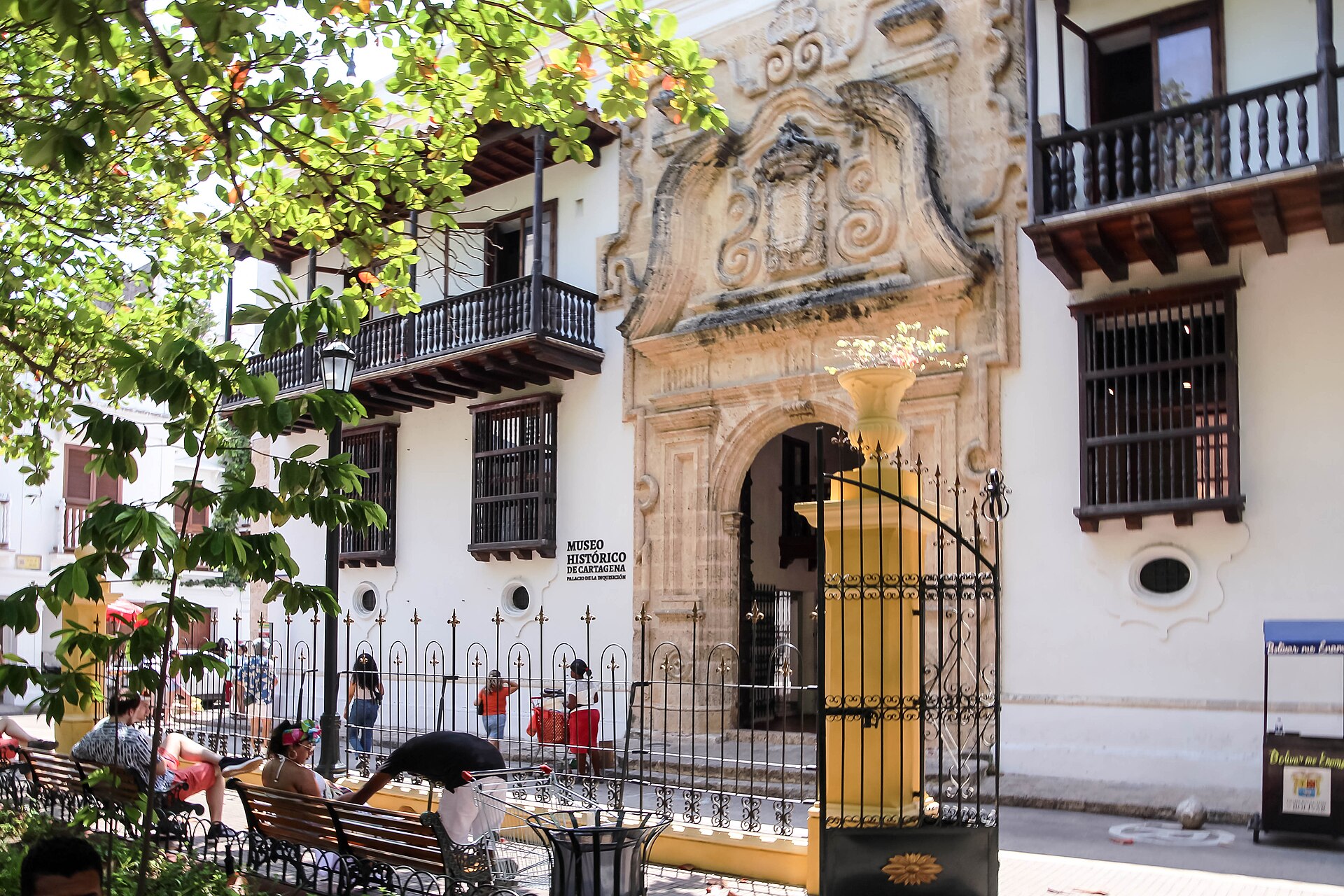
The Palace of the Inquisition is the most historically significant colonial building in Cartagena — a Baroque palace on Plaza de Bolívar that served as the headquarters of the Spanish Inquisition in New Granada from 1610 to 1821. The museum inside documents the Inquisition's activities in Cartagena — the trials, the punishments, and the auto-da-fé (public sentencing ceremonies) that were performed in the plaza outside — with a directness that makes the building's beautiful architecture feel uncomfortable, which is the correct emotional response. The collection includes instruments of torture (the rack, the water torture device, the garrucha pulley system), trial records, and the Baroque portal that is considered the finest piece of colonial stonework in the city. The courtyard — where accused heretics, witches, and Jews were held before trial — is now a peaceful garden, and the transition from the street's cheerful commerce to the museum's documented cruelty provides one of Cartagena's most jarring historical encounters. The Inquisition in Cartagena was particularly concerned with enslaved Africans who practised non-Christian religions and with the conversos (Jews who had converted to Christianity but were suspected of secretly maintaining Jewish practices) who had fled Spain to the colonies. The museum's treatment of this history adds the religious-persecution dimension to Cartagena's colonial story that the architecture alone can't convey.
Palenque de San Basilio (Day Trip)
San Basilio del Palenque, Mahates, Colombia
San Basilio de Palenque is the first free Black settlement in the Americas — a village 50 kilometres south of Cartagena founded in the 17th century by escaped enslaved Africans (cimarrones) led by Benkos Biohó, who established an independent community in the foothills that the Spanish were never able to reconquer. Palenque maintained its freedom, its African-derived language (Palenquero, the only Spanish-based creole language in Latin America), and its cultural traditions for four centuries, and was designated a UNESCO Masterpiece of Oral and Intangible Heritage in 2005. The village preserves African-descended cultural practices that have disappeared elsewhere in the Americas — the music (bullerengue, a women's drumming and singing tradition), the champion boxing tradition (Palenque has produced several world champions), the cooking (enyucado, a cassava and coconut cake), and the language (a creole mixing Spanish with Bantu languages) are all living traditions. The palenqueras — women in colourful dresses who sell fruit from bowls balanced on their heads in Cartagena's old city — are from Palenque, and their presence in the tourist district connects the colonial city to its African heritage. Visiting Palenque requires a guide (local community members offer tours) and provides the most important cultural experience accessible from Cartagena — an encounter with the African heritage that shaped Colombia's Caribbean coast but that the colonial architecture of the old city tends to obscure.
Playa Blanca (Day Trip)
Vía a Playa Blanca, Barú, Cartagena, Colombia
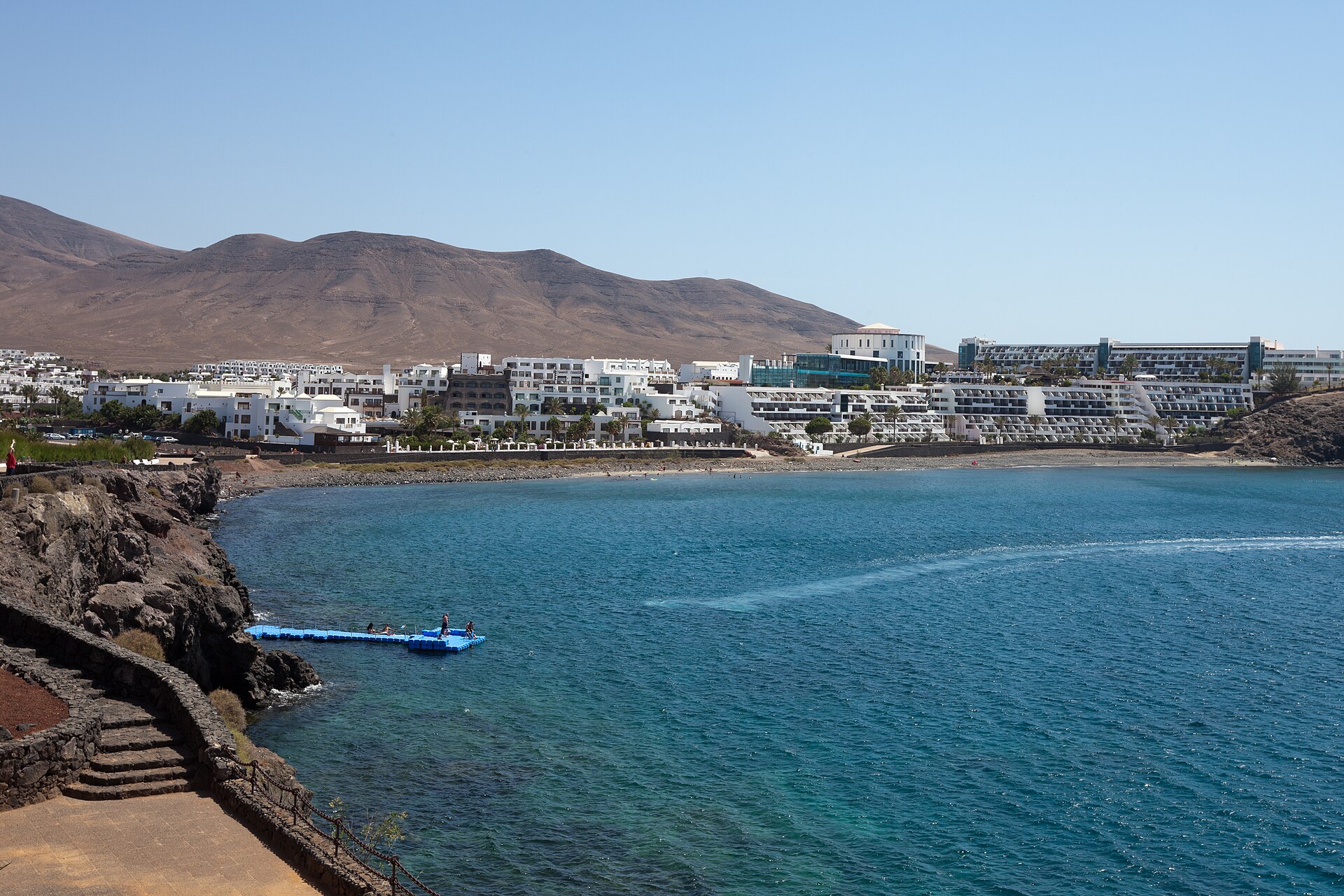
Playa Blanca on Barú Island is the closest genuinely beautiful beach to Cartagena — a long stretch of white sand and turquoise Caribbean water 1.5 hours by car and ferry south of the city, where the water is warm, shallow, and clear (unlike the grey, wave-pounded city beaches of Bocagrande). The beach's mainland connection (via a bridge opened in 2014) has made it accessible by car as well as by boat, transforming it from a barely-developed fishermen's beach into Cartagena's weekend escape. The beach has become increasingly developed and touristy — hawkers are aggressive and the middle section can feel crowded — but the ends of the beach (especially walking north or booking a beach club at the quieter southern end) still provide the Caribbean postcard experience. Book a guided tour for logistics simplicity, or rent a car for flexibility. Avoid weekends if possible.
Plaza de Bolívar & Cathedral
Plaza de Bolívar, Centro, Cartagena, Colombia
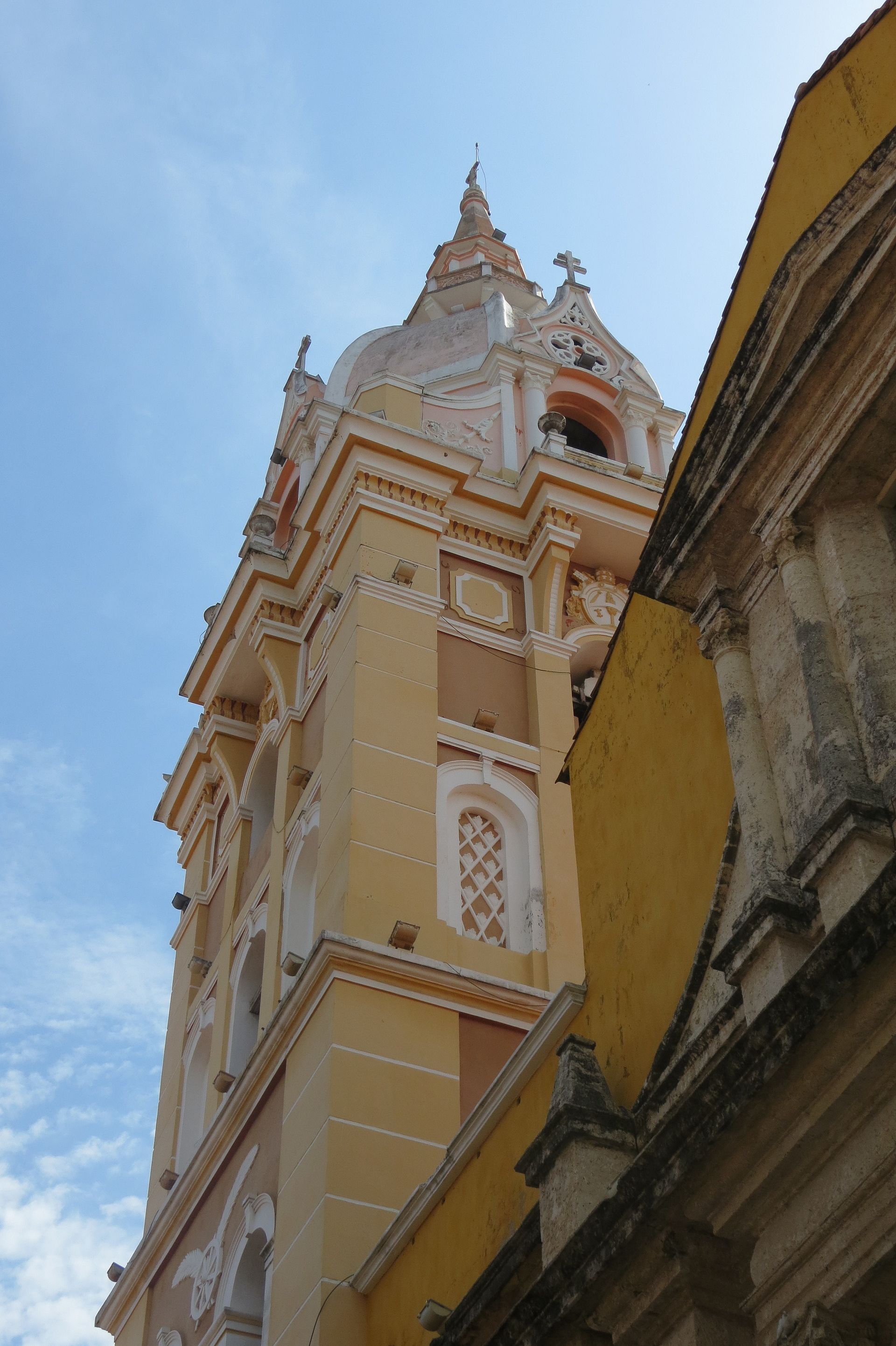
Plaza de Bolívar is the formal heart of Cartagena's old city — a shaded square anchored by a statue of Simón Bolívar (the liberator of Colombia, Venezuela, Ecuador, Bolivia, and Peru) and surrounded by the Palace of the Inquisition (now a museum documenting the Spanish Inquisition's activities in Cartagena), the Cathedral, and the colonial buildings that housed the institutions of Spanish colonial power. The Palace of the Inquisition is the square's most historically charged building — the Inquisition operated in Cartagena from 1610 to 1821, and the museum displays the instruments of torture, the trial records, and the architectural spaces (including the dungeon and the courtyard where sentences were announced) that document one of the darker chapters of colonial history. The building's Baroque portal is considered the finest piece of colonial architecture in Cartagena. The Cathedral, begun in 1575 and completed in 1612, was partially destroyed by Sir Francis Drake's 1586 attack on Cartagena (Drake demanded a ransom, and the cathedral tower was the first building he targeted) and rebuilt in the 17th century.
Plaza de la Aduana
Plaza de la Aduana, Centro, Cartagena, Colombia
Plaza de la Aduana is the largest and oldest square in Cartagena — a broad trapezoidal plaza used as the main mustering ground of the city since the 16th century, surrounded by the Old Customs House (now the Alcaldía, or city hall), the Palacio Municipal, and the Plaza de los Coches beyond. A small bronze statue of Christopher Columbus in the centre was erected in 1894, though it has become controversial in the context of modern debates about colonial monuments. The square leads directly to the Puerta del Reloj (Clock Tower Gate) — the historic main gate of Cartagena — and to the adjacent Plaza de los Coches where slaves were auctioned during the colonial period and where the famous Portal de los Dulces (a row of arcades selling traditional Cartagena sweets — coconut-based cocadas, enyucado, caballitos) has operated since the 19th century.
Plaza de San Diego
8-15 Calle 39, San Diego, Cartagena, 130001, Colombia
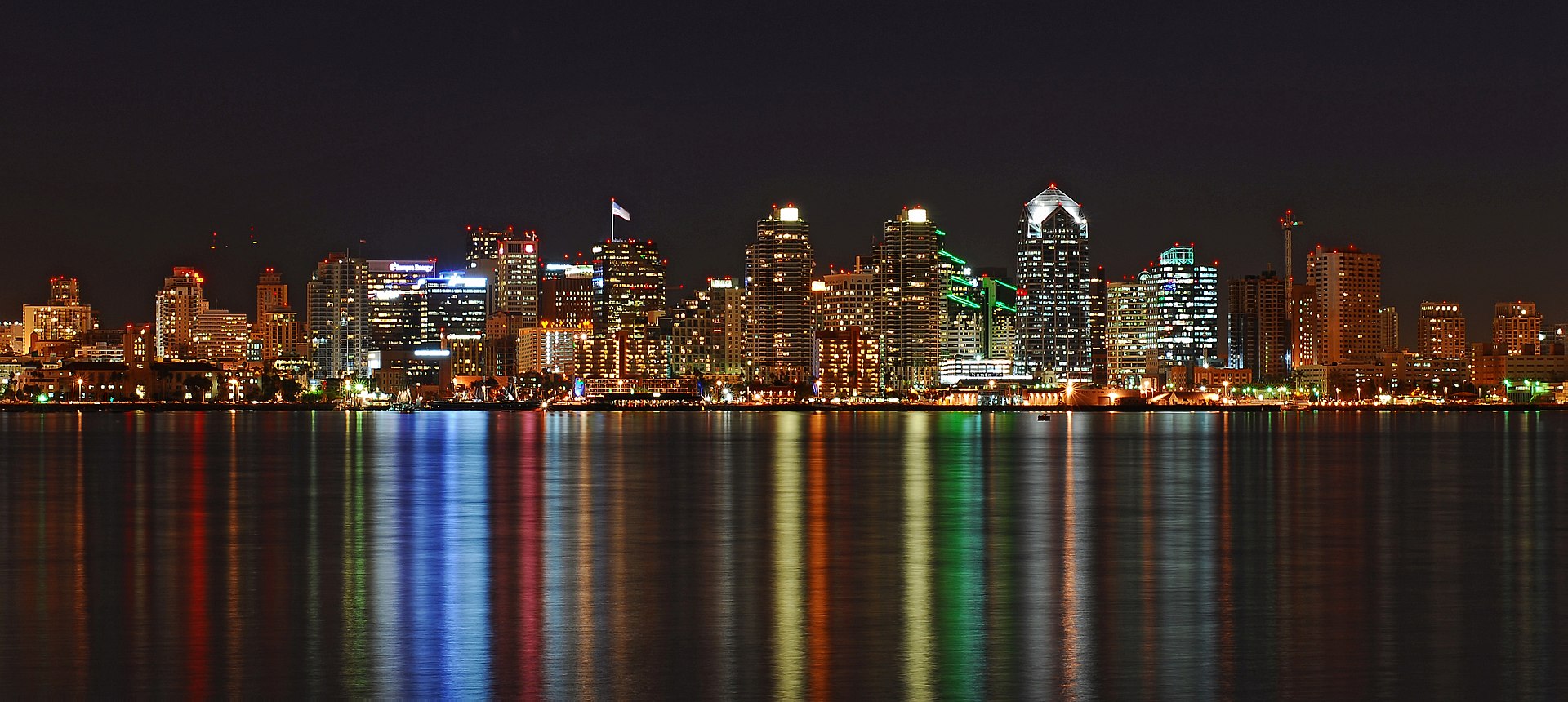
Plaza de San Diego is a small, intimate square in the quieter northern part of the walled city — named for the now-demolished Convento de San Diego and dominated at one end by the restored 17th-century Santa Clara convent (now the luxury Sofitel Santa Clara hotel). The square has one of Cartagena's most concentrated collections of restaurants — Santísimo, Juan del Mar, La Vitrola (Cartagena's legendary Cuban-style restaurant founded in 1994 with live bolero and son music) — making it the old town's gastronomic heart after dark. The square is less touristy than Plaza Santo Domingo but just as picturesque, and the quieter atmosphere allows conversation without competing with street musicians. La Vitrola in particular is worth the premium price — the Cuban band plays from 7:30 PM nightly, and the food is seafood-focused Caribbean cuisine at a high level.
Plaza Santo Domingo
Plaza de Santo Domingo, Cartagena
Plaza Santo Domingo is Cartagena's most famous evening plaza — a small square in the walled city dominated by the 16th-century Iglesia de Santo Domingo (the oldest church in Cartagena, completed in 1552) and featuring Fernando Botero's monumental bronze sculpture 'La Gordita' (officially 'Mujer Reclinada'), a voluptuous reclining nude donated by the Colombian sculptor in 2000 that has become the most-photographed statue in the city. The square fills nightly with tables from the surrounding restaurants (Restaurante Santo Domingo, El Santísimo), musicians, and locals on the traditional Caribbean evening stroll. The colonial atmosphere — carriage horses clopping past, yellow lamplight against white stucco and bougainvillea, music from multiple directions — is Cartagena at its most theatrical. The church interior is usually open after 6 PM and has an unornamented colonial simplicity that contrasts with the extravagance outside.
Rosario Islands (Day Trip)
Islas del Rosario, Cartagena, Colombia
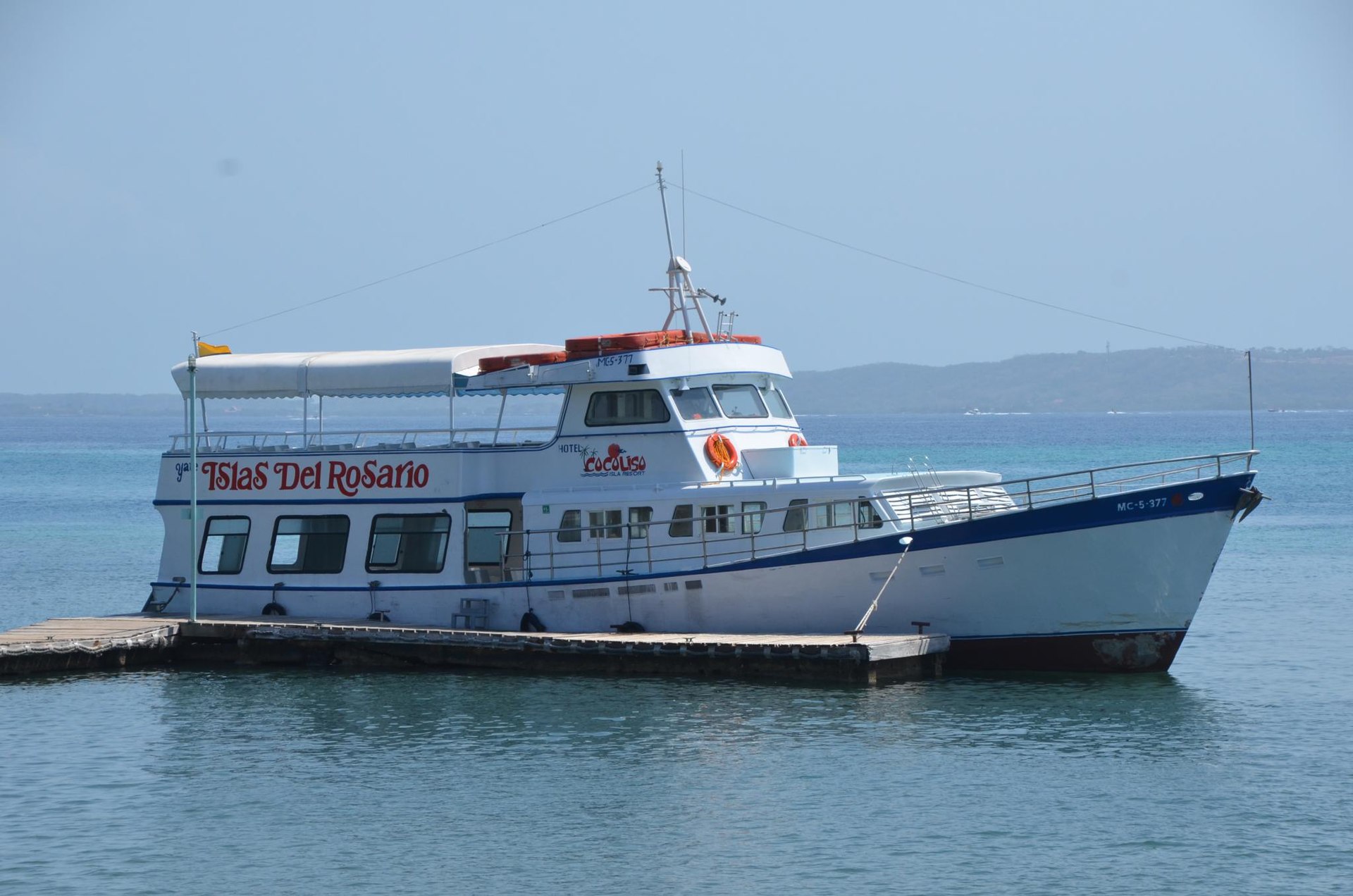
The Rosario Islands are a coral archipelago 45 minutes by boat from Cartagena — 27 islands of white sand beaches, turquoise water, and the kind of Caribbean paradise that the mainland city's urban intensity makes you need. The islands are part of a national marine park and contain some of the best-preserved coral reefs on Colombia's Caribbean coast. The standard day trip includes a boat ride through Cartagena's bay (passing the fortress of San Fernando de Bocachica and the mangrove channels that line the coast), time on a beach island (most trips go to Isla Grande or Playa Blanca on Isla de Barú), a seafood lunch, and snorkelling on the coral reefs. The water clarity and marine biodiversity (tropical fish, sea fans, brain coral) provide excellent snorkelling by Caribbean standards. Playa Blanca on Isla de Barú (technically a peninsula, not an island) is the most visited beach — a kilometre of white sand with crystal water that is the postcard Caribbean that Cartagena's city beaches can't provide. The beach is crowded and commercialised during peak season, but the water quality and the setting remain beautiful.
San Pedro Claver Church & Museum
3-101 Calle 31, Centro, Cartagena, 130001, Colombia
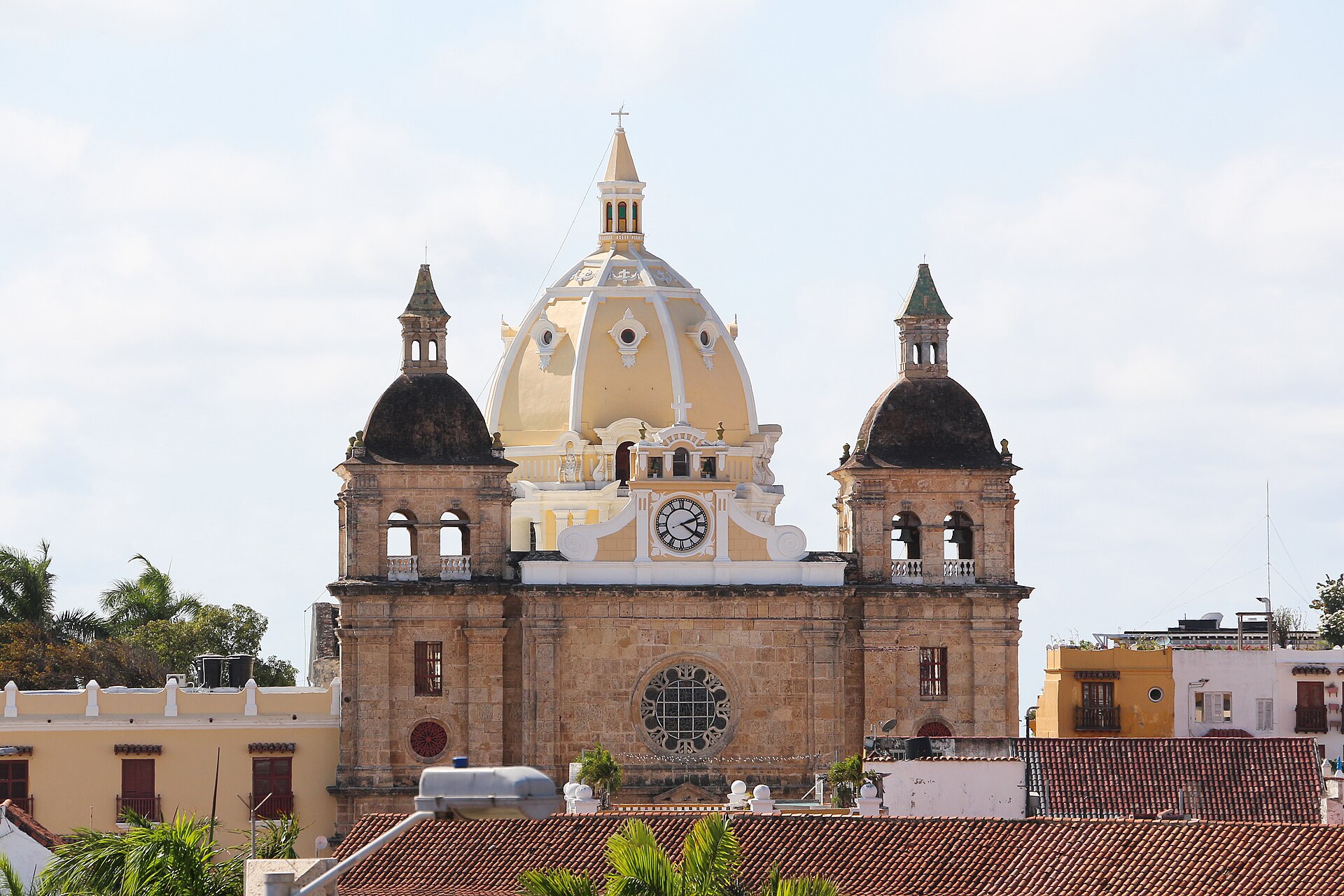
The Church and Monastery of San Pedro Claver honours the Spanish Jesuit priest who spent 40 years (1615-1654) ministering to enslaved Africans arriving at Cartagena's port — meeting the slave ships, providing food and medicine to the captives, baptising an estimated 300,000 people, and campaigning for the humane treatment of the enslaved in a colony whose economy depended on their labour. Claver called himself 'the slave of the slaves' and was canonised in 1888. The monastery, now a museum, displays Claver's cell (preserved with his simple furnishings), religious art from the colonial period, and the archaeological collection that documents Cartagena's pre-Colombian and colonial history. The church, completed in 1654, contains Claver's remains beneath the altar and is an active place of worship where the Afro-Colombian community's relationship with the priest who served their ancestors is part of living religious practice. The plaza outside the church features Fernando Botero's sculpture of a reclining woman — one of several Botero works in Cartagena (the Colombian artist, one of the most famous in Latin America, donated works to his native country's cities) — and the combination of colonial religious history and contemporary art in the same square captures Cartagena's ability to hold the past and present simultaneously.

Santa Cruz de Manga
Calle Real de Manga, Cartagena
Manga is an island neighbourhood southeast of the walled city — connected by a bridge, less visited by tourists, and home to the largest concentration of Republican-era (late 19th / early 20th century) mansions in Cartagena. The wealthy Cartagenero families who abandoned the walled city during its 19th-century decline built here instead, producing a remarkable collection of eclectic, Neo-Moorish, and Art Nouveau villas set in tropical gardens along the Calle Real. The Iglesia del Señor de los Milagros, the Casa Román (one of the finest Neo-Moorish houses with a Moorish-style central patio), and the Plaza de la Fortaleza are the main stops on a 30-minute walking circuit. Manga has almost no restaurants or tourist infrastructure, which preserves its residential calm — a useful contrast after the intensity of the walled city.

Street Art Tour Getsemaní
Getsemaní, Cartagena
Getsemaní's streets are an outdoor art gallery — since the early 2010s the neighbourhood has been transformed by over 200 murals, stencils, and street-art pieces that range from geometric portraits of Afro-Colombian women by artist El Pestilente, to hyperrealistic murals of Getsemaní residents by Luis Jaramillo, to political pieces addressing the neighbourhood's resistance to gentrification. The street art is concentrated along Calle San Juan, Calle de las Flores, and the small alleys branching off Plaza de la Trinidad. Guided street art tours (about 2 hours, available from Getsemaní Tours and several local operators) provide context that the casual visitor misses — who the artists are, what the murals mean, and how the visual transformation has paralleled Getsemaní's rapid socioeconomic change. The best murals photograph well in the morning (before 10 AM) when the tropical sun is still low.
Sunset from Café del Mar
Cartagena City Walls, Centro, Cartagena, Colombia
Café del Mar sits atop the Baluarte de Santo Domingo — a section of the colonial walls overlooking the Caribbean Sea — and provides the most celebrated sunset experience in Cartagena. The bar occupies a cannon emplacement on the wall's highest point, and the view — the sun dropping into the Caribbean directly ahead, the waves breaking against the wall below, and the old city's church towers and rooftops visible behind — is the daily spectacle that draws crowds to the walls every evening. The ritual is simple: arrive by 5pm, order a cocktail (the coconut lemonade and the signature Café del Mar cocktail are the most popular), claim a spot on the wall, and watch the sky turn from blue to gold to orange to purple over the course of an hour. The crowd is a mix of tourists and Cartageneros, and the atmosphere — relaxed, celebratory, and enhanced by the DJ who plays ambient and electronic music as the sun descends — makes this the social event that closes every Cartagena day. The walls around Café del Mar extend in both directions and are walkable at sunset — the stretch from Santo Domingo to the Clock Tower passes through the most atmospheric section of the fortifications, with views of the city on one side and the sea on the other.
Teatro Adolfo Mejía
Plaza de la Merced, Centro, Cartagena
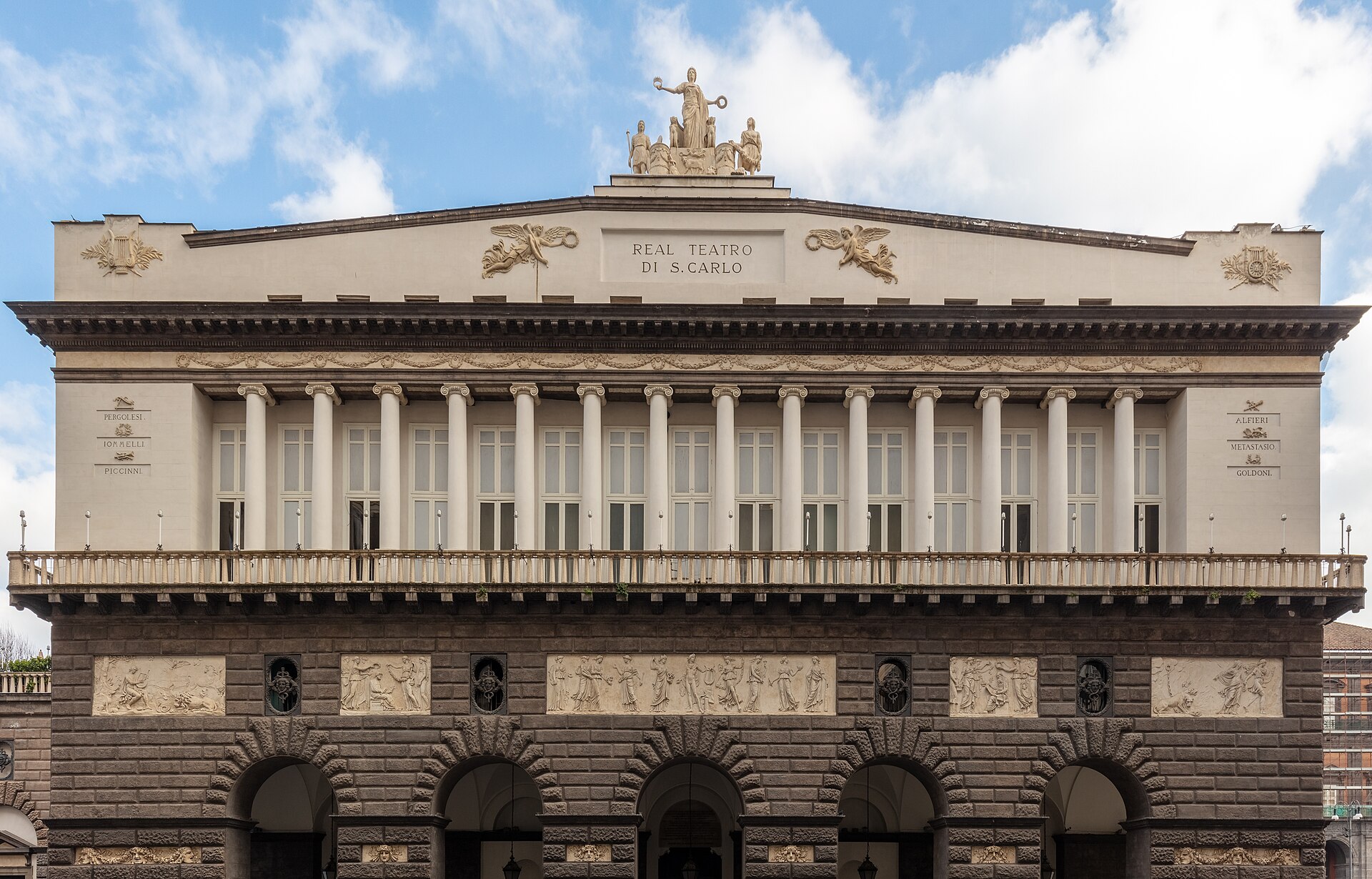
The Teatro Adolfo Mejía (formerly Teatro Heredia) is Cartagena's historic theatre — a Neoclassical opera house opened in 1911 and built on the foundations of a 17th-century convent, with a cream-and-gold interior decorated with murals by Colombian artist Enrique Grau and a horseshoe auditorium inspired by the Palais Garnier in Paris. The theatre hosts the Cartagena International Music Festival every January (Latin America's most important classical music festival) and Colombia's national theatre companies throughout the year. Even without a performance, the theatre is worth visiting for its lobby and ceiling murals — Grau's 'Four Seasons' on the auditorium dome is one of the finest examples of early-20th-century Colombian decorative painting. The theatre faces the Plaza de la Merced, site of the Convent of La Merced where independence hero Simón Bolívar declared Cartagena's independence from Spain in 1811.
Walled City (Ciudad Amurallada)
Cartagena, Cartagena, Colombia
The Walled City is Cartagena's UNESCO World Heritage heart — a 13-kilometre circuit of 17th-century stone walls enclosing a colonial district of cobblestone streets, pastel-painted mansions with wooden balconies draped in bougainvillea, churches, plazas, and the atmospheric decay that makes Cartagena the most photogenic colonial city in South America. The walls were built by the Spanish over two centuries to protect the city's treasure-laden port from pirates and rival empires. The architecture within the walls is Spanish Colonial at its most tropical — the houses are built around central courtyards (patios), with thick walls for insulation, high ceilings for ventilation, and the wooden balconies (balcones) that extend over the narrow streets, creating shade at street level and private outdoor space above. The restoration of the colonial buildings (accelerated since UNESCO designation in 1984) has converted many into boutique hotels, restaurants, and galleries, creating a living heritage district rather than a museum. Walking the walls themselves — accessible from several points, particularly the Baluarte de Santo Domingo — provides an elevated perspective across the rooftops of the old city, the Caribbean Sea, and the modern high-rise skyline of Bocagrande in the distance.