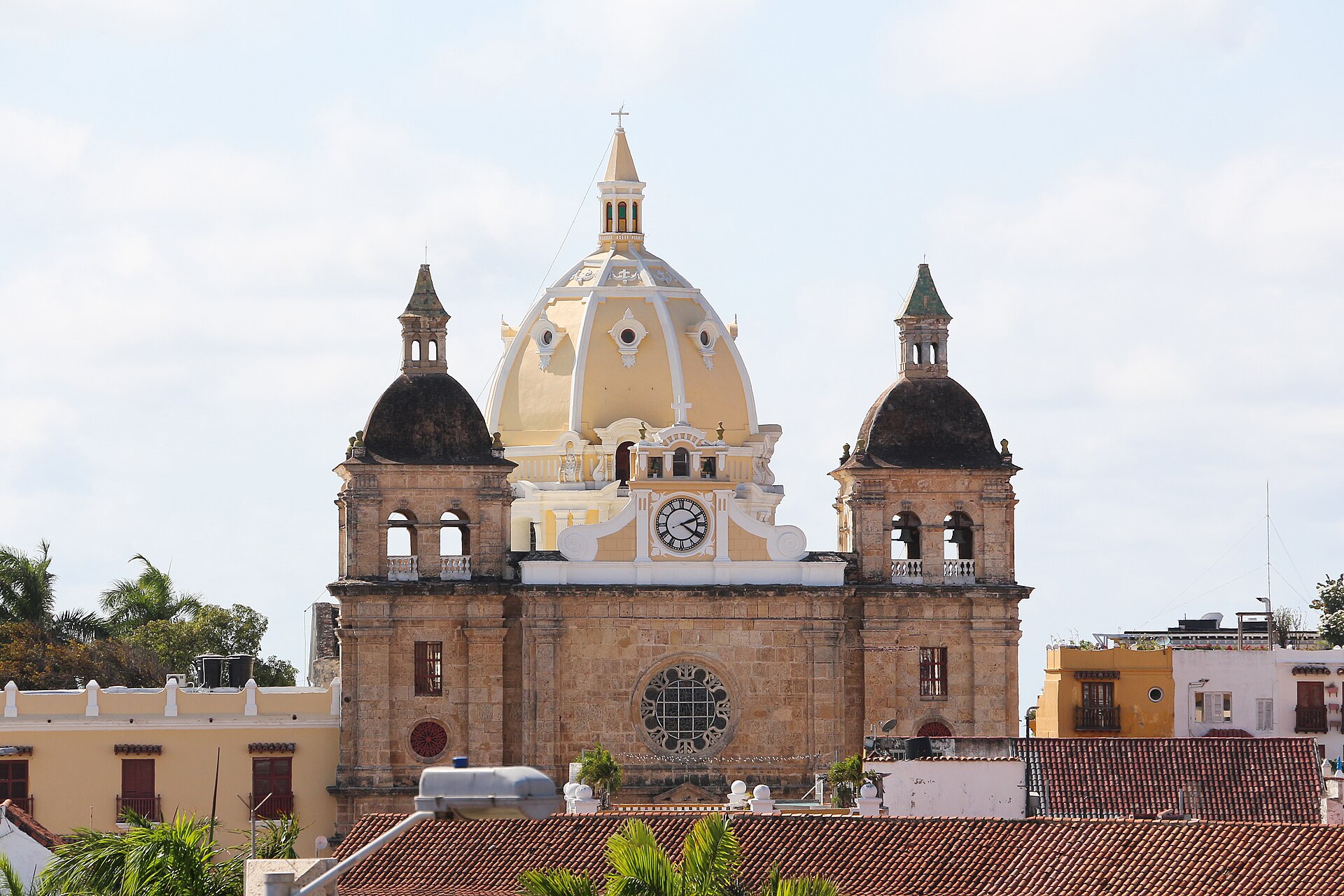
The Church and Monastery of San Pedro Claver honours the Spanish Jesuit priest who spent 40 years (1615-1654) ministering to enslaved Africans arriving at Cartagena's port — meeting the slave ships, providing food and medicine to the captives, baptising an estimated 300,000 people, and campaigning for the humane treatment of the enslaved in a colony whose economy depended on their labour. Claver called himself 'the slave of the slaves' and was canonised in 1888.
The monastery, now a museum, displays Claver's cell (preserved with his simple furnishings), religious art from the colonial period, and the archaeological collection that documents Cartagena's pre-Colombian and colonial history. The church, completed in 1654, contains Claver's remains beneath the altar and is an active place of worship where the Afro-Colombian community's relationship with the priest who served their ancestors is part of living religious practice.
The plaza outside the church features Fernando Botero's sculpture of a reclining woman — one of several Botero works in Cartagena (the Colombian artist, one of the most famous in Latin America, donated works to his native country's cities) — and the combination of colonial religious history and contemporary art in the same square captures Cartagena's ability to hold the past and present simultaneously.
Verified Facts
Pedro Claver ministered to enslaved Africans for 40 years
He baptised an estimated 300,000 enslaved people
Claver was canonised in 1888
A Botero sculpture is in the plaza outside
Get walking directions
3-101 Calle 31, Centro, Cartagena, 130001, Colombia