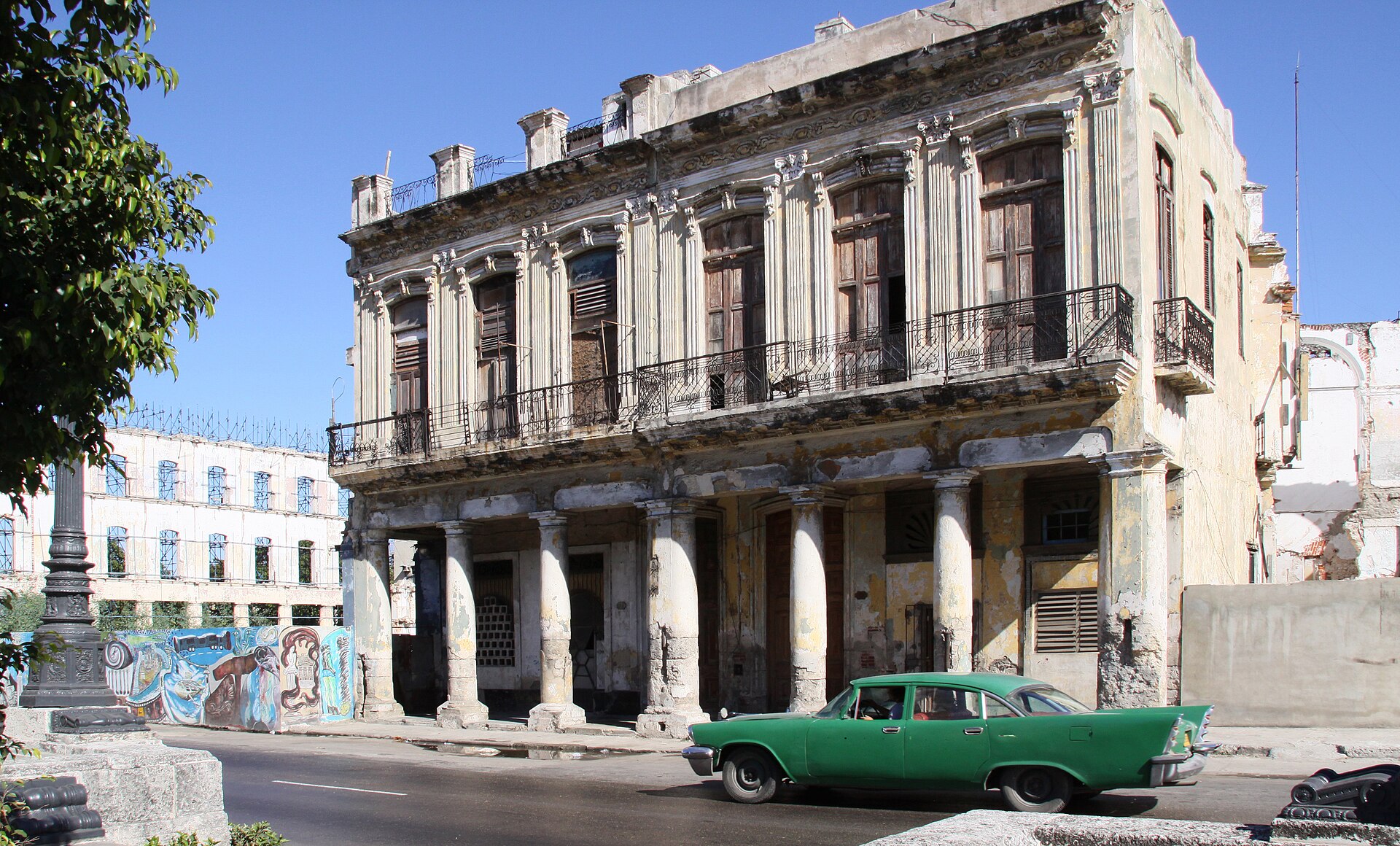
Classic American Cars
Havana, Cuba
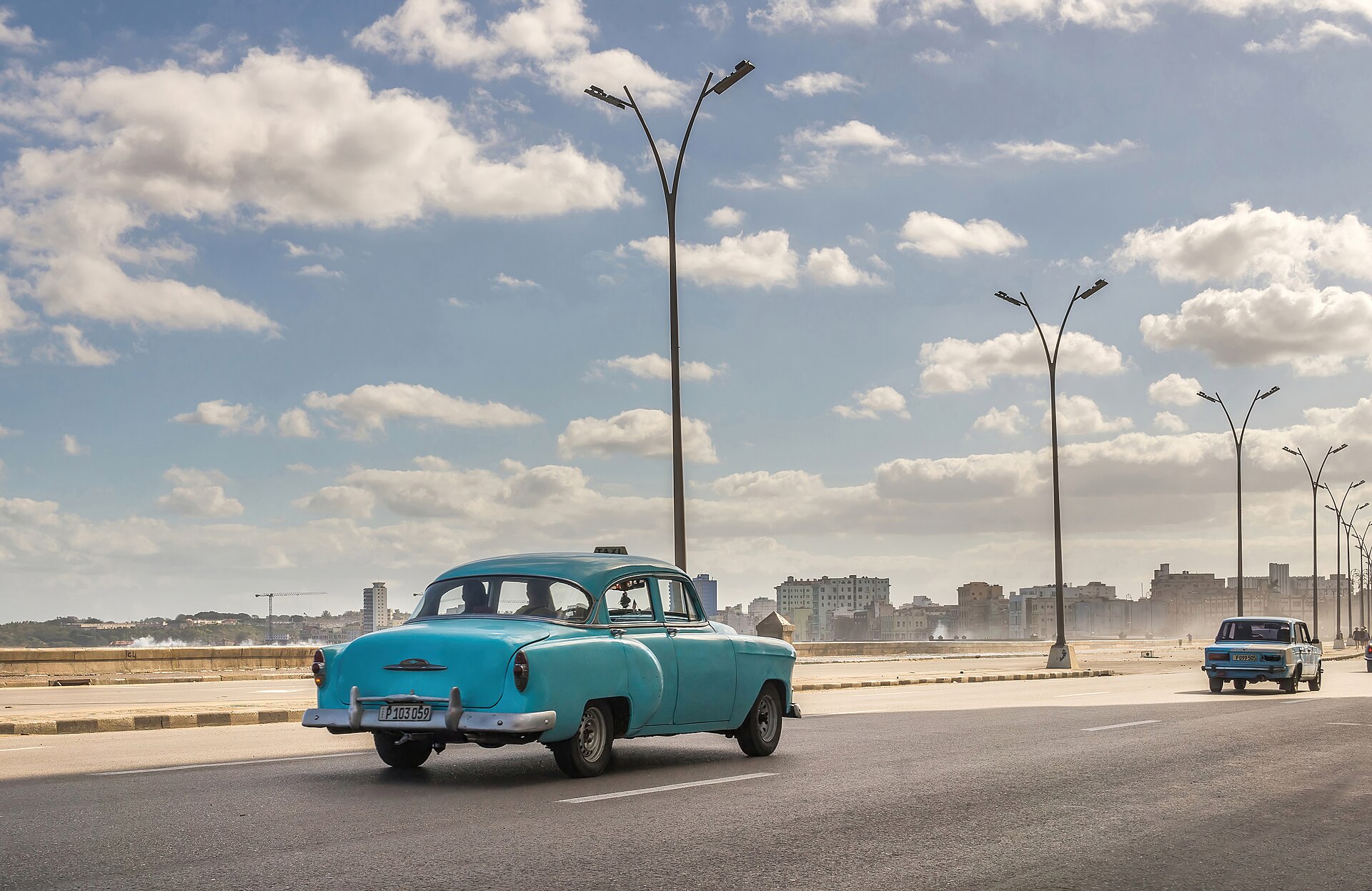
The 1950s American cars that fill Havana's streets are the city's most recognisable visual feature — approximately 60,000 pre-1960 American automobiles (Chevrolets, Fords, Buicks, Cadillacs, Pontiacs) still in daily use, maintained with improvised parts, Russian diesel engines, and the mechanical ingenuity that six decades of embargo have required.
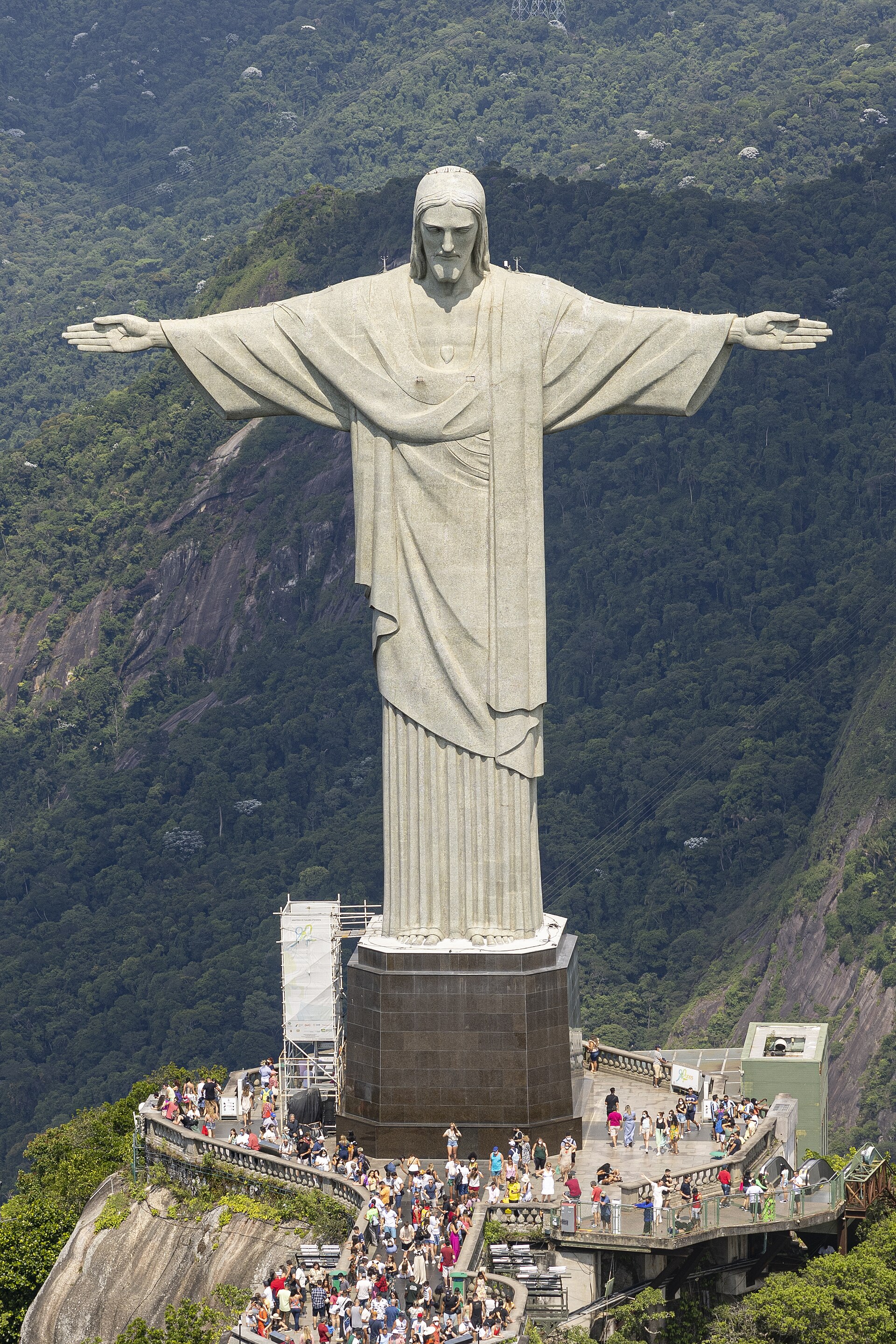
Cristo de La Habana
Carretera Casablanca, Regla, Havana, Cuba
The Cristo de La Habana is a 20-metre white marble statue of Jesus Christ that overlooks Havana Bay from a hilltop in Casablanca on the eastern side of the harbour.
Edificio Bacardi
Avenida de Bélgica (Monserrate), La Habana Vieja, Havana, Cuba
The Edificio Bacardi is Havana's greatest Art Deco building — a 12-storey tower completed in 1930 as the headquarters of the Bacardi rum company and widely considered one of the finest examples of Art Deco architecture in Latin America.
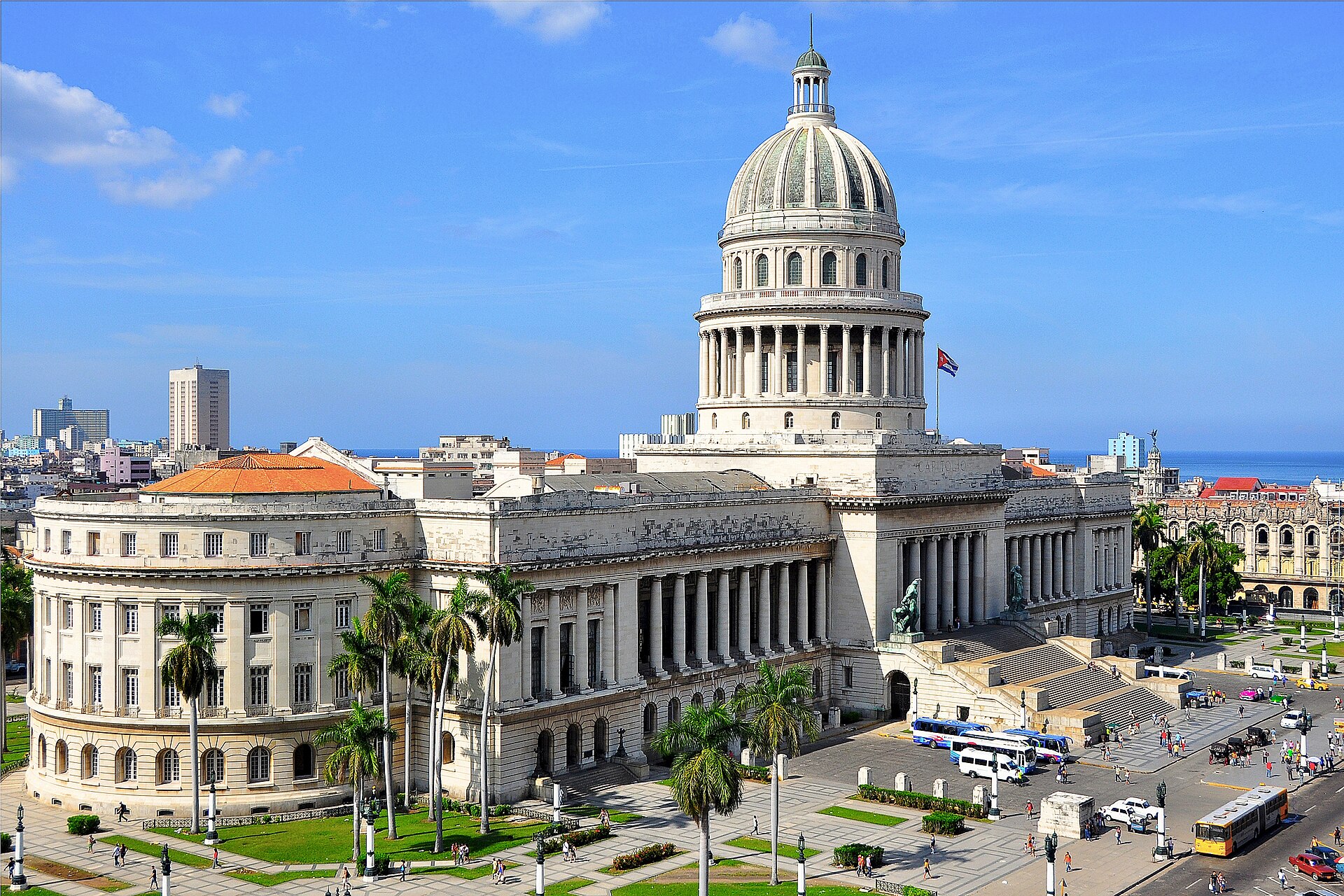
El Capitolio
Paseo del Prado, Centro Habana, Havana, Cuba
El Capitolio is Havana's most imposing building — a neoclassical capitol completed in 1929 that was modelled on the US Capitol in Washington (though Cuban guides will tell you it's one metre taller, one metre wider, and more beautiful, all of which may be true) and served as the seat of Cuba's government until the revolution.
El Floridita
Obispo 557, Habana Vieja, Havana
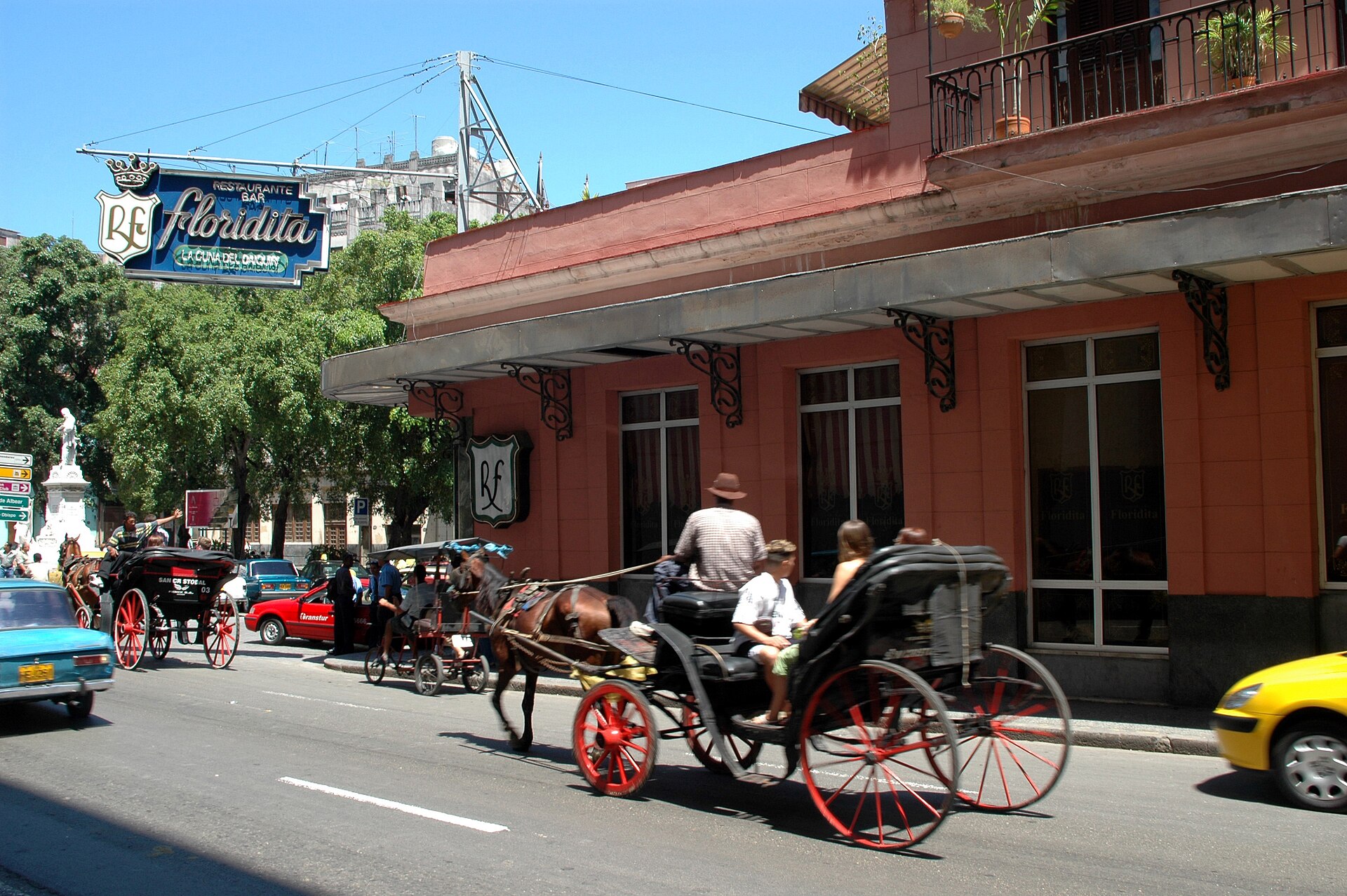
El Floridita is Havana's most famous bar — a pink-and-mahogany establishment at the corner of Obispo and Monserrate that claims to be the birthplace of the daiquiri and was Ernest Hemingway's preferred drinking spot during his two decades of living in Cuba.
El Malecón
Malecón, La Habana Vieja, Havana, Cuba
The Malecón is Havana's 8-kilometre seawall promenade — a broad, curving boulevard along the city's north coast that serves as Havana's living room, dating spot, fishing pier, exercise track, and the place where the entire social life of the city plays out against a backdrop of crashing waves and the crumbling facades of Art Deco and neoclassical apartment buildings.

El Morro (Castillo de los Tres Reyes)
Carretera de la Cabaña, Regla, Havana, Cuba
El Morro is the fortress that guards the entrance to Havana Bay — a massive stone castle completed in 1630 after 40 years of construction and designed by Italian engineer Giovanni Battista Antonelli.
Gran Teatro de La Habana
Paseo del Prado, Centro Habana, Havana, Cuba
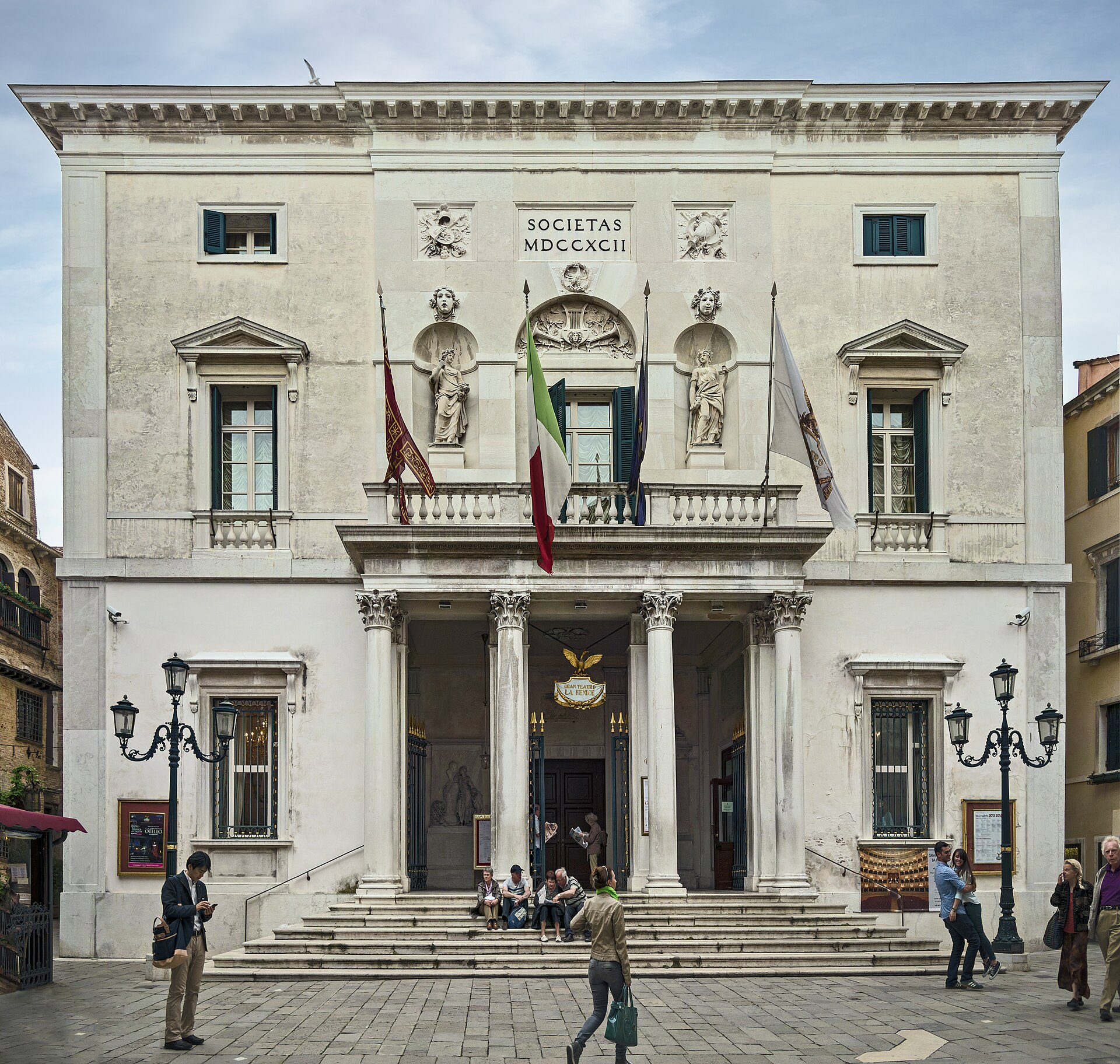
The Gran Teatro de La Habana is Cuba's national theatre — a Neo-Baroque confection built in 1915 on the foundation of an earlier 1838 theatre, where Enrico Caruso famously refused to perform in 1920 because of a hurricane warning (he was afraid of the weather, not the singing).
Habana Vieja Street Music & Son Culture
Autopista La Habana - Melena del Sur, Arroyo Naranjo, Havana, Cuba
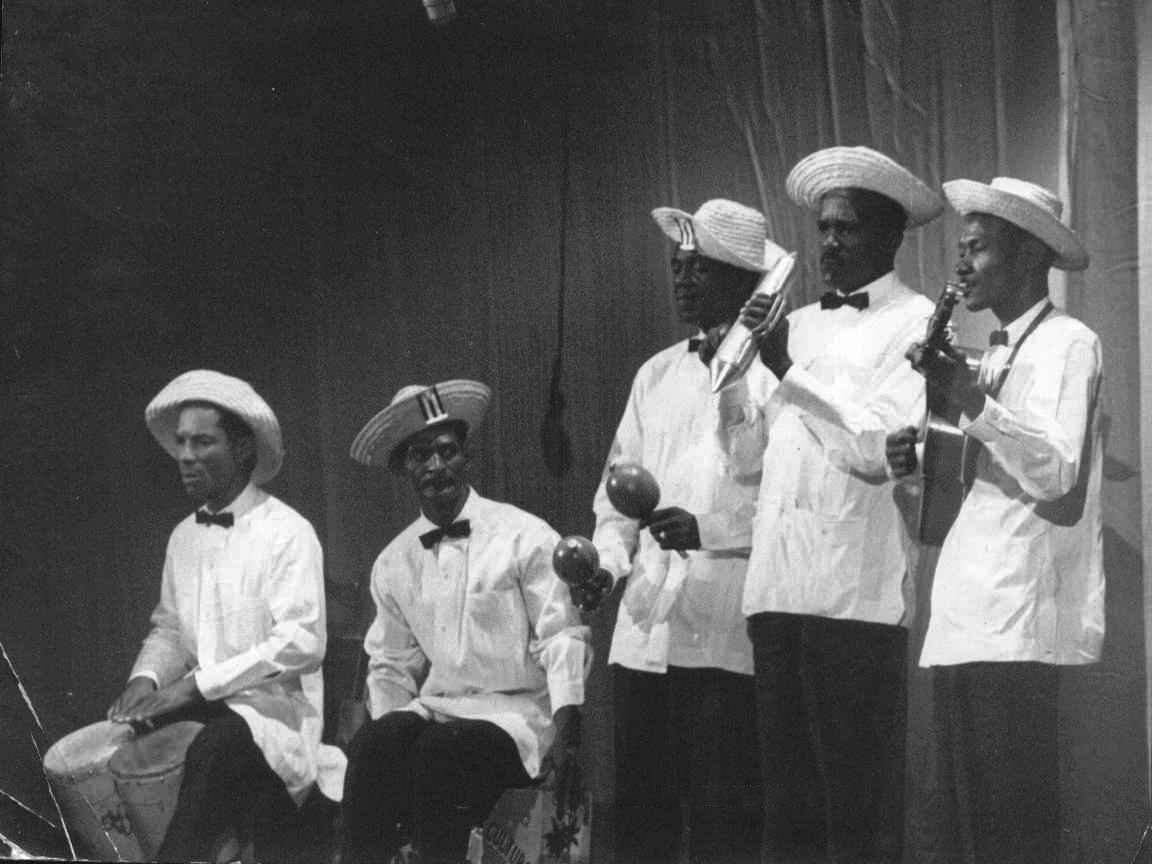
Cuban son — the musical genre that became salsa, that Ry Cooder and the Buena Vista Social Club brought to international attention in 1997, and that remains the soundtrack of daily life in Havana — is performed in bars, restaurants, plazas, and on street corners throughout Old Havana with a frequency and quality that makes the city one of the great live music destinations in the world.
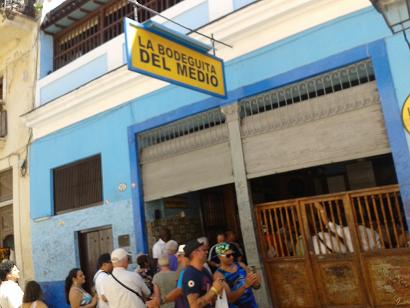
La Bodeguita del Medio
Empedrado, La Habana Vieja, Havana, Cuba
La Bodeguita del Medio is Havana's most famous bar — a tiny restaurant on Calle Empedrado in Old Havana that has been serving mojitos since 1942 and whose walls are covered in autographs, photographs, and graffiti from Ernest Hemingway, Gabriel García Márquez, Pablo Neruda, Salvador Allende, Nat King Cole, and every other cultural luminary who passed through Havana in the 20th century.
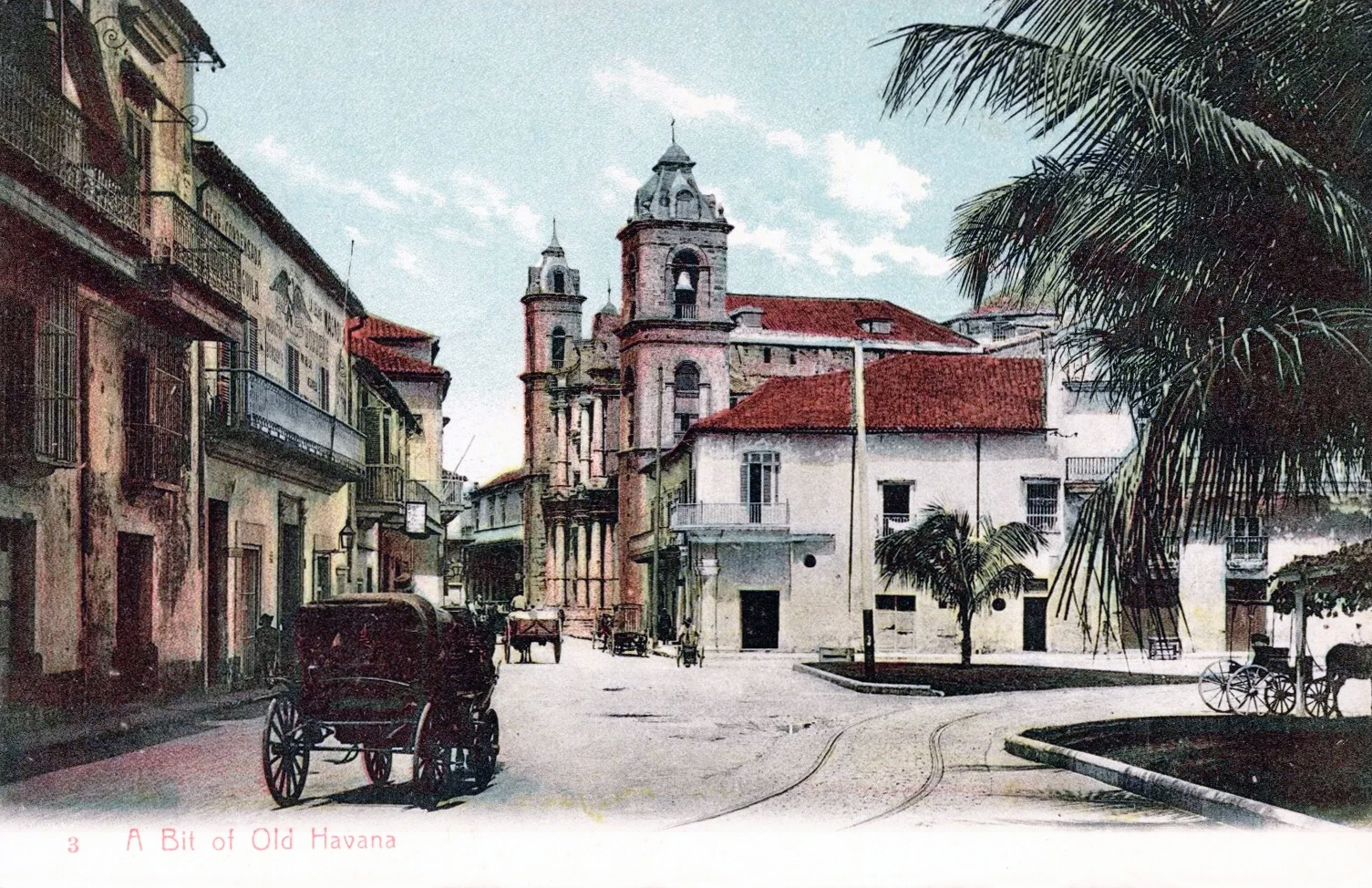
Old Havana (Habana Vieja)
Habana Vieja, Havana
Old Havana is a UNESCO World Heritage Site and one of the most complete colonial urban landscapes in the Americas — a 4-square-kilometre district of 16th to 18th-century plazas, Baroque churches, neoclassical palaces, and the crumbling, magnificent residential buildings that have been slowly restored since the 1990s under the direction of the City Historian's Office.
Parque Central
Parque Central, La Habana
Parque Central is the civic heart of Havana — the tree-shaded square that separates Old Havana from Centro Habana and that has been the city's most important public space since it was laid out in 1877.
Paseo del Prado
Paseo del Prado, Centro Habana, Havana, Cuba
Paseo del Prado is Havana's grand 19th-century promenade — a tree-lined boulevard running from Parque Central to the Malecón that was laid out in 1772 as the first paseo outside the old city walls and remodelled in 1927-28 by the French landscape architect Jean-Claude Nicolas Forestier (who also designed Paris's Champ de Mars in its modern form).

Plaza de Armas
Plaza de Armas, Habana Vieja, La Habana
Plaza de Armas is Havana's oldest square — laid out in 1519 as the military parade ground of the original Spanish settlement and still surrounded by the buildings that made Havana the capital of Spanish colonial Cuba for 400 years.
Plaza de la Catedral
Cathedral Square, La Habana Vieja, Havana, Cuba
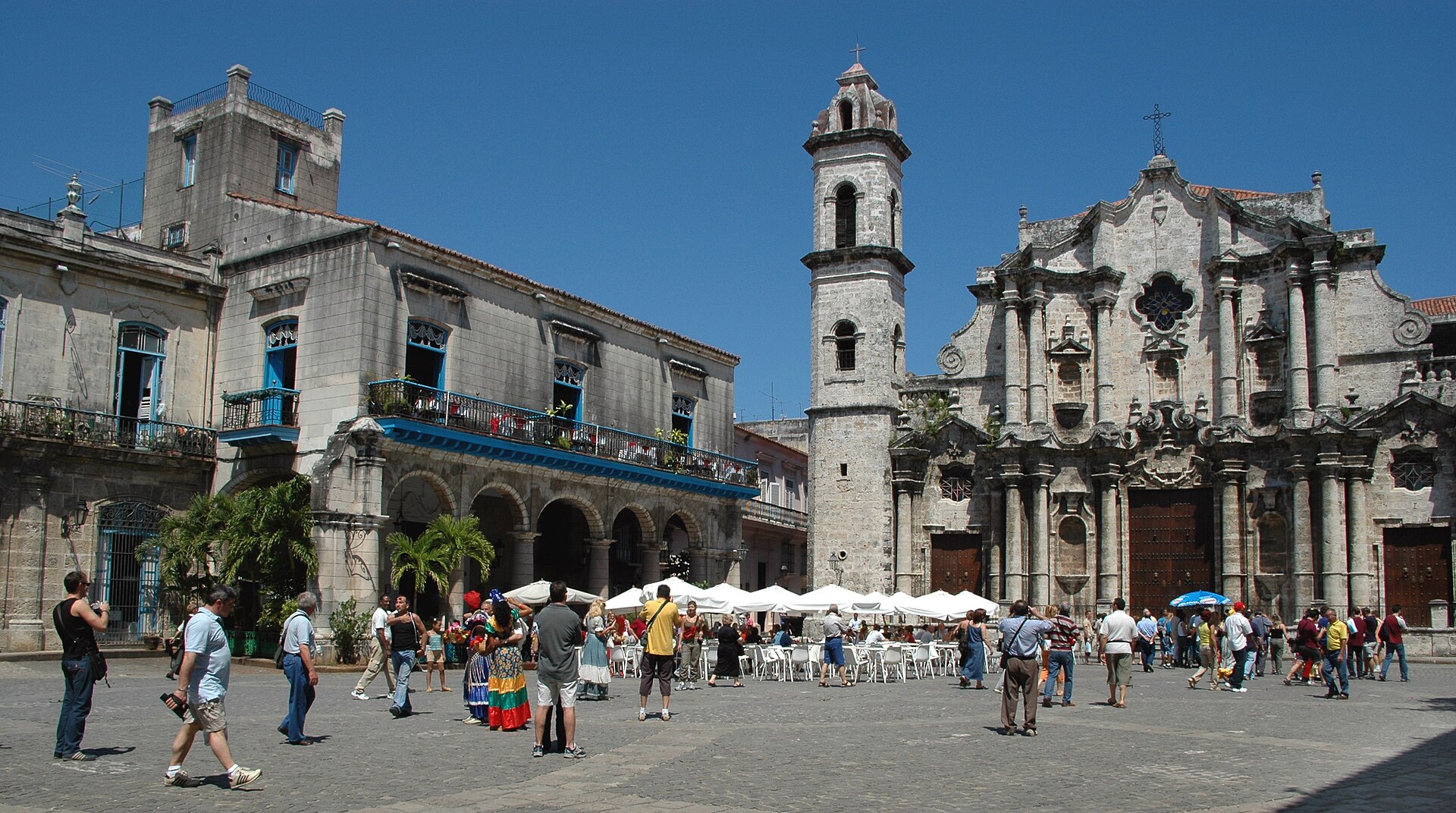
Plaza de la Catedral is the most beautiful square in Havana — an asymmetric cobblestoned plaza dominated by the Baroque facade of the Cathedral of San Cristóbal (completed in 1777, with one tower deliberately wider than the other to allow rainwater to drain — a practical asymmetry that has become the building's most distinctive feature).
Plaza de la Revolución
Plaza de la Revolución, Plaza de la Revolución, Havana, Cuba
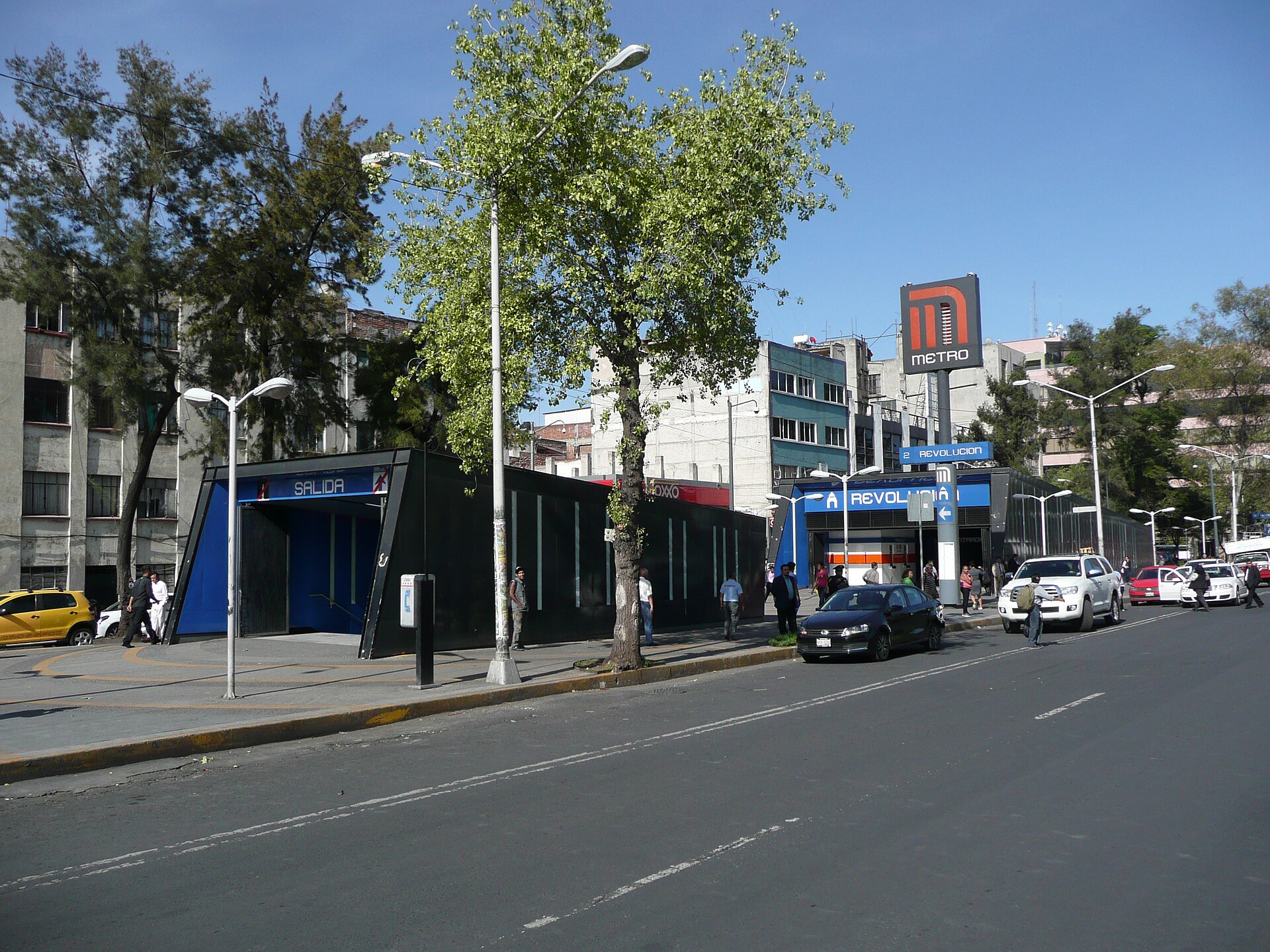
Plaza de la Revolución is where modern Cuban history has been performed — a vast concrete square that can hold up to 1 million people and has been the setting for Fidel Castro's marathon speeches, Pope John Paul II's 1998 mass, and every major state ceremony since the revolution.
Plaza de San Francisco
San Francisco Square, La Habana Vieja, Havana, Cuba
Plaza de San Francisco is one of the four great squares of Old Havana — a cobblestone plaza facing the harbour, dominated by the 16th-century Basilica of San Francisco de Asís, whose 42-metre bell tower was for centuries the tallest structure in Havana and the first landmark visible to ships entering the bay.
Explore iconic in Havana
GPS-guided narration at every landmark. Tap a spot on the map, hear the story. Every fact verified.