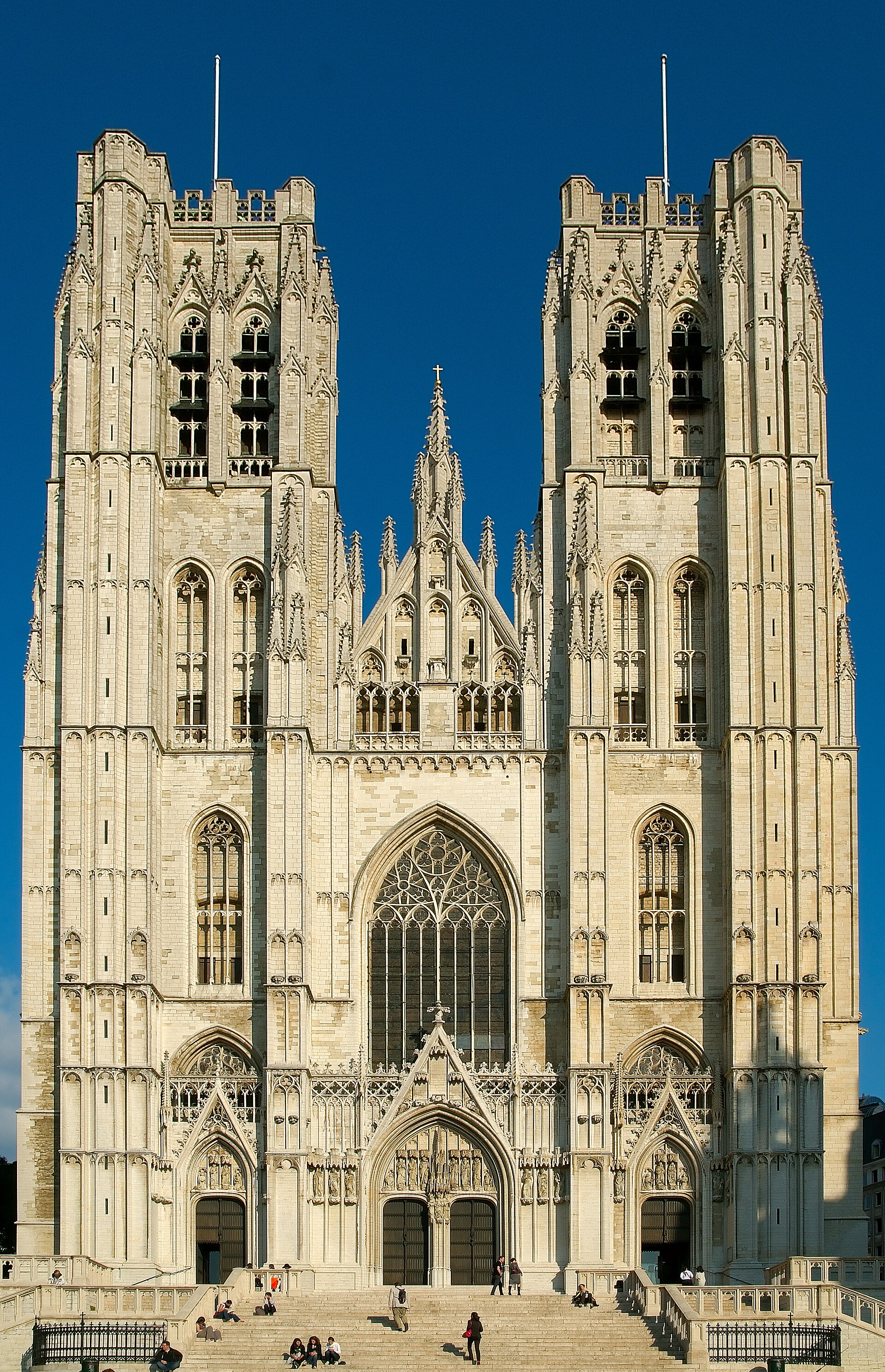
Brussels' cathedral is a Gothic masterpiece that took 300 years to build (1226-1519) and sits on the hill between the upper and lower town like a stone mediator between the royal quarter above and the commercial city below. The twin towers — 64 metres each, deliberately left without spires — give the facade a fortress-like solidity that is more Northern European than the lacy Gothic of France.
The interior is remarkable for its stained glass — the 16th-century windows in the transept, designed by Bernard van Orley, depict Habsburg rulers and their consorts in vivid colour and extraordinary detail. The Chapel of the Holy Sacrament houses a controversial relic — the 'Miracle of the Sacrament,' relating to a medieval anti-Semitic legend about desecrated communion wafers — which the church now contextualises with explanatory panels addressing the legend's harmful origins. The 11th-century Romanesque crypt, discovered during excavations in 1999, reveals the foundations of an earlier church and is accessible via a staircase in the nave.
The cathedral is free to enter and less visited than Notre-Dame Basilica in Old Montreal or its Parisian namesake, which means you can often sit in the nave and experience the proportions and light of a major Gothic cathedral without crowds. The organ concerts, held regularly, fill the stone interior with sound that demonstrates why Gothic architects designed their vaults as much for acoustics as for structure.
Verified Facts
Construction spanned from 1226 to 1519
The twin towers are 64 metres tall
16th-century stained glass windows were designed by Bernard van Orley
An 11th-century Romanesque crypt was discovered in 1999
Get walking directions
Place Sainte-Gudule, 1000 Brussels