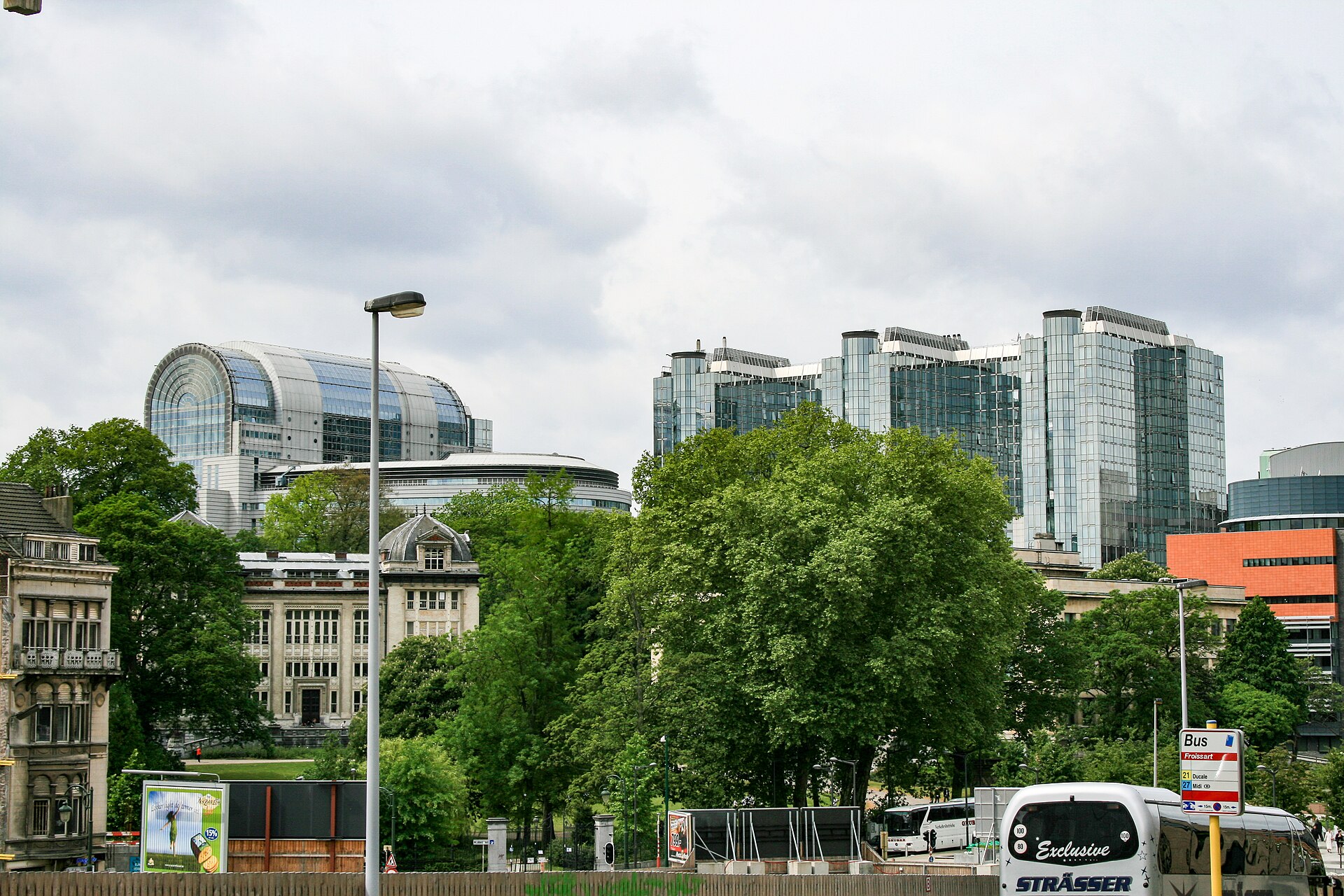
The European Quarter is where the European Union lives — a district of glass-and-steel institutional buildings east of the city centre that houses the European Commission, the European Council, the European Parliament, and the bureaucratic machinery that governs 450 million people. The quarter is architecturally divisive (the buildings range from corporate-bland to genuinely interesting), but the experience of walking through the administrative capital of Europe is unique and provides context for understanding how the EU actually works.
The Parlamentarium, the European Parliament's visitor centre, is free and unexpectedly engaging — an interactive exhibition that explains the EU's history, institutions, and decision-making processes through multimedia displays, a 360-degree cinema, and role-playing exercises where you negotiate legislation with virtual MEPs. The European Council building (Europa), with its distinctive egg-shaped structure enclosed in a lantern of recycled window frames from all 27 member states, is the most architecturally significant building in the quarter.
The quarter sits on and around Rue de la Loi, a boulevard that connects the Cinquantenaire park to the city centre, and the contrast between the monumental institutional architecture and the surrounding residential streets of Ixelles and Etterbeek is quintessentially Brussels — a city that has always been slightly embarrassed by its own importance. The Parc Léopold, a small green space below the Parliament, contains the Museum of Natural Sciences (home to the world's largest collection of Iguanodon dinosaur skeletons, found in a Belgian coal mine in 1878).
Verified Facts
The European Quarter houses the Commission, Council, and Parliament
The Parlamentarium is the Parliament's free visitor centre
The Europa building uses recycled window frames from 27 member states
The Museum of Natural Sciences houses the world's largest Iguanodon collection
Get walking directions
Rue de la Loi, Quartier Nord-Est, Brussels, 1040, Belgium