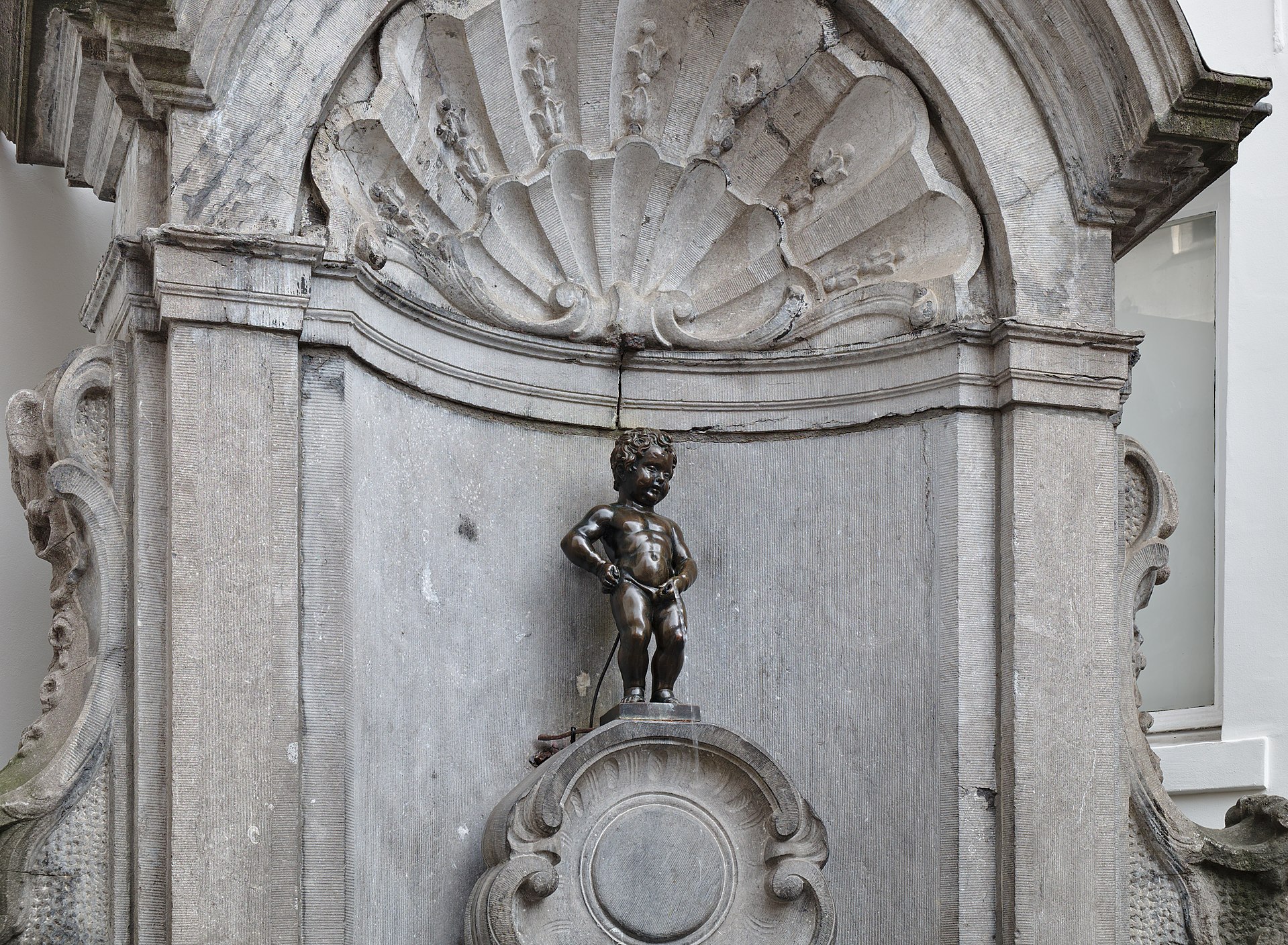
Manneken Pis is a 61-centimetre bronze statue of a small boy urinating into a fountain — and it is the most famous landmark in Belgium, which tells you something about Belgian humour, Belgian expectations, and the remarkable power of a good story to turn a tiny sculpture into a national symbol. The statue is much smaller than visitors expect (the universal reaction is 'that's it?'), and that gap between reputation and reality has become part of the experience.
The current statue dates to 1619, replacing an earlier version that may have existed since the 14th century. The legends about its origin are numerous and contradictory — a boy who saved the city by urinating on a fire threatening to explode a gunpowder stash, a duke's son who urinated from a tree during a battle, a lost boy found by his father in this position. None of the stories are verifiable, which hasn't prevented them from being repeated for centuries.
The statue's most distinctive tradition is its wardrobe — Manneken Pis has been receiving costumes since 1698, when a governor of the Austrian Netherlands dressed him in a suit. The collection now numbers over 1,000 outfits, donated by governments, organisations, and individuals from around the world, and the statue is dressed in a different costume several times a week according to a published schedule. The GardeRobe MannekenPis museum nearby displays a selection of the costumes. Two companion statues — Jeanneke Pis (a squatting girl) and Zinneke Pis (a urinating dog) — complete a trio that exists nowhere else in the world.
Verified Facts
The current statue dates to 1619 and is 61 centimetres tall
Manneken Pis has a wardrobe of over 1,000 costumes
The statue has been receiving costumes since 1698
Companion statues include Jeanneke Pis and Zinneke Pis
Get walking directions
Rue de l'Étuve 46, 1000 Brussels