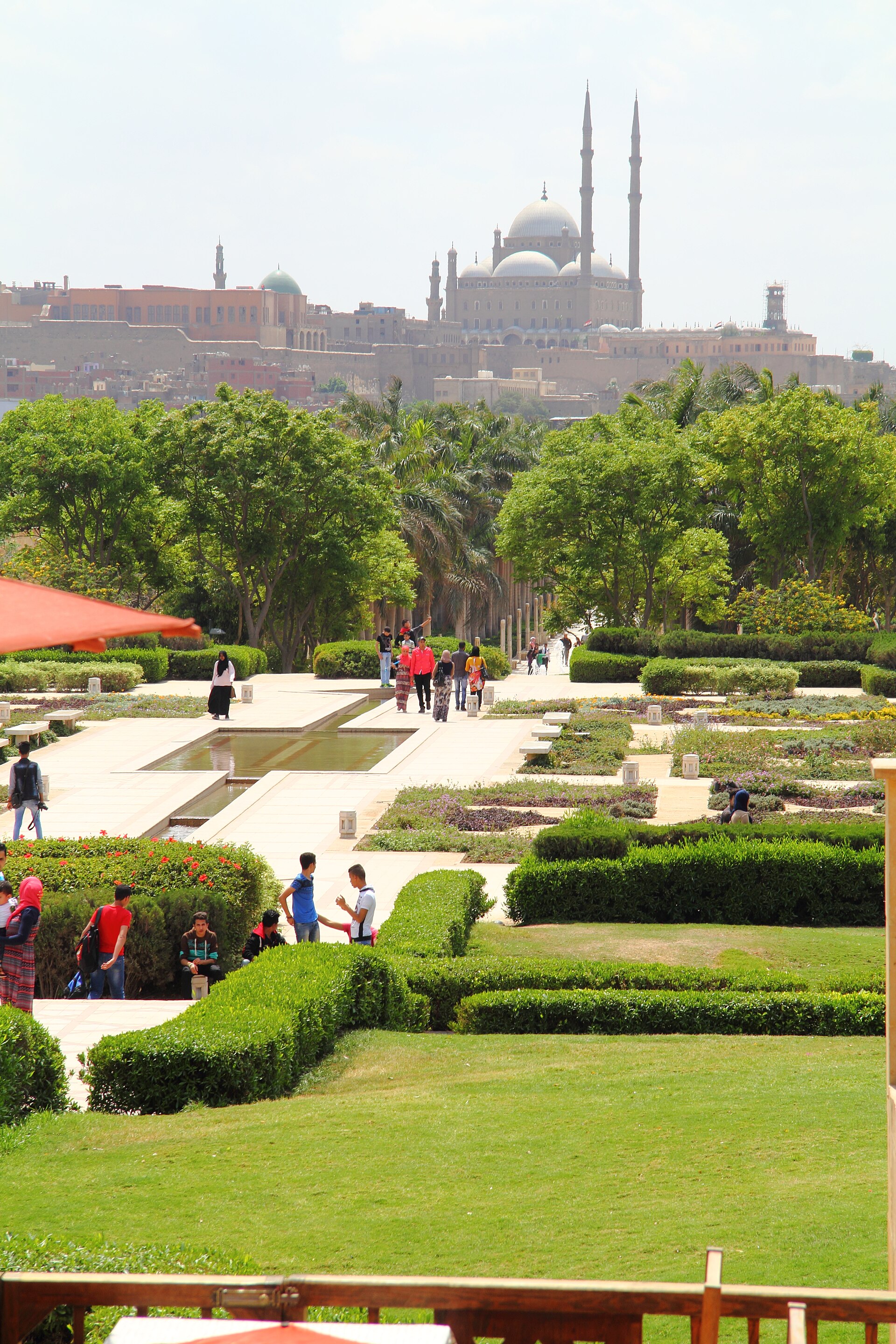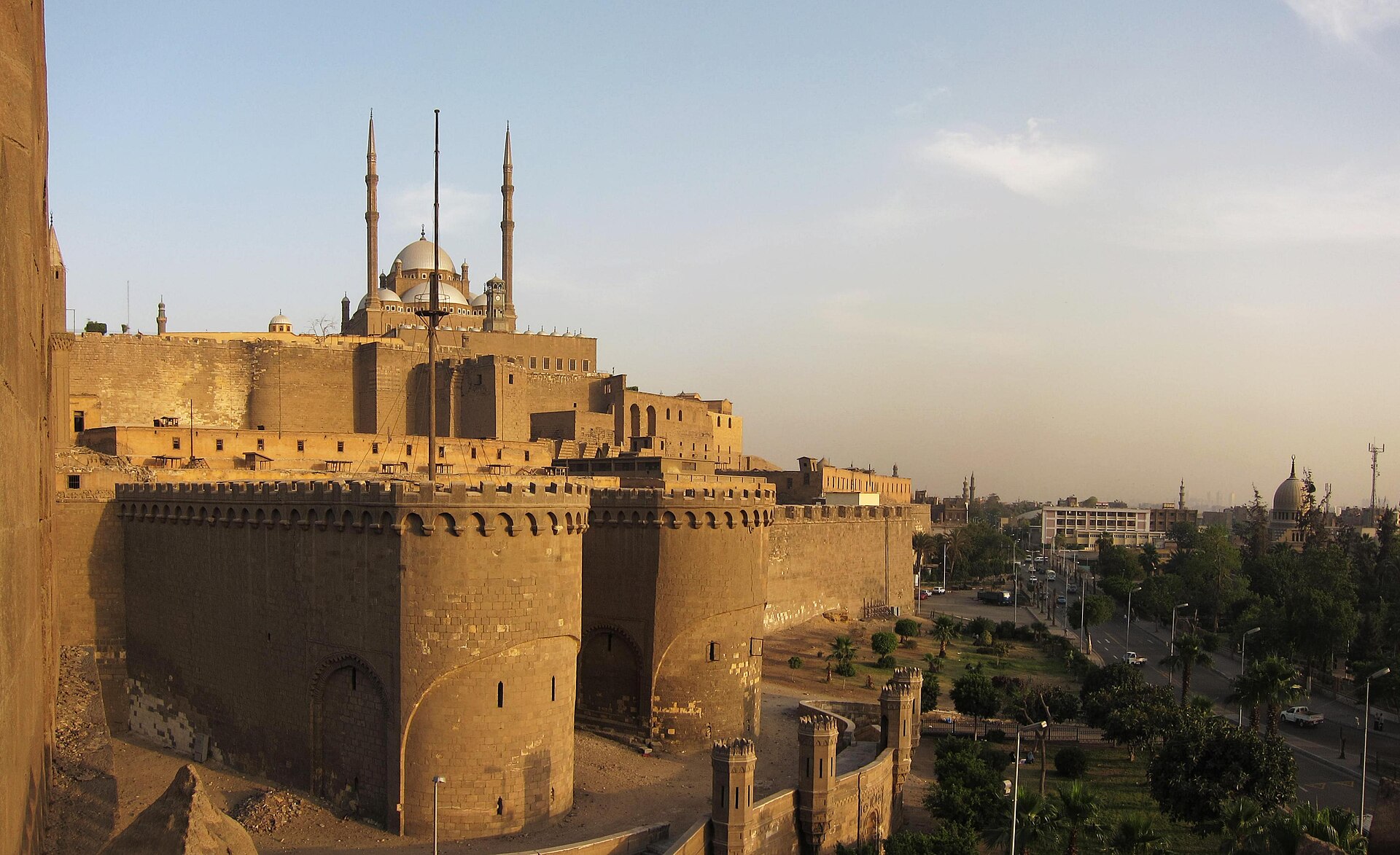
The Citadel of Saladin is the fortress that has dominated Cairo's skyline for over 800 years — built by the Ayyubid sultan Saladin beginning in 1176 as a defence against the Crusaders, and serving as the seat of Egyptian government for nearly 700 years until the 19th century. The fortress sits on a spur of the Mokattam Hills overlooking the city, and the view from its ramparts — across the entire Cairo basin to the pyramids on the western horizon — is the single most comprehensive panorama of the city.
The Mosque of Muhammad Ali, inside the citadel walls, is Cairo's most visible mosque — a massive Ottoman-style structure with an 82-metre dome and twin minarets that dominates the city's skyline. Built between 1830 and 1848 by Muhammad Ali Pasha (considered the founder of modern Egypt), the mosque was modelled on the Ottoman mosques of Istanbul and represents Egypt's last great architectural gesture before the colonial era. The interior — a vast prayer hall lit by thousands of glass lanterns hanging from chains — is one of the most impressive mosque interiors in the Middle East.
The citadel complex also contains the National Military Museum (in the Muhammad Ali's Harem Palace), the Police Museum, and several smaller mosques and gardens. The citadel's strategic position — controlling the approach to Cairo from the east — is immediately apparent from the ramparts, and understanding why Saladin chose this site to build his fortress helps explain the military geography that has shaped Cairo's history for a millennium.
Verified Facts
The Citadel was begun by Saladin in 1176
The Mosque of Muhammad Ali was built between 1830 and 1848
The citadel served as Egypt's seat of government for nearly 700 years
Muhammad Ali Pasha is considered the founder of modern Egypt
Get walking directions
Al Abageyah Street, Al Abageyya Housing, Cairo, 11636, Egypt