Walking Tours in Cairo
30 Landmarks in Cairo
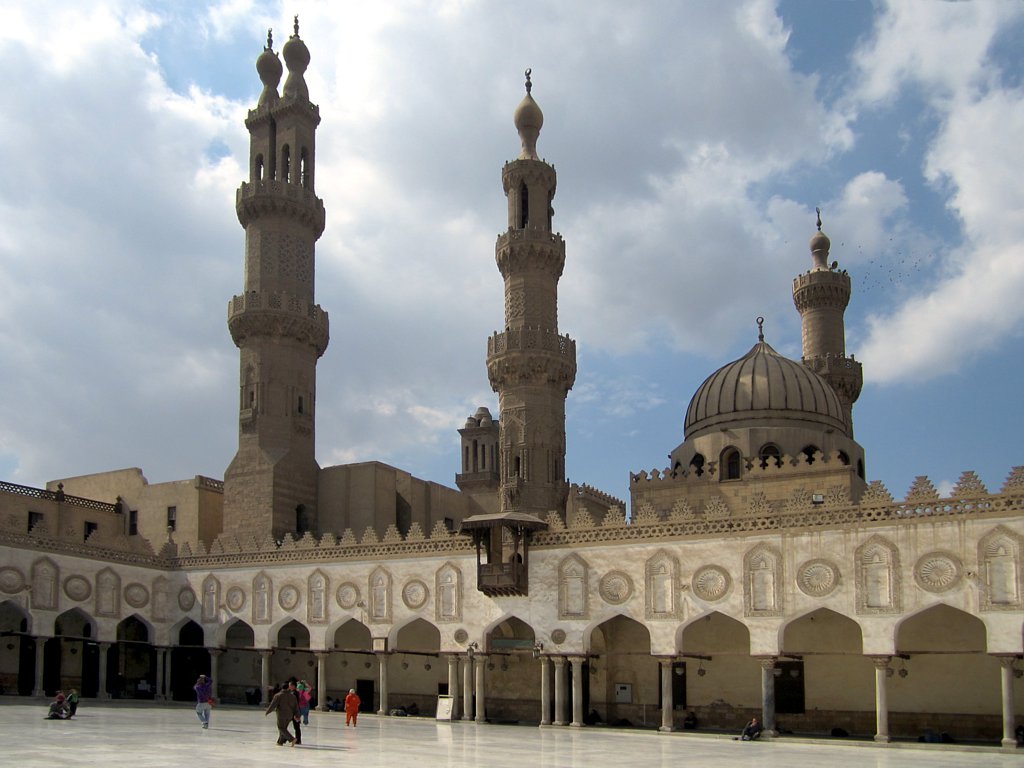
Al-Azhar Mosque
Cairo, United States
Al-Azhar Mosque is one of the most important religious institutions in the Islamic world — founded in 970 AD by the Fatimid dynasty as both a mosque and a university, making it one of the oldest continuously operating educational institutions on Earth. Al-Azhar University, which grew from the mosque's teaching circles, has been the premier centre of Sunni Islamic scholarship for over a millennium, and its Grand Imam is considered the highest authority in Sunni Islam. The mosque's architecture spans its entire 1,000-year history — the original Fatimid hypostyle hall (with its rows of marble columns and carved stucco), Mamluk-era minarets (each in a different style, reflecting the different centuries in which they were added), and Ottoman-era additions create a building that is simultaneously a place of worship and a timeline of Islamic architectural development. The central courtyard, paved in marble with a fountain for ablutions, provides one of the most serene spaces in a city that is otherwise relentlessly noisy. Al-Azhar sits at the heart of Islamic Cairo — the dense, medieval quarter east of modern downtown where mosques, madrasas, and Mamluk architecture survive in a density that rivals any historic Islamic city. The view from Al-Azhar Park (a modern green space on the Ayyubid-era city wall) back toward the mosque's minarets provides the classic panorama of Islamic Cairo's skyline — a forest of domes and minarets that has defined the city's identity for a millennium.
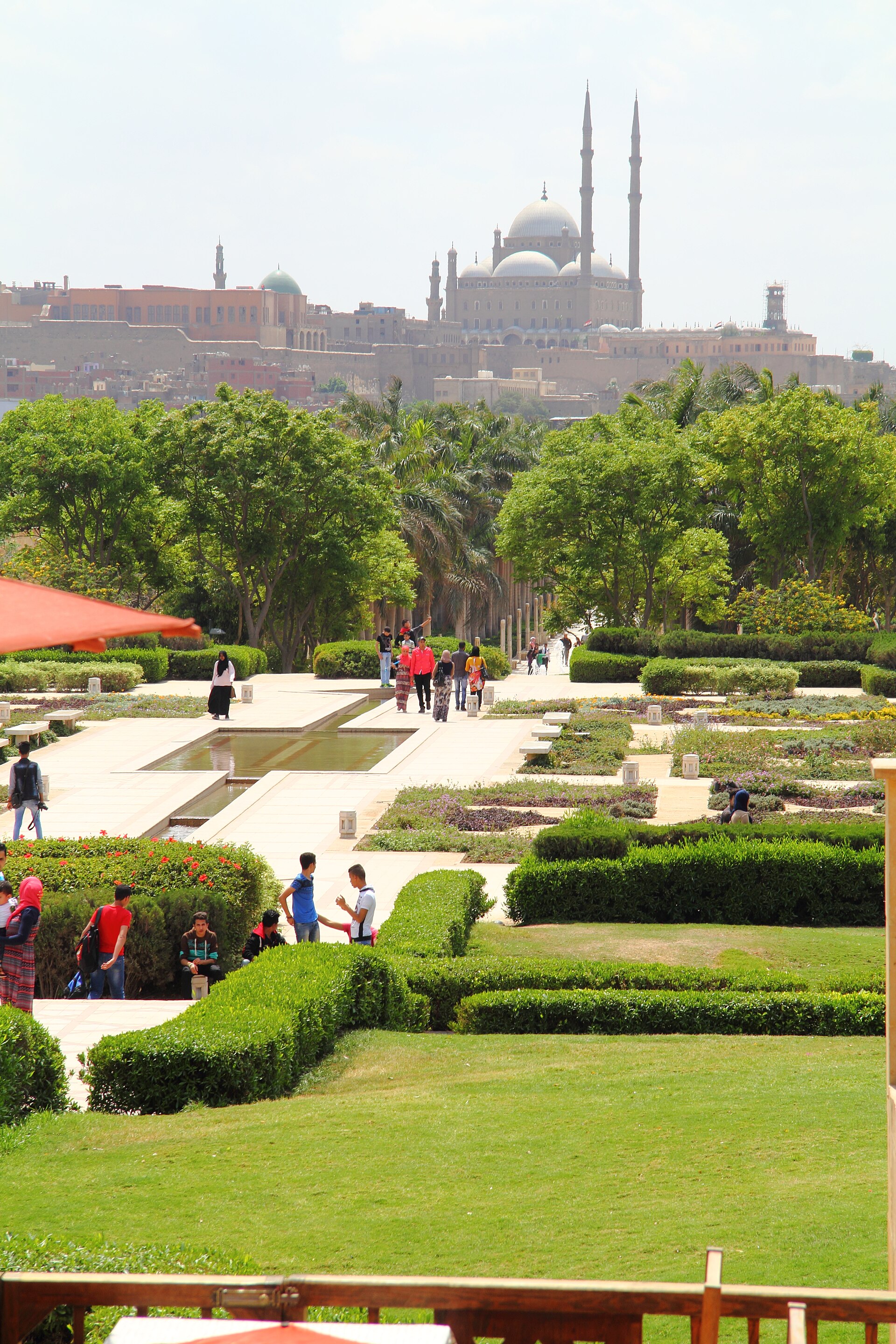
Al-Azhar Park
Salah Salem Street, Al Sarayat, Cairo, 11535, Egypt
Al-Azhar Park is Cairo's most beautiful green space — a 30-hectare park created by the Aga Khan Trust for Culture on a former rubbish dump on the edge of Islamic Cairo, opened in 2005 and providing the city with its first significant public park in over a century. The transformation — from 500 years of accumulated waste to a manicured landscape of gardens, fountains, and promenades — is one of the most remarkable urban regeneration projects in the Middle East. The park sits on the Darassa Hills, overlooking Islamic Cairo to the west, and the views from its terraces — across the medieval minarets and domes to the Citadel of Saladin on the far ridge — are the finest in the city. The Ayyubid-era city wall, discovered during the park's construction, has been restored and is visible along the park's western edge, adding an archaeological dimension to what is otherwise a thoroughly contemporary landscape. The park's design — by Sasaki Associates with Egyptian landscape architects — uses water, shade, and the traditional Islamic garden vocabulary of geometry and symmetry to create a cool, green refuge from the heat and noise of the surrounding streets. The restaurants on the park's terraces serve Egyptian cuisine with the panoramic view, and the lakeside café provides a waterside setting that is genuinely unexpected in a city that, despite sitting on the Nile, offers remarkably little public access to water. The park charges a modest admission fee that keeps it well-maintained and moderately uncrowded — a rare combination in Cairo.
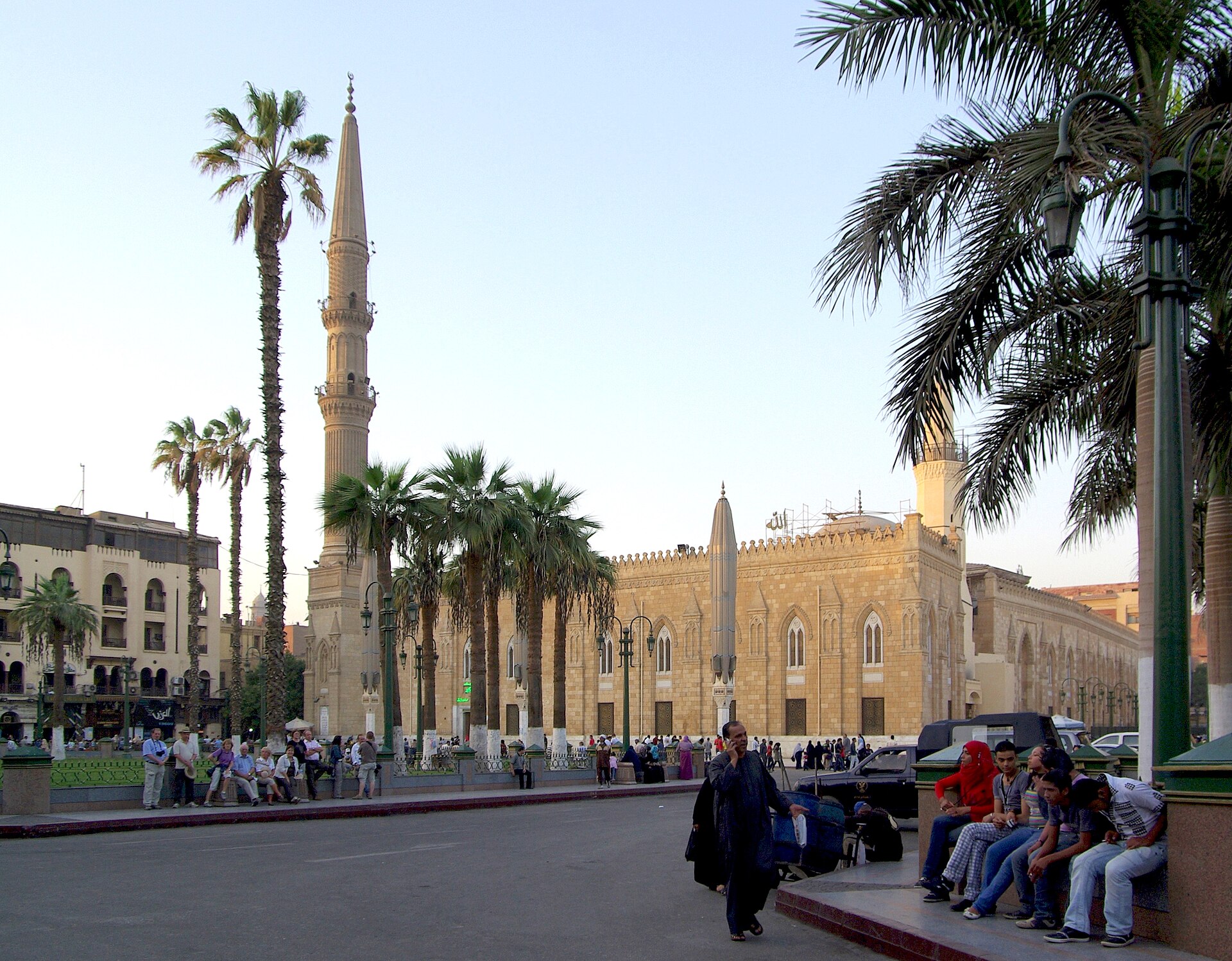
Al-Husayn Mosque & Surrounding Quarter
Midan al-Husayn, Islamic Cairo
The Mosque of al-Husayn is one of the holiest sites in Islam — believed to contain the head of Husayn ibn Ali, the grandson of the Prophet Muhammad whose martyrdom at the Battle of Karbala in 680 AD is the foundational event of Shia Islam. The mosque, rebuilt in its current form in 1154, sits on Midan al-Husayn, a large square adjacent to Khan el-Khalili that is one of the most spiritually charged public spaces in Cairo. The square and surrounding streets are the centre of Cairo's religious and festive life. During Ramadan, the area transforms into an enormous open-air iftar (breaking-of-fast) celebration, with restaurants and food stalls serving thousands of people every evening. The Mawlid al-Husayn (the annual celebration of Husayn's birthday) draws hundreds of thousands of Sufi devotees to the square for nights of dhikr (devotional chanting), music, and spiritual ecstasy that provide one of the most intense religious experiences available in any Muslim city. The restaurants surrounding the square — particularly the late-night establishments serving kushari (Egypt's national dish of lentils, rice, pasta, and tomato sauce), ful medames (stewed fava beans), and the grilled meats that Egyptian street food does superbly — provide some of the best cheap eating in Cairo. The area is busiest after the evening prayer, when families gather on the square and the commercial energy of Khan el-Khalili extends into the surrounding streets.
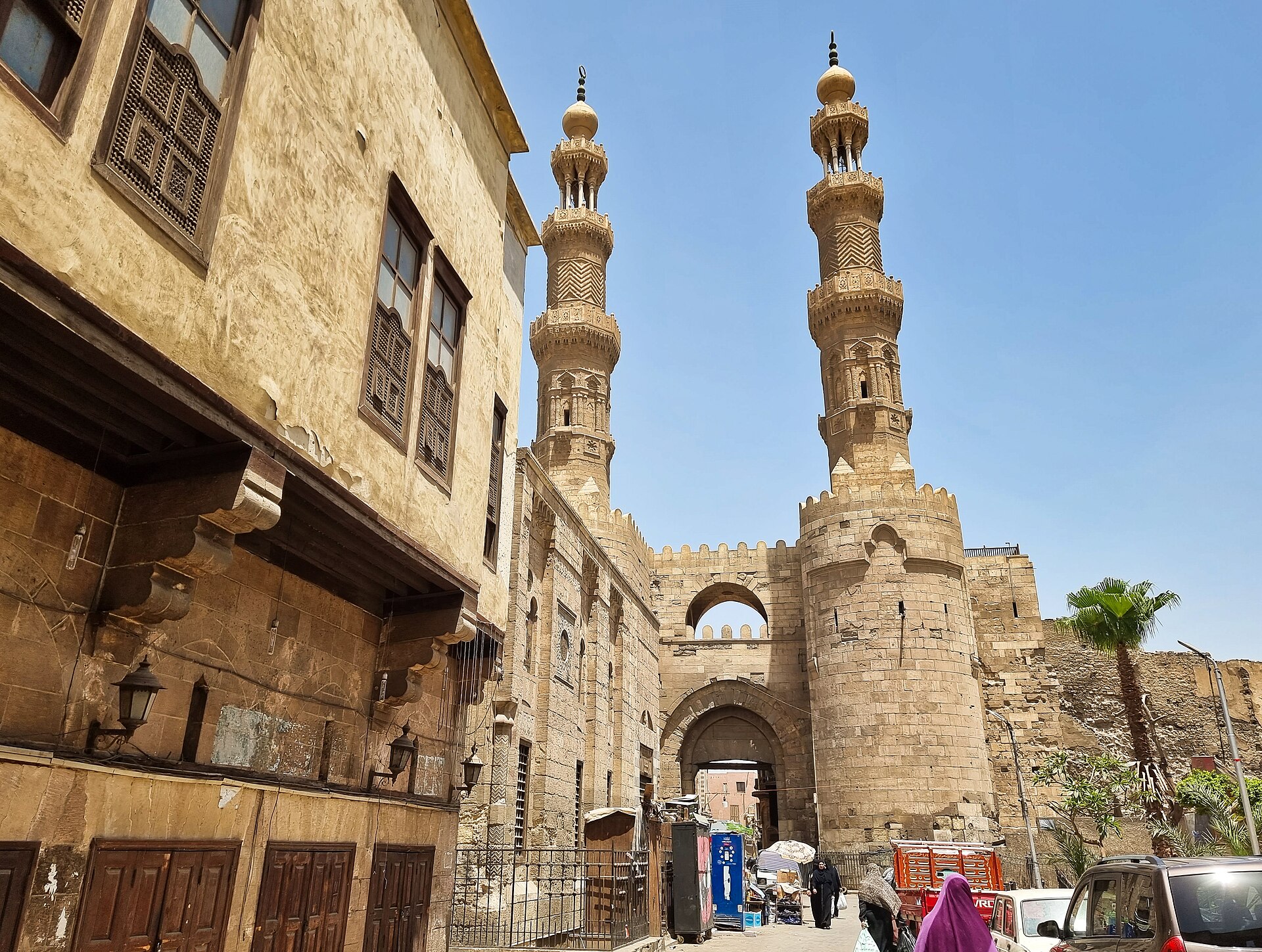
Bab Zuweila
Al Moez Ldin Allah Street, Darb Sa'Ada, Cairo, 11639, Egypt
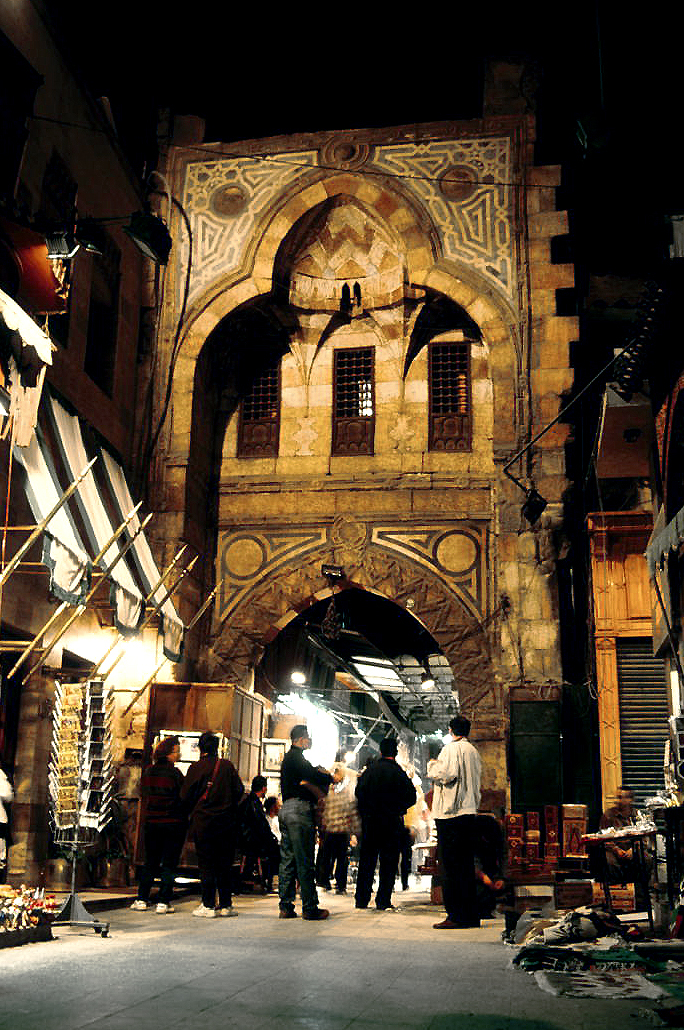
Bab Zuweila is the last surviving gate of the Fatimid city walls — a massive 11th-century stone gateway with twin minarets that marks the southern entrance to Al-Muizz Street and Islamic Cairo's medieval core. The gate was built in 1092 during the Fatimid period and served as the city's southern boundary for centuries, with the minarets added in the 15th century when the Mosque of al-Mu'ayyad was built against the gate's inner walls. The minarets are climbable (a narrow, spiralling staircase leads to the top of each), and the view from the summit is one of the best in Islamic Cairo — looking north along Al-Muizz Street toward the Fatimid gates of Bab al-Futuh and Bab al-Nasr, with the domes and minarets of a thousand years of Islamic architecture creating a skyline that has barely changed since the Mamluk period. The view south reveals the more modern parts of the city and the contrast between the medieval fabric of Islamic Cairo and the 19th and 20th-century development beyond. Bab Zuweila was historically the gate where public executions took place — the last Mamluk sultan, Tumanbay II, was hanged from the gate in 1517 after the Ottoman conquest, an event that marked the end of the Mamluk dynasty and the beginning of Ottoman rule in Egypt. The gate's massive proportions (the walls are several metres thick) and the heavy wooden doors (still in place) demonstrate the military architecture that made Fatimid Cairo one of the best-defended cities in the medieval world.
City of the Dead (Northern Cemetery)
Northern Cemetery, Cairo
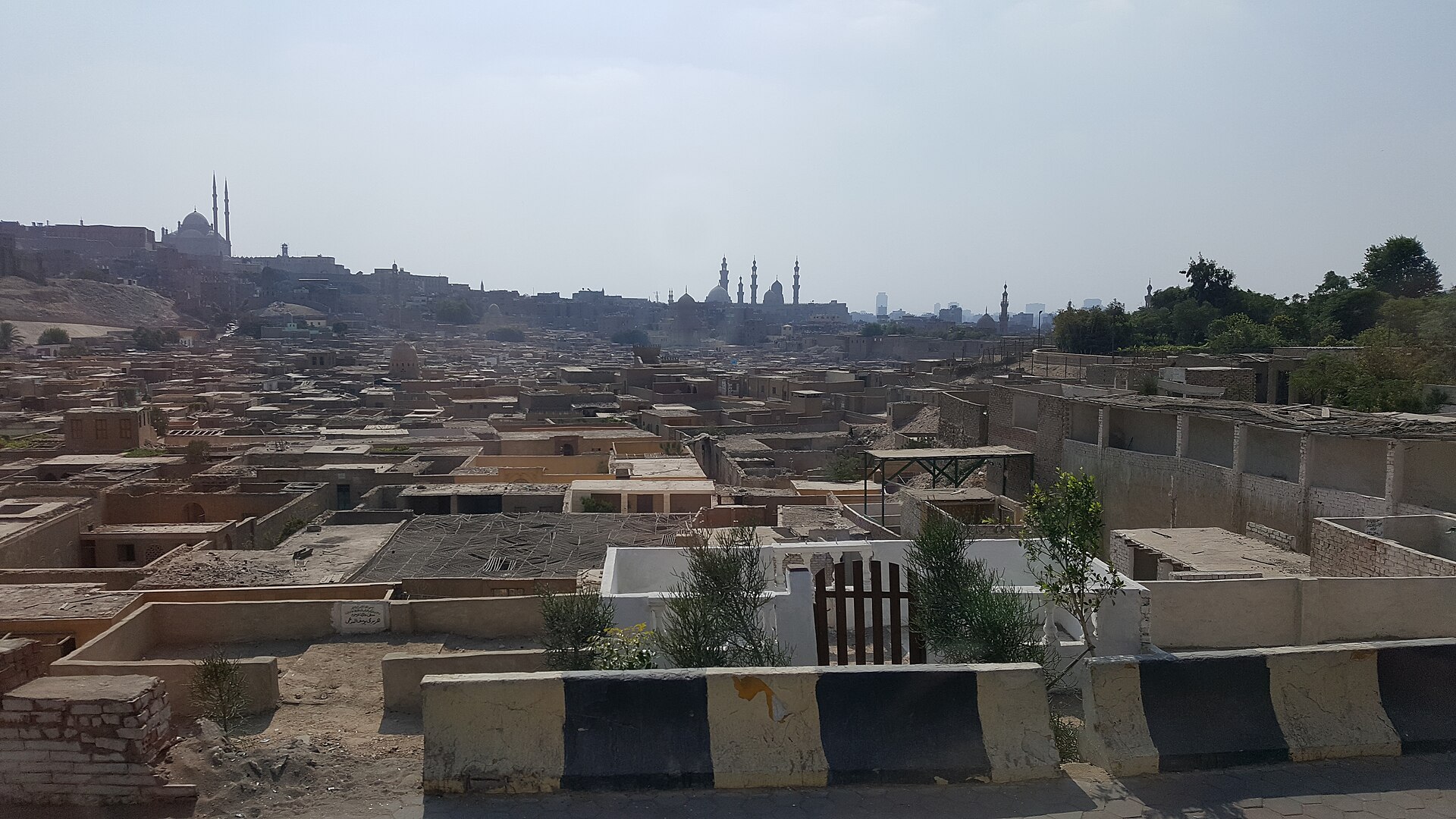
The City of the Dead is one of the most extraordinary urban phenomena in the world — a vast medieval cemetery east of Islamic Cairo where an estimated 500,000 to one million people live among the tombs, mausoleums, and funerary complexes of Egypt's sultans, emirs, and saints. The living inhabitants — who have occupied the cemetery for generations, building houses, shops, and cafés among the tombs — have created a functioning neighbourhood in a space that was designed for the dead. The Northern Cemetery contains some of the finest Mamluk architecture in Cairo — the Mausoleum of Sultan Barquq (1411), the Mausoleum of Sultan Qaytbay (1474, whose dome is considered the finest carved stone dome in Islamic architecture), and the complex of Sultan Inal, each representing the peak of Mamluk funerary architecture. The carved stone domes — with their intricate geometric patterns produced by chiselling directly into the stone surface — are the Northern Cemetery's architectural signature and represent a level of stonecraft that has never been equalled. Visiting the City of the Dead is both architecturally rewarding and ethically complex — this is a residential neighbourhood, not a tourist attraction, and the residents live here not by choice but because Cairo's housing crisis has left them nowhere else to go. A respectful visit — hiring a local guide, staying on the main paths, asking permission before photographing — is the appropriate approach. The architecture justifies the visit; the living conditions contextualise it.
Coptic Cairo
Old Cairo, Cairo, Egypt
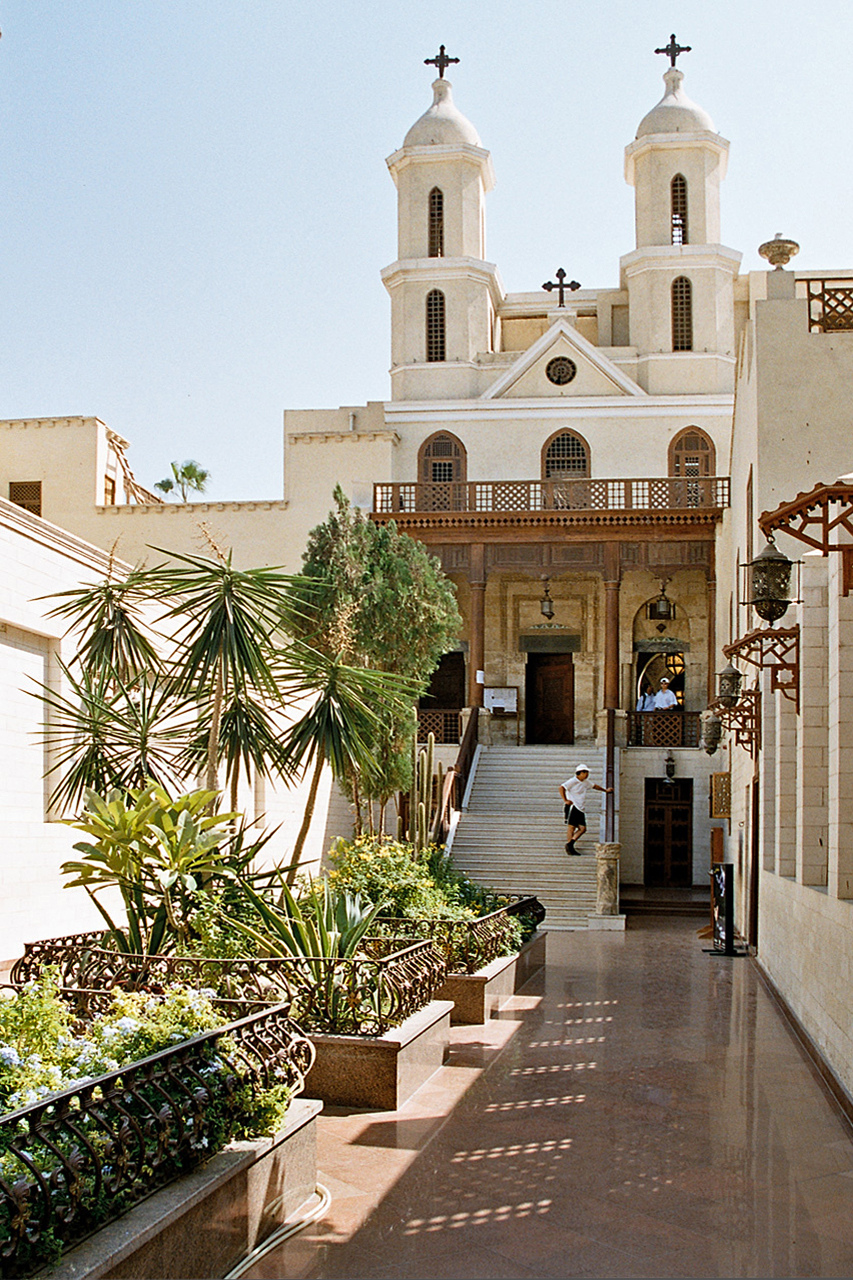
Coptic Cairo is the oldest part of the city — a walled enclave built on the site of the Roman fortress of Babylon that predates Islamic Cairo by six centuries and contains some of the oldest Christian churches in the world. The Coptic community, which traces its origins to the apostle Mark's mission to Egypt in the 1st century AD, maintains churches, monasteries, and institutions within this compact quarter that together represent one of the most complete early Christian landscapes surviving anywhere. The Hanging Church (Al-Mu'allaqa), built on top of the gatehouse of the Roman fortress with its nave suspended above the old passageway, is the most famous and the most architecturally distinctive — a church that literally hangs above the ground on ancient columns. The interior, with its carved wooden screens (iconostases), marble pulpit, and icons painted in the distinctive Coptic style, provides a visual introduction to a Christian tradition that developed independently of both Western and Eastern Orthodox Christianity. The Coptic Museum, adjacent to the Hanging Church, houses the largest collection of Coptic art and artifacts in the world — textiles, manuscripts, icons, and the Nag Hammadi codices (early Gnostic gospels discovered in 1945 that revolutionised understanding of early Christianity). The Ben Ezra Synagogue, also within the Coptic quarter, is the oldest synagogue in Cairo and is traditionally associated with the site where the infant Moses was found in the reeds — a claim that, like most claims in a city this old, is historically uncertain but emotionally compelling.
Downtown Cairo (Khedival Cairo)
Talaat Harb Street, Al Ismalia, Cairo, 11519, Egypt
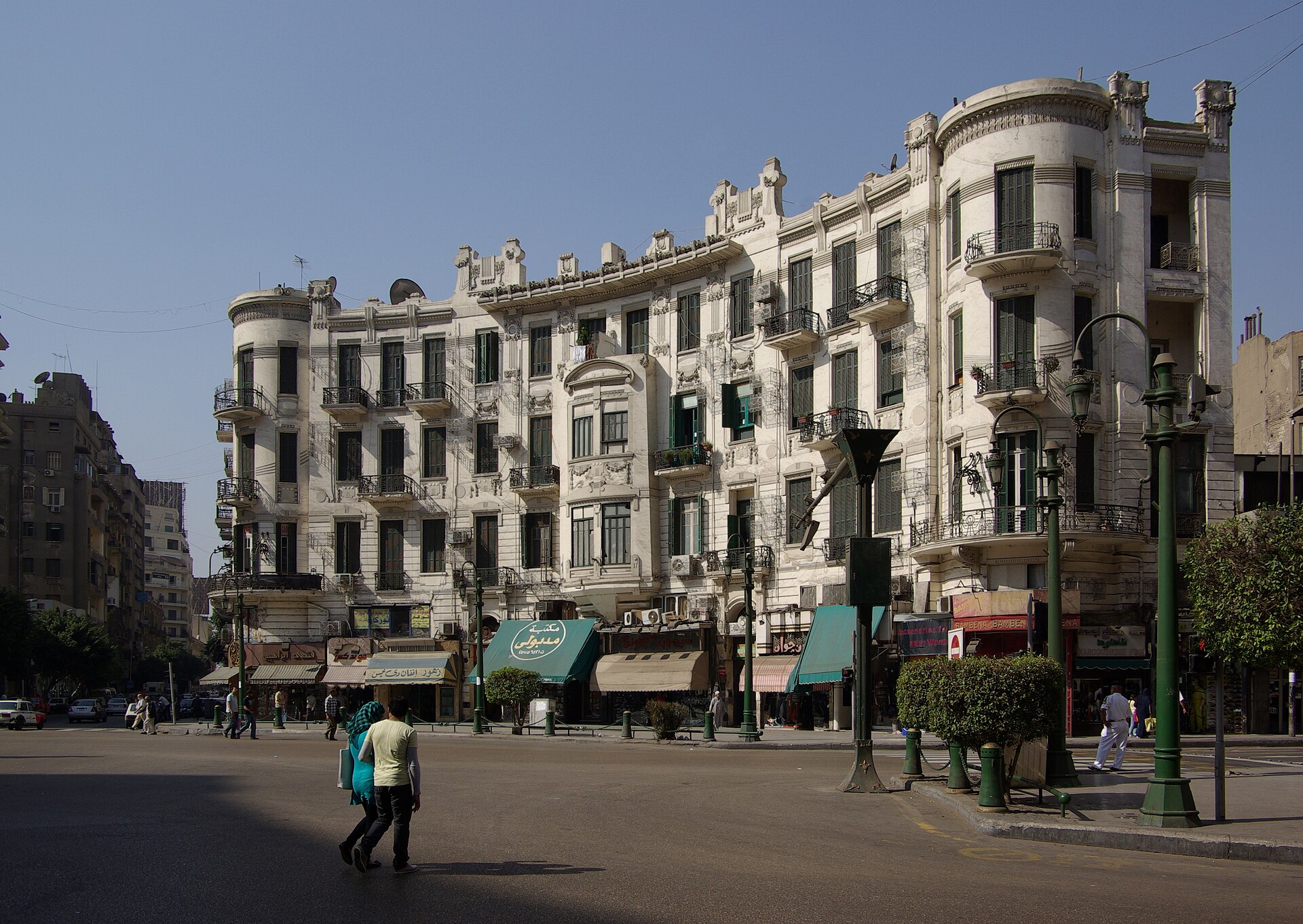
Downtown Cairo is the city's faded European quarter — a grid of Belle Époque, Art Nouveau, and Art Deco buildings designed by European architects in the late 19th and early 20th centuries when Cairo was being rebuilt as a cosmopolitan capital modelled on Paris. The buildings along Talaat Harb Street, Qasr el-Nil, and 26th of July Street were designed to rival European boulevards, and despite decades of pollution, neglect, and the general entropy of a city that has other priorities, the architectural quality remains remarkable. Talaat Harb Square, the informal centre of downtown, is anchored by the statue of the Egyptian nationalist banker Talaat Harb (who founded the first Egyptian-owned bank) and surrounded by the kind of ornate commercial buildings that would be heritage-listed in any European city but in Cairo are simply the backdrop to daily life. The cafés — particularly Groppi (a legendary Swiss-Egyptian patisserie founded in 1924) and the street-level ahwa (traditional coffee shops) — provide the social infrastructure of a neighbourhood where literary, political, and artistic Cairo has gathered for a century. Downtown's current state — peeling facades, traffic chaos, and the general atmosphere of a district that was built for a cosmopolitan population that largely left after the 1952 revolution — is either depressing or romantic depending on your tolerance for faded grandeur. The preservation movement is growing, and several buildings have been restored, but the pace of decay continues to outstrip the pace of restoration. Visit now, because downtown Cairo in its current state — magnificent, crumbling, and utterly alive — will not last forever.
Egyptian Food Culture (Kushari & Street Food)
Downtown Cairo, Cairo, Egypt
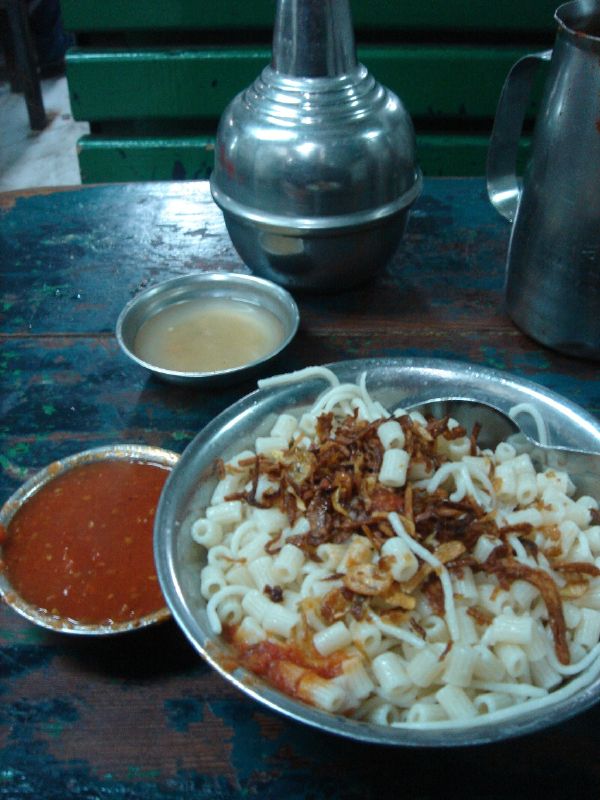
Egyptian street food is one of the great underappreciated cuisines of the Middle East — a tradition of cheap, filling, flavourful dishes that feeds 100 million people daily and centres on a handful of preparations that have been perfected over centuries. Kushari, Egypt's national dish, is a carbohydrate celebration: lentils, rice, macaroni, and chickpeas layered in a bowl and topped with tomato sauce, garlic vinegar, and crispy fried onions. The combination sounds absurd and tastes extraordinary, and a plate costs about 20 Egyptian pounds (less than $1). Abou Tarek, a multi-storey kushari restaurant in downtown Cairo, is the most famous kushari destination — a no-frills establishment where the dish is served in four sizes and the only decision you need to make is how hungry you are. Foul (ful medames, slow-stewed fava beans mashed with oil, lemon, and cumin) is the traditional breakfast, served from dedicated foul carts that set up on every major street at dawn. Ta'amiya (Egyptian falafel, made from fava beans rather than chickpeas) is the other breakfast staple, fried to order and stuffed into baladi bread. The late-night food scene in Cairo is exceptional — because the city stays awake later than almost any other (restaurants serve full meals at midnight, and street food vendors operate until 2am), the eating options multiply after the tourist restaurants close. Hawawshi (spiced minced meat stuffed in bread and grilled), shawarma, and the liver sandwiches that are the guilty pleasure of Cairo's taxi drivers and night workers are all available from street stalls that operate on a schedule that would alarm a health inspector but delight a hungry visitor.
Egyptian Museum (Tahrir Square)
El Tahrir Square, Qasr Al Doubara, Cairo, 11519, Egypt
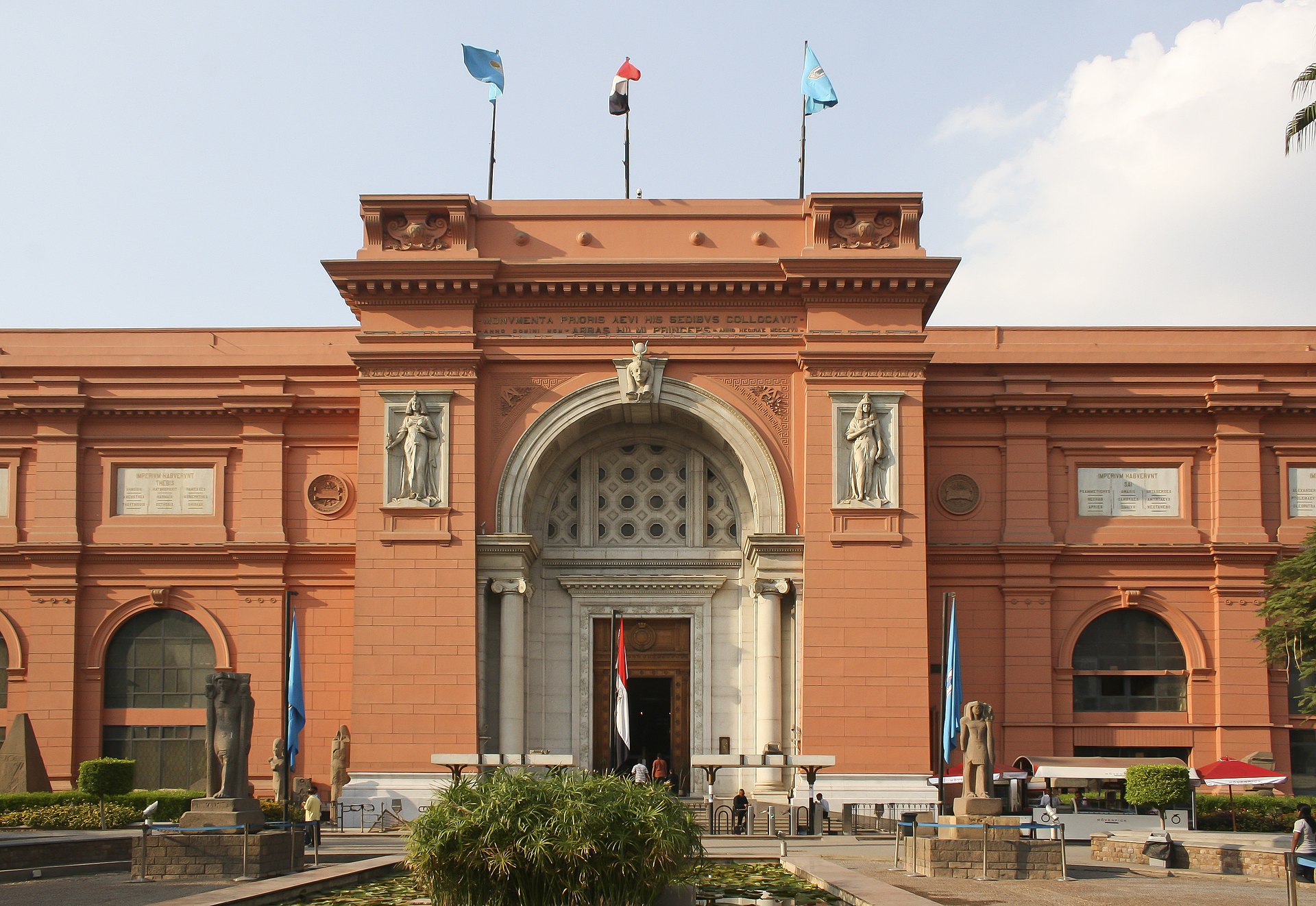
The Egyptian Museum on Tahrir Square is the most important collection of pharaonic antiquities in the world — over 120,000 artifacts spanning 5,000 years of Egyptian civilisation, housed in a pink neoclassical building from 1902 that is itself a monument to the 19th-century passion for Egyptology. The museum's most famous resident is Tutankhamun — the golden death mask, the golden throne, the canopic jars, and the thousands of objects recovered from his tomb in the Valley of the Kings in 1922 by Howard Carter. The museum is overwhelming by design — the galleries are packed, the labelling is minimal, and the experience of walking through room after room of stone sarcophagi, painted coffins, jewellery, and statuary that spans from the predynastic period to the Greco-Roman era is less like visiting a curated exhibition than like wandering through a warehouse of civilisational achievement. The Royal Mummies Room (requiring a separate ticket) displays the preserved bodies of pharaohs including Ramesses II and Hatshepsut — meeting the face of a ruler who died 3,000 years ago is one of those museum experiences that makes time feel malleable. The museum's collection is gradually being transferred to the Grand Egyptian Museum near Giza, and the Tahrir Square building's future is uncertain. Visiting now — while the museum retains its famously chaotic, treasure-house atmosphere — offers an experience that the new museum's sleek, modern galleries will deliberately not replicate. The building's location on Tahrir Square adds a layer of modern history — the square was the epicentre of the 2011 Egyptian revolution, and the museum was damaged during the protests.
Gayer-Anderson Museum
Ahmad Ibn Tulun Street, El-Sayeda Zeinab, Cairo
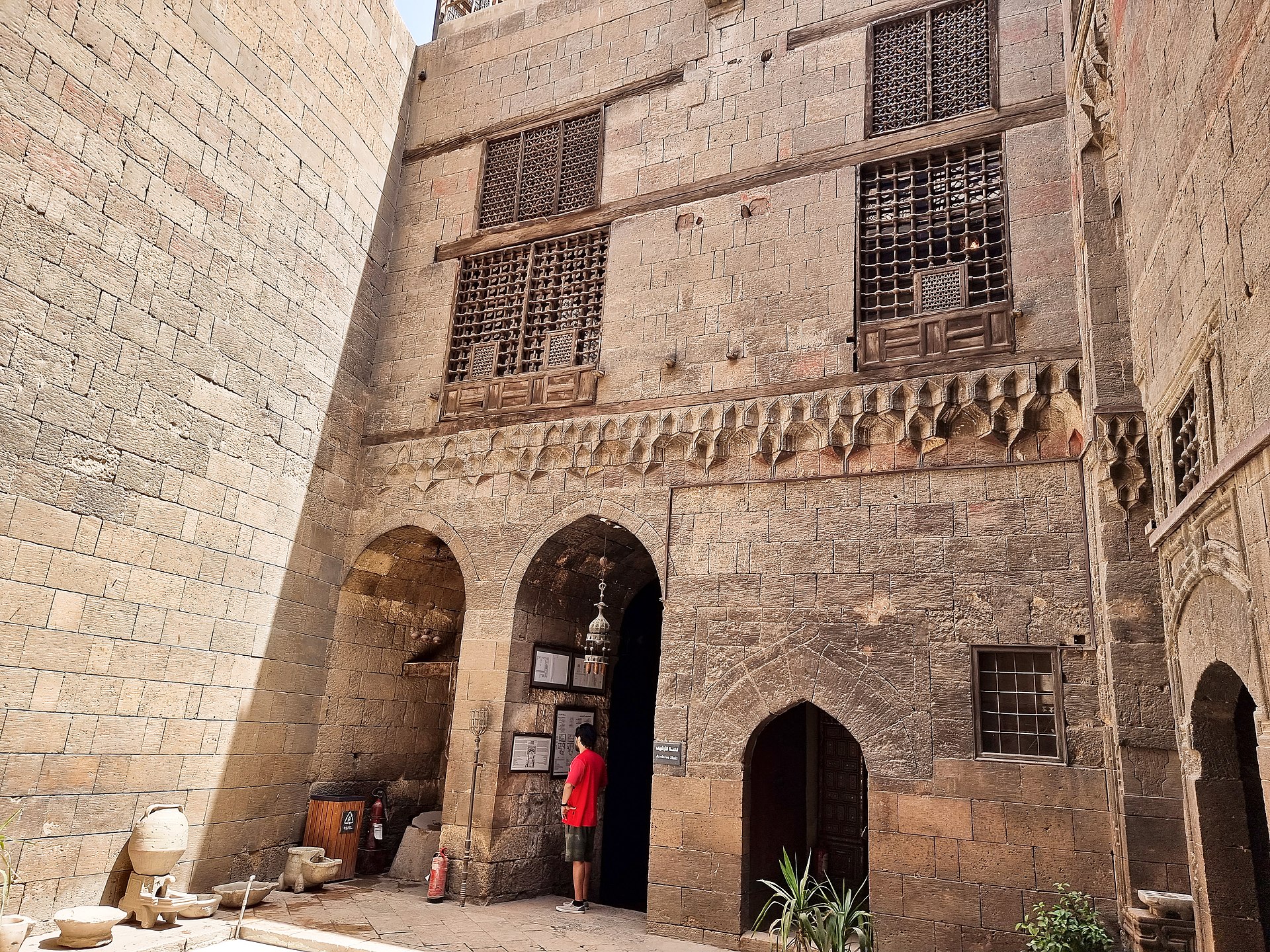
The Gayer-Anderson Museum is one of Cairo's most charming hidden treasures — two 17th-century Ottoman houses connected by a bridge and filled with the eclectic collection of Major Robert Gayer-Anderson, a British army officer who lived in the houses from 1935 to 1942 and filled them with Islamic art, Chinese porcelain, Persian carpets, pharaonic antiquities, and the accumulated curiosities of a life spent collecting in Egypt and the Middle East. The houses themselves — with their mashrabiya (wooden lattice) windows, marble fountains, painted ceilings, and the rooftop terrace overlooking the Ibn Tulun Mosque — are the most complete surviving examples of Ottoman domestic architecture in Cairo. Gayer-Anderson restored and furnished the houses as a living museum of Egyptian domestic art, and the rooms — a Persian room, a Damascus room, a Chinese room — reflect the taste of a collector who treated interior design as a form of cultural ethnography. The museum is adjacent to the Mosque of Ibn Tulun (and is accessed through the mosque's courtyard), and the combination of the two — the 9th-century mosque and the 17th-century houses — creates a pairing that covers eight centuries of Egyptian Islamic architecture in a single visit. The museum appeared in the James Bond film 'The Spy Who Loved Me' (1977), though the Bond connection is the least interesting thing about a museum that rewards the kind of slow, room-by-room exploration that most visitors to Cairo's major monuments don't have time for.
Giza Plateau Sound & Light Show
Zuqaq Al Giza, Bab El Bahr, Cairo, 11668, Egypt
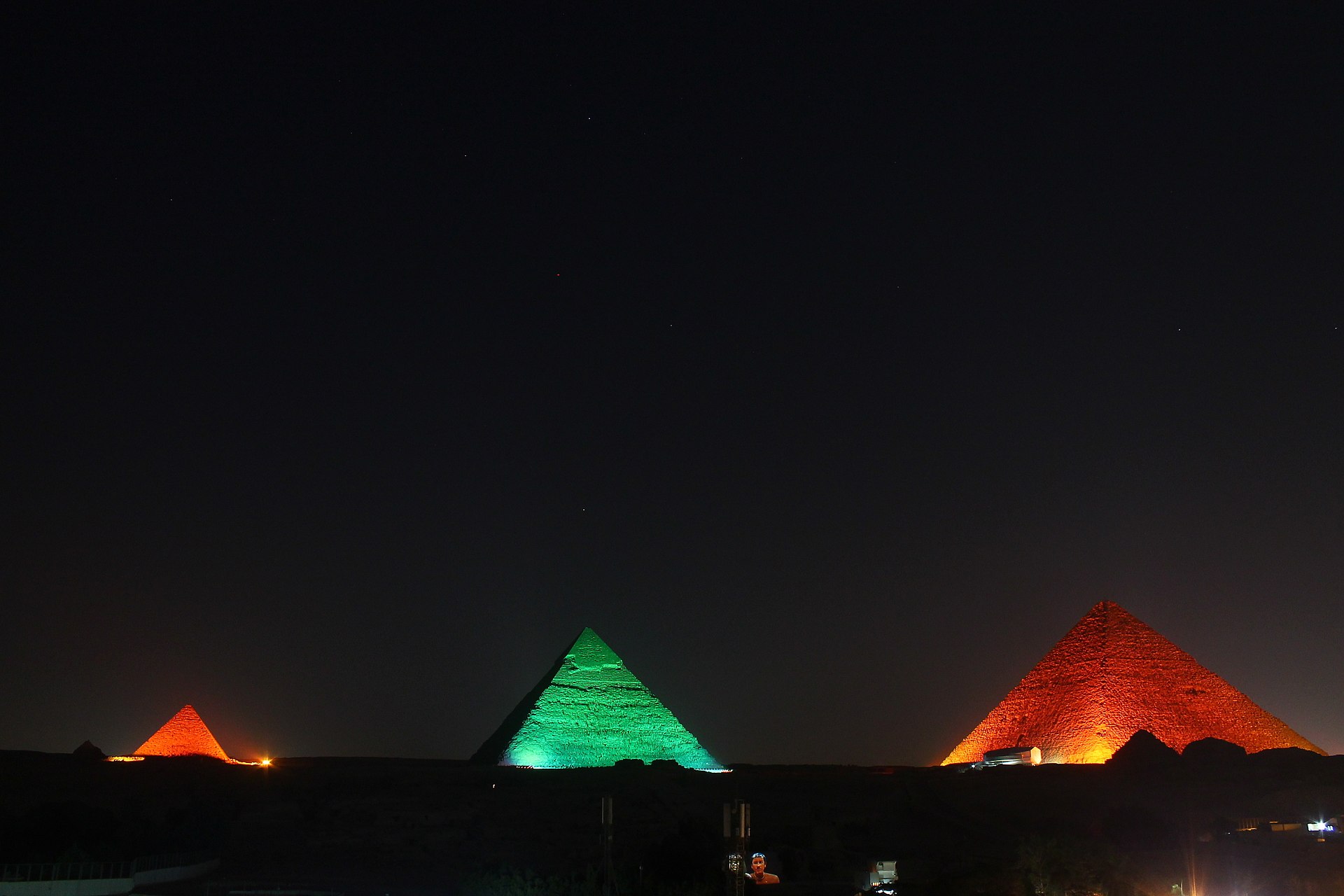
The Sound and Light Show at the Pyramids has been running since 1961 — a nightly spectacle that illuminates the pyramids and the Sphinx with coloured lights while a narration (available in multiple languages) tells the story of ancient Egypt through the voices of the pharaohs and the Sphinx itself. The show is unapologetically theatrical, mildly cheesy, and absolutely worth seeing, because the experience of watching the pyramids emerge from darkness in pools of coloured light, with the Sphinx narrating its own 4,500-year history, is unlike anything available at any other archaeological site. The show runs every evening (with different language versions on different nights — English, French, Arabic, German, Japanese, and others rotate through the schedule), and the open-air seating faces the Sphinx with the three pyramids behind. The first moment — when a single spotlight illuminates the Sphinx's face against the dark plateau — is genuinely dramatic, and the progressive revelation of the pyramids (Khufu, then Khafre, then Menkaure) as the narrative moves through the dynasties uses light in the way that the pharaohs' architects used stone: to create awe. The show is best attended in winter (October through March), when the evening temperatures are comfortable and the air is clearer. Summer shows can be uncomfortably hot and hazy. The narration is historically simplified (this is entertainment, not scholarship), but the combination of ancient monuments, night sky, and theatrical lighting creates an experience that is emotional rather than educational — and that is exactly what the pyramids, which were built to inspire awe rather than understanding, were designed for.
Grand Egyptian Museum (GEM)
Al Remaya Street, Kafr Nassar, Giza, 12559, Egypt
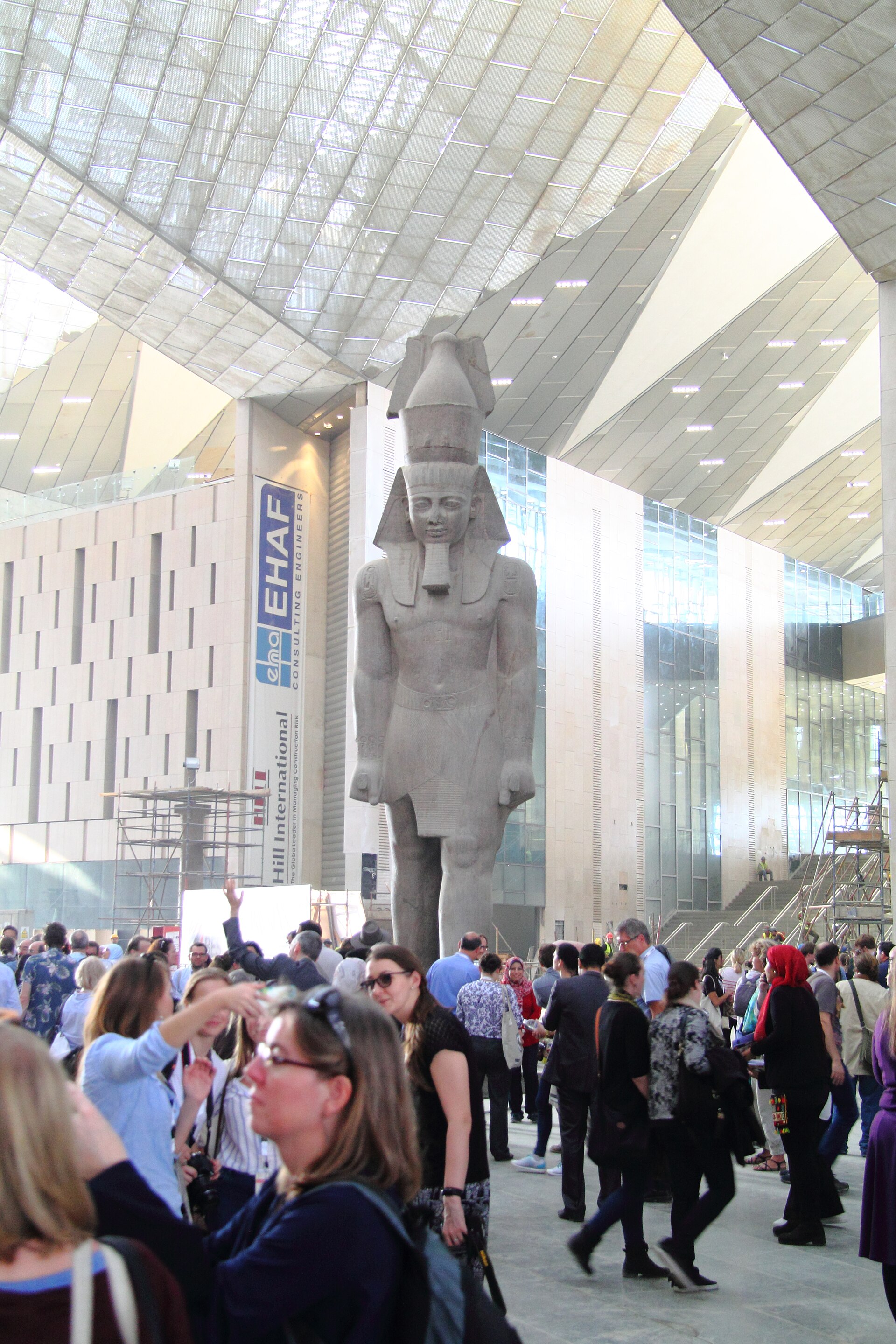
The Grand Egyptian Museum is the most ambitious museum project of the 21st century — a 490,000-square-metre complex near the Giza Pyramids designed to house the complete collection of Egyptian antiquities, including the entire Tutankhamun collection (5,400 objects, many never previously displayed) in a single purpose-built institution. The museum, designed by Heneghan Peng Architects and under construction since 2012, represents Egypt's determination to house its heritage in a building worthy of the collection. The building's atrium, oriented to frame a view of the Great Pyramid through floor-to-ceiling windows, creates a visual connection between the museum and the monuments that provides the context that the cramped galleries of the old Egyptian Museum on Tahrir Square could never offer. The 11-metre-tall colossus of Ramesses II, which stood at the Cairo railway station for decades, has been relocated to the museum's entrance as a ceremonial guardian. The Tutankhamun galleries will display the complete contents of the boy king's tomb for the first time — the golden mask, the golden sarcophagus, the thrones, the chariots, the jewellery, and the 5,000 other objects that Howard Carter spent a decade cataloguing after his 1922 discovery. The museum's conservation labs, visible to visitors through glass walls, demonstrate the ongoing work of preserving objects that are 3,000 years old. The GEM's proximity to the pyramids (visible from the museum terraces) creates a museum experience that is both indoor and outdoor, both ancient and contemporary.
Heliopolis & Baron Empain Palace
Heliopolis, Cairo, Egypt
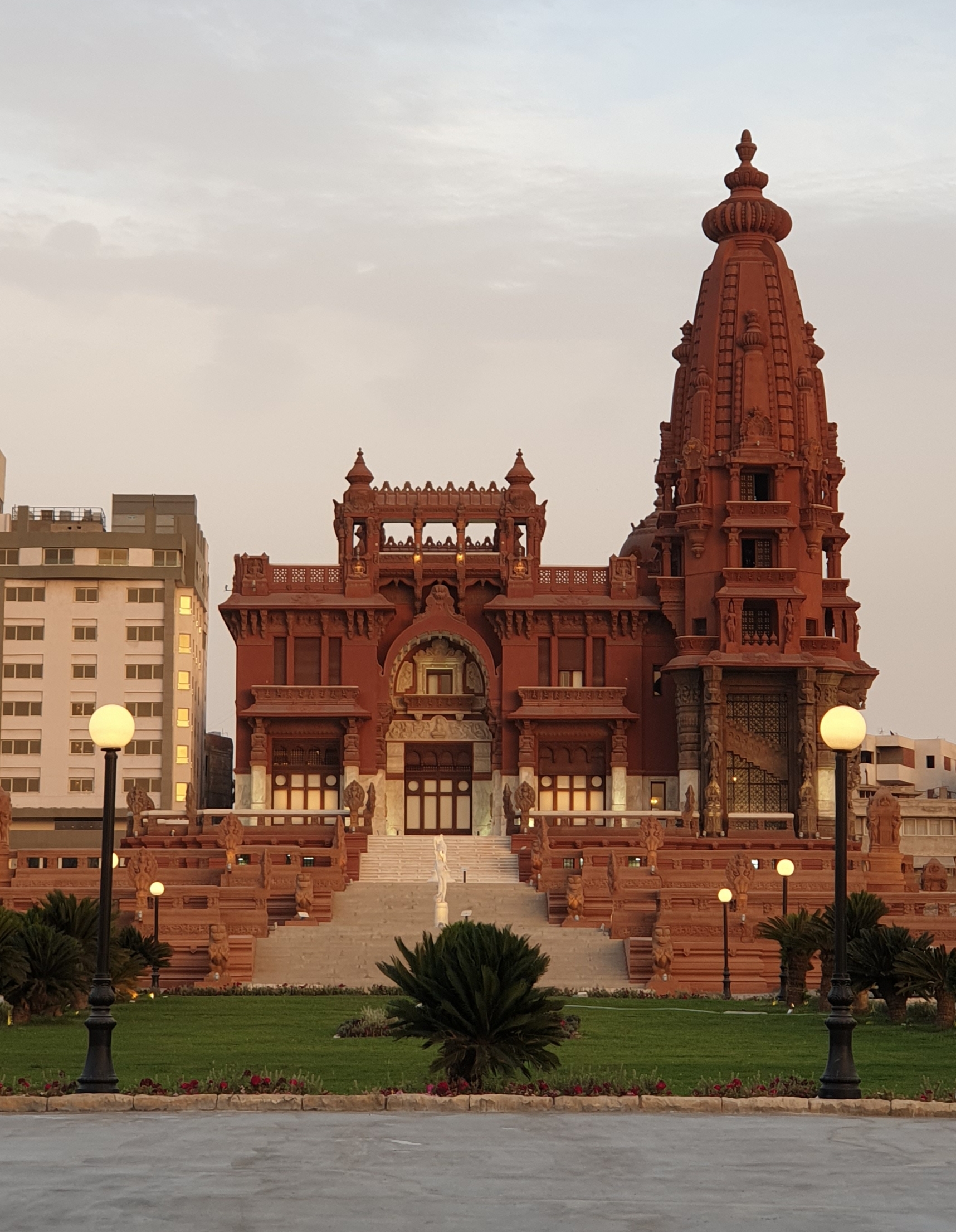
Heliopolis is Cairo's most architecturally distinctive suburb — a planned city built in the early 20th century by Belgian industrialist Baron Édouard Empain in an extraordinary mix of Moorish, Hindu, and Art Nouveau styles that created a satellite city in the desert northeast of Cairo. The Baron Empain Palace, the suburb's centrepiece, is a reinforced-concrete Hindu temple-palace inspired by the Angkor Wat temples of Cambodia — a building so bizarre and beautiful that it has been the subject of ghost stories, urban legends, and the kind of awestruck disbelief that only a Hindu palace in the Egyptian desert can produce. The palace, built between 1907 and 1911 and designed by French architect Alexandre Marcel (who also designed the Cambodian pavilion at the 1900 Paris Exposition), was Baron Empain's personal residence and a statement of his architectural ambitions for Heliopolis. The building sat empty and deteriorating for decades after Empain's death but was restored by the Egyptian government and reopened as a museum in 2020. The interior, with its marble floors, carved columns, and the rotating tower that allowed the baron to follow the sun throughout the day, has been restored to its original grandeur. Heliopolis's other architectural treasures — the Basilica, a Byzantine-Romanesque church; the Heliopolis Palace Hotel (now a presidential palace); and the residential streets of Moorish-revival villas and apartment buildings — create a suburb that looks like it belongs in Marrakech or Mumbai rather than Cairo. The metro extends to Heliopolis, making it accessible from central Cairo in about 30 minutes.
Islamic Cairo (Al-Muizz Street)
Cairo, Egypt
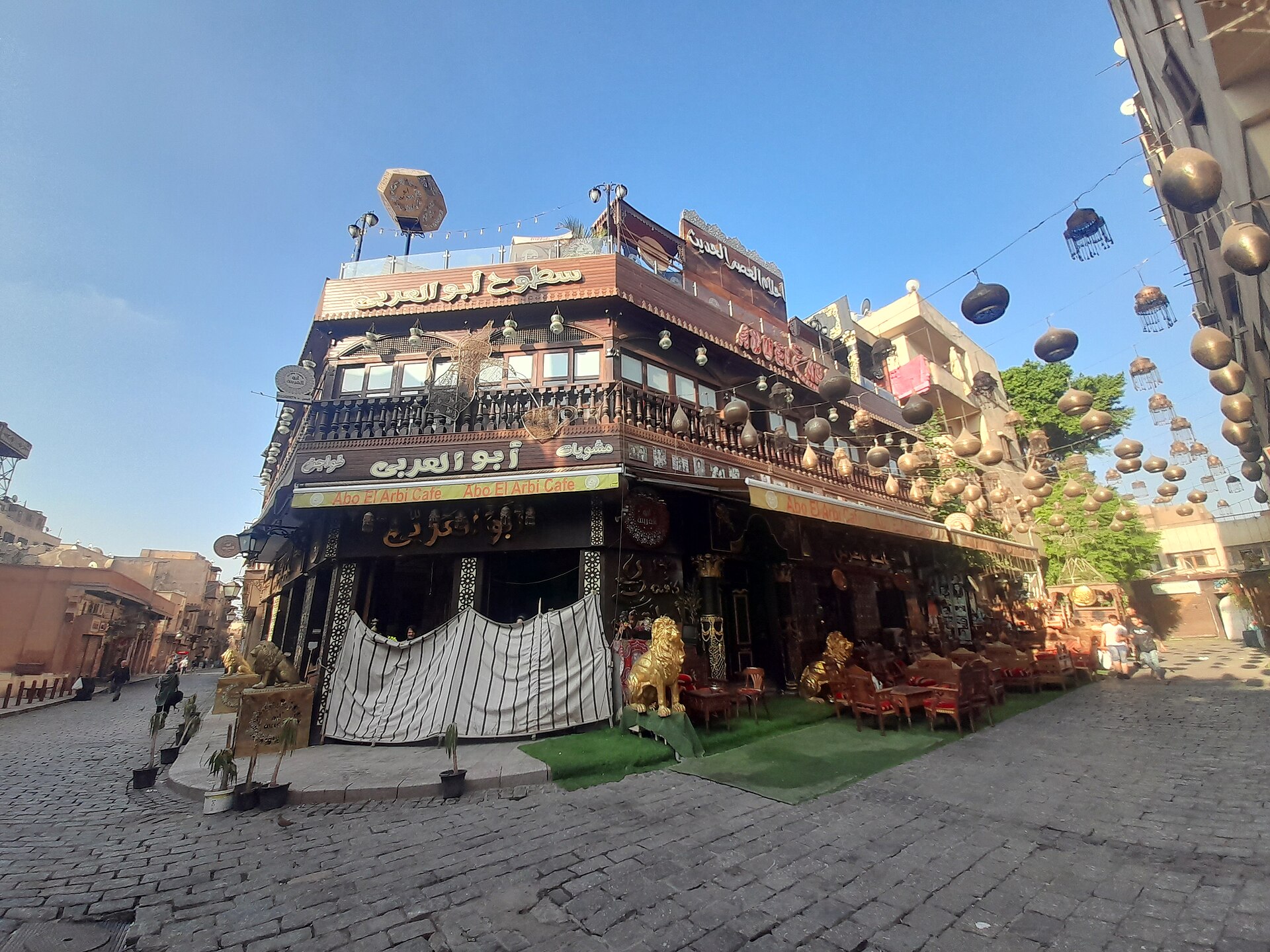
Al-Muizz Street is the most historically significant street in Cairo — a kilometre-long corridor through the heart of Islamic Cairo that contains the highest concentration of medieval Islamic architecture in the world. Named after the Fatimid caliph who founded Cairo in 969 AD, the street runs from Bab Zuweila in the south to Bab al-Futuh in the north, passing between mosques, madrasas, mausoleums, fountains, and caravanserais that span the Fatimid, Ayyubid, Mamluk, and Ottoman periods. The Mamluk architecture is the star. The complex of Sultan Qalawun (1285) — a mosque, madrasa, and hospital arranged along the street — is one of the masterpieces of Islamic architecture, with a mausoleum dome whose interior stained glass and carved stucco rival anything in the Islamic world. The Mosque of al-Hakim (1013), the Sultan Hassan Mosque (1356), and the al-Ghuri complex (1504) each represent different centuries and different approaches to mosque design, creating an architectural walk that covers 500 years of Islamic building in a single street. Al-Muizz Street was pedestrianised and restored in the early 2000s, and walking it now — past the restored facades, through the medieval gates, and into the side alleys where craftsmen still work in workshops that haven't fundamentally changed since the Mamluk period — is the most rewarding historical walk in Cairo. The street connects to Khan el-Khalili at its midpoint, and combining the bazaar with a full walk of Al-Muizz creates a half-day immersion in Islamic Cairo that no museum can replicate.
Khan el-Khalili Bazaar
Khan el-Khalili, Islamic Cairo
Khan el-Khalili is Cairo's great bazaar — a labyrinth of narrow alleys, covered passages, and caravanserais that has been the commercial heart of Islamic Cairo since the 14th century, when the Mamluk sultan al-Zahir Barquq established a khan (caravanserai) for merchants trading between the Mediterranean and the Indian Ocean. The bazaar has been continuously operating for over 600 years, making it one of the oldest continuously running markets in the Middle East. The merchandise ranges from the genuinely traditional (handmade brass lanterns, silver jewellery, spices, perfume oils, papyrus paintings) to the aggressively tourist (plastic pharaoh heads, fake scarabs, T-shirts). The quality improves dramatically as you move away from the main tourist thoroughfares into the side alleys where craftsmen — coppersmiths, woodworkers, tentmakers — still work in workshops that haven't changed in centuries. The Tentmakers' Market (Souk al-Khayamiya) near Bab Zuweila is particularly remarkable — artisans create elaborate appliqué textiles using techniques passed down through generations. El Fishawy café, wedged into an alley near the centre of the bazaar, has been serving mint tea and shisha since 1797 and is the most famous café in Cairo — a mirrors-and-brass establishment where Naguib Mahfouz (Egypt's Nobel Prize-winning novelist) wrote many of his Cairo novels. Sitting at El Fishawy with a tea, watching the bazaar flow past, is the quintessential Cairo experience — the combination of age, commerce, caffeine, and the eternal sound of Arabic conversation creates an atmosphere that no description can adequately convey.
Manial Palace
1 Al Manial Street, Al Roda And Al Mekyas, Cairo, 11553, Egypt
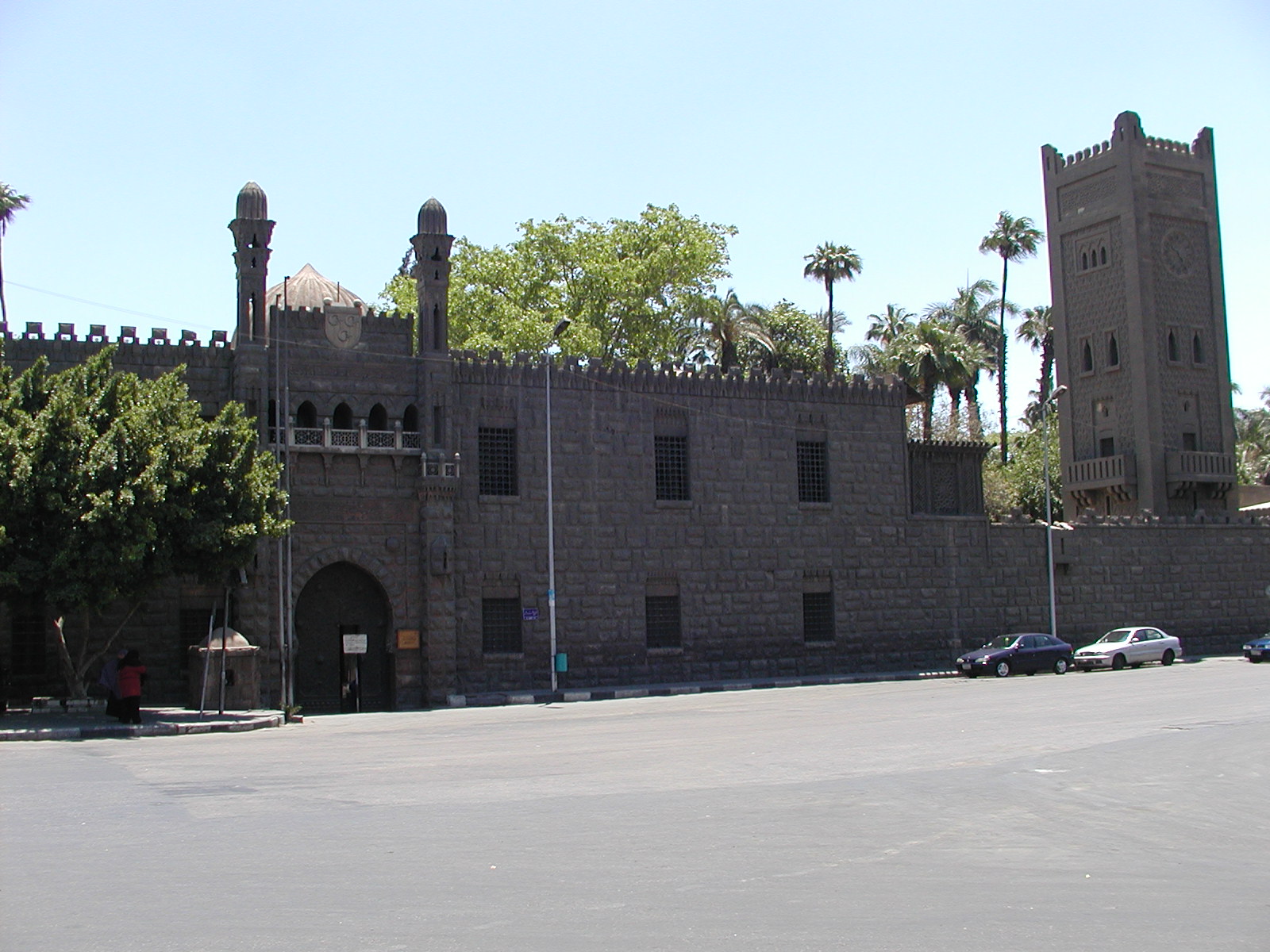
The Manial Palace is the most beautiful palace museum in Cairo — a 19th-century royal residence on Rhoda Island in the Nile built by Prince Muhammad Ali Tewfik (uncle of King Farouk) in an eclectic mix of Ottoman, Moorish, Persian, and Rococo styles that is simultaneously overwhelming and exquisite. The prince, who never became king but lived like one, designed the palace himself and filled it with the kind of decorative excess that makes European palace collections look restrained. The palace complex includes a reception palace (with rooms decorated in different Islamic styles — Moorish, Ottoman, Mamluk, Persian — each more elaborate than the last), a private mosque (with a minaret decorated in blue tilework), a hunting museum (displaying the prince's taxidermied trophies), a throne room, and gardens planted with rare tropical species that the prince collected from his travels. The combination of architectural styles — which would be incoherent in less skilled hands — creates an interior that is both fantastical and deeply knowledgeable about the Islamic architectural traditions it draws from. The palace is on Rhoda Island, accessible by bridge from both Old Cairo and the Giza bank, and its Nile-side gardens provide a peaceful riverside retreat from the city. The Nilometer, a structure dating to 861 AD used to measure the Nile's flood levels (which determined Egypt's agricultural prosperity and tax rates for over a millennium), is at the island's southern tip and can be combined with a Manial Palace visit.
Mosque of Ibn Tulun
Ahmed Ibn Touloun Street, Army Housing, Cairo, 11797, Egypt
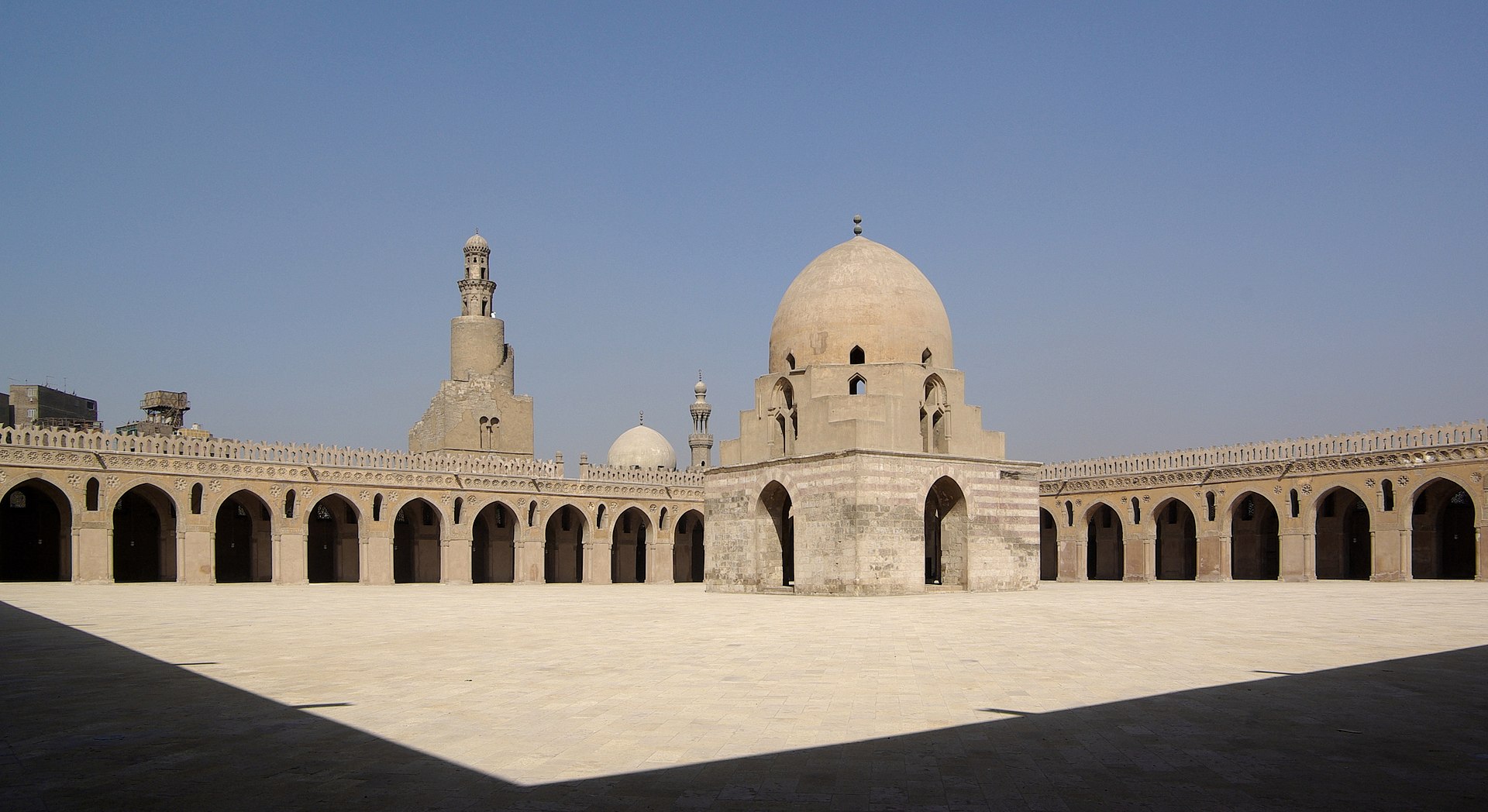
The Mosque of Ibn Tulun is the oldest mosque in Cairo that retains its original form — built between 876 and 879 AD by Ahmad ibn Tulun, the Abbasid governor who declared Egypt independent and built this mosque as the centrepiece of his new capital. The mosque is one of the largest in the world (6.5 acres), and its vast, open courtyard — surrounded by arcaded porticoes and anchored by a spiral minaret inspired by the Great Mosque of Samarra in Iraq — is the most spacious and serene architectural experience in Cairo. The mosque's simplicity is its power. Unlike the later Mamluk and Ottoman mosques, which are decorated with marble, stucco, and tilework, Ibn Tulun relies on the proportions of its spaces, the rhythm of its pointed arches, and the interplay of light and shadow across the stucco-covered brick walls. The carved stucco frieze that runs around the upper walls of the arcades — geometric and floral patterns incised into the plaster — is the earliest surviving example of Egyptian Islamic decorative art and predates the elaborate work of later periods by centuries. The spiral minaret — a helicoidal tower that visitors can climb for views across Islamic Cairo — is unique in Egypt and directly modelled on the minarets of Samarra, reflecting Ibn Tulun's origins in Abbasid Iraq. The Gayer-Anderson Museum, housed in two connected 17th-century houses adjacent to the mosque, displays a private collection of Islamic and Oriental art in one of the best-preserved historical houses in Cairo.
Mosque of Muhammad Ali
Citadel of Saladin, Al Abageyah, Cairo
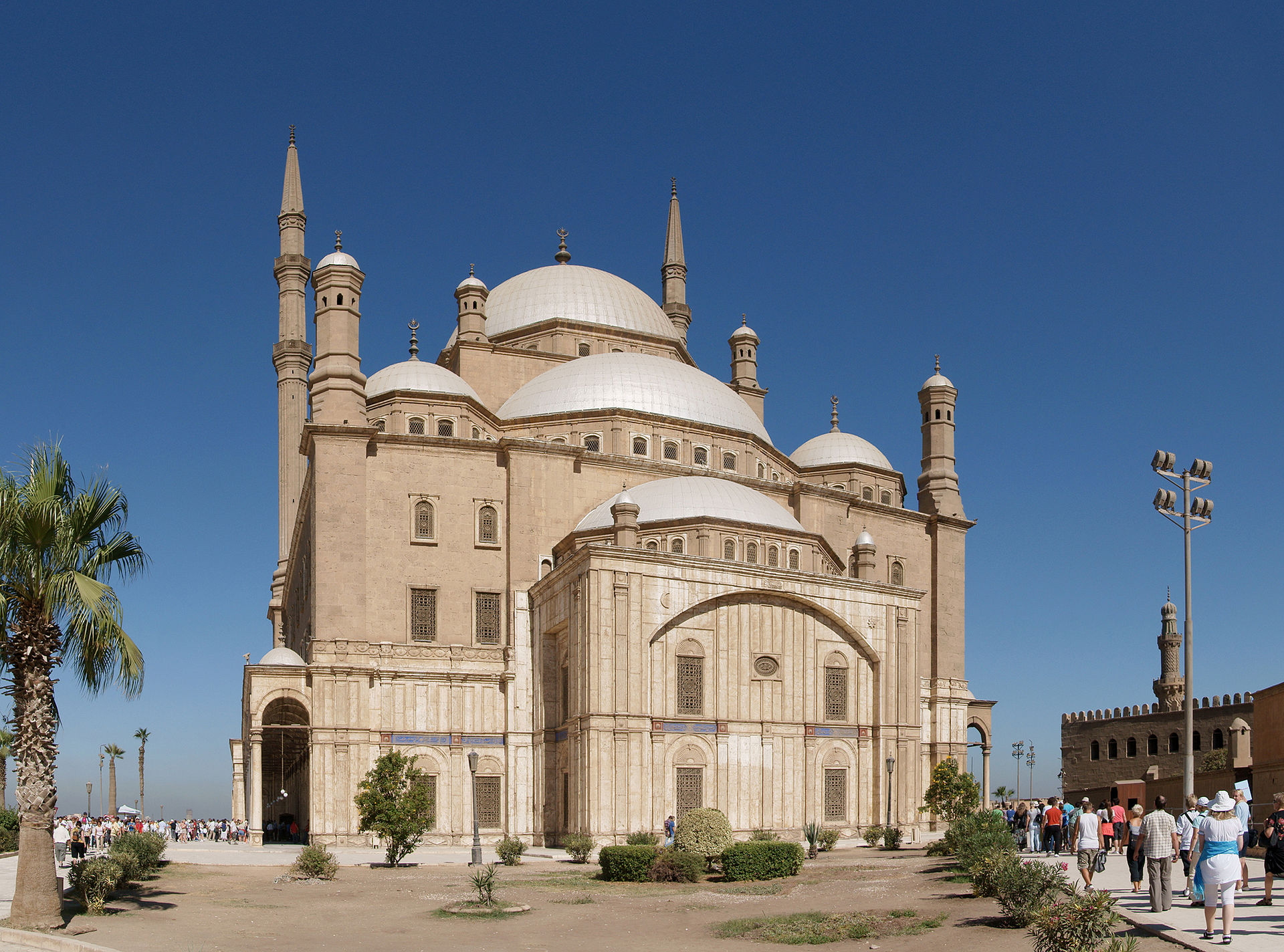
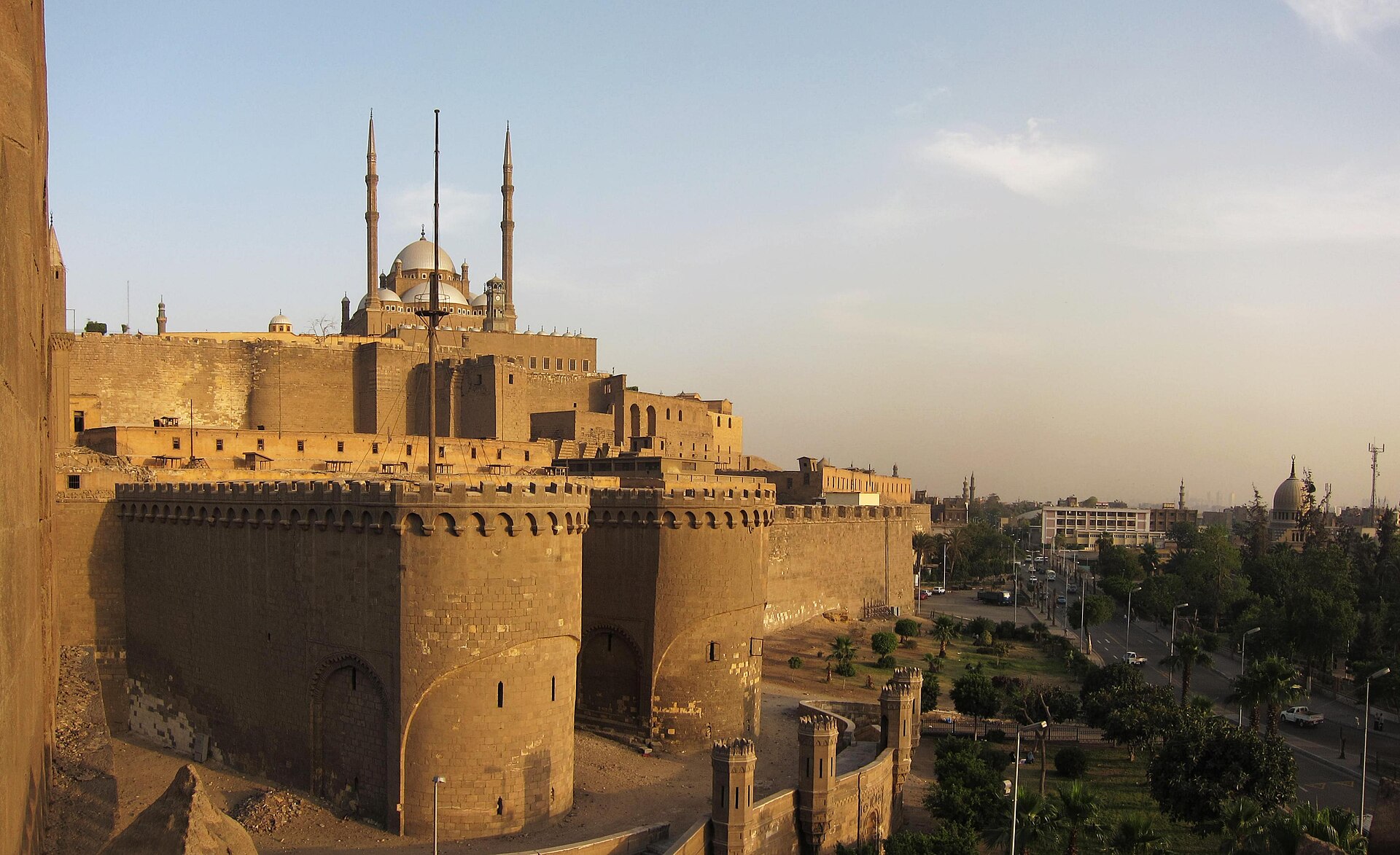
The Mosque of Muhammad Ali is Cairo's most visible mosque — a massive Ottoman-style structure with an 82-metre dome and twin 84-metre minarets that dominates the Citadel of Saladin and the city's skyline. Built between 1830 and 1848 by Muhammad Ali Pasha (the Albanian-born governor who modernised Egypt and is considered the founder of modern Egypt), the mosque was deliberately modelled on the great Ottoman mosques of Istanbul — a political statement of loyalty to the Ottoman sultan that simultaneously demonstrated Egypt's architectural ambitions. The interior is vast and luminous — a single domed prayer hall hung with hundreds of glass lanterns on chains that, when lit, create a constellation of warm light against the painted dome above. The alabaster cladding (giving the mosque its nickname, the 'Alabaster Mosque') covers the lower walls and columns, and the cool, pale stone combined with the lantern light produces an atmosphere of serene grandeur. Muhammad Ali's tomb, behind a bronze screen in the corner of the mosque, is surmounted by a marble cenotaph. The mosque's elevated position in the Citadel provides the best views in Cairo — looking north across the Islamic quarter's minarets and domes to the modern city beyond, and west to the pyramids on the horizon on clear days. The clock tower in the courtyard was a gift from King Louis-Philippe of France in exchange for the obelisk that now stands in the Place de la Concorde in Paris — a trade that Egyptians have been joking about ever since (the clock has never worked).
Muqattam Hills & Cave Church
Mokattam, Cairo
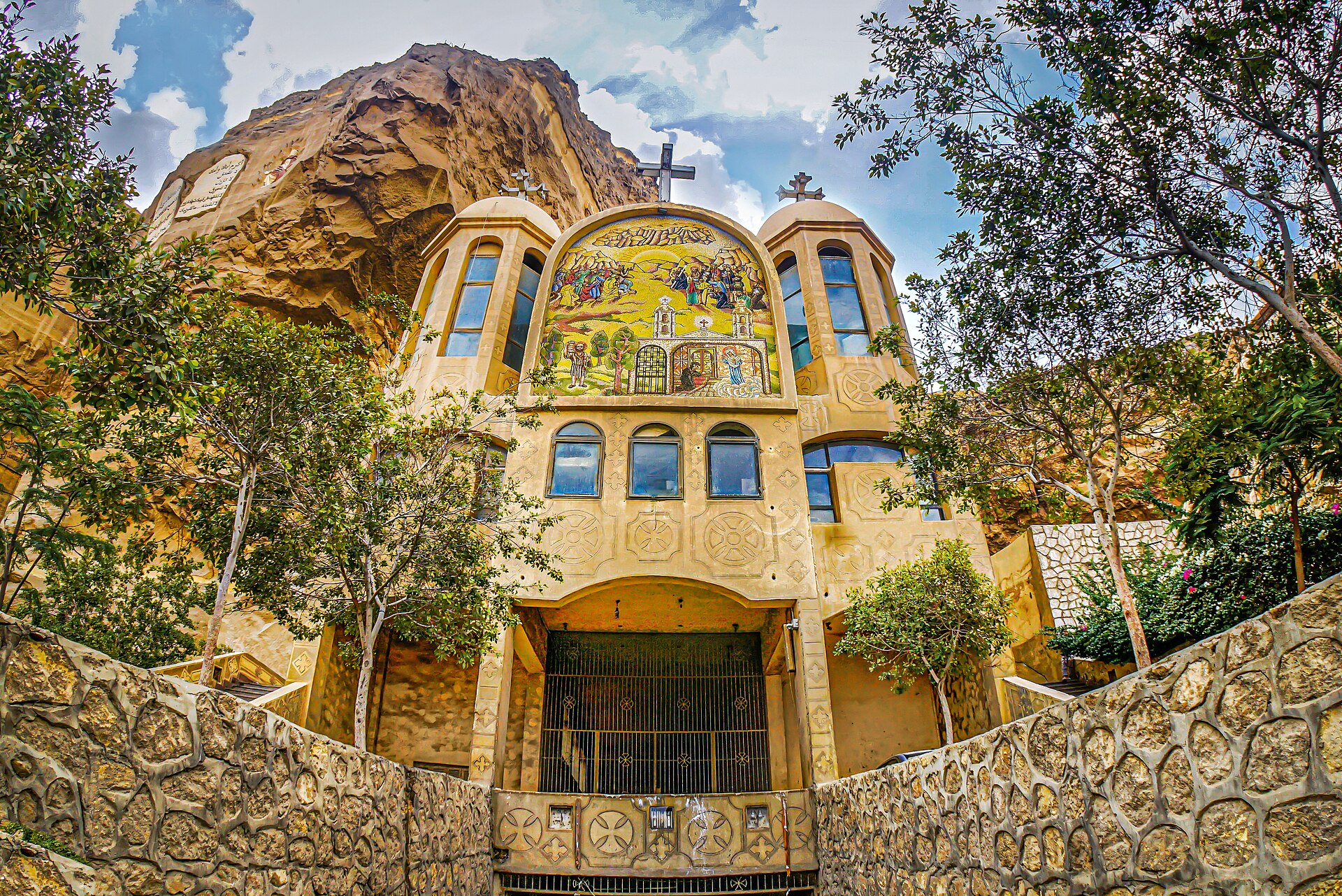
The Monastery of Saint Simon, better known as the Cave Church, is one of the most extraordinary religious spaces in the Middle East — a church carved into the cliffs of the Mokattam Hills that seats 20,000 people, making it the largest church in the Middle East and one of the largest in the world. The church was built by the Zabbaleen (Cairo's garbage collectors, a Coptic Christian community) in the 1970s within the caves of the Mokattam limestone quarries, and the combination of carved rock, religious art, and the faith community that built it creates an experience unlike any other church in Egypt. The Zabbaleen community, who settle in the area known as Garbage City (Manshiyat Naser), have been Cairo's informal waste management system for decades — collecting, sorting, and recycling the city's garbage with an efficiency that formal waste management companies have struggled to match. The community is predominantly Coptic Christian, and the churches they've built in the Mokattam caves — there are seven, the largest seating 20,000 — express both their faith and their determination to create sacred space in the most marginalised part of the city. Visiting the Cave Church requires a degree of open-mindedness about the surrounding neighbourhood — Garbage City is a working waste-processing area, and the streets are lined with sorted recyclables. But the church itself, with its carved rock walls, its biblical scenes etched into the limestone cliffs, and its vast seating carved into the mountain, is a testament to human faith and ingenuity that the more polished churches of Cairo's city centre can't match.
Museum of Islamic Art
Port Said Street, Bab al-Khalq, Cairo
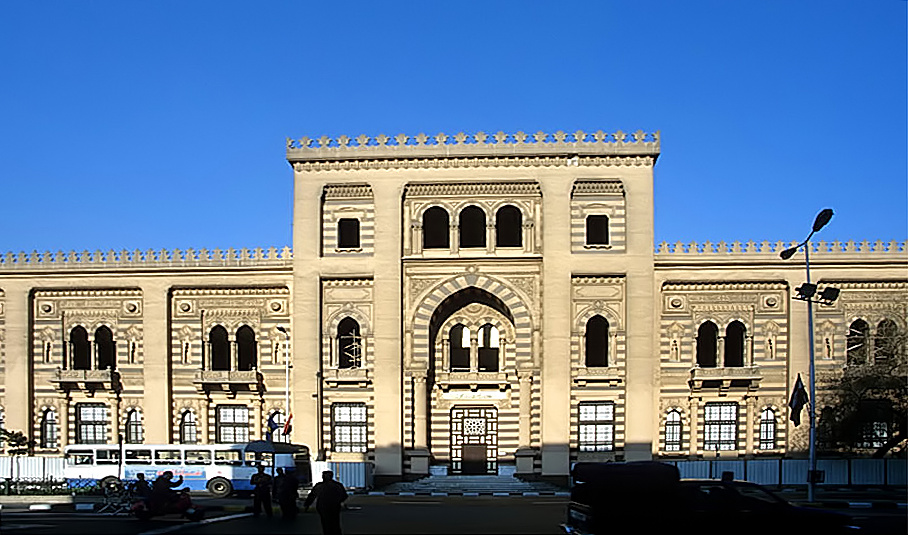
The Museum of Islamic Art in Cairo is one of the finest collections of Islamic art in the world — over 100,000 objects spanning 1,400 years and the full geographic range of the Islamic world, from Umayyad Syria and Abbasid Iraq through Fatimid and Mamluk Egypt to Ottoman Turkey and Mughal India. The museum, founded in 1881 and housed in a neo-Mamluk building at the edge of Islamic Cairo, was severely damaged by a car bomb in 2014 and reopened after a meticulous restoration in 2017. The collection's strengths include Mamluk metalwork (inlaid brass trays, ewers, and candlesticks of extraordinary craftsmanship), Fatimid rock crystal, Quranic manuscripts in every major calligraphic style, textiles from across the Islamic world, and the carved wooden mashrabiya screens and doors that demonstrate the architectural craft traditions of medieval Cairo. The ceramics collection — spanning Abbasid lustre ware, Iznik tiles, and Egyptian Mamluk pottery — traces the development of Islamic ceramic art across centuries and continents. The museum's location at the intersection of Port Said Street and Al-Muizz Street makes it a natural bookend to an Islamic Cairo walk — start at the museum for context, then walk north along Al-Muizz through the monuments whose artistic traditions the museum explains. The building itself, with its domed entrance hall and galleries arranged around a central courtyard, provides a sympathetic architectural setting for the collection, and the recently restored galleries display the objects with the space and lighting they deserve.
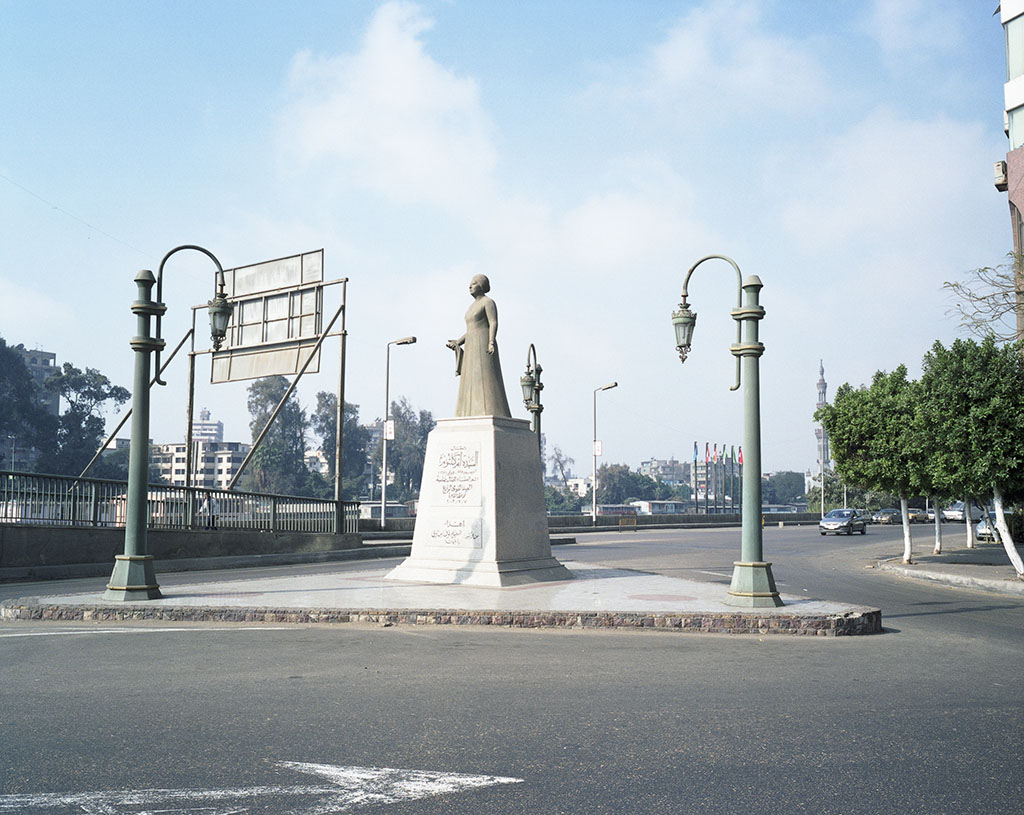
Nile Corniche & Zamalek
Al Gezira Street, Omar El Khayam, Cairo, 11568, Egypt
The Nile Corniche is Cairo's river promenade — a continuous waterfront road running along both banks of the Nile through central Cairo that provides the only reliable open space and fresh air in a city of 20 million people. Walking the Corniche at sunset, when the feluccas (traditional sailing boats) drift on the water and the city's skyline softens in the golden light, is Cairo at its most liveable. Zamalek, the northern half of Gezira Island in the middle of the Nile, is Cairo's most cosmopolitan neighbourhood — tree-lined streets of Art Deco apartment buildings, embassies, galleries, and the cafés and restaurants that serve Cairo's educated, multilingual elite. The neighbourhood feels more Parisian than Egyptian — a legacy of the Khedive Ismail's 19th-century ambition to make Cairo the 'Paris on the Nile.' The 26th of July Street, Zamalek's main commercial strip, is lined with bookshops, bakeries, and the kind of independent businesses that survive in a neighbourhood where cultural capital outweighs commercial pressure. The Cairo Tower (Borg al-Qahira), a 187-metre lotus-shaped concrete tower built in 1961 with CIA money (a bribe that Egyptian president Nasser reportedly spent on the tower specifically to irritate the Americans), provides a 360-degree view from its revolving restaurant and observation deck. The view — the Nile winding north toward the delta, the pyramids on the western horizon, and the city spreading in every direction — is the definitive Cairo panorama.
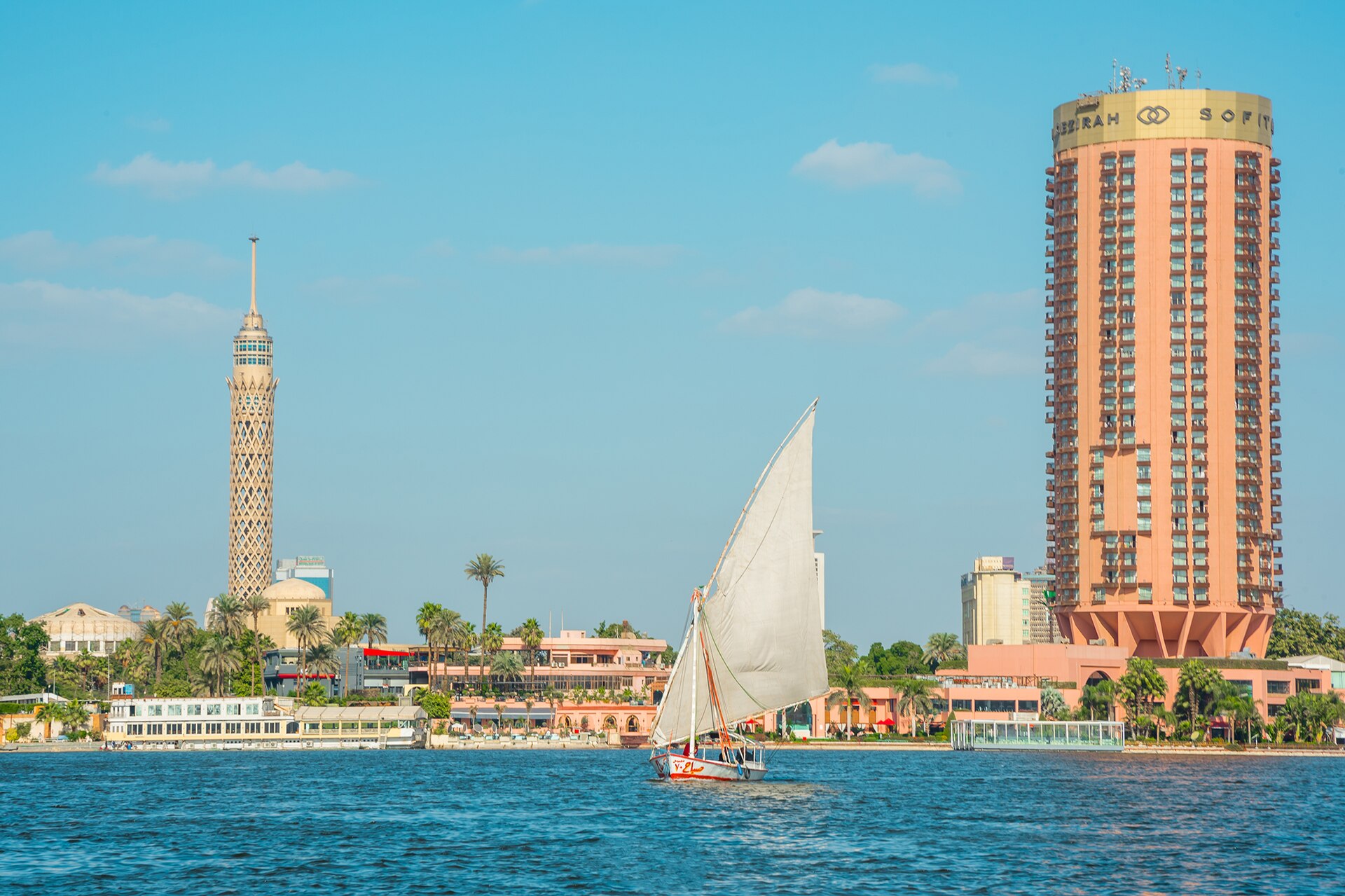
Nile Felucca Ride
Kornish Al Nil Street, Al Ismalia, Cairo, 11519, Egypt
A felucca ride on the Nile is the most peaceful experience available in Cairo — a traditional wooden sailboat with a single triangular sail that drifts along the river using the same wind and current that have powered boats on the Nile for 5,000 years. The feluccas launch from various points along the Corniche (the stretch near the Four Seasons Garden City and the area around Zamalek are the most popular departure points), and an hour's sailing — past the islands, under the bridges, and alongside the Corniche's evening promenade — provides a perspective on Cairo that the land-locked city streets can't offer. The feluccas are simple — wooden benches, cushions, and a canvas awning for shade — and the experience depends entirely on the time of day and the quality of the light. A late afternoon sailing, when the sun drops behind the western bank and the minarets of Islamic Cairo are backlit against an orange sky, is the single most romantic experience Cairo offers. The river is surprisingly quiet once you're away from the bridges, and the absence of engine noise (feluccas are entirely wind-powered) creates a silence that seems impossible given the chaos visible on both banks. The boatmen charge by the hour (negotiate before boarding — the starting price is always higher than the final price, and both parties know this), and the most pleasant arrangement is a sunset sail of 60-90 minutes with tea. The Nile's current is strong enough to move the boat gently even when the wind drops, and the experience of drifting on a river that has been the lifeline of Egyptian civilisation since before the pharaohs is one of those travel moments that earns every cliché written about it.
Pyramids of Dahshur
Dahshur, Giza Governorate, Egypt
Dahshur is where the Egyptians figured out how to build a true pyramid — a desert site 40 kilometres south of Cairo containing two of the most architecturally significant pyramids in Egypt: the Bent Pyramid and the Red Pyramid, both built by Pharaoh Sneferu around 2600 BC. Together, they document the engineering evolution from the stepped structures of Saqqara to the perfect geometry of Giza in a single ruler's reign. The Bent Pyramid is the most visually distinctive pyramid in Egypt — its lower portion rises at a steep 54-degree angle, then abruptly changes to a shallower 43-degree angle about halfway up, giving it a 'bent' profile that is unique among Egyptian pyramids. The angle change was almost certainly a mid-construction correction — the engineers realised the steep angle would cause structural failure and reduced it to save the building. The Bent Pyramid retains more of its original white limestone casing than any other pyramid, giving a sense of how the pyramids looked when new. The Red Pyramid (named for the reddish limestone of its core, visible where the casing has been removed) was Sneferu's successful second attempt — a true smooth-sided pyramid built at the shallower 43-degree angle that the Bent Pyramid's correction had established. The Red Pyramid is the third-largest pyramid in Egypt and the first successful true pyramid, making it the direct ancestor of the Great Pyramid of Giza. Visitors can enter the Red Pyramid and descend to the burial chamber — a cramped, steeply angled passage that is physically challenging but architecturally rewarding.
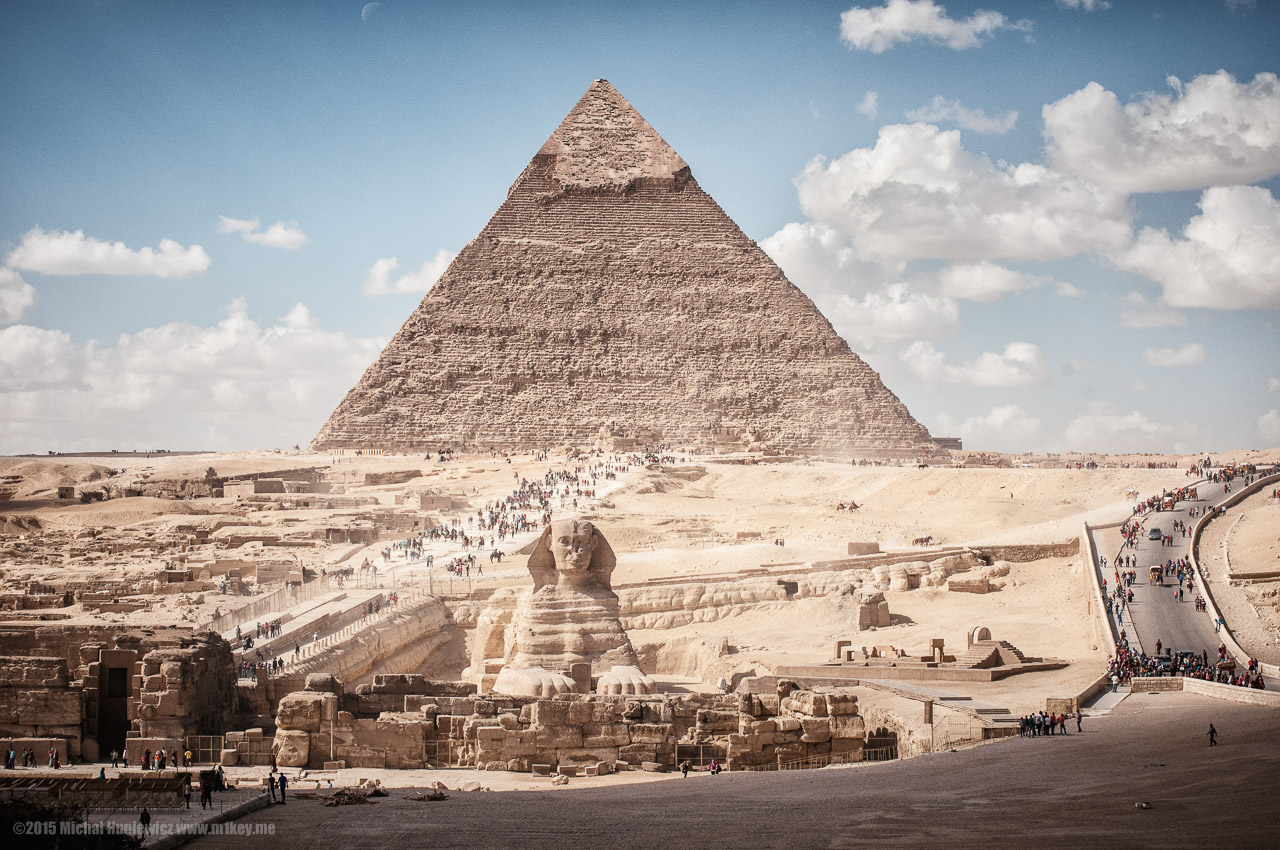
Pyramids of Giza & The Sphinx
Al Ahram Tunnel, First Al Omraneya, Giza, 12551, Egypt
The Pyramids of Giza are the last surviving Wonder of the Ancient World — three monumental tombs built 4,500 years ago for the pharaohs Khufu, Khafre, and Menkaure, standing on a limestone plateau at the edge of the Western Desert with the sprawl of modern Cairo visible in the haze behind them. The Great Pyramid of Khufu, the largest, was the tallest structure on Earth for nearly 4,000 years — 146 metres of 2.3 million limestone blocks, each weighing an average of 2.5 tonnes, assembled with a precision that modern engineers still struggle to fully explain. The Sphinx, crouching at the base of the Khafre causeway, is carved from a single outcrop of limestone and has been staring east toward the sunrise for 45 centuries. The face — widely believed to represent Pharaoh Khafre, though some scholars disagree — has lost its nose (knocked off by a Sufi zealot in the 14th century, not by Napoleon's soldiers as the myth claims) but retains an expression of serene authority that has made it the most recognisable sculpture in history. The pyramids are best visited early morning or late afternoon, when the light is warm and the worst of the heat and the tour bus crowds have passed. The interior of the Great Pyramid is accessible (for an additional fee) via a narrow, ascending passage that leads to the King's Chamber — a granite room containing an empty sarcophagus that has been open since the first recorded entry in the 9th century. The Grand Egyptian Museum, opening adjacent to the Giza plateau, will house the largest collection of Egyptian antiquities in the world, including the complete Tutankhamun collection.
Saqqara Step Pyramid
Saqqara, Giza Governorate, Egypt
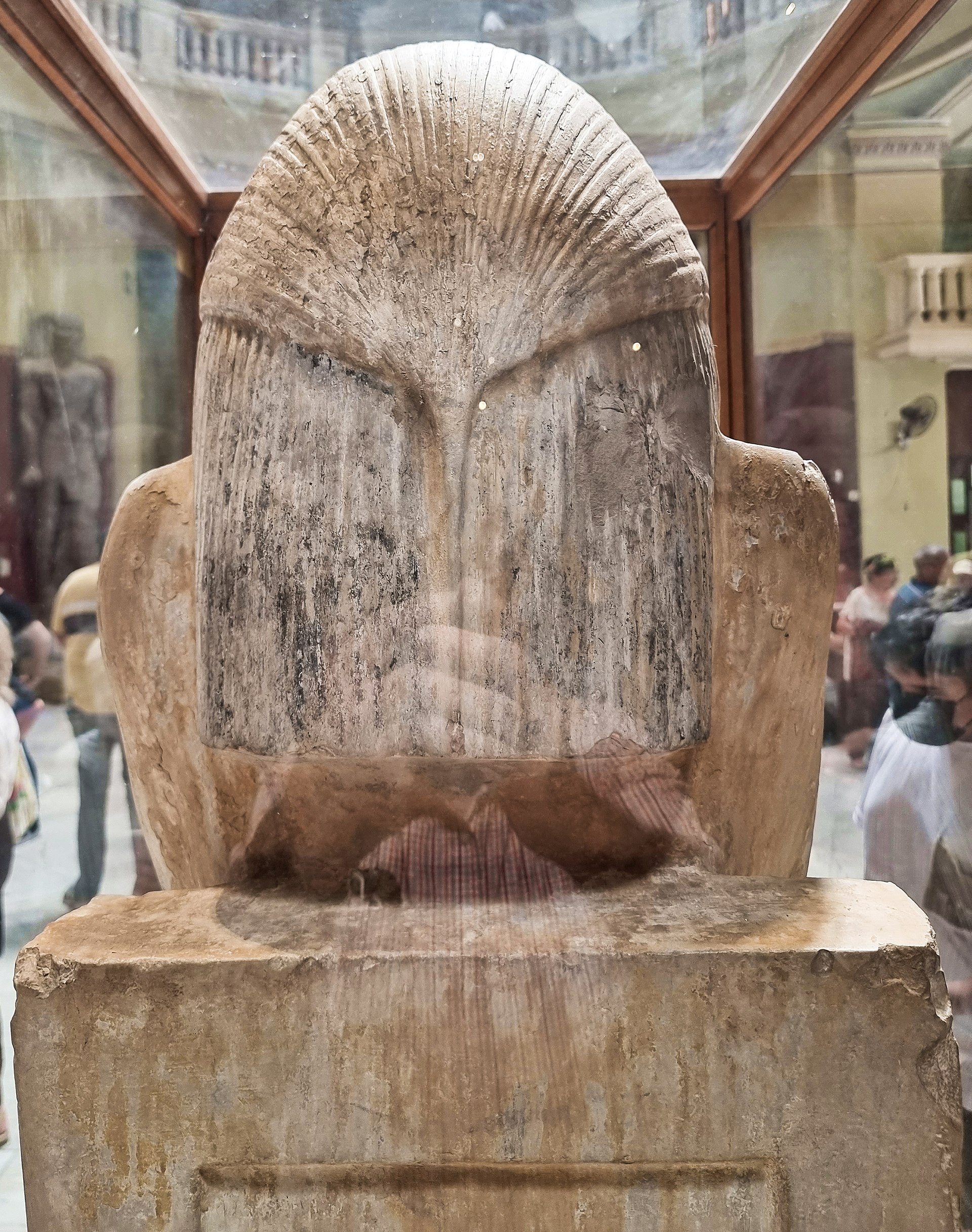
Saqqara is the necropolis that invented the pyramid — a vast desert plateau 30 kilometres south of Cairo where the Step Pyramid of Djoser, built around 2670 BC by the architect Imhotep, represents the first monumental stone structure in human history. Before Djoser's pyramid, Egyptian tombs were flat-topped mud-brick structures (mastabas). Imhotep's innovation — stacking six mastabas of decreasing size to create a stepped tower — was the conceptual breakthrough that led, within a century, to the smooth-sided pyramids at Giza. Imhotep is history's first named architect (and was later deified as the Egyptian god of medicine and architecture), and his Step Pyramid complex — which includes a massive enclosure wall, ceremonial courtyards, and the first use of stone columns in architecture — represents a moment when human ambition exceeded all previous building technology. The complex was recently restored by a controversial renovation project that cleaned, stabilised, and partly rebuilt the pyramid and its surrounding structures. Saqqara is far larger than Giza — the necropolis stretches for 7 kilometres along the desert edge and contains pyramids, tombs, and temple complexes spanning 3,000 years of Egyptian history. The Serapeum (underground galleries where the mummified Apis bulls were buried in 70-tonne granite sarcophagi), the mastaba of Ti (with its brilliantly preserved Old Kingdom reliefs of daily life), and the recently opened Tomb of Mehu (painted scenes of fishing, hunting, and banqueting from 2300 BC) reward the visitors who venture beyond the Step Pyramid.
Sultan Hassan Mosque
Al Sultan Hassan Street, Al Helmia, Cairo, 11655, Egypt
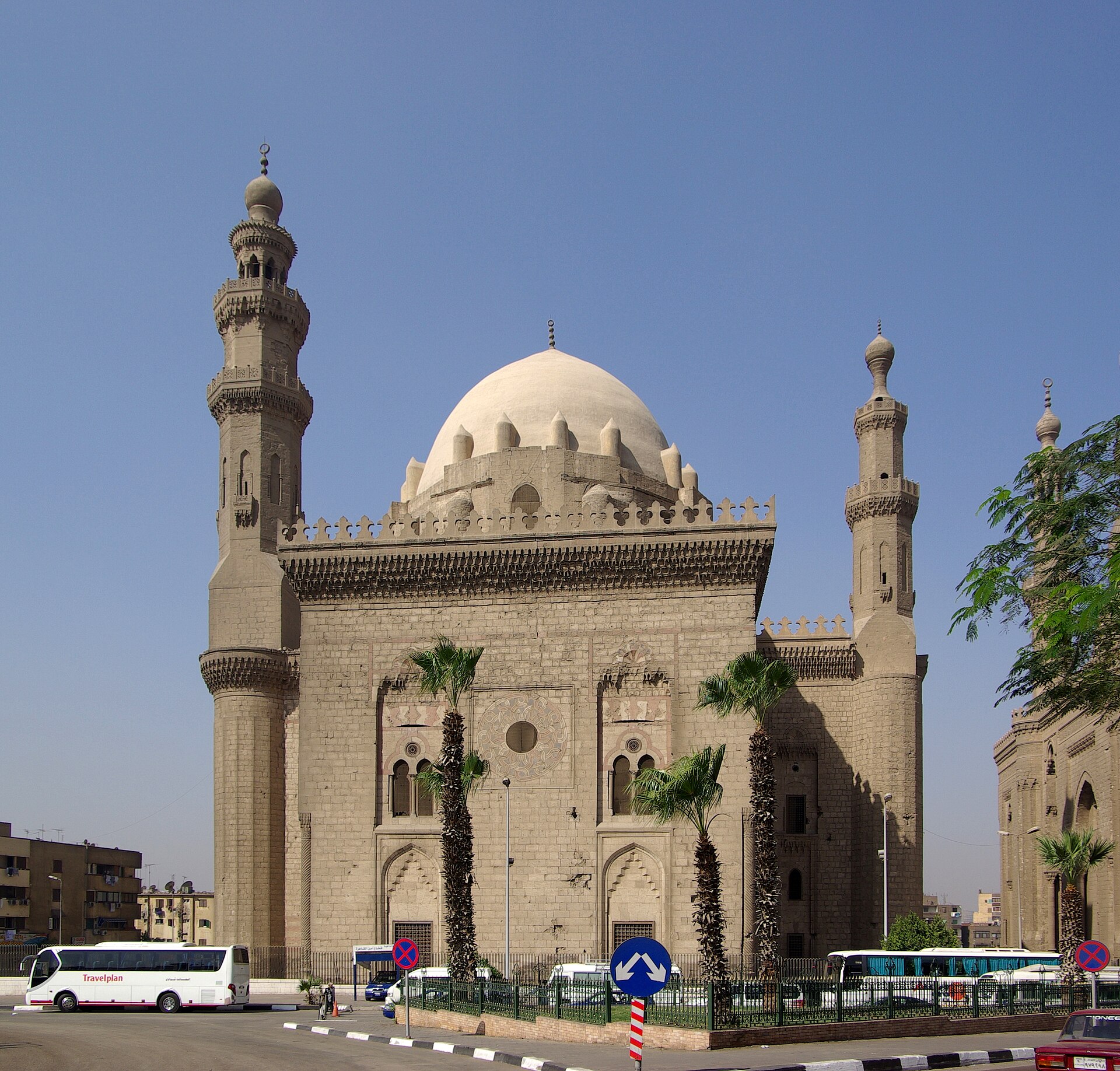
The Sultan Hassan Mosque is the largest and most ambitious mosque of the Mamluk period — a massive stone complex built between 1356 and 1363 that architectural historians consider one of the masterpieces of Islamic architecture worldwide. The mosque's sheer scale (it was the tallest building in Cairo when completed), the quality of its stonework, and the sophistication of its spatial design make it the single most impressive historic building in Cairo after the pyramids. The mosque is organised around a central courtyard with four iwans (vaulted halls) opening onto it, one for each of the four Sunni schools of jurisprudence — a design that reflects the educational function of the mosque as a madrasa where all four traditions could be taught simultaneously. The main iwan is the largest covered space in any Mamluk building, and the scale — the vault rises to over 26 metres — creates a sense of interior volume that is genuinely overwhelming. The mausoleum chamber, behind the main iwan, contains Sultan Hassan's cenotaph beneath a dome decorated with carved stucco of extraordinary refinement. The mosque sits at the foot of the Citadel, and the view of the two together — the Mamluk mosque below, the Ottoman citadel above — is the most historically dense perspective in Cairo. The Al-Rifa'i Mosque directly opposite, built in the 19th century deliberately to echo Sultan Hassan's scale and style, creates an architectural dialogue across the square that spans 500 years.
Tahrir Square
Tahrir Square, Downtown Cairo
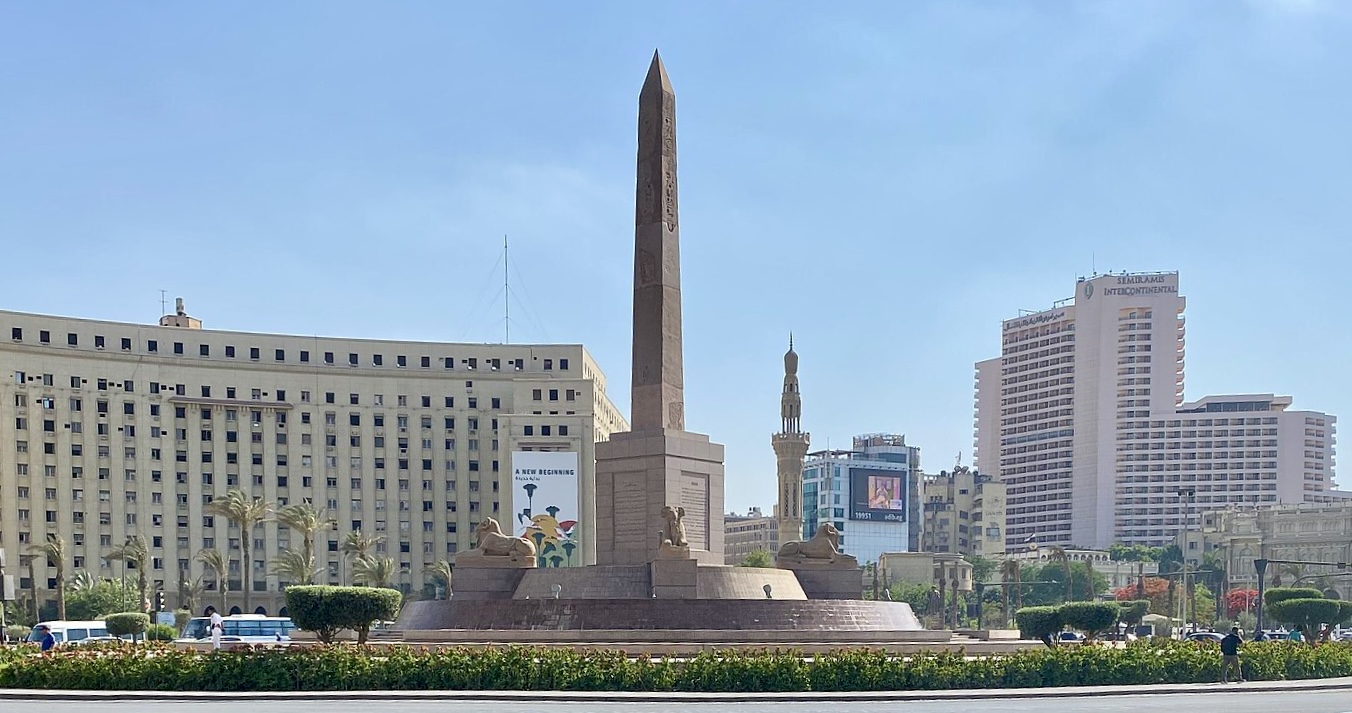
Tahrir Square is the most politically significant public space in the Middle East — a traffic-choked roundabout in downtown Cairo that became the epicentre of the 2011 Egyptian revolution, when millions of Egyptians gathered to demand the resignation of President Hosni Mubarak. The 18 days of protest (January 25 to February 11, 2011) that ended Mubarak's 30-year rule were broadcast from this square to the world, and the name 'Tahrir' (Liberation) — given to the square after the 1952 revolution that ended the monarchy — acquired a new and more powerful meaning. The square was originally designed in the 19th century as the centrepiece of Khedive Ismail's Haussmann-inspired downtown, and the surrounding buildings — the Egyptian Museum, the Nile Hilton (now the Ritz-Carlton), the Arab League headquarters, and the former National Democratic Party headquarters (burned during the revolution and since demolished) — represent the institutional architecture of 20th-century Egypt. The square's transformation from traffic circle to revolutionary arena and back to traffic circle is itself a commentary on the relationship between public space and political power. Today, Tahrir Square has returned to its pre-revolutionary function — a noisy, congested intersection that bears little physical trace of the events that made it globally famous. A flagpole and a small monument have been added, but the square's significance is historical and symbolic rather than visual. The Egyptian Museum on the square's northern edge remains the area's main attraction for visitors, and the downtown streets radiating from the square provide the most walkable urban experience in a city where walking is often an act of faith.
Tentmakers' Market (Souk al-Khayamiya)
Near Bab Zuweila, Islamic Cairo
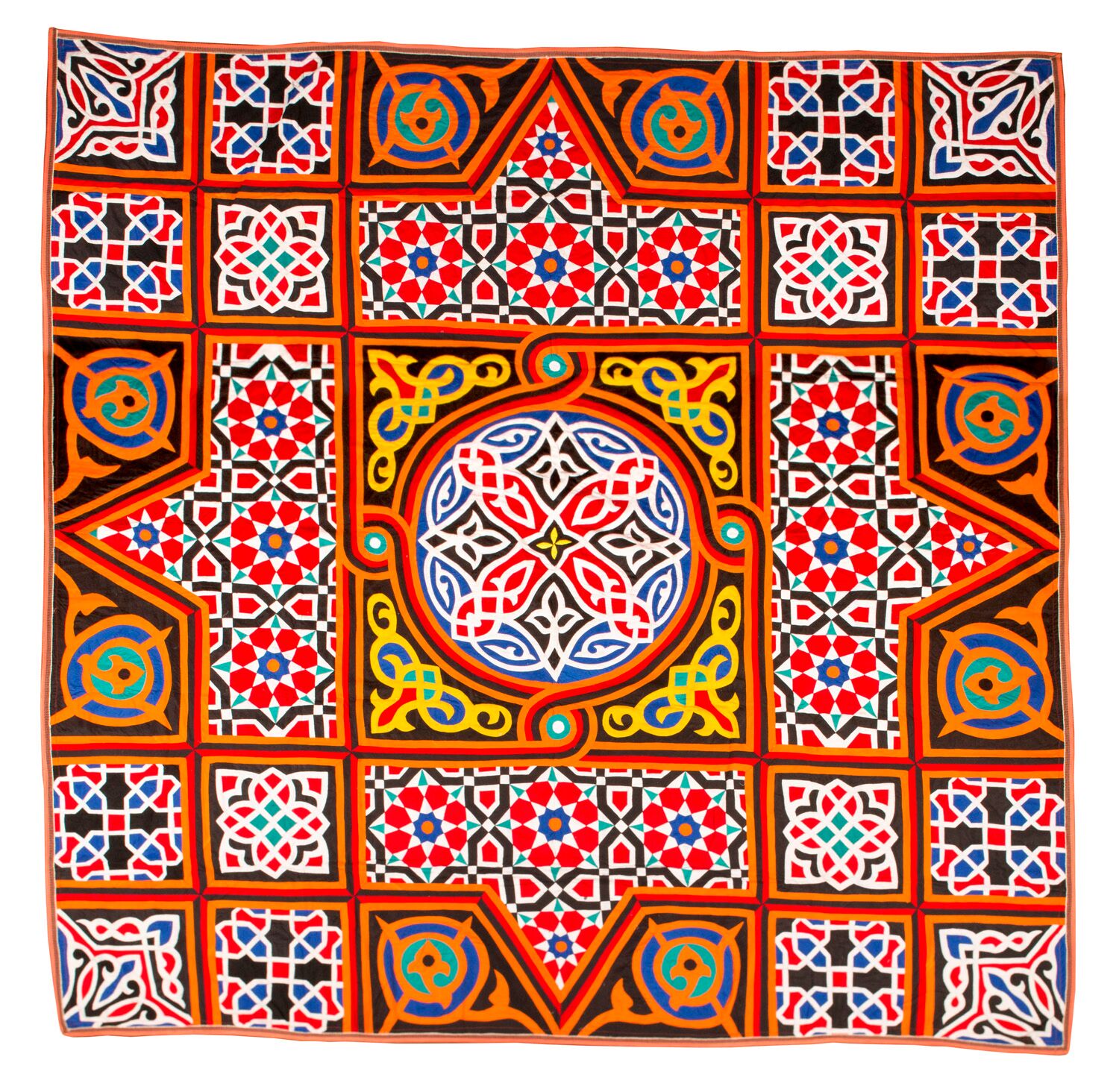
The Tentmakers' Market is the last covered souk in Cairo — a narrow street of workshops near Bab Zuweila where artisans create elaborate appliqué textiles using a technique that has been practised in Egypt for centuries. The craftsmen cut intricate geometric and calligraphic designs from coloured fabric and stitch them onto canvas to create the decorative panels (khayamiya) that were traditionally used to line tents, decorate festival pavilions, and cover the mahmal (the ceremonial camel litter that carried the covering of the Kaaba from Cairo to Mecca). The market's workshops are open to visitors, and watching the craftsmen cut freehand Arabic calligraphy and complex geometric patterns from folded fabric — without templates, using only scissors and generations of inherited skill — is one of Islamic Cairo's most impressive craft demonstrations. The designs range from traditional Quranic calligraphy and geometric patterns to contemporary designs adapted for Western tastes (cushion covers, wall hangings, table runners). The market sits in the covered passage just inside Bab Zuweila, and the combination of the gate, the market, and the nearby Mosque of al-Mu'ayyad creates a pocket of medieval Cairo that feels more like a museum than a street. The tentmakers are the last practitioners of a craft that once employed hundreds of artisans — the tourism revenue from visitors who buy their work is essential to the trade's survival, making a purchase here an act of cultural preservation as well as shopping.
The Citadel of Saladin
Al Abageyah Street, Al Abageyya Housing, Cairo, 11636, Egypt
The Citadel of Saladin is the fortress that has dominated Cairo's skyline for over 800 years — built by the Ayyubid sultan Saladin beginning in 1176 as a defence against the Crusaders, and serving as the seat of Egyptian government for nearly 700 years until the 19th century. The fortress sits on a spur of the Mokattam Hills overlooking the city, and the view from its ramparts — across the entire Cairo basin to the pyramids on the western horizon — is the single most comprehensive panorama of the city. The Mosque of Muhammad Ali, inside the citadel walls, is Cairo's most visible mosque — a massive Ottoman-style structure with an 82-metre dome and twin minarets that dominates the city's skyline. Built between 1830 and 1848 by Muhammad Ali Pasha (considered the founder of modern Egypt), the mosque was modelled on the Ottoman mosques of Istanbul and represents Egypt's last great architectural gesture before the colonial era. The interior — a vast prayer hall lit by thousands of glass lanterns hanging from chains — is one of the most impressive mosque interiors in the Middle East. The citadel complex also contains the National Military Museum (in the Muhammad Ali's Harem Palace), the Police Museum, and several smaller mosques and gardens. The citadel's strategic position — controlling the approach to Cairo from the east — is immediately apparent from the ramparts, and understanding why Saladin chose this site to build his fortress helps explain the military geography that has shaped Cairo's history for a millennium.
Wadi Degla Protectorate
Wadi Degla, Maadi, Cairo
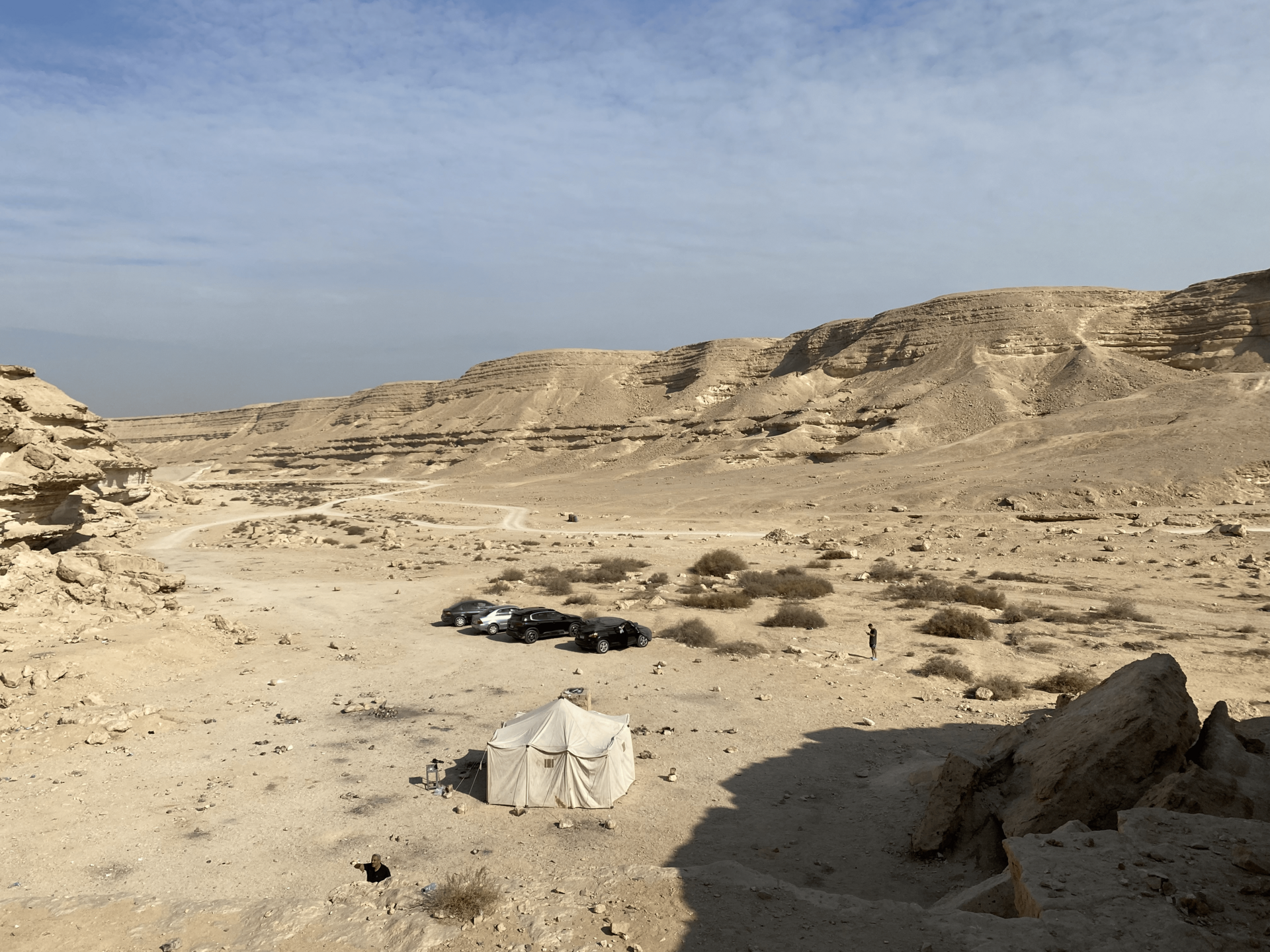
Wadi Degla is Cairo's most unexpected natural escape — a 60-square-kilometre protected desert canyon south of the city where fossilised whale bones, coral reef formations, and the geological record of an ancient sea are preserved in the limestone walls of a dry wadi (valley) that was underwater 40 million years ago. The protectorate provides the most dramatic contrast available in Cairo: from the apartment blocks of Maadi, you drive five minutes and enter a desert canyon that looks like it belongs in the American Southwest. The canyon walls, carved by the now-dry Degla River over millions of years, expose cross-sections of limestone that contain marine fossils — shark teeth, sea urchins, and the shells of creatures that lived when the Sahara was the floor of the Tethys Sea. The hiking trail along the canyon floor extends for about 5 kilometres, and the geology lesson written in the rock walls — layers of limestone, sandstone, and fossilised coral — covers 40 million years in a single walk. The protectorate is popular with Cairo's outdoor community — runners, mountain bikers, and birdwatchers (the canyon attracts migratory raptors and desert species) use it as an escape from the city's traffic and pollution. The entrance fee is minimal, and the experience of standing in a fossil-studded desert canyon while the towers of Cairo are visible on the northern horizon provides the perspective shift that every visitor to the city needs — a reminder that Cairo sits on the edge of a desert that was once an ocean.