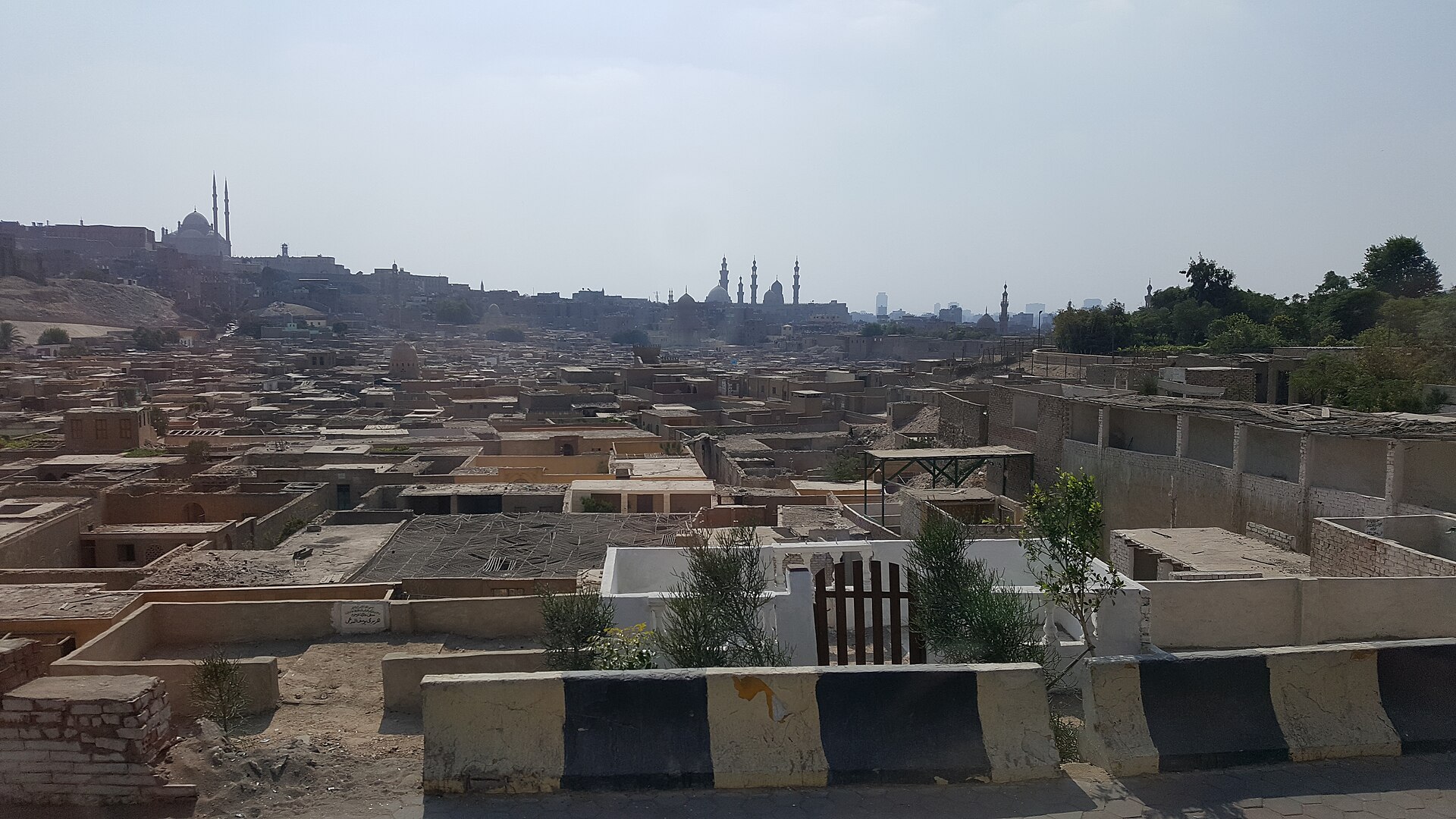
The City of the Dead is one of the most extraordinary urban phenomena in the world — a vast medieval cemetery east of Islamic Cairo where an estimated 500,000 to one million people live among the tombs, mausoleums, and funerary complexes of Egypt's sultans, emirs, and saints. The living inhabitants — who have occupied the cemetery for generations, building houses, shops, and cafés among the tombs — have created a functioning neighbourhood in a space that was designed for the dead.
The Northern Cemetery contains some of the finest Mamluk architecture in Cairo — the Mausoleum of Sultan Barquq (1411), the Mausoleum of Sultan Qaytbay (1474, whose dome is considered the finest carved stone dome in Islamic architecture), and the complex of Sultan Inal, each representing the peak of Mamluk funerary architecture. The carved stone domes — with their intricate geometric patterns produced by chiselling directly into the stone surface — are the Northern Cemetery's architectural signature and represent a level of stonecraft that has never been equalled.
Visiting the City of the Dead is both architecturally rewarding and ethically complex — this is a residential neighbourhood, not a tourist attraction, and the residents live here not by choice but because Cairo's housing crisis has left them nowhere else to go. A respectful visit — hiring a local guide, staying on the main paths, asking permission before photographing — is the appropriate approach. The architecture justifies the visit; the living conditions contextualise it.
Verified Facts
An estimated 500,000 to one million people live in the cemetery
The Mausoleum of Sultan Qaytbay (1474) has the finest carved stone dome in Islamic architecture
The cemetery contains Mamluk funerary complexes from the 14th-15th centuries
Residents have lived among the tombs for generations
Get walking directions
Northern Cemetery, Cairo