Coptic Cairo is the oldest part of the city — a walled enclave built on the site of the Roman fortress of Babylon that predates Islamic Cairo by six centuries and contains some of the oldest Christian churches in the world. The Coptic community, which traces its origins to the apostle Mark's mission to Egypt in the 1st century AD, maintains churches, monasteries, and institutions within this compact quarter that together represent one of the most complete early Christian landscapes surviving anywhere.
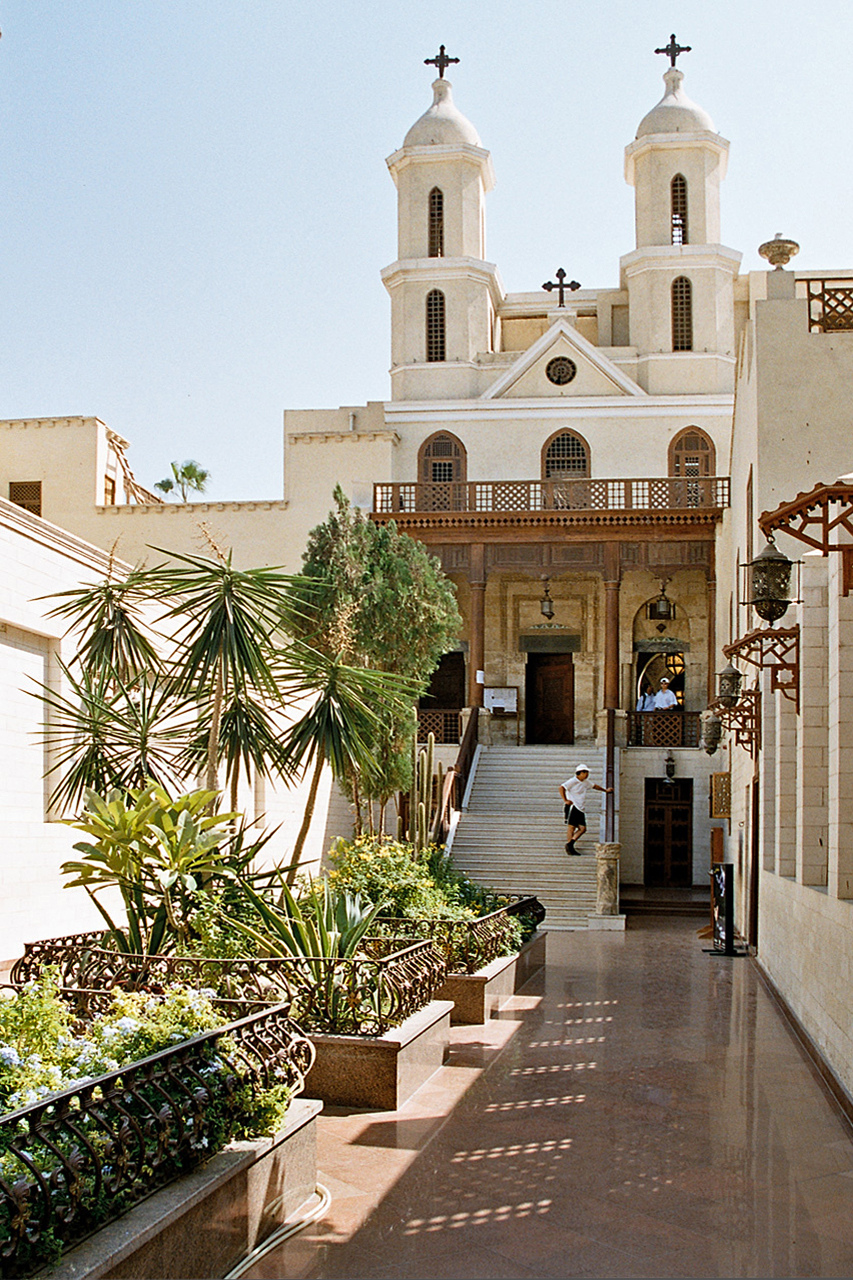
The Hanging Church (Al-Mu'allaqa), built on top of the gatehouse of the Roman fortress with its nave suspended above the old passageway, is the most famous and the most architecturally distinctive — a church that literally hangs above the ground on ancient columns. The interior, with its carved wooden screens (iconostases), marble pulpit, and icons painted in the distinctive Coptic style, provides a visual introduction to a Christian tradition that developed independently of both Western and Eastern Orthodox Christianity.
The Coptic Museum, adjacent to the Hanging Church, houses the largest collection of Coptic art and artifacts in the world — textiles, manuscripts, icons, and the Nag Hammadi codices (early Gnostic gospels discovered in 1945 that revolutionised understanding of early Christianity). The Ben Ezra Synagogue, also within the Coptic quarter, is the oldest synagogue in Cairo and is traditionally associated with the site where the infant Moses was found in the reeds — a claim that, like most claims in a city this old, is historically uncertain but emotionally compelling.
Verified Facts
Coptic Cairo is built on the site of the Roman fortress of Babylon
The Hanging Church is built atop the Roman fortress gatehouse
The Coptic Museum houses the Nag Hammadi codices
The Ben Ezra Synagogue is the oldest synagogue in Cairo
Get walking directions
Old Cairo, Cairo, Egypt