The Grand Egyptian Museum is the most ambitious museum project of the 21st century — a 490,000-square-metre complex near the Giza Pyramids designed to house the complete collection of Egyptian antiquities, including the entire Tutankhamun collection (5,400 objects, many never previously displayed) in a single purpose-built institution. The museum, designed by Heneghan Peng Architects and under construction since 2012, represents Egypt's determination to house its heritage in a building worthy of the collection.
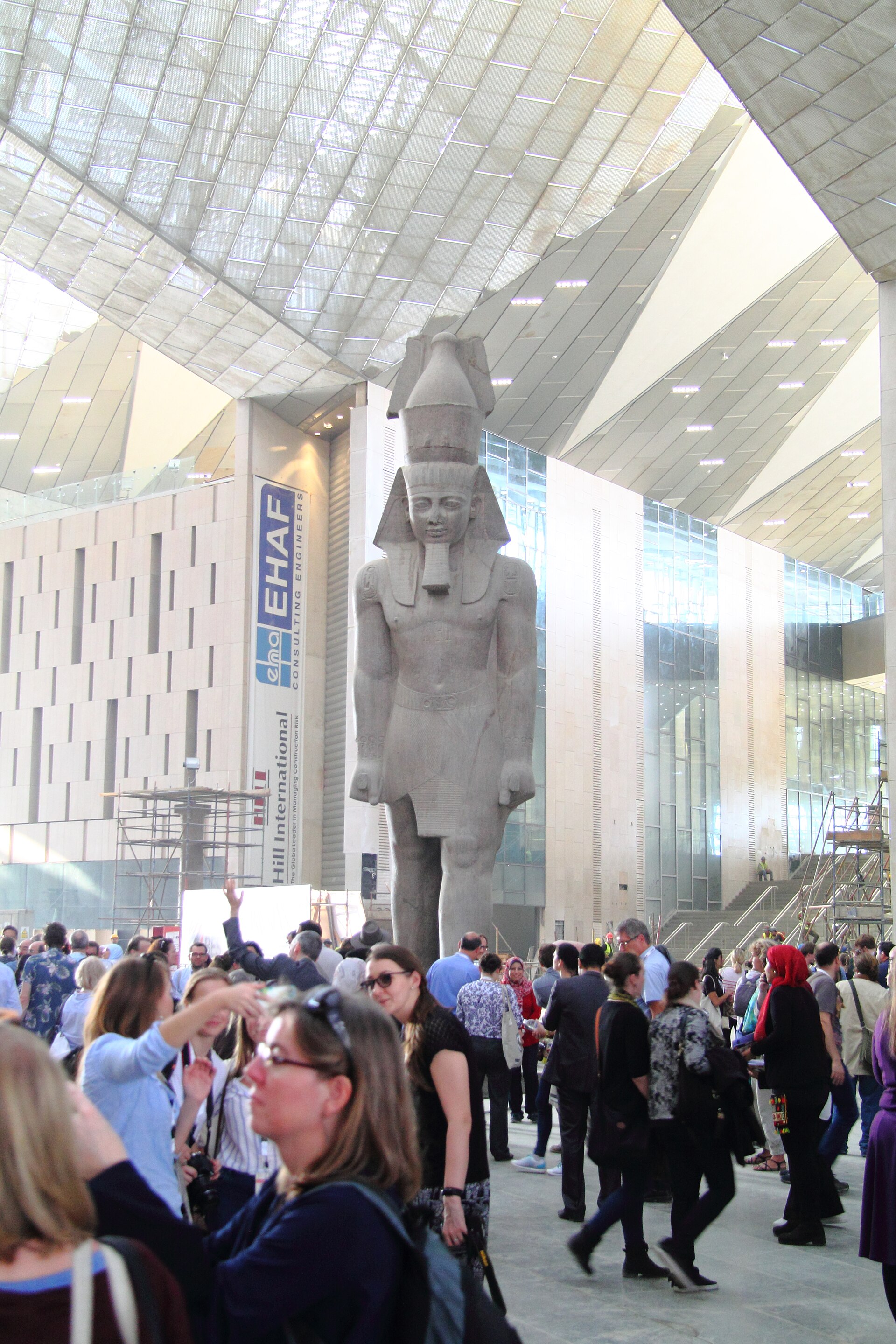
The building's atrium, oriented to frame a view of the Great Pyramid through floor-to-ceiling windows, creates a visual connection between the museum and the monuments that provides the context that the cramped galleries of the old Egyptian Museum on Tahrir Square could never offer. The 11-metre-tall colossus of Ramesses II, which stood at the Cairo railway station for decades, has been relocated to the museum's entrance as a ceremonial guardian.
The Tutankhamun galleries will display the complete contents of the boy king's tomb for the first time — the golden mask, the golden sarcophagus, the thrones, the chariots, the jewellery, and the 5,000 other objects that Howard Carter spent a decade cataloguing after his 1922 discovery. The museum's conservation labs, visible to visitors through glass walls, demonstrate the ongoing work of preserving objects that are 3,000 years old. The GEM's proximity to the pyramids (visible from the museum terraces) creates a museum experience that is both indoor and outdoor, both ancient and contemporary.
Verified Facts
The Grand Egyptian Museum covers 490,000 square metres
Designed by Heneghan Peng Architects
The complete Tutankhamun collection of 5,400 objects will be displayed
The colossus of Ramesses II guards the entrance
Get walking directions
Al Remaya Street, Kafr Nassar, Giza, 12559, Egypt