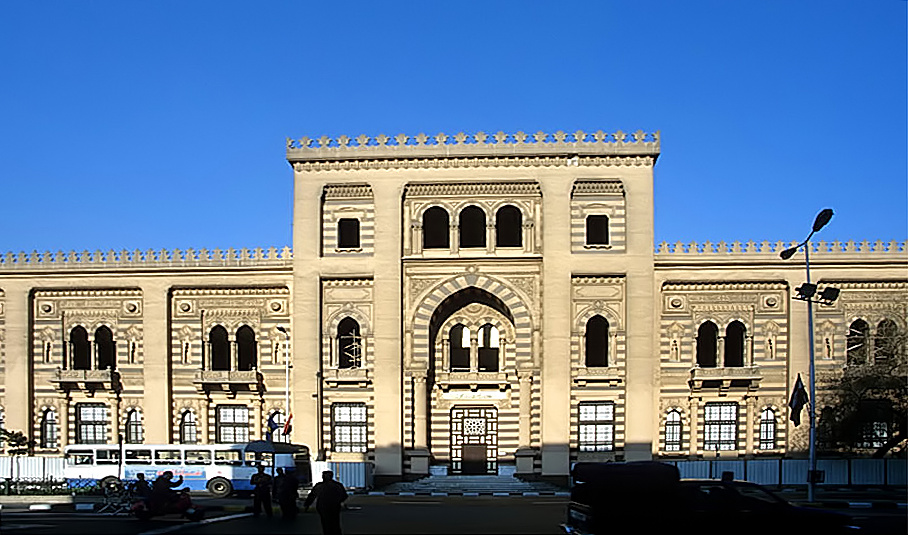
The Museum of Islamic Art in Cairo is one of the finest collections of Islamic art in the world — over 100,000 objects spanning 1,400 years and the full geographic range of the Islamic world, from Umayyad Syria and Abbasid Iraq through Fatimid and Mamluk Egypt to Ottoman Turkey and Mughal India. The museum, founded in 1881 and housed in a neo-Mamluk building at the edge of Islamic Cairo, was severely damaged by a car bomb in 2014 and reopened after a meticulous restoration in 2017.
The collection's strengths include Mamluk metalwork (inlaid brass trays, ewers, and candlesticks of extraordinary craftsmanship), Fatimid rock crystal, Quranic manuscripts in every major calligraphic style, textiles from across the Islamic world, and the carved wooden mashrabiya screens and doors that demonstrate the architectural craft traditions of medieval Cairo. The ceramics collection — spanning Abbasid lustre ware, Iznik tiles, and Egyptian Mamluk pottery — traces the development of Islamic ceramic art across centuries and continents.
The museum's location at the intersection of Port Said Street and Al-Muizz Street makes it a natural bookend to an Islamic Cairo walk — start at the museum for context, then walk north along Al-Muizz through the monuments whose artistic traditions the museum explains. The building itself, with its domed entrance hall and galleries arranged around a central courtyard, provides a sympathetic architectural setting for the collection, and the recently restored galleries display the objects with the space and lighting they deserve.
Verified Facts
The museum was founded in 1881 and houses over 100,000 objects
The museum was damaged by a car bomb in 2014
It reopened after restoration in 2017
The collection spans 1,400 years of Islamic art from across the Muslim world
Get walking directions
Port Said Street, Bab al-Khalq, Cairo