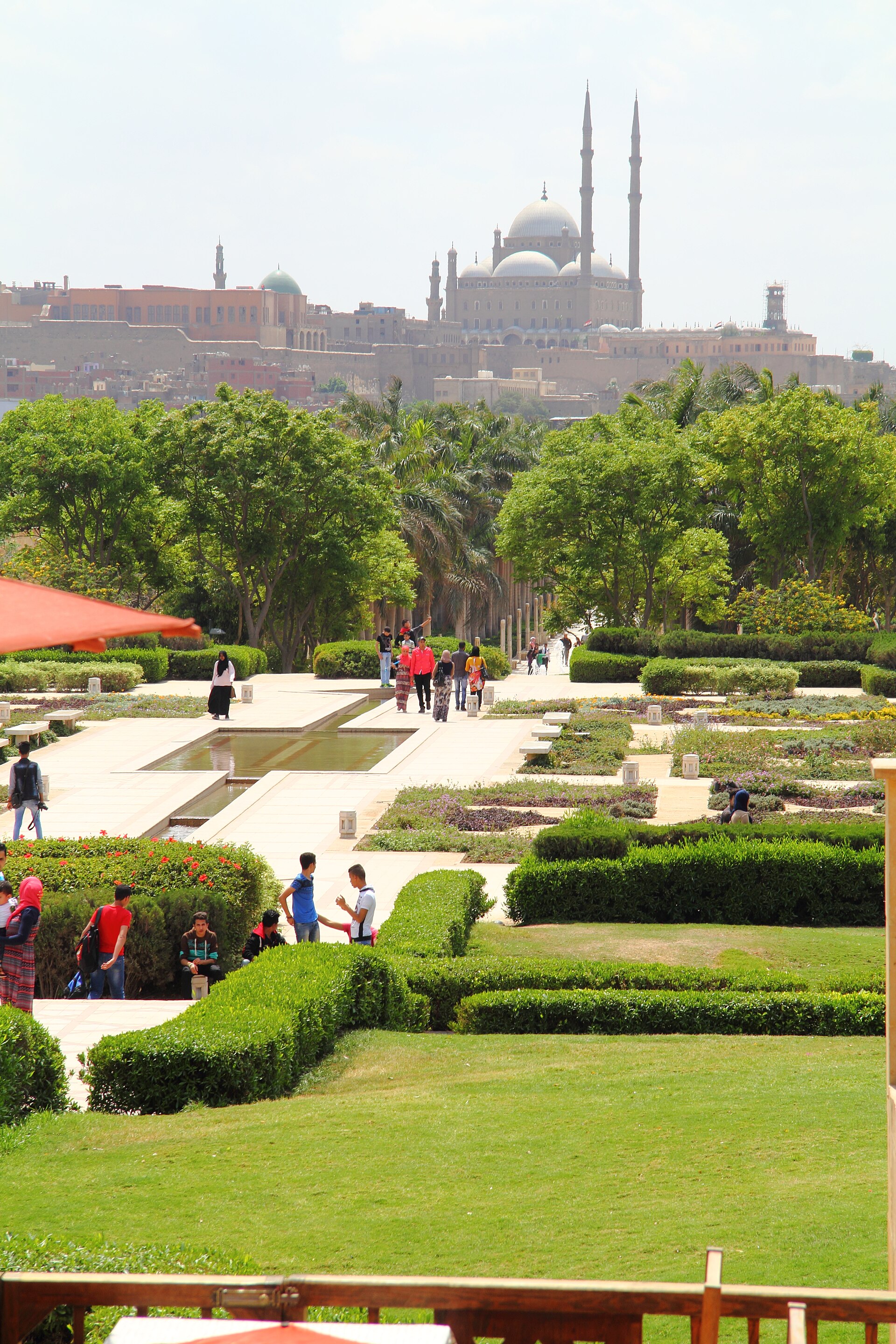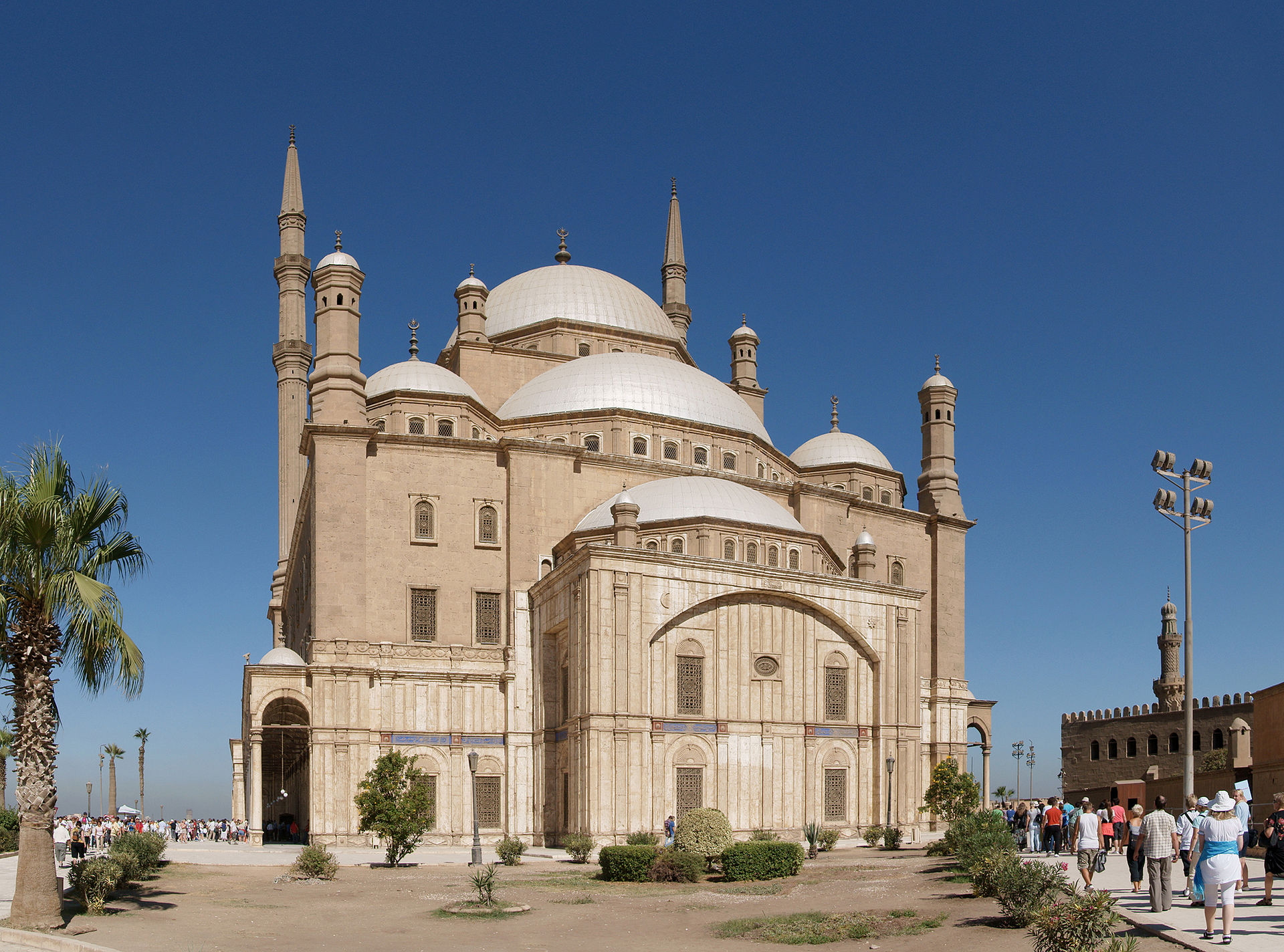
The Mosque of Muhammad Ali is Cairo's most visible mosque — a massive Ottoman-style structure with an 82-metre dome and twin 84-metre minarets that dominates the Citadel of Saladin and the city's skyline. Built between 1830 and 1848 by Muhammad Ali Pasha (the Albanian-born governor who modernised Egypt and is considered the founder of modern Egypt), the mosque was deliberately modelled on the great Ottoman mosques of Istanbul — a political statement of loyalty to the Ottoman sultan that simultaneously demonstrated Egypt's architectural ambitions.
The interior is vast and luminous — a single domed prayer hall hung with hundreds of glass lanterns on chains that, when lit, create a constellation of warm light against the painted dome above. The alabaster cladding (giving the mosque its nickname, the 'Alabaster Mosque') covers the lower walls and columns, and the cool, pale stone combined with the lantern light produces an atmosphere of serene grandeur. Muhammad Ali's tomb, behind a bronze screen in the corner of the mosque, is surmounted by a marble cenotaph.
The mosque's elevated position in the Citadel provides the best views in Cairo — looking north across the Islamic quarter's minarets and domes to the modern city beyond, and west to the pyramids on the horizon on clear days. The clock tower in the courtyard was a gift from King Louis-Philippe of France in exchange for the obelisk that now stands in the Place de la Concorde in Paris — a trade that Egyptians have been joking about ever since (the clock has never worked).
Verified Facts
The mosque was built between 1830 and 1848 by Muhammad Ali Pasha
The twin minarets are 84 metres tall
The clock tower was a gift from France in exchange for a Luxor obelisk
Muhammad Ali Pasha is considered the founder of modern Egypt
Get walking directions
Citadel of Saladin, Al Abageyah, Cairo