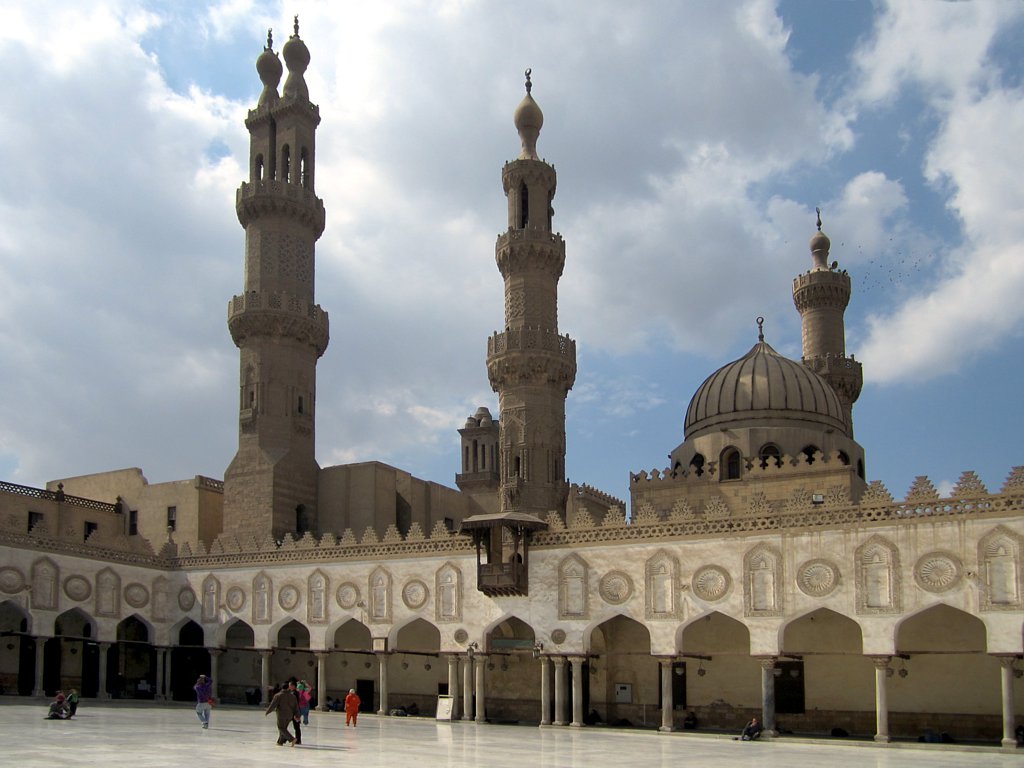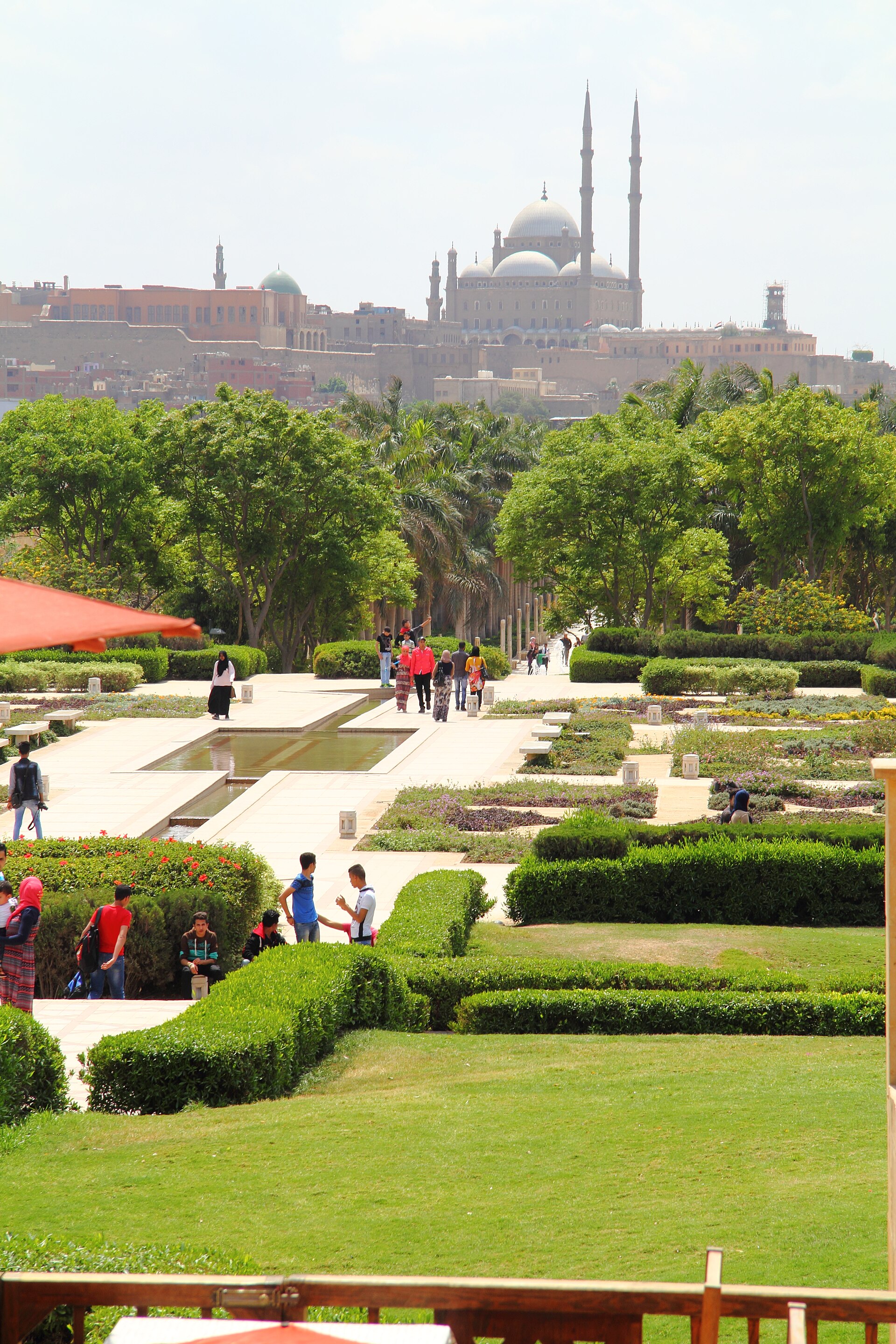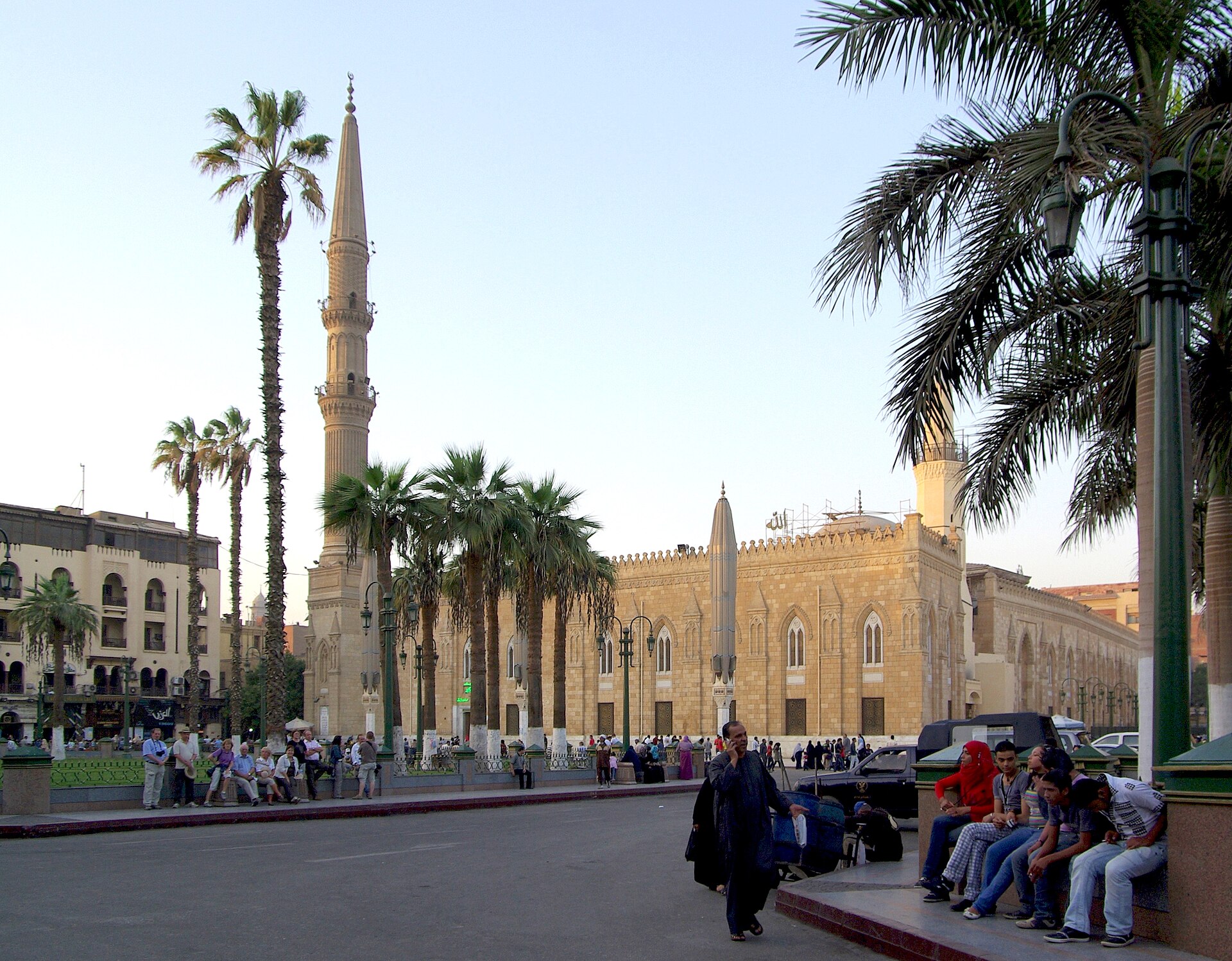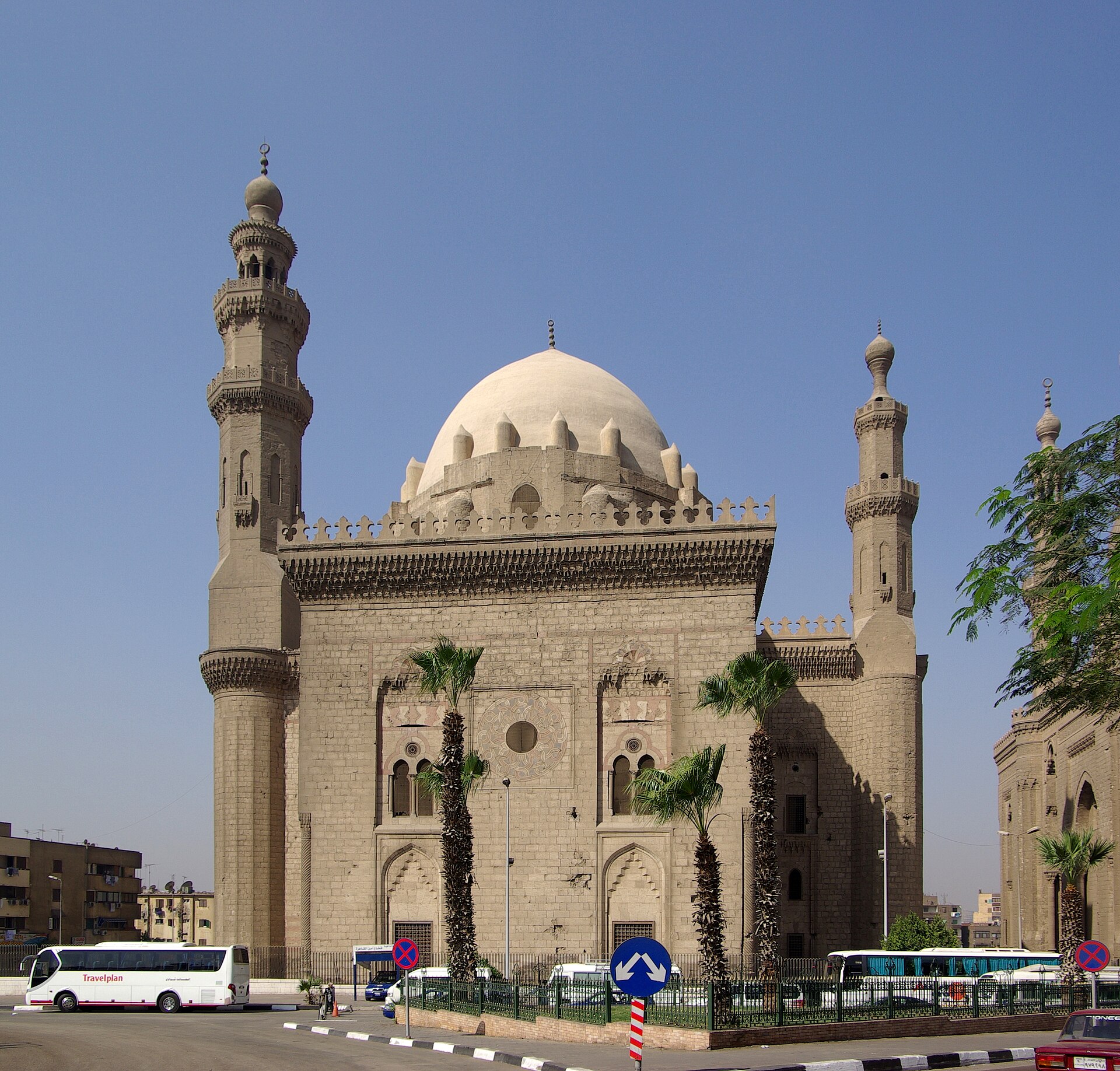
The Sultan Hassan Mosque is the largest and most ambitious mosque of the Mamluk period — a massive stone complex built between 1356 and 1363 that architectural historians consider one of the masterpieces of Islamic architecture worldwide. The mosque's sheer scale (it was the tallest building in Cairo when completed), the quality of its stonework, and the sophistication of its spatial design make it the single most impressive historic building in Cairo after the pyramids.
The mosque is organised around a central courtyard with four iwans (vaulted halls) opening onto it, one for each of the four Sunni schools of jurisprudence — a design that reflects the educational function of the mosque as a madrasa where all four traditions could be taught simultaneously. The main iwan is the largest covered space in any Mamluk building, and the scale — the vault rises to over 26 metres — creates a sense of interior volume that is genuinely overwhelming. The mausoleum chamber, behind the main iwan, contains Sultan Hassan's cenotaph beneath a dome decorated with carved stucco of extraordinary refinement.
The mosque sits at the foot of the Citadel, and the view of the two together — the Mamluk mosque below, the Ottoman citadel above — is the most historically dense perspective in Cairo. The Al-Rifa'i Mosque directly opposite, built in the 19th century deliberately to echo Sultan Hassan's scale and style, creates an architectural dialogue across the square that spans 500 years.
Verified Facts
Sultan Hassan Mosque was built between 1356 and 1363
It was the tallest building in Cairo when completed
The mosque contains four iwans for the four Sunni schools of jurisprudence
The main iwan vault rises over 26 metres
Get walking directions
Al Sultan Hassan Street, Al Helmia, Cairo, 11655, Egypt