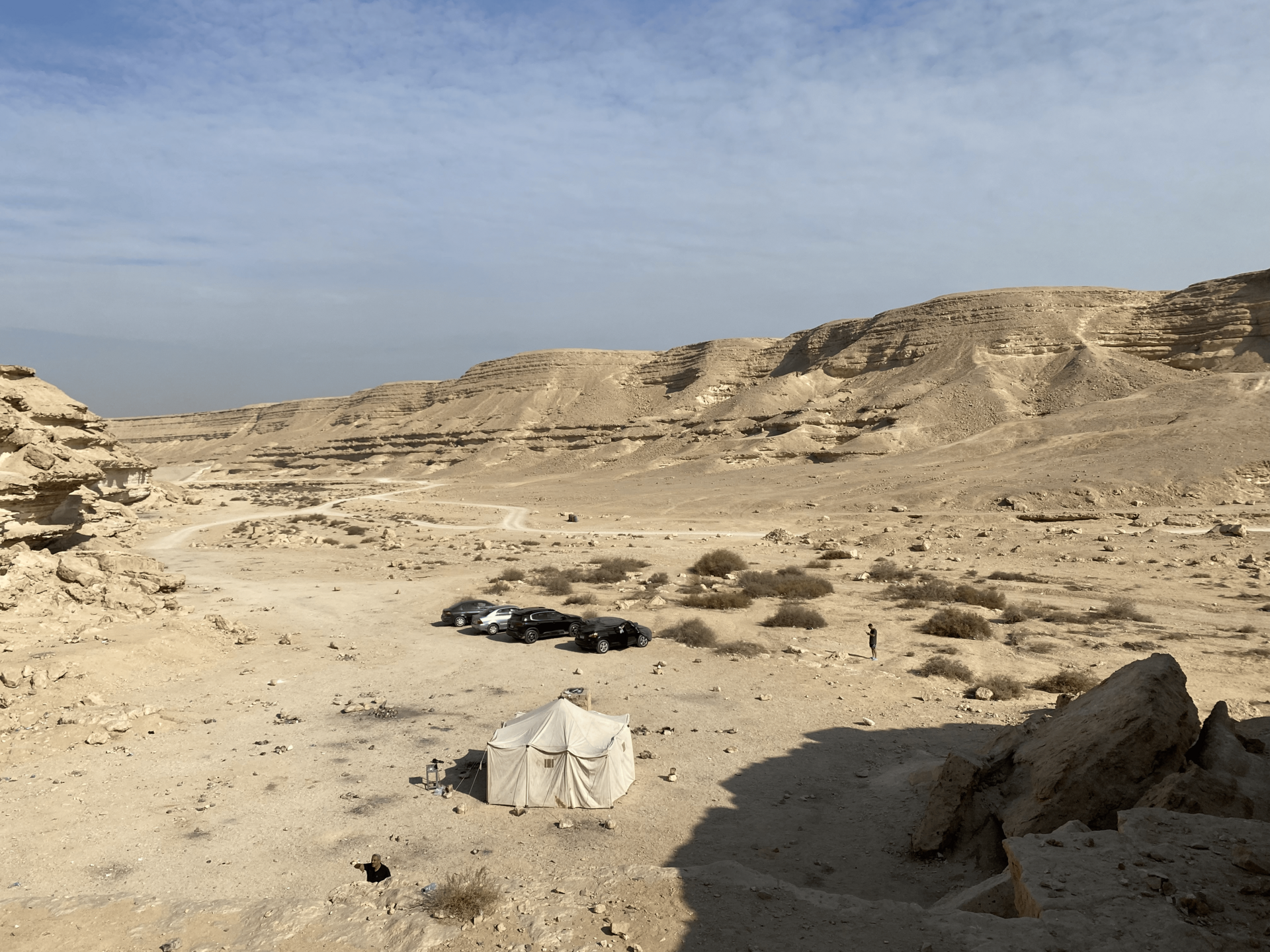
Wadi Degla is Cairo's most unexpected natural escape — a 60-square-kilometre protected desert canyon south of the city where fossilised whale bones, coral reef formations, and the geological record of an ancient sea are preserved in the limestone walls of a dry wadi (valley) that was underwater 40 million years ago. The protectorate provides the most dramatic contrast available in Cairo: from the apartment blocks of Maadi, you drive five minutes and enter a desert canyon that looks like it belongs in the American Southwest.
The canyon walls, carved by the now-dry Degla River over millions of years, expose cross-sections of limestone that contain marine fossils — shark teeth, sea urchins, and the shells of creatures that lived when the Sahara was the floor of the Tethys Sea. The hiking trail along the canyon floor extends for about 5 kilometres, and the geology lesson written in the rock walls — layers of limestone, sandstone, and fossilised coral — covers 40 million years in a single walk.
The protectorate is popular with Cairo's outdoor community — runners, mountain bikers, and birdwatchers (the canyon attracts migratory raptors and desert species) use it as an escape from the city's traffic and pollution. The entrance fee is minimal, and the experience of standing in a fossil-studded desert canyon while the towers of Cairo are visible on the northern horizon provides the perspective shift that every visitor to the city needs — a reminder that Cairo sits on the edge of a desert that was once an ocean.
Verified Facts
Wadi Degla covers approximately 60 square kilometres
The canyon contains marine fossils from approximately 40 million years ago
The Sahara was once the floor of the Tethys Sea
The protectorate is accessible from the Maadi suburb
Get walking directions
Wadi Degla, Maadi, Cairo